FEVE Coated Aluminum Panel Performance Data for High Gloss Architectural Facades
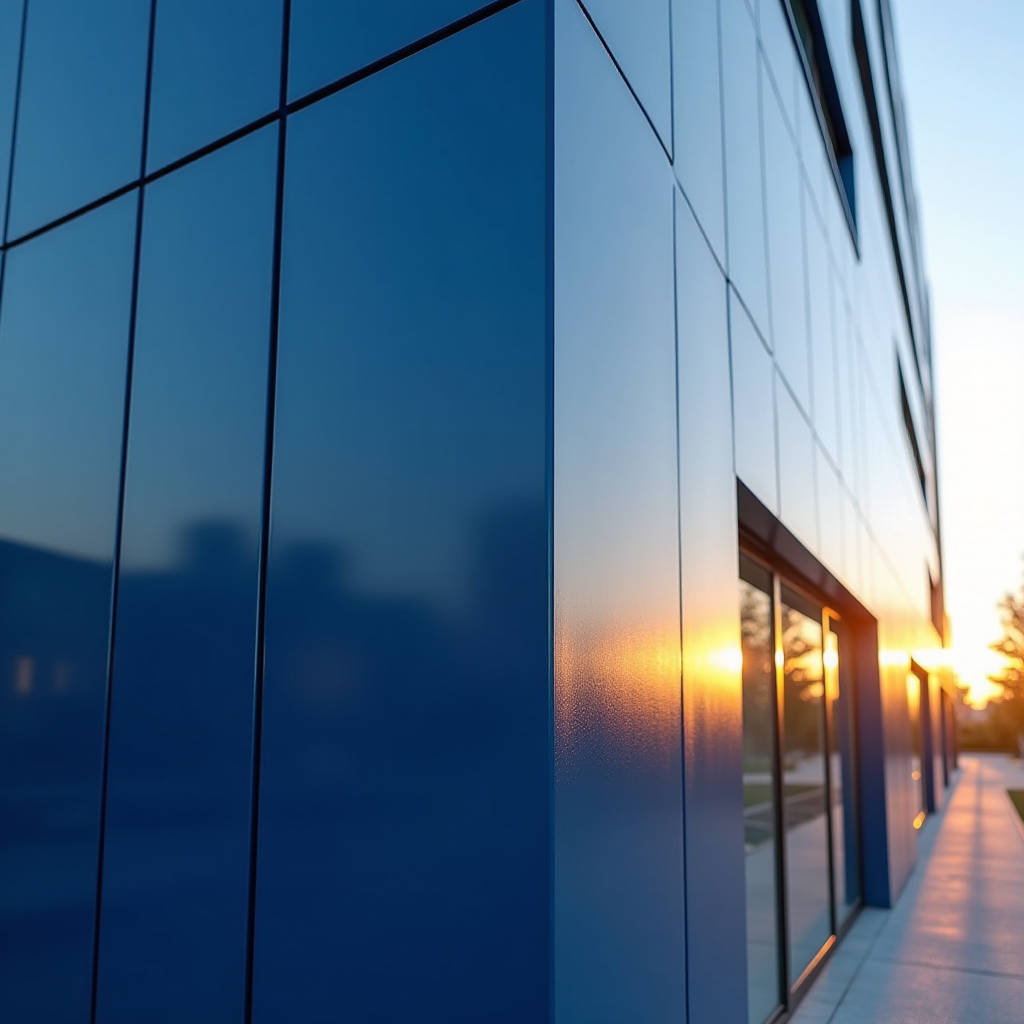
When a project specification demands a facade material that holds its gloss and color intensity for over a decade without fading into a chalky mess, the conversation inevitably turns to fluoropolymer chemistry. Among the available options, the FEVE Coated Aluminum Panel has carved out a distinct position—not as a generic substitute for PVDF, but as a deliberate choice where high-gloss aesthetics and long-term weather resistance intersect. Unlike standard architectural coatings that degrade through UV-induced polymer chain scission, FEVE (fluoroethylene vinyl ether) resin systems form a chemically inert barrier that resists photodegradation at the molecular level. For architects specifying solid aluminium cladding panels on high-visibility commercial towers, transportation hubs, or cultural venues, understanding what FEVE brings to the table—and where its limitations lie—determines whether a project ages gracefully or becomes a maintenance liability.
What Separates FEVE from PVDF at the Resin Level
Both FEVE and PVDF belong to the fluoropolymer family, but their molecular architecture diverges significantly. PVDF (polyvinylidene fluoride) relies on a semi-crystalline structure where fluorine atoms pack tightly along the carbon backbone. This delivers excellent chemical resistance but creates inherent processing constraints—PVDF requires acrylic modification to adhere to metal substrates, and its crystalline nature limits the achievable gloss ceiling to roughly 30-40 GU at 60° measurement geometry.
FEVE resins take a different approach. The alternating copolymer structure of fluoroethylene and vinyl ether units introduces amorphous regions into the polymer matrix. This structural difference produces two practical outcomes for solid aluminium cladding panels. First, the amorphous character allows pigment particles to disperse more uniformly through the cured film, which is why FEVE Coated Aluminum Panel surfaces can achieve gloss readings of 70-85 GU without compromising film integrity. Second, the vinyl ether groups provide crosslinking sites that create a tighter three-dimensional network after curing. The result is a coating that combines solvent-soluble application convenience with thermoset-like durability after baking.
From a specification standpoint, this matters because high-gloss PVDF coatings often require a clear topcoat to boost reflectance—adding process steps and cost. FEVE achieves comparable or superior gloss in a single-coat system when formulated correctly, though most reputable coaters still apply a multi-layer system for color consistency and edge coverage on fabricated panels.
Gloss Retention and Color Stability: The Data Behind the Claims
Accelerated weathering data tells part of the story. In QUV-B 313 testing (ASTM G154), quality FEVE formulations routinely show less than 5% gloss loss after 4,000 hours of exposure. Equivalent PVDF systems typically land in the 8-12% range under identical conditions. Translating this to real-world performance, a FEVE Coated Aluminum Panel installed on a south-facing facade in a subtropical climate can reasonably be expected to maintain 80% or more of its original gloss after 10-12 years of service.
Color shift—measured as Delta E (ΔE) under CIE Lab—is where FEVE demonstrates another measurable advantage. The vinyl ether backbone resists the yellowing that plagues some acrylic-modified fluoropolymers. Independent testing by coating manufacturers shows ΔE values below 1.5 after 3,000 hours of accelerated weathering for properly formulated FEVE systems. This is critical for architects specifying bold, saturated colors like deep reds, cobalt blues, or jet blacks on solid aluminium cladding panels. These pigments absorb more infrared radiation, raising surface temperatures and accelerating degradation in lesser coating systems.
However, specifiers should approach manufacturer claims with calibrated skepticism. The quality of the primer layer—typically an epoxy or polyurethane system—plays an outsized role in overall system durability. A premium FEVE topcoat over an inadequate primer will delaminate regardless of the fluoropolymer's inherent weather resistance. This is where working with experienced fabricators who control the entire coating line matters more than the resin brand alone.
Application Thickness and Fabrication Considerations for Solid Panels
For solid aluminium cladding panels in 2.0mm, 2.5mm, or 3.0mm thicknesses, the FEVE coating system typically follows a three-layer architecture: a chromate or chrome-free conversion coating applied directly to the pretreated aluminium substrate, followed by a 5-8 micron epoxy or polyurethane primer, and finally a 20-25 micron FEVE color coat. Some high-gloss specifications add a 10-15 micron clear FEVE topcoat for additional depth and scratch resistance.
Total dry film thickness (DFT) for a complete FEVE system on solid aluminium panels should fall between 30-40 microns. This is thinner than the 35-45 micron range typical for PVDF systems on architectural aluminium, but the crosslink density of FEVE compensates for the reduced film build. Fabricators must pay attention to cure conditions: FEVE coatings typically require a peak metal temperature (PMT) of 220-240°C, held for 90-120 seconds. Undercuring leaves unreacted crosslinking sites that become moisture-sensitive over time. Overcuring can embrittle the film, leading to micro-cracking when panels are brake-formed or router-cut after coating.
One practical consideration that often gets overlooked in specification documents: FEVE coatings are harder than PVDF at equivalent film builds, measuring 2H-3H on the pencil hardness scale versus H-2H for PVDF. This improved scratch resistance benefits panels during handling, fabrication, and installation, but it also means the coating is slightly less flexible. For panels requiring tight-radius bending or complex perforation patterns, fabricators should conduct bend tests on coated samples before committing to full production runs.
Chemical Resistance and Coastal Environment Performance
Coastal installations present a particular challenge for architectural coatings. The combination of UV exposure, salt spray, and humidity cycling can degrade even high-performance fluoropolymers through a synergistic mechanism that accelerated weathering cabinets struggle to replicate. FEVE resins, owing to their fully saturated molecular backbone and high fluorine content (typically 25-30% by weight), demonstrate excellent resistance to both alkaline and acidic environments.
In ASTM B117 neutral salt spray testing, FEVE Coated Aluminum Panel specimens routinely exceed 3,000 hours with no blistering, no underfilm corrosion, and minimal gloss reduction. This performance translates directly to installations in marine environments—think resort hotels on Southeast Asian coastlines, Middle Eastern waterfront developments, or Australian beachfront apartments. The coating's resistance to chloride ion penetration protects the aluminium substrate from the pitting corrosion that can initiate at cut edges or fastener holes.
Acid rain resistance is another consideration for projects in industrial zones or regions with heavy coal-fired power generation. FEVE's vinyl ether linkages are inherently resistant to acid-catalyzed hydrolysis, unlike the ester groups found in polyester or silicon-modified polyester coatings. This makes FEVE a pragmatic choice for solid aluminium cladding panels on manufacturing facilities, logistics centers, or urban projects in cities with documented air quality challenges.
Comparing FEVE, PVDF, and Polyester Coatings: A Practical Reference
The table below provides a side-by-side comparison of the three primary coating families used on architectural aluminium cladding. These values represent typical ranges based on manufacturer data sheets and independent testing—actual performance depends on formulation quality, application technique, and environmental conditions.
| Performance Parameter | FEVE Coating | PVDF (70/30) | Polyester (SMP) |
|---|---|---|---|
| Maximum Gloss (60° GU) | 75-90 | 30-45 | 60-80 |
| Gloss Retention (5yr Florida) | 85-95% | 75-85% | 40-60% |
| Color Shift ΔE (3,000hr QUV) | <1.5 | <2.5 | 3.0-8.0 |
| Salt Spray Resistance (ASTM B117) | 3,000+ hrs | 3,000+ hrs | 1,000-1,500 hrs |
| Pencil Hardness | 2H-3H | H-2H | HB-F |
| Typical Service Life (Exterior) | 15-20 years | 20-25 years | 7-12 years |
| Available Color Range | Excellent (bright, deep, metallic) | Good (limited bright colors) | Excellent (all color types) |
| Film Flexibility (T-Bend) | 2T-3T | 1T-2T | 0T-1T |
| Relative Cost Index | 1.0 | 0.85-0.95 | 0.45-0.60 |
What this table reveals is that FEVE occupies a specific middle ground—not the absolute durability champion (PVDF holds that title for service life), but the clear leader when high-gloss aesthetics must coexist with strong weather resistance. The cost premium over PVDF is modest, typically 5-15% depending on color and order volume, which makes the specification decision more about aesthetic intent than budget alone.
Where FEVE Delivers Its Strongest Value Proposition
Not every project benefits equally from specifying FEVE Coated Aluminum Panel systems. The coating's strengths align most closely with specific architectural scenarios where its unique combination of gloss, color depth, and weather resistance solves a genuine design problem.
High-Visibility Retail and Commercial Facades: When a brand's corporate identity depends on a specific, vibrant color rendered with automotive-grade gloss, FEVE is the logical choice. The coating's ability to hold deep reds, electric blues, and pure blacks without fading preserves brand equity over the building's lifecycle. For solid aluminium cladding panels forming large-format fascia elements, the coating's consistent gloss across panel-to-panel joints eliminates the "patchwork" effect that can appear with lower-gloss systems.
Transportation Infrastructure: Airport terminals, high-speed rail stations, and metro entrances subject cladding to an aggressive mix of UV exposure, vibration, and airborne pollutants. FEVE's hardness provides measurable scratch and abrasion resistance during the inevitable cleaning and maintenance cycles these facilities undergo. The coating's dirt-shedding properties—a function of its low surface energy—reduce cleaning frequency compared to polyester or acrylic systems.
Cultural and Institutional Buildings: Museums, performing arts centers, and university buildings often feature complex geometries with curved or faceted solid aluminium panels. FEVE's ability to maintain color consistency across panels bent at different radii, combined with its resistance to the micro-cracking that can occur at bend lines, makes it suitable for these demanding applications. The coating's depth of color also enhances the visual impact of sculptural facade elements where shadow and highlight play across the surface.
Coastal and High-Humidity Locations: As discussed earlier, the coating's chloride resistance and low moisture vapor transmission rate protect the aluminium substrate in marine environments. Projects in Southeast Asia, the Caribbean, and the Persian Gulf region represent natural markets for FEVE-specified cladding systems.
Specification Pitfalls and Quality Control Markers
Writing a specification that actually delivers the intended performance requires more than listing "FEVE coating" on a drawing note. Several common pitfalls separate specifications that work from those that create disputes during construction.
Resin Content Verification: Not all FEVE-labeled coatings contain the same fluoropolymer loading. The AAMA 2605 specification, which governs high-performance organic coatings on architectural aluminium, requires a minimum of 70% fluoropolymer resin by weight in the color coat. However, AAMA 2605 was originally written around PVDF chemistry. Specifiers should verify that the FEVE system they are approving meets or exceeds AAMA 2605 requirements for gloss retention, color retention, and chalk resistance—even if the resin chemistry differs from the standard's PVDF origins.
Primer Compatibility: The best FEVE topcoat cannot compensate for a mismatched primer. Epoxy primers offer excellent adhesion and corrosion resistance but can chalk when exposed to UV if the topcoat is damaged. Polyurethane primers provide better flexibility and UV resistance but may not bond as aggressively to the aluminium substrate. The specifier should require the coating applicator to provide documented compatibility testing between the specific primer and FEVE topcoat being proposed.
Batch-to-Batch Color Consistency: High-gloss coatings amplify color variations that would be invisible at lower gloss levels. A ΔE of 1.0 between two panels with 30 GU gloss may be imperceptible; the same ΔE at 80 GU can be obvious under certain lighting conditions. Specifications should require the fabricator to provide color readings from multiple points across production batches and to maintain a maximum ΔE of 1.0 (CIE Lab, D65 illuminant, 10° observer) against the approved control sample.
Edge Coverage: Solid aluminium cladding panels are fabricated after coating, which means cut edges expose bare aluminium. Quality fabricators address this through edge treatment—either a touch-up coating system matched to the FEVE topcoat or a factory-applied edge seal. Specifications should explicitly address edge treatment requirements and testing protocols, particularly for projects in corrosive environments.
Fabrication Sequencing and Lead Time Realities
FEVE coating lines are less common than PVDF lines, particularly outside of East Asia where the technology originated. This creates practical supply chain considerations for project teams. A typical FEVE Coated Aluminum Panel order follows this sequence: aluminium coil or sheet procurement (2-4 weeks), pretreatment and coating application (1-2 weeks depending on line scheduling), fabrication including cutting, routing, and bending (2-3 weeks), and quality control with packaging (1 week). Total lead time from order placement to ex-works delivery typically runs 6-10 weeks, though this can extend during peak construction seasons.
For projects with tight schedules, early engagement with the coating applicator is essential. Some fabricators maintain stock of FEVE-coated coil in popular colors—whites, silvers, and grays—which can cut lead times significantly. However, custom colors require the full production cycle. Specifiers should factor this into their procurement timeline and avoid late-stage color changes that reset the entire sequence.
Companies like Futeng® that operate integrated coating and fabrication facilities can streamline this process by eliminating the logistics gaps between coating and fabrication stages. When evaluating suppliers, project teams should ask about coating line ownership versus subcontracting arrangements, as the latter introduces additional coordination risk and quality control handoffs.
Maintenance Requirements Over the Service Life
One of the quieter advantages of specifying FEVE Coated Aluminum Panel systems is the reduced maintenance burden over the building's service life. The coating's low surface energy—typically 20-25 dynes/cm compared to 35-40 for polyester coatings—means airborne dirt, diesel particulates, and biological growth adhere less tenaciously. Rainfall provides a reasonable degree of self-cleaning on vertical surfaces, though sheltered areas like soffits and deep reveals will still require periodic washing.
Recommended cleaning protocols for FEVE-coated panels are straightforward: a mild detergent solution (pH 6-8) applied with a soft brush or sponge, followed by a freshwater rinse. Pressure washing should be limited to below 500 psi with a fan nozzle held at least 300mm from the surface. Abrasive cleaners, strong alkaline solutions, and solvent-based cleaning products should be avoided—they can damage the coating's gloss without necessarily being detectable until the damage is extensive.
Annual inspection of sealant joints, fastener conditions, and any areas of mechanical damage should be part of the building's maintenance program. Cut-edge corrosion, if it occurs, typically appears first at panel corners and around penetrations. Early intervention with a matched touch-up coating prevents the corrosion from spreading under the coating film.
Making the Specification Decision
Choosing between FEVE, PVDF, and other coating systems ultimately comes down to ranking priorities. If absolute maximum service life is the primary concern—and gloss level is secondary—a well-formulated PVDF system on solid aluminium cladding panels remains the conservative choice, with documented performance exceeding 25 years on landmark projects worldwide. If the architectural vision demands a high-gloss, deeply saturated facade that retains its visual impact for 15-20 years, FEVE is the technically superior option.
The decision should also account for regional factors. In markets where FEVE coating lines are well-established—Japan, South Korea, China, and increasingly Southeast Asia—the cost premium over PVDF is modest and lead times are competitive. In regions where FEVE remains a specialty product, the logistics and scheduling implications may outweigh the technical advantages.
For the specifier, the key is to treat the coating system as an integral part of the facade design rather than a commodity item to be value-engineered. The cost difference between a premium FEVE system and a basic PVDF system on a typical commercial facade represents perhaps 2-4% of the total cladding package cost. Spread over a 15-20 year service life with reduced maintenance and retained aesthetic performance, that premium is difficult to argue against on purely economic grounds—assuming the project's design intent genuinely benefits from what FEVE delivers.