Hylar 5000 Aluminum Panel Coating Chemistry Substrate Selection and AAMA 2605 Compliance for Facade Engineers
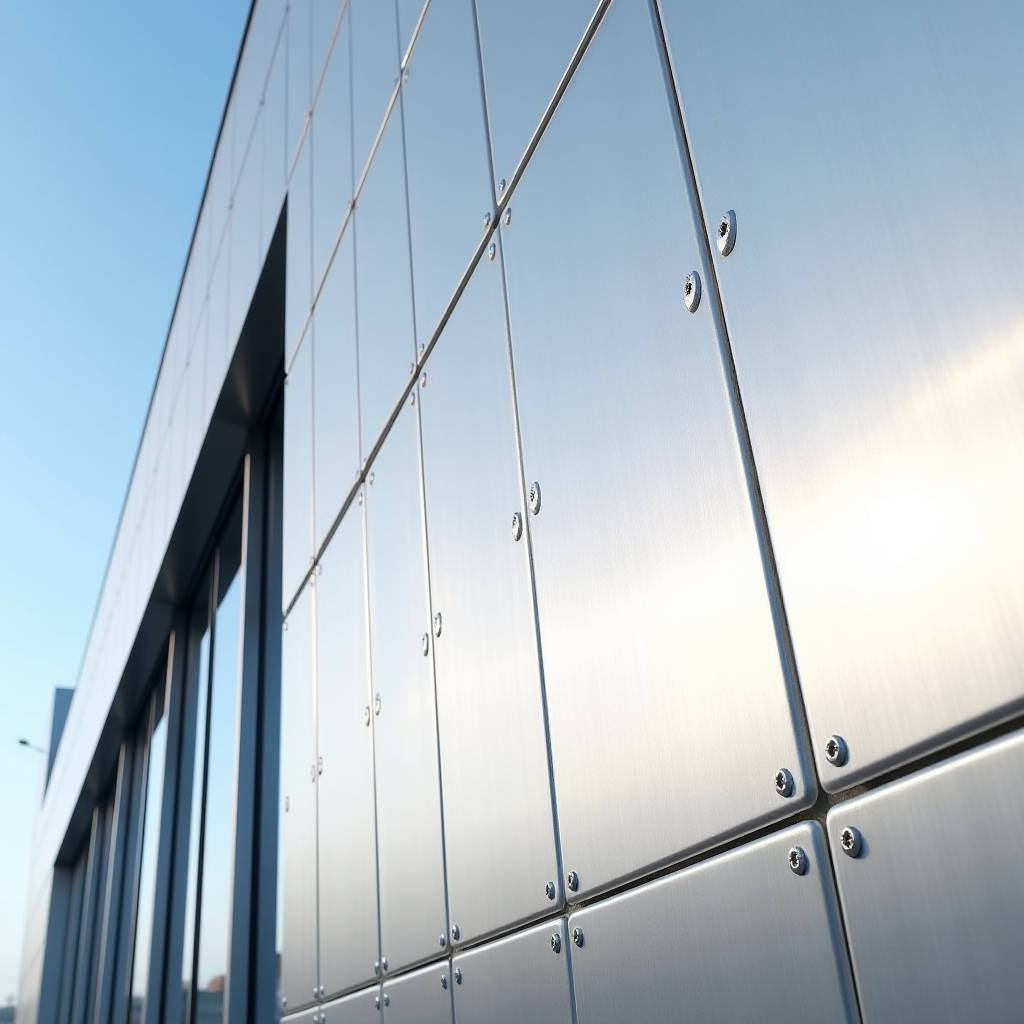
When a project specification calls for a fluoropolymer coating system on solid aluminium cladding, the name Hylar 5000 appears on submittals across North America, Europe, and the Middle East. A Hylar 5000 Aluminum Panel is not a generic painted sheet. It is a precisely engineered architectural product where the coating chemistry, substrate preparation, and application process collectively determine whether a building facade will still look acceptable after 20 years of UV exposure, salt spray, and thermal cycling. The distinction matters because the PVDF resin in Hylar 5000 carries a specific molecular weight distribution and crystallinity profile that directly affects film formation, pigment binding, and long-term gloss retention. For general contractors and facade consultants evaluating material substitutions, understanding what sits behind the Hylar 5000 name on a data sheet means the difference between a warranted assembly and a latent defect claim.
What Hylar 5000 Actually Means in Coating Chemistry
Hylar 5000 is a polyvinylidene fluoride (PVDF) resin manufactured by Solvay. The "5000" designation refers to a specific grade within the Hylar family, engineered for coil and spray-applied architectural coatings. The resin forms the backbone of a coating system that must contain a minimum of 70% PVDF resin by weight in the dry film, as required by AAMA 2605. The remaining 30% consists of acrylic resins that serve as a dispersing medium and adhesion promoter. This ratio is not arbitrary. Below 70% PVDF content, the semicrystalline fluoropolymer matrix loses its ability to resist photo-oxidative degradation. Above 70%, the film becomes too rigid and prone to micro-cracking during thermal expansion of the aluminium substrate.
The ceramic pigments used in Hylar 5000 systems are another variable that separates specification-grade coatings from commodity paints. Inorganic mixed-metal oxide pigments—cobalt aluminate blues, chrome titanate yellows, iron oxide reds—are calcined at temperatures exceeding 1,000°C before being milled into the coating. This thermal pre-treatment eliminates the organic fraction that would otherwise degrade under UV. The result is a colour that shifts less than 5 Delta E units over 20 years in south-facing vertical exposure, per historical weathering data from the AAMA 2605 qualification program.
Substrate Selection: Why Aluminium Grade Determines Coating Performance
Applying Hylar 5000 over the wrong aluminium alloy is a recurring failure mode that the industry continues to see on project sites. The coating itself can be identical across two panels, but if one uses 3003-H14 and the other uses a recycled-heavy 1100 alloy with uncontrolled trace elements, the corrosion performance diverges sharply within five years.
For solid aluminium cladding panels carrying Hylar 5000, the substrate should be 3003 or 3105 alloy in H14 temper, conforming to ASTM B209. These manganese-bearing alloys provide the right balance of tensile strength (140-180 MPa), yield strength (115-145 MPa), and elongation (4-8% depending on gauge) for roll-forming and brake-press work without cracking the coating. The more critical specification is the pretreatment layer. A chrome phosphate conversion coating applied at 40-60 mg/ft² provides the anchor profile for PVDF adhesion. Non-chrome alternatives based on zirconium or titanium chemistry are available and increasingly specified under LEED v4.1 requirements, but they require tighter process control during coil coating to achieve equivalent salt-spray resistance.
Futeng® supplies Hylar 5000 Aluminum Panels in 2.0mm, 2.5mm, and 3.0mm thicknesses as standard, with the 3003-H14 substrate sourced from mills that provide full heat-lot traceability. For projects requiring 4.0mm panels for large-format applications with minimal stiffener framing, the substrate is upgraded to 5052-H32 for higher flexural rigidity.
Coating Architecture: Primer, Color Coat, and Clear
A Hylar 5000 coating system is rarely a single layer. The standard architecture for architectural aluminium panels is a two-coat system: a corrosion-inhibiting epoxy or polyurethane primer at 0.2-0.3 mils dry film thickness (DFT), followed by a Hylar 5000 color coat at 0.7-0.8 mils DFT. Total DFT typically lands at 1.0 ± 0.1 mils. For metallic and mica finishes, a three-coat system adds a Hylar 5000 clear coat at 0.3-0.5 mils DFT over the metallic base, bringing total DFT to 1.2-1.5 mils.
The primer is not a commodity layer. It performs three functions: it passivates the aluminium surface against filiform corrosion, it provides a uniform base for color coat adhesion, and it absorbs differential thermal expansion between the aluminium (coefficient of thermal expansion approximately 23.6 × 10⁻⁶ /°C) and the PVDF film (approximately 12-14 × 10⁻⁶ /°C). Without a properly formulated primer, the mismatch in thermal expansion coefficients leads to micro-cracking at the interface after repeated thermal cycles, particularly on dark colors where panel surface temperatures can reach 80°C in direct summer sun.
Spray Application vs. Coil Coating: Two Routes to the Same Specification
Hylar 5000 can be applied by two fundamentally different processes, and the choice affects project lead times, color consistency, and cost. Coil coating applies the full coating system to flat aluminium sheet on a continuous line at speeds of 100-200 feet per minute. The sheet is then cut, formed, and fabricated into panels. Spray application applies the coating to already-fabricated panels in a batch process using conventional air-atomized or HVLP spray equipment, followed by oven curing at 230-250°C peak metal temperature.
| Parameter | Coil-Coated Hylar 5000 | Spray-Applied Hylar 5000 |
|---|---|---|
| DFT uniformity | ±0.05 mils across full coil | ±0.15 mils, dependent on operator |
| Color consistency (Delta E) | <1.0 across production run | <2.0 batch-to-batch |
| Minimum order quantity | Typically 2,000-5,000 sq ft | No minimum; single panel feasible |
| Edge coverage | Bare cut edges; requires field touch-up | Full edge wrap possible |
| Lead time (typical) | 4-8 weeks including fabrication | 3-5 weeks |
| Cost premium vs. coil | Baseline | +15% to +25% |
For large uniform facades exceeding 10,000 square feet, coil-coated Hylar 5000 Aluminum Panels deliver superior color uniformity at lower cost per square foot. For complex geometries with folded returns, perforated patterns, or small-batch custom colors, spray-applied Hylar 5000 is the practical choice despite the higher unit cost. The specification writer should note that AAMA 2605 does not distinguish between the two application methods—both must meet the same performance thresholds for gloss retention, color change, chalk resistance, and adhesion after accelerated weathering.
Reading AAMA 2605 Test Data: What the Numbers Actually Mean
The AAMA 2605 specification is the de facto standard for high-performance architectural coatings on aluminium. A Hylar 5000 system that meets AAMA 2605 has passed a battery of accelerated tests that correlate, imperfectly, to decades of outdoor exposure. Understanding what each test measures and what constitutes a pass helps in evaluating coating submittals.
South Florida Exposure: The Real Benchmark
The definitive test for any PVDF coating is 10-year outdoor exposure in South Florida at 45° south-facing, as specified in AAMA 2605. After 10 years, the coating must retain at least 50% of its original gloss (60° gloss meter), show color change of no more than 5 Delta E units, and exhibit chalking no worse than rating 8 per ASTM D4214. Hylar 5000 systems typically exceed these minimums by a significant margin, with many formulations retaining 70-80% gloss after a decade of subtropical UV and humidity.
Accelerated Laboratory Tests
For projects that cannot wait 10 years for data, AAMA 2605 specifies accelerated tests. The QUV-B 313 test (ASTM G154) exposes coated panels to cycles of UV radiation at 313 nm and condensation at elevated temperature for 4,000 hours. A passing result shows minimal color fade and no blistering. Salt spray resistance per ASTM B117 runs for 4,000 hours and checks for under-film corrosion at the scribe line. Resistance to mortar, acid, and alkali per ASTM D1308 simulates construction-site chemical exposure. A Hylar 5000 panel that passes all these tests has demonstrated, in the laboratory, the chemical and mechanical durability required for a 20-30 year facade service life.
AAMA 2605 compliance is not self-certified. Third-party testing by an accredited laboratory such as Q-Lab or Atlas Weathering Services Group should be included in every coating submittal package. Manufacturer test reports without independent verification do not meet the specification.
Color Range and Metallic Effects: The Pigment Constraint
The color palette for Hylar 5000 Aluminum Panels is simultaneously broad and constrained. Broad because the 70% PVDF resin system can carry a wide range of ceramic pigments. Constrained because the inorganic pigments that survive the PVDF curing temperature and deliver 20-year color stability are limited to specific chemistries. Bright organic reds, vivid purples, and certain fluorescent tones cannot be achieved with inorganic pigments at any price point. When a design team specifies a RAL color that falls outside the achievable gamut for PVDF, the coating supplier must offer a metameric match—a color that appears identical under D65 daylight but may shift under incandescent or LED lighting.
Metallic and mica finishes add another layer of complexity. The aluminum flake pigments used in metallic Hylar 5000 coatings are typically non-leafing grades with a particle size distribution between 15-45 microns. These flakes orient parallel to the substrate surface during application, creating the metallic reflectance. A clear PVDF topcoat is mandatory over metallic base coats to prevent oxidation of the aluminum flakes and to provide the depth-of-image that architects expect from a premium metallic finish. The clear coat adds approximately 20-30% to the material cost compared to a standard solid-color two-coat system.
Fabrication Constraints: What Happens After Coating
A Hylar 5000 Aluminum Panel does not exist in isolation. It must be cut, routed, folded, perforated, and assembled into a rainscreen or cladding system. Each fabrication step imposes constraints that the designer and fabricator must respect to preserve coating integrity.
Minimum bend radius for coil-coated Hylar 5000 panels is 2T (twice the material thickness) for 90° bends on 3003-H14. Tighter bends risk cracking the PVDF film, particularly on the outside radius where the coating is in tension. For spray-applied panels, the coating is applied after bending, so the constraint shifts to ensuring that the spray operator achieves full coverage inside corners and on folded returns. Perforated panels present a special case: the cut edges of each perforation are bare aluminium and must be accounted for in the corrosion protection strategy. Edge creep from filiform corrosion at perforation holes is a known failure mode in coastal environments if the pretreatment and primer system are not robust.
Oil canning—the visible waviness in flat metal panels—is not a coating defect but a substrate phenomenon. Hylar 5000 coatings, with their high gloss in certain formulations, can make oil canning more visible. The solution is not in the coating but in the panel design: heavier gauge material, smaller panel dimensions, and the use of stiffener ribs or back-side structural bonding.
Warranty Structure: What Is Actually Covered
PVDF coating warranties are among the most misunderstood documents in architectural metalwork. A typical Hylar 5000 warranty covers film integrity, color change, chalking, and gloss retention for a specified period—commonly 20, 25, or 30 years. What it does not cover is equally important: mechanical damage, abrasion, chemical attack from incompatible cleaning agents, and installation defects. The warranty is issued by the coating applicator, not the resin manufacturer, and is only valid if the panels are installed per the applicator's published guidelines and maintained per a specified cleaning schedule.
For a warranty to be enforceable, the project must typically be registered with the coating applicator before panel fabrication begins. Retroactive warranty claims on unregistered projects are routinely denied. The warranty also specifies a maximum color change and minimum gloss retention at the end of the warranty period, measured against a retained standard panel. If the project team does not retain a standard panel in controlled storage, the warranty measurement basis is lost.
Comparative Performance: Hylar 5000 vs. FEVE vs. SMP
PVDF is not the only fluoropolymer coating chemistry available for architectural aluminium. FEVE (fluoroethylene vinyl ether) resins, sold under trade names such as Lumiflon, offer an alternative with different application characteristics. And below the fluoropolymer tier, siliconized-modified polyester (SMP) coatings compete on price. The following table summarizes the performance differences that matter for specification decisions.
| Property | Hylar 5000 (PVDF) | FEVE (Lumiflon-type) | SMP (50% solids) |
|---|---|---|---|
| Resin chemistry | Polyvinylidene fluoride | Fluoroethylene vinyl ether | Silicone-polyester copolymer |
| Fluorine content | ~59% by weight in resin | ~25-30% by weight in resin | 0% |
| Gloss retention (10 yr S. Florida) | 70-85% | 65-80% | 30-50% |
| Chalk resistance (10 yr) | Rating 8-10 | Rating 7-9 | Rating 4-6 |
| Application method | Coil or spray; high bake | Spray; air-dry or low bake | Coil or spray; moderate bake |
| Field repairability | Difficult; requires PVDF touch-up | Good; air-dry chemistry | Good; standard touch-up |
| Relative cost per sq ft | 100% (baseline) | 110-130% | 60-75% |
FEVE coatings offer a practical advantage in field repairability because they cure at ambient temperature, making on-site touch-up of scratches and fastener heads feasible without a bake oven. For complex architectural geometries with extensive field-assembled joints, this can be a meaningful factor. However, for factory-finished panels where the coating is applied under controlled conditions, the higher fluorine content of Hylar 5000 translates to measurably better long-term gloss retention and chalk resistance.
Cost Drivers: What Moves the Price Per Square Foot
The installed cost of a Hylar 5000 Aluminum Panel facade is driven by variables that go well beyond the coating chemistry. Panel size, thickness, color, finish type, and fabrication complexity all interact to determine the final number. A 2.0mm solid-color two-coat panel in a standard white or light gray might cost $8-12 per square foot for the material alone. A 3.0mm three-coat metallic panel with custom color matching, perforated pattern, and folded returns can reach $22-28 per square foot. These are material-only estimates; installed costs including framing, insulation, and labor typically add $15-35 per square foot depending on the complexity of the rainscreen system and local labor rates.
Custom color matching is a significant cost adder. If a project requires a specific RAL, Pantone, or custom color that is not in the applicator's standard library, the matching process involves laboratory formulation, multiple drawdown panels, and accelerated weathering verification. This process costs $2,000-5,000 per color and adds 3-4 weeks to lead time. For projects with multiple accent colors, the cumulative cost and schedule impact of custom matching should be factored into the design-phase budget.
Quality Control: What to Inspect Before Accepting a Shipment
When Hylar 5000 Aluminum Panels arrive on site, a systematic incoming inspection can prevent the installation of defective material. The following checks should be performed on a statistically representative sample per ANSI/ASQ Z1.4 inspection level S-2:
- DFT measurement: Use a calibrated eddy-current gauge (e.g., Elcometer 456) to measure total dry film thickness at five points per panel. Acceptable range is 0.9-1.1 mils for two-coat systems, 1.1-1.5 mils for three-coat systems.
- Color verification: Compare against the approved color standard using a spectrophotometer under D65 illuminant. Delta E should not exceed 1.5 for adjacent panels on the same elevation.
- Gloss measurement: Use a 60° gloss meter. The gloss level should match the specified range (typically 25-35 for standard colors, 40-60 for metallics).
- Adhesion test: Perform cross-hatch adhesion per ASTM D3359 Method B on a sacrificial panel. Rating should be 4B or 5B.
- Visual inspection: Check for craters, pinholes, solvent pops, dirt inclusions, and edge damage. Acceptable criteria per ASTM D714 for blistering and ASTM D610 for rust.
Panels that fail any of these checks should be segregated and documented with photographs. The coating applicator's warranty and replacement obligations depend on proper documentation of non-conformance at the time of receipt, not after installation.
Environmental Considerations: LEED, VOC, and End-of-Life
Hylar 5000 coatings are solvent-based systems, and the volatile organic compound (VOC) content during application is a regulatory consideration. Coil-coating lines capture and thermally oxidize the solvents, achieving destruction efficiencies above 98%. Spray-applied PVDF operations must use afterburners or carbon adsorption systems to meet local air quality regulations. From a LEED perspective, the aluminium substrate is the larger environmental story. Solid aluminium panels with 3003 alloy typically contain 30-50% recycled content (post-industrial), and the panels are 100% recyclable at end of life. The PVDF coating does not interfere with aluminium recycling; it burns off in the remelt furnace and is captured by the pollution control system.
For projects pursuing LEED v4.1 credits, the key documentation requirements are the recycled content percentage (MR Credit: Building Product Disclosure and Optimization), the VOC content of the coating system (EQ Credit: Low-Emitting Materials), and the product's contribution to the building's overall environmental performance. The Environmental Product Declaration (EPD) for the panel system, if available from the manufacturer, streamlines this documentation.
Specifying Hylar 5000 Aluminum Panels: A Practical Checklist
Writing a specification that gets the intended result requires more than referencing AAMA 2605. The following points should be explicitly addressed in the specification to avoid substitution of non-equivalent products:
- Resin specification: State "70% PVDF resin based on Hylar 5000 or Kynar 500 by weight in the dry color coat film." Accept both resin brands; they are chemically equivalent for architectural purposes.
- Substrate: Specify 3003-H14 or 3105-H14 per ASTM B209, with chrome phosphate or approved non-chrome pretreatment.
- Coating system: Define the number of coats (two or three), DFT per coat, and total DFT. Reference AAMA 2605-20 as the performance standard.
- Color: Specify the color by manufacturer code and name, or by a custom standard. Include gloss range (e.g., 25-35 at 60°).
- Testing: Require independent third-party test reports demonstrating AAMA 2605 compliance for the specific color and coating system proposed.
- Warranty: Require a 20-year minimum warranty covering film integrity, color change, chalking, and gloss retention, issued by the coating applicator.
- Quality assurance: Require the applicator to be certified by the resin manufacturer (Solvay Hylar 5000 licensed applicator program).
A specification written this way gives the general contractor clear criteria for evaluating submittals and gives the design team confidence that the installed facade will perform as intended. For projects where the specification is performance-based rather than prescriptive, the AAMA 2605 test criteria become the gatekeeper, and any coating system that can demonstrate compliance through independent testing is technically acceptable. In practice, Hylar 5000 and Kynar 500 systems dominate the compliant submittals because they have the decades of weathering data that FEVE and high-performance polyester systems are still accumulating.
The decision to use Hylar 5000 Aluminum Panels on a building facade is fundamentally a decision about risk allocation over a 20-30 year time horizon. The coating premium over SMP or polyester alternatives represents a small fraction of total facade cost—typically 3-5%—but it buys a known quantity in terms of color stability, gloss retention, and film integrity. For institutional buildings, corporate headquarters, and high-visibility commercial projects where the cost of recoating or panel replacement far exceeds the initial coating premium, the specification logic is straightforward. The engineering challenge lies not in choosing the resin but in ensuring that every link in the supply chain—substrate mill, pretreatment line, coating applicator, fabricator, and installer—executes to the standard that the Hylar 5000 name implies.