Kynar 500 Aluminum Panel Specification Guide for Commercial Facade Projects
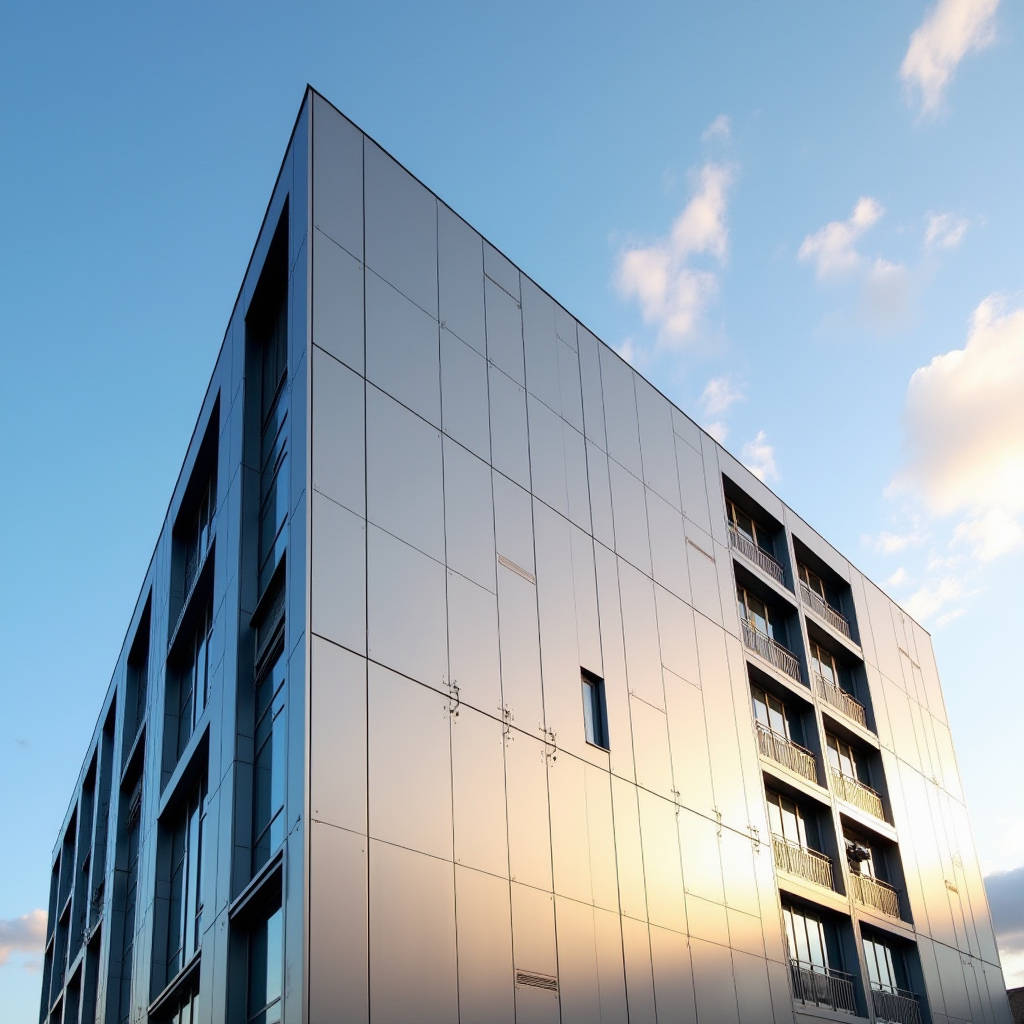
Specifying architectural cladding for a commercial project means confronting a hard truth: the finish you choose today determines how the building looks a decade from now. Kynar 500 Aluminum Panel systems have become the benchmark for architects and facade engineers who refuse to compromise on long-term color integrity. The polyvinylidene fluoride (PVDF) resin chemistry behind Kynar 500 creates a coating that resists ultraviolet degradation, acid rain etching, and airborne particulate abrasion in ways that conventional polyester and silicone-modified polyester (SMP) finishes simply cannot match. But specifying Kynar 500 is not as straightforward as ticking a box on a submittal. The coating is only half the equation. The aluminum substrate, the coil coating process, the fabricator's quality controls, and the installation methodology all interact to determine whether a panel performs for 30 years or starts showing chalk lines in five. This article examines the technical architecture behind Kynar 500 Aluminum Panel systems, focusing on what procurement managers and construction teams need to verify before accepting a shipment.
What Kynar 500 Actually Is: Resin Chemistry Without the Marketing Hype
The term "Kynar 500" refers to a specific grade of polyvinylidene fluoride (PVDF) resin manufactured by Arkema. The "500" designation is not arbitrary. It indicates that the resin meets the performance criteria established by the AAMA 2605 specification, which is the highest tier within the architectural coatings classification system. To qualify as a Kynar 500 coating, the resin system must contain a minimum of 70% PVDF resin by weight in the pigment-free portion of the formulation. The remaining 30% consists of acrylic resins that serve as a carrier, enabling pigment dispersion and adhesion to the metal substrate.
This 70/30 ratio is the critical threshold. Coatings with lower PVDF content, even if they use the same base chemistry, do not deliver equivalent weathering performance. The carbon-fluorine bond in PVDF is one of the strongest single bonds in organic chemistry, with a bond dissociation energy of approximately 485 kJ/mol. For comparison, the carbon-hydrogen bonds in polyester and acrylic coatings fall in the range of 410-430 kJ/mol. This difference explains why Kynar 500 Aluminum Panel finishes resist photochemical breakdown for decades while conventional coatings begin degrading within 3-5 years of equatorial sun exposure.
Arkema licenses the Kynar 500 trademark to approved coil coaters and paint formulators. This means the resin itself is consistent, but the final coating quality depends heavily on the formulation partner and application process. Major formulators like PPG (Duranar), Sherwin-Williams (Fluropon), and AkzoNobel (Trinar) all produce Kynar 500-based coating systems. Each has slightly different gloss ranges, color matching capabilities, and warranty structures. The specifier's job is to verify that the coating system named in the submittal actually uses licensed Kynar 500 resin, not a generic PVDF or a lower-PVDF-content alternative.
AAMA 2605 vs. 2604 vs. 2603: The Specification Hierarchy That Determines Panel Life
Understanding the AAMA specification hierarchy is essential for anyone writing or reviewing cladding submittals. The American Architectural Manufacturers Association publishes three tiers of performance standards for architectural coatings on aluminum. Each tier corresponds to a different expected service life and set of minimum performance requirements.
| Specification | Coating Type | Minimum PVDF Content | South Florida Exposure (10-Year) | Typical Service Life | Relative Cost Index |
|---|---|---|---|---|---|
| AAMA 2605 | PVDF (Kynar 500) | 70% | Max 5 ΔE color change, max 8 chalk rating | 30-40+ years | 100 |
| AAMA 2604 | SMP / 50% PVDF | 50% | Max 5 ΔE color change, max 6 chalk rating | 15-20 years | 65-75 |
| AAMA 2603 | Polyester | 0% | Not typically rated for 10-year exposure | 5-10 years | 40-50 |
The data in this table reflects real-world performance benchmarks documented by the American Architectural Manufacturers Association. The 10-year South Florida exposure test is the industry's most demanding natural weathering protocol. Panels are mounted at 45 degrees facing south, exposed to approximately 2,800 hours of sunlight annually, combined with salt spray and high humidity. A Kynar 500 Aluminum Panel finish that passes AAMA 2605 will show color change of no more than 5 ΔE units after a full decade of this exposure. For context, the human eye can detect a ΔE of approximately 1.0 under controlled conditions, and a ΔE of 3.0 is noticeable to most observers in side-by-side comparison. A ΔE of 5.0 after 10 years of Florida sun represents remarkably stable color retention.
Substrate Matters: Why 2.0mm, 2.5mm, and 3.0mm Solid Aluminum Changes the Equation
Coating performance cannot be separated from substrate quality. A Kynar 500 finish applied to substandard aluminum will exhibit premature failure modes that have nothing to do with the coating chemistry. The aluminum alloy, temper, thickness, and flatness all influence how the coated panel behaves during fabrication, installation, and decades of thermal cycling.
For architectural cladding, the standard alloys are 1100, 3003, and 5052. Alloy 3003 offers the best balance of formability, corrosion resistance, and cost for most flat panel and simple brake-formed applications. Alloy 5052 provides higher tensile strength and is preferred for panels requiring extensive perforation, complex routing, or long spans where wind load deflection governs the design. The temper designation matters: H14 temper (half-hard) provides adequate strength while maintaining sufficient ductility for 90-degree brake forming without cracking at the bend radius.
Panel thickness is a structural decision, not just a cost variable. A 2.0mm Kynar 500 Aluminum Panel weighs approximately 5.4 kg/m² and is suitable for soffit applications, interior cladding, and low-wind-load exterior facades with close support spacing. The 2.5mm option (6.75 kg/m²) is the most common specification for commercial curtain wall spandrel panels and rainscreen systems, providing a good balance of flatness and handling weight. For high-wind zones, large-format panels exceeding 1.2m in any dimension, or applications where visible oil-canning is unacceptable, 3.0mm material (8.1 kg/m²) is the standard recommendation. The incremental material cost from 2.5mm to 3.0mm typically runs 15-20%, but the reduction in callbacks for flatness complaints often justifies the premium.
Futeng® produces solid aluminum panels in all three thicknesses with Kynar 500 coating systems applied through their certified coil coating partners. The key specification to verify is the coating thickness: AAMA 2605 requires a minimum dry film thickness of 30 microns (1.2 mils) for a two-coat system and 35 microns (1.4 mils) for a three-coat system with a clear topcoat. Metallic and mica colors require the three-coat system because the clear coat encapsulates the metallic flake, preventing oxidation that would dull the sparkle over time.
Coil Coating vs. Spray Application: Why the Process Determines Consistency
Kynar 500 coatings can be applied via two fundamentally different processes: continuous coil coating and post-fabrication spray application. These are not interchangeable, and the performance differences are significant enough to warrant careful specification.
Coil coating involves unwinding a continuous aluminum coil, cleaning and chemically pretreating the surface, applying the primer and PVDF topcoat via roller coating, and curing the coating in a precisely controlled oven at a peak metal temperature of 232-249°C (450-480°F). The entire process runs at speeds of 30-60 meters per minute. The result is a coating with extremely uniform film thickness, consistent gloss, and a molecular-level bond between the pretreatment layer, primer, and topcoat. Coil-coated Kynar 500 Aluminum Panel stock is then shipped to fabricators who cut, route, and form the panels.
Spray application is used when panels must be coated after fabrication, typically for complex 3D geometries, field touch-ups, or small batch sizes where coil coating minimums cannot be met. Spray-applied PVDF can meet AAMA 2605 requirements, but achieving uniform film thickness on complex geometries requires skilled operators and rigorous quality control. The cure cycle is also harder to control in a batch oven compared to a continuous coil line.
For the vast majority of architectural cladding projects, coil-coated Kynar 500 Aluminum Panel material is the preferred specification. The process consistency, lower cost per square meter, and established quality assurance protocols make it the default choice for projects exceeding 500 m². Spray application is reserved for custom fabrications, curved panels, and restoration work where matching existing colors on-site is required.
Color Stability and Chalk Resistance: What the ASTM Test Data Actually Shows
Color fade and chalking are the two most visible failure modes for architectural coatings, and they are the primary reasons specifiers choose Kynar 500 Aluminum Panel systems over lower-cost alternatives. The standardized test methods that quantify these properties are ASTM D4214 (for chalking) and ASTM D2244 (for color measurement).
Chalking occurs when the organic binder in a coating degrades due to UV exposure, releasing pigment particles onto the surface. When you run your hand across a chalked panel, white or colored powder transfers to your fingers. The ASTM D4214 test rates chalking on a scale of 10 (no chalking) to 0 (complete binder degradation). After 10 years of South Florida exposure, AAMA 2605-compliant Kynar 500 coatings must maintain a chalk rating of 8 or higher. In practice, most Kynar 500 Aluminum Panel finishes maintain ratings of 9-10 after a decade. SMP coatings under AAMA 2604 typically drop to 6-7 in the same period, and polyester coatings can fall below 4.
Color stability is measured using a spectrophotometer and expressed as ΔE (total color difference in CIELAB color space). The AAMA 2605 requirement of ΔE ≤ 5 after 10 years is conservative. Data from the Arkema weathering database, which includes over 50 years of Florida exposure data, shows that most Kynar 500 colors maintain ΔE values below 3 after a decade. Dark colors and bright reds, oranges, and yellows are the most challenging to stabilize because the pigments that produce these hues are inherently more susceptible to UV degradation. Specifiers should request 10-year Florida exposure data for the specific color being considered, not just the generic coating system.
Thermal Cycling and Panel Flatness: The Engineering Problem Nobody Discusses in Submittals
Aluminum expands and contracts with temperature changes at a rate of approximately 23.6 × 10⁻⁶ per °C. For a 3-meter-long Kynar 500 Aluminum Panel, a temperature swing of 60°C (from a cold winter night to direct summer sun) produces a length change of roughly 4.25mm. The coating itself has a different coefficient of thermal expansion than the aluminum substrate, creating interfacial stress at the bond line during thermal cycling.
This is where Kynar 500's flexibility becomes a performance advantage. PVDF resins have inherently higher elongation than polyester or acrylic resins, allowing the coating to stretch and contract with the aluminum without micro-cracking. The ASTM D522 test for coating flexibility, using a conical mandrel bend, typically shows Kynar 500 coatings passing 1/8-inch mandrel bends without cracking, even after accelerated weathering.
The panel flatness issue, commonly called oil-canning, is primarily a function of the aluminum substrate and fabrication process, not the coating. However, dark-colored Kynar 500 Aluminum Panel systems absorb more solar radiation, reaching surface temperatures 20-30°C higher than light-colored panels. This additional thermal expansion can exacerbate oil-canning in panels that are marginally flat to begin with. The solution is not to change the coating but to specify adequate panel thickness, proper stiffener spacing, and attachment systems that allow for thermal movement. As a rule of thumb, panels should be designed with a minimum of 3mm of movement accommodation per linear meter, and attachment clips should never be rigidly fixed at both ends of a panel.
Warranty Architecture: What the Fine Print Covers and What It Doesn't
Kynar 500 coating warranties are issued by the coating formulator (PPG, Sherwin-Williams, etc.), not by Arkema. The standard warranty covers film integrity, color change, and chalk resistance for periods ranging from 20 to 30 years, depending on the project location, building type, and color selection. Understanding the warranty exclusions is as important as reading the coverage terms.
Standard exclusions include: damage from abrasive cleaning methods, exposure to corrosive chemicals not typical of ambient atmospheric conditions, failure of the substrate due to corrosion originating from the reverse side of the panel, and installations within 1,500 meters of saltwater coastlines unless a specific marine-grade pretreatment is specified. Coastal installations require chromate or chrome-free conversion coatings that meet ASTM B449 Class A or equivalent standards. Without this pretreatment, even a Kynar 500 Aluminum Panel will experience filiform corrosion at cut edges and fastener penetrations.
The warranty also typically requires that panels be installed in accordance with AAMA installation guidelines and that the building owner maintain a basic cleaning schedule. Cleaning frequency depends on the environment: urban locations with acid rain exposure may require annual washing, while rural locations might need cleaning every 3-5 years. The warranty document should specify the acceptable cleaning methods and detergents.
Cost Engineering: Kynar 500 Aluminum Panel vs. Alternatives Over 30 Years
Procurement decisions based solely on initial square-meter cost ignore the lifecycle economics that make Kynar 500 Aluminum Panel systems the rational choice for commercial buildings. The following table compares the estimated 30-year cost of ownership for three coating systems on a 5,000 m² facade project, factoring in recoating cycles and maintenance.
| Cost Category | AAMA 2605 (Kynar 500) | AAMA 2604 (SMP) | AAMA 2603 (Polyester) |
|---|---|---|---|
| Initial installed cost (USD/m²) | $185-220 | $155-185 | $130-155 |
| Re-coating cycles (30 years) | 0 | 1 | 2-3 |
| Re-coating cost per cycle (USD/m²) | $0 | $95-130 | $95-130 |
| Access equipment per cycle (USD/m²) | $0 | $40-65 | $40-65 |
| 30-year total cost (USD/m²) | $185-220 | $290-380 | $400-545 |
| Building downtime during recoating | None | 4-6 weeks | 8-14 weeks |
These figures assume a mid-rise commercial building in a temperate climate zone. The recoating cost estimates include surface preparation, containment, application, and waste disposal. The access equipment line item covers scaffolding, swing stages, or boom lifts. The most significant hidden cost is building downtime: a functioning commercial building cannot easily accommodate full facade recoating without disrupting tenants, closing entrances, and creating liability risks from falling debris.
For projects where the building owner intends to hold the asset for 15 years or more, the lifecycle argument for Kynar 500 Aluminum Panel specification is compelling. The premium over SMP is typically recovered within the first recoating cycle that the building avoids.
Supply Chain Verification: What to Check Before Accepting a Shipment
Receiving Kynar 500 Aluminum Panel shipments requires a systematic verification process. The coating is not visually distinguishable from lower-performance alternatives, and the consequences of accepting non-conforming material can be severe. The following checks should be standard operating procedure for any project where Kynar 500 has been specified.
First, verify the coating formulator's certification label on each pallet or bundle. Legitimate Kynar 500-coated material carries a label identifying the formulator, the coating system name, the AAMA 2605 compliance statement, and a batch number that can be traced to the coil coating run. Second, check the color against the approved control sample under standardized lighting conditions. The industry standard for visual color evaluation is ASTM D1729, which specifies the light source and viewing geometry. Third, measure the dry film thickness using a calibrated eddy-current gauge in accordance with ASTM D7091. Take measurements at multiple locations on multiple panels to verify uniformity.
For projects exceeding 2,000 m², retain a third-party coating inspector to perform random sampling and laboratory verification. The lab should confirm PVDF content via pyrolysis gas chromatography, verify color and gloss against the specification, and perform accelerated weathering tests per ASTM G154 if the project schedule allows. The cost of this verification, typically $3,000-8,000 depending on the scope, is negligible compared to the cost of removing and replacing non-conforming panels after installation.
Installation Factors That Void the Warranty
Even the best Kynar 500 Aluminum Panel material can fail if installed incorrectly. The most common installation errors that lead to coating failures are: using carbon steel fasteners without isolation washers, cutting panels on-site without proper edge treatment, and installing panels with inadequate drainage and ventilation behind the cladding.
Fastener selection is critical. Stainless steel (304 or 316 grade) fasteners should be used with EPDM or neoprene isolation washers to prevent galvanic corrosion between the fastener and the aluminum panel. Carbon steel fasteners, even if zinc-plated, will initiate galvanic corrosion at the penetration point within the first year of exposure, especially in coastal or industrial environments. The corrosion byproducts will stain the coating surface and eventually undermine the coating adhesion around the fastener.
Field cutting of Kynar 500 Aluminum Panel material should be minimized. When it is unavoidable, cut edges must be deburred, cleaned, and touched up with an approved PVDF touch-up coating. The cut edge exposes bare aluminum that will oxidize and, in the presence of moisture, can initiate filiform corrosion that creeps under the coating. The touch-up coating seals this edge, but it is never as durable as the factory-applied finish. Panel layouts should be designed to place factory edges at visible locations and field-cut edges at concealed joints whenever possible.
Rainscreen detailing is equally important. A Kynar 500 Aluminum Panel facade should be designed as a pressure-equalized rainscreen with a minimum 19mm air cavity behind the panels, continuous ventilation at the top and bottom, and a drainage plane that directs any water that penetrates the panel joints to the exterior. Stagnant moisture behind the panels will accelerate corrosion of the aluminum substrate from the reverse side, a failure mode that no coating warranty covers.
Regional Climate Considerations That Change the Specification
The performance of Kynar 500 Aluminum Panel systems is well-documented across climate zones, but certain environments demand specification adjustments. Understanding these regional factors prevents specifying a system that meets the letter of AAMA 2605 but fails prematurely due to local conditions.
In coastal environments within 1,500 meters of saltwater, the specification must include a marine-grade pretreatment. The standard recommendation is a chromate conversion coating meeting ASTM B449 Class A, or a chrome-free alternative such as a titanium-zirconium conversion coating that meets the performance requirements of AAMA 2605. The primer layer should also be specified as a corrosion-inhibiting formulation. Without these measures, chloride ions will penetrate microscopic defects in the coating and initiate pitting corrosion of the aluminum.
In high-UV environments such as the Middle East, Australia, and high-altitude locations, color selection becomes a performance variable. Dark colors with a Light Reflectance Value (LRV) below 30% should be specified with a three-coat system including a clear topcoat, even if the color is not metallic. The clear coat provides additional UV screening for the pigment layer. Panel surface temperatures in these environments can exceed 80°C, and the additional thermal stress accelerates degradation of the pigment-binder interface.
In cold climates with frequent freeze-thaw cycles, the primary concern is moisture ingress at panel joints. Water that penetrates the joint and freezes can exert pressures exceeding 200 MPa, enough to deform panel edges and crack sealant joints. The joint design should incorporate a ventilated cavity that allows water to drain and dry before freezing, and sealant joints should be designed with a width-to-depth ratio of 2:1 to accommodate movement without adhesive failure.
Selecting Kynar 500 Aluminum Panel systems for a project is a decision that rewards thorough technical evaluation. The coating chemistry is proven, but the real-world performance depends on the aluminum substrate specification, the coating application process, the fabrication quality controls, and the installation methodology. When these elements are properly coordinated, the result is a facade that maintains its appearance and integrity for decades with minimal maintenance. The key is to treat the specification not as a single line item but as an integrated system where every component must perform for the full service life of the building.