Antibacterial Aluminum Panel Silver Ion Coating Technology and Healthcare Facade Specification
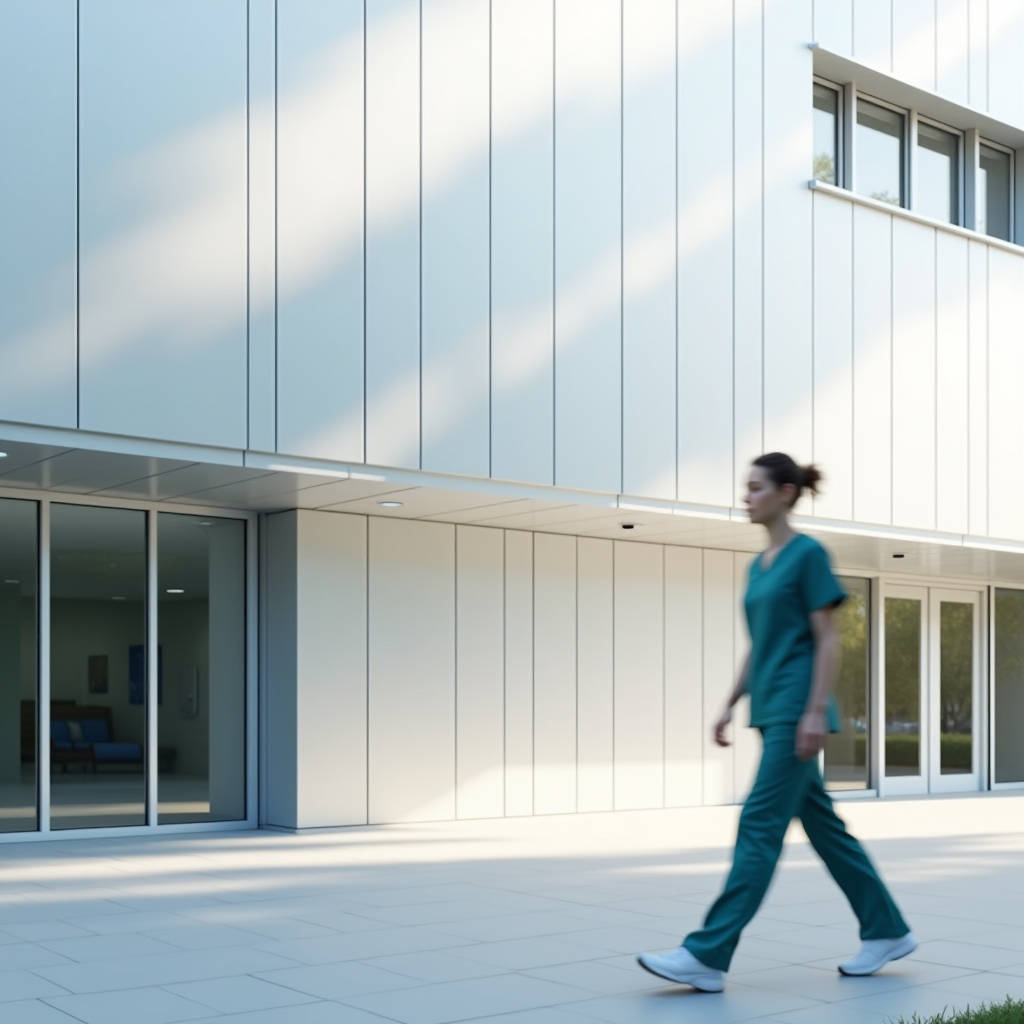
When a hospital administrator in Singapore signs off on a 12,000-square-meter facade renovation, the conversation rarely starts with aesthetics. It starts with infection control protocols, surface hygiene compliance, and the long-term cost of keeping a building envelope from becoming a microbial reservoir. An Antibacterial Aluminum Panel addresses exactly this intersection — a solid aluminium cladding product engineered with silver-ion antimicrobial technology embedded into the PVDF or polyester coating system, capable of eliminating 99.9% of surface bacteria within hours of contact while maintaining the mechanical performance expected from architectural-grade aluminium sheets.
The demand trajectory is clear. The global antimicrobial coatings market surpassed $4.2 billion in 2023, with healthcare construction alone accounting for roughly 28% of that volume according to data from Grand View Research. What project owners and facade consultants are increasingly realizing is that specifying an Antibacterial Aluminum Panel is not merely a material swap — it is a fundamental rethinking of how the building skin contributes to operational hygiene. This article examines the coating chemistry, performance testing protocols, installation considerations, and total cost of ownership for solid antibacterial aluminium cladding in high-stakes environments like hospitals, pharmaceutical cleanrooms, food processing plants, and public transit hubs.
How Silver-Ion Technology Actually Works in Architectural Coatings
The antimicrobial mechanism in an Antibacterial Aluminum Panel relies on silver ions (Ag⁺) dispersed within the fluoropolymer or polyester topcoat. When moisture from ambient humidity or surface condensation contacts the coating, a controlled release of silver ions begins. These ions penetrate bacterial cell walls, bind to thiol groups in enzymes, disrupt DNA replication, and ultimately cause cell lysis. The process is catalytic — the silver ion is not consumed in the reaction, which means the antimicrobial activity persists for the functional lifespan of the coating rather than leaching out as a sacrificial biocide would.
Three technical parameters define the efficacy of this system. First, silver ion loading concentration, typically ranging from 0.5% to 2.5% by weight in the cured film. Below 0.3%, the kill rate against gram-negative bacteria like Escherichia coli drops below the 99% threshold required by most healthcare specifications. Second, particle size distribution of the silver compound — nano-scale particles (5–50 nm) provide exponentially higher surface area and faster ion release kinetics compared to micron-scale alternatives. Third, the compatibility between the silver additive and the base resin system. PVDF (polyvinylidene fluoride) coatings based on Kynar 500® or Hylar 5000® resins have demonstrated excellent carrier performance for silver-ion additives without compromising the 30+ year exterior durability that architects specify PVDF for in the first place.
Independent testing under ISO 22196:2011 (Measurement of antibacterial activity on plastics and other non-porous surfaces) provides the standardized framework for validating these claims. A properly formulated Antibacterial Aluminum Panel should deliver an antibacterial activity value (R) greater than 2.0 against both Staphylococcus aureus and E. coli, which corresponds to a >99% reduction in viable bacterial count within 24 hours of inoculation. Some manufacturers, including panels supplied by Futeng®, achieve R values exceeding 4.0 within 6 hours, which is particularly relevant for operating theater environments where between-case turnaround time is measured in minutes, not days.
Coating System Comparison: Antimicrobial Performance vs. Exterior Durability
Not all antibacterial coatings are created equal. The choice between PVDF, polyester, and FEVE resin systems has direct consequences for both antimicrobial longevity and facade service life. The table below summarizes the key performance differentiators based on accelerated weathering data and antimicrobial efficacy testing.
| Parameter | PVDF with Ag⁺ (70/30) | FEVE with Ag⁺ | Polyester with Ag⁺ |
|---|---|---|---|
| Antibacterial activity (R value, ISO 22196) | 3.5 – 4.8 | 3.2 – 4.5 | 2.8 – 3.6 |
| Silver ion retention after 3,000 hrs QUV-B | >92% | >88% | 70 – 80% |
| Color retention (ΔE, 10 years Florida) | <3.0 | <3.5 | 5.0 – 8.0 |
| Film thickness (μm, AAMA 2605) | 30 – 45 | 30 – 40 | 20 – 30 |
| Typical warranty period | 20 – 30 years | 15 – 20 years | 10 – 15 years |
| Recommended application | Exterior facade, high-UV | Exterior, coastal zones | Interior, cleanroom |
The data reveals a critical specification nuance: PVDF-based antibacterial coatings retain over 92% of their silver ion content after 3,000 hours of accelerated UV exposure, while polyester systems can lose up to 30% of antimicrobial activity over the same period. For an exterior Antibacterial Aluminum Panel installation on a hospital facade in a tropical climate, specifying PVDF is not optional — it is the difference between a 5-year and a 25-year effective antimicrobial lifespan. The cost premium for PVDF over polyester, typically $12–18 per square meter, amortizes to less than $0.60 per square meter per year over a 20-year service window.
Solid Aluminium Panel Specifications: What the Substrate Brings to the Table
While the coating carries the antimicrobial function, the aluminium substrate determines the panel's mechanical integrity, fire performance, and flatness tolerance. Solid aluminium panels — as distinct from aluminium composite materials — are manufactured from single-layer aluminium alloy sheets, typically 2.0 mm, 2.5 mm, or 3.0 mm in thickness for architectural cladding applications. The alloy grades most commonly specified are AA 1100, AA 3003, and AA 5005, with AA 3003 offering the best balance of formability, corrosion resistance, and cost for the majority of facade projects.
Panel flatness is governed by the temper designation. H14 temper (half-hard) provides sufficient rigidity for panel sizes up to 1,200 mm × 2,400 mm without oil-canning, while H18 temper (full-hard) is preferred for larger spans or perforated panels where dimensional stability is paramount. The coefficient of thermal expansion for aluminium is approximately 24 × 10⁻⁶ /°C, which means a 3-meter panel will expand and contract by roughly 3.6 mm across a 50°C temperature swing. This must be accounted for in the fixing system design — a detail that is often overlooked when the specification conversation fixates on antimicrobial performance at the expense of basic facade engineering.
For interior applications such as cleanroom wall cladding or pharmaceutical processing areas, 2.0 mm thick solid aluminium panels offer a compelling combination of weight (5.4 kg/m²), flatness, and cost. The panels can be fabricated with folded returns on all four edges, creating a rigid cassette that resists deflection under the positive pressure differentials common in ISO Class 5–8 cleanrooms. The antibacterial coating is applied to the visible face, while the reverse side typically receives a standard polyester service coat.
Installation Considerations for Hygienic Environments
Installing an Antibacterial Aluminum Panel system in a healthcare or food-grade facility introduces constraints that go well beyond standard curtain wall practice. The primary concern is joint detailing. Every horizontal and vertical joint between panels represents a potential harbor for microbial growth if not properly sealed or designed to drain. The three most common joint strategies are:
- Silicone-sealed butt joints (6–8 mm gap): Most common in interior healthcare applications. The sealant must be a neutral-cure, FDA-compliant silicone with inherent antimicrobial properties. Joint depth-to-width ratio should be maintained at 1:2 to accommodate thermal movement without cohesive failure. Annual inspection of sealant integrity is recommended.
- Open-joint rainscreen (15–25 mm gap): Preferred for exterior hospital facades. The open joint allows pressure equalization and drainage, reducing the risk of moisture entrapment behind the panel. The antibacterial function is concentrated on the panel face where patient and staff contact is most likely. The supporting subframe should be stainless steel (grade 304 or 316) rather than galvanized steel to eliminate corrosion risk in the cavity.
- Interlocking cassette with gasket: Used in cleanroom and laboratory settings where the wall surface must be fully flush and wipeable. EPDM or silicone gaskets with antimicrobial additives provide a continuous seal. This system adds approximately 15–20% to the installed cost compared to butt-jointed panels but eliminates the ongoing maintenance burden of sealant replacement.
Fixing method also matters. Exposed fasteners are strongly discouraged in any hygienic application — they create crevices that are impossible to clean effectively and disrupt the continuity of the antibacterial coating. Concealed clip systems, typically using extruded aluminium profiles with stainless steel spring clips, are the industry standard. The clip spacing should be calculated based on the panel thickness and the project's design wind load, with a maximum deflection limit of L/175 under serviceability wind loads per AAMA 508 guidelines.
Cleaning Protocols and Antimicrobial Longevity
A common misconception among facility managers is that an Antibacterial Aluminum Panel eliminates the need for cleaning. It does not. The silver-ion mechanism kills bacteria on contact, but it does not remove the organic debris, biofilm precursors, or inorganic soiling that can physically shield bacteria from the coating surface. A panel fouled with a layer of dust and grease will exhibit reduced antimicrobial efficacy simply because the bacteria are not in direct contact with the silver ions.
The recommended cleaning protocol for antibacterial PVDF-coated aluminium panels involves quarterly washing with a pH-neutral detergent (pH 6–8) and soft-bristle brushes or microfiber pads. Pressure washing should be limited to a maximum of 500 psi at a nozzle distance of no less than 300 mm from the panel surface. Harsh chemicals — bleach, hydrogen peroxide at concentrations above 3%, quaternary ammonium compounds, and acidic descalers — can degrade the PVDF resin matrix and accelerate silver ion leaching, effectively shortening the antimicrobial service life.
For healthcare facilities subject to terminal cleaning protocols between patient occupancy, the panel coating should be validated for compatibility with the specific disinfectants used by the facility's environmental services team. A reputable manufacturer will provide a chemical resistance chart documenting the coating's performance after repeated exposure to common hospital-grade disinfectants. Testing per ASTM D1308 (Standard Test Method for Effect of Household Chemicals on Clear and Pigmented Organic Finishes) provides a defensible framework for this assessment.
Regulatory and Certification Landscape
Specifying an Antibacterial Aluminum Panel for a regulated environment requires navigating a patchwork of standards that vary by geography and application. In the United States, the EPA regulates antimicrobial surface coatings under the Federal Insecticide, Fungicide, and Rodenticide Act (FIFRA). Any product making public health claims about bacterial reduction must be registered as a treated article. The silver ion additive itself must be EPA-registered, and the treated panel must be manufactured in an EPA-registered establishment.
In the European Union, the Biocidal Products Regulation (BPR, Regulation (EU) 528/2012) governs the placing on the market of biocidal products and treated articles. Silver ions fall under Product Type 2 (disinfectants and algaecides not intended for direct application to humans or animals) and Product Type 4 (food and feed area disinfectants). An Antibacterial Aluminum Panel destined for a food processing facility in the EU must use a silver-ion additive that is supported under the BPR review program for PT-4, and the panel supplier must be able to provide a Declaration of Compliance upon request.
Beyond chemical regulation, the panel system must meet all standard building code requirements for the jurisdiction. For solid aluminium cladding, this typically includes compliance with ASTM B209 for aluminium sheet, AAMA 2605 for high-performance PVDF coatings, and the relevant sections of the International Building Code for fire performance. The antibacterial function is an additional performance attribute layered on top of these baseline requirements — it does not replace or exempt the panel from any of them.
Cost Analysis: Antibacterial vs. Standard Solid Aluminium Cladding
Procurement managers evaluating an Antibacterial Aluminum Panel specification need to understand the cost structure beyond the per-square-meter material price. The antibacterial coating adds a premium of $18–35 per square meter over standard PVDF-coated solid aluminium panels, depending on silver ion concentration, panel thickness, and order volume. For a typical mid-rise hospital project with 8,000 square meters of facade area, this translates to a material cost increment of $144,000–$280,000.
However, the total cost of ownership equation shifts when operational factors are considered. A study published in the American Journal of Infection Control estimated that each healthcare-associated infection (HAI) adds $21,000–$34,000 to the cost of a patient's care. If an antibacterial facade contributes to even a marginal reduction in environmental bioburden — and by extension, a fractional reduction in HAI rates — the payback period can be measured in months, not years. This is the argument that infection control committees find compelling, and it is the one that facade consultants should be prepared to make when justifying the specification premium.
Lifecycle cost modeling should also account for the reduced frequency of deep cleaning and the elimination of supplemental antimicrobial surface treatments. A standard PVDF facade in a healthcare setting might require bi-annual antimicrobial fogging or wipe-down treatments at a cost of $3–6 per square meter per year. Over 20 years, that recurring cost alone can exceed the initial premium for the antibacterial coating, making the Antibacterial Aluminum Panel the more economical choice on a net present value basis.
Project Typologies Where Antibacterial Cladding Delivers Measurable Value
The application of antibacterial solid aluminium panels is not limited to hospitals. Several project typologies present compelling use cases where the hygiene dividend justifies the material premium:
- Pharmaceutical manufacturing facilities (GMP Grade C/D areas): Wall surfaces in secondary packaging, corridor, and gowning areas must be cleanable, non-shedding, and resistant to disinfectants. Solid aluminium panels with antibacterial PVDF coating meet these requirements without the joint and delamination risks associated with HPL or FRP panels.
- Food and beverage processing plants: USDA and FDA regulations require wall surfaces in processing areas to be smooth, impervious, and cleanable. The antibacterial function adds a layer of passive protection against Listeria monocytogenes and Salmonella colonization on wall surfaces, particularly in high-humidity zones like washdown areas.
- Public transit stations and airport terminals: High-touch wall surfaces in these environments — particularly in restroom corridors, nursing rooms, and food court areas — are subject to constant microbial loading. Antibacterial panels reduce the risk of surface-mediated transmission without requiring changes to the architectural design vocabulary.
- Educational and childcare facilities: The Centers for Disease Control and Prevention has documented the role of environmental surfaces in the transmission of norovirus, influenza, and MRSA in school settings. Antibacterial wall cladding in corridors, cafeterias, and restrooms provides a passive hygiene layer that operates continuously between cleaning cycles.
For each of these project types, the specification should be tailored to the specific microbial risk profile and operational conditions. A pharmaceutical cleanroom may prioritize polyester-based antibacterial coatings for their lower cost and adequate performance in a controlled interior environment, while a tropical hospital facade demands the full PVDF system for long-term exterior durability.
Quality Assurance and Factory Inspection Protocols
Given the specialized nature of the coating, third-party quality assurance is essential. A thorough factory inspection program for an Antibacterial Aluminum Panel order should include the following verification steps, ideally witnessed by the project's facade consultant or a designated inspection agency:
First, raw material traceability. The mill certificates for the aluminium coil should confirm alloy grade, temper, and thickness tolerance per The Aluminum Association standards. The silver-ion additive should be accompanied by a Certificate of Analysis from the additive manufacturer confirming silver concentration, particle size distribution, and EPA or BPR registration number.
Second, coating process verification. The pretreatment line should be confirmed to operate a seven-stage or greater process including alkaline degreasing, rinsing, chromate or titanium-zirconium conversion coating, and a final deionized water rinse. The coating line parameters — line speed, oven temperature profile, and film thickness gauges — should be recorded and cross-checked against the coating supplier's recommended cure schedule.
Third, finished product testing. A statistically valid sampling plan (per ISO 2859-1, General Inspection Level II) should be applied to each production batch. Each sample panel should be tested for coating thickness (ASTM D7091), gloss (ASTM D523), color (ASTM D2244), adhesion (ASTM D3359, Method B), and antibacterial activity (ISO 22196). Impact resistance per ASTM D2794 and pencil hardness per ASTM D3363 provide additional confidence in the mechanical integrity of the coating system.
Fourth, packaging and handling. Antibacterial panels should be protected with a strippable polyethylene film on the coated face to prevent contamination during transport and installation. The film should be marked with a removal timeframe — typically 30–60 days from the date of manufacture — beyond which adhesive residue may compromise the coating surface.
Specifying an antibacterial coating is not a substitute for specifying a properly engineered facade system. The panel must work as a building envelope component first and as an antimicrobial surface second. If the joints leak, the coating's bacteria-killing ability is irrelevant.
This observation, drawn from a senior facade engineer with 25 years of healthcare project experience, underscores a principle that should guide every specification decision: the Antibacterial Aluminum Panel is a performance-enhanced version of a proven cladding product, not a fundamentally new category of material. Its specification should begin with the same rigorous attention to wind load, thermal movement, water penetration, and fire safety that governs any solid aluminium cladding project. The antibacterial function is layered on top of that foundation — valuable, measurable, and increasingly demanded by informed building owners, but never a replacement for basic facade engineering competence.
The conversation is shifting. Building owners who once viewed antimicrobial surfaces as a niche healthcare specification are now asking about them for office towers, residential lobbies, and retail environments. The COVID-19 pandemic permanently altered expectations around the hygienic performance of shared spaces. An Antibacterial Aluminum Panel specification, properly executed with PVDF chemistry, solid aluminium substrate, and rigorous quality assurance, offers a durable, code-compliant, and economically defensible response to those expectations — one that stands up to scrutiny from infection control professionals, facade engineers, and project accountants alike.