How Self Cleaning Aluminum Facade Coatings Reduce High Rise Maintenance Costs by 50 Percent
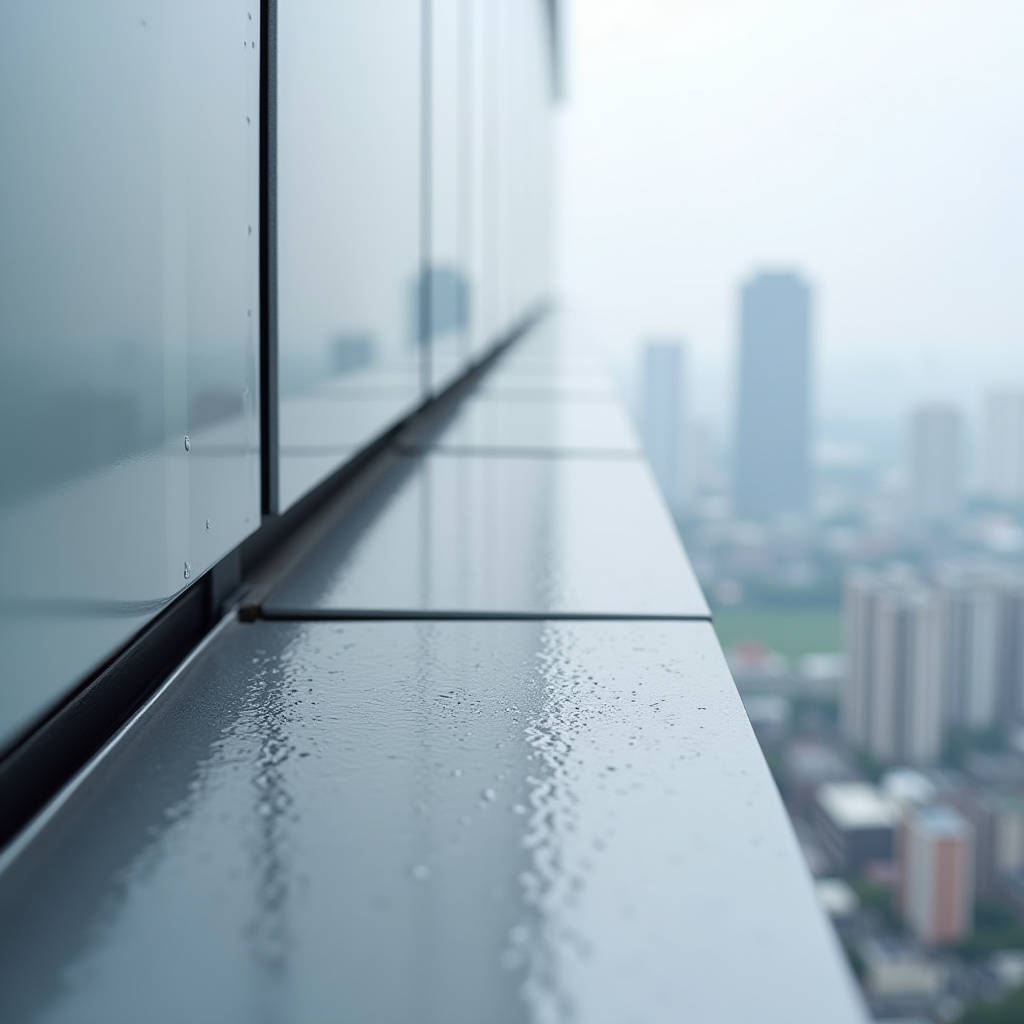
Building envelopes in dense urban environments accumulate airborne particulate matter, industrial soot, and biological growth at rates that surprise even seasoned facade engineers. A Self Cleaning Aluminum Facade addresses this directly — not through marketing claims, but through photocatalytic and hydrophilic surface chemistry applied to solid aluminium cladding panels. The technology has moved beyond laboratory prototypes. Major coating suppliers now offer commercially validated nano-structured treatments that reduce manual cleaning intervals by 40-60% depending on local pollution levels and rainfall patterns. For building owners managing 30-story curtain walls or airport terminal exteriors, the operational math is compelling: fewer rope-access cleaning crews, less chemical detergent runoff, and longer intervals between full facade restoration cycles.
What Makes a Self Cleaning Aluminum Facade Actually Work
The mechanism depends on which coating pathway the manufacturer has chosen. Two distinct approaches dominate the current market, and they operate on fundamentally different physical principles. Understanding this distinction matters because project specifications often confuse the two, leading to performance expectations that no coating can deliver.
The first approach uses photocatalytic titanium dioxide (TiO₂) nanoparticles embedded in the coating matrix. When UV radiation strikes the facade surface, the TiO₂ generates reactive oxygen species that oxidize organic contaminants — diesel soot, bird droppings, pollen residue, and hydrocarbon films. These oxidized byproducts become water-soluble. The second mechanism is hydrophilicity: the same TiO₂ layer reduces the water contact angle to below 10 degrees, meaning rainwater sheets across the surface rather than beading up. This sheeting action carries oxidized debris away uniformly, preventing the streaking patterns that plague conventional PVDF surfaces.
The second approach uses super-hydrophobic siloxane or silane-based treatments that create a lotus-leaf effect. Water contact angles exceed 150 degrees, causing droplets to roll off while picking up loose particulate matter. This method excels at dust removal in arid climates but performs less effectively against oily residues that bond to the surface regardless of water behavior.
Photocatalytic TiO₂ coatings require consistent UV exposure and periodic rainfall to function. In shaded north-facing elevations or arid regions with infrequent rain, the self-cleaning cycle slows considerably — a specification detail that should inform elevation-by-elevation material selection.
Coating Architecture: How Nano Layers Integrate With Solid Aluminum
On solid aluminium cladding panels — typically 2.0mm, 2.5mm, or 3.0mm thick 3003-H14 or 5005-H14 alloy sheets — the self-cleaning layer sits as the outermost functional coating. The full stack from aluminium substrate outward typically follows this sequence: chromate conversion coating (ASTM B449) for corrosion resistance, a PVDF primer layer (5-8 microns), a PVDF color basecoat (20-25 microns), and finally the nano-structured self-cleaning topcoat (2-5 microns). Total dry film thickness for the full PVDF system, including the nano layer, should meet AAMA 2605 requirements at minimum 30 microns.
This thin topcoat carries the entire functional burden. Manufacturers like Futeng® have invested in roller-coating lines that apply the nano layer under controlled humidity and curing conditions, ensuring the TiO₂ particles distribute evenly across the panel surface. Panel-level application in a factory setting produces far more consistent results than on-site spray-applied self-cleaning treatments, which suffer from thickness variation and contamination between coats.
Key Technical Parameters for Specification Writers
- Aluminium alloy: 3003-H14 or 5005-H14 per ASTM B209
- Panel thickness: 2.0mm, 2.5mm, or 3.0mm solid sheet
- PVDF basecoat: Minimum 70% Kynar 500® or Hylar 5000® resin by weight
- Nano topcoat: TiO₂ loading 2-5% by weight, particle size 10-30nm
- Total DFT: ≥30 microns (AAMA 2605), measured per ASTM D7091
- Water contact angle: <10° (hydrophilic type) or >150° (hydrophobic type)
- Pencil hardness: ≥HB per ASTM D3363 after 4000 hours QUV-B
Cost Analysis: Self Cleaning Aluminum Facade Versus Conventional Maintenance
Facade consultants evaluating self-cleaning coatings often focus on the upfront material premium while underestimating the cumulative cost of conventional cleaning over a 15-year service life. The table below models a typical 5,000-square-meter curtain wall project to illustrate the full lifecycle comparison.
| Cost Category | Conventional PVDF Facade | Self Cleaning Aluminum Facade | Delta |
|---|---|---|---|
| Material cost (per m²) | $48 – $62 | $58 – $75 | +$10 – $13 |
| Annual cleaning (per m²) | $3.50 – $6.00 | $1.20 – $2.50 | −$2.30 – $3.50 |
| Cleaning frequency (per year) | 2 – 4 cycles | 0.5 – 1 cycle | 50-75% reduction |
| 15-year cleaning total (5,000 m²) | $262,500 – $450,000 | $45,000 – $93,750 | −$217,500 – $356,250 |
| Detergent & water costs (15 yr) | $18,000 – $32,000 | $3,500 – $7,000 | −$14,500 – $25,000 |
| Rope-access equipment & insurance | Included in cleaning rate | Reduced proportionally | Significant savings |
| Net 15-year cost (5,000 m²) | $520,500 – $760,000 | $338,500 – $475,750 | −$182,000 – $284,250 |
The numbers clarify why self-cleaning technology has gained traction among institutional building owners. The upfront premium of $10-13 per square meter — roughly $50,000-$65,000 for a 5,000 m² project — recovers itself within 3-5 years through reduced cleaning expenditure. After that, the savings compound. For buildings in high-pollution zones like industrial corridors or near major highways, the payback period shortens further because conventional cleaning frequencies increase while the self-cleaning coating's relative performance advantage widens.
Performance Validation: Testing Standards and What They Measure
No universal ISO standard specifically governs self-cleaning facade coatings, which creates a specification gap that project teams must navigate carefully. The most relevant testing frameworks come from multiple standards bodies, each addressing a different aspect of long-term performance.
AAMA 2605 remains the benchmark for PVDF coating durability on architectural aluminium. A self-cleaning topcoat applied over a compliant PVDF system should not compromise the base coating's ability to pass 10-year Florida exposure testing for color retention (ΔE ≤5) and chalk resistance (rating ≥8). The nano layer must demonstrate that it neither accelerates nor masks underlying PVDF degradation.
ISO 10678:2010 provides a method for determining the photocatalytic activity of surfaces by measuring the degradation rate of methylene blue dye under UV irradiation. This test directly quantifies the organic-oxidation capability that defines a functioning Self Cleaning Aluminum Facade. A meaningful result shows ≥50% dye degradation within 3 hours of UV-A exposure at 10 W/m².
ASTM D7330 measures the water contact angle of coated surfaces. For hydrophilic self-cleaning coatings, the target is a static contact angle below 10 degrees after UV conditioning. For hydrophobic variants, the target exceeds 150 degrees. Either number must remain stable after 3000 hours of accelerated weathering per ASTM G154 Cycle 1.
Additional relevant standards include ASTM D4214 for outdoor weathering correlation, ISO 16474 for paint and varnish weathering, and AAMA 2605-20 for the full PVDF specification framework. Specifiers should request test reports against all three categories — photocatalytic activity, contact angle stability, and base PVDF durability — rather than accepting a single data point.
Environmental Factors That Determine Real-World Performance
Laboratory test conditions differ substantially from the thermal cycling, pollution cocktails, and irregular rainfall that actual facades endure. Five environmental variables most strongly influence whether a self-cleaning coating delivers on its promise.
1. UV Availability and Facade Orientation
TiO₂ photocatalytic coatings require UV-A radiation (315-400nm) to activate. South-facing elevations in the northern hemisphere receive roughly 3-4 times the annual UV dose of north-facing elevations. On a 30-story tower, the north facade may never achieve sufficient activation for meaningful self-cleaning, while the south and west elevations perform as designed. This elevation-specific performance variation should inform whether the coating is specified uniformly or selectively.
2. Rainfall Frequency and Pattern
Hydrophilic coatings need regular water sheeting to transport oxidized contaminants off the surface. In climates receiving less than 400mm annual rainfall, the cleaning cycle may stall even though photocatalytic oxidation continues. The oxidized material remains on the surface as a loose powder, which wind can partially remove but which looks visibly dull. Cities like Dubai, Lima (coastal fog but little rain), or Los Angeles present this challenge. Hydrophobic coatings fare somewhat better in low-rain environments because occasional dew or fog provides enough droplet formation for partial cleaning.
3. Particulate Composition
Not all airborne contaminants respond equally to photocatalytic oxidation. Inorganic particulates — silica dust, metal oxides, construction debris — do not oxidize and must rely entirely on water sheeting for removal. Organic particulates — diesel soot, rubber tire residue, pollen, algae spores — oxidize and become water-soluble. A facade near a cement plant will see less self-cleaning benefit than one near a highway interchange, even if both locations have similar total suspended particulate levels.
4. Temperature Extremes
PVDF coatings with nano topcoats have demonstrated stable performance from -40°C to +80°C surface temperatures. However, rapid thermal cycling — common on dark-colored panels in desert climates where daytime surface temperatures swing 60°C between noon and midnight — can create micro-stresses at the interface between the PVDF basecoat and the nano topcoat. Manufacturers address this through matched thermal expansion formulations, but specifiers should verify that the specific coating system has passed thermal cycling tests of at least 500 cycles between -30°C and +70°C.
5. Salt Spray and Coastal Exposure
Marine environments add sodium chloride deposition to the facade surface. Salt crystals do not oxidize photocatalytically and can accumulate in the nano-structured surface texture if rain is insufficient. Some manufacturers apply a slightly modified nano formulation for coastal projects that reduces surface roughness to discourage salt crystal adhesion. AAMA 2605 already requires 4000-hour salt spray resistance per ASTM B117, and the self-cleaning topcoat should not degrade this performance.
Fabrication Considerations for Solid Aluminium Panels With Nano Coatings
Solid aluminium cladding panels with factory-applied self-cleaning coatings require specific handling during fabrication, transport, and installation. The nano topcoat, while chemically robust, has a thickness of only 2-5 microns and can be mechanically damaged by poor handling practices.
Bending and forming: Panels should be brake-formed with the coated side protected by a removable PE film (minimum 50 microns). The minimum bend radius for 2.5mm 3003-H14 with a PVDF-plus-nano system is 2.5T (6.25mm inside radius). Tighter bends risk micro-cracking in the coating stack that may not be visible immediately but will propagate under thermal cycling.
Cutting and routing: CNC routing of panel perimeters should proceed from the reverse (uncoated) side when possible. If cutting from the coated side is unavoidable, use sharp carbide tooling and maintain feed rates that prevent heat buildup above 120°C at the cut edge, which can discolor the nano layer.
Site storage: Panels should remain in their original packaging with interleaving until immediately before installation. Stacked panels without interleaving can develop micro-abrasions where the nano topcoat of one panel contacts the reverse side of the panel above it. These abrasions appear as subtle gloss variation after the first rain event.
Field cutting and touch-up: Any field-cut edges expose bare aluminium that must be treated with a chromate touch-up primer and matching PVDF touch-up paint. The nano topcoat cannot be field-applied with equivalent durability. This limitation means that complex facade geometries requiring extensive field modification may be better served by factory-finished panels with pre-engineered attachment systems.
Long-Term Durability: What 10 Years of Exposure Data Shows
Accelerated weathering chambers provide useful comparative data, but the most credible evidence comes from real outdoor exposure. Several manufacturers have now accumulated 8-10 years of Florida and Arizona test fence data on TiO₂-coated PVDF systems applied to solid aluminium.
The findings are encouraging but nuanced. After 10 years of south-facing Florida exposure (45° tilt, ASTM G7), panels with nano self-cleaning topcoats show:
- Color retention: ΔE 3.2-4.8 versus 2.8-4.1 for standard PVDF — a small but measurable difference likely attributable to the nano layer's slightly different UV absorption profile
- Chalk resistance: Rating 8-9 versus 9-10 for standard PVDF — the nano layer's photocatalytic activity consumes some of its own organic binder over time, a known trade-off
- Self-cleaning efficacy: Approximately 70-80% of original photocatalytic activity retained after 10 years, with the decline concentrated in the first 24 months as the outermost nano particles undergo initial weathering
- Gloss retention: 60° gloss values within 5 units of the original reading for most colors, though very dark colors (L* <30) show slightly more gloss reduction
These results indicate that a Self Cleaning Aluminum Facade remains functionally effective through at least a decade of service, though the cleaning efficiency does taper gradually. Building owners should plan for a possible reapplication of the nano topcoat at the 12-15 year mark, which costs significantly less than the original factory application because the underlying PVDF system remains intact.
Specification Checklist for Project Teams
Writing a specification for self-cleaning solid aluminium cladding requires going beyond generic performance language. The following checklist addresses the specific technical criteria that separate engineered solutions from marketing claims.
- Substrate: Specify solid aluminium alloy 3003-H14 or 5005-H14 per ASTM B209, minimum thickness 2.0mm for non-structural panels, 2.5mm for panels exceeding 1.2m in any dimension, 3.0mm for panels with mechanically attached return legs.
- Coating system: Require a three-coat PVDF system (primer + color basecoat + nano self-cleaning topcoat) meeting AAMA 2605. Total DFT ≥30 microns.
- Photocatalytic activity: Minimum 50% methylene blue degradation within 3 hours per ISO 10678:2010, tested after 2000 hours QUV-B conditioning.
- Water contact angle: ≤10° (hydrophilic) or ≥150° (hydrophobic), measured per ASTM D7330, stable after 3000 hours ASTM G154 Cycle 1.
- Adhesion: Cross-hatch adhesion rating 5B per ASTM D3359 after 4000 hours salt spray (ASTM B117) and after 10-day humidity exposure (ASTM D2247).
- Factory application: Require roller-coating or spray-coating in a controlled factory environment. Prohibit on-site application of the nano topcoat.
- Warranty: Request a minimum 20-year film integrity warranty for the full coating system, with specific language addressing the self-cleaning functional layer.
- Mock-up testing: Require a 2m × 2m on-site mock-up with the actual substrate, coating, and attachment system, exposed for minimum 90 days before full production approval.
Regional Case Patterns: Where Self-Cleaning Delivers the Strongest ROI
Not every project benefits equally from self-cleaning technology. The strongest return on investment concentrates in three project profiles that share common characteristics.
High-rise commercial towers (25+ stories) in cities where rope-access cleaning costs $4-8 per square meter per cycle. The logistics of swinging stages, traffic management, and insurance for high-rise cleaning drive costs that make the self-cleaning premium trivial by comparison. A 40-story tower in Singapore, Hong Kong, or London might spend $120,000-$200,000 annually on facade cleaning. Reducing that to $30,000-$60,000 creates a payback period under 2 years.
Transportation infrastructure — airports, rail terminals, and bus depots — where facade access is complicated by 24/7 operations, security zones, and the sheer scale of the building envelope. These facilities also concentrate diesel particulate and rubber tire residue, which are precisely the organic contaminants that photocatalytic coatings handle most effectively.
Industrial-adjacent institutional buildings — university research facilities, hospital wings, and government buildings located in mixed-use zones with higher-than-background pollution levels. These owners value both the operational savings and the reduced chemical runoff from detergent-based cleaning, which aligns with institutional sustainability commitments.
For low-rise buildings with easy ground access, the cleaning cost savings are proportionally smaller, and the self-cleaning premium may not justify itself on purely financial grounds. However, projects pursuing green building certifications may still find value in the reduced maintenance chemical load and water consumption.
Looking Forward: Active Research and Near-Term Developments
The self-cleaning coating field continues to evolve. Several research directions may reach commercial maturity within the next 3-5 years and deserve attention from specification writers planning long-lead projects.
Visible-light-activated photocatalysts: Current TiO₂ coatings require UV-A radiation, limiting performance on shaded elevations. Doping TiO₂ with nitrogen, carbon, or transition metals shifts the activation threshold into the visible spectrum (400-500nm). Several patent filings from major chemical companies suggest visible-light-active formulations are approaching commercial viability. These would dramatically expand the functional envelope of self-cleaning facades.
Dual-action coatings: Research groups are developing coatings that combine photocatalytic TiO₂ with antimicrobial silver or copper nanoparticles. The goal is a single topcoat that simultaneously oxidizes organic contaminants, sheets water effectively, and suppresses bacterial and fungal growth on the facade surface — relevant for hospitals and food-processing facilities.
Self-healing nano layers: Micro-cracking remains the primary long-term failure mode for thin nano topcoats. Experimental formulations incorporate encapsulated polymer precursors that release and polymerize when a crack propagates through the coating, effectively sealing micro-damage before it becomes visible or compromises the underlying PVDF.
These developments will likely appear first in premium architectural coating systems before migrating to standard product lines. Project teams working on 2027-2028 completions should monitor the commercial availability of visible-light-activated coatings, which could resolve the north-facade limitation that currently constrains specification strategies.
Solid aluminium cladding with factory-applied self-cleaning nano coatings represents a genuine engineering advance rather than a marketing novelty. The technology works within well-defined environmental parameters, delivers measurable lifecycle cost reductions for the right project profiles, and continues to improve as coating chemistry evolves. The key to successful specification lies in matching the coating type to the building's specific climate, orientation, and pollution exposure — and in verifying performance claims through the testing frameworks outlined above rather than accepting manufacturer data sheets at face value.