Self Cleaning Aluminum Panel Coating Chemistry Performance Data and Specification Guide
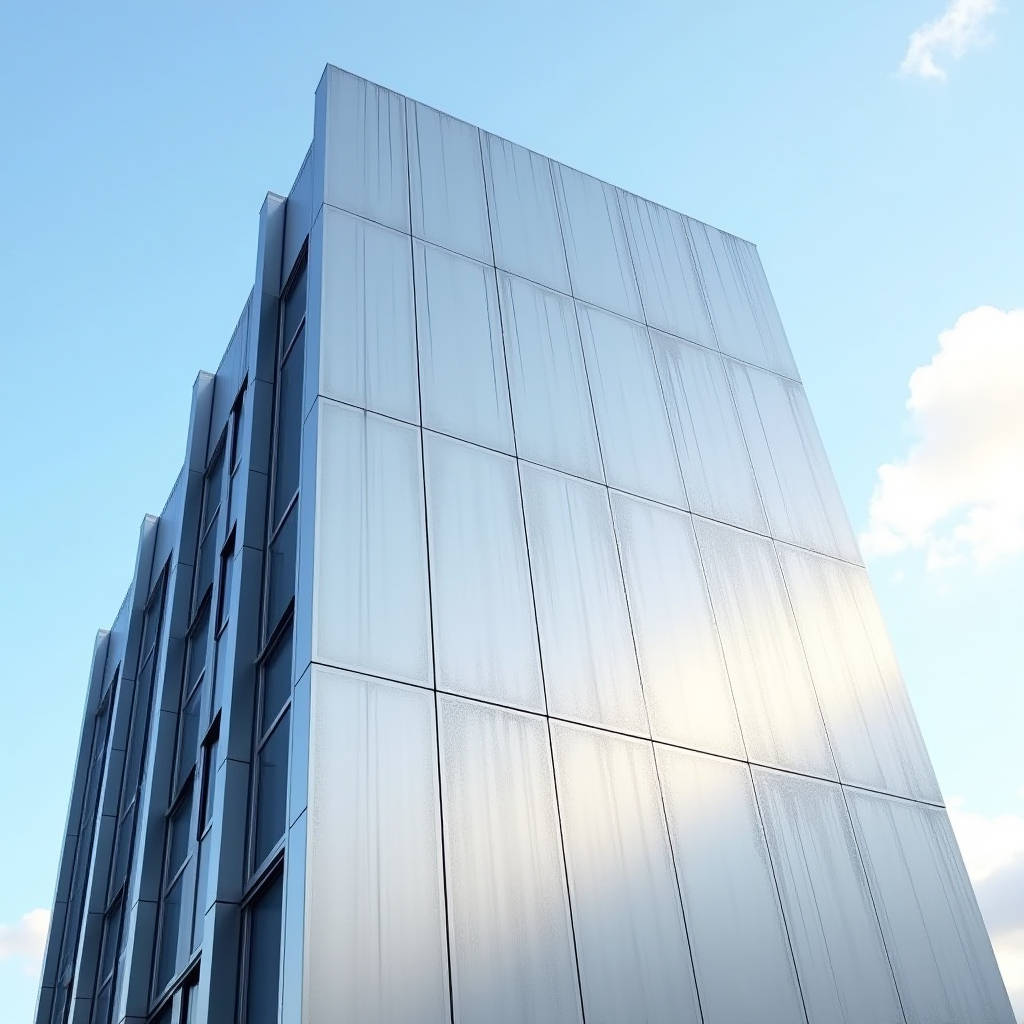
Specifying a self cleaning aluminum panel for a high-rise facade means committing to a particular coating chemistry, a defined maintenance interval, and a set of performance expectations that standard PVDF simply cannot deliver. The term gets thrown around in project specifications constantly, but the gap between a marketing claim and a coating system that actually hydrolyzes organic dirt under UV exposure is substantial. This article examines what happens at the coating level, how photocatalytic and hydrophilic mechanisms differ, what ASTM and AAMA standards apply, and how to write a specification that a manufacturer can genuinely substantiate rather than wave away with a glossy datasheet.
What the Coating Actually Does
Conventional PVDF coatings on solid aluminum panels rely on surface smoothness and chemical inertness to resist dirt adhesion. A self cleaning aluminum panel goes further. The functional layer applied over the PVDF base coat introduces one of two mechanisms: photocatalytic oxidation or super-hydrophilicity. Some systems combine both.
In a photocatalytic system, titanium dioxide (TiO₂) nanoparticles embedded in the clear topcoat act as a semiconductor. When UV radiation strikes the coating surface, electron-hole pairs form and react with water vapor and oxygen in the air to produce hydroxyl radicals and superoxide ions. These reactive species oxidize organic contaminants—diesel soot, pollen residue, bird droppings, hydrocarbon films—breaking them down into carbon dioxide and water. The process is continuous as long as the panel receives UV exposure. It does not consume the TiO₂ catalyst, which means the self-cleaning function persists for the service life of the coating rather than washing away after a few rain cycles.
Super-hydrophilic coatings work differently. They reduce the contact angle of water on the panel surface to below 10 degrees, sometimes approaching 5 degrees. Instead of beading, water sheets across the surface and carries loose particulate matter with it. This mechanism does not chemically decompose organic films, but it prevents the accumulation of inorganic dust and prevents water spotting—a common complaint with standard PVDF on dark-colored panels in hard-water regions.
The distinction matters for specification writing. A project in Singapore or Houston, where organic growth and hydrocarbon deposition dominate, benefits more from a photocatalytic system. A project in Dubai or Riyadh, where fine sand and mineral dust are the primary contaminants, may see better results from a super-hydrophilic coating. The wrong choice leads to panels that look dirty despite the premium paid for the self-cleaning claim.
Coating Architecture on Solid Aluminum
On a solid aluminum panel—typically 2.0 mm, 2.5 mm, or 3.0 mm thick 5052 or 3003 alloy—the coating stack matters. A standard PVDF system for architectural aluminum follows AAMA 2605, requiring a minimum total dry film thickness of 25 microns for a two-coat system and 30 microns for a three-coat system. The self-cleaning functional layer sits on top of this.
The typical build for a self cleaning aluminum panel looks like this:
- Pretreatment: Chromate conversion coating per ASTM B449 or titanium-zirconium conversion for RoHS-compliant projects. This layer provides corrosion resistance and adhesion for the primer.
- Primer: Epoxy or polyurethane primer, 5–8 microns DFT. Blocks UV transmission to the metal substrate and provides a uniform base for the color coat.
- Color coat: PVDF (70% Kynar 500® or Hylar 5000® resin minimum), 12–15 microns DFT. Carries the pigment and provides the primary weather barrier.
- Clear topcoat: PVDF clear, 8–12 microns DFT. Some manufacturers incorporate the nano-functional material directly into this layer.
- Functional layer: TiO₂-containing or silica-based nano-coating, 1–3 microns DFT. Applied via spray, roll-coat, or thermal-cure process depending on the manufacturer's line capability.
The total DFT for a self-cleaning system on solid aluminum typically runs 35–45 microns—thicker than a standard three-coat PVDF system. This has implications for the coil-coating or spray-coating line, the cure cycle, and the flexibility of the coating during panel forming. A coating that is too thick or improperly cured will micro-crack at bend radii below 3T, compromising both the self-cleaning function and the corrosion barrier.
Standards and Testing: What to Ask For
No single ASTM or ISO standard covers "self-cleaning" as a performance category for architectural metal coatings. This creates a verification problem. Manufacturers can claim self-cleaning properties without defining what that means quantitatively. The specifier's job is to demand test data that correlates to real-world performance.
Key standards and test methods to reference in a specification:
- AAMA 2605: The baseline for high-performance architectural coatings on aluminum. A self-cleaning system must meet or exceed all AAMA 2605 requirements—including 10-year South Florida exposure with maximum 5 Delta-E color change and 8 gloss retention rating—before the self-cleaning function is even discussed.
- ISO 27448 (Fine ceramics—Test method for self-cleaning performance of semiconducting photocatalytic materials): Measures the degradation of an organic dye (methylene blue) under UV exposure. This is the closest thing to a standardized photocatalytic activity test. A panel that can degrade a methylene blue stain to a specified Delta-E within a defined UV dose has quantifiable photocatalytic function.
- ISO 10678 (Determination of photocatalytic activity of surfaces in an aqueous medium): Another photocatalytic activity test, using different probe molecules. Relevant for panels in high-humidity or rainfall environments.
- Contact angle measurement per ASTM D7334: For super-hydrophilic coatings, demand a contact angle below 10 degrees after UV conditioning. A panel with a 30-degree contact angle is not meaningfully hydrophilic and will not sheet water effectively.
- Accelerated weathering: ASTM G154 (xenon arc) or ASTM G155 (fluorescent UV) for minimum 4,000 hours, with photocatalytic activity or contact angle measured before and after. The self-cleaning function must survive the weathering cycle, not just the initial installation.
Futeng® and other established solid aluminum panel manufacturers with in-house coating lines can typically provide a test package that includes AAMA 2605 certification, ISO 27448 photocatalytic activity data, and contact angle measurements. If a supplier cannot produce these three documents, the self-cleaning claim is unsubstantiated.
Performance Data: What the Numbers Look Like
The table below compares key performance parameters across four coating systems relevant to solid aluminum cladding. The data is drawn from typical manufacturer specifications and independent test reports for architectural-grade PVDF and nano-functional coatings.
| Parameter | Standard 3-Coat PVDF | PVDF + Photocatalytic TiO₂ | PVDF + Super-Hydrophilic SiO₂ | PVDF + Hybrid TiO₂/SiO₂ |
|---|---|---|---|---|
| Total DFT (microns) | 30–35 | 35–42 | 35–40 | 38–45 |
| AAMA 2605 Compliant | Yes | Yes | Yes | Yes |
| Initial Contact Angle (degrees) | 70–85 | 15–30 | 5–10 | 5–15 |
| Contact Angle After 4,000 hrs QUV | 75–90 | 20–40 | 8–15 | 8–20 |
| ISO 27448 Methylene Blue Degradation (ΔE after 24h UV) | No significant degradation | ΔE > 20 | ΔE < 5 | ΔE > 15 |
| Primary Dirt Removal Mechanism | Rain rinse (mechanical) | Chemical oxidation + rain rinse | Water sheeting + rain rinse | Oxidation + sheeting |
| Best Suited Environment | Low-pollution suburban | Urban, industrial, high-traffic | Arid, dusty, hard-water regions | Mixed urban-industrial with seasonal dust |
| Estimated Service Life of Self-Cleaning Function | N/A | 15–20 years | 10–15 years | 12–18 years |
| Relative Cost Premium Over Standard PVDF | Baseline | +15–25% | +10–20% | +20–30% |
The cost premium column deserves attention. On a 10,000-square-meter facade project using 2.5 mm solid aluminum panels, the baseline PVDF material cost might run approximately USD 55–65 per square meter (panel only, excluding substructure and installation). A photocatalytic self-cleaning upgrade adds roughly USD 8–16 per square meter. For the full facade, that is USD 80,000–160,000 in additional material cost. Whether this premium is justified depends on the maintenance access strategy for the building.
Maintenance Cost Economics
The financial case for a self cleaning aluminum panel rests on reducing the frequency and cost of facade cleaning. A standard PVDF-clad high-rise in a moderate urban environment typically requires professional facade cleaning every 12–18 months to maintain appearance. In polluted or high-traffic corridors, the interval may shrink to 6–9 months.
Facade cleaning costs vary by region, building height, and access method. Representative figures for a 20-story building with 8,000 square meters of cladding:
- Rope access (abseiling): USD 3–6 per square meter per cleaning cycle. Total: USD 24,000–48,000 per cycle.
- Swing stage or BMU (Building Maintenance Unit): USD 2–4 per square meter, but the BMU itself represents a capital cost of USD 200,000–500,000 installed.
- Cherry picker / boom lift (low-rise only): USD 1–3 per square meter, limited to approximately 20-meter reach.
If a self-cleaning coating extends the cleaning interval from 12 months to 36 months, the building owner saves two cleaning cycles every three years. Over a 15-year period, that is 10 avoided cycles. At USD 35,000 per cycle (mid-range estimate), the cumulative saving reaches USD 350,000—comfortably exceeding the USD 80,000–160,000 coating premium. The calculation is sensitive to local labor rates, water access, and the actual performance of the coating in the specific microclimate, but the order-of-magnitude logic holds.
A more nuanced factor: self-cleaning coatings reduce the need for detergent-based cleaning. Standard facade cleaning often uses mild acidic or alkaline detergents that, over repeated cycles, contribute to gloss loss and micro-etching of the PVDF surface. Eliminating or reducing detergent exposure preserves the coating's aesthetic properties and extends the time to first recoating. This is a secondary financial benefit that rarely appears in value-engineering spreadsheets but matters over a 30-year building lifecycle.
Environmental Factors That Influence Performance
A self cleaning aluminum panel does not perform uniformly across all climates and orientations. Several environmental variables determine whether the coating delivers on its promise or falls short.
UV Availability
Photocatalytic systems require UV radiation in the 300–388 nm range to activate the TiO₂ catalyst. A south-facing facade in Singapore (approximately 1 degree north latitude) receives abundant UV year-round. A north-facing facade in London (51 degrees north) receives dramatically less UV, particularly during the October–March period when the sun angle is low and cloud cover is frequent. On a north-facing elevation in a high-latitude city, a photocatalytic coating may be dormant for half the year, functioning only as a standard PVDF surface. In such cases, a super-hydrophilic coating—which does not require UV activation—may be the more practical choice.
Rainfall Frequency and Intensity
Both photocatalytic and hydrophilic systems require periodic water contact to remove the oxidized or loosened contaminants. A building in Lima, Peru, where annual rainfall is negligible but humidity is high, will see limited self-cleaning action because the degraded organic residue has no mechanism for physical removal. The coating may oxidize the dirt, but the dirt stays on the panel. Conversely, a building in Mumbai during monsoon season will see aggressive washing action that keeps panels clean but may also challenge the long-term adhesion of the nano-functional layer if the coating system is not properly formulated for high-moisture cycling.
Pollutant Type
Photocatalytic TiO₂ coatings are most effective against organic pollutants: polycyclic aromatic hydrocarbons from diesel exhaust, volatile organic compounds, biological growth, and oil-based residues. They are less effective against inorganic particulate matter—silica dust, metal oxides, and salt spray. In a coastal industrial zone where both organic and inorganic contaminants are present, a hybrid system combining TiO₂ photocatalysis with super-hydrophilic sheeting action offers the broadest protection.
Fabrication and Installation Considerations
Specifying a self cleaning aluminum panel introduces constraints at the fabrication stage that differ from standard PVDF panels. The functional nano-layer is the outermost surface; any damage during handling, routing, bending, or installation is permanent and cannot be touched up in the field.
Key fabrication rules:
- Protective film: The panel must ship from the coating line with a UV-stable, high-temperature-resistant protective film. Standard polyethylene film used for interior-grade panels can leave adhesive residue that compromises the hydrophilic surface. Demand a film rated for minimum 6 months of outdoor exposure without adhesive transfer.
- Bend radii: The nano-functional layer adds stiffness to the coating stack. Minimum bend radius should be confirmed with the manufacturer for the specific coating system, but 3T (three times material thickness) is a conservative starting point. Tighter bends risk micro-cracking that exposes the color coat to direct UV and pollutant attack.
- Field cutting: Any field-cut edge exposes bare aluminum. The cut edge must be touched up with a compatible PVDF touch-up kit, but the self-cleaning function cannot be restored on the touch-up area. Panel layouts should minimize field cuts on visible surfaces.
- Rigging and handling: Suction cups and padded slings are mandatory. Dragging a panel across a scaffold board or stacking panels without interleaving can abrade the functional layer. Damage may not be visible at installation but will appear as differential soiling within 6–12 months.
For the installer, the practical implication is that a self cleaning aluminum panel job requires more careful site logistics than a standard PVDF job. The cost of replacing a damaged panel—including lead time, craneage, and access—can easily exceed USD 2,000 per panel on a high-rise project. This risk should be priced into the installation tender.
Writing a Specification That Works
A performance specification for a self-cleaning solid aluminum panel system should address the coating, not just the panel. The following clauses represent a starting point for a Section 07 42 13 or equivalent specification. They are written to be verifiable through standard test methods.
Specification Clause — Self-Cleaning Coating Performance:
Provide solid aluminum panels with a factory-applied PVDF coating system meeting AAMA 2605 requirements. The coating system shall include a self-cleaning functional top layer. The manufacturer shall submit the following test reports:
(a) AAMA 2605 certification for the complete coating system, including the self-cleaning layer.
(b) ISO 27448 photocatalytic activity test results demonstrating a minimum Delta-E of 15 after 24 hours of UV-A exposure at 1.0 mW/cm².
(c) Contact angle measurement per ASTM D7334, demonstrating a water contact angle not exceeding 15 degrees after UV conditioning.
(d) Accelerated weathering test per ASTM G154 Cycle 1 for 4,000 hours, with photocatalytic activity and contact angle measured at 0, 1,000, 2,000, and 4,000 hours. The self-cleaning function shall show no more than 30% degradation from initial values.
(e) Manufacturer's written warranty confirming the self-cleaning function for a minimum of 15 years under normal atmospheric exposure.
The warranty clause is particularly important. Standard PVDF warranties from reputable manufacturers cover film integrity, color stability, and chalk resistance. A self-cleaning warranty must separately address the functional performance of the nano-layer. Without this, the specifier has no contractual recourse if the panels stop self-cleaning after three years but the PVDF base coat remains intact.
Quality Control on the Coating Line
Producing a consistent self cleaning aluminum panel at scale requires process control that goes beyond standard PVDF quality checks. The nano-functional material—whether TiO₂ dispersion, silica sol-gel, or a hybrid formulation—must be applied at a precisely controlled thickness. Too thin, and the photocatalytic or hydrophilic effect is insufficient. Too thick, and the coating may haze, crack, or delaminate.
Inline quality control measures that a capable manufacturer should demonstrate:
- DFT gauges calibrated for the specific nano-coating: Standard eddy-current gauges may not resolve a 1–3 micron layer accurately. Beta-backscatter or X-ray fluorescence methods may be required depending on the coating chemistry.
- Contact angle measurement on every production batch: A minimum of three measurements per coil or per spray batch, with statistical process control limits established.
- Methylene blue degradation spot test: A rapid QC version of ISO 27448, using a standardized dye application and UV exposure chamber, with color change measured by spectrophotometer. This provides a pass/fail gate before panels ship.
- Cross-hatch adhesion per ASTM D3359: The nano-layer must achieve 5B adhesion to the underlying PVDF clear coat. Any delamination at the nano-layer/PVDF interface is a failure.
Suppliers like Futeng® that operate their own PVDF coating lines have an advantage here: the entire coating stack—pretreatment, primer, color coat, clear coat, and nano-functional layer—is applied under one roof with integrated quality control. When the nano-layer is applied by a third-party coater on top of a pre-finished PVDF panel, the adhesion between the PVDF and the nano-layer becomes a risk point, and warranty responsibility becomes fragmented.
Regional Performance Case Patterns
Without referencing specific buildings, certain patterns emerge from project experience across different climate zones:
Southeast Asia (tropical, high UV, high rainfall): Photocatalytic TiO₂ coatings perform well. Abundant UV drives the oxidation cycle, and frequent rainfall removes the degraded residue. The main failure mode observed is biological growth (mold, algae) on shaded elevations where UV is insufficient. A hybrid coating with some biocidal function—often achieved through the photocatalytic process itself—addresses this.
Middle East (arid, high UV, low rainfall, high dust loading): Super-hydrophilic coatings show better results than pure photocatalytic systems because the primary contaminant is inorganic dust. However, the water sheeting effect requires occasional rain or manual rinsing. In completely rainless periods exceeding 6 months, even a super-hydrophilic panel will accumulate visible dust. Some projects in this region specify a supplementary manual rinse cycle (water only, no detergent) every 6 months to maintain appearance.
Northern Europe (temperate, low UV, moderate rainfall): The low UV environment limits photocatalytic activity during winter months. Super-hydrophilic coatings are preferred, but the performance differential over standard PVDF is smaller than in high-pollution environments. The economic case for the coating premium is weakest here unless the building is adjacent to a specific pollution source such as a major roadway or industrial facility.
Coastal industrial (combined salt spray, hydrocarbon pollution, high humidity): This is the most aggressive environment for any coating system. A hybrid photocatalytic/hydrophilic coating on a properly pretreated solid aluminum substrate (chromate or high-performance titanium-zirconium conversion) provides the best defense. The photocatalytic function attacks hydrocarbon films while the hydrophilic function helps shed salt-laden moisture before it dries and leaves crystalline deposits. Even so, the specifier should expect some performance degradation after 10–12 years in this environment and plan for recoating or panel replacement accordingly.
Practical Procurement Guidance
When sourcing a self cleaning aluminum panel for a project, procurement managers should structure their inquiry to separate verifiable claims from marketing language. The following approach yields actionable information:
- Request the AAMA 2605 certificate first. If the manufacturer cannot produce a current, third-party AAMA 2605 certification for the complete coating system including the self-cleaning layer, eliminate them from consideration. This is a non-negotiable baseline for any architectural aluminum panel.
- Ask for ISO 27448 test data on the specific color being specified. Photocatalytic activity can vary with the pigment loading and color of the underlying PVDF coat. Dark colors absorb more UV and may heat the panel surface, potentially affecting reaction kinetics. A test on white may not represent performance on charcoal grey.
- Request a weathering test report that includes post-weathering self-cleaning function measurement. A coating that self-cleans at time-zero but loses the function after 2,000 hours of accelerated weathering is not a 15-year solution.
- Clarify the warranty scope. Does the warranty cover the self-cleaning function specifically, or only the PVDF base coat? What is the remedy if the self-cleaning function fails—recoating, panel replacement, or financial compensation? What exclusions apply (abrasive cleaning, chemical exposure, proximity to specific industrial emissions)?
- Visit the coating line if the project value justifies it. A factory visit reveals whether the nano-coating application is a controlled, documented process or an ad-hoc operation. Look for DFT measurement records, contact angle test logs, and batch traceability from raw coil to finished panel.
The self cleaning aluminum panel category has matured significantly over the past decade. The chemistry is well understood, the test methods exist, and capable manufacturers can deliver consistent, verifiable performance. The remaining challenge for the specifier and procurement manager is distinguishing between suppliers who have invested in the coating technology and quality systems to support it, and those who have simply added the word "nano" to their product name.
A properly specified, properly tested self-cleaning coating on solid aluminum panels reduces facade maintenance costs, extends the aesthetic service life of the building envelope, and eliminates the detergent loading associated with conventional facade cleaning. The premium over standard PVDF is real but quantifiable, and the payback period—when calculated with realistic maintenance cost assumptions for the specific building type and location—is typically 5 to 8 years. For a building with a 30-year design life, that leaves two decades of net savings. The key is doing the technical due diligence before the purchase order is issued.