Color Changing Aluminum Facade Engineering Interference Coatings for Solid Aluminium Panels
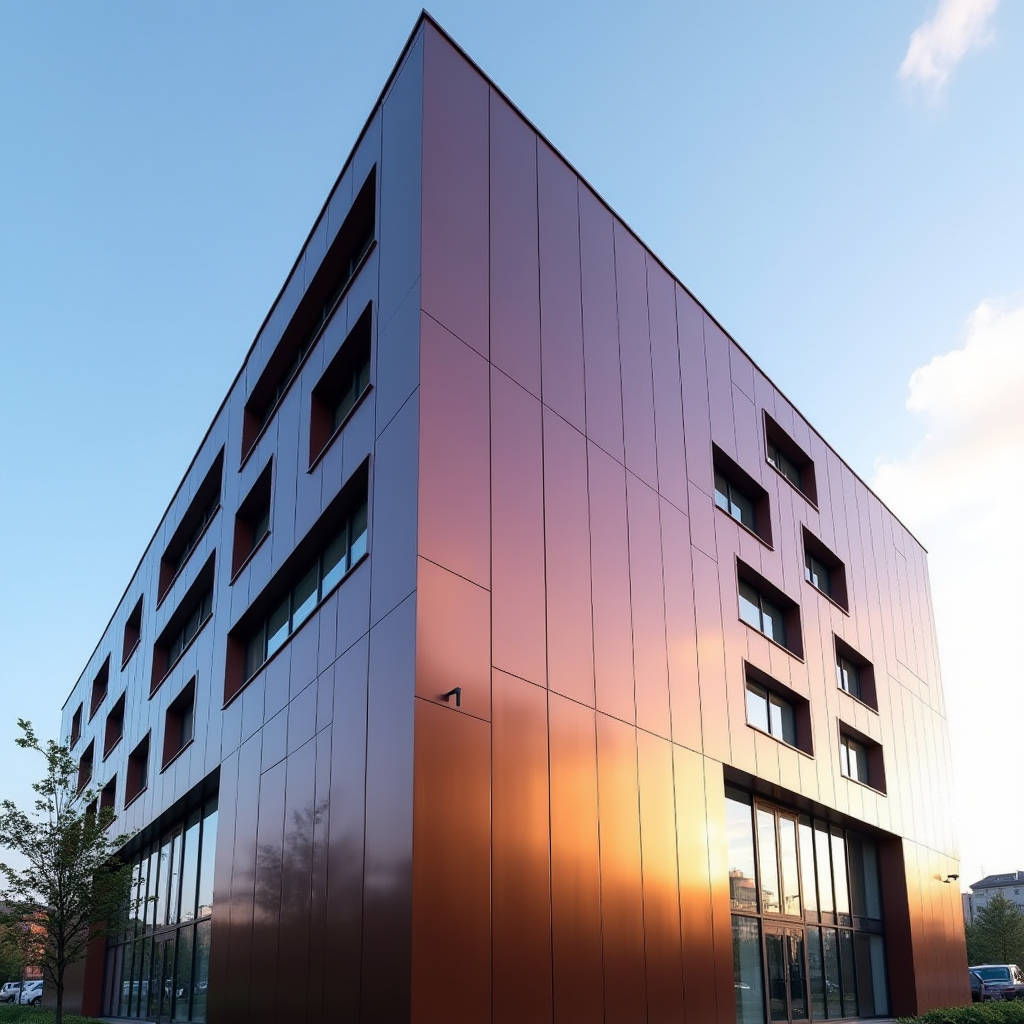
The question of whether a building facade can shift color in response to light, weather, or viewing angle is no longer theoretical. A Color Changing Aluminum Facade achieves this through engineered coating systems applied to solid aluminium panels—not through gimmicks or digital projections, but through precisely formulated pigment and interference technologies baked into PVDF or FEVE resin systems at the factory level. For architects and facade contractors, the technical distinction matters enormously. What gets specified as a "color shifting" effect can range from mica-based pearlescent finishes to multi-layer interference coatings that produce measurable angular color difference values (ΔE*ab). This article examines the coating technologies that make color-shifting aluminium facades possible, the performance data behind each approach, and the procurement and installation realities that determine whether a project's chromatic ambition survives its first decade of weather exposure.
What Actually Makes an Aluminum Facade Change Color
The term "color changing" covers at least three distinct physical mechanisms, and conflating them leads to specification errors. The first is angle-dependent color shift, where the perceived hue changes as the viewer moves or as sunlight moves across the facade throughout the day. This relies on interference pigments—microscopic platelets of mica coated with titanium dioxide or other metal oxides—suspended in the coating layer. Light reflects off multiple layers within each pigment particle, and the path length difference creates constructive or destructive interference at specific wavelengths. The result is a measurable shift: a panel that reads as bronze at a 15° viewing angle might shift to deep violet at 75°.
The second mechanism is thermochromism, where the coating actually changes its molecular structure in response to temperature. Leuco dye-based thermochromic systems have been used in small-scale architectural applications, but their UV stability remains a serious limitation for exterior facades. Most commercial thermochromic pigments begin degrading after 6-12 months of direct sun exposure, making them unsuitable for permanent building envelopes without sacrificial protective layers that add cost and complexity.
The third is photochromism, where light intensity triggers reversible color change. This is the mechanism behind photochromic glass, but for aluminium panels, it faces the same durability hurdles as thermochromics. The practical reality for 2025-2026 facade projects is that interference-based angle-dependent coatings represent the only commercially viable, warrantied option for achieving a Color Changing Aluminum Facade on solid aluminium panels. Major coil coating lines and liquid spray operations now offer these systems with full AAMA 2605 compliance.
Interference Pigment Technology: The Engineering Behind the Shift
Interference pigments used in architectural aluminium coatings are fundamentally different from the metallic flakes found in standard mica coatings. A standard pearlescent pigment uses a mica substrate coated with a single layer of TiO₂, producing a simple white-pearl effect. An interference pigment for architectural facades typically uses a synthetic substrate (often silica or alumina flakes) with multiple precisely controlled oxide layers. The thickness of each layer—controlled to nanometer tolerances—determines which wavelengths interfere constructively.
The key specification parameter here is the optical path difference, calculated as 2 × n × d × cos(θ), where n is the refractive index of the coating layer, d is its physical thickness, and θ is the angle of refraction. By engineering this value to fall within the visible spectrum (380-780 nm), manufacturers can create coatings that shift predictably between two distinct colors. Common commercial combinations include gold-to-green, bronze-to-purple, silver-to-blue, and copper-to-teal.
For the facade contractor, the critical takeaway is that these pigments must be incorporated into a full coating system—typically a 3-coat or 4-coat PVDF system—with the interference layer positioned between the primer and the clear topcoat. The clear coat is not optional; without it, the interference pigments are exposed to direct UV and moisture attack, and the color shift effect degrades within 2-3 years. With a proper 70% PVDF clear coat at 25-30 microns DFT, warranted performance extends to 20+ years.
PVDF vs. FEVE: Which Resin System for Color-Shifting Facades
Both polyvinylidene fluoride (PVDF) and fluoroethylene vinyl ether (FEVE) resin systems can carry interference pigments, but they behave differently in terms of color consistency, application method, and long-term shift stability. The choice has real cost and performance implications for any Color Changing Aluminum Facade project.
| Property | 70% PVDF (Kynar 500® / Hylar 5000®) | FEVE (Lumiflon®-based) |
|---|---|---|
| Application Method | Spray (shop-applied) or coil coating | Spray (shop-applied) primarily |
| Minimum DFT (Total System) | 35-40 microns (3-coat); 45-50 microns (4-coat) | 40-50 microns (3-coat) |
| Gloss Retention (10 years, Florida) | 50-70% (60° gloss, initial 25-35 units) | 65-80% (60° gloss, initial 25-35 units) |
| Color Shift Stability (ΔE*ab, 10 years) | ≤ 5 units (AAMA 2605 spec) | ≤ 3-4 units (typical, FEVE generally tighter) |
| Interference Pigment Compatibility | Excellent; industry standard | Excellent; slightly better wetting of synthetic substrates |
| Relative Cost (per m², 2.5mm solid panel) | Base: $45-65; With interference: $75-110 | Base: $55-75; With interference: $85-125 |
| Typical Warranty Period | 20-25 years (film integrity, color) | 25-30 years (film integrity, color) |
The data above reflects real-world testing, not marketing claims. For projects in coastal or high-UV environments (Middle East, Southeast Asia, Australia), the tighter ΔE*ab stability of FEVE becomes more relevant. For temperate climates, PVDF delivers sufficient performance at a lower price point. The key is that the interference pigment layer itself does not degrade—what degrades is the resin matrix holding it. A higher-performing resin directly translates to longer color-shift retention.
Shop Application vs. Field Application: Why This Matters More for Interference Coatings
Standard solid-color PVDF can be touched up in the field with reasonable success. An interference coating cannot. The color-shift effect depends on the precise orientation of pigment platelets within the cured film, which in turn depends on spray parameters: atomization pressure, gun distance, fluid flow rate, and flash-off time between coats. A field-applied repair will never match the platelet orientation of the factory-applied finish, and the mismatch becomes glaringly obvious when the facade catches light at certain angles.
This has direct procurement implications. When specifying a Color Changing Aluminum Facade, the project team must order 5-8% extra material for waste and future repairs—not the standard 2-3% for solid colors. Panels damaged during installation cannot be reliably refinished on site. The entire damaged panel must be replaced with a factory-finished spare. This also means the fabricator must retain the exact batch of interference coating used for the project, or at minimum document the formulation so it can be reproduced. Suppliers like Futeng® maintain batch records and can hold reserve coating stock for large projects, which becomes a practical necessity rather than a luxury when dealing with interference finishes.
Angular Color Measurement: How to Specify and Verify the Shift
Specifying "color changing" in a contract document without quantitative criteria invites disputes. The industry standard for measuring angle-dependent color is the multi-angle spectrophotometer, which reads L*a*b* values at multiple aspecular angles—typically 15°, 25°, 45°, 75°, and 110° relative to the specular reflection. For an interference coating, the specification should define:
- The nominal color at a reference angle (usually 45° aspecular, measured with a D65 illuminant and 10° observer)
- The acceptable ΔE*ab tolerance at that reference angle (typically ≤ 1.5 units for batch-to-batch consistency)
- The expected hue shift at 15° and 75° relative to the 45° reading, expressed as a Δh* (hue angle difference) rather than a ΔE*ab, since the lightness will also change with angle
For example, a gold-to-green interference coating might be specified as: "At 45° aspecular, the coating shall read L* 65 ± 2, a* 5 ± 1.5, b* 25 ± 2. At 15° aspecular, the hue angle h* shall shift by +40° to +55° relative to the 45° reading. At 75° aspecular, the hue angle h* shall shift by -25° to -35° relative to the 45° reading." This provides a measurable, enforceable standard that both the coating applicator and the contractor can verify with a multi-angle device.
The ASTM E2194 standard covers multi-angle color measurement of metal flake and interference pigments, and should be referenced in the coating specification. For the overall coating performance, AAMA 2605 remains the governing standard for high-performance architectural coatings on aluminium.
Substrate Preparation: Why Solid Aluminium Panels Outperform Composites for Interference Finishes
Interference coatings amplify surface imperfections. A 50-micron orange peel texture that would be invisible under a matte solid color becomes pronounced under an interference finish because the changing color highlights variations in surface angle. This is where solid aluminium panels (2.0mm, 2.5mm, or 3.0mm thickness) provide a genuine advantage. The panel surface can be mechanically leveled and chemically pretreated to a uniform smoothness that thin composite skins cannot match.
The pretreatment sequence for interference-grade finishing on solid aluminium typically includes: alkaline degreasing → water rinse → acid desmutting → water rinse → chrome-free conversion coating (per ASTM B921) → deionized water rinse → forced drying. The conversion coating weight must be tightly controlled at 5-10 mg/ft² for titanium/zirconium-based systems. Too little and adhesion suffers; too much and the coating can telegraph the conversion layer structure through the interference pigments.
Panel flatness is equally critical. A 2.5mm solid aluminium panel with properly designed stiffeners and a maximum deflection of L/180 under design wind load will maintain the optical integrity of the interference coating. Panels that oil-can or deflect excessively create visible distortion in the color-shift pattern, which reads as a defect even if the coating itself is perfectly applied. The Aluminum Association's design guidelines for flatness tolerances should be tightened by approximately 30% for interference-coated panels compared to solid-color panels.
Cost Modeling: The Real Numbers Behind Color-Shifting Facade Projects
An interference-coated Color Changing Aluminum Facade costs more than a standard PVDF solid color, but the premium varies significantly based on the specific pigment system, the number of coating layers, and the project's location. Below is a cost model for a mid-rise commercial project (2,000 m² of facade area, 2.5mm solid aluminium panels):
| Cost Component | Standard PVDF Solid Color | PVDF Interference (2-Layer Shift) | FEVE Interference (3-Layer Shift) |
|---|---|---|---|
| Aluminium substrate (2.5mm, mill finish) | $18-22/m² | $18-22/m² | $18-22/m² |
| Pretreatment & primer | $8-10/m² | $10-12/m² | $12-14/m² |
| Color/interference coat(s) | $12-15/m² | $28-38/m² | $35-48/m² |
| Clear topcoat (70% PVDF or FEVE) | $8-10/m² | $10-12/m² | $12-15/m² |
| Fabrication (cutting, routing, stiffening) | $25-35/m² | $28-38/m² | $28-38/m² |
| Waste factor | 3% | 6% | 6% |
| Total Installed Cost (estimated) | $85-110/m² | $120-155/m² | $140-175/m² |
These figures assume shop-applied coatings at a qualified applicator, with fabrication and installation by an experienced facade contractor. The 30-50% premium for interference coatings is real, but it must be weighed against the alternative: a static facade that requires architectural lighting or digital media to achieve visual dynamism, which carries its own capital and operational costs.
Durability Realities: What Happens After 5, 10, and 20 Years
The long-term performance of interference coatings on aluminium facades depends on three factors: the quality of the clear topcoat, the UV stability of the pigment system, and the environmental exposure conditions. Accelerated weathering data (QUV-B 313, 4000 hours per ASTM G154) provides a useful proxy, but real-world Florida exposure data carries more weight with experienced specifiers.
At year 5, a properly applied PVDF interference system in a temperate climate (Boston, London, Tokyo) should show ΔE*ab ≤ 2 units and no visible change in the color-shift behavior. In a high-UV environment (Dubai, Singapore, Phoenix), the ΔE*ab may reach 3-4 units, with a slight muting of the shift intensity—the colors still shift, but the transition feels less dramatic. At year 10, the temperate-climate panel should remain within AAMA 2605's ΔE*ab ≤ 5 specification, while the high-UV panel may approach or slightly exceed that threshold. By year 20, the clear coat begins to show micro-cracking and chalking (gloss retention drops below 50%), and the interference effect becomes noticeably subdued. This is not coating failure in the technical sense—the aluminium remains protected—but the color-shifting character that justified the premium has diminished.
FEVE-based systems extend each of these timelines by roughly 5-8 years, which is why they command a higher price. For institutional buildings with 50+ year design lives, the FEVE premium amortizes favorably.
Design Strategies: Making the Most of Angular Color Shift
The most successful Color Changing Aluminum Facade installations use the angle-dependent shift as a compositional tool rather than a novelty. Three strategies have proven effective across completed projects:
1. Directional Emphasis. Orient panels so that the color shift aligns with the building's primary approach paths. A facade that reads as warm bronze when viewed from the main entrance plaza but shifts to cool violet when seen from the side street creates a dynamic experience without requiring any moving parts. The panel orientation relative to the viewer's expected path determines which color dominates at each approach angle.
2. Pattern Programming. Alternate panels with different interference pigment formulations (e.g., gold-to-green and bronze-to-purple) in a predetermined pattern. As the sun moves, different parts of the pattern activate, creating a kinetic effect from a static installation. This requires careful shop drawing coordination—each panel must be labeled with its orientation and position in the pattern, and the installation sequence must be rigorously followed.
3. Gradient Transitions. Use a single interference pigment but vary the clear coat thickness or the pigment concentration across the facade to create a gradient of shift intensity. This is technically demanding and requires the coating applicator to run multiple batch formulations, but the result is a facade that appears to change color at different rates across its surface.
Procurement Checklist for Interference-Coated Solid Aluminium Panels
For the procurement manager or facade contractor preparing to order a color-shifting aluminium facade, the following items should be verified before releasing the purchase order:
- Coating applicator qualification: Verify that the applicator has completed at least 3 projects using interference pigments on architectural aluminium. Request reference panels from those projects.
- Multi-angle color standard: Obtain a physical color standard panel measured at 15°, 45°, and 75° aspecular, with documented L*a*b* values at each angle. This becomes the contractual color reference.
- Batch size and continuity: Confirm that the entire project can be coated from a single pigment batch. If multiple batches are unavoidable, require a batch-to-batch ΔE*ab ≤ 1.0 at the reference angle.
- Waste/spare panel quantity: Order minimum 6% extra panels for waste during fabrication and installation, plus 2% for long-term spares. Interference panels cannot be field-matched.
- Warranty documentation: Require a written warranty covering film integrity and color stability (ΔE*ab ≤ 5) for a minimum of 20 years, issued by the coating manufacturer, not just the applicator.
- Mock-up requirement: A minimum 3m × 3m on-site mock-up, installed at the actual building orientation, must be approved before full production begins. Evaluate the color shift at different times of day.
Futeng® has supplied interference-coated solid aluminium panels for projects across Southeast Asia and the Middle East, with documented batch consistency and full AAMA 2605-compliant warranty packages. The key differentiator for any supplier on these projects is not just the coating itself but the quality control infrastructure—multi-angle spectrophotometry, batch traceability, and the willingness to produce and hold physical color standards for the project duration.
When a Color-Shifting Facade Makes Engineering Sense
Not every project benefits from a Color Changing Aluminum Facade. The premium is real, and the coordination complexity is higher than a standard solid-color system. The projects where it makes the strongest case share certain characteristics: they have a design concept that uses angular color shift as a primary architectural gesture rather than an afterthought; they have a budget that can absorb a 30-50% coating premium without compromising other envelope performance requirements; they have a project team with the experience to manage the additional quality control steps; and they are located in environments where the dynamic light conditions—changing sun angles, varied viewing distances, and multiple approach paths—will actually reveal the color-shift effect to building users and passersby.
For the right project, the result is a facade that does what no static material can: it makes the building feel alive across the course of a day, without a single moving part, without energy consumption, and with a warranted service life measured in decades. The technology is mature, the supply chain exists, and the specification framework is well-defined. The remaining variable is the design vision to deploy it with discipline.