Metallic Coating Aluminum Facade PVDF vs FEVE Performance and Long Term Cost Analysis
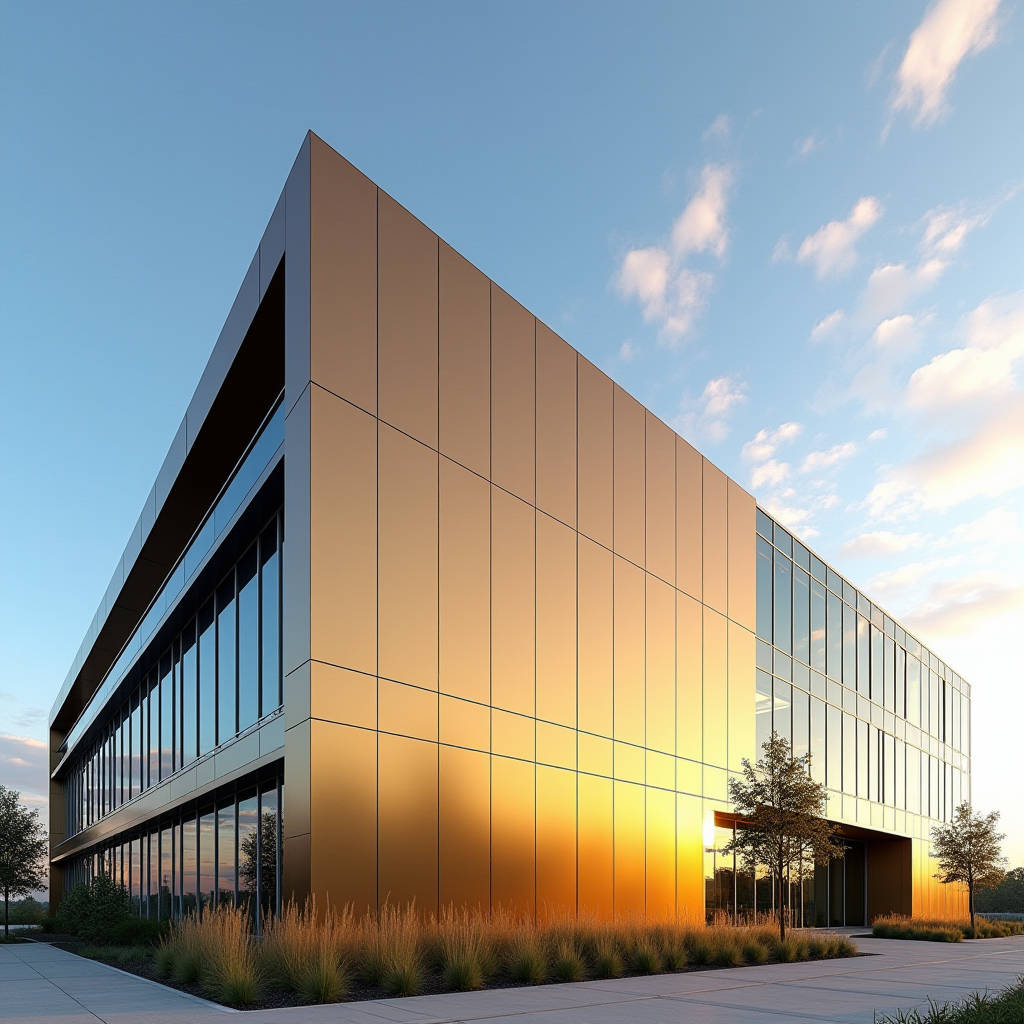
When a project architect specifies a Metallic Coating Aluminum Facade, the conversation rarely stops at color. Behind every shimmering panel is a matrix of decisions about coating chemistry, application thickness, warranty structure, and long-term weathering performance. General contractors and facade consultants who treat metallic finishes as a simple aesthetic checkbox often learn the hard way that not all metallic coatings are engineered equally. The reflective pigments, the resin system that holds them, and the pretreatment beneath all interact with UV radiation, salt spray, and thermal cycling in ways that can either preserve the building's intended look for decades or degrade it within five years. This article dissects the technical reality behind Metallic Coating Aluminum Facade systems, focusing on the critical distinction between PVDF-based and FEVE-based metallic topcoats, the role of pigment orientation in color consistency, and the practical cost implications of choosing one chemistry over another for solid aluminium cladding panels in the 2.0mm to 3.0mm thickness range.
Why Metallic Finishes Demand a Different Technical Approach
A solid-color PVDF coating on a 2.5mm aluminium panel is a relatively straightforward proposition. The pigment particles are spherical, randomly distributed, and the coating erodes uniformly under UV exposure at a predictable rate of roughly 0.2 to 0.3 microns per year in temperate climates. A Metallic Coating Aluminum Facade introduces a fundamentally different set of variables. Metallic pigments are not spheres; they are microscopic flat flakes of aluminium, mica, or pearlescent material that must orient parallel to the panel surface during application to achieve the desired reflective effect. If these flakes tilt, clump, or protrude from the resin surface, the panel will exhibit visible color shift when viewed from different angles — a phenomenon facade engineers call "flop" inconsistency.
The problem compounds when panels are installed on different elevations of the same building. A south-facing Metallic Coating Aluminum Facade in Singapore endures roughly 1,800 kWh/m² of annual solar radiation. The north elevation receives less than half that. With a standard polyester powder coat, the south panels would chalk and fade years before the north panels. With a properly formulated PVDF metallic system using 70% Kynar 500® resin, the differential weathering between orientations narrows dramatically because the carbon-fluorine bond in PVDF is essentially inert to UV photons. The metallic flakes remain encapsulated in a resin matrix that does not degrade, photochemically, in any meaningful timeframe under terrestrial sunlight.
PVDF vs. FEVE: The Chemistry That Determines Service Life
Two resin chemistries dominate the high-performance Metallic Coating Aluminum Facade market: polyvinylidene fluoride (PVDF) and fluoroethylene vinyl ether (FEVE). Both are fluoropolymers, but their application methods, cure mechanisms, and practical performance profiles differ in ways that directly affect procurement decisions.
PVDF, typically sold under the Kynar 500® or Hylar 5000® trade names, is a dispersion coating applied by spray in a factory-controlled environment. The resin requires a minimum 70% PVDF content by weight in the dry film to meet AAMA 2605 specifications. The remaining 30% is acrylic resin that aids pigment wetting and film formation. During the bake cycle at 230-250°C, the acrylic crosslinks while the PVDF remains thermoplastic, creating a semi-interpenetrating network. This structure is what gives PVDF its legendary resistance to chalking — the AAMA 2605 standard permits no more than a No. 8 chalk rating after 10 years of South Florida exposure, and quality PVDF systems routinely achieve No. 9 or 10.
FEVE resins, such as Lumiflon®, take a different approach. They are thermosetting and cure through a chemical crosslinking reaction, typically with isocyanates, at lower temperatures than PVDF. This allows FEVE coatings to be formulated as liquid coatings or as powders — a significant advantage for fabricators who want to offer metallic finishes without investing in liquid spray lines. FEVE-based Metallic Coating Aluminum Facade systems can achieve AAMA 2605 performance levels, but the metallic pigment loading and orientation control are more challenging in powder form. The electrostatic spray process that deposits powder particles does not inherently align metallic flakes the way a liquid spray gun's atomization and flow-out can. Fabricators who master FEVE powder metallics invest heavily in reclaim system tuning and gun parameter optimization to achieve acceptable flop consistency across large batch runs.
Pretreatment: The Layer Nobody Sees but Everyone Pays For
Before a single micron of metallic coating touches the aluminium surface, the panel must undergo conversion coating. The industry standard for architectural aluminium is a hexavalent-chromium or trivalent-chromium pretreatment that deposits a chromium oxide layer roughly 200-400 nanometers thick. This layer serves two functions: it passivates the aluminium surface against filiform corrosion, and it provides a microscopically rough anchor profile for the primer.
Filiform corrosion is the nightmare scenario for any Metallic Coating Aluminum Facade installed in coastal or high-humidity environments. It manifests as thread-like filaments creeping under the coating from a cut edge or scratch, lifting the paint film and creating visible blistering trails. A properly executed chrome pretreatment — applied by immersion in a multi-stage power wash line, not by hand-wiping — reduces filiform corrosion susceptibility by orders of magnitude. The Qualicoat and AAMA 2605 standards both mandate specific pretreatment protocols, and the wise specifier will request pretreatment bath titration logs alongside the coating manufacturer's batch certificates.
For projects pursuing LEED or BREEAM credits, trivalent chromium pretreatments are now widely available and perform comparably to hexavalent systems when applied correctly. The environmental advantage is real: trivalent chromium is roughly 500 times less toxic than hexavalent chromium and does not carry the same occupational exposure concerns during fabrication.
Metallic Pigment Types and Their Effect on Appearance
Not all "metallic" coatings are created from the same raw materials. The choice of effect pigment directly determines the visual character of the finished Metallic Coating Aluminum Facade and, critically, its long-term color stability.
Aluminium Flake Pigments
Conventional aluminium flake pigments are produced by ball-milling atomized aluminium powder in a solvent slurry with lubricants. The resulting flakes are classified by particle size distribution, typically ranging from 5 to 45 microns in diameter. Coarse flakes produce a sparkly, high-brilliance effect; fine flakes yield a smoother, satin-like metallic sheen. The Achilles' heel of aluminium flake is its reactivity. In the presence of moisture and alkali, aluminium flakes can corrode, producing hydrogen gas and aluminium hydroxide — a white, voluminous corrosion product that ruins the coating's appearance. High-quality PVDF formulations encapsulate each flake in a silica or polymer shell to prevent this, but the encapsulation adds cost and reduces the flake's effective reflectivity.
Mica and Pearlescent Pigments
Mica-based pigments consist of a natural mica substrate coated with a thin layer of titanium dioxide or iron oxide. The oxide layer thickness determines the interference color — the color that appears when light reflects off both the top and bottom surfaces of the TiO2 layer and recombines constructively at specific wavelengths. Pearlescent Metallic Coating Aluminum Facade panels shift color dramatically with viewing angle, an effect that architects either love or find deeply unsettling when the building is completed. The practical challenge with mica pigments is that their interference color is thickness-dependent; if the coating film thickness varies by more than 5-10 microns across a panel, the color shift becomes visible as blotching. This demands tighter process control from the coating applicator than a simple solid-color job.
Coating Thickness Specifications and Why They Matter
The AAMA 2605 specification for high-performance architectural coatings mandates a minimum total dry film thickness of 30 microns (1.2 mils) for a two-coat system and 40 microns (1.6 mils) for a three-coat system. In practice, reputable applicators targeting a Metallic Coating Aluminum Facade will apply a primer at 5-8 microns, a metallic basecoat at 20-25 microns, and a clear topcoat at 12-15 microns — totaling roughly 40-45 microns. The clearcoat is not optional for metallic finishes. Without it, the metallic flakes at the surface are exposed to direct UV, moisture, and airborne pollutants. The clearcoat also provides the gloss level specified by the architect, typically 25-35 gloss units at 60° for a matte metallic or 70-85 units for a high-gloss finish.
Film thickness measurement is performed with an eddy-current gauge calibrated to the specific aluminium alloy being coated. For solid aluminium panels in the 2.0-3.0mm range, the alloy is typically 3003-H14 or 5052-H32. Both alloys are non-magnetic and electrically conductive, making eddy-current measurement straightforward. The specifier should require that the applicator record thickness readings at a minimum of five points per panel — center and four corners — and that no single reading fall below 80% of the specified minimum.
| Property | PVDF (Kynar 500®) 70% Resin | FEVE (Lumiflon®) Liquid | FEVE Powder Coating | Standard Polyester Powder |
|---|---|---|---|---|
| AAMA Specification | 2605 | 2605 | 2605 (if qualified) | 2603 |
| South Florida 10-Year Chalk Rating | No. 8-10 | No. 8-10 | No. 6-8 | No. 4-6 |
| Color Retention (ΔE after 5 years) | ≤ 3.0 | ≤ 3.0 | ≤ 4.0 | ≤ 5.0 |
| Metallic Flake Orientation Control | Excellent (liquid spray) | Excellent (liquid spray) | Moderate (electrostatic) | Poor (no clearcoat) |
| Typical Dry Film Thickness | 40-45 μm (3-coat) | 40-45 μm (3-coat) | 60-80 μm (single coat) | 60-80 μm (single coat) |
| Filiform Corrosion Resistance | Excellent (with Cr pretreatment) | Excellent (with Cr pretreatment) | Good | Moderate |
| Relative Cost per m² (solid 2.5mm panel) | Base + 25-35% | Base + 20-30% | Base + 15-25% | Baseline |
| Typical Warranty Period | 20-30 years | 20-30 years | 15-20 years | 5-10 years |
Color Consistency Across Production Batches
One of the most persistent headaches in Metallic Coating Aluminum Facade projects is batch-to-batch color variation. Unlike solid colors, where a spectrophotometer reading of L*a*b* values under a single illuminant is usually sufficient for quality control, metallic finishes require multi-angle color measurement. The industry standard instrument is the X-Rite MA-T12 or similar multi-angle spectrophotometer, which measures color at 15°, 25°, 45°, 75°, and 110° from the specular reflection angle. A panel that matches the master standard at 45° may deviate visibly at 15° (the "face" angle) or 75° (the "flop" angle).
The root cause of batch variation is almost always in the pigment dispersion and application parameters. Aluminium flakes that are not fully wetted by the resin will agglomerate, changing the effective particle size distribution and thus the sparkle character. Spray gun atomization pressure, fluid flow rate, and gun-to-target distance all influence how the flakes orient as they land on the panel surface. A change of 5 psi in atomization air pressure can shift the flop index by 2-3 points — enough to be visible to a trained eye when adjacent panels are installed on the same elevation.
For large projects exceeding 2,000 m² of Metallic Coating Aluminum Facade, the prudent approach is to require the coating applicator to produce a production run of at least 50 m² as a "batch standard" before commencing full production. All subsequent production is then measured against this batch standard rather than the original laboratory drawdown. This accounts for the inevitable slight shift that occurs when scaling from a lab sample to a production line. The batch standard should be archived and retained for the duration of the project warranty period.
Accelerated Weathering Tests and Their Limitations
Specifiers often rely on accelerated weathering data — ASTM G154 (QUV) or ASTM G155 (Xenon Arc) — to compare coating systems. These tests are useful for screening formulations but have well-documented limitations when predicting real-world performance of a Metallic Coating Aluminum Facade. QUV testing uses fluorescent UVB-313 or UVA-340 lamps that emit a UV spectrum different from natural sunlight. Xenon arc lamps more closely approximate the solar spectrum, but neither test replicates the wet-dry cycling, thermal shock, and atmospheric pollutant exposure that a building facade actually experiences.
A more reliable predictor is natural weathering data from South Florida exposure sites, where the combination of high UV, high humidity, and salt-laden air creates one of the most aggressive outdoor environments for architectural coatings. AAMA 2605 requires 10-year South Florida exposure with specific performance benchmarks. When evaluating a coating system for a Metallic Coating Aluminum Facade destined for a coastal Middle Eastern or Southeast Asian location, ask the coating manufacturer for 5-year or 10-year Florida exposure data on the specific metallic color being proposed — not just on a white or clear version of the same resin system. Metallic pigments can accelerate or retard coating degradation in ways that are not fully captured by testing on non-metallic colors.
Fabrication Considerations for Metallic Coated Panels
Solid aluminium panels with metallic coatings require careful handling during fabrication to avoid damage that will be visible on the finished facade. The metallic flakes in the coating create a directional "grain" that is established during the spray application. If panels are cut, routed, or folded after coating, the cut edges will reveal bare aluminium and the coating at the bend line may micro-crack if the bend radius is too tight. The minimum recommended bend radius for a 2.5mm solid aluminium panel with a 3-coat PVDF metallic system is 2.5 times the material thickness, or approximately 6mm. Tighter bends risk cracking the clearcoat and exposing the metallic basecoat to the environment.
For projects where panels must be post-formed after coating, FEVE powder coatings generally offer better flexibility than PVDF liquids. The crosslinked FEVE network can elongate more before fracturing. However, the trade-off is that FEVE powders applied to flat sheets and then bent will show a visible change in metallic appearance at the bend line because the flake orientation is disrupted by the deformation. This is not a coating defect; it is a physical consequence of bending a film containing oriented reflective particles. The architect should be made aware of this effect and approve mock-up panels that include typical bend geometries.
Fabricators like Futeng® who specialize in solid aluminium cladding panels typically run dedicated coating lines with automated spray guns and conveyorized ovens that maintain precise control over film thickness and cure temperature. This level of process control is difficult to achieve with manual spraying, especially for metallic finishes where flake orientation is sensitive to application parameters.
Cost Breakdown for Metallic Coating Aluminum Facade Systems
The cost premium for a Metallic Coating Aluminum Facade over a standard solid-color PVDF system varies with the type of metallic pigment, the number of coats, and the batch size. A mica-based pearlescent metallic in a 3-coat PVDF system can add 30-40% to the coating cost per square meter compared to a standard RAL solid color in 2-coat PVDF. Aluminium flake metallics are generally less expensive than mica-based effects, carrying a premium of 15-25%.
The cost equation shifts when FEVE powder is considered. The material cost of FEVE powder is higher per kilogram than PVDF liquid, but the application efficiency is significantly better. Liquid spray coating typically achieves 50-60% transfer efficiency, meaning 40-50% of the coating material is overspray that must be captured and either recycled or disposed of. Electrostatic powder coating can achieve 85-95% transfer efficiency with proper reclaim systems. For a project requiring 5,000 m² of Metallic Coating Aluminum Facade panels, the reduced material waste from powder coating can offset the higher material cost, bringing the total applied cost close to parity with liquid PVDF. However, the metallic appearance quality from powder is generally not equivalent to liquid spray, and the specifier must decide whether the cost savings justify the aesthetic compromise.
Specifying Metallic Coatings for Coastal and Industrial Environments
Coastal installations subject a Metallic Coating Aluminum Facade to chloride ion deposition that accelerates corrosion of both the aluminium substrate and any unprotected metallic pigment flakes. The AAMA 2605 specification includes a salt spray resistance test (ASTM B117) requiring 4,000 hours with no blistering and minimal creepage from the scribe. For projects within 500 meters of a saltwater coastline, this should be considered a minimum requirement, not a target.
Industrial environments introduce sulfur dioxide and nitrogen oxides that can form acidic condensates on the panel surface. PVDF is chemically inert to these species; FEVE is similarly resistant. The weak link is often the primer layer. A strontium chromate or non-chromate corrosion-inhibiting primer is essential for industrial atmospheres. The primer should be specified at a minimum of 5 microns dry film thickness, and the coating system should be tested to ISO 12944 corrosion categories C4 (high industrial) or C5 (aggressive marine/industrial) as appropriate for the site.
For projects in the Middle East, where a Metallic Coating Aluminum Facade must endure extreme UV, sand abrasion, and diurnal temperature swings of 30°C or more, the coating system's thermal expansion coefficient becomes relevant. PVDF has a coefficient of linear thermal expansion of approximately 120 × 10⁻⁶ /°C. Aluminium is roughly 23 × 10⁻⁶ /°C. This fivefold difference means the coating expands and contracts more than the substrate during thermal cycling. A 3-coat PVDF system at 40 microns total thickness has sufficient flexibility to accommodate this differential strain without cracking. Thicker single-coat powder systems at 80 microns may develop micro-cracks over thousands of thermal cycles, particularly at panel edges and fastener penetrations.
Quality Assurance Documentation for Project Handover
A professionally executed Metallic Coating Aluminum Facade project should be accompanied by a documentation package that gives the building owner confidence in the long-term performance of the coating. At minimum, this package should include: coating manufacturer batch certificates confirming resin type and pigment formulation; pretreatment bath titration records; dry film thickness measurements for each panel or batch; gloss readings at 60°; adhesion test results (ASTM D3359, minimum 4B rating); and the coating manufacturer's project-specific warranty document.
The warranty itself deserves scrutiny. A 20-year PVDF coating warranty typically covers film integrity — no peeling, cracking, or flaking — and color retention within a specified ΔE, usually 5.0 units or less. It does not cover chalking, which is considered a natural weathering process, nor does it cover damage from improper cleaning or maintenance. The warranty is issued by the coating manufacturer, not the panel fabricator, and is contingent on the coating having been applied by a certified applicator following the manufacturer's published application guidelines. Specifiers should verify that the nominated applicator holds current certification from the coating resin supplier — PPG, Sherwin-Williams, or AkzoNobel for PVDF systems, or AGC for Lumiflon® FEVE systems.
The decision to specify a Metallic Coating Aluminum Facade carries implications that extend well beyond the design studio. The chemistry, application method, pretreatment, and quality assurance protocols all interact to determine whether the building will look as intended in year 20 as it did on day one. Understanding these technical fundamentals allows the project team to evaluate coating proposals on their merits, ask the right questions during the submittal review process, and ultimately deliver a facade that performs.