Metallic Finish Aluminum Panel Coating Systems and Performance Standards for Exterior Facades
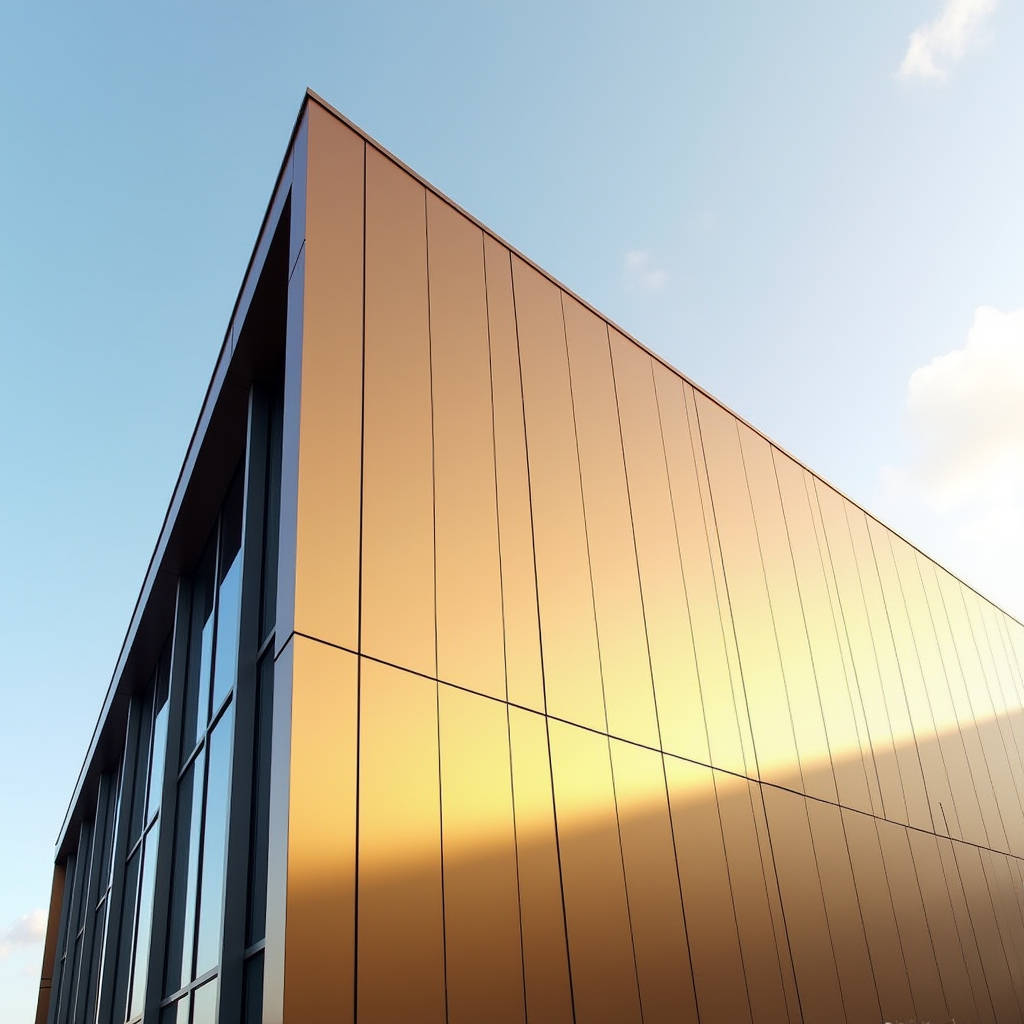
When a general contractor asks whether a metallic finish aluminum panel will hold its color after ten years of direct sun exposure on a coastal high-rise, the answer depends entirely on the coating system, not the metal substrate. A metallic finish aluminum panel is not a single product category. It spans a wide performance range—from budget polyester coatings that chalk within three years to PVDF fluoropolymer systems that carry 30-year film integrity warranties. The distinction matters because the metallic effect itself introduces variables that solid-color panels do not face: pigment orientation, clear coat thickness, and the inherent UV sensitivity of metallic flakes. This article examines the coating technologies, testing standards, manufacturing tolerances, and long-term cost implications that procurement teams and facade engineers need to evaluate before specifying metallic finish aluminum panels for exterior cladding applications.
What Actually Defines a Metallic Finish on Solid Aluminum
The term "metallic finish" in architectural aluminum cladding refers to a coating system that incorporates aluminum flake pigments or mica particles suspended in a resin base. When light hits the surface, these platelets reflect at different angles, creating the characteristic shimmer and depth that solid colors cannot replicate. The effect is sometimes called "travel"—the visible shift in brightness as the viewing angle changes.
On solid aluminum panels—typically 2.0mm, 2.5mm, or 3.0mm thick 3003 or 5052 alloy sheets—the metallic coating is applied through a multi-layer spray process. The base coat carries the metallic pigment, and a clear topcoat provides gloss control and environmental protection. This two-coat or three-coat architecture is standard for exterior-grade metallic finishes. Single-coat metallic systems exist but lack the durability required for facade applications.
The aluminum flake orientation during spraying determines the final appearance. Poorly controlled application produces "clouding" or "mottling"—visible inconsistencies in the metallic effect across panel surfaces. This is a known quality differentiator. High-end manufacturers like Futeng® control flake orientation through electrostatic application parameters and precise flash-off timing between coats, ensuring batch-to-batch consistency across thousands of square meters.
Coating Chemistry: Why PVDF Dominates Exterior Metallic Applications
Three coating families dominate the metallic finish aluminum panel market: polyester (PE), silicon-modified polyester (SMP), and polyvinylidene fluoride (PVDF). Each behaves differently under UV radiation, salt spray, and thermal cycling.
Polyester-based metallic coatings are the least expensive. They use a simple polymer backbone that begins degrading under UV exposure within 18-24 months. The metallic pigments accelerate this process because the aluminum flakes create micro-edges in the film where moisture and oxygen attack the resin. For interior decorative applications, PE metallics are perfectly adequate. For exterior facades, they represent a warranty risk that most serious cladding contractors avoid.
SMP coatings add silicone intermediates to the polyester resin, improving gloss retention and chalk resistance. A high-quality SMP metallic finish can deliver 10-15 years of serviceable appearance in moderate climates. However, the silicone modification only slows degradation—it does not stop it. In tropical or high-UV environments, SMP metallics still show measurable color shift (ΔE > 5) within 7-10 years.
PVDF coatings, based on Kynar 500® or Hylar 5000® resin systems, contain a minimum 70% fluoropolymer resin by weight in the color coat. The carbon-fluorine bond is one of the strongest in organic chemistry, resisting UV photodegradation at a fundamental level. When properly applied as a three-coat system (primer, metallic color coat, clear topcoat), PVDF metallic finishes routinely achieve AAMA 2605 compliance—the highest performance standard for architectural coatings. The clear coat is not optional for metallics; it encapsulates the aluminum flakes and prevents oxidation at the pigment-resin interface.
Performance Standards That Procurement Teams Should Reference
Specifying a metallic finish aluminum panel without referencing a performance standard is a procurement error. The key standards are:
- AAMA 2605: The highest specification for architectural coatings on aluminum. Requires 10-year South Florida exposure testing with maximum color change of ΔE ≤ 5, gloss retention ≥ 50%, and no chalking beyond rating 8. This is the benchmark for PVDF metallic finishes on exterior cladding.
- AAMA 2604: An intermediate specification suitable for SMP coatings. Allows greater color shift and gloss loss. Often specified for secondary facades, soffits, or sheltered applications where cost savings justify the performance trade-off.
- AAMA 2603: The minimum performance tier, typically for interior applications or sheltered exterior use. Polyester metallics fall into this category.
- EN 13523 (European): Covers coil-coated metals, with specific test methods for metallic coatings including meandering and color consistency measurements not found in AAMA standards.
- ISO 16474: Accelerated weathering test methods that correlate with natural exposure data. Useful for comparing coatings when real-world aging data is unavailable.
The specification document should explicitly state the required AAMA grade. A vague reference to "metallic finish" without a performance tier invites substitution of lower-grade coatings that look identical on day one but diverge dramatically within three years.
| Coating Type | AAMA Grade | Typical DFT (μm) | Gloss Retention (10yr) | Color Shift ΔE (10yr) | Warranty Range | Relative Cost |
|---|---|---|---|---|---|---|
| Polyester (PE) Metallic | 2603 | 20-25 | <30% | >10 | 1-3 years | 1.0x |
| SMP Metallic | 2604 | 25-30 | 40-60% | 5-8 | 5-10 years | 1.3-1.5x |
| PVDF 2-Coat Metallic | 2605 | 30-35 | ≥50% | ≤5 | 15-20 years | 1.8-2.2x |
| PVDF 3-Coat Metallic | 2605 | 35-45 | ≥65% | ≤3 | 20-30 years | 2.2-2.8x |
| FEVE (Fluoroethylene Vinyl Ether) | 2605 equivalent | 35-45 | ≥70% | ≤3 | 20-30 years | 2.5-3.0x |
The three-coat PVDF system commands a premium, but the incremental cost—typically $8-15 per square meter over a two-coat metallic—is negligible compared to the cost of re-cladding a building facade. For projects in the Middle East, Southeast Asia, or coastal Australia, where UV index regularly exceeds 10, the three-coat specification is not a luxury; it is engineering prudence.
Manufacturing Variables That Affect Metallic Appearance Consistency
Metallic finishes amplify manufacturing defects that would be invisible on solid colors. The directional reflectance of aluminum flakes means that even minor variations in spray technique, film thickness, or curing temperature produce visible differences across panel batches.
Dry film thickness (DFT) control is critical. For PVDF metallic coatings, the color coat DFT should be maintained within ±3μm across the entire panel surface and between production batches. Thicker areas appear darker and more saturated; thinner areas look lighter and less metallic. This tolerance is tighter than the ±5μm typically acceptable for solid colors. Achieving this requires automated electrostatic spray systems with real-time thickness monitoring—manual spraying cannot maintain the consistency required for large-scale facade projects.
Panel orientation during spraying and curing also matters. Metallic flakes align parallel to the panel surface due to surface tension during film formation. If panels are sprayed vertically and then cured horizontally, the flake orientation shifts, changing the apparent color. The entire production line—from pretreatment to final cure—must maintain consistent panel orientation. This is a process detail that separates experienced solid aluminum cladding manufacturers from general metal fabricators.
Batch-to-batch color matching for metallic finishes requires spectrophotometer measurement at multiple angles—typically 15°, 45°, and 110° from specular. A single-angle measurement, sufficient for solid colors, will miss metamerism issues where two panels match at one viewing angle but diverge at another. The standard reference is ASTM E2194 for multi-angle color measurement of metallic and pearlescent materials.
Corrosion Considerations for Coastal and Industrial Environments
Metallic finish aluminum panels installed within 3km of a coastline or in heavy industrial zones face additional corrosion risks that the coating system must address. The aluminum substrate itself—alloy 5052 with H32 temper—offers excellent marine corrosion resistance due to its magnesium content. However, the coating is the first line of defense.
The weak point in metallic finishes is the clear coat. If the clear coat is too thin or improperly cured, chloride ions penetrate to the metallic pigment layer and initiate filiform corrosion—thread-like corrosion tracks that spread beneath the coating. Once established, filiform corrosion cannot be remediated; the affected panels must be replaced.
AAMA 2605-compliant PVDF systems address this through minimum clear coat DFT of 15-20μm and mandatory salt spray testing per ASTM B117 (4,000 hours minimum). Some manufacturers now offer enhanced marine formulations with additional corrosion inhibitors in the primer layer, specifically developed for projects in the Arabian Gulf, Southeast Asian archipelagos, and Caribbean locations.
The panel edge treatment is equally important. Cut edges expose bare aluminum that must be protected. For metallic finish panels, the standard practice is to apply a touch-up coating system at all field-cut edges. However, factory-fabricated panels with pre-formed returns and cassette edges eliminate this vulnerability entirely—a detail worth specifying for high-corrosion environments.
Gloss Levels and Their Impact on Facade Aesthetics
Metallic finish aluminum panels are available in gloss ranges from 10-15 GU (matte) to 70-80 GU (high gloss), measured at 60° per ASTM D523. The gloss level interacts with the metallic effect in ways that designers should understand before specifying.
High-gloss metallics (60+ GU) maximize the "travel" effect—the color shift is most dramatic and the metallic flakes produce maximum sparkle. However, high-gloss finishes also reveal every surface imperfection. Oil canning, weld marks, and minor dents that would be invisible at 30 GU become obvious at 70 GU. The substrate preparation and panel flatness tolerances must tighten accordingly.
Mid-gloss metallics (25-40 GU) are the most common specification for exterior facades. They provide visible metallic effect without amplifying surface irregularities. Most PVDF metallic coatings naturally settle in this range when the clear coat is applied at standard thickness.
Matte metallics (10-20 GU) are gaining popularity for contemporary architectural designs. Achieving a matte metallic finish requires specialized clear coat formulations with matting agents—typically silica particles—that scatter light at the surface. The challenge is that matting agents slightly reduce the clear coat's barrier properties. A matte PVDF metallic may have marginally lower corrosion resistance than its gloss counterpart, though still within AAMA 2605 limits when properly formulated.
Color Range Limitations and Custom Matching Realities
Not every color can be produced as a metallic finish. The aluminum flake pigments are inherently silver-toned, and the final color results from the interaction between the flakes and the tinted resin. Deep, saturated colors—particularly dark blues, deep reds, and blacks—require high pigment loading that can mask the metallic effect. The most successful metallic colors are mid-tones: champagne, bronze, pewter, silver-gray, and light gold.
Custom color matching for metallic finishes is more complex than for solid colors. The metallic flake size, shape, and loading all affect the final appearance. A specification that calls for "RAL 9006 metallic" is insufficient—RAL 9006 (White Aluminum) and RAL 9007 (Grey Aluminum) are the only metallic colors in the RAL Classic system, and they describe a general effect rather than a precise color. For architectural projects, the reference should be a physical sample panel, not a color code.
Most PVDF coating suppliers maintain libraries of pre-formulated metallic colors with established weathering data. Custom formulations require 8-12 weeks for development and accelerated weathering validation. Project schedules must account for this lead time, particularly for large-scale developments where the custom metallic color becomes a signature architectural element.
Installation Factors That Preserve the Metallic Appearance
The best PVDF metallic coating can be undermined by poor installation practices. Three common issues deserve attention from construction managers and facade contractors.
First, protective film removal timing. Metallic finish aluminum panels ship with a polyethylene protective film, typically 60-80 microns thick, to prevent handling damage. If this film is left on for more than 90 days—especially in direct sunlight—the adhesive can bond permanently to the coating or leave residue that alters the metallic appearance. The specification should mandate film removal within 30 days of panel delivery and immediately upon installation.
Second, cleaning chemical compatibility. Construction site cleaning often involves aggressive chemicals that can etch the clear coat. Acidic masonry cleaners, in particular, can permanently dull metallic PVDF finishes. The cleaning protocol should specify pH-neutral detergents and soft-cloth application only. Pressure washing, if used, must stay below 500 psi and maintain a minimum 30cm nozzle distance.
Third, panel replacement logistics. If a metallic finish panel is damaged and requires replacement two years after installation, the new panel will not match the surrounding panels exactly. Even PVDF coatings weather slightly over time, and the original production batch parameters may be difficult to replicate exactly. The solution is to order 2-3% attic stock—extra panels stored on-site—from the same production batch as the main order. For projects where this is not feasible, the specification should acknowledge that replacement panels may exhibit minor color variation and establish acceptable ΔE thresholds.
Cost Structure Across the Metallic Finish Spectrum
The cost of a metallic finish aluminum panel is not simply the base metal cost plus a coating upcharge. The metallic effect introduces cost multipliers at every stage:
- Coating material cost: PVDF metallic coatings cost 2-3x more per liter than solid-color PVDF due to the aluminum flake pigments and the additional clear coat layer.
- Application cost: Three-coat systems require additional spray booth time and more stringent quality control. Rejection rates for metallic finishes are typically 3-5% versus 1-2% for solid colors.
- Inventory cost: Metallic colors are often project-specific, making excess inventory difficult to repurpose. Manufacturers price this risk into the per-square-meter rate.
- Warranty cost: The longer warranty periods associated with PVDF metallics carry financial reserves that manufacturers must maintain.
For a typical 2.5mm solid aluminum panel with PVDF metallic finish, the ex-factory price ranges from $55-85 per square meter depending on panel complexity, quantity, and the specific metallic formulation. This compares to $40-60 for the same panel with a solid PVDF color. The premium is real, but it buys a fundamentally different visual product—one that cannot be replicated by any other cladding material.
Specification Checklist for Project Documentation
Based on the technical factors discussed, a procurement specification for metallic finish aluminum panels should include the following elements:
- Substrate: Solid aluminum alloy (3003 or 5052), H32 or H14 temper, minimum 2.0mm thickness for exterior walls.
- Coating system: PVDF fluoropolymer, minimum 70% Kynar 500® or Hylar 5000® resin, three-coat architecture (primer + metallic color coat + clear coat).
- Performance standard: AAMA 2605 compliance with test reports from an accredited laboratory.
- Color reference: Physical sample panel, not a printed color chip or digital representation.
- DFT tolerance: Color coat ±3μm, clear coat minimum 15μm, total system 35-45μm.
- Gloss range: Specified at 60° geometry, with acceptable tolerance of ±5 GU.
- Warranty: Minimum 20-year film integrity and color retention, issued by the coating manufacturer, not the panel fabricator.
- Batch control: All panels for a single elevation from the same production batch. Attic stock of 2-3% included in the order.
- Edge treatment: Factory-fabricated returns and cassettes where possible; touch-up coating system specified for field-cut edges.
- Protective film: Removal within 30 days of delivery, documented in the installation schedule.
This checklist does not guarantee a perfect outcome—no specification can—but it eliminates the most common failure modes that lead to disputes between contractors, architects, and panel suppliers.
The metallic finish aluminum panel represents a mature technology with well-understood performance characteristics. The risks are not in the material itself but in the gap between what the specification says and what the installer receives. Closing that gap requires technical literacy from everyone in the supply chain, from the architect selecting the initial color sample to the contractor verifying the coating thickness on the delivered panels. When that alignment exists, a PVDF metallic finish will deliver decades of stable, visually striking facade performance with minimal maintenance beyond periodic cleaning.