Matte Finish Aluminum Facade Longevity Coating Specs and Real World Performance Data
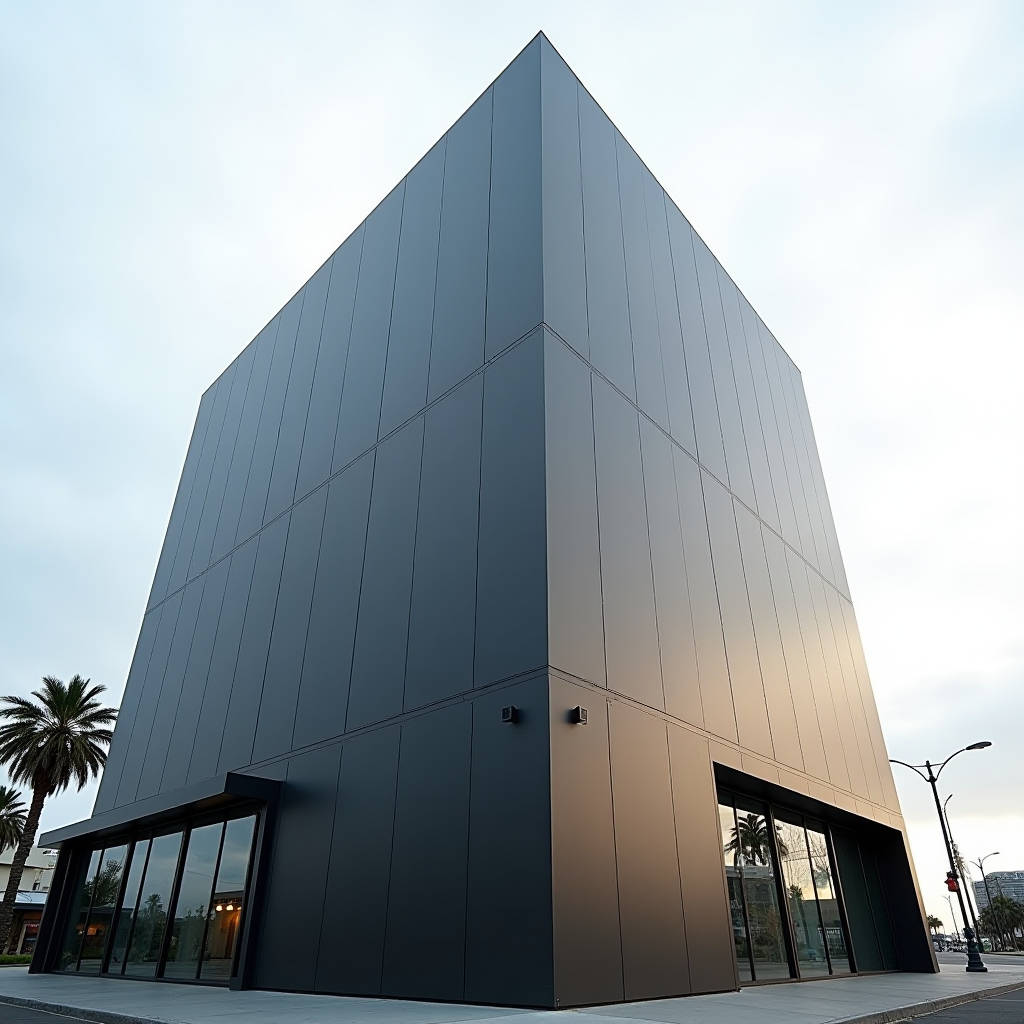
Architects and facade consultants keep asking the same question: can a Matte Finish Aluminum Facade survive 15 years on a coastal high-rise without looking wrecked by salt spray and UV exposure? The short answer is yes, but only if the coating system is specified correctly from day one. Too many project teams treat matte PVDF as a simple aesthetic checkbox. They pick a color from a swatch, approve the sample, and move on. Six years later, the facade shows uneven chalk marks, the color has shifted two Delta E units, and the owner is asking who signed off on the material. This article breaks down what actually determines the longevity of matte aluminum cladding in harsh environments, covering coating chemistry, film thickness tolerances, gloss unit ranges, and the fabrication details that prevent edge corrosion. No marketing fluff, just the technical parameters that separate a 20-year facade from an expensive warranty claim.
Why Matte Finishes Demand More From the Coating System
A matte surface is not simply a gloss finish with less shine. The low-gloss appearance comes from microscopic surface roughness that scatters reflected light in multiple directions. In a high-gloss PVDF coating, the resin flows out smooth during curing, creating a flat surface that reflects light uniformly. A matte coating achieves its look through pigment loading, matting agents, and controlled curing profiles that intentionally create a micro-textured surface.
This texture introduces two practical problems. First, the increased surface area traps airborne salts, industrial pollutants, and particulate matter more readily than a smooth gloss surface. Second, the matting agents, typically silica-based additives, can create microscopic voids in the resin matrix if not properly dispersed. Those voids become pathways for moisture ingress over thousands of wet-dry cycles. A Matte Finish Aluminum Facade on a building in Singapore or Dubai faces roughly 200 such cycles per year. Over a decade, that is 2,000 opportunities for moisture to work its way toward the aluminum substrate.
The coating formulation has to compensate. Top-tier PVDF systems for matte finishes use 70% PVDF resin content (per AAMA 2605), with the balance being acrylic resins and pigment. The acrylic component is not filler; it provides adhesion to the aluminum substrate and contributes to film flexibility. But in matte formulations, the ratio and the dispersion quality of matting agents become the critical variables that determine whether the coating stays intact or starts micro-cracking at year eight.
Gloss Units and the Specification Gap
Gloss is measured in GU (gloss units) using a glossmeter at a 60-degree angle per ASTM D523. A high-gloss PVDF coating typically reads 70 to 90 GU. A matte finish lands between 10 and 30 GU. The problem is that many project specifications only state "matte" without defining an acceptable GU range. This ambiguity lets fabricators supply panels that measure 30 GU on one batch and 12 GU on the next, and the visual mismatch only becomes obvious after installation.
The tighter the GU tolerance, the more consistent the facade appearance. For a Matte Finish Aluminum Facade spanning more than 5,000 square meters, the specification should lock in a GU range with no more than ±5 units of variation across all panels. This requires the coater to run the same paint batch, the same line speed, and the same oven temperature profile for the entire project. Some coaters resist this because it ties up a production line. But the alternative is a patchwork facade that looks fine from 50 meters away and embarrassingly inconsistent up close.
Below is a reference table showing how gloss ranges correlate with perceived appearance and typical application contexts:
| Gloss Level | GU Range (60°) | Visual Character | Best Application | Dirt Retention Risk |
|---|---|---|---|---|
| High Gloss | 70–90 | Reflective, color-saturated | Accent elements, landmark towers | Low |
| Semi-Gloss | 40–60 | Balanced, moderate reflection | General curtain wall | Low to Moderate |
| Satin | 25–40 | Soft sheen, subtle reflection | Mid-rise commercial | Moderate |
| Matte | 10–25 | Flat, non-reflective | Museum, institutional, coastal | Moderate to High |
| Dead Matte | Below 10 | Chalky, light-absorbing | Interior only (not exterior-rated) | Very High |
Dead matte finishes below 10 GU are generally not recommended for exterior solid aluminum panels. The amount of matting agent required to push gloss that low compromises film integrity. Several manufacturers, including Futeng®, advise against dead matte for any exterior application where the panel faces direct rainfall and UV exposure. The coating simply does not have enough resin continuity to resist moisture penetration over the long term.
PVDF Film Thickness: The Number That Actually Matters
Architects spend hours debating color chips but rarely ask about dry film thickness (DFT). For a Matte Finish Aluminum Facade, DFT is the single most important number on the coating spec sheet. AAMA 2605, the standard for high-performance architectural coatings on aluminum, requires a minimum total DFT of 30 microns (1.2 mils) for a two-coat system and 40 microns (1.6 mils) for a three-coat system.
Here is the catch: matte coatings lose thickness faster than gloss coatings under identical weathering conditions. The micro-textured surface that creates the matte effect erodes incrementally as the top resin layer degrades. A gloss coating at 30 microns DFT might lose 3 to 5 microns over 15 years. A matte coating at the same starting thickness can lose 6 to 8 microns in the same period because the surface area exposed to UV and abrasion is larger.
This means the minimum DFT for a matte PVDF on exterior solid aluminum panels should be 35 microns for a two-coat system and 45 microns for a three-coat system, even though AAMA 2605 allows lower numbers. The extra 5 microns is cheap insurance. It adds roughly $0.40 to $0.70 per square foot to the coating cost and buys several additional years before the coating wears through to the primer layer.
The primer layer itself deserves attention. A proper two-coat system for matte finishes uses an epoxy or polyurethane primer at 5 to 8 microns DFT, followed by the color coat. A three-coat system adds a clear topcoat that can be formulated matte or used as a sacrificial protective layer. For coastal projects within 500 meters of saltwater, the three-coat system is strongly recommended regardless of what the budget spreadsheet says.
Coastal Environments: Salt, Moisture, and the Corrosion Clock
Salt spray testing per ASTM B117 gives a controlled measure of corrosion resistance, but real coastal exposure is harder to simulate. A Matte Finish Aluminum Facade on a building in Miami or Jeddah faces a combination of salt-laden wind, intense UV, and frequent condensation cycles. The salt crystals that settle on the matte surface do not wash off as easily as they would on a gloss finish. They sit in the micro-valleys of the textured coating and become hygroscopic, pulling moisture from the air and creating localized corrosion cells.
The aluminum alloy grade matters here. Solid aluminum panels for exterior facades should use 3003-H14 or 5005-H14 alloy. The 5005 series offers better corrosion resistance in marine environments due to its lower copper content and higher magnesium content compared to 3003. The difference in material cost is roughly 8 to 12 percent, but for a building within 200 meters of the coastline, the upgrade is justified.
Chromate conversion coating on the aluminum substrate before painting is non-negotiable for coastal projects. This pretreatment passivates the aluminum surface and provides a chemical bond between the metal and the primer. Some fabricators try to cut costs by using chromate-free pretreatments for interior panels, but for exterior matte finishes in corrosive environments, hexavalent chromate conversion coating remains the most reliable option, despite environmental concerns about its use. The industry is moving toward trivalent chromium and zirconium-based alternatives, but the long-term field data is still being collected.
Edge detailing is another factor that gets overlooked. Solid aluminum panels are cut, routed, and folded into shape. The cut edges expose bare aluminum that is not protected by the factory-applied coating. If those edges are not sealed with a field-applied touch-up coating or designed to be hidden behind gaskets and sealants, moisture wicks into the aluminum and starts filiform corrosion that creeps under the coating. With matte finishes, filiform corrosion is more visible because the flat, non-reflective surface provides no optical camouflage for the thin, worm-like corrosion trails.
Color Stability and the Delta E Trap
Color fading is measured in Delta E (ΔE) units, which quantify the perceptual difference between the original color and the weathered color. AAMA 2605 requires ΔE not to exceed 5.0 after 10 years of Florida exposure. For a Matte Finish Aluminum Facade, the visual impact of a given ΔE shift is often more noticeable than on a gloss finish because there is no specular reflection to distract the eye from the color change.
Darker matte colors, particularly deep blues, charcoal grays, and blacks, are the most vulnerable. The pigment systems that produce these colors absorb more infrared radiation, which raises the panel surface temperature and accelerates resin degradation. A matte black panel on a south-facing elevation in Arizona can reach 85°C on a summer afternoon. The same panel in white might peak at 55°C. That 30°C difference translates to a significantly faster rate of polymer breakdown in the coating.
Inorganic pigments (mixed metal oxides) offer better color stability than organic pigments in matte formulations. Ceramic-based pigments like cobalt aluminate (blue), chromium oxide (green), and iron oxide (red/brown) resist UV degradation far better than organic alternatives. The trade-off is that inorganic pigments produce a narrower color gamut, so very vibrant or saturated matte colors are harder to achieve without organic pigment blends that may fade faster.
Specifiers should request accelerated weathering test data per ASTM G154 (xenon arc) or ASTM G155 (QUV) for the specific matte color being specified, not just a generic data sheet for the coating system. A reputable supplier like Futeng® can provide these test reports for individual color formulations, showing ΔE values at 2,000, 4,000, and 6,000 hours of exposure. If the ΔE exceeds 3.0 at 4,000 hours, the color is probably not suitable for a facade expected to last 20 years without visible fading.
Fabrication Challenges Unique to Matte Solid Aluminum Panels
Solid aluminum panels with matte finishes present fabrication difficulties that do not exist with gloss coatings. The first is handling damage. Matte surfaces show scratches and abrasions more readily because any disruption to the micro-textured surface changes the way light scatters, creating a visible mark even if the scratch does not penetrate the color coat. Fabricators need to use protective film that stays on the panels through cutting, routing, folding, and installation. The film must be UV-stable if panels are stored outdoors before installation, and it must peel cleanly without leaving adhesive residue on the matte surface.
The second issue is bend radius. Solid aluminum panels are typically 2.0, 2.5, or 3.0 mm thick and are brake-formed or routed-and-folded to create the panel geometry. The coating on the outside of a bend stretches during forming. A matte PVDF coating has slightly less elongation capacity than a gloss coating because the matting agents act as stress concentrators within the resin matrix. For a 2.5 mm panel with a matte finish, the minimum outside bend radius should be 2.5 times the panel thickness (approximately 6.3 mm) to avoid micro-cracking of the coating on the bend line. For gloss finishes, a 2.0x thickness radius is often acceptable. This means matte panels require slightly wider bend radii, which affects the sharpness of corners and the visual crispness of the facade.
The third issue is color matching across different production batches. Matte colors are more sensitive to small variations in oven temperature, line speed, and humidity during curing. A batch produced on a dry winter day can look subtly different from a batch produced on a humid summer day, even with the same paint formulation. The solution is to produce all panels for a single elevation from the same coil of aluminum and the same batch of paint, and to run them through the coating line in a single continuous production window. This requires coordination between the fabricator, the coater, and the project schedule, but it is the only reliable way to guarantee batch-to-batch color consistency on a matte facade.
Maintenance Realities: What Building Owners Need to Know
A Matte Finish Aluminum Facade does not clean itself. The micro-textured surface that makes it look elegant also makes it harder to clean effectively. Dirt, diesel particulate, and biological growth adhere more tenaciously to matte surfaces than to gloss surfaces. A pressure washer alone will not restore a matte facade to its original appearance; it will just push the dirt around.
The recommended cleaning protocol for matte PVDF-coated aluminum panels involves a low-pressure application of a pH-neutral detergent, a dwell time of 5 to 10 minutes, and gentle agitation with a soft-bristle brush. Abrasive cleaners, alkaline detergents, and stiff brushes will permanently damage the matte surface by polishing down the micro-texture, creating shiny patches that are impossible to reverse. The cleaning frequency depends on the environment: urban locations with heavy traffic may need cleaning every 12 to 18 months, while suburban or rural locations can go 24 to 36 months between cleanings.
Building owners should budget for this maintenance. A 10,000-square-meter matte facade cleaned every 18 months at $2 to $4 per square meter adds up to $20,000 to $40,000 per cleaning cycle. Over 20 years, that is $250,000 to $500,000 in maintenance costs that should be factored into the life-cycle cost analysis during the specification phase. Gloss facades in the same environment might need cleaning half as often, which is a genuine operational cost difference that specifiers rarely discuss with clients.
Specification Checklist for a Durable Matte Finish Aluminum Facade
Based on the technical factors discussed above, the following checklist summarizes the key specification parameters that should appear in a project document for any exterior matte solid aluminum facade expected to perform for 15 years or more:
- Alloy grade: 5005-H14 for coastal (within 500m of saltwater), 3003-H14 acceptable for inland
- Panel thickness: 2.5 mm minimum for panels larger than 1.0 m², 3.0 mm for panels exceeding 2.0 m²
- Coating system: 70% PVDF resin, three-coat system (primer + color + clear) for matte finishes
- Minimum DFT: 45 microns total for three-coat matte, 35 microns for two-coat matte
- Gloss range: 15–25 GU at 60°, with ±5 GU tolerance across all panels on the same elevation
- Pretreatment: Chromate conversion coating per ASTM D1730 or equivalent
- Color stability: ΔE ≤ 5.0 after 10 years per AAMA 2605, with test data for the specific color formulation
- Edge sealing: All cut edges to receive field-applied touch-up coating or be concealed behind gaskets
- Bend radius: Minimum 2.5x panel thickness for matte-coated panels
- Batch control: Single coil, single paint batch, single production run per elevation
These parameters are not arbitrary. They are derived from the failure modes observed on real projects where matte aluminum facades underperformed. Each line item addresses a specific mechanism of degradation: corrosion, coating erosion, color shift, or mechanical damage. Cutting any one of them to save upfront cost shifts risk onto the building owner and the contractor's warranty exposure.
Testing and Quality Assurance Beyond the Data Sheet
A standard PVDF coating data sheet tells you what the coating can do under ideal laboratory conditions. It does not tell you what happened to the specific batch of panels that will be installed on your project. For a Matte Finish Aluminum Facade, the project-specific quality assurance program should include at least three test protocols beyond the standard mill certificates.
First, cross-hatch adhesion testing per ASTM D3359 on retention samples from each production batch. A matte coating with poorly dispersed matting agents will show adhesion failure at the coating-substrate interface or between the primer and color coat. Second, MEK rub testing per ASTM D5402 to verify that the coating has achieved full cure. Undercured matte PVDF will soften under solvent exposure and will weather prematurely. Third, color and gloss measurement on randomly selected panels from each batch, recorded and compared against the approved control sample, with the data compiled into a project-specific quality report.
For large projects exceeding 10,000 square meters of matte facade area, it is worth commissioning an independent coating inspection during production. An inspector can verify DFT measurements on every panel, check gloss consistency, and catch quality issues before panels leave the factory. The cost of inspection is typically $3,000 to $8,000 depending on factory location and project duration, which is negligible compared to the cost of removing and replacing defective panels after installation.
Industry standards provide the baseline. The American Architectural Manufacturers Association (AAMA) publishes AAMA 2605, the most widely referenced performance specification for architectural coatings on aluminum. ASTM International maintains the test methods referenced throughout this article. For projects in Europe and the Middle East, the Qualicoat certification system provides an equivalent framework for coating quality assurance. Specifiers should reference these standards explicitly in project documents rather than relying on vague phrases like "premium quality coating."
Futeng®, as a manufacturer of solid aluminum cladding panels, has accumulated field data from projects across Southeast Asia, the Middle East, and Australia where matte PVDF facades have been in service for over a decade. The consistent finding is that panels specified with the parameters outlined in this article show negligible color shift and no coating delamination after 10 to 12 years of exposure, while panels specified to minimum code requirements often show visible degradation by year seven or eight. The difference is not in the brand name on the coating can; it is in the film thickness, the gloss tolerance, and the quality control during production.
Making the Right Call for the Next Project
The decision to use a Matte Finish Aluminum Facade is fundamentally an aesthetic choice, but the long-term performance of that choice depends entirely on technical specification details that are invisible to the eye. The matte surface that looks sophisticated on day one will look tired and neglected by year five if the coating thickness was skimped, the gloss tolerance was ignored, or the edge sealing was omitted.
Project teams that take the time to specify alloy grade, DFT, GU range, pretreatment, and batch control in precise, measurable terms end up with facades that perform as intended. Those that treat matte as just another color option end up managing warranty claims. The cost difference between a properly specified matte facade and a minimally specified one is typically 8 to 15 percent of the cladding package cost. Spread over the 20-year service life of the building, that premium works out to less than one percent of the annual facade maintenance and replacement reserve. It is not a cost; it is a risk allocation decision. Make it consciously.