High Gloss Aluminum Panel Facades Demand Engineering Precision Beyond the Shine
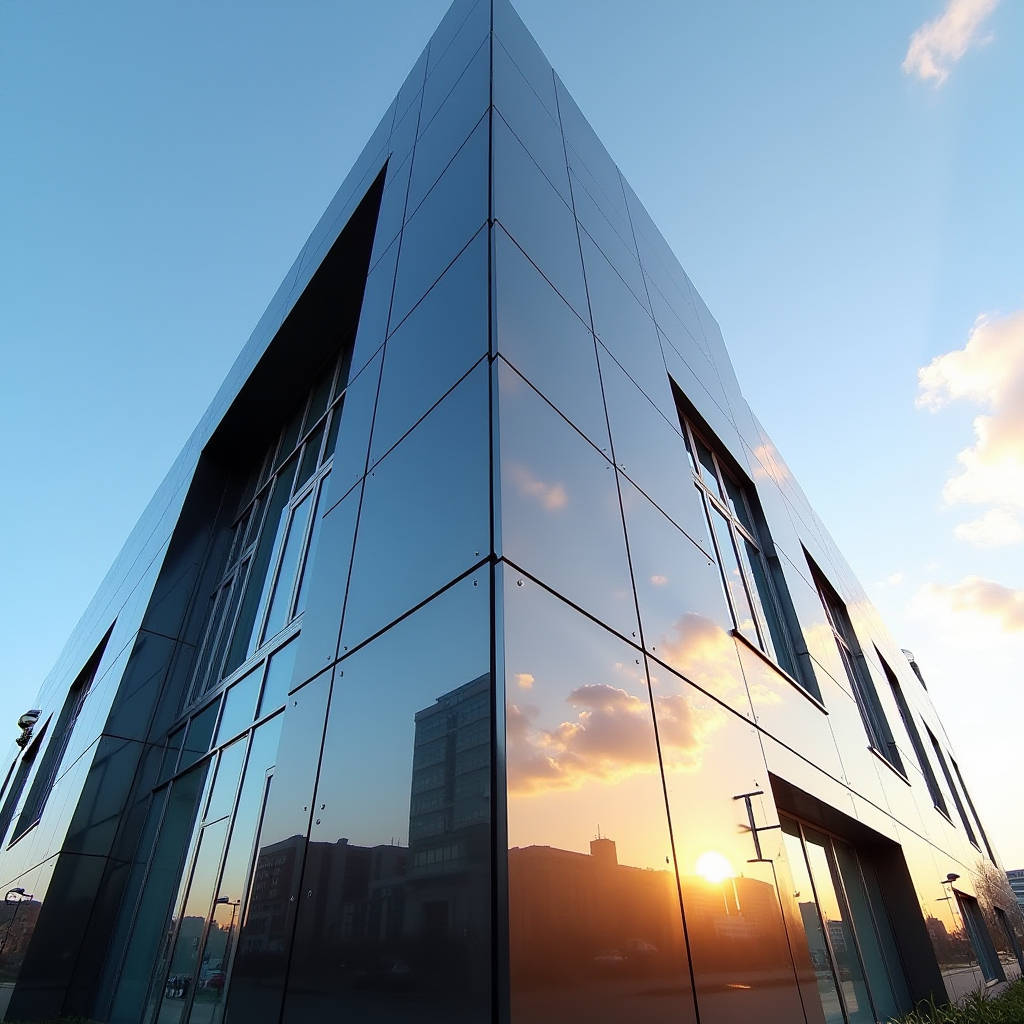
Specifying a High Gloss Aluminum Panel for an exterior facade is not a simple aesthetic decision. Architects chase the liquid, mirror-like finish because it transforms a building's skin into a dynamic canvas that shifts with the sky. But the conversation changes the moment a contractor unrolls the shop drawings. A high-gloss surface on solid aluminium cladding exposes every substrate irregularity, every millimeter of thermal movement, and every flaw in the PVDF coating process. The reflectivity that makes the design compelling also makes the installation unforgiving. This article unpacks the specific technical demands that separate a successful high-gloss solid aluminium facade from a costly field failure, focusing on coating chemistry, flatness tolerances, and the supply chain realities that procurement managers need to understand before issuing a purchase order.
Why High Gloss Demands More From Solid Aluminium Than Matte Finishes
Matte and low-gloss coatings hide a lot. A 60-degree gloss meter reading of 25 to 35 GU (gloss units) scatters reflected light, which masks minor oil-canning, roller marks, and substrate waviness. Push that reading past 80 GU, and the physics flips. The surface becomes a mirror. Every deviation from flatness — even a 0.5mm ripple across a 1,200mm span — becomes visible to the naked eye from 10 meters away. This is not a cosmetic preference; it is an engineering constraint.
For solid aluminium panels — typically 2.0mm, 2.5mm, or 3.0mm thick 1xxx, 3xxx, or 5xxx series alloy sheets — achieving a high-gloss finish starts long before the coating line. The aluminium substrate must be tension-leveled to eliminate residual stress. If the mill produces sheet with internal stress gradients, the panel will warp after routing or bending. A high-gloss PVDF topcoat will then amplify that warp threefold under direct sunlight because the reflective surface concentrates thermal gain unevenly across the panel face.
Contractors who have installed high-gloss stainless steel panels understand the principle. Solid aluminium is lighter and easier to fabricate, but it requires the same obsessive attention to substrate preparation. The difference is that aluminium's coefficient of thermal expansion — roughly 2.4 mm/m over a 100°C temperature swing — means the panel moves. A high-gloss finish makes that movement visible if the joint design does not account for it properly.
PVDF Coating Chemistry for High-Gloss Solid Aluminium Panels
Not all PVDF systems can produce a durable high-gloss finish. The standard architectural PVDF formulation — 70% Kynar 500® or Hylar 5000® resin with 30% acrylic — works well for mid-gloss colors, but pushing gloss above 85 GU requires reformulation. The acrylic component must be adjusted to improve flow and leveling during the bake cycle, but increasing acrylic content above 30% compromises long-term chalk resistance.
The coating line that produces a high-gloss solid aluminium panel typically applies a three-coat system: a corrosion-resistant primer (5-8 microns), a color coat (20-25 microns), and a clear topcoat (12-15 microns). The clear coat is where the gloss lives. It must be formulated with UV-stable resins that resist yellowing over decades of exposure. A low-quality clear coat might measure 90 GU on day one and drop to 60 GU within three years as the resin oxidizes.
Baking parameters matter equally. The peak metal temperature must reach 232-249°C and hold for a precise duration. Under-baking leaves the clear coat soft and prone to scratching during handling and installation. Over-baking embrittles the finish, causing micro-cracking at fold lines. For a high-gloss panel, either defect is catastrophic because the reflective surface magnifies the visual impact of any coating failure.
Gloss Measurement Standards and Field Verification
The industry standard for measuring specular gloss is ASTM D523, which uses a 60-degree geometry for general evaluation and 20-degree geometry for high-gloss surfaces. A panel marketed as "high gloss" should register at minimum 80 GU at 60 degrees, and ideally above 90 GU. The 20-degree measurement provides better discrimination between truly high-gloss finishes — two panels might both read 90 GU at 60 degrees but show a 10-point spread at 20 degrees.
Procurement specifications should reference the AAMA 2605 standard for high-performance architectural coatings. This standard requires a minimum of 10 years of South Florida exposure testing with no more than 5 Delta E color change and no more than 8 gloss units loss. For a high-gloss panel starting at 90 GU, that means the finish should still read above 82 GU after a decade of subtropical UV and humidity. Not all suppliers can demonstrate this data. Asking for AAMA 2605 certification documentation before awarding a contract is not optional — it is the only way to verify that the high-gloss finish will survive the warranty period.
Flatness: The Engineering Variable That Controls Everything
Flatness tolerances for solid aluminium cladding panels are governed by the alloy, thickness, fabrication method, and coating system. A standard 3.0mm aluminium panel with a matte PVDF finish might ship with a flatness deviation of 0.8% of the diagonal dimension. For a high-gloss panel, that tolerance must tighten to 0.4% or less. Otherwise, the reflected image on the facade will show visible distortion — what contractors call the "funhouse mirror effect."
Achieving this tolerance requires several process controls. The aluminium sheet must be cut from tension-leveled coil stock. After routing, the panel should be stress-relieved if the geometry involves deep returns or complex perforations. The coating line must apply uniform film thickness across the entire panel surface; a 5-micron variation in clear coat thickness can create a visible wave pattern on a high-gloss finish when viewed from an oblique angle.
Fabricators who specialize in high-gloss solid aluminium panels often use a dedicated production cell with climate-controlled storage. Aluminium expands and contracts with temperature. If a panel is fabricated at 15°C and coated at 30°C, the dimensional change is enough to affect flatness. The best shops keep raw material, fabrication, and coating all within a 5°C temperature band.
Oil-Canning and the High-Gloss Penalty
Oil-canning — the wavy distortion visible on flat metal panels — is a well-known phenomenon in the cladding industry. The Metal Construction Association acknowledges that some degree of oil-canning is inherent to flat metal panels and is not a manufacturing defect. However, a high-gloss surface makes oil-canning dramatically more visible. A panel that would be considered acceptable with a matte finish might be rejected by the architect if it carries a 90-GU gloss.
The mitigation strategy starts with alloy selection. Aluminum alloy 5052-H32, commonly used for architectural panels, offers a good balance of strength and formability. Increasing thickness from 2.0mm to 3.0mm reduces oil-canning tendency by roughly 40% because stiffness scales with the cube of thickness. Adding stiffeners to the panel back — either aluminum extrusions bonded with structural adhesive or mechanically attached hat channels — further reduces visible distortion. The stiffener spacing must be calculated based on the panel's aspect ratio and the expected wind load, following the guidance in the Aluminum Design Manual published by the Aluminum Association.
Thermal Management on High-Gloss Building Envelopes
A high-gloss solid aluminium panel reflects more solar radiation than a matte panel of the same color. This is both an advantage and a risk. The reflected solar energy reduces heat gain through the building envelope, which can lower cooling loads. But the panel itself absorbs some energy, and the temperature rise affects the panel's dimensional stability.
On a summer afternoon in Dubai or Phoenix, a dark-colored high-gloss aluminium panel can reach a surface temperature of 80°C. The panel will expand by approximately 1.5mm per meter relative to its fabricated dimensions at 20°C. If the panel is restrained by rigid connections at both ends, this expansion generates compressive stress that manifests as buckling. The high-gloss finish will then show the buckle as a bright spot — a concentrated reflection that draws the eye.
The solution is a properly engineered attachment system. Panels should be fixed at one point and allowed to slide at all other connection points. The sliding connections must accommodate the calculated thermal movement range plus a safety factor of 1.5. For a 3-meter panel, that means designing for roughly 7mm of movement at each free end. The joint sealant must also accommodate this movement without adhesive failure. High-performance silicone sealants with ±50% movement capability are standard; polyurethane sealants with lower movement capability should be avoided on high-gloss facades where joint aesthetics are critical.
Color Consistency Across Production Batches
High-gloss finishes amplify color differences. Two panels that measure within 1 Delta E on a matte surface might appear identical. The same 1 Delta E on a high-gloss surface can be visible because the reflective surface creates a higher perceived contrast. This is a psychophysical effect — the human eye is more sensitive to color differences on glossy surfaces than on matte ones.
For large-scale projects, this means batch control is non-negotiable. The aluminium coil used for the project should come from a single heat lot to ensure consistent alloy chemistry. The PVDF coating should be applied in a continuous production run, with color measurements taken every 50 panels using a spectrophotometer calibrated to the project's master standard. Panels that fall outside a 0.5 Delta E tolerance should be set aside for use in less visible areas or re-coated.
Suppliers with robust quality systems — such as those operating under ISO 9001-certified processes — maintain detailed batch traceability records. Futeng®, for example, documents coil certifications, pretreatment parameters, and coating batch numbers for each panel produced. This level of traceability becomes critical when a project spans multiple phases over several years and the architect demands that Phase 2 panels match Phase 1 exactly.
Fabrication Constraints: Routing, Bending, and Edge Treatment
High-gloss solid aluminium panels are typically fabricated using CNC routing and press brake bending. The routing operation cuts the panel perimeter and any openings, leaving a clean edge that will be folded to form the panel returns. The bend radius must be at least equal to the material thickness — a 3.0mm panel requires a minimum 3.0mm inside bend radius. Tighter bends risk cracking the coating at the fold line, and a cracked high-gloss finish is irreparable in the field.
Edge treatment deserves special attention. After bending, the panel edges are exposed aluminium. On a matte panel, a thin edge might go unnoticed. On a high-gloss panel, the bright reflective face makes any visible raw edge look like a defect. The standard practice is to specify that panel edges be returned (hemmed) or that the edge be coated with a touch-up PVDF paint that matches the face color. For premium installations, panels can be fabricated with a fully welded and ground corner construction that eliminates visible seams — but this adds significant cost and lead time.
The following table summarizes the key technical parameters that procurement teams should evaluate when comparing high-gloss solid aluminium panel suppliers:
| Parameter | Standard Requirement | High-Gloss Requirement | Verification Method |
|---|---|---|---|
| Gloss Level (60° Geometry) | 25-75 GU | ≥85 GU | ASTM D523 Gloss Meter |
| Coating System | 2-coat PVDF | 3-coat PVDF with clear topcoat | Supplier Certification / AAMA 2605 |
| Total Dry Film Thickness | 25-35 microns | 40-48 microns | ASTM D7091 / Eddy Current Gauge |
| Flatness Tolerance | 0.8% of diagonal | ≤0.4% of diagonal | Straightedge + Feeler Gauge / ASTM E1155 |
| Color Consistency (Batch) | ΔE ≤ 2.0 | ΔE ≤ 0.5 | ISO 7724 / Spectrophotometer |
| Panel Thickness Options | 2.0mm, 2.5mm | 2.5mm, 3.0mm (recommended) | Micrometer / Calibrated Caliper |
| Thermal Movement Accommodation | Per joint design | 1.5× calculated movement minimum | Engineering Calculation per EN 1991-1-5 |
| Weathering Resistance | 5-year Florida | 10-year Florida / AAMA 2605 | Third-Party Test Report |
Handling, Packaging, and Site Storage
The journey from factory to facade is where many high-gloss panels get damaged. A scratch that would be invisible on a matte panel becomes a glaring defect on a 90-GU surface. The protective film applied at the factory is the first line of defense. It must be a UV-stable polyethylene film with a clean-removal adhesive that does not leave residue after 6 months of outdoor exposure. Cheap protective films break down under UV, leaving adhesive residue that requires solvent cleaning — and solvents can attack the clear coat.
Packaging should use interleaving — sheets of foam or paper between each panel — to prevent face-to-face contact during transport. Panels should be shipped vertically in A-frame crates, not stacked horizontally. Horizontal stacking concentrates pressure on the bottom panels, and even with interleaving, the weight can cause micro-abrasions on the high-gloss surface.
On site, panels should be stored under cover, away from construction dust and welding spatter. The protective film should remain in place until immediately before installation. If panels are stored for more than 3 months, the film should be inspected for signs of degradation. A film that has baked onto the surface is a nightmare to remove and can permanently damage the gloss finish.
Installation Sequencing and Joint Alignment
Installing high-gloss solid aluminium panels demands a different rhythm than standard cladding. The installer cannot simply fix a panel and move on. Each panel must be checked for alignment relative to its neighbors because the reflective surface will reveal even a 1mm offset in the joint line. The eye reads the joint as a continuous line, and any deviation reads as a defect.
The recommended sequence is to install from a fixed reference point outward, typically starting at the center of the facade and working toward the edges. This approach distributes accumulated tolerances to the building corners, where they are less visible. Laser levels should be used to establish horizontal and vertical reference lines, and each panel should be checked against these lines before final tightening of the fasteners.
The attachment system must allow for fine adjustment in three axes. Slotted holes in the substructure, combined with adjustable brackets, give the installer the ability to dial in panel position to within 0.5mm. This level of precision adds labor cost — expect high-gloss facade installation to take 20-30% longer than a comparable matte finish installation. The tender should account for this.
Long-Term Maintenance and Gloss Retention
A high-gloss solid aluminium panel facade requires a maintenance plan that respects the sensitivity of the finish. The PVDF clear coat is tough — it resists most environmental contaminants — but it is not indestructible. Accumulated dirt reduces gloss and creates a patchy appearance. The recommended cleaning interval depends on the environment: urban locations with moderate rainfall might need cleaning every 12 months; coastal or industrial environments may require 6-month intervals.
Cleaning should use low-pressure water (below 500 psi) with a pH-neutral detergent applied with soft brushes or microfiber cloths. Abrasive cleaners, acidic solutions, and high-pressure washers can damage the clear coat. The goal is to remove surface deposits without scratching the gloss finish. After cleaning, the gloss level should be measured at representative locations and compared to the baseline readings taken at installation. A drop of more than 5 GU over 5 years warrants investigation.
For projects in the Middle East, where sand abrasion is a real concern, some specifiers are now requiring a sacrificial clear coat system — an additional 5-micron layer of clear PVDF that is designed to erode over time while protecting the underlying gloss finish. This approach adds cost but extends the aesthetic service life of the facade in harsh environments. The American Architectural Manufacturers Association (AAMA) publishes technical guidance on coating durability that is relevant to these decisions.
Specifying High-Gloss Solid Aluminium Panels: A Practical Checklist
Procurement managers and facade engineers who are specifying high-gloss solid aluminium panels for the first time should consider the following points before going to tender:
- Verify the substrate is solid aluminium, not composite. The specification should state the alloy (e.g., 5052-H32 or 3003-H14), thickness (2.5mm or 3.0mm recommended for high-gloss), and temper. This eliminates ambiguity and prevents substitution with ACP products that cannot meet the same flatness or durability standards.
- Require AAMA 2605 test data for the exact color and gloss level specified. Generic test reports are not sufficient. The coating system proposed for the project must have been tested at the specified gloss level.
- Define flatness acceptance criteria in the contract. Reference a standard such as ASTM E1155 for floor flatness or a custom specification based on the panel diagonal. Include a method for field verification — a straightedge and feeler gauge is practical and defensible.
- Specify batch production and color tolerance. Require that all panels for a given elevation be produced from a single coil batch and coated in a continuous run. Set a maximum Delta E tolerance of 0.5 for high-gloss finishes.
- Include protective film and packaging requirements. Specify UV-stable film with a rated outdoor exposure life of at least 6 months. Require vertical A-frame packaging with interleaving.
- Account for extended installation time. The tender should include a productivity factor that reflects the additional alignment and handling time required for high-gloss panels.
- Plan for maintenance access. The building design should include provisions for facade access equipment — BMU cradles, davits, or rope access anchors — that allow cleaners to reach all panel surfaces without damaging the finish.
The Aluminum Association and ISO 12944 (corrosion protection of steel structures by protective paint systems) provide additional reference frameworks, though the most directly applicable standard for high-gloss aluminium cladding remains AAMA 2605. For projects in Europe, the Qualicoat specification for architectural coatings on aluminium offers a parallel certification pathway.
What Contractors Learn After the First High-Gloss Project
Every contractor who has delivered a high-gloss solid aluminium facade will tell you the same thing: the learning curve is steep, and the first project is rarely profitable. The lessons accumulate quickly. Panel handling requires more care than expected. The substructure tolerances that worked fine on the last matte-finish project are suddenly unacceptable. The architect's expectations for joint alignment exceed what the shop drawings promised.
But the contractors who stick with it develop a specialization that commands a premium. High-gloss facades are rare enough that expertise is scarce. A firm that can demonstrate completed high-gloss projects — with reference letters and close-up photographs taken two years after completion — has a competitive advantage in the market.
The suppliers matter too. A reliable solid aluminium panel manufacturer with experience in high-gloss PVDF coating will have the process controls, the testing data, and the technical support to guide a project from specification through installation. When evaluating suppliers, look beyond the price per square meter. Ask about their gloss retention data, their batch traceability system, and their experience with projects of similar scale and complexity. The answers will reveal whether they understand the specific demands of a high-gloss facade or whether they are simply selling a shiny panel.
High-gloss solid aluminium cladding is not for every project. It costs more, takes longer, and punishes shortcuts. But when the conditions are right — a design that justifies the reflectivity, a budget that accommodates the premium, and a team that understands the technical demands — the result is a facade that stops people on the street. The key is to treat the specification not as a product selection but as an engineering problem. The gloss is the easy part. Everything else is where the work lives.