Mirror Finish Aluminium Panel Engineering and Specification for High Reflectance Facades
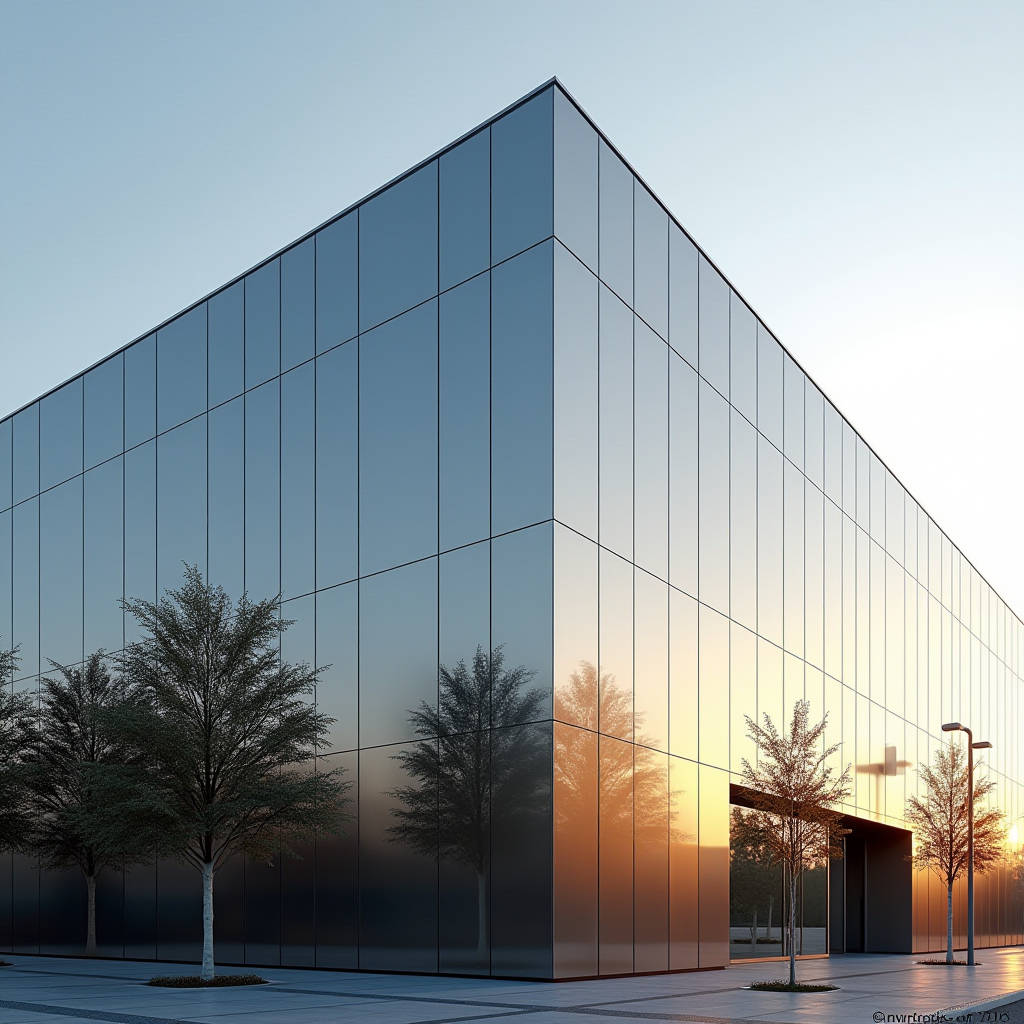
Specifying a mirror finish aluminium panel for a commercial facade means accepting a fundamental trade-off: the undeniable visual drama of a near-perfect reflective surface against the engineering reality that this is one of the most technically demanding finishes to get right at scale. Architects chase the liquid-metal look for flagship retail, corporate lobbies, and cultural buildings. General contractors and facade installers, however, need to know whether the panels arriving on site will actually match each other, resist handling damage, and hold their reflectance across a 20-year service life. The answer depends less on the aluminium alloy itself and more on the substrate preparation, the coating or anodising process, and the quality control discipline of the mill. This article walks through what separates a spec-grade mirror finish aluminium panel from a cosmetic disappointment, covering optical performance metrics, fabrication constraints, installation sequencing, and the maintenance realities that no one discusses during the design phase.
What Defines a True Mirror Finish on Solid Aluminium
A mirror finish aluminium panel is not simply a shiny sheet. The term describes a surface with specular reflectance high enough to produce a clear, undistorted image reflection. In practical terms, this means total reflectance values above 85% across the visible spectrum (400-700 nm), with diffuse reflectance kept below 2%. Achieving this on solid aluminium sheet — typically 2.0 mm, 2.5 mm, or 3.0 mm gauge for architectural cladding — requires either mechanical polishing to a sub-micron surface roughness followed by a protective clear coat, or a specialised wet coating system applied over a flawlessly prepared substrate.
The distinction matters because many products marketed as "mirror finish" are actually high-gloss painted surfaces with reflectance in the 70-80% range. They look reflective under showroom lighting but fail to deliver a crisp mirror image when installed on a sunlit facade. The American Architectural Manufacturers Association (AAMA) does not publish a standalone standard for mirror finishes, but the relevant benchmarks fall under AAMA 2605 for high-performance PVDF coatings and various ISO 2813 gloss measurements. A genuine architectural mirror finish should meet a 20° gloss reading above 90 GU (gloss units) and retain that value after accelerated weathering.
Mechanical Polishing vs. Coating-Based Mirror Finishes
Two distinct manufacturing routes produce mirror finish aluminium panels, and the choice has downstream consequences for flatness, durability, and cost:
Mechanically polished mirror finish: The aluminium sheet is progressively ground and polished using abrasive compounds, often finishing with a rouge or alumina slurry that reduces surface roughness (Ra) to below 0.02 μm. The polished surface is then sealed with a transparent protective layer — typically a clear PVDF or anodic oxide film. This route delivers the highest possible reflectance (often exceeding 90%) and the sharpest image clarity. However, it is labour-intensive, sensitive to substrate quality, and unforgiving of any underlying metal defects. Rolled-in inclusions, grain structure irregularities, or even minor stretcher strains become visible after polishing.
Coating-based mirror finish: A high-solids, high-gloss wet coating — often a specially formulated PVDF or polyester system — is applied over a meticulously pre-treated aluminium surface. The coating itself contains reflective metallic pigments or relies on an exceptionally smooth base layer to create the mirror effect. Reflectance typically peaks around 80-85%, with a slight softening of image edges compared to mechanical polishing. The advantage is better consistency across large production runs and greater tolerance of minor substrate imperfections. The disadvantage is that coating thickness variations, orange peel, or solvent popping can introduce diffuse scatter that degrades the mirror illusion.
| Property | Mechanically Polished + Clear Coat | High-Gloss PVDF Coating | Bright Anodised (Electropolished) |
|---|---|---|---|
| Total Reflectance (Visible) | 88-94% | 78-86% | 80-88% |
| Surface Roughness (Ra) | <0.02 μm | 0.05-0.15 μm | 0.03-0.08 μm |
| 20° Gloss (ASTM D523) | 95-100+ GU | 85-95 GU | 90-98 GU |
| Image Clarity (DOI) | Excellent, sharp edges | Good, slight softening | Very good, minor haze |
| Substrate Sensitivity | Extremely high | Moderate | High |
| Typical Max Panel Size | 1,500 x 3,000 mm | 1,600 x 4,000 mm+ | 1,500 x 3,500 mm |
| Relative Cost Index | 100 (baseline) | 60-75 | 85-95 |
| Weathering Durability | 20+ years with clear PVDF | 20-25 years (AAMA 2605) | 15-25 years (dependent on seal) |
Substrate Quality: The Hidden Determinant of Mirror Performance
No coating or polishing process can rescue a poor substrate. For a mirror finish aluminium panel, the base metal must meet surface quality requirements far stricter than those for standard architectural cladding. Mills producing sheet destined for mirror finishing typically use specially rolled aluminium with controlled grain structure and minimal inclusions. Alloy 1050, 1060, or 5005 are commonly specified because their high purity and fine grain reduce the risk of visible defects after polishing or coating.
The critical substrate parameters include:
- Alloy temper: H14 or H24 tempers provide the stiffness needed for flat panel fabrication while retaining enough ductility for bending and routing. Softer tempers (O, H12) risk waviness that becomes exaggerated under a mirror finish.
- Surface flatness: A mirror finish amplifies any deviation from flatness. Even a 0.5 mm wave across a 1,000 mm span creates visible distortion in the reflected image. Mills targeting mirror-grade sheet typically hold flatness to within 0.2% of panel diagonal.
- Freedom from roll marks: Standard mill-finish aluminium carries subtle roll marks from the cold-rolling process. These are invisible under a matte or textured coating but become glaringly obvious under a mirror finish. Mirror-grade sheet requires polished work rolls and often additional skin-pass rolling.
- Edge condition: Sheared edges with burrs or micro-cracks create initiation points for corrosion and disrupt the visual continuity of the reflective surface. Laser-cut or waterjet-cut edges are preferred for mirror-finish panels, with edges dressed and sealed before installation.
Fabricators who routinely produce mirror finish aluminium panels, such as Futeng®, maintain dedicated production lines where substrate inspection occurs under controlled lighting that simulates the specular conditions the panel will face in service. This is not a step that can be skipped or performed casually.
Fabrication Constraints When Working with Mirror Finish Panels
Fabricating a mirror finish aluminium panel introduces constraints that do not apply to standard painted or anodised panels. The most significant is the impossibility of rework. A scratch, scuff, or handling mark on a mirror surface cannot be spot-repaired. The entire panel must be re-polished or re-coated, or scrapped entirely. This drives fabrication economics in ways that project teams need to understand before committing to the specification.
Handling and Protective Films
Every mirror finish panel leaves the factory with a laser-cut, UV-stabilised polyethylene protective film applied to the face. The film must remain in place through fabrication, transport, and installation — removed only after all adjacent trades have completed their work. Standard protective films used for architectural aluminium are often insufficient; mirror finishes demand films with higher adhesion consistency and no residue transfer after extended outdoor exposure. The film specification should be written into the purchase order, including the maximum rated exposure period (typically 90-180 days depending on climate).
Forming and Bending
Mirror finish panels can be bent and routed, but the forming process must account for the protective film and the risk of micro-cracking in the reflective layer. Bend radii should be generous — typically 2.5 to 3 times the panel thickness for 2.0 mm and 2.5 mm gauges. Sharp 90° folds risk cracking the coating or anodic layer and creating a visible stress line in the reflected image. Where tight corners are unavoidable, fabricated corner pieces with mitred and welded joints, subsequently polished or coated as assemblies, offer a better result than attempting to fold a mirror panel into a sharp angle.
Perforations and Cutouts
Perforated mirror finish panels present a particular challenge. The cut edges of each perforation expose bare aluminium that must be sealed against corrosion, and the perforation pattern introduces localised flatness deviations. Laser perforation after coating or polishing is the preferred method, as it minimises burr formation and heat-affected zone distortion. The perforation pattern should be designed to maintain sufficient flat web area between holes; patterns with less than 8 mm of solid metal between perforations tend to exhibit visible waviness under specular lighting.
Installation Sequencing and On-Site Protection
The construction sequence for a mirror finish aluminium panel facade differs markedly from a standard cladding installation. The reflective surface acts as a quality-control mirror for the entire building envelope: any misalignment, uneven gasket compression, or fastener over-tightening is instantly visible in the distorted reflection. Site teams accustomed to hiding minor imperfections behind textured or matte finishes will find the mirror finish unforgiving.
Key installation protocols include:
- Substructure tolerance: The supporting framework — whether aluminium extruded mullions, steel sub-girts, or a unitised carrier system — must be set to a tolerance of ±1.5 mm across any 3-metre span. This is tighter than the ±3 mm commonly accepted for standard cladding. Laser surveying and continuous shimming are standard practice.
- Fastener torque control: Over-tightening panel fasteners introduces localised dimpling that the mirror finish magnifies. Torque-controlled drivers set to the panel manufacturer's specified value (typically 8-12 Nm for M6 stainless fixings into aluminium rails) are essential.
- Panel handling on site: Mirror panels should be stored vertically in their original crates, never stacked horizontally. Suction lifters with clean rubber cups are the only acceptable handling method. Rope slings, even with softeners, risk edge damage and film abrasion.
- Trade coordination: Glazing, sealant application, and perimeter flashing work should be completed before mirror panels are installed wherever possible. If mirror panels must go in earlier, they require hard board or plywood shielding across the entire face until adjacent trades finish.
- Film removal timing: The protective film should be peeled only after all scaffolding is struck, all cleaning is complete, and the building is ready for handover. Premature removal exposes the mirror surface to construction dust, overspray, and accidental contact.
On a recent project where mirror finish aluminium panels clad a 12-storey atrium, the contractor reported that installation took approximately 40% longer per square metre than equivalent matte-finish panels. The additional time was consumed almost entirely by alignment verification and protective measures. This labour premium should be factored into programme and cost plans from the outset.
Weathering Performance and Long-Term Reflectance Retention
The durability question is the one that procurement managers and facade consultants press hardest: will a mirror finish aluminium panel still look like a mirror after 10 or 15 years of exposure to UV radiation, airborne pollutants, and cleaning chemicals? The answer depends on the protective system and the environmental severity.
For mechanically polished panels with a clear PVDF topcoat, the primary degradation mechanism is UV-induced yellowing or hazing of the clear coat. High-quality clear PVDF formulations meeting AAMA 2605 incorporate UV absorbers and hindered amine light stabilisers (HALS) that delay this degradation. Accelerated weathering tests (ASTM G154, 5,000 hours QUV-B) on such systems typically show gloss retention above 80% and colour change (ΔE) below 5. In real-world temperate climates, this translates to 20-25 years before visible degradation becomes apparent.
For high-gloss pigmented PVDF coatings, the metallic pigments themselves can oxidise or lose orientation over time, reducing reflectance. The Florida exposure data from coating manufacturers — a standard reference point for architectural coatings — shows that premium mirror-grade PVDF coatings retain 85-90% of their initial gloss after 10 years of south-facing exposure at 45°. This is adequate for most commercial building lifecycles but falls short of the 30-40 year expectation for institutional buildings.
Bright anodised mirror finishes present a different degradation profile. The anodic oxide layer is integral to the aluminium and cannot delaminate, but it is microporous and can trap atmospheric contaminants. Without regular cleaning, anodised mirror surfaces in urban or industrial environments develop a visible haze within 3-5 years. The Aluminum Association publishes guidance on anodised aluminium maintenance, recommending pH-neutral cleaning at least twice yearly for exposed mirror finishes.
Cleaning and Maintenance: The Operational Reality
No amount of engineering can eliminate the fact that a mirror finish aluminium panel will show every water spot, every fingerprint, every airborne dust deposit. The maintenance burden is real and must be communicated to building owners before specification. A mirror facade on a building without a committed cleaning regime will look unacceptable within months.
Recommended cleaning protocols for mirror finish aluminium panels:
- Frequency: Minimum quarterly for sheltered locations, monthly for exposed facades, and fortnightly for ground-level panels within reach of the public.
- Method: Low-pressure water rinse to remove grit, followed by a pH-neutral detergent applied with a soft sponge or microfiber mitt. Rinse with deionised water to prevent spotting. Never use abrasive cleaners, acidic restoration products, or high-pressure washers above 30 bar.
- Access: Building maintenance units (BMUs) or cradle systems must be designed with stand-off pads that prevent the cradle from contacting the mirror surface. Rope-access cleaning teams must be briefed on the no-abrasion protocol.
- Graffiti and vandalism: Mirror finishes are particularly vulnerable to scratching. Anti-graffiti clear coats can be specified as part of the original finish, but they add cost and may slightly reduce reflectance. The decision should be made based on the building's location and risk profile.
The ASTM International standard E2813 provides a framework for evaluating cleaning effectiveness on architectural surfaces, and specifiers would do well to reference it in their maintenance specifications.
Cost Drivers and Budgeting Considerations
Mirror finish aluminium panels command a significant premium over standard PVDF-coated solid aluminium cladding. The cost differential arises from multiple sources, not just the finish itself:
- Substrate premium: Mirror-grade aluminium sheet typically costs 15-25% more than standard architectural sheet due to tighter flatness tolerances and higher purity requirements.
- Finishing cost: Mechanical polishing is labour-intensive and slow. A single 1,200 x 2,400 mm panel may require 2-3 hours of progressive polishing. Coating-based mirror finishes are faster but still carry a 30-50% premium over standard PVDF colours due to the additional base-coat preparation and quality control.
- Yield loss: Rejection rates for mirror finish panels are higher than for standard finishes. Fabricators typically factor in 5-10% material wastage for mirror work, compared to 2-3% for standard finishes.
- Installation labour: As noted earlier, the slower installation pace and additional protective measures add 30-50% to on-site labour costs for the cladding package.
- Logistics: Mirror panels cannot be densely packed. Crating and transport costs per square metre are higher than for standard panels.
A realistic budget for a mirror finish aluminium panel facade, including substructure, panels, and installation, starts at approximately 2.5 to 3.5 times the cost of an equivalent standard PVDF solid aluminium cladding system. This multiplier should be used for early-stage feasibility estimates, with detailed quotes obtained from experienced fabricators once the panel sizes, fixing system, and finish specification are finalised.
Specification Checklist for Project Teams
Writing a specification for mirror finish aluminium panels requires attention to parameters that standard cladding specs do not address. The following checklist covers the essential points that should appear in the performance specification or purchase description:
- Base metal: Specify alloy (1050, 1060, or 5005 recommended), temper (H14 or H24), and thickness (2.0 mm minimum for exterior cladding, 2.5 mm or 3.0 mm for large-format panels).
- Surface flatness: Maximum deviation of 0.2% of panel diagonal, measured under specular lighting conditions.
- Reflectance: Minimum total reflectance of 85% (mechanically polished) or 80% (coating-based) across 400-700 nm, with diffuse reflectance below 2%.
- Gloss: Minimum 20° gloss of 90 GU per ASTM D523, measured after protective film removal.
- Protective coating: Clear PVDF meeting AAMA 2605 (for polished panels) or high-gloss PVDF coating meeting AAMA 2605 (for coating-based mirror). Include UV stabiliser and HALS requirements.
- Protective film: UV-stabilised polyethylene, minimum 80 μm thickness, rated for 120-day outdoor exposure without residue. Specify film removal instructions.
- Edge treatment: All cut edges to be deburred, dressed, and sealed with a compatible edge sealant.
- Quality control: 100% visual inspection under specular lighting. Maximum acceptable defect size: 0.5 mm at 1 metre viewing distance.
- Packaging: Individual panel separation with foam interleaving. Vertical crate orientation. Weatherproof wrapping.
- Warranty: Minimum 20-year film integrity warranty for the coating system, per AAMA 2605 requirements.
Engaging with a fabricator that has demonstrable experience in mirror finish work is more important than the specification itself. Ask for reference projects of similar scale and climate exposure, and inspect panels under natural daylight — not just factory lighting — before approving the finish.
Where Mirror Finish Makes Engineering Sense
For all its challenges, a mirror finish aluminium panel is the right choice for specific applications where its optical properties serve a genuine architectural purpose. Interior atrium linings, where the reflective surface amplifies daylight and creates a sense of expanded volume, are a strong application. Soffit panels under deep canopies, where the mirror reflects the activity below and reduces the visual weight of the building mass, are another. Exterior feature walls on buildings set back from public roads, where the mirror captures and reflects the surrounding landscape, can be spectacular when executed well.
The applications where mirror finish is less advisable include full-building cladding in coastal or industrial environments, where salt spray or acidic pollutants attack the finish; ground-level facades in high-traffic urban locations, where the maintenance burden becomes unsustainable; and large-format panels on buildings with high wind loads, where the additional stiffening required to maintain flatness under suction adds cost and complexity.
The engineering judgement is straightforward: specify mirror finish aluminium panels where the visual payoff justifies the cost premium and the maintenance commitment, and where the environmental conditions and building geometry support long-term performance. The specification, fabrication, and installation discipline required is considerable, but the result — a facade that genuinely transforms its surroundings through reflection — remains one of the most compelling effects available in architectural metalwork.