Mirror Finish Aluminum Panel Engineering Flatness Coating and Installation Demands
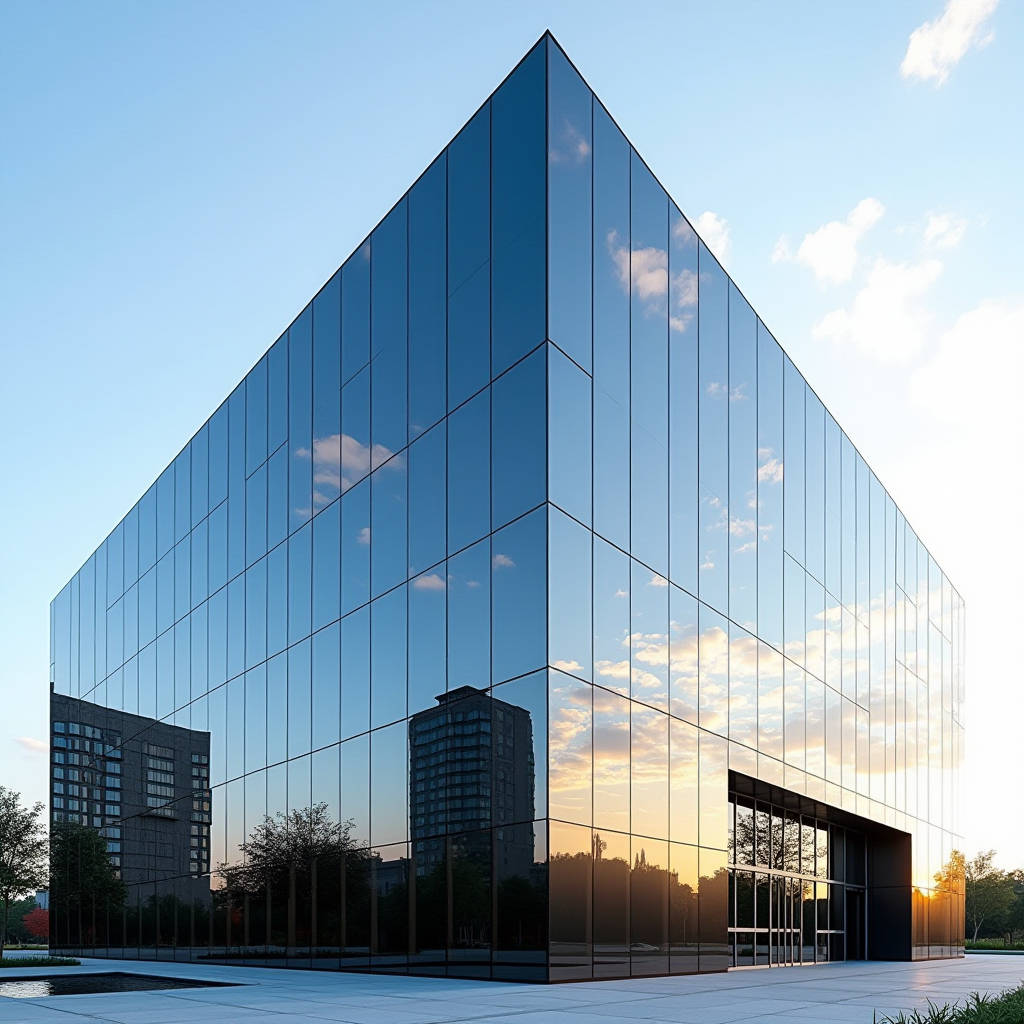
Specifying a Mirror Finish Aluminum Panel for a high-profile facade means committing to a look that demands absolute precision. Unlike standard matte or brushed architectural metal, a mirror-grade surface leaves zero room for substrate defects, coating inconsistencies, or installation misalignment. Every ripple, every weld mark, every micron of orange peel gets amplified by that reflective surface. Over the past decade, we have seen projects where the specification was flawless on paper but fell apart during fabrication because the engineer underestimated what it actually takes to produce a flat, distortion-free mirror panel at scale. This article is built for the contractor, the facade consultant, and the procurement manager who needs to know where mirror finish solid aluminum panels succeed, where they fail, and how to write a spec that a mill can actually deliver against.
What Mirror Finish Actually Means on Solid Aluminum
There is a persistent confusion in the market between "bright" aluminum and a true mirror finish. A bright anodized surface reflects light but does not produce a clear, undistorted image. A genuine Mirror Finish Aluminum Panel, by contrast, achieves a level of specular reflectance where you can read text or recognize facial features in the reflection at a distance of several meters. This is not a single-step process. It requires mechanical polishing, often followed by chemical brightening, then anodizing or a specialized coating system to lock the surface in place.
The substrate matters enormously here. Solid aluminum sheets — typically 2.0mm, 2.5mm, or 3.0mm gauge per architectural cladding standards — must be sourced from mills that can supply 5000-series or 6000-series alloys with tight grain control. If the base metal has inconsistent grain structure, the polishing process will reveal streaks, clouding, or directional haze that becomes obvious once the panel is installed on a sunlit elevation. This is why alloy selection is not a secondary decision. 5052 and 6061 are common choices, but 5052 tends to produce a slightly warmer tone while 6061 can achieve higher hardness and better flatness retention after forming.
Anodized mirror finishes typically follow the AA-M10 or AA-M20 specifications, with M20 representing the highest level of specularity. Achieving M20 on a large-format solid panel — say 1500mm x 4000mm — requires a polishing line capable of handling that sheet size without introducing bow or edge distortion. Not every factory has this capability. When a project specifies mirror finish across 2000 square meters of facade, the production bottleneck is almost always the polishing and brightening line, not the anodizing tank.
The Anodized Mirror vs. PVDF Mirror Coating Debate
One of the most consequential technical decisions on a mirror finish project is the choice between anodized and coated surfaces. Both can produce high reflectivity, but they behave completely differently over time, and the failure modes are distinct.
Anodized mirror finishes are produced by electrochemically growing a transparent aluminum oxide layer over a polished substrate. The oxide layer is integral to the metal — it cannot peel, chip, or delaminate in the way a coating can. This makes anodized mirror panels exceptionally durable in terms of adhesion. However, the oxide layer is porous unless sealed, and unsealed or poorly sealed anodizing will absorb atmospheric contaminants, leading to a gradual loss of reflectivity and the development of a chalky, cloudy appearance. For coastal or industrial environments, the sealing quality and anodizing thickness (typically 15-25 microns for architectural applications) become the difference between a facade that still looks sharp after 15 years and one that needs replacement after 7.
PVDF-based mirror coatings, applied via spray or coil coating at 30-40 microns dry film thickness, offer a different value proposition. The fluoropolymer chemistry provides inherent resistance to UV degradation, chemical attack, and chalking. A high-quality PVDF mirror coating — typically a 70% PVDF resin system meeting AAMA 2605 — can hold its gloss and color better than anodized surfaces in aggressive environments. The trade-off is that PVDF is a film applied to the surface, not grown from it. Adhesion depends entirely on pretreatment quality. If the chromate conversion coating or chrome-free pretreatment is inconsistent, the mirror coating can delaminate, particularly at cut edges, fastener penetrations, or areas subjected to thermal cycling.
The table below summarizes the key performance differences between the two approaches for mirror finish solid aluminum panels:
| Property | Anodized Mirror (AA-M20) | PVDF Mirror Coating (AAMA 2605) |
|---|---|---|
| Specular Reflectance | 85-92% (substrate-dependent) | 75-85% (coating formulation limits) |
| Coating Thickness | 15-25 μm (oxide layer) | 30-40 μm (dry film) |
| Adhesion Mechanism | Integral oxide growth | Mechanical/chemical bond to substrate |
| UV Resistance | Excellent (inorganic oxide) | Excellent (fluoropolymer chemistry) |
| Chemical Resistance | Moderate (acid/alkali sensitive) | High (inert fluorocarbon) |
| Typical Warranty Period | 10-15 years (sealed) | 20-30 years (70% PVDF) |
| Repairability On-Site | Very limited | Possible with touch-up kits |
| Cost Index (Relative) | 1.15-1.35x | 1.0x (baseline) |
Flatness Is the Real Engineering Challenge
If you ask any facade contractor who has installed a Mirror Finish Aluminum Panel system what the single biggest headache was, they will almost always say flatness. A mirror surface acts like an optical inspection tool. A deviation of 2mm across a 1200mm span — which would be invisible on a textured or matte finish — becomes painfully obvious when the reflection of a neighboring building or the horizon line is visibly warped.
Solid aluminum panels achieve flatness through a combination of material selection, tension-leveling at the mill, and careful fabrication. The starting point is the coil or sheet. Tension-leveled material from mills that supply architectural-grade aluminum will have internal stresses relieved, reducing the tendency to warp during routing, folding, or welding. For mirror finish applications, we recommend specifying a flatness tolerance of 0.2% of the panel diagonal or better — meaning a panel with a 2000mm diagonal should not deviate more than 4mm from a true plane. This is tighter than the typical 0.5% tolerance used for standard architectural panels.
Fabrication methods also play a decisive role. Welded corner joints on mirror panels require grinding and polishing that can introduce localized heat distortion. The alternative is a cassette-style panel with folded returns and mechanical corner connectors, which eliminates welding altogether but may leave visible joint lines in the reflection. For 3.0mm solid aluminum, cassette folding with a hemmed edge can produce a clean, flat panel without the thermal distortion problems of welding. The trade-off is that cassette panels are typically limited to simpler geometries — rectangular or trapezoidal shapes — whereas welded assemblies can accommodate complex curves and compound angles.
Stiffener placement is another variable that separates experienced fabricators from the rest. Mirror panels need stiffeners bonded to the rear face to prevent oil-canning and wind-induced deflection. The stiffener spacing, adhesive type, and bonding pressure all affect the visible surface. If the adhesive shrinks during curing, it can pull the face sheet inward, creating a subtle depression visible in the reflection. Two-part structural adhesives with low shrinkage characteristics are standard for this application. Futeng® has addressed this in their mirror panel production line by using a controlled-temperature curing process that minimizes adhesive-induced distortion on large-format panels.
Environmental Durability and Corrosion Considerations
Mirror finish aluminum panels live or die by their ability to maintain reflectivity in real-world conditions. The enemy is not just corrosion in the traditional sense — pitting, white rust, or filiform corrosion — but also the gradual degradation of the reflective surface through micro-pitting, staining, and atmospheric deposit accumulation.
For anodized mirror surfaces, the primary defense is the seal quality. Anodizing creates a hexagonal pore structure in the oxide layer. These pores must be sealed — typically through hot water sealing, nickel acetate sealing, or a combination — to prevent the ingress of contaminants. The ISO 3210 standard specifies the phosphoric-chromic acid test for anodizing seal quality. A mass loss below 30 mg/dm² is generally considered acceptable for architectural applications, but for mirror finishes in aggressive environments, we recommend specifying below 20 mg/dm².
PVDF mirror coatings face different challenges. While the fluoropolymer is chemically inert, the coating is not perfectly impermeable. Over time, moisture and chloride ions can migrate through the coating to the metal interface, particularly if the dry film thickness is below specification or if there are micro-voids in the coating. This is why AAMA 2605 certification requires not just initial performance but also accelerated weathering testing — typically 4000 hours of QUV exposure or equivalent — to validate long-term durability.
Coastal installations deserve special attention. Salt spray testing per ASTM B117 provides a comparative benchmark, but real coastal exposure is more complex. The combination of salt, UV, and thermal cycling can accelerate seal degradation on anodized surfaces and promote under-film corrosion on coated surfaces. For projects within 500 meters of a shoreline, a minimum anodizing thickness of 20 microns with high-quality sealing, or a PVDF system with a corrosion-inhibiting primer, should be considered mandatory. Some specifications also call for a marine-grade alloy such as 5052-H32, which has better resistance to saltwater corrosion than standard 3003 or 1100 alloys.
Designing with Mirror Finish: Optical Behavior and Facade Integration
Architects often select a Mirror Finish Aluminum Panel for its ability to dematerialize a building volume — the facade reflects the sky, the surrounding landscape, or the urban context, making the structure appear lighter or even invisible. But this optical effect is highly dependent on panel orientation, curvature, and the angle of incident light. A flat mirror panel on a south-facing elevation in a northern hemisphere location will produce intense specular reflections that can cause glare issues for neighboring buildings, traffic, or pedestrians. This is not a hypothetical concern — several high-profile projects have faced legal challenges or costly remediation because the mirror facade created hazardous glare conditions.
Glare analysis should be part of the design phase, not an afterthought. Software tools can model the specular reflection path from the facade at different times of day and seasons. If the analysis identifies unacceptable glare zones, the mitigation options include: introducing a subtle texture or pattern to the mirror surface to diffuse reflections, angling panels slightly downward or upward to redirect the reflection away from sensitive receptors, or using a combination of mirror and non-mirror panels to break up the reflective surface.
Panel joint design also interacts with the mirror effect. Open-joint systems, where panels are separated by a gap of 15-25mm, create shadow lines that help define the panel grid and reduce the visual impact of minor alignment errors. Closed-joint systems with silicone sealant produce a smoother overall surface but are less forgiving of installation tolerances. For mirror finishes, open joints are generally preferred because the shadow gap provides a visual reference that makes slight flatness variations less noticeable.
Fabrication Tolerances and Quality Control
The fabrication of mirror finish solid aluminum panels demands tolerances that are tighter than industry norms. The table below outlines the key dimensional and surface quality parameters that should be specified and verified during production:
| Parameter | Standard Panel Tolerance | Mirror Finish Tolerance | Measurement Method |
|---|---|---|---|
| Panel Flatness | 0.5% of diagonal | 0.2% of diagonal | Feeler gauge on granite surface plate |
| Edge Straightness | ±1.5mm per 1000mm | ±0.5mm per 1000mm | Straight edge + feeler gauge |
| Squareness | ±1.0mm across diagonal | ±0.5mm across diagonal | Steel tape, both diagonals |
| Surface Defects | No visible defects at 3m | No visible defects at 1m under 500 lux | Visual inspection, controlled lighting |
| Coating Gloss (60° meter) | ±5 GU of target | ±3 GU of target | Gloss meter per ASTM D523 |
| Reflectance Uniformity | Not typically specified | ±3% across panel surface | Reflectometer, grid pattern |
Quality control for mirror panels should include a 100% visual inspection under controlled lighting conditions — not just a spot check. The most common defects that escape factory inspection are micro-scratches from handling, polishing compound residue in corners, and edge burn from routing. Each of these becomes glaringly obvious once the panel is installed and illuminated by direct sunlight.
Handling, Packaging, and Site Storage
A Mirror Finish Aluminum Panel that leaves the factory in perfect condition can arrive at the job site ruined if the logistics chain is not properly managed. The reflective surface is unforgiving of abrasion. Panels rubbing against each other during transport will produce scratches that cannot be polished out on site without compromising the coating or anodizing thickness.
Best practice for packaging mirror panels includes: interleaving with soft, non-abrasive foam or polyethylene sheet between each panel; edge protection on all four sides; rigid crating that prevents panel movement during transit; and moisture barriers to prevent condensation during temperature changes. For overseas shipments, vacuum-sealed packaging with desiccant packs is recommended to prevent humidity-related staining during the weeks-long container journey.
On-site storage requires a clean, dry, covered area. Panels should be stored vertically on A-frames with padded supports, never stacked horizontally where the weight of upper panels can press debris into the surface of lower panels. The protective film applied at the factory should remain in place until immediately before installation. Even then, the film should be peeled carefully — a rapid peel can generate static electricity that attracts dust particles to the mirror surface.
Installation: The Mirror Magnifies Every Error
Installation of mirror finish aluminum panels is where the theoretical meets the brutal reality of construction tolerances. The supporting subframe — whether aluminum extruded profiles or steel channels — must be installed to a flatness tolerance that matches or exceeds the panel tolerance. If the subframe has a 5mm deviation across a 3-meter span, no amount of shimming will produce a visually acceptable mirror facade. The reflection will show every undulation.
Laser scanning or total station surveying of the subframe before panel installation is not a luxury on mirror finish projects — it is a necessity. The survey data should be compared against the 3D model, and any deviations beyond the specified tolerance must be corrected before panels are lifted into place. This adds cost and time to the installation phase, but skipping this step almost guarantees rework.
Fastener selection also deserves attention. Exposed fasteners on a mirror panel create a visual interruption in the reflection. Concealed fixing systems — using rear-mounted clips, undercut anchors, or bonded studs — preserve the continuous mirror surface. The structural adhesive used for bonding must be compatible with both the panel substrate and the coating system. Incompatibility can lead to staining, softening of the coating, or loss of bond strength over time. Testing per ASTM C794 for peel adhesion of structural sealants is a standard reference point.
Cost Drivers and Budget Planning
Mirror finish solid aluminum panels occupy the upper end of the architectural metal cost spectrum. The premium over a standard PVDF-coated panel in a solid color ranges from 30% to 70%, depending on the specific finish, panel size, and complexity. The cost is driven by several factors: the base metal quality required (tension-leveled, architectural-grade alloy), the polishing and brightening process, the specialized coating or anodizing, the tighter fabrication tolerances, and the more demanding quality control and packaging requirements.
For budget planning purposes, a rough breakdown of the cost premium for a mirror finish system versus a standard solid-color PVDF system is as follows:
- Base material upgrade: 10-15% (tension-leveled, premium alloy)
- Polishing and surface preparation: 15-25% (mechanical polish + chemical brightening)
- Mirror coating/anodizing: 10-20% (versus standard PVDF color coat)
- Tighter fabrication tolerances: 5-10% (slower production, higher scrap rate)
- QC, packaging, handling: 5-10% (100% inspection, premium packaging)
These percentages are additive and apply to the material cost of the panels. Installation costs may also increase due to the stricter subframe tolerances, laser surveying, and slower handling required for mirror panels. A realistic total installed cost premium for a mirror finish facade system is typically 40-80% above a standard architectural aluminum panel system.
Specification Checklist for Mirror Finish Projects
Writing a specification that a fabricator can actually execute requires clarity on the parameters that matter. Below is a concise checklist of items that should be addressed in any mirror finish aluminum panel specification:
- Alloy and temper: Specify 5052-H32 or 6061-T6 with tension-leveling requirement.
- Panel thickness: 2.5mm minimum for mirror finish; 3.0mm recommended for panels exceeding 1.2m².
- Finish type: Anodized per AA-M20 or PVDF mirror coating per AAMA 2605. State which.
- Flatness tolerance: 0.2% of panel diagonal, measured on granite surface plate.
- Reflectance: Minimum 80% specular reflectance, measured per ASTM E430 or equivalent.
- Seal quality (anodized): Mass loss below 20 mg/dm² per ISO 3210.
- Coating thickness (PVDF): Minimum 35 μm dry film thickness, 70% PVDF resin.
- Packaging: Interleaved with non-abrasive separator, rigid crate, moisture barrier.
- Subframe tolerance: ±2mm across any 3m span, verified by survey.
- Mock-up requirement: Minimum 3-panel on-site mock-up, approved before production.
The mock-up is non-negotiable. A mirror finish system must be evaluated under real site lighting conditions, at the actual installation angle, before committing to full production. What looks acceptable in a factory inspection bay under diffuse fluorescent lighting can look completely different under direct sunlight at a 30-degree viewing angle.
When Mirror Finish Is the Wrong Choice
As much as we advocate for the technical capabilities of solid aluminum mirror panels, there are project conditions where they are simply the wrong specification. High-traffic areas at ground level, where the panels will be subjected to frequent contact, abrasion, or vandalism, are poor candidates. The mirror surface will show every scratch, and repair is difficult to impossible without replacing the panel.
Projects with very tight budgets and schedules should also reconsider. The cost premium and the longer lead times — polishing and anodizing mirror panels can add 4-6 weeks to the production schedule — mean that mirror finish is not a last-minute design change. It requires planning from the schematic design phase onward.
Environments with high levels of airborne particulates — near construction sites, industrial zones, or arid regions with frequent dust storms — will require frequent cleaning to maintain the mirror appearance. If the building owner is not prepared for a regular facade maintenance program, the panels will lose their visual impact within months. The ISO 15686 framework for service life planning provides a useful methodology for evaluating whether the required maintenance regime is realistic for a given project.
Ultimately, a Mirror Finish Aluminum Panel is a high-performance architectural product that rewards careful specification and punishes shortcuts. The projects that succeed with mirror finishes are those where the architect, the facade engineer, the fabricator, and the installer all understand the technical demands and are aligned on the quality standards. When that alignment exists, the result is a facade that transforms the building's relationship with its environment — reflecting, dissolving, and redefining the visual landscape. When it does not, the result is a costly lesson in the unforgiving nature of a mirror surface.