Brushed Aluminium Panel Specification Guide for Commercial Facade Engineering
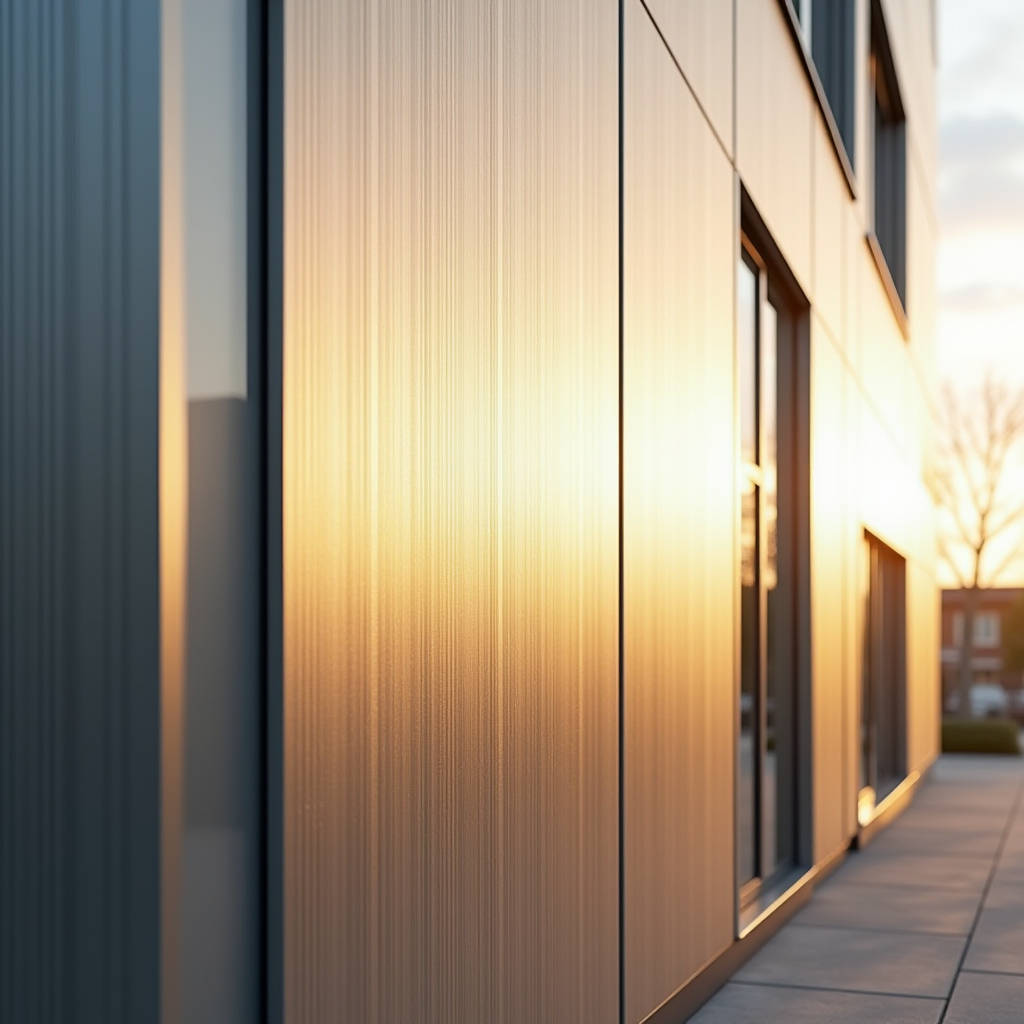
When a facade consultant specifies a Brushed Aluminium Panel, the conversation rarely stays on colour alone for long. The real discussion pivots toward directional grain consistency across 4-metre spans, the relationship between brush-wheel grit and long-term weathering, and whether the coating system can hold its linear texture through a decade of UV exposure. These are the questions that separate decorative metal from engineered cladding. A Brushed Aluminium Panel on a commercial tower or a high-end retail podium is not a cosmetic afterthought. It is a precision-finished architectural skin that must perform under wind load, thermal cycling, and the scrutiny of someone standing three metres away checking for grain mismatch between adjoining sheets. This article unpacks what actually matters when specifying, fabricating, and installing solid brushed-finish aluminium cladding at scale — from alloy selection and anodising compatibility to the cost implications of directional brushing on large-format panels.
What Defines a Brushed Finish on Solid Aluminium
The term "brushed" describes a unidirectional linear grain mechanically applied to the aluminium surface using abrasive belts, wire brushes, or oscillating brush wheels. The process removes a microscopic layer of metal oxide and creates parallel striations that scatter light in a controlled way. Unlike polished or mirror finishes, a brushed surface hides fingerprints, minor scratches, and handling marks — a practical advantage on busy construction sites where panels inevitably get handled before final installation.
On solid aluminium sheets — typically 2.0 mm, 2.5 mm, or 3.0 mm thick for facade applications — the brushing process must be executed before any coating is applied. The raw aluminium sheet passes through a series of abrasive stations where grit size, brush pressure, and feed speed determine the final grain depth and uniformity. Grit specifications generally range from 80 to 320, with 120-180 grit being the most common for architectural exteriors. Coarser grits (80-120) produce a more pronounced texture that reads well at distance but can trap airborne contaminants in coastal or industrial environments. Finer grits (220-320) yield a subtler finish that looks closer to satin stainless steel but demands tighter fabrication tolerances because any surface imperfection becomes more visible.
ASTM B209 governs aluminium sheet and plate specifications, including surface finish classifications. While it does not define "brushed" as a standalone category, the mechanical finishing parameters fall under the mill finish and conversion coating discussions that precede final PVDF or anodising application.
Alloy Selection: Why 5005 and 5052 Dominate Brushed Facade Applications
Not every aluminium alloy takes a brushed finish equally well. The grain structure, manganese content, and temper all influence how the abrasive media interacts with the surface. For solid aluminium cladding panels that will receive a brushed finish, two alloys dominate the market: 5005-H14 and 5052-H32.
5005-H14 offers a fine, uniform grain structure that responds predictably to mechanical brushing. The surface finish comes out consistent across large batches, which matters enormously when a facade comprises hundreds of panels fabricated over several weeks. Its anodising response is excellent — the brushed texture remains clearly visible under a clear anodic layer, and the colour shift is minimal. For projects where the brushed aluminium will be clear-anodised rather than painted, 5005 is the default choice.
5052-H32 brings higher tensile strength (approximately 31,000 psi ultimate vs. 5005's 20,000 psi) and superior corrosion resistance in marine environments. The trade-off is a slightly coarser grain structure that can produce a marginally less uniform brushed appearance. For coastal projects where salt spray resistance matters more than absolute grain perfection, 5052 is the pragmatic choice. The brushing parameters — particularly feed speed and abrasive pressure — need adjustment compared to 5005 to achieve comparable visual results.
| Property | 5005-H14 | 5052-H32 | 3003-H14 |
|---|---|---|---|
| Tensile Strength (MPa) | 140-165 | 210-230 | 130-155 |
| Yield Strength (MPa) | 120-135 | 180-195 | 110-125 |
| Brushed Finish Uniformity | Excellent | Good | Moderate |
| Anodising Response | Excellent | Good | Fair |
| Marine Corrosion Resistance | Moderate | Excellent | Moderate |
| Typical Cladding Thickness | 2.0-3.0 mm | 2.5-3.0 mm | 2.0-2.5 mm |
| Relative Cost Index | 1.0 (baseline) | 1.15-1.25 | 0.85-0.95 |
Coating Systems Over Brushed Aluminium: PVDF vs. Clear Anodising
Once the aluminium surface has been brushed, the specifier faces a critical decision: preserve the raw metallic look with a transparent coating, or apply a tinted PVDF system that allows the grain to ghost through the colour. Each path has distinct performance implications.
Clear PVDF Over Brushed Grain
Applying a clear PVDF coating (typically 25-35 microns dry film thickness) over a brushed aluminium surface preserves the metallic appearance while providing UV protection and chemical resistance. The coating conforms to AAMA 2605 standards for high-performance architectural coatings. The brushed grain remains fully visible, and the clear topcoat adds a subtle depth that enhances the linear texture. This approach works well for interiors and sheltered exterior applications. However, clear PVDF does not provide the same level of surface hardness as anodising, and the underlying aluminium can still oxidise if the coating is scratched through to bare metal.
Tinted PVDF with Brushed Substrate
Metallic PVDF colours — particularly silver, champagne, bronze, and graphite — can be applied over a brushed substrate to create a finish where the grain pattern subtly modulates the colour. The effect is most visible in lighter metallic tones. The minimum PVDF film thickness for exterior solid aluminium panels remains 25 microns for a two-coat system and 35-40 microns for a three-coat system with primer. The brushing must be completed before the pretreatment and coating stages, and the grain direction must be documented on fabrication drawings to ensure all panels align on the facade.
Clear Anodising Over Brushed Finish
Anodising builds an aluminium oxide layer electrochemically, typically 10-25 microns thick for architectural applications. The brushed texture remains exceptionally crisp under an anodic layer because the oxide grows perpendicular to the surface rather than flowing over it like a liquid coating. ISO 7599 specifies the requirements for architectural anodic coatings. The main limitation is alloy compatibility — 5005 anodises beautifully with a brushed finish, while 5052 produces a slightly yellower tone that may not suit all design intents. Anodising also cannot match the colour range of PVDF; it is largely limited to clear, champagne, bronze, and black tones.
Directional Grain: The Fabrication Challenge Nobody Discusses Early Enough
Brushed aluminium is inherently directional. The linear grain runs in one axis, and every panel on the facade must align. This sounds straightforward on paper. On a 40-metre elevation with windows, louvres, and return panels wrapping around corners, it becomes a logistical discipline that touches every stage from sheet layout to site installation.
The grain direction must be specified on the shop drawings. Typically, the grain runs vertically on wall panels — matching the natural visual flow of a building elevation. But design intent sometimes calls for horizontal grain, which creates different challenges: horizontal joints interrupt the grain flow more visibly, and any panel that needs to be rotated 90 degrees to fit the sheet layout will break the pattern. The fabricator must nest parts on the raw brushed sheets so that every panel maintains the specified grain orientation. This often increases material waste by 8-15% compared to non-directional finishes, a cost that should be factored into the budget at specification stage, not discovered during fabrication.
On-site, the installation team needs clear documentation showing grain direction for every panel location. A single panel installed with grain running perpendicular to its neighbours is immediately visible, especially under low-angle morning or evening light that rakes across the facade. Remediation means replacing the panel — there is no site fix for grain mismatch.
Weathering Performance and Long-Term Appearance Retention
A brushed aluminium panel facade will change over time. The question is how much, and whether the change is acceptable within the design parameters. Several factors influence long-term appearance retention:
Atmospheric pollutants settle into the microscopic grooves of the brushed texture. In urban environments with diesel particulates, the grain can accumulate grime that dulls the metallic reflectivity. Rain washing helps, but only on vertical surfaces with uninterrupted water flow. Horizontal returns, soffits, and sheltered areas under deep reveals will show differential weathering within 18-36 months. Specifying a slightly coarser grain (120-150 grit) on sheltered elevations can help because the deeper texture masks particulate accumulation better than a fine satin finish.
UV exposure affects clear coatings differently than pigmented ones. A clear PVDF topcoat over brushed aluminium will not yellow significantly — high-quality PVDF resins resist UV degradation for 20+ years — but the underlying aluminium can undergo subtle oxidation if moisture penetrates through micro-scratches in the coating. Clear anodising is more UV-stable but can develop a chalky appearance over decades if the anodic layer thickness is below 15 microns. For exterior brushed aluminium panels, the anodic coating should meet Class I requirements under AAMA 611, which mandates a minimum 18-micron film thickness.
Cost Structure: Where the Money Goes on Brushed Facade Projects
Understanding the cost breakdown of a brushed aluminium panel facade helps procurement managers make informed decisions. The brushing process itself adds a measurable premium over standard mill-finish or PVDF-coated panels without mechanical finishing.
| Cost Component | Standard PVDF Solid Panel | Brushed + Clear PVDF | Brushed + Clear Anodised |
|---|---|---|---|
| Raw Aluminium Sheet (3.0 mm, 5005) | $28-35 / m² | $28-35 / m² | $28-35 / m² |
| Mechanical Brushing | N/A | $8-14 / m² | $8-14 / m² |
| Pretreatment & Coating | $18-25 / m² | $20-28 / m² | $15-22 / m² |
| Fabrication (CNC, folding, routing) | $30-45 / m² | $30-45 / m² | $30-45 / m² |
| Directional Grain Waste Factor | N/A | 8-15% material adder | 8-15% material adder |
| Total Estimated Installed Cost | $180-260 / m² | $210-310 / m² | $200-290 / m² |
These figures are indicative for mid-to-large-scale commercial projects. The brushing premium is not trivial — it typically adds 12-20% to the total installed cost compared to a standard PVDF solid panel. However, the premium buys a finish that cannot be replicated by printed or film-laminated alternatives. For projects where the metallic grain is central to the architectural expression, the cost is justifiable. For projects where the brushed effect is a secondary consideration, a metallic PVDF coating over a standard smooth substrate may achieve a broadly similar visual at lower cost.
Suppliers with integrated brushing and coating lines can reduce the cost premium by eliminating double handling and reducing lead times. Futeng® operates solid aluminium panel production with in-house brushing capabilities, which allows tighter quality control over grain consistency from batch to batch — a factor that becomes critical when the facade exceeds 2,000 m² and panels are produced across multiple production runs.
Fabrication Tolerances and Quality Control
Brushed aluminium panels demand tighter fabrication discipline than standard coated panels. The brushing process introduces subtle surface stresses that can affect flatness, particularly on thinner gauges. A 2.0 mm brushed sheet may exhibit slightly more oil-canning than an unbrushed sheet of the same thickness because the mechanical abrasion relieves some of the residual stress from the rolling process at the mill.
Key quality control checkpoints for brushed aluminium panels include:
- Grain consistency check: Compare panels from the beginning, middle, and end of each production batch under consistent lighting. Variation in brush-wheel wear across a production run can shift the grain appearance.
- Flatness tolerance: After brushing and coating, panels should meet a flatness tolerance of ±2 mm over a 1-metre straight edge, per ISO 2768 general tolerances for linear dimensions.
- Coating adhesion: Cross-hatch testing per ASTM D3359 should achieve a 5B rating (no coating removal) on brushed substrates, which can be more challenging than on smooth substrates due to the increased surface area and micro-undulations.
- Grain alignment on folded edges: When a panel is folded, the grain on the return leg should continue in the same direction as the face. This requires the fabricator to plan the fold sequence relative to the grain axis.
Installation Considerations for Brushed Aluminium Facades
The installation phase is where brushed aluminium panels face their greatest risk of damage. The linear grain, while excellent at hiding minor scratches, is vulnerable to deep gouges that cut across the grain direction. A scratch running perpendicular to the grain catches light differently and becomes highly visible.
Site handling protocols should mandate clean gloves, protective film left in place until the final clean, and dedicated lifting frames rather than slings that can abrade the surface. If a panel is damaged on site, touch-up is effectively impossible — a brushed finish cannot be spot-repaired. The entire panel must be replaced, which means the project should carry 3-5% spare panels specifically for the brushed finish, compared to the 2-3% typically held for standard coated panels.
Cleaning and maintenance of brushed aluminium panels follows similar protocols to other PVDF or anodised facades. Mild detergent and water, applied with soft cloths or sponges, are sufficient for routine cleaning. Abrasive cleaners, scouring pads, and pressure washers set above 500 psi should be avoided — they can alter the grain appearance or damage the coating. The Aluminum Association publishes maintenance guidelines that are broadly applicable to brushed architectural finishes.
Comparing Brushed Aluminium to Alternative Metallic Finishes
Architects evaluating a Brushed Aluminium Panel often consider several metallic finish alternatives. Each has distinct characteristics that affect specification decisions:
Brushed vs. Mirror Finish: Mirror-polished aluminium delivers maximum reflectivity but shows every fingerprint, scratch, and atmospheric deposit. Brushed finishes trade some reflectivity for far greater practicality on occupied buildings. Mirror finishes are rarely specified for large exterior facades; they are more common on interior feature walls and column cladding.
Brushed vs. Anodised (Non-Brushed): Standard anodised aluminium without mechanical brushing has a uniform matte or satin appearance depending on the etch pretreatment. It lacks the directional grain that gives brushed aluminium its distinctive character. The cost is lower because the brushing step is eliminated, but the visual result is fundamentally different.
Brushed vs. Metallic PVDF on Smooth Substrate: A metallic PVDF coating on a smooth aluminium panel can approximate the look of brushed metal from a distance, but up close the absence of physical grain texture is apparent. The metallic flakes in the paint create a different type of light interaction than mechanically brushed striations. For projects where budget prohibits true brushed aluminium, metallic PVDF is the closest alternative.
Specifying Brushed Aluminium Panels: A Practical Checklist
A thorough specification for brushed aluminium cladding should address the following points to avoid ambiguity and ensure the finished facade matches the design intent:
- Alloy and temper: Specify 5005-H14 for general applications or 5052-H32 for coastal/marine environments. Do not leave alloy selection to the fabricator without understanding the trade-offs.
- Grit specification: State the abrasive grit range (e.g., 150-180 grit) and provide a physical reference sample. Written descriptions of "fine brushed" or "satin brushed" are too subjective for procurement.
- Grain direction: Indicate grain orientation on all elevation and shop drawings. Specify whether grain runs vertically or horizontally, and how it should be handled at corners and returns.
- Coating system: Define whether clear PVDF, tinted PVDF, or clear anodising is required. Reference the relevant AAMA or ISO standard and specify minimum film thickness.
- Batch consistency requirement: Require that all panels for a single elevation be produced from the same production batch where possible, or that a continuity sample be approved before production of subsequent batches.
- Mock-up requirement: Mandate an on-site or off-site mock-up of at least 4-6 panels installed with the actual support system to verify grain alignment, joint appearance, and overall visual performance under natural lighting.
- Spare panel allowance: Specify 3-5% spare panels for the brushed finish to cover installation damage and future replacement needs.
A Brushed Aluminium Panel facade is a precision architectural product. The decisions made during specification — alloy grade, grit size, coating type, grain direction — cascade through fabrication and installation and ultimately determine whether the finished building reads as a cohesive metallic surface or a patchwork of misaligned panels. Getting these details right requires close coordination between architect, facade engineer, fabricator, and installer. When the process works, the result is a facade with a depth and material authenticity that printed or laminated alternatives cannot match. The grain catches morning light differently than afternoon shadow. The surface changes subtly as weather and time leave their mark. That is the point — and it is worth specifying correctly.