Corten Effect Aluminum Panel Engineering and Specification for Modern Facade Systems
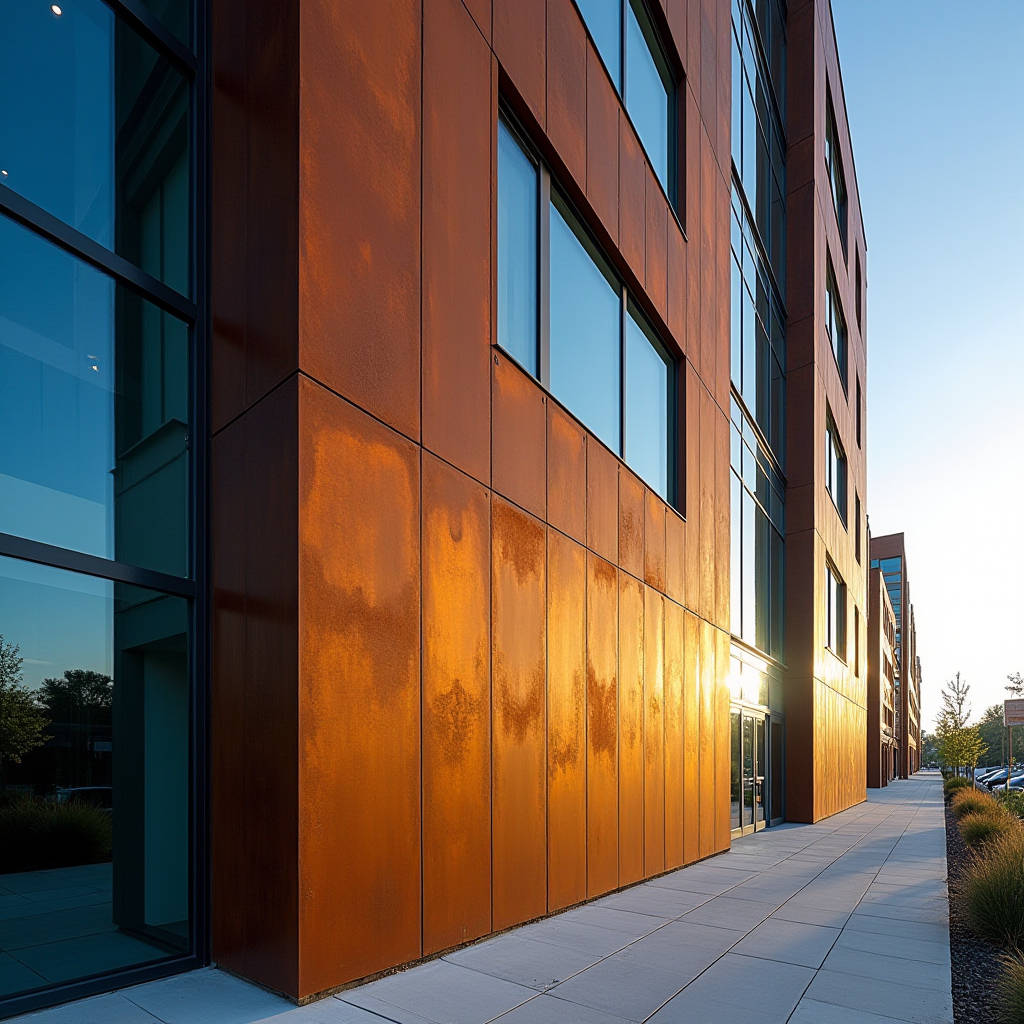
When a project calls for the raw, oxidized aesthetic of weathering steel but the structural or weight constraints make solid Corten impractical, the conversation shifts to a different material entirely. A Corten Effect Aluminum Panel delivers the same rusted visual signature without the material compromises that come with actual weathering steel. The appeal is straightforward: you get the burnt orange, textured patina that architects specify for industrial-chic facades, yet the substrate is a solid aluminium sheet weighing roughly one-third of equivalent steel. This matters on large-scale curtain wall retrofits where dead load calculations dictate what the existing structure can carry. It matters on high-rise soffits where hauling heavy steel panels into position drives up labor hours. And it matters on coastal projects where real Corten's corrosion behavior becomes unpredictable once chloride ions enter the equation. Understanding what a Corten Effect Aluminum Panel actually is, how the finish is produced, and where it outperforms its steel counterpart is the foundation for specifying it correctly on your next envelope design.
What Defines a Corten Effect Aluminum Panel
The term "Corten Effect" describes a surface finish applied to solid aluminium sheets that replicates the appearance of weathered Corten steel. The substrate is a solid aluminium alloy, typically from the 3xxx or 5xxx series, in gauges of 2.0mm, 2.5mm, or 3.0mm. These are not composite panels. There is no polyethylene core, no thin aluminium skin glued to a filler material. The panel is monolithic aluminium through its entire cross-section, which determines its fire classification, its bending behavior during fabrication, and its recyclability at end of life.
The finish itself is achieved through advanced multi-layer coating systems. Unlike the natural rust on Corten steel, which develops over months or years of atmospheric exposure, the Corten effect on aluminium is manufactured in a controlled factory environment. The most common approach uses PVDF (polyvinylidene fluoride) resin-based coatings, typically applied at a dry film thickness of 30-40 microns across a two-coat or three-coat system. Some manufacturers employ a base primer with metallic pigments, followed by a tinted clear coat that creates depth and color variation. The result mimics the mottled, uneven surface of oxidized steel, complete with the characteristic shifts between dark brown, orange, and charcoal tones.
There is also a growing segment of powder coating technology targeting the Corten aesthetic. Axalta's Alesta SD Corten line, for instance, uses a super-durable polyester powder formulation that replicates the weathered steel look while meeting AAMA 2604 performance standards. The advantage of powder is zero VOC emissions during application and a single-coat process that simplifies quality control. However, PVDF liquid coatings remain dominant in high-end architectural work because of their proven 20-plus-year track record on aluminium curtain wall panels under full sun exposure in the Middle East and Southeast Asia.
Why Solid Aluminium Instead of Actual Corten Steel
The question comes up on nearly every project: if the spec calls for a rusted look, why not use real Corten? The answer splits into four practical concerns that general contractors and facade engineers deal with daily.
First, weight. A 2.5mm solid aluminium panel weighs approximately 6.8 kg/m². A 1.5mm Corten steel panel, which is the minimum practical gauge for flatness on wall cladding, weighs around 11.8 kg/m². That 5 kg/m² difference compounds across 5,000 square meters of facade into 25 metric tons of additional dead load. On a mid-rise building with a steel frame, that might be absorbable. On an aluminium curtain wall system, it often is not. The mullion sizing, bracket spacing, and anchor embedment all change when the cladding weight increases by 70%. A Corten Effect Aluminum Panel keeps the dead load within the range that standard curtain wall profiles are designed to handle.
Second, the runoff problem. Real Corten steel sheds rust-laden water during its first few years of weathering. This runoff stains adjacent surfaces, including concrete paving, stone cladding, glass, and sealant joints. The staining is ferric oxide, and it is notoriously difficult to remove from porous materials. On a building with mixed materials, the detailing required to manage Corten runoff adds cost and complexity. An aluminium panel with a factory-applied Corten effect finish does not shed rust. The color is locked in the coating. Adjacent materials stay clean.
Third, corrosion behavior in aggressive environments. Corten steel works by forming a dense, adherent oxide layer that slows further corrosion. This mechanism depends on cyclic wetting and drying. In continuously humid environments, or in marine atmospheres with chloride deposition above 1.0 mg/m²/day, the protective patina may not stabilize. The steel continues to corrode at rates that can exceed 0.1mm per year. Solid aluminium with a properly pretreated and coated surface does not rely on a self-healing oxide mechanism. Its corrosion resistance is inherent to the metal and the barrier coating, making it predictable in coastal and tropical climates.
Fourth, fabrication and lead time. Corten steel sheets require specialized bending equipment, and the pre-weathered material is harder on tooling. Welding Corten requires matching filler metals to preserve the weathering characteristics. Aluminium fabrication shops are more common in most markets, and the tooling for routing, folding, and perforating solid aluminium is widely available. This translates to shorter lead times and more competitive pricing on fabricated panel systems.
Coating Technologies Behind the Corten Effect
Not all Corten effect finishes are equal. The performance difference between a budget polyester coating and a properly specified PVDF system becomes apparent within three to five years of exposure. Understanding the coating chemistry helps procurement teams evaluate supplier quotations on a level playing field.
| Coating Type | Resin System | Dry Film Thickness | Color Retention (10 Years) | Salt Spray Resistance | Typical Warranty |
|---|---|---|---|---|---|
| Standard Polyester | Polyester | 20-25 µm | Delta E > 5.0 | 500 hrs | 3-5 years |
| Super Durable Polyester | Polyester/TGIC | 60-80 µm | Delta E < 3.0 | 1,000 hrs | 10-15 years |
| PVDF 70% (2-Coat) | Kynar 500/Hylar 5000 | 30-35 µm | Delta E < 2.0 | 3,000+ hrs | 20-25 years |
| PVDF 70% (3-Coat) | Kynar 500/Hylar 5000 | 40-45 µm | Delta E < 1.5 | 3,000+ hrs | 20-30 years |
| FEVE Fluoropolymer | Lumiflon | 30-40 µm | Delta E < 2.0 | 3,000+ hrs | 20-30 years |
The data in the table reflects testing under ASTM B117 (salt spray) and ASTM D2244 (color measurement) protocols. For projects where the Corten Effect Aluminum Panel is specified on a south-facing elevation in a high-UV region, the three-coat PVDF system is the conservative choice. The primer layer provides adhesion and corrosion protection, the color coat carries the Corten-effect pigments, and the clear topcoat adds depth and UV resistance. Some suppliers, including Futeng®, have developed proprietary multi-layer systems that incorporate metallic flakes in the mid-coat to simulate the crystalline structure of real rust under magnification.
A note on the powder coating route: super-durable polyester powders meeting AAMA 2604 can achieve excellent results for the Corten effect, particularly on interior applications or sheltered exterior locations. The textured finish possible with powder can add tactile authenticity to the rusted appearance. However, for full exterior exposure on high-rise buildings, AAMA 2605-compliant PVDF liquid coatings remain the benchmark. The specification decision should reference the project's geographic location, the panel accessibility for future maintenance, and the architect's tolerance for color shift over the building's design life.
Comparing Corten Effect Aluminum to Other Weathered Metal Finishes
The architectural market now offers several pre-finished metal options that aim to replicate naturally weathered surfaces. Corten effect, zinc effect, copper patina, and verdigris finishes each target a different aesthetic, but they share a common value proposition: the look without the wait, and without the material behavior of the real metal.
A Corten Effect Aluminum Panel differs from a zinc-effect aluminium panel in both color range and the underlying coating formulation. Zinc-effect finishes typically use a grey-blue palette with subtle metallic flake. Corten effect requires a warm spectrum from deep brown to bright orange, which demands different pigment chemistry. The iron oxide pigments used in Corten-effect coatings are inherently more UV-stable than the organic pigments used in some blue-green patina finishes, which is one reason Corten-effect PVDF panels tend to show less color fade over a 15-year horizon than verdigris-effect panels.
From a cost perspective, the Corten effect sits in the middle of the specialty finish range. It is generally less expensive than a true copper-effect finish because the raw pigments are less costly. It is more expensive than a standard solid-color PVDF coating because the application process is more complex. Achieving a convincing rust pattern requires controlled variation in the coating application. Some manufacturers use a robotic spray system that varies the nozzle distance and flow rate to create natural-looking mottling. Others apply a base coat and then a patterned second coat through a template or mask. Each approach has different repeatability characteristics, which matters when the project requires 2,000 panels to look consistent across an entire facade.
Engineering and Installation Considerations
Specifying a Corten Effect Aluminum Panel involves more than picking a color swatch. The panel system design, the attachment method, and the interface with the building's weather barrier all need to be coordinated with the finish characteristics.
Panel flatness is a particular concern with Corten-effect finishes. The mottled, textured appearance can either mask or amplify oil-canning, depending on the gloss level and the viewing angle. Most Corten-effect coatings are specified at a low gloss, typically 15-25 GU at 60 degrees, which helps minimize the visual impact of minor surface waves. The solid aluminium substrate, at 2.5mm or 3.0mm thickness, provides better inherent flatness than thinner gauges. For panels exceeding 600mm in width, stiffening ribs or a folded return edge are recommended to maintain flatness within the tolerances specified in ASTM E2835 for architectural flatness.
Attachment systems for Corten Effect Aluminum Panels fall into three main categories. Exposed fastener systems are the most economical but interrupt the rusted visual with visible screw heads. Concealed clip systems, such as those using extruded aluminium rails with continuous engagement, provide a clean face but require more precise fabrication and installation. Cassette systems, where each panel is a pre-assembled unit with folded edges that clip into a sub-frame, offer the best combination of flatness control and installation speed. The cassette approach also allows panels to be removed individually for access to the building envelope behind the cladding.
Thermal movement must be accounted for in the joint design. Solid aluminium has a coefficient of thermal expansion of approximately 2.4 x 10⁻⁵ m/m/°C. A 3-meter panel subjected to a 60°C temperature swing will expand and contract by about 4.3mm. Joint widths of 10-12mm are typical for Corten Effect Aluminum Panel installations, with the joint sealant or gasket selected to accommodate the calculated movement. The dark color of the Corten effect means the panel surface temperature can reach 70-80°C under direct summer sun, so the joint design should use the upper end of the expected temperature range.
Cost Structure and Value Engineering
Procurement teams evaluating Corten Effect Aluminum Panel options need to understand what drives the square-meter cost. The material cost breaks down into three main components: the aluminium substrate, the coating process, and the fabrication.
The aluminium substrate cost follows the LME aluminium price plus a conversion premium. For 2.5mm 3003-H14 alloy sheet, the raw material cost typically ranges from $18-25/m² depending on market conditions and order volume. The Corten-effect coating adds $12-20/m² for a PVDF system, with the higher end reflecting three-coat systems and more complex mottling patterns. Fabrication, including cutting, folding, routing, and attachment hardware, adds another $15-30/m² depending on panel complexity and batch size. The total ex-factory cost for a fabricated Corten Effect Aluminum Panel system typically lands in the $45-75/m² range, which compares favorably to pre-weathered Corten steel at $70-100/m² when factoring in the additional substructure and handling requirements of the heavier steel panels.
Installation cost is where the aluminium option often pulls ahead. Lighter panels mean fewer installers per panel, faster cycle times, and reduced crane or hoist requirements. On a typical mid-rise project, installation labor for aluminium cassette panels runs 15-20% lower than for equivalent steel panels. When the total installed cost is calculated, the Corten Effect Aluminum Panel is frequently the cost-effective choice, particularly on projects where the building structure was not designed for heavy cladding.
"The shift from real Corten to Corten-effect aluminium on our last three mixed-use projects saved an average of 18% on the facade package while eliminating the rust-runoff detailing that had caused punch-list headaches on earlier jobs." — This reflects a pattern observed across multiple commercial projects where the specification pivot was driven by practical construction economics rather than material cost alone.
Performance Standards and Compliance
Any Corten Effect Aluminum Panel specified for exterior use should be backed by testing that aligns with recognized international standards. The relevant standards fall into three categories: coating performance, panel system performance, and fire safety.
For coating performance, AAMA 2605 is the highest specification for architectural coatings on aluminium. It requires a minimum of 10 years of South Florida exposure with color change (Delta E) not exceeding 5.0 units, chalk resistance of no less than rating 8, and gloss retention of at least 50%. A PVDF Corten-effect coating that meets AAMA 2605 has been tested to withstand the equivalent of decades of sun, rain, and thermal cycling. The American Architectural Manufacturers Association publishes the full test protocol, which includes accelerated weathering per ASTM G155, salt spray per ASTM B117, and chemical resistance per ASTM D1308.
For panel system performance, ASTM E2835 covers the air leakage, water penetration, and structural performance of aluminium panel wall systems. The standard references ASTM E330 for wind load testing, which is critical for high-rise applications where the Corten Effect Aluminum Panel must resist both positive and negative wind pressures. Testing should be conducted on a mock-up that replicates the actual panel size, joint detail, and attachment method specified for the project.
Fire performance is a key advantage of solid aluminium panels. Unlike aluminium composite materials with polyethylene cores, a solid aluminium panel is non-combustible. It meets the requirements of ASTM E136 for non-combustibility and can be used in buildings where the International Building Code restricts combustible materials on exterior walls above a certain height. For projects in the UK and Middle East, the panels should be tested to BS 8414 or NFPA 285 as part of the complete wall assembly.
For projects in Europe, the EN 13501-1 reaction-to-fire classification applies. A solid aluminium panel with a PVDF coating typically achieves an A1 or A2-s1,d0 rating, depending on the coating thickness and the specific test configuration. This is a critical differentiator from ACP products, which require extensive fire engineering to justify their use on high-rise facades.
Common Specification Mistakes and How to Avoid Them
Over years of reviewing facade specifications, several recurring issues surface when Corten Effect Aluminum Panel products are specified.
The first mistake is specifying the finish by reference to a photograph rather than a controlled physical sample. The Corten effect varies significantly between manufacturers because the coating application process is proprietary. A photo taken under studio lighting will not match the panel as it appears on a north-facing facade at 4 PM. The correct approach is to require a physical sample panel, minimum 300mm x 300mm, produced on the actual production line, and to approve it under natural daylight at multiple viewing angles. The approved sample becomes the benchmark for the entire project batch.
The second mistake is failing to specify the coating batch continuity. Because the Corten effect relies on a specific mottling pattern, panels produced in different coating batches may show visible variation. The specification should require that all panels for a single elevation come from the same coating batch, or that a batch-to-batch color matching protocol is agreed upon before production begins. The acceptable Delta E between batches should be stated explicitly, typically 1.0 or less for a high-end architectural project.
The third mistake is overlooking the edge treatment. The cut edges of a Corten Effect Aluminum Panel will show the bare aluminium substrate unless they are specified to be returned, folded, or touched up. For cassette systems, the edges are typically folded back and hidden within the joint. For face-fixed panels, exposed edges should be factory-coated or touched up on site with a matching coating system. The edge treatment should be detailed in the shop drawings and reviewed during the submittal process.
The fourth mistake is assuming that the Corten effect finish is as hard as a standard solid-color PVDF. The mottling technique can sometimes result in a slightly softer surface, particularly if a textured clear coat is used. The specification should include a pencil hardness test per ASTM D3363, with a minimum hardness of HB to F for exterior applications. This ensures the finish can withstand cleaning and minor impact without scratching through to the base coat.
Sourcing and Supply Chain Factors
The global supply chain for Corten Effect Aluminum Panel products has matured significantly in the past decade. Production capacity is concentrated in China, with several manufacturers operating dedicated coating lines for specialty architectural finishes. The lead time for a typical project runs 4-7 weeks from order confirmation to ex-factory delivery, depending on the coating complexity and the fabrication requirements.
When evaluating suppliers, procurement teams should look beyond the unit price. The key factors include the coating line's quality certifications, the availability of in-house or partnered fabrication capability, and the supplier's track record on projects of similar scale. A supplier that only coats the aluminium but outsources fabrication introduces an additional coordination risk. Integrated manufacturers that handle both coating and fabrication under one quality management system reduce the risk of misalignment between the finish specification and the fabricated panel dimensions.
Freight and logistics deserve attention. Solid aluminium panels are typically shipped in wooden crates with interleaving to prevent finish damage during transit. Ocean freight from China to the US West Coast runs 3-4 weeks, with an additional 1-2 weeks for customs clearance and inland trucking. For projects on tight construction schedules, air freight is an option for smaller quantities, though the cost premium is significant. The packaging specification should require that panels are shipped vertically on edge, not flat, to minimize the risk of flexural damage during handling.
Quality inspection before shipment is standard practice. Third-party inspection agencies can verify panel dimensions, coating thickness, color consistency, and packaging integrity at the factory before the containers are sealed. The inspection protocol should reference the approved sample panel and the project-specific tolerance schedule. For large projects, a phased inspection approach covering raw material receipt, post-coating, and pre-shipment stages provides the most comprehensive quality assurance.
Maintenance and Long-Term Performance
One of the selling points of a Corten Effect Aluminum Panel is that it requires minimal maintenance compared to real Corten steel. The coating does not evolve over time. The color you approve on the sample is the color that stays on the building. There is no runoff to manage, no patina to stabilize, and no need to protect adjacent surfaces from rust staining.
That said, periodic cleaning is recommended to maintain the appearance. Atmospheric soiling, particularly in urban environments with diesel particulates, can dull the finish over time. A gentle wash with a pH-neutral detergent and soft-bristle brush, followed by a low-pressure rinse, is typically sufficient at 12-24 month intervals. The cleaning frequency depends on the local environment. A building in a coastal location with salt spray may need more frequent cleaning than one in a suburban setting.
The PVDF coating on a Corten Effect Aluminum Panel is inherently resistant to graffiti and chemical attack. Most graffiti removal products can be used without damaging the finish, though a test patch should always be performed first. The coating's low surface energy also means that many paints and markers do not adhere well, making removal easier than on anodized or bare metal surfaces.
After 20-25 years of service, a PVDF-coated Corten Effect Aluminum Panel may show some color fade, particularly on south-facing elevations in high-UV climates. At that point, the options include recoating in situ or replacing individual panels. The cassette system design makes panel replacement straightforward, as individual units can be unclipped without disturbing adjacent panels. This is a practical advantage over site-applied render or paint systems, where localized repairs are difficult to blend with the surrounding surface.
The long-term value proposition of a Corten Effect Aluminum Panel rests on three pillars: the structural lightness that reduces substructure cost, the factory-controlled finish that eliminates site variability, and the predictable performance that comes from a material system tested to international standards. For architects who want the industrial warmth of weathered steel and contractors who want a cladding system that installs efficiently and stays within budget, the aluminium-based Corten effect has become a standard option in the facade design toolkit.