Rust Effect Aluminum Panel Engineering Finish Chemistry and Rainscreen Performance Standards
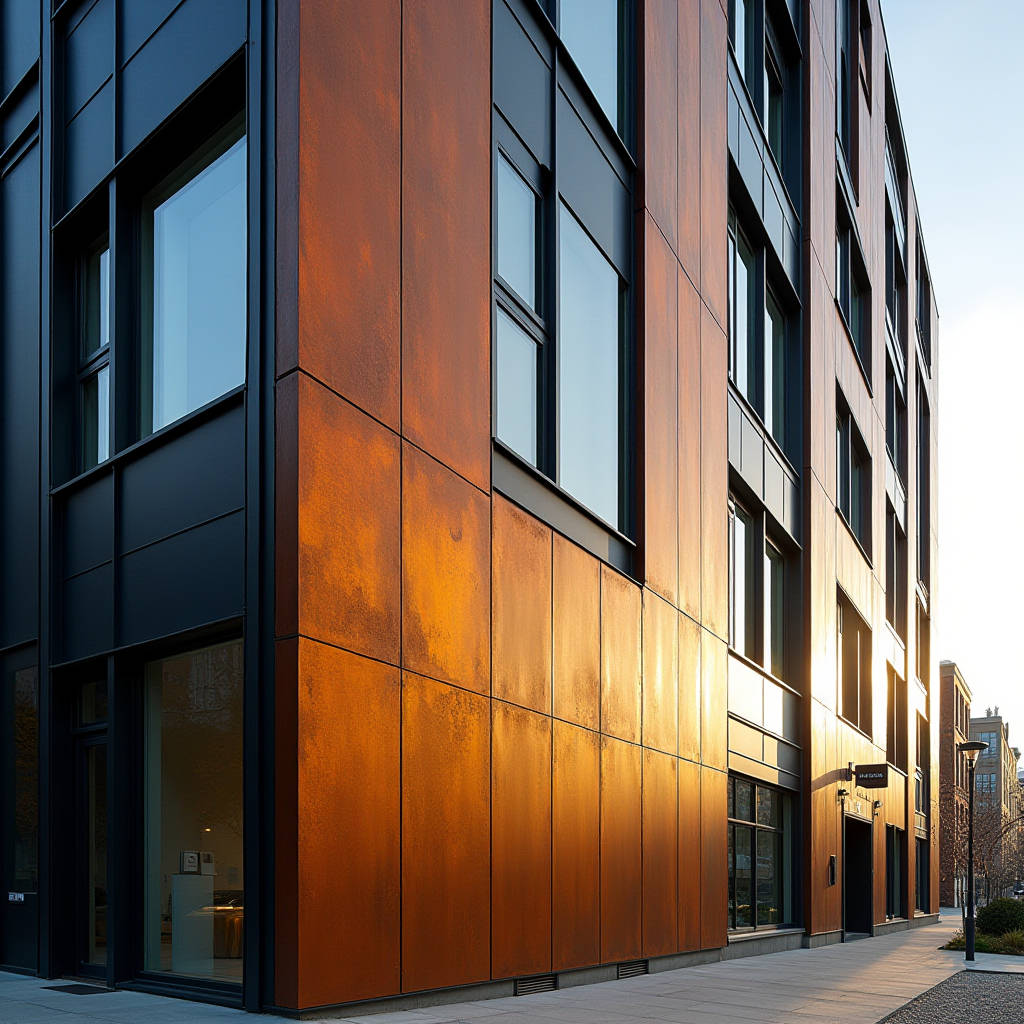
Rust Effect Aluminum Panel has carved out a distinct position in the architectural metals market, and for reasons that go well beyond surface-level aesthetics. Architects and facade consultants are specifying these panels at an accelerating rate for mid-rise commercial projects, cultural institutions, and adaptive reuse developments where the warmth of oxidized steel is desired but the structural and maintenance liabilities of actual weathering steel are not. The core proposition is straightforward: a solid aluminum sheet, typically in 2.5mm or 3.0mm gauge, factory-finished with a multi-layer coating system that replicates the chromatic depth and granular texture of genuine rust, without the material loss, staining runoff, or section thinning that real corrosion introduces. This article examines the technical anatomy of that finish, the performance standards that separate a durable architectural product from a short-lived decorative treatment, and the engineering considerations that general contractors and curtain wall installers encounter when integrating these panels into rainscreen assemblies, soffit applications, and large-format facade retrofits.
What Actually Constitutes a Rust Effect Finish on Solid Aluminum
The term "rust effect" circulates broadly in the cladding industry, but the technical reality spans a wide quality spectrum. At the lower end, a simple digital print with a clear topcoat might deliver a photographic approximation of rust, adequate for interior feature walls but insufficient for any exterior application with UV exposure. At the architectural specification level, the finish is a layered system: a chrome-based conversion coating bonds directly to the aluminum substrate, a primer layer provides adhesion continuity, and then the rust-effect layer itself is applied through a combination of pigmented PVDF (polyvinylidene fluoride) coatings, often in three to five passes, with some manufacturers incorporating actual iron-oxide particles suspended in the fluoropolymer matrix to create genuine micro-texture. The top clear coat, typically a 70% PVDF formulation conforming to AAMA 2605, locks the entire system in place.
This matters because solid aluminum does not rust. The iron content in standard 3003 or 5052 aluminum alloys is negligible, and the metal's natural oxidation produces a thin, transparent aluminum oxide layer that passivates the surface. Any "rust" appearance is therefore entirely engineered. The quality of that engineering determines whether the panel looks convincing on day one and day 3,000. A properly specified Rust Effect Aluminum Panel from a manufacturer operating under ISO 9001 quality management will carry a multi-decade finish warranty, with color shift limited to no more than 5 Delta E units over 20 years of south-facing Florida exposure. That is the benchmark the industry should reference.
The Chemistry of Perceived Patina: How the Finish Works
Understanding the finish architecture helps procurement teams avoid costly mis-specification. The rust effect is not a single paint layer. It is a sequence where each pass contributes to the final visual depth. The base coat typically carries a dark, warm brown or charcoal tone. Intermediate layers introduce variegation: burnt orange, umber, and sienna tones are applied in a controlled but randomized pattern, often through a combination of roller coating and spray application. Some advanced systems use a chemical reaction layer where ferrous compounds are applied and then oxidized in a controlled environment before the clear coat seals them. This produces a genuinely textured surface, not just a printed image.
The clear coat is the critical protective envelope. Architectural-grade PVDF clear coats contain 70% PVDF resin by weight, with the balance comprising acrylic resins and ceramic pigments. This ratio is specified in AAMA 2605-20 and is the threshold for what the industry considers "high-performance." Below this, at 50% PVDF (AAMA 2604), the coating will chalk and fade noticeably faster. For a Rust Effect Aluminum Panel, the clear coat must also provide UV screening to protect the variegated pigment layers beneath. Without adequate UV blockers, the iron-oxide pigments—whether real or synthetic—will degrade, and the panel will shift from a convincing rust tone to a flat, muddy brown within five to seven years.
Substrate Integrity: Why Solid Aluminum Matters
The cladding substrate is as important as the finish. Solid aluminum sheets in 2.0mm, 2.5mm, and 3.0mm thicknesses provide the flatness, wind-load resistance, and fabrication versatility that curtain wall systems demand. Unlike composite panels with a polyethylene core, solid aluminum panels do not delaminate under heat, do not exhibit core degradation at routed edges, and maintain their structural properties across a wider temperature range. For a rust-effect finish, which relies on surface continuity for its visual impact, the dimensional stability of solid aluminum is a practical advantage. There is no risk of the finish cracking at fold lines or around punched openings when the panel is fabricated into cassettes, trays, or custom perforated screens.
Alloy selection also plays a role. 3003-H14 is the workhorse for flat panels, offering good formability and corrosion resistance. For projects requiring deeper draws or complex geometries, 5052-H32 provides higher tensile strength. Both alloys accept the chrome conversion coating uniformly, which is essential for adhesion of the rust-effect system. The temper affects spring-back during bending, and fabricators should account for this when planning cassette returns and interlocking joint details. A 2.5mm 3003-H14 panel with a 25mm return leg will behave predictably on a CNC press brake, and the rust-effect finish, properly cured, will not micro-crack along the bend radius if the minimum bend radius guidelines are followed.
| Property | AAMA 2605 (High-Performance) | AAMA 2604 (Standard) | AAMA 2603 (Interior) |
|---|---|---|---|
| PVDF Resin Content (min.) | 70% | 50% | N/A (acrylic/polyester) |
| Film Thickness (min.) | 30 microns (1.2 mil) | 25 microns (1.0 mil) | 20 microns (0.8 mil) |
| South Florida 10-Year Color Change | ≤ 5 Delta E | ≤ 5-8 Delta E | Not rated for exterior |
| Chalk Resistance (10-Year) | Rating 8 minimum | Rating 6 minimum | Not rated |
| Typical Warranty | 20-30 years | 10-15 years | None for exterior |
| Recommended for Rust Effect Exterior | Yes | Conditional (low-rise, shaded) | No |
Manufacturing Tolerances and Quality Control
For a Rust Effect Aluminum Panel to perform as specified, the manufacturing process must control variables that generic sheet metal production often overlooks. Flatness is the first concern. A panel with oil-canning—visible waviness across the surface—will distort the rust-effect finish, creating highlights and shadows that read as defects rather than intentional patina. Reputable suppliers maintain flatness within 0.5% of the panel's diagonal dimension, measured per ASTM E2830. This is achieved through precision leveling after coil coating and before shearing to size.
Color consistency is the second major challenge. Unlike a solid RAL color, a rust-effect finish is inherently variegated. The specification must define what constitutes acceptable variation. A well-written spec will reference a master panel range: three to five physical samples that establish the upper and lower bounds of acceptable color and texture variation. The project's quality assurance protocol should include a mock-up phase where installed panels are reviewed under site lighting conditions. This is standard practice for architectural metal and is codified in the Metal Construction Association's technical bulletin on pre-finished metal wall panels.
Futeng® has built its production workflow around these quality gates, with inline spectrophotometer checks at the coating line and a dedicated flattening station for panels exceeding 1,200mm in width. For procurement managers sourcing from Asia, verifying that the factory operates under ISO 9001 and has a documented process control plan for variegated finishes is a minimum due diligence step.
Rainscreen Integration: Detailing for Rust-Effect Panels
The majority of exterior Rust Effect Aluminum Panel applications are in drained and back-ventilated rainscreen systems. The panel becomes the outer leaf, separated from the weather barrier by an air cavity of 38mm to 50mm. This cavity is critical for managing moisture and for preserving the panel finish. Condensation that forms on the back of the aluminum panel during nighttime cooling must be able to drain freely; standing water against the rear of the panel can, over time, degrade the primer layer if the panel's reverse side is not adequately protected.
Specifiers should require that the panel's reverse side receives a wash coat or service coat, typically a thin epoxy or polyester layer, even if it is not visible after installation. This is a small cost addition that significantly extends the panel's service life. The carrier system—aluminum extrusions, stainless steel clips, and adjustable brackets—must be isolated from the panel to prevent galvanic corrosion. Nylon isolators or EPDM gaskets at all contact points are standard practice. The fastener specification should call for 316 stainless steel, not 304, particularly in coastal or industrial environments where chloride exposure is elevated.
Joint Design and Visual Continuity
Open joints are the most common detailing approach for rainscreen systems, with gaps of 10mm to 20mm between panels. The dark shadow line created by the joint can complement the rust-effect finish, but it also introduces a visual interruption. Some architects specify a dark-colored carrier rail or a black breather membrane behind the open joint to maintain a consistent background. Others prefer a shiplap or interlocking panel profile that conceals the joint from direct view. The choice affects the panel's edge treatment: interlocking panels require precise fabrication of the return legs, and the rust-effect finish must be applied uniformly to these edges, which is more demanding than coating a flat face.
Coastal and Industrial Environment Performance
One of the strongest arguments for specifying a Rust Effect Aluminum Panel instead of actual weathering steel is environmental resistance. Corten steel, the most common reference material, relies on a stable patina of rust to protect the underlying steel. In coastal environments with salt spray, or in industrial zones with sulfur dioxide exposure, that patina does not stabilize. The steel continues to corrode, losing section thickness at rates that can exceed 0.5mm per decade in aggressive conditions. This is a structural concern, not just a cosmetic one.
Solid aluminum, by contrast, is inherently corrosion-resistant. The 3003 and 5052 alloys have demonstrated decades of service in marine atmospheres without significant pitting, provided proper isolation from dissimilar metals is maintained. The PVDF coating adds a second line of defense. Salt spray testing per ASTM B117, with 3,000 hours of exposure, is a standard qualification test for architectural coatings, and a properly formulated PVDF system will show no blistering, no loss of adhesion, and minimal color change after this regimen. For projects within 500 meters of a coastline, the specification should explicitly require this test data from the coating supplier.
Fire Performance and Building Code Compliance
Fire safety is a non-negotiable parameter for exterior cladding on buildings above a certain height or occupancy classification. Solid aluminum panels carry a distinct advantage here: aluminum is non-combustible, classified as A1 under EN 13501-1 or as a limited-combustible material under ASTM E136, depending on the specific alloy and thickness. The PVDF coating does contribute a small organic content, but the overall system, when tested as part of a complete rainscreen assembly per NFPA 285 or BS 8414, can meet the requirements for use on high-rise buildings in most jurisdictions.
This is a point that procurement teams should verify with test reports specific to the panel system being specified. A generic aluminum panel fire rating is not sufficient; the test must cover the complete assembly including the rust-effect finish, the carrier system, insulation, and the air barrier. The National Fire Protection Association maintains the NFPA 285 test standard, and compliance is mandatory under the International Building Code for exterior wall assemblies on buildings over 40 feet in height. Solid aluminum panels with PVDF finishes have a long track record of passing this test when properly detailed.
Cost Structure and Lifecycle Economics
The installed cost of a Rust Effect Aluminum Panel system varies with panel thickness, finish complexity, carrier system design, and project location. As a rough order of magnitude, a 2.5mm solid aluminum panel with a high-performance rust-effect PVDF finish, supplied as fabricated cassettes with a standard aluminum carrier system, will fall in the range of $55 to $85 per square foot installed, depending on volume and complexity. This is higher than a standard solid-color PVDF panel, which typically runs $35 to $50 per square foot, because the rust-effect finish involves additional coating passes and slower line speeds.
However, the lifecycle comparison with actual weathering steel is instructive. Corten steel panels of comparable thickness may have a lower initial material cost, but the installed cost converges when factoring in the heavier carrier system required for the additional weight, the need for stainless steel fasteners throughout, and the runoff management system to handle staining of adjacent surfaces. Over a 30-year service life, the aluminum panel's maintenance cost is near zero, while the steel panel may require recoating or replacement of sections that have corroded beyond acceptable limits. The American Architectural Manufacturers Association provides lifecycle cost analysis methodologies that can be applied to these comparisons.
Fabrication Constraints and Design Freedom
Solid aluminum panels with rust-effect finishes can be fabricated into a wide range of shapes: flat panels, curved panels via roll-forming, perforated panels with hole patterns from 5mm to 50mm diameter, and custom waterjet-cut designs. The finish is applied to the flat sheet before fabrication in most cases, which means the cut edges of perforations will show the bare aluminum substrate. For some designers, this is an acceptable detail; for others, it is a defect. The solution is post-fabrication edge treatment, either through a touch-up coating process or by specifying a darker base coat that minimizes the visual contrast at cut edges.
Perforation also affects the perceived finish. A panel with 30% open area will read lighter and less saturated than a solid panel with the same coating, because the shadowed interior of each perforation adds visual darkness. Mock-ups are essential to validate the design intent. The same applies to curved panels: the rust-effect finish on a convex surface will catch light differently than on a flat surface, and the variegation pattern may appear compressed or stretched depending on the bend radius. Fabricators with experience in architectural metal, such as Futeng®, can advise on these optical effects during the design development phase.
Specification Writing: Key Clauses to Include
A well-written specification for Rust Effect Aluminum Panel systems should include several clauses that go beyond the standard template. The substrate clause should specify alloy (3003-H14 or 5052-H32), thickness (minimum 2.0mm for exterior, 2.5mm recommended), and flatness tolerance. The finish clause should reference AAMA 2605, specify the minimum PVDF resin content of 70%, and include a requirement for a master panel range to define acceptable color and texture variation. The testing clause should require ASTM B117 salt spray results, AAMA 2605 color retention and chalk resistance data, and NFPA 285 compliance for the complete assembly if the building height triggers the requirement.
The ASTM International standards referenced in these clauses are the common language of architectural metal specification, and procurement teams should insist on test reports from ISO 17025 accredited laboratories, not in-house quality control data. The difference in credibility is significant, and it affects warranty validity. A 20-year finish warranty from a reputable manufacturer is only as strong as the testing that backs it.
Installation Sequencing and Site Handling
Site handling of Rust Effect Aluminum Panels requires more care than handling standard solid-color panels. The variegated finish can show scratches and scuffs more readily because the damage interrupts the visual pattern. Installers should use clean, soft gloves, and panels should be stored vertically on A-frames with protective interleaving between panels. Cutting or drilling on site should be minimized; all fabrication should be completed at the factory. If site modifications are unavoidable, the cut edges must be treated with an approved touch-up coating, and the repair should be documented in the quality assurance record.
Sequencing is also important. The rust-effect finish, once installed, becomes a reference surface that neighboring trades must work around. Sealant application, window installation, and adjacent material installation should be scheduled to avoid contamination of the panel surface. Silicone sealants, in particular, can leave a residue that is difficult to remove from the textured finish without affecting the appearance. The general contractor's quality control plan should include a protected walk-through after panel installation to identify and document any damage before the scaffolding is struck.
Global Supply Chain and Lead Time Realities
For international projects, the supply chain for Rust Effect Aluminum Panels involves several stages: aluminum coil procurement, coating application, fabrication, and shipping. Lead times from order to delivery typically range from 8 to 14 weeks, depending on the complexity of the finish and the fabrication requirements. The coating process is the bottleneck: a rust-effect finish with multiple passes requires more line time than a standard solid color, and the quality control checks between passes add to the cycle time. Procurement managers should build this into their project schedules and should not assume that a rust-effect panel can be delivered on the same timeline as a standard PVDF panel.
Ocean freight from Asian manufacturing hubs to North American or European ports adds 4 to 6 weeks, plus customs clearance. For projects with tight deadlines, air freight is an option for small quantities, but the cost premium is substantial. A more practical approach is to phase the order: critical panels for the most visible elevations ship first, with the remainder following by sea. This requires close coordination between the fabricator, the freight forwarder, and the site team, and it is where working with an experienced supplier pays dividends in reduced site downtime.
The specification of a Rust Effect Aluminum Panel is not a one-line entry in a finish schedule. It is a technical decision that touches on metallurgy, polymer chemistry, fire engineering, structural design, and construction logistics. The projects that succeed with this material are those where the design team and the procurement team engage early with the supply chain, review test data rigorously, and invest in the mock-up and quality assurance processes that translate a factory finish into a durable, convincing architectural surface. The material is capable of delivering exactly what the architect envisions: the warmth and character of weathered steel, without the compromises that real oxidation brings.