Terracotta Effect Aluminum Panel Engineering and Procurement Guide for Facade Professionals
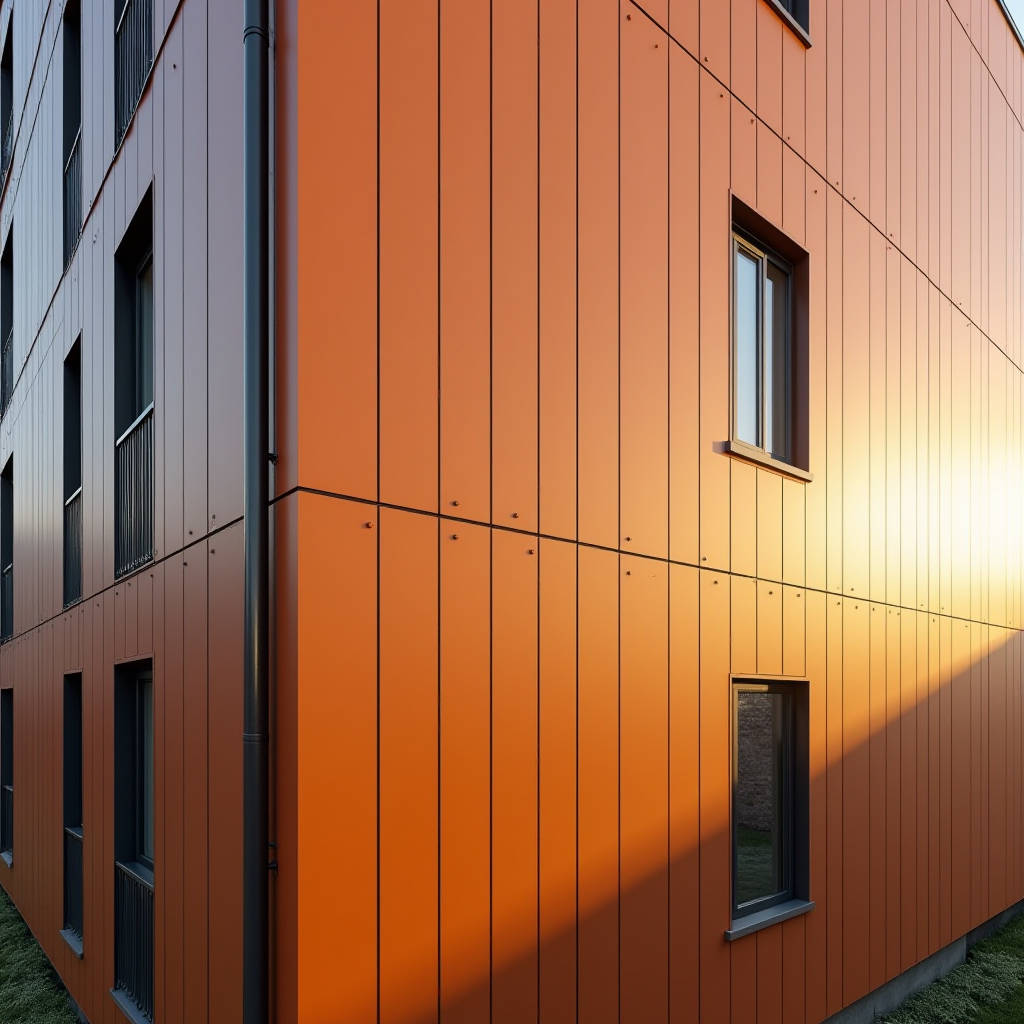
Terracotta Effect Aluminum Panel systems have carved out a distinct position in modern facade engineering, offering the warm, grounded aesthetic of fired clay without the weight penalties, structural complexity, and long lead times that traditional terracotta often imposes. What makes this material category genuinely interesting right now is not simply the color match — it is the convergence of advanced PVDF coating chemistry, precision forming tolerances, and the demand for ventilated rainscreen performance that meets both ASHRAE 90.1 and evolving European fire codes. When a general contractor or facade consultant specifies a terracotta-look finish on solid aluminum, they are making a calculated bet on material longevity, reduced dead load, and faster installation cycles. This article examines the engineering realities behind that bet, focusing on coating durability, substrate selection, drainage plane design, and the cost variables that procurement teams need to track before issuing a purchase order.
Why Solid Aluminum Takes the Terracotta Finish Further Than Composite Panels
The terracotta visual effect lives and dies by the quality of the coating system. On a solid aluminum substrate — typically 2.0 mm, 2.5 mm, or 3.0 mm thick 1100 or 3003 series alloy — the metal surface provides a perfectly flat, non-combustible canvas for PVDF fluoropolymer coatings loaded with inorganic pigments that replicate the iron-oxide warmth of natural clay. The core distinction here is that solid aluminum eliminates the polyethylene or mineral-filled core found in composite panels. That matters for three reasons: fire performance under ASTM E84 and EN 13501-1, the ability to bend and fabricate complex geometries without delamination risk, and long-term flatness retention under thermal cycling. A 2.5 mm solid panel carrying a 70% PVDF resin system with a terracotta color coat and clear topcoat can maintain color stability (ΔE ≤ 5) for over 20 years in southern European or Middle Eastern exposure conditions, provided the pretreatment is a chrome-based or titanium-zirconium conversion coating applied at 300–400 mg/ft².
Fabricators who have worked with both solid and composite terracotta-finish products consistently report that solid panels hold edge crispness better on folded returns and perforated screens. The reason is straightforward: there is no soft core to compress or mushroom under the brake press. For architects designing open-joint rainscreen systems where panel edges remain visible, this edge quality translates directly into the perceived craftsmanship of the facade.
Coating Chemistry: How PVDF Delivers a Believable Terracotta Appearance
The terracotta effect is not a single color — it is a family of hues ranging from pale Tuscan pinks to deep burnt umber, often with subtle variegation that mimics the natural firing variation of clay. Achieving this on aluminum requires a multi-layer coating process. The base layer is typically a corrosion-resistant primer, followed by a pigmented color coat containing a blend of iron oxide, titanium dioxide, and sometimes small quantities of cobalt or chromium pigments to tune the warmth. The final clear coat — usually a 70% PVDF formulation — locks in the pigments and provides the UV resistance that prevents the terracotta tone from fading into a washed-out beige over time.
Specifiers should pay close attention to the PVDF resin percentage. A 70% PVDF system (as defined by AAMA 2605) delivers substantially better chalk resistance and color retention than a 50% system (AAMA 2604). For terracotta-effect panels, the difference is visible within 5–7 years on south-facing elevations in latitudes below 35°. The cost difference between the two specifications is roughly $3–$6 per square meter at the coil coating stage, which is modest relative to the cost of re-coating or replacing faded panels after a decade of service. Spectrum Metal Finishing and Linetec have both published technical data on their terracotta coating lines, and the key takeaway from their accelerated weathering tests (QUV-B 313, 4000 hours) is that the ΔE shift for 70% PVDF terracotta formulations stays under 3.0, while 50% systems can drift past 6.0 in the same test window.
Mechanical Properties: Why Panel Thickness Matters for Terracotta Rainscreens
Traditional terracotta baguette or panel systems are heavy. A typical terracotta rainscreen panel weighs 45–65 kg/m² when you account for the clay body, the support rail, and the clips. A solid aluminum panel with a terracotta effect finish, at 2.5 mm thickness, weighs approximately 6.8 kg/m². That is an 85% reduction in dead load. For a 20,000 m² facade, the structural frame savings alone can run into six figures when you factor in reduced steel tonnage, smaller anchor embedments, and simpler lifting logistics.
The table below summarizes the mechanical and physical properties that procurement teams should evaluate when comparing terracotta-effect solid aluminum panels across different thicknesses and alloy grades.
| Property | 2.0 mm (1100-H14) | 2.5 mm (3003-H14) | 3.0 mm (3003-H14) | Traditional Terracotta (Reference) |
|---|---|---|---|---|
| Weight (kg/m²) | 5.4 | 6.8 | 8.1 | 45–65 |
| Flexural Modulus (GPa) | 69 | 69 | 69 | 20–40 |
| Maximum Panel Size (mm) | 1200 × 2400 | 1500 × 4000 | 1500 × 5000 | 300 × 1200 (typical) |
| Wind Load Capacity (kPa, span 600 mm) | 1.8 | 2.6 | 3.4 | Varies by support system |
| Fire Rating (EN 13501-1) | A2-s1, d0 | A2-s1, d0 | A2-s1, d0 | A1 |
| Thermal Expansion (mm/m per 50°C) | 1.2 | 1.2 | 1.2 | 0.3–0.5 |
| Typical Lead Time (weeks) | 4–6 | 4–6 | 4–6 | 12–20 |
The thermal expansion figure deserves attention. Aluminum moves roughly 3–4 times more than clay under the same temperature swing. For a 4-meter panel length, a 50°C temperature rise produces nearly 5 mm of linear expansion. The rainscreen support system — typically aluminum T-profiles or hat channels with stainless steel clips — must accommodate this movement through slotted connections. Engineers who overlook this detail will see panel buckling within the first seasonal cycle, and the terracotta effect loses its visual integrity when panels ripple in the afternoon sun.
Drainage and Ventilation: The Rainscreen Cavity Behind the Terracotta Look
A terracotta-effect aluminum rainscreen is only as good as the cavity behind it. The ventilated air gap — typically 38 mm to 50 mm — serves three functions: it depressurizes wind-driven rain, it allows the back of the panel to dry, and it creates a thermal break that reduces cooling loads. The American Architectural Manufacturers Association (AAMA) publishes design guidance in AAMA 508 and AAMA 509 that covers drained and ventilated wall systems. For terracotta-effect panels, the open-joint variant is particularly popular because the shadow lines between panels echo the look of traditional terracotta baguette spacing.
Open joints mean the cavity will see some water ingress. The air and water barrier (AWB) behind the cavity must be a fluid-applied or self-adhered membrane rated for UV exposure if the joints exceed 10 mm. Sika and Grace have product lines that handle this, and the specifier should verify that the AWB is compatible with the stainless steel clip fasteners that will penetrate it. The clip system itself — typically 316 stainless for coastal projects — should be thermally isolated from the aluminum support rail to prevent galvanic corrosion. A 0.5 mm EPDM gasket between the clip and the rail is standard practice.
Fabrication Tolerances: Making the Terracotta Effect Look Authentic
The visual authenticity of a Terracotta Effect Aluminum Panel facade depends heavily on fabrication precision. Traditional terracotta has a slightly irregular surface — the micro-texture of fired clay, subtle color variation across the kiln load, and the natural warping that occurs during firing. An aluminum panel that is too perfect can look synthetic, which defeats the purpose of the terracotta specification. The solution lies in controlled imperfection.
Leading coating applicators now offer terracotta finishes with deliberate tonal variation — typically 2–3 shade variants within the same color family — that are applied to panels in a randomized sequence. The fabricator then ships the panels with an installation map that distributes the shade variants across the facade to avoid clustering. This approach adds roughly 8–12% to the coating cost but transforms the visual result from "painted metal" to "believable terracotta."
Flatness tolerance is the other critical variable. For a 2.5 mm solid panel, the industry benchmark for flatness is ±0.25% of the diagonal dimension, measured as the gap under a straight edge. On a 3-meter diagonal panel, that means a maximum deviation of 7.5 mm. Tighter tolerances — ±0.15% — are achievable with tension-leveled coil stock and careful handling through the CNC routing and folding stages. Futeng®, a manufacturer with extensive experience in solid aluminum facade panels, has demonstrated that tension-leveled 3003-H14 coil processed through a precision turret punch line can consistently hit ±0.18% flatness on panels up to 1500 mm wide, which is well within the range needed for a visually demanding terracotta-effect rainscreen.
Cost Structure: Where the Money Goes on a Terracotta-Effect Facade
Procurement managers evaluating Terracotta Effect Aluminum Panel systems need to understand the cost breakdown beyond the simple per-square-meter panel price. The panel itself — including the aluminum substrate, PVDF terracotta coating, and fabrication — typically accounts for 45–55% of the installed facade cost. The support system (rails, clips, fasteners, thermal breaks) represents 20–25%. The air and water barrier, insulation, and cavity fire barriers add another 15–20%. Installation labor rounds out the remaining 10–15%, though this varies significantly by region and building height.
Compared to traditional terracotta, the material cost for solid aluminum terracotta-effect panels is typically 10–15% higher on a per-square-meter basis. But when you factor in the structural savings from reduced dead load, the faster installation (fewer crane lifts, simpler handling), and the shorter lead times, the total installed cost frequently comes in 5–8% lower than traditional terracotta. This cost advantage widens on high-rise projects where the weight savings cascade through the entire structural design.
Weathering Performance: What Happens After 10, 15, and 20 Years
The long-term performance of a terracotta-effect PVDF coating is well-documented through South Florida exposure testing. Panels coated with 70% PVDF terracotta formulations and exposed at 45° south-facing in Miami show minimal color shift (ΔE < 3) and chalking ratings of 8–10 (ASTM D4214) after 10 years. The same panels after 20 years typically show ΔE values between 4 and 6, which is still within the range that the human eye perceives as consistent color when panels are viewed from street level.
The weak point in the system is rarely the coating itself. It is the cut edges. Any panel that has been routed, folded, or perforated exposes raw aluminum at the edge. If the edge is not treated — either with a touch-up pen, a shop-applied clear coat, or by designing the edge to sit inside a folded return that shields it from direct rain — corrosion will initiate at the edge and creep under the coating. The ISO 12944 corrosion protection standard provides a useful framework for specifying edge treatment based on the environmental corrosivity category. For C3 and C4 environments (urban and industrial), a simple chromate touch-up pen is adequate. For C5-M (marine), the fabricator should apply a full edge seal in the shop.
Fire Performance and Code Compliance
Solid aluminum panels with PVDF coatings are inherently non-combustible. Under ASTM E84, a 2.5 mm solid aluminum panel with a terracotta-effect PVDF finish achieves a Flame Spread Index of 0 and Smoke Developed Index of 0–5, which places it firmly in Class A territory. Under EN 13501-1, the classification is A2-s1, d0 — meaning no contribution to fire, minimal smoke, and no flaming droplets. This is a critical differentiator in markets like the UK, Australia, and the Middle East, where post-Grenfell regulations have tightened significantly on combustible cladding materials.
The fire performance of the complete rainscreen assembly depends on cavity fire barriers. Open-joint terracotta-effect systems require horizontal and vertical cavity barriers at each floor level and at 10-meter intervals vertically, typically using mineral wool or intumescent materials tested to ASTM E2307 or BS 8414. Specifying the panel alone as non-combustible is not enough — the entire assembly must be considered.
Installation Speed and Logistics
One of the less-discussed advantages of terracotta-effect solid aluminum panels is the installation cadence. A four-person crew installing traditional terracotta baguettes on a rail system can typically cover 25–35 m² per day, depending on the complexity of the cutting around openings. The same crew working with large-format aluminum panels (1500 mm × 3000 mm) with a terracotta finish can cover 60–80 m² per day. The panels are lighter, the handling is less delicate, and the attachment method — typically a hook-on or cassette system — is faster than the clip-and-pin systems used for terracotta.
For projects on tight construction schedules, this speed differential can compress the facade installation timeline by 3–5 weeks on a mid-rise building. The logistics chain is also simpler: aluminum panels ship flat-packed in crates, while terracotta requires custom stillages with foam spacers to prevent chipping. Damage rates in transit for terracotta can run 3–5%; for aluminum panels, the figure is typically under 1%.
Specification Checklist for Procurement Teams
When drafting a specification for a Terracotta Effect Aluminum Panel facade, the following points should be addressed explicitly in the tender documents to avoid substitution with lower-grade products:
- Alloy and temper: Specify 3003-H14 or 1100-H14, minimum 2.5 mm thickness for panel sizes exceeding 1 m².
- Coating system: 70% PVDF resin, AAMA 2605 compliant, with a minimum 3-coat system (primer + color + clear).
- Color range: Define the terracotta shade using a physical standard (RAL or custom sample) and specify the acceptable ΔE range (typically ≤ 2.0 for initial delivery).
- Flatness tolerance: ±0.25% of diagonal, measured per ASTM E1592.
- Edge treatment: Shop-applied chromate conversion coating or clear edge seal for all cut edges.
- Support system: 6063-T6 aluminum rails with 316 stainless steel clips, thermally isolated.
- Fire performance: Panel classification A2-s1, d0 per EN 13501-1; complete assembly tested per BS 8414 or equivalent.
- Warranty: Minimum 20-year coating warranty against chalking and color fade, issued by the coating applicator.
These eight points form the backbone of a specification that protects the project from value-engineering substitutions that compromise the terracotta effect or the long-term durability of the facade. The warranty clause is particularly important: PVDF coating warranties are typically backed by the resin manufacturer (e.g., PPG or AkzoNobel) and should be passed through to the building owner.
Regional Market Considerations
The adoption of terracotta-effect aluminum panels varies significantly by region. In the Middle East, the combination of high UV exposure, sand abrasion, and a preference for earthy facade tones has made terracotta-effect PVDF one of the fastest-growing finish categories. In Northern Europe, the trend is driven by planning requirements that mandate clay-toned facades in historic districts — and solid aluminum offers a way to meet those requirements without the weight and cost of traditional terracotta. In North America, the market is still developing, with most terracotta-effect specifications coming from institutional and higher-education projects where the design team wants the warmth of terracotta but the performance and cost profile of a metal rainscreen.
Each region imposes different technical demands. Middle Eastern projects require coatings tested for sand abrasion resistance (ASTM D968) and UV stability at 60°C panel surface temperatures. Northern European projects prioritize thermal performance and condensation management in the cavity. North American projects often need to satisfy both IBC Chapter 26 and local energy codes. The panel system itself is adaptable, but the specification must be tuned to the regional climate and regulatory environment.
The Terracotta Effect Aluminum Panel category has matured to the point where it is no longer a niche architectural curiosity. It is a mainstream facade option with a well-documented performance record, a competitive installed cost, and a supply chain capable of delivering large-scale projects on schedule. For the general contractor and the facade engineer, the key to a successful outcome lies in the details: the PVDF resin percentage, the edge treatment, the cavity design, and the flatness specification. Get those four variables right, and the result is a facade that delivers the warmth of terracotta with the engineering predictability of aluminum.