Granite Finish Aluminum Panel Coating Systems That Survive 10 Years of UV and Salt Exposure
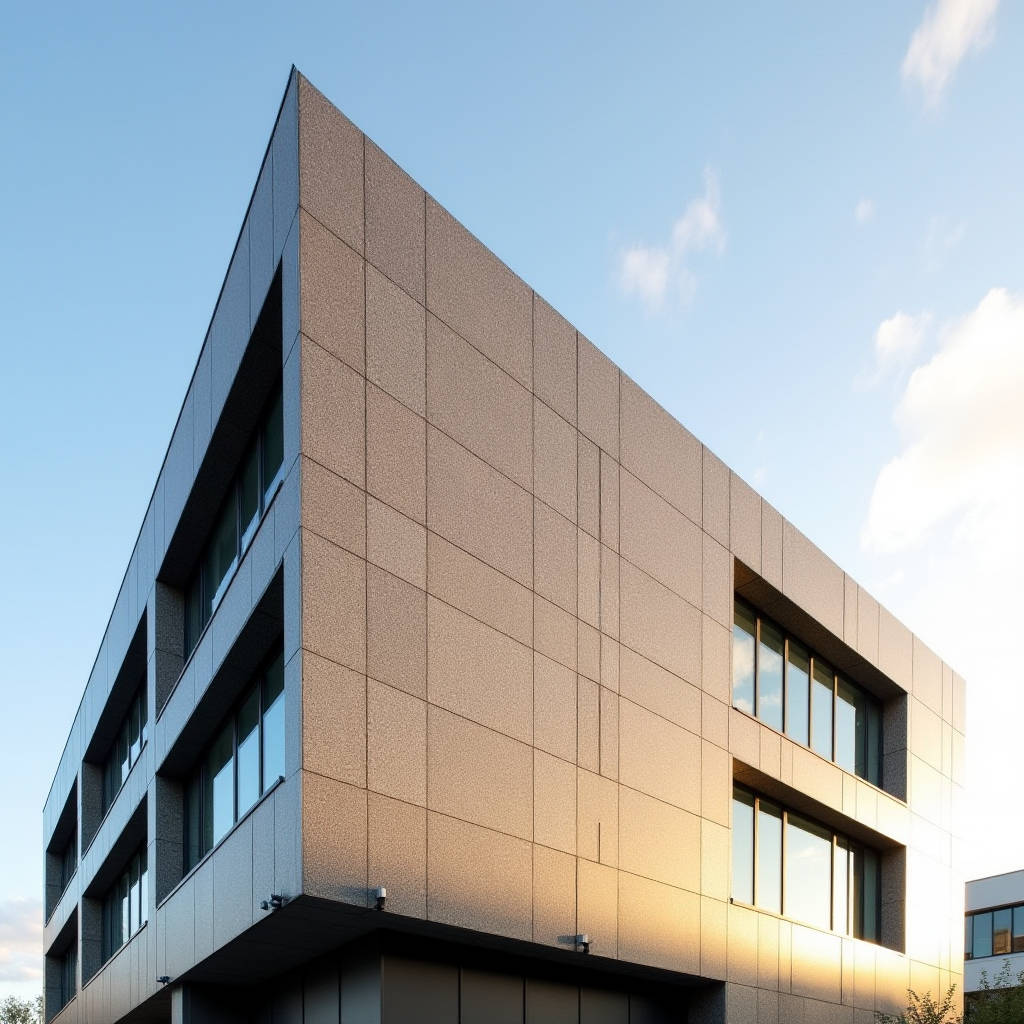
Specifying a Granite Finish Aluminum Panel for a commercial facade means confronting a single question early: can the coating hold its visual integrity through a decade of UV exposure, salt spray, and thermal cycling? Architects and facade contractors chasing the mass and permanence of natural stone increasingly turn to solid aluminium sheets with granite-effect PVDF coatings, but the gap between a sample swatch and installed performance is where reputations get made or broken. The coating system, not the metal substrate, determines whether that granite pattern reads as deliberate architecture or faded afterthought five years in. This article examines the coating technologies, accelerated weathering benchmarks, and real-world performance data that separate a granite finish worth specifying from one that belongs in a value-engineering cut list.
How the Granite Illusion Is Built: Sublimation vs. Liquid Coating
Two distinct manufacturing paths produce a granite-look surface on solid aluminium panels, and the choice between them shapes everything from color fidelity to UV resistance. The first method, sublimation transfer, embeds dye directly into a base polyester or PVDF primer layer under heat and vacuum. A printed film carrying the granite pattern releases its pigments into the coating at around 180–200°C. The result is a crisp, high-resolution stone reproduction with virtually unlimited pattern customization. Mills can replicate specific quarried granite slabs, complete with the exact feldspar speckling, mica flecks, and quartz veining of a reference sample.
The second method, liquid PVDF coil or spray coating with formulated granite-effect pigments, suspends metallic and ceramic particles in a fluoropolymer resin matrix. This approach relies on a 70% PVDF resin system (Kynar 500® or Hylar 5000®) with ceramic pigment dispersion. The granite appearance emerges from layered application: a base color coat, a mid-coat carrying the speckle and vein effects, and a clear topcoat for gloss control and additional UV shielding. Total dry film thickness for a three-coat PVDF granite finish on solid aluminium typically runs 30–40 microns, compared to 25–30 microns for standard solid colors. That extra 10 microns matters because the ceramic pigments need encapsulation depth to resist chalking.
Sublimated finishes offer superior pattern resolution but historically struggled with exterior durability because the dye layer sits closer to the surface. Modern variants pair sublimation with a PVDF clear topcoat, creating a hybrid system that locks the pattern behind a fluoropolymer barrier. This approach has gained traction in markets where architects demand exact granite matching across multiple building phases. Liquid PVDF granite coatings, by contrast, dominate high-rise and coastal specifications where long-term weathering trumps pixel-perfect stone replication. Neither approach is inherently superior; the correct choice depends on whether the project prioritizes aesthetic fidelity or weathering longevity.
PVDF Granite Coatings Under the Lens: AAMA 2605 and Beyond
Any discussion of exterior-grade Granite Finish Aluminum Panel durability starts with AAMA 2605, the voluntary specification that governs high-performance organic coatings on architectural aluminium. Meeting AAMA 2605 requires passing a battery of accelerated tests: 4,000 hours of salt spray resistance (ASTM B117), 10 years of South Florida exposure with no checking, cracking, or adhesion loss, and color retention of at least 50% of original gloss after the exposure period. For a granite finish, the standard applies differently than for solid colors because the multi-tonal pattern masks minor fading that would be obvious on a uniform surface.
The practical implication: a granite-effect PVDF coating that loses 30% of its gloss over a decade might still read as acceptable to the eye because the stone pattern itself contains natural tonal variation. This creates both an advantage and a risk. The advantage is that granite finishes are inherently more forgiving of minor weathering than solid colors. The risk is that specifiers sometimes downgrade coating quality on granite-finish panels, reasoning that the pattern will hide defects. That reasoning collapses when the clear topcoat chalks, turning the entire surface a uniform chalky white regardless of the pattern beneath.
For projects within 5 km of saltwater, the coating specification should exceed minimum AAMA 2605 requirements. A three-coat PVDF system with a minimum 70% resin content and ceramic pigment loading above 35% by weight provides the necessary barrier against chloride ion penetration. Some manufacturers, including Futeng®, offer a four-coat system for granite finishes in aggressive environments: primer, base color coat, granite-effect mid-coat, and a thickened clear topcoat at 15–18 microns alone. The added cost runs roughly $4–7 per square meter, which is negligible against the cost of recoating a 30-story tower.
| Coating System | Dry Film Thickness | Salt Spray (ASTM B117) | South Florida 10-Year | Relative Cost Index |
|---|---|---|---|---|
| 2-Coat PVDF Solid Color | 25–30 µm | 4,000 hrs | Pass | 1.0 |
| 3-Coat PVDF Granite (Standard) | 30–35 µm | 4,000 hrs | Pass | 1.25–1.35 |
| 4-Coat PVDF Granite (Marine Grade) | 38–45 µm | 6,000+ hrs | Pass with <5 ΔE | 1.50–1.65 |
| Sublimation + PVDF Clear Topcoat | 28–35 µm | 3,000–4,000 hrs | Conditional | 1.30–1.45 |
| FEVE Fluoropolymer Granite (3-Coat) | 30–38 µm | 5,000 hrs | Pass | 1.55–1.75 |
Solid Aluminium vs. Composite: Why the Substrate Dictates Coating Life
The granite finish is only as durable as the metal it bonds to. Solid aluminium sheets at 2.0 mm, 2.5 mm, or 3.0 mm thickness provide a thermally stable substrate that expands and contracts at roughly 2.4 × 10⁻⁵ m/m/°C. A 3-meter panel subjected to a 60°C diurnal temperature swing moves approximately 4.3 mm over its length. The PVDF coating, with its own elongation capacity exceeding 100%, accommodates this movement without micro-cracking. The bond between coating and metal remains intact because both materials share similar thermal expansion coefficients and the aluminium surface, properly chromate-converted, provides a chemically inert anchor profile.
This substrate stability becomes critical when the granite pattern includes dark mineral tones. Dark coatings absorb more solar radiation; surface temperatures on a black granite-effect panel can reach 85°C on a 35°C day. The solid aluminium sheet acts as a heat sink, conducting thermal energy away from the coating interface and into the panel body and rear ventilation cavity. Panels thinner than 2.0 mm risk localized hot spots where the coating can exceed its glass transition temperature, accelerating polymer chain scission and pigment degradation. The 2.5 mm and 3.0 mm options provide enough thermal mass to keep the coating within its designed operating range across all but the most extreme climates.
Flatness is another substrate-driven variable that affects how a granite finish reads visually. Solid aluminium panels in 5000-series (Al-Mg) or 3000-series (Al-Mn) alloys, properly tension-leveled and fabricated with rear stiffeners, maintain a deflection limit of L/180 under wind load. This matters for granite finishes because the human eye reads stone as a planar, monolithic surface. Any oil-canning or pillowing in the panel telegraphs the thinness of the metal behind the stone illusion. A 3.0 mm solid aluminium panel with a properly engineered stiffener grid delivers the visual mass that the granite pattern promises.
Pattern Registration Across Panel Joints: The Fabrication Challenge
Granite patterns on solid aluminium panels face a problem that solid-color finishes never encounter: pattern continuity. Natural granite has no seams, but a building facade has hundreds of panel joints. If the granite pattern stops abruptly at each joint, the facade reads as a grid of disconnected tiles rather than a monolithic stone surface. Achieving pattern registration across panels requires coordination between the coating applicator and the fabricator that most project specifications overlook.
The coating applicator can produce pattern-matched runs by printing or spraying from a continuous reference pattern, then numbering each sheet in sequence. The fabricator must then cut and form panels in the same sequence, maintaining orientation arrows on the protective film. This adds roughly 8–12% to fabrication costs and requires the shop drawing to map every panel to its specific sheet location. For projects where pattern continuity is specified, the contract should require a full-scale mockup of at least three panels wide by two panels high to verify that the pattern reads continuously across joints under site lighting conditions.
An alternative approach, increasingly common on large-scale commercial projects, abandons pattern matching in favor of randomized granite patterns. Each panel carries a unique section of the granite pattern, and the joints become deliberate visual breaks. This approach is faster to fabricate and install, costs less, and avoids the risk of a single misaligned panel disrupting the entire facade. The aesthetic trade-off is that the facade reads as a stone-clad grid rather than a monolithic stone surface. Neither approach is wrong, but the specification must state the intent clearly. A vague note reading "granite finish to match architect's sample" is a dispute waiting to happen.
Weathering Realities: What 10 Years of Exposure Actually Does
Accelerated laboratory tests tell one story; installed facades tell another. Granite-finish PVDF coatings on solid aluminium panels have now been in service long enough to generate real-world performance data. The key findings from projects in Southeast Asia, the Middle East, and coastal Australia converge on several points.
Color shift, measured as ΔE (CIE Lab), typically runs 1.5–3.0 after 10 years for a properly formulated three-coat PVDF granite finish. This is within the range that the human eye perceives as "the same color" under most lighting conditions. The shift is rarely uniform across the granite pattern; lighter mineral tones tend to yellow slightly while darker tones remain stable, creating a subtle warming effect that some architects actually prefer. Gloss retention at 60° geometry averages 55–70% of original after a decade, with the clear topcoat formulation being the decisive variable. Coatings using Kynar 500® resin with a minimum 70% PVDF content consistently outperform those with lower resin ratios.
Chalking, the degradation of the resin binder that leaves pigment particles exposed on the surface, is the most common failure mode for granite finishes in tropical and subtropical climates. ASTM D4214 chalking ratings of 8 or above (10 = no chalking) are typical for quality PVDF granite finishes after 5–7 years. Ratings below 6 indicate that the coating has lost its protective resin layer and the granite pattern is being physically eroded. The fix is not a touch-up; it is full panel replacement. This is why the coating specification deserves as much attention as the structural engineering of the panel system.
For projects in the Gulf region, where combined UV radiation and airborne sand create a unique abrasion environment, some manufacturers now offer a ceramic-reinforced clear topcoat that increases surface hardness from a pencil hardness of F–H to 2H–3H. The ceramic particles, typically silica or alumina at nano-scale dispersion, provide sacrificial abrasion resistance without compromising the fluoropolymer's UV-blocking function. Testing per ASTM D3363 shows a measurable improvement in scratch resistance that translates to longer pattern retention in sandy environments.
Fire Performance: Solid Aluminium and the Granite Coating
Solid aluminium panels are non-combustible (Euroclass A1 per EN 13501-1 when uncoated), but the granite-effect coating introduces an organic component that must be accounted for in fire engineering. A typical PVDF granite coating at 35 microns dry film thickness contributes approximately 45–55 grams of organic material per square meter. This is well below the threshold that would change a panel's fire classification from A1 to A2, but it is not zero. For projects requiring strict non-combustibility, such as high-rise facades above 18 meters in many jurisdictions, the coating system must be documented and the total organic content calculated.
The relevant test standard is EN 13501-1, with the SBI (Single Burning Item) test per EN 13823 measuring heat release, smoke production, and flaming droplets. Solid aluminium panels with PVDF granite coatings consistently achieve A2-s1,d0 classification when tested as a complete system including the aluminium substrate, coating, and any rear insulation. The s1 rating (lowest smoke production) and d0 rating (no flaming droplets) are critical for high-rise applications. Specifiers should request the full classification report, not just a summary certificate, and verify that the tested configuration matches the specified panel thickness and coating system.
Cost Structure: Where the Money Goes on a Granite Finish Facade
Understanding the cost breakdown of a Granite Finish Aluminum Panel facade helps procurement managers allocate budget where it affects performance. The material cost of a 2.5 mm solid aluminium panel with a three-coat PVDF granite finish typically runs $45–65 per square meter ex-works, depending on alloy grade, panel size, and pattern complexity. Custom granite pattern matching can add $8–15 per square meter. Fabrication, including cutting, folding, routing, and stiffener attachment, adds $25–40 per square meter. The installed cost, including substructure, brackets, thermal isolation, and labor, pushes the total to $120–180 per square meter for a typical commercial facade.
The coating itself accounts for roughly 15–20% of the ex-works panel cost but determines 80% of the long-term aesthetic performance. Value engineering that cuts coating quality to save $3–5 per square meter is a false economy when the cost of access scaffolding for recoating runs $30–50 per square meter. The math is straightforward: spend on the coating now, or spend ten times that amount on remediation later. This is not a sales pitch; it is an observation drawn from facade remediation projects across three continents.
Specifying Granite Finish Panels: A Practical Checklist
A specification for granite-finish solid aluminium panels must address variables that standard cladding specifications ignore. The following checklist covers the critical points that separate a tight specification from one that invites substitution and disappointment.
- Alloy and temper: Specify 5005-H14 or 3003-H14 for general applications; 5052-H32 for high-wind or impact zones. Minimum yield strength of 110 MPa for 5005, 170 MPa for 5052.
- Sheet thickness: 2.5 mm minimum for panels up to 1,200 mm in any dimension; 3.0 mm for larger panels or ground-floor zones subject to impact.
- Coating system: Three-coat PVDF, 70% resin minimum (Kynar 500® or Hylar 5000®), total DFT 30–40 microns. Require AAMA 2605 test reports for the specific granite pattern, not a generic color.
- Pattern specification: State whether pattern-matched or randomized. If matched, define the acceptable deviation at panel joints (typically ±2 mm). Require a numbered shop drawing mapping panels to sheets.
- Pretreatment: Chromate conversion coating per ASTM D1730, or chrome-free alternative per Qualicoat specifications. Minimum coating weight of 300 mg/m² for chromium treatment.
- Fire classification: Require EN 13501-1 classification report for the complete panel system, including coating and any factory-bonded insulation.
- Mockup: Minimum 3 m × 3 m on-site mockup, installed using the specified substructure and fixing method, approved by the architect before production begins.
- Warranty: Minimum 20-year film integrity warranty for PVDF granite coatings on solid aluminium. Color and gloss warranty terms should be clearly defined with ΔE limits.
Quality Verification: What to Check Before the Panels Leave the Factory
Factory inspection of granite-finish panels requires a different eye than solid-color panels. The inspector must evaluate the pattern as well as the coating. Key inspection points include:
- Pattern consistency: Compare production panels against the approved sample under both daylight (D65) and horizon light (A) sources. Granite patterns can shift color temperature dramatically under different lighting.
- Coating thickness: Use an eddy-current gauge calibrated for aluminium. Measure at five points per panel (four corners and center). Acceptable variation: ±5 microns from specified DFT.
- Gloss level: Measure at 60° geometry per ASTM D523. Granite finishes typically target 25–35 gloss units. Variation across a production batch should not exceed ±5 units.
- Adhesion: Cross-hatch test per ASTM D3359, Method B. Rating of 4B or 5B is acceptable. Any delamination at the coating-metal interface is grounds for rejection.
- Panel flatness: Place panel on a certified flat surface. Maximum deviation: 0.5% of the panel's diagonal dimension. Oil-canning visible from 3 meters at a 45° angle is not acceptable.
For large projects, retaining a third-party inspection agency to witness production and perform these checks at the factory is standard practice. The cost, typically $3,000–8,000 depending on project scale, is a fraction of the cost of replacing defective panels after installation. Suppliers like Futeng® maintain in-house testing facilities that can provide real-time quality data during production runs, reducing the need for retrospective inspection.
Installation Factors That Affect Granite Finish Appearance
Even the best granite-finish panel can look mediocre if installed without attention to the factors that affect how the pattern reads across a facade. Panel orientation is the first consideration. Granite patterns have a natural directionality; the veining and speckling create a visual grain that should run consistently across all panels. The protective film should carry orientation arrows, and the installation crew must follow them. A single panel installed upside-down or rotated 90 degrees will stand out more than a slight color mismatch.
Joint width and shadow gap depth affect how the eye perceives pattern continuity. Narrower joints (10–12 mm) create a more monolithic reading; wider joints (15–20 mm) emphasize the grid. The shadow gap depth, determined by the distance from the panel face to the gasket or sealant, should be at least 25 mm to create a defined shadow line that masks minor pattern misalignment at joints. Open-joint systems, increasingly popular for ventilated facades, require a dark-colored weather barrier behind the panels to prevent the backing material from showing through the joints and disrupting the stone illusion.
Lighting is the variable that no specification can fully control. A granite-finish facade that looks perfectly matched under overcast morning light can show noticeable variation under low-angle afternoon sun. The specifier's best defense is the on-site mockup, viewed at multiple times of day before the full production run is approved. If the mockup reveals unacceptable variation under certain lighting conditions, the pattern can be adjusted, or the architect can accept the variation as inherent to the material. What cannot be fixed is discovering the problem after 2,000 panels are installed.
The long-term performance of a Granite Finish Aluminum Panel facade depends on decisions made long before the first panel is hung. Coating chemistry, substrate stability, pattern specification, and installation discipline each play a role. The projects that still look intentional after 15 years share a common thread: someone in the specification chain understood that the granite finish is not a commodity product but an engineered system where every component affects the outcome. Getting the coating right is the hardest part of that system, and it is also the part most worth getting right.