Stone Effect Aluminum Cladding Coating Chemistry and 20 Year Weathering Performance Data
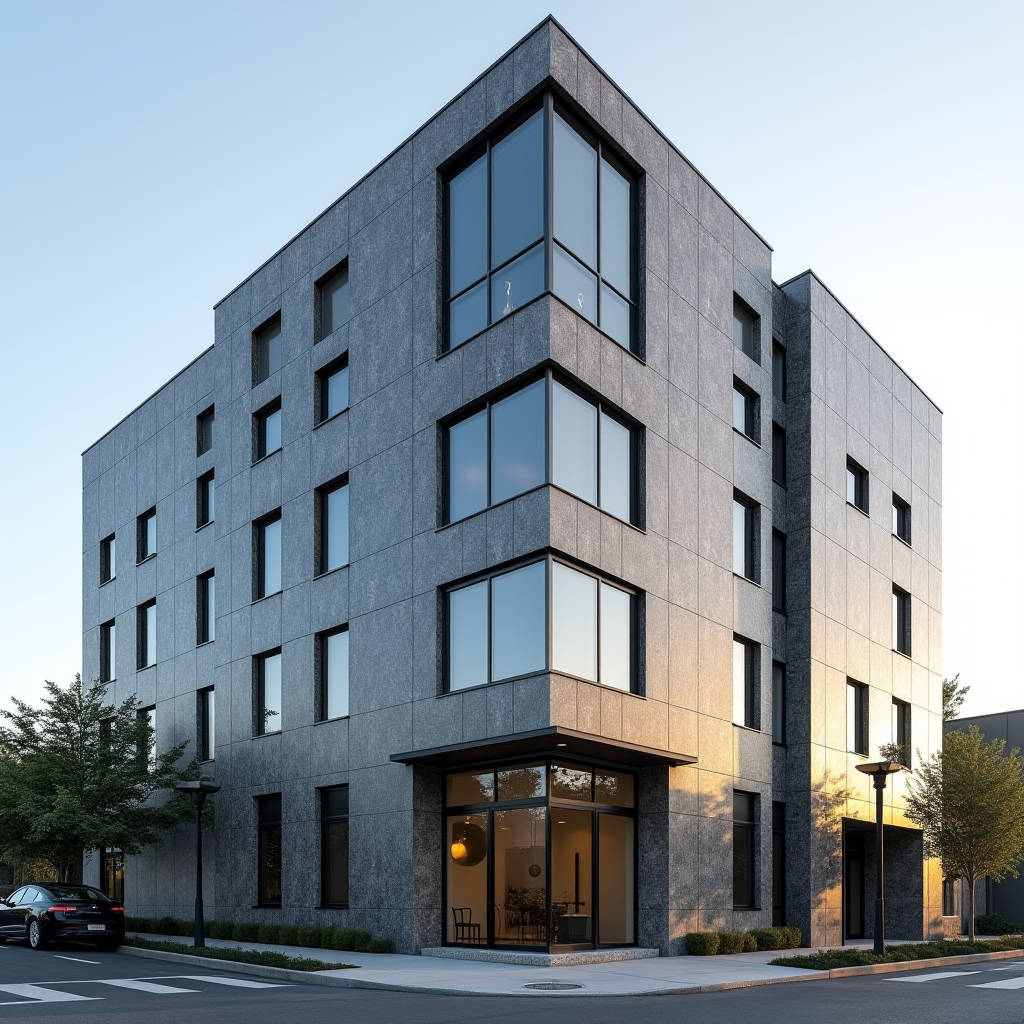
When a project specification calls for the visual weight and permanence of natural stone but the structural budget tells a different story, the conversation shifts. Stone Effect Aluminum Cladding has moved from a niche alternative to a primary facade material across commercial, institutional, and high-rise residential projects. The reason is straightforward: the coating technology now delivers grain depth, tonal variation, and surface texture that read as authentic stone from street level, while the substrate remains a fully engineered solid aluminium panel system. For contractors and facade consultants, the real question is not whether the material looks convincing. It is whether the coating system specified will survive the thermal cycling, UV exposure, and moisture conditions of the actual installation site. This article focuses on the coating chemistry, substrate preparation, and long-term performance data that separate a facade that still looks like stone after 15 years from one that betrays itself in five.
The Coating Technologies Behind the Stone Illusion
Not all stone-effect finishes are created equal, and the differences live in the chemistry. Three coating families dominate the solid aluminium cladding market for stone replication: PVDF (polyvinylidene fluoride) liquid coatings, polyester powder coatings, and sublimation transfer films. Each carries distinct performance profiles that directly affect warranty terms, fade resistance, and the realism of the stone pattern itself.
PVDF fluoropolymer coatings, typically applied at 70% PVDF resin content with inorganic pigments, remain the benchmark for exterior durability. The carbon-fluorine bond in PVDF is one of the strongest chemical bonds known in polymer science, which is why coatings formulated to AAMA 2605 standards routinely carry 20-year film integrity warranties. For Stone Effect Aluminum Cladding, PVDF systems use a multi-layer approach: a primer for corrosion adhesion, a base color coat that establishes the dominant stone tone, and a clear topcoat that locks in the printed or variegated effect layer. The total dry film thickness typically lands between 30 and 45 microns, though some manufacturers push to 50 microns for coastal installations.
Polyester powder coating systems, particularly those using super-durable polyester resins with TGIC or HAA crosslinkers, offer a different value proposition. The powder application process electrostatically deposits a dry film that is then oven-cured into a continuous coating. For stone effects, advanced powder systems use a multi-shot process where different colored powders are applied in sequence to build the veining and mottling characteristic of granite or travertine. These systems meet AAMA 2604 standards and are typically specified for 10-15 year performance windows. The finish is harder than liquid PVDF, which matters for ground-floor applications where impact resistance is a concern.
Sublimation transfer represents the third path. Here, a stone pattern is printed onto a transfer film using heat-activated dyes, then thermally bonded into a polyester powder-coated substrate under heat and pressure. The dyes penetrate the powder coating layer, creating a finish that cannot delaminate in the way a film laminate might. The realism achievable with sublimation is often superior to direct printing, because the dye diffusion naturally softens pattern edges in a way that mimics natural stone grain. However, the UV resistance of sublimated finishes depends heavily on the clear topcoat applied afterward, and specifiers should verify accelerated weathering data before committing to this route for full-sun elevations.
Substrate Matters: Why Solid Aluminium Changes the Coating Equation
The coating is only half the story. The substrate underneath determines whether the stone-effect finish remains flat and stable across decades of thermal movement. Solid aluminium panels — typically 2.0mm, 2.5mm, or 3.0mm thick in alloys 3003, 5005, or 5052 — bring a coefficient of thermal expansion that is uniform through the entire panel cross-section. This matters because stone-effect finishes, particularly those with directional veining patterns, will telegraph any substrate distortion through the visible surface.
When a solid aluminium panel expands and contracts through a daily temperature swing of 30°C or more, the entire panel moves as one. There is no differential expansion between a thin aluminium skin and a polyethylene core, because there is no core. The result is a panel that stays flat, which means the stone pattern stays coherent across panel joints. This is particularly important on large-format panels exceeding 1,200mm in width, where even minor oil-canning would break the illusion of stone solidity.
Panel flatness tolerances for solid aluminium Stone Effect Aluminum Cladding should be specified at no more than 0.5% of the panel's short dimension, measured as deviation from a true plane. This is tighter than the typical 0.8% accepted for solid-color panels, because the stone pattern's visual continuity amplifies the perception of waviness. Reputable processors, including Futeng®, achieve this through a combination of alloy selection, controlled tension leveling during coil processing, and precise routing of stiffener attachment points on the panel rear face.
Weathering Performance: What the Data Shows
Accelerated weathering data provides the most reliable predictor of how Stone Effect Aluminum Cladding will perform over time. The industry standard tests — ASTM G154 for UV condensation, ASTM B117 for salt spray, and AAMA 2605 for South Florida exposure — give specifiers a framework for comparing coating systems on equal footing.
The critical metric for stone-effect finishes is Delta E (ΔE), the quantitative measure of color change. A ΔE value below 5 is generally considered acceptable for architectural coatings after 10 years of exterior exposure. However, stone-effect finishes present a unique challenge: the human eye is far more sensitive to color shifts in variegated patterns than in solid colors. A ΔE of 3 on a solid grey panel might go unnoticed, but the same shift on a granite-effect finish with multiple tonal bands can create a perceptible mismatch between panels that were originally identical.
This is why the best stone-effect PVDF systems target a ΔE below 3 after 4,000 hours of QUV-B accelerated weathering. The inorganic pigments used in these systems — iron oxides, chromium oxides, and complex inorganic color pigments (CICPs) — are inherently more UV-stable than the organic pigments that might be used in lower-cost polyester systems. The price difference between a PVDF stone-effect finish and a polyester stone-effect finish — typically $8-15 per square meter — largely reflects this pigment cost differential.
| Coating System | Standard | Typical DFT (microns) | ΔE After 4000 hrs QUV-B | Warranty Window | Best Application |
|---|---|---|---|---|---|
| PVDF 70% (3-coat) | AAMA 2605 | 35-50 | < 3.0 | 20 years | High-rise facades, coastal zones |
| PVDF 50% (2-coat) | AAMA 2604 | 25-35 | < 5.0 | 15 years | Mid-rise commercial, inland |
| Super-Durable Polyester Powder | AAMA 2604 | 60-80 | < 5.0 | 10-15 years | Ground-floor, high-traffic zones |
| Standard Polyester Powder | AAMA 2603 | 60-80 | < 8.0 | 5-7 years | Interior feature walls, soffits |
| Sublimation + Clear PVDF | Custom spec | 80-100 | < 4.0 | 10-15 years | Complex stone patterns, granite |
Cost Drivers Beyond the Square-Meter Price
The per-square-meter cost of Stone Effect Aluminum Cladding is only the starting point. Experienced quantity surveyors and facade estimators look at the total installed cost, which is shaped by panel size optimization, waste factors, and the complexity of the support system. Solid aluminium stone-effect panels typically range from $85 to $160 per square meter for the material alone, depending on alloy grade, thickness, and coating specification. That compares to $120-250 per square meter for quarried granite cladding at 30mm thickness, before factoring in the structural steel required to support it.
The weight differential drives the largest cost gap. A 2.5mm solid aluminium panel weighs approximately 6.8 kg/m². A 30mm granite panel weighs roughly 80-90 kg/m². That 12:1 ratio means the supporting structure for stone-effect aluminium can be significantly lighter. On a 5,000 m² facade, the structural steel savings alone can reach $200,000-400,000, depending on building height and wind load requirements. This is the number that often converts a stone specification to a stone-effect aluminium specification during value engineering.
Waste factors also differ. Natural stone slabs carry a 15-25% waste factor for cutting and breakage, particularly for book-matched or vein-matched installations. Stone-effect aluminium panels, fabricated to precise shop drawings with CNC routing and folding, typically run 5-8% waste. For a project consuming 3,000 m² of facade material, the difference between 20% and 7% waste represents nearly 400 m² of material that does not need to be purchased.
Fire Performance and Code Compliance
Fire safety has become a non-negotiable priority in facade engineering since the Grenfell Tower tragedy, and solid aluminium panels occupy a fundamentally different regulatory category than composite panels. A solid aluminium sheet is non-combustible by nature. When tested to EN 13501-1, solid aluminium panels achieve an A1 or A2-s1,d0 classification depending on the coating system applied. This is a critical distinction for projects in the UK, Europe, the Middle East, and increasingly in North America and Asia-Pacific markets where building codes are tightening combustible cladding restrictions.
The coating itself can affect the fire classification. PVDF coatings, being fluoropolymer-based, contribute negligible fuel load and typically do not degrade the A1 rating of the underlying aluminium. Polyester powder coatings, depending on thickness and formulation, may shift the classification to A2-s1,d0, which is still acceptable for most building types and heights under current regulations. The key documentation specifiers should request includes the full EN 13501-1 test report, not just the classification certificate, along with evidence that the tested sample matches the specified coating system and substrate.
For projects in jurisdictions following the International Building Code (IBC), NFPA 285 compliance is the relevant benchmark for exterior wall assemblies. Solid aluminium Stone Effect Aluminum Cladding, when installed as part of a tested wall assembly, can meet NFPA 285 requirements. The critical variables are the insulation layer behind the panel and the presence of any combustible weather barriers, not the aluminium panel itself.
Installation Considerations That Affect the Stone Illusion
The most convincing stone-effect finish can be undermined by installation details that draw attention to the panelized nature of the facade. Joint design is the primary variable. Natural stone facades typically use 6-10mm open joints or butt joints with sealant. Stone Effect Aluminum Cladding can replicate these joint patterns, but the panel joint must be executed with the same discipline.
For a monolithic stone appearance, many architects now specify a 10-12mm open joint with a dark-colored backer rod or EPDM gasket visible behind the joint. This creates a shadow line that reads as a natural stone joint from a distance. The alternative — a color-matched silicone sealant joint — can work well but requires meticulous tooling to avoid the "plastic" look that sealant can impart. The panel edge profile matters too: a square-cut edge with a return leg that hides the panel thickness creates a more convincing stone-like shadow than a simple folded edge.
Panel size and layout also affect the perception of authenticity. Natural stone slabs are typically limited to 1.5-2.0 meters in the long dimension by quarry block size and transportation constraints. Specifying aluminium panels at 3.0-4.0 meters in length, while technically feasible, can break the illusion because the panel proportions no longer read as stone. The most successful stone-effect installations use panel sizes that mimic the dimensional constraints of the stone type being replicated, even though the aluminium substrate could be fabricated larger.
Specifying Stone Effect Aluminum Cladding: A Practical Checklist
Based on the technical factors discussed above, a robust specification for Stone Effect Aluminum Cladding should address the following points. This checklist is drawn from real project experience and reflects the documentation that reputable suppliers should provide without hesitation.
- Alloy and temper: Specify 3003-H14, 5005-H14, or 5052-H32. 5052 is preferred for coastal environments due to higher magnesium content and better corrosion resistance per ASTM B209.
- Panel thickness: 2.0mm minimum for panels up to 600mm width; 2.5mm for 600-1,200mm; 3.0mm for panels exceeding 1,200mm or for ground-floor impact zones.
- Coating system: Specify PVDF 70% resin to AAMA 2605 for exterior applications with 20-year performance expectations. Require the coating applicator to be a licensed applicator of the specified PVDF brand.
- Stone pattern reference: Provide a physical reference sample of the stone being replicated, not just a digital image. Color matching from digital files alone introduces unacceptable variance.
- Batch consistency: Require all panels for a single elevation to be coated from the same production batch. Stone-effect patterns have batch-to-batch variation that can be visible across large facades.
- Flatness tolerance: Maximum 0.5% deviation from true plane across the panel's short dimension.
- Fire test documentation: Full EN 13501-1 or NFPA 285 test report matching the specified system build-up.
- Warranty: Minimum 15-year film integrity warranty for PVDF; 10-year for super-durable polyester powder.
Quality Control: What to Inspect Before Shipment
For procurement managers and facade contractors importing Stone Effect Aluminum Cladding, pre-shipment inspection is the last line of defense against costly site rejections. The inspection protocol should go beyond the standard dimensional checks and focus on the stone-effect finish specifically.
Color and pattern consistency should be checked under controlled lighting — ideally a D65 light booth — by comparing production panels against the approved reference sample. Natural daylight varies too much to serve as a reliable inspection environment. The inspector should lay out a minimum of 5% of panels from each production batch in a grid pattern to check for tonal drift across the batch. This is the same method used for natural stone slab selection, and it is equally valid for stone-effect coatings.
Adhesion testing per ASTM D3359 (cross-hatch) or ISO 2409 should be performed on a sample panel from each batch. The coating should achieve a classification of 5B or 0 (no detachment) for PVDF systems. Impact resistance per ASTM D2794 should also be verified, particularly for ground-floor panels where pedestrian and vehicle impact is a risk. A minimum of 1.5 Joules impact resistance without cracking or delamination is a reasonable benchmark for 2.5mm solid aluminium with PVDF coating.
Edge coating integrity is a frequently overlooked inspection point. The fabrication process — cutting, routing, folding — exposes raw aluminium edges that must be touched up or sealed. For stone-effect finishes, the edge touch-up paint must match not just the base color but the specific tonal band that intersects the panel edge. This is painstaking work, and the inspection should verify that no raw aluminium is visible on any fabricated edge, including inside folded returns and around stiffener attachment points.
Regional Market Dynamics and Supply Chain Realities
The global supply chain for Stone Effect Aluminum Cladding has shifted significantly in the past five years. Chinese manufacturers have invested heavily in PVDF coating lines and sublimation technology, and the quality gap between top-tier Chinese producers and established European or North American suppliers has narrowed considerably. The lead time advantage is substantial: a typical order of 3,000-5,000 m² of custom stone-effect solid aluminium panels can be produced in 4-6 weeks from approved shop drawings, compared to 8-12 weeks from some Western suppliers.
However, procurement managers should approach the supply chain with clear technical specifications and a willingness to audit. The variables that separate reliable stone-effect production from inconsistent output include: the quality of the pretreatment line (chrome vs. chrome-free conversion coating), the number of coating layers applied, the curing oven temperature control, and the experience of the color-matching technicians. A factory audit that observes these specific processes is worth far more than a general ISO 9001 certificate.
For projects in the Middle East, where high ambient temperatures and intense UV exposure are design conditions, the coating specification should be tightened beyond standard AAMA 2605. A minimum of 45 microns total dry film thickness, with a heat-reflective pigment package, can significantly extend the service life of stone-effect finishes in these environments. Some manufacturers now offer specialized "high-TSR" (total solar reflectance) stone-effect coatings that reduce panel surface temperature by 10-15°C compared to conventional dark stone finishes, which reduces thermal cycling stress on both the coating and the panel.
The decision to specify Stone Effect Aluminum Cladding is ultimately a decision about managing risk across the building's lifecycle. The material cost is higher than basic solid-color aluminium panels. But measured against the alternative — natural stone with its weight penalties, structural costs, and diminishing quarry availability — the stone-effect aluminium route offers a predictable, engineerable facade solution that meets the aesthetic brief without compromising on fire safety or long-term durability. The key is to specify the coating system as rigorously as the stone itself would be specified, because the coating is the product. The aluminium is just what carries it.