Stone Finish Aluminum Panel Coating Technologies and Performance Standards for Facade Specification
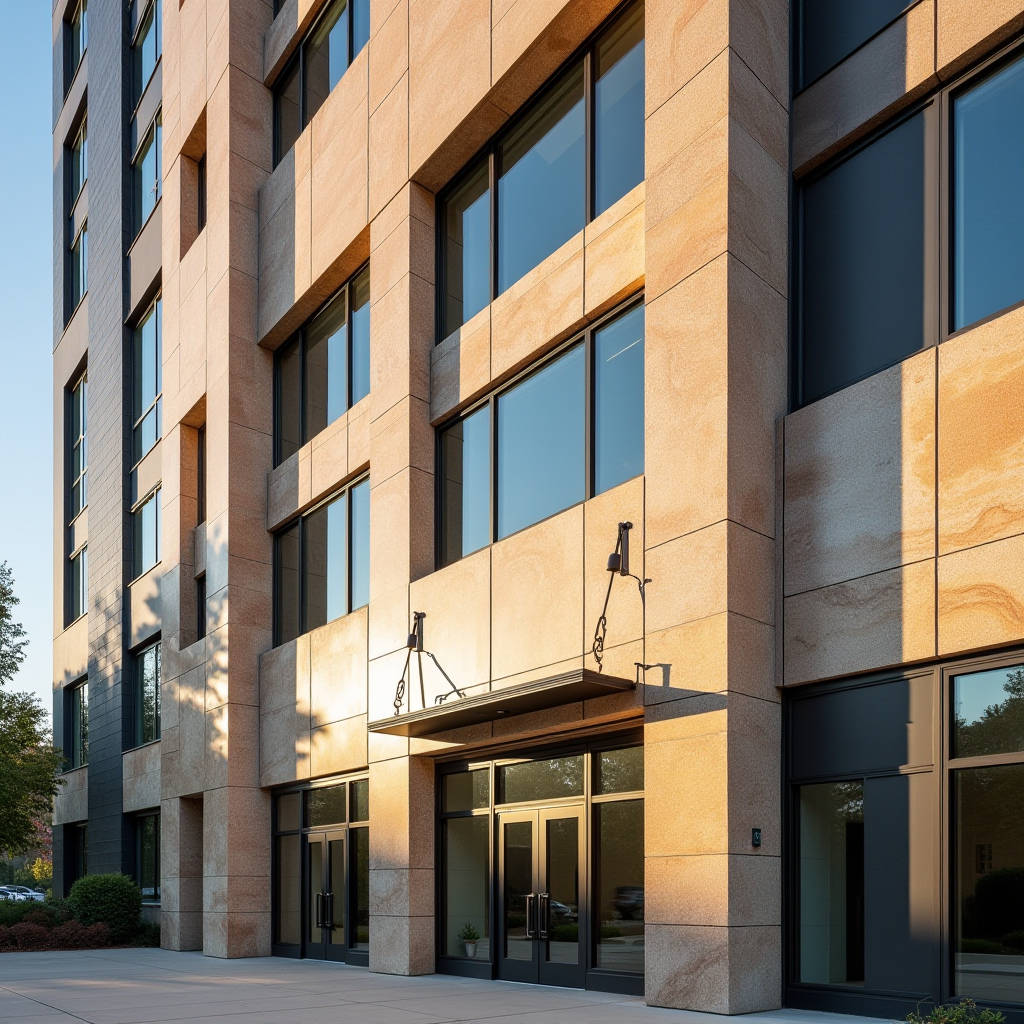
Stone finish aluminum panel systems have shifted from a niche aesthetic option to a mainstream specification in commercial cladding over the past five years. The driving force is straightforward: architects and developers want the visual weight and permanence of natural stone without the structural burden, installation headaches, and long-term maintenance liabilities that come with quarried masonry. A properly engineered stone finish aluminum panel delivers the same granite, slate, or limestone appearance at roughly one-eighth the weight of solid stone, with factory-controlled color consistency and a fully non-combustible solid aluminum core. This article focuses on the technical factors that determine whether a stone finish aluminum panel performs for decades or fails within the first five years — covering coating chemistry, thickness realities, fire classification, and the fabrication tolerances that separate architectural-grade product from decorative sheet metal.
What Separates Architectural Stone Finishes from Decorative Prints
The term "stone finish" covers a wide spectrum of quality in the aluminum cladding market. At the lower end, you find simple digital inkjet prints on polyester-coated aluminum — fine for interior feature walls but completely unsuitable for exterior facades. At the architectural end, the process involves multi-layer fluoropolymer coating systems with precisely controlled pigment distribution, often combined with sublimation transfer technology that embeds the stone pattern into the coating layer rather than sitting on top of it.
The most durable stone finish aluminum panel products use a three-tier coating architecture. The base layer is a corrosion-resistant primer, typically a chromate or chrome-free conversion coating applied directly to the aluminum substrate. The middle layer carries the pigmented stone pattern — this is where the visual realism lives or dies. The top clear coat provides UV shielding, gloss control, and abrasion resistance. When all three layers use PVDF (polyvinylidene fluoride) resin systems — specifically 70% PVDF content with 30% acrylic resin as defined by AAMA 2605 — the panel achieves the 20-plus-year exterior durability that specifiers expect.
Lower-cost stone finish aluminum panel products often substitute the top clear coat with a polyester or polyurethane system. This cuts material cost by 30-40% but dramatically reduces UV resistance. Within three to five years of exterior exposure, the stone pattern begins to chalk and fade, and the color shift becomes visible even from street level. For projects where the building owner expects a 15-year minimum service life without recoating, specifying full PVDF throughout the coating stack is not optional — it is the baseline requirement.
Solid Aluminum vs. Composite: The Core Difference That Matters
Stone finish aluminum panel products are manufactured on two fundamentally different substrates: solid aluminum sheets (typically 2.0mm, 2.5mm, or 3.0mm thick) and aluminum composite panels (two thin aluminum skins bonded to a polyethylene or mineral-filled core). While both can carry stone finish coatings, the performance divergence is significant.
Solid aluminum panels offer inherent non-combustibility. A 3.0mm solid aluminum sheet with a stone finish coating carries a Class A fire rating under ASTM E84 and meets the non-combustible requirements of many international building codes without needing a fire-retardant core. This matters enormously for high-rise facades, where post-Grenfell regulatory tightening has made combustible cladding materials a non-starter in many jurisdictions.
The flatness characteristics also differ. Solid aluminum panels, when properly tension-leveled and fabricated with appropriate stiffening, maintain superior flatness across large spans. Composite panels can exhibit "oil-canning" — a visible waviness caused by differential thermal expansion between the aluminum skins and the core material. On a stone finish surface, oil-canning is particularly unforgiving because the irregular pattern highlights any deviation from flatness, making the panel look warped even when the distortion is under 2mm.
From a fabrication standpoint, solid stone finish aluminum panel material can be routed, folded, welded, and formed into complex geometries — cassette panels, column covers, soffit liners, and custom-shaped feature elements — without exposing an edge that reveals a different material. The stone pattern wraps continuously around folded edges when the coating is applied before fabrication, creating a monolithic appearance that composite panels struggle to match.
Coating Technologies: Sublimation, PVDF, and FEVE Compared
Three dominant coating technologies deliver stone finish effects on aluminum, and each has distinct performance characteristics that specifiers need to understand.
PVDF liquid spray coating with stone-effect pigmentation is the most widely specified for exterior applications. The 70% PVDF resin system provides proven weatherability backed by decades of Florida exposure data. The stone pattern is achieved through precisely controlled application of multiple pigmented layers, often with a final clear coat that can be specified in gloss levels from 5 to 70 units. The limitation is that PVDF stone finishes tend to look more uniform and less organic than real stone — the random veining and color variation of natural granite is difficult to replicate with spray application alone.
Sublimation transfer technology addresses this limitation. The process starts with a PVDF or polyester base coat, then uses heat and pressure to transfer a photographic-quality stone image from a transfer film directly into the coating layer. The result is exceptionally realistic — individual quartz crystal patterns, marble veining, and granite speckling reproduce with photographic accuracy. The durability question hinges on the top coat: if the sublimated pattern is sealed under a PVDF clear coat, exterior performance matches traditional PVDF systems. Without that clear coat, the pattern is vulnerable to UV degradation and physical abrasion.
FEVE (fluoroethylene vinyl ether) coatings represent the premium tier. FEVE resins offer gloss retention and chalk resistance that exceed even high-grade PVDF, with some manufacturers offering 30-year film integrity warranties. FEVE-based stone finish aluminum panel products are specified for landmark projects and extreme climates — coastal installations with salt spray, desert environments with intense UV, and high-pollution urban centers where acid rain resistance matters.
| Coating Technology | Resin System | Typical Film Thickness | Exterior Durability | Stone Pattern Realism | Relative Cost |
|---|---|---|---|---|---|
| Polyester Powder | Polyester | 60-80 μm | 3-5 years | Low — uniform, limited depth | $ |
| PVDF Spray (Kynar 500®) | 70% PVDF / 30% Acrylic | 30-40 μm (3-coat) | 20-25 years | Moderate — good color, less organic texture | $$ |
| Sublimation + PVDF Clear | PVDF top coat over sublimated pattern | 35-45 μm total | 15-20 years | High — photographic veining and speckling | $$$ |
| FEVE Fluoropolymer | FEVE resin | 40-50 μm (3-coat) | 25-30+ years | Moderate to High — depends on application method | $$$$ |
| Sublimation + FEVE Clear | FEVE top coat over sublimated pattern | 45-55 μm total | 30+ years | Highest — photographic realism with maximum durability | $$$$$ |
Fire Performance and Building Code Compliance
Fire safety has become the dominant compliance concern for facade materials globally. A stone finish aluminum panel made from solid aluminum carries inherent fire performance advantages that simplify code compliance across multiple jurisdictions.
Solid aluminum panels 2.0mm and thicker are classified as non-combustible under ASTM E136 and meet the limited combustibility requirements of NFPA 285 when installed as part of a tested wall assembly. This is not a minor technical detail — it means that solid aluminum stone finish panels can be specified for high-rise facades, exit corridors, and other life-safety-critical locations without the additional engineering and testing burden that combustible-core products require.
The key distinction: a stone finish aluminum panel with a solid aluminum core does not contribute fuel to a fire. The PVDF or FEVE coating on the surface is organic and will eventually degrade under extreme heat, but the aluminum substrate itself melts rather than burns, and the coating mass is negligible relative to the total panel mass. This is fundamentally different from panels with polyethylene cores, which can contribute significantly to fire spread and produce flaming droplets.
For projects in the Middle East, Southeast Asia, and Australia — where building codes have tightened considerably since 2017 — specifying solid aluminum stone finish panels eliminates a layer of compliance risk. The product can be specified with confidence under the UAE Fire and Life Safety Code, the Singapore Fire Code, and the Australian National Construction Code (NCC) without needing to prove that a combustible core has been adequately fire-retarded.
Fabrication Tolerances and Installation Realities
The visual success of a stone finish aluminum panel facade depends as much on fabrication precision as on coating quality. Stone patterns — particularly those mimicking marble veining or granite with directional grain — amplify any misalignment between adjacent panels. A 2mm gap variation that would be invisible on a solid-color panel becomes glaringly obvious when it interrupts a continuous vein pattern.
Panel flatness tolerances should be specified at a maximum of 0.5% of the panel's diagonal dimension for architectural stone finish applications. For a 1200mm x 2400mm panel, that means a maximum deviation of approximately 13mm across the diagonal — but in practice, high-quality fabricators like Futeng® deliver flatness within 0.2-0.3% of diagonal, which translates to roughly 5-8mm for the same panel size. This tighter tolerance is critical for stone finish surfaces because the irregular pattern makes any deviation read as a defect rather than normal material behavior.
Edge treatment deserves careful attention in the specification. Stone finish aluminum panel products should be fabricated with folded or welded corners wherever possible, rather than relying on exposed cut edges. When the stone pattern wraps continuously around a folded edge, the panel reads as a solid stone element. When the edge is cut and exposed, the metallic aluminum substrate becomes visible and breaks the illusion. For cassette panel systems, the return leg should be a minimum of 20mm to provide adequate shadow line depth and conceal the panel edge from most viewing angles.
Attachment systems for stone finish aluminum panels follow the same engineering principles as any solid aluminum cladding system, but with one additional consideration: the fastening system must accommodate thermal movement without creating stress concentrations that could crack the coating at attachment points. Aluminum expands and contracts at approximately 2.4mm per meter per 100°C temperature change. For a 3-meter panel in a climate with a 60°C annual temperature swing, that is roughly 4.3mm of movement. The attachment system must allow this movement freely, or the coating will eventually crack around rivet and bolt holes.
Weight Comparison and Structural Implications
One of the strongest engineering arguments for stone finish aluminum panel specification is the weight savings relative to natural stone cladding. A 30mm-thick granite panel weighs approximately 80-90 kg per square meter. A 3.0mm solid aluminum panel with stone finish coating weighs approximately 8-9 kg per square meter. That is a 90% weight reduction.
This weight difference cascades through the entire building structure. The supporting substructure can be lighter. The building's primary structural frame carries less dead load. In seismic zones, the reduced mass directly translates to lower seismic forces on the building. On renovation projects, stone finish aluminum panel systems can often be installed over existing facades without the need for structural reinforcement — something that would be impossible with natural stone at the same scale.
The practical implication for project teams: a stone finish aluminum panel facade can deliver the aesthetic of a stone-clad building on a structural budget closer to that of a conventional metal panel system. The cost savings in the supporting structure often offset the premium cost of the high-end stone finish coating, making the overall installed cost competitive with mid-range natural stone while delivering better long-term performance.
Weathering, Maintenance, and Lifecycle Performance
Natural stone weathers. Granite develops surface oxidation. Marble etches in acid rain. Limestone erodes. These are accepted characteristics of the material, but they represent ongoing maintenance costs and aesthetic changes that some building owners find unacceptable.
A properly specified stone finish aluminum panel does not weather in the same way. The PVDF or FEVE coating system is chemically inert for practical purposes — it does not oxidize, does not react with acid rain, and does not support biological growth. The color and gloss measured on day one should remain within 5 Delta E units after 20 years of exterior exposure, based on South Florida accelerated weathering data from coating manufacturers.
Maintenance consists of periodic cleaning to remove atmospheric soiling — typically a pressure wash with mild detergent every 12-24 months depending on the environment. There is no need for sealing, no risk of efflorescence, and no progressive deterioration of the surface. This is a significant lifecycle cost advantage over natural stone, which requires periodic sealing, repointing of joints, and eventual replacement of spalled or cracked units.
For specifiers concerned about the environmental impact, solid aluminum panels are fully recyclable at end of life. The aluminum substrate can be remelted and reused without loss of properties, and the coating is consumed in the remelting process. This contributes to LEED credits under the Building Life-Cycle Impact Reduction and Building Product Disclosure and Optimization categories.
Specifying Stone Finish Aluminum Panels: Key Technical Criteria
Writing a specification that gets the intended result requires attention to detail beyond simply calling out "stone finish aluminum panel." The following criteria should be explicit in the specification document:
Substrate: Solid aluminum alloy, typically 3003-H14 or 5052-H32, minimum thickness 2.0mm for non-structural applications and 2.5mm or 3.0mm for large-format panels or high-wind zones. The alloy selection matters: 3003 offers better formability for complex shapes, while 5052 provides higher tensile strength for spanning applications.
Coating system: Specify the resin chemistry (PVDF or FEVE), the number of coats, and the minimum film thickness. Reference AAMA 2605 for PVDF systems or AAMA 2605-equivalent criteria for FEVE. Include the stone pattern reference — either a manufacturer's standard pattern code or a custom match requirement with a physical sample as the benchmark.
Fire performance: Require test data demonstrating compliance with the relevant local code. For international projects, ASTM E84 Class A and ASTM E136 non-combustibility are widely recognized benchmarks. For projects subject to NFPA 285, require assembly-level test data including the specific panel system.
Fabrication tolerances: Specify panel flatness, dimensional tolerance (typically ±1.5mm on length and width), and squareness (diagonal difference within 3mm). For stone finish panels, the flatness tolerance should be tighter than for solid-color panels.
Warranty: For exterior applications, require a minimum 20-year film integrity warranty on the coating system from the coating manufacturer. This is standard for PVDF systems and should be available without surcharge from reputable fabricators.
Common Failure Modes and How to Avoid Them
Understanding how stone finish aluminum panel installations fail helps specifiers write better requirements and helps contractors avoid costly callbacks.
Pattern mismatch at joints: This is the most common aesthetic complaint. Stone patterns with strong directional veining must be fabricated with the pattern orientation consistent across all panels, and the installation sequence must respect that orientation. Some manufacturers offer "book-matched" or "flow-matched" panel sets for feature walls where the pattern is designed to continue across panel joints.
Coating delamination: Usually caused by inadequate surface preparation before coating application. The aluminum substrate must be properly cleaned, deoxidized, and conversion-coated before the primer is applied. Specifying a chromate conversion coating per ASTM B449 or an equivalent chrome-free process provides a reliable pretreatment benchmark.
Galvanic corrosion at fasteners: When stainless steel fasteners contact aluminum in the presence of an electrolyte (rainwater, coastal spray), galvanic corrosion can occur. The fix is straightforward: specify stainless steel fasteners with an appropriate isolation detail — typically a nylon or EPDM washer between the fastener head and the aluminum panel surface.
Oil-canning: Even with solid aluminum panels, inadequate stiffening can produce visible waviness. The solution is proper engineering of the panel profile — either through the use of stiffener ribs bonded to the panel rear face, or through the panel geometry itself (folded returns, formed profiles that add section depth). A panel that looks perfectly flat in the factory can develop oil-canning after installation if thermal movement is constrained.
Suppliers with deep fabrication experience, such as Futeng®, address these failure modes through established quality control protocols — including panel-by-panel flatness inspection, coating adhesion testing per ASTM D3359, and dimensional verification against approved shop drawings before shipment.
Cost Structure and Value Engineering Considerations
The installed cost of a stone finish aluminum panel facade typically falls between $45 and $85 per square foot, depending on panel complexity, coating specification, and project location. This positions it competitively against natural stone cladding ($60-$120+ per square foot installed) while offering significant weight and maintenance advantages.
The coating specification is the single largest cost variable. A polyester powder stone finish might cost $3-5 per square foot for the coating alone. A PVDF stone finish with sublimation transfer and clear top coat might cost $8-12 per square foot. FEVE systems add another $2-4 per square foot. For a 50,000-square-foot facade, the coating specification difference can represent a $250,000-$500,000 line item swing.
Value engineering should focus on areas where cost can be reduced without compromising performance. Using a standard stone pattern from the manufacturer's library rather than developing a custom match saves tooling and sampling costs. Simplifying panel geometry — reducing the number of unique panel types and minimizing complex folded shapes — reduces fabrication labor. Specifying a 2.5mm panel thickness instead of 3.0mm saves approximately 15% on material cost while maintaining adequate stiffness for most applications.
What should not be value-engineered: the coating chemistry. Downgrading from PVDF to polyester on an exterior application saves money up front but guarantees premature fading and chalking. The cost of recoating or replacing panels within 5-7 years will far exceed the initial coating savings.
"The stone finish aluminum panel market has matured to the point where specifiers can achieve virtually any natural stone aesthetic without compromising on fire performance, structural efficiency, or long-term durability. The key is understanding the coating technology hierarchy and specifying accordingly — not just calling out a color and hoping for the best."
Making the Right Specification Decision
Stone finish aluminum panel systems have earned their place in the architectural cladding toolkit through a combination of aesthetic versatility and engineering pragmatism. The product category now spans a wide quality range, and the specifier's job is to match the performance requirements to the project's budget, climate, and regulatory environment.
For high-rise facades in fire-sensitive jurisdictions, the solid aluminum substrate with PVDF or FEVE stone finish coating is the clear specification choice — it eliminates combustible material concerns while delivering the stone aesthetic that drives the architectural vision. For low-rise commercial buildings in mild climates, a PVDF stone finish on solid aluminum still represents the best balance of cost and durability, though the specifier has more flexibility on coating thickness and warranty terms.
The most successful stone finish aluminum panel projects share a common thread: the specification was written with a clear understanding of the coating technology, the fabrication requirements, and the installation tolerances that make the difference between a facade that looks like stone and one that looks like painted metal with a pattern. When those details are right, the result is a building that delivers the visual permanence of natural stone with the performance advantages that only aluminum can provide.