Electrophoresis Coated Aluminum for Solid Cladding Panels Performance and Specification Guide
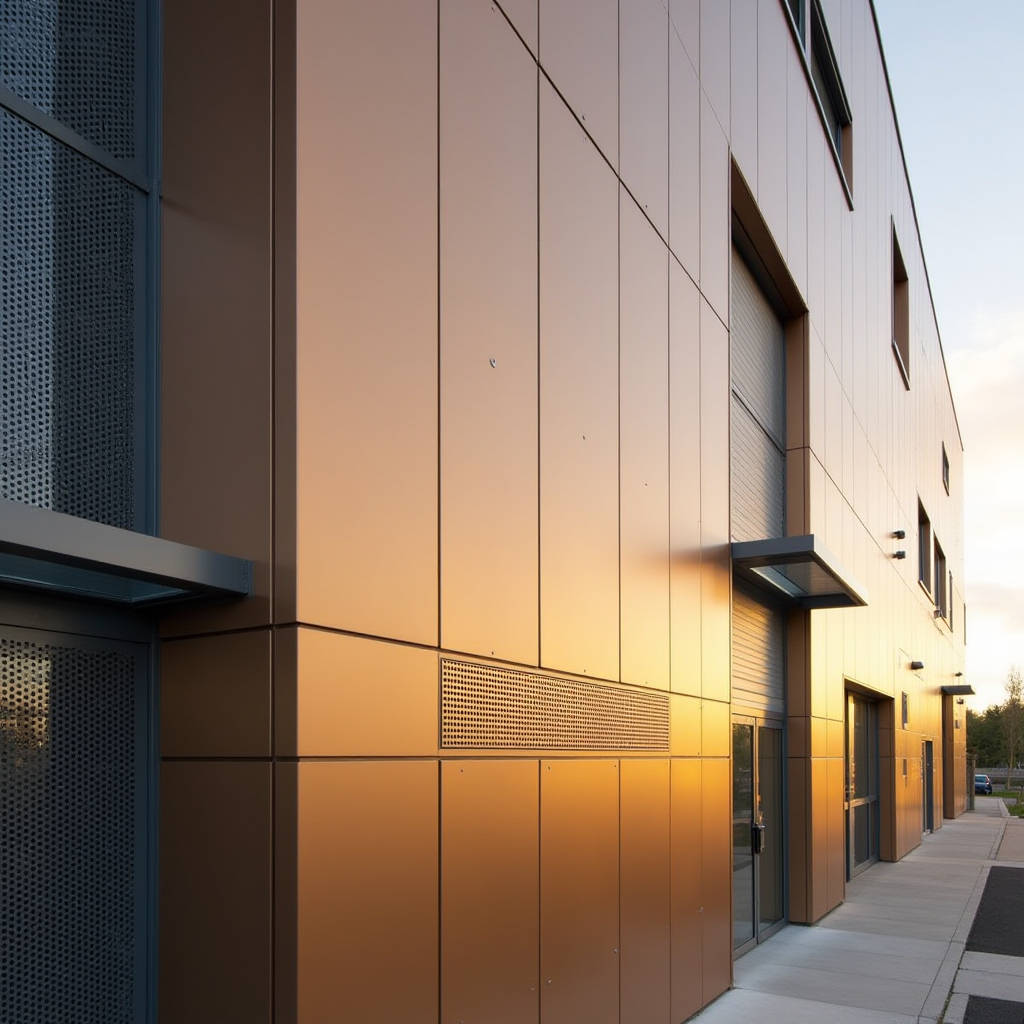
When a project specification demands uniform coating coverage across the entire surface of solid aluminium cladding panels—including folded edges, punched holes, and recessed joint profiles—spray-based finishing methods hit their physical limits. Electrophoresis coated aluminum solves this problem through electro-deposition, a process where charged paint particles migrate under an electric field and deposit evenly onto every conductive surface. For facade engineers and procurement managers evaluating exterior cladding systems, understanding how this technology performs on 2.0mm to 3.0mm solid aluminium sheets matters because the coating uniformity directly affects long-term corrosion resistance in coastal, industrial, and high-humidity environments.
What Makes Electrophoresis Different from Conventional Coating Methods
Standard spray coating relies on mechanical application. A technician or robotic arm directs a spray gun toward the panel surface, and paint particles travel through the air to land on the substrate. This works reasonably well for flat, unobstructed surfaces. The problem emerges on complex geometries—folded panel returns, perforated screens, stiffener ribs, and interlocking joint details. These areas receive less coating, sometimes none at all. Edge pull-back, where surface tension causes coating to retreat from sharp corners, leaves the thinnest sections of aluminium with the least protection.
Electrophoresis eliminates these variables. The aluminium panel is immersed in a bath containing electrically charged paint particles suspended in deionized water. When direct current passes through the system, the panel acts as an electrode, attracting particles uniformly across its entire surface. The coating builds simultaneously on flat faces, inside corners, cut edges, and through perforations. Film thickness is controlled by voltage, bath chemistry, and immersion time—not by operator technique or spray gun distance.
This mechanism matters for solid aluminium cladding panels specifically because these panels undergo fabrication processes—CNC routing, punching, folding, welding—that create the very geometric complexity where spray coatings fail. A panel that leaves the coating line with edge protection already in place does not rely on field-applied touch-up pens to seal vulnerable areas.
How the Process Works: From Anodizing to Electrophoretic Deposition
Electrophoresis coated aluminum does not start in the electrophoresis tank. The process sequence is critical to coating adhesion and durability. For architectural-grade solid aluminium sheets, the workflow typically follows this path:
- Pre-treatment: Degreasing removes forming oils and shop contaminants. Alkaline etching creates a uniform surface profile. Acid neutralization follows, then rinsing.
- Anodizing: The aluminium panel undergoes sulfuric acid anodizing to build a controlled oxide layer. This porous anodic film serves as the adhesion base for the electrophoretic coating. Without this step, the organic topcoat would not bond reliably to bare aluminium.
- Electrophoretic deposition: The anodized panel enters the electrophoresis bath. Under DC current (typically 100-250V), charged resin particles migrate to the panel surface and deposit as a uniform film. Bath temperature, solids content, pH, and voltage are tightly controlled.
- Rinse and recovery: Panels pass through ultrafiltration rinse stages to recover excess paint solids, reducing waste and maintaining bath stability.
- Curing: The coated panels enter an oven at 170-200°C, where the deposited film crosslinks into a dense, hard resin layer.
The combined anodic oxide + electrophoretic coating system creates a duplex protection mechanism. The anodic layer provides hardness and electrochemical stability, while the organic topcoat seals the porous oxide and adds chemical resistance. This is not simply a paint job—it is a metallurgical-plus-polymer composite surface engineered for decades of exterior exposure.
Technical Performance Data on Solid Aluminium Panels
For procurement teams comparing coating specifications, the numbers tell the story. The table below compares key performance parameters across four common architectural aluminium finishing systems applied to 2.5mm solid aluminium cladding panels:
| Performance Parameter | Electrophoresis (Anodic E-Coat) | PVDF Liquid Spray (70% Kynar) | Powder Coating (Polyester TGIC) | Standard Anodizing (Class I) |
|---|---|---|---|---|
| Coating Thickness Range | 15-30 μm (organic layer) + 10-15 μm (anodic) | 25-35 μm (3-coat), 30-40 μm (4-coat) | 60-80 μm | 15-20 μm (oxide only) |
| Edge Coverage | Full, uniform | Variable, edge pull-back common | Variable, Faraday cage effects | Full, uniform |
| Salt Spray Resistance (ASTM B117) | 4,000+ hours | 3,000+ hours | 1,000-2,000 hours | 1,000-3,000 hours (sealed) |
| Pencil Hardness | 4H-6H | F-HB | H-2H | 9H (oxide layer) |
| Chemical Resistance (10% HCl, 24h) | No blistering, slight color shift | No effect | Mild blistering possible | Etching, irreversible damage |
| Color Consistency (Batch-to-Batch) | Excellent (bath-controlled) | Good (operator-dependent) | Good | Variable (alloy-dependent) |
| UV Resistance (5-Year Florida ΔE) | ≤ 3.0 (with UV-stable resin) | ≤ 2.0 | ≤ 5.0 (super-durable grades: ≤ 3.0) | N/A (no organic layer) |
| Typical Cost Index (vs. Anodizing = 1.0) | 1.3-1.6 | 1.8-2.5 | 1.1-1.4 | 1.0 |
Salt spray testing per ASTM B117 provides a comparative benchmark, though real-world correlation varies by exposure environment. The 4,000+ hour figure for electrophoresis coated aluminum reflects the duplex system's ability to resist underfilm corrosion propagation. When the dense organic topcoat finally allows moisture ingress at a scratch or impact site, the underlying anodic layer acts as a secondary barrier, slowing the corrosion front.
Where Electrophoresis Coated Aluminum Outperforms on Facades
Coastal and Marine Environments
Salt-laden air attacks aluminium through chloride ion penetration. The pitting corrosion mechanism starts at microscopic surface defects and spreads laterally beneath the coating. Electrophoresis coated aluminum panels resist this two ways: the uniform coating thickness eliminates thin spots where chloride ions can break through, and the anodic underlayer electrochemically passivates the aluminium surface. For projects within 5 kilometers of a coastline, specifying e-coated solid aluminium panels with a minimum 25 μm organic topcoat over a Class I anodic layer (per AAMA 611 guidelines) provides a measurable durability advantage.
Perforated and Decorative Facade Screens
Architects increasingly specify perforated solid aluminium panels for solar shading, ventilation screens, and decorative double-skin facades. Each perforation creates an interior cylindrical surface that spray coating cannot reach. Electrophoretic deposition coats the inside of every hole uniformly. This matters because uncoated hole interiors become corrosion initiation points, and visible rust staining on a decorative screen is a warranty claim waiting to happen. Specification writers should note that the electrophoretic coating on perforated panels achieves full coverage at hole diameters as small as 3mm, provided adequate bath circulation.
High-Rise Curtain Wall Spandrel Panels
Spandrel panels behind glazing experience a unique microclimate: solar radiation heats the cavity, condensation forms at night, and ventilation is minimal. Coating failure in this zone leads to visible degradation through the glass. Electrophoresis coated aluminum spandrel panels, with their uniform coverage on folded returns and stiffener attachment points, eliminate the weak spots where condensation-triggered corrosion typically begins. The hard, crosslinked resin surface also resists the scratching that can occur during glazing installation.
Interior Applications with High Touch Frequency
Lift lobbies, column cladding, and wall panels in high-traffic areas face abrasion from human contact, cleaning chemicals, and impact. The 4H-6H pencil hardness of cured electrophoretic coatings significantly outperforms PVDF (F-HB) and standard powder coatings (H-2H) in scratch resistance. For interior solid aluminium cladding where appearance retention over a 20-year service life matters, the hardness advantage translates directly to lower maintenance costs.
Color Range and Aesthetic Considerations
Electrophoresis coated aluminum is available in a defined but versatile color palette. The most common architectural finishes include:
- Silver and clear anodic tones: The natural metallic appearance of aluminium with a transparent or lightly tinted topcoat. These finishes highlight the material's inherent character.
- Champagne and light bronze: Warm metallic tones achieved through electrolytic coloring of the anodic layer before electrophoretic sealing.
- Dark bronze and black: Deep, saturated tones produced by heavier electrolytic deposition or organic dye absorption in the anodic pores.
- Matte white and light gray: Opaque pigmented electrophoretic coatings that provide uniform, non-metallic appearance.
The color range is narrower than PVDF liquid coatings, which can match virtually any RAL or custom color through pigment blending. However, the metallic tones achievable through anodic coloring plus electrophoretic sealing have a depth and three-dimensional quality that sprayed coatings cannot replicate. The color exists within the oxide structure, not on top of it. For architects seeking a premium metallic aesthetic on solid aluminium panels, this optical property often justifies the specification.
Batch-to-batch color consistency with electrophoresis coated aluminum is generally excellent because the bath chemistry parameters—metal salt concentration, pH, temperature, and current density—are more precisely controllable than the human and environmental variables in spray operations. This matters for large facade projects where panels from multiple production runs must match on the same elevation.
Production Capacity and Supply Chain Reality
Not every aluminium fabricator operates an electrophoresis line. The capital investment for a full anodizing-plus-electrophoresis line is substantial, and the process chemistry requires specialized wastewater treatment for the paint bath effluent. This limits the supplier base compared to powder coating or PVDF spraying, which have lower barriers to entry.
For procurement managers, this means lead time planning must account for the coating process as a potential bottleneck. A typical architectural electrophoresis line processes panels in batch mode, with tank dimensions determining maximum panel size. Common tank sizes accommodate panels up to 6-7 meters in length, which covers most facade applications. Larger panels may require specialized facilities.
Futeng® operates integrated anodizing and electrophoresis lines that process solid aluminium cladding panels in thicknesses from 2.0mm to 3.0mm, with a standard production capacity that supports mid-to-large-scale facade projects. The key specification detail to verify with any supplier is whether the electrophoresis line is dedicated to architectural products or shared with industrial components, as bath contamination from non-architectural work can affect finish quality.
Quality Verification: What to Check on Site
When electrophoresis coated aluminum panels arrive on site, the following checks should be part of the receiving inspection protocol:
- Coating thickness measurement: Use an eddy-current gauge calibrated for the anodic-plus-organic duplex system. Measure at panel centers, edges, and corners. Variation should be within ±15% of the specified value.
- Visual inspection under diffuse light: Look for craters, pinholes, or orange peel. Electrophoretic coatings should exhibit a smooth, uniform surface. Minor bath particle inclusions are acceptable if below the visibility threshold at 3 meters viewing distance.
- Adhesion testing: Cross-hatch test per ISO 2409 or ASTM D3359. Classification 0 or 1 is expected for properly cured electrophoretic coatings on anodized substrate.
- Color verification: Compare against the approved control sample under standardized lighting (D65 illuminant). ΔE should be ≤ 1.0 for adjacent panels on the same elevation.
- Impact resistance: Per ASTM D2794, the coating should withstand 1.8 N·m direct and reverse impact without cracking or delamination.
These tests are not academic exercises. A project in Southeast Asia experienced coating delamination on 200+ solid aluminium spandrel panels because the anodizing step was shortened to increase throughput, compromising the adhesion base for the electrophoretic layer. The panels passed initial visual inspection but failed within 18 months of installation. The remediation cost exceeded the original coating budget by a factor of four.
Environmental and Regulatory Compliance
Electrophoresis coating technology has evolved significantly in its environmental profile. Modern cathodic epoxy and anodic acrylic systems use water as the primary solvent, with volatile organic compound (VOC) content typically below 0.5 kg per square meter of coated surface. This compares favorably to solvent-based PVDF systems, which can emit 3-5 kg VOC per square meter depending on the specific formulation and spray booth capture efficiency.
The ultrafiltration and reverse osmosis recovery systems integrated into modern electrophoresis lines capture over 95% of paint solids for reuse, minimizing waste discharge. The primary environmental consideration is the treatment of rinse water containing low concentrations of paint resin and neutralizing agents. Compliance with local wastewater discharge regulations requires on-site treatment capability, which reputable coating facilities maintain.
For projects pursuing LEED, BREEAM, or Green Star certification, the low-VOC profile of electrophoresis coated aluminum can contribute to indoor environmental quality credits. The coating also contains no heavy metals (lead, cadmium, hexavalent chromium), aligning with ISO 14001 environmental management requirements increasingly common in international facade specifications.
Cost Engineering: Where the Value Proposition Sits
Electrophoresis coated aluminum panels typically cost 30-60% more than standard anodized panels and 10-30% more than basic polyester powder coating. Compared to high-performance PVDF systems (70% Kynar resin, 3-coat), e-coat is generally 20-40% less expensive. The cost equation changes when factoring in lifecycle performance:
- Reduced touch-up and repair: The uniform edge coverage eliminates the need for field-applied touch-up on cut edges and fastener holes, saving labor during installation.
- Longer maintenance intervals: The hard, chemically resistant surface requires less frequent cleaning to maintain appearance. In polluted urban environments, this can reduce facade maintenance costs by 15-25% over a 20-year period.
- Lower replacement rate: Panels that resist corrosion at edges and joints do not need premature replacement. The avoided cost of access equipment, labor, and material for even a partial re-cladding far exceeds the initial coating premium.
For budget-conscious projects in moderate environments, the specification sweet spot is often electrophoresis coated aluminum for the most vulnerable facade zones—ground-floor columns, balcony soffits, parapet caps, and areas within splash distance of paving—while using standard anodized or powder-coated panels for upper elevations with less exposure. This targeted approach optimizes the cost-performance balance.
Making the Specification Decision
Electrophoresis coated aluminum occupies a specific position in the architectural coating hierarchy. It does not replace PVDF for projects requiring exact custom color matching or maximum UV resistance in intense sunbelt exposures. It does not replace standard anodizing for budget-driven projects where the oxide layer alone provides sufficient protection. It excels where the combination of uniform coverage, hardness, corrosion resistance, and metallic aesthetic quality justifies the mid-range cost.
The decision framework for specifiers should weigh four factors: exposure environment severity, geometric complexity of the panel design, aesthetic requirements for metallic finish depth, and lifecycle maintenance budget. When two or more of these factors point toward the strengths of electrophoretic coating, the specification makes engineering and economic sense. When only one factor applies, alternative coating systems may offer better value.
For the facade contractor and installer, the practical advantage is simpler: panels arrive with coating already protecting every edge and hole, reducing the touch-up workload and the associated risk of coating failure at the most vulnerable points. That reliability, repeated across thousands of panels on a single project, is what makes the technology worth specifying.