Anodized Aluminum Facade Specification Guide for Architects and Building Envelope Engineers
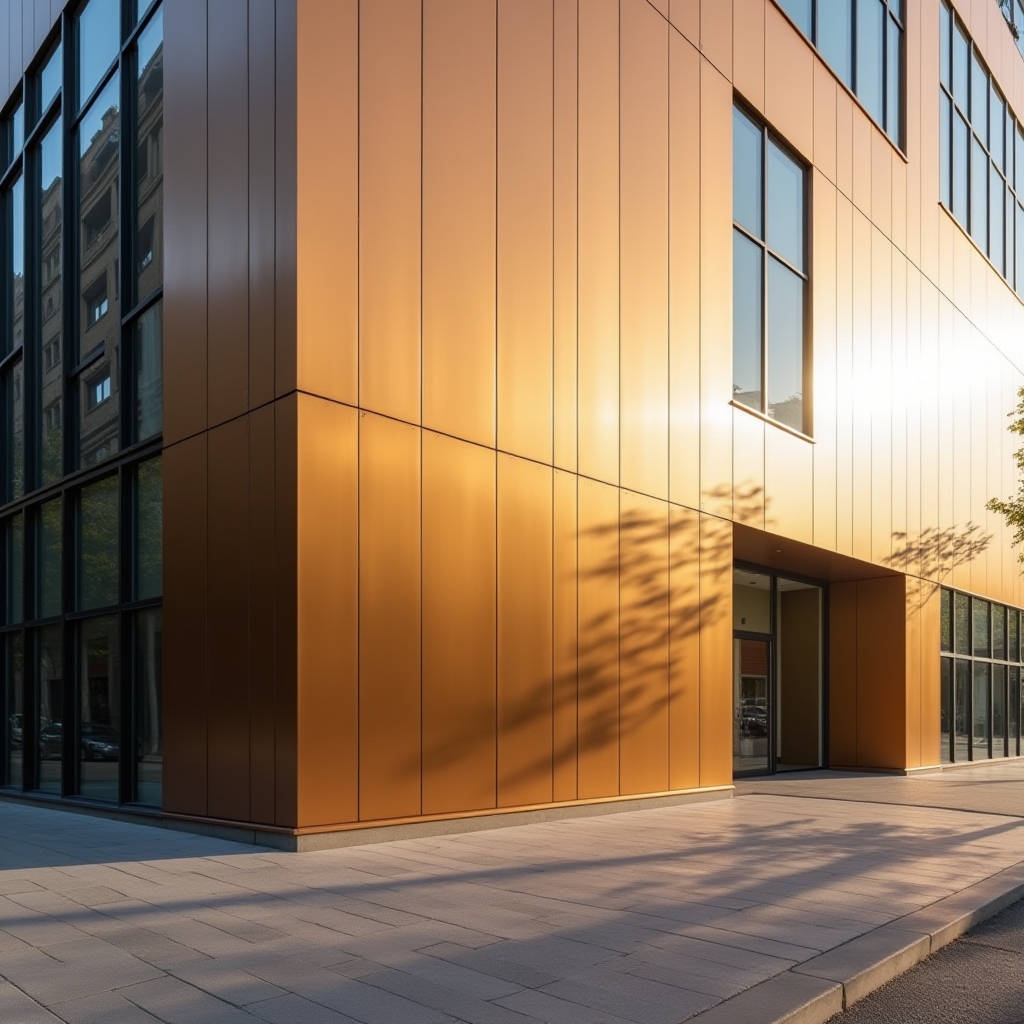
An anodized aluminum facade represents one of the most technically demanding cladding decisions a project team can make. The electrochemical process that creates the anodic layer—growing aluminum oxide directly from the base metal rather than applying a coating on top—produces a surface that resists UV degradation, salt spray, and mechanical abrasion in ways that organic coating systems cannot match. But the specification path is narrow. Getting the alloy grade wrong, misunderstanding thickness tolerances, or overlooking the distinction between batch and continuous anodizing can turn a premium architectural intent into a jobsite dispute. This article examines the metallurgical, process, and procurement variables that determine whether an anodized aluminum facade performs for 30 years or shows visible inconsistency within the first 18 months.
What the Anodic Layer Actually Does
Anodizing is not a coating. It is a controlled electrochemical conversion of the aluminum surface into aluminum oxide (Al₂O₃), a ceramic-like material that is chemically bonded to the substrate. The process immerses aluminum panels in an acid electrolyte bath—typically sulfuric acid—and passes a direct current through the metal. Oxygen ions released at the anode react with the aluminum surface, building an oxide layer outward from the original surface plane. The result is a hard, transparent film typically 10 to 25 microns thick for architectural applications, depending on the class specified under AAMA 611.
The practical implications matter more than the chemistry. Because the oxide layer is integral to the metal, an anodized aluminum facade cannot delaminate, peel, or chalk the way painted finishes eventually can. The surface hardness of the anodic film—measured at approximately 6 to 7 on the Mohs scale—means it resists scratching during handling and installation better than PVDF or powder coatings. This hardness also translates to abrasion resistance on high-traffic building elevations where wind-driven sand or particulate matter would gradually erode organic finishes.
Color stability under UV exposure is another differentiator. The anodic layer is transparent, and color is achieved either through the natural metallic tone of the oxide itself or by introducing metallic salts into the pore structure before sealing. These inorganic colorants do not photodegrade. A properly sealed anodized aluminum facade will show Delta E color shift of less than 2 units after 10 years of south-facing exposure in most climates—a figure that organic coating systems struggle to match without significant pigment loading.
Alloy Selection: The Decision That Determines Everything
Not all aluminum alloys anodize well. The 5xxx series (Al-Mg) and 6xxx series (Al-Mg-Si) dominate architectural cladding, but they behave differently in the anodizing bath. Alloy 5005, with its controlled magnesium content and low iron, produces a clear, consistent anodic film with a warm silver tone. It is the workhorse alloy for anodized aluminum facade panels where color uniformity across large elevations is critical. Alloy 5052, with higher magnesium, yields a slightly darker, more amber-toned finish that some architects specify intentionally for its depth.
The 6xxx series extrusions—6063 and 6061—are common for framing and sub-structure but can also be used for panel stiffeners. The key risk with 6xxx alloys is the silicon content, which can produce a grayish or mottled appearance if not tightly controlled. For solid aluminum cladding panels in the 2.0mm to 3.0mm thickness range, 5005-H14 or 5005-H34 temper is the standard recommendation. Suppliers like Futeng® typically stock 5005 in coil and sheet form specifically for anodizing-grade applications, which eliminates the batch-to-batch variation that plagues projects where the fabricator sources generic sheet from multiple mills.
Batch Anodizing vs. Continuous Coil Anodizing
This distinction is one of the most consequential and least discussed in facade specification. Batch anodizing involves racking pre-cut, pre-fabricated panels and immersing them in tanks. The panels are handled individually, and the anodic film forms on all exposed surfaces simultaneously. Batch anodizing is the method used for custom-shaped panels, panels with folded returns, and panels that have already been perforated or routed.
Continuous coil anodizing processes aluminum coil through the anodizing line before cutting and fabrication. The film thickness is extremely uniform—typically within ±1 micron across the entire coil—and the process is efficient for large volumes of flat panels. However, coil-anodized material exposes a raw cut edge when panels are sheared or routed after anodizing. This edge has no anodic protection and will weather differently than the face. For an anodized aluminum facade with visible panel joints, this edge behavior may be acceptable. For systems with shadow gaps or open joints, the exposed edge can become a visual liability.
The cost equation also differs. Batch anodizing carries higher per-unit labor costs but allows for smaller minimum order quantities and more flexible quality control. Coil anodizing demands minimum runs—typically 500 to 1,000 square meters per color and thickness—but delivers lower per-square-meter costs at volume. Project teams should align the process choice with panel geometry, edge detail design, and procurement scale before issuing tender documents.
Thickness Classes and What They Mean for Service Life
| AAMA 611 Class | Film Thickness | Recommended Exposure | Typical Service Life | Relative Cost Index |
|---|---|---|---|---|
| Class I | 18-25 microns | Severe industrial, marine, tropical | 30+ years | 1.0 (baseline) |
| Class II | 10-18 microns | Moderate urban, inland | 20-25 years | 0.85 |
| Class I (High-Performance) | 25-30 microns | Coastal, high-abrasion | 35+ years | 1.15 |
AAMA 611 defines the performance standard for architectural anodized aluminum. Class I, with a minimum film thickness of 18 microns, is the default specification for exterior anodized aluminum facade applications. Class II, at 10 to 18 microns, is suitable for interior work or protected exterior conditions but should not be specified for exposed building envelopes. Some coastal projects in the Middle East and Southeast Asia now specify a "Class I Plus" requirement of 25 microns minimum, particularly for the first 30 meters of elevation where salt spray concentration is highest.
The film thickness directly affects sealing quality. The anodic layer is porous before sealing; the pores are what allow dyes and metallic salts to be absorbed for coloring. Sealing closes these pores by hydrating the oxide, converting it to a swollen, non-absorptive state. Inadequate sealing leaves the pores open to contaminants, which causes staining and corrosion initiation. The seal quality test—ASTM B136, which measures the mass loss of the anodic film after immersion in a chromic-phosphoric acid solution—should be specified with a maximum acceptable value of 2.0 mg/cm² for exterior work.
Color Consistency: The Real-World Challenge
An anodized aluminum facade demands a level of color control that is fundamentally different from painted systems. With PVDF coatings, color is a function of pigment formulation applied to the surface. With anodizing, color emerges from the interaction between the aluminum alloy chemistry, the anodizing bath parameters, and the coloring method. Three variables drive color variation:
First, the alloy chemistry itself. Even within the 5005 specification, the iron and magnesium content can vary within the allowable range, and these variations shift the tone of the natural anodized finish. Mills that supply anodizing-grade sheet control these tramp elements more tightly than mills producing general-purpose aluminum. The cost premium for anodizing-grade material—typically 5% to 8%—reflects this tighter chemistry control.
Second, bath conditions. The acid concentration, temperature, dissolved aluminum content, and current density all influence the oxide structure and, consequently, the way light interacts with the surface. A bath that has been running for several days with high dissolved aluminum will produce a different visual result than a freshly made-up bath. Reputable anodizers manage this by tracking bath life and scheduling architectural work in dedicated production windows.
Third, the coloring process itself. Electrolytic coloring—the most common method for architectural bronze and black tones—deposits tin, cobalt, or nickel salts into the pore structure. The deposition rate depends on current waveform and bath chemistry, and small variations produce visible color shifts. For large anodized aluminum facade projects, the specifier should require a color range panel set showing the acceptable lightness and hue variation, typically expressed as a Delta E tolerance of ≤3.0 under D65 illumination.
Fabrication Sequencing and Panel Flatness
Anodizing changes the aluminum surface, but it does not hide fabrication defects. In fact, the reflective nature of an anodized aluminum facade amplifies surface irregularities that a matte powder coat would conceal. Panel flatness becomes a critical quality metric, and the fabrication sequence must account for the stresses introduced during cutting, routing, and folding.
Solid aluminum panels for anodized applications should be specified with a flatness tolerance of ±0.5% of the panel's diagonal dimension, measured as the deviation from a true plane. For a 1,200mm x 2,400mm panel, this translates to a maximum deviation of approximately 6.7mm—tighter than the typical ±0.8% tolerance for painted panels. Achieving this requires stress-relieved sheet, CNC routing with sharp tooling to minimize edge burr, and careful handling throughout the anodizing process to prevent rack marks.
Panel stiffeners—typically aluminum extrusions bonded or mechanically fastened to the rear face—must be attached after anodizing if the panel is batch-anodized, or before anodizing if the stiffener material is compatible with the anodizing process. The thermal expansion differential between the panel skin and the stiffener can induce visible oil-canning on the face if the bond pattern is not engineered correctly. A common rule of thumb: stiffener spacing should not exceed 50 times the panel skin thickness. For a 2.5mm thick panel, stiffeners should be spaced no more than 125mm apart.
Weathering, Maintenance, and the Fingerprint Problem
An anodized aluminum facade weathers differently than coated alternatives. The anodic surface is hydrophilic in its natural state, meaning water sheets rather than beads. This reduces the visibility of water staining and helps the facade self-clean during rain. However, the surface is also susceptible to fingerprint marking during installation, and these marks can become etched into the oxide if not removed promptly.
The maintenance protocol is straightforward but must be followed. Installers should wear clean cotton gloves during panel handling. Any fingerprints or construction residue should be cleaned with a pH-neutral detergent and copious water within 48 hours. Abrasive cleaners, alkaline masonry cleaners, and acidic restoration products will attack the anodic layer and must be kept off the facade. Annual cleaning with mild detergent and low-pressure water is sufficient for most environments; marine and industrial sites may require semi-annual washing to remove accumulated chlorides or sulfates.
One underappreciated advantage: an anodized aluminum facade can be cleaned more aggressively than painted surfaces when necessary. The hardness of the oxide layer means that non-abrasive scrubbing to remove stubborn deposits will not dull or burnish the surface the way it would on a PVDF finish. This is relevant for building elevations near construction sites, transportation corridors, or areas with high particulate fallout.
Cost Structure and Procurement Logic
The installed cost of an anodized aluminum facade typically runs 15% to 25% higher than an equivalent PVDF-coated solid aluminum system, depending on panel complexity, anodizing class, and project location. The premium reflects the cost of anodizing-grade alloy, the anodizing process itself, and the additional quality control required. But the lifecycle cost equation often favors anodizing when the building is expected to remain in service for 30 years or more without facade refurbishment.
Procurement timing is the hidden cost driver. Anodizing lead times for custom architectural work range from 6 to 12 weeks, depending on the anodizer's production schedule and the project's color requirements. Custom color matching—particularly for electrolytic bronze and black tones—can add 2 to 4 weeks for sample approval. Projects that delay facade package procurement until after structural framing is complete often face pressure to switch to faster coating alternatives, which compromises the original design intent.
For projects in the 5,000 to 20,000 square meter range, engaging with an experienced solid aluminum panel supplier like Futeng® during the design development phase allows the team to lock in anodizing-grade alloy availability, reserve production capacity, and align the panel design with the anodizer's rack dimensions—all of which reduce cost and schedule risk.
Specifying with Confidence: Key Standards and References
A tight specification prevents disputes. The core standards for an anodized aluminum facade are AAMA 611 (voluntary specification for anodized architectural aluminum), AAMA 609 for cleaning and maintenance, and ASTM B136 for seal quality. For projects in Europe, the equivalent is ISO 7599, which defines anodizing classes and test methods. In Australia and New Zealand, AS 1231 provides the framework.
The specification should address alloy grade (5005-H14 or equivalent), anodizing class (Class I minimum), film thickness range (18-25 microns), seal quality (ASTM B136, ≤2.0 mg/cm²), color tolerance (Delta E ≤3.0), and the acceptable color range panel set. It should also require the anodizer to provide batch certificates showing film thickness measurements, seal test results, and color readings for each production lot. These certificates become part of the quality assurance documentation and protect the project team if performance issues arise later.
Quality Assurance International (QUA) and the Aluminum Association maintain lists of certified architectural anodizers. Specifying that the anodizer must hold a current certification from one of these bodies adds a layer of third-party verification that can be valuable when the project team does not have in-house anodizing expertise.
When Anodized Is the Right Answer—and When It Is Not
An anodized aluminum facade excels in specific conditions: high-UV environments where organic coatings would chalk or fade, coastal locations where salt spray demands superior corrosion resistance, and architectural designs that require a metallic aesthetic that cannot be convincingly replicated with paint. The finish is also the correct choice for projects pursuing LEED or BREEAM credits, as the anodizing process generates no volatile organic compounds and the aluminum remains fully recyclable at end of life.
The technology has limitations that honest specifiers acknowledge. The color palette is narrower than PVDF—natural silver, champagne, bronze, and black are the standard architectural options, with custom electrolytic colors possible but expensive. Panel-to-panel color consistency, while manageable with proper quality control, will never match the batch-to-batch uniformity of a well-managed paint line. And the surface is susceptible to chemical attack from alkaline substances, which means it is not suitable for applications where the facade will be regularly exposed to concrete wash-out, strong cleaning chemicals, or industrial alkaline fallout.
For project teams evaluating an anodized aluminum facade, the decision framework should weigh four factors: the building's expected service life, the local environmental conditions, the architectural requirement for metallic appearance, and the procurement timeline. When all four factors align, anodizing delivers a facade that ages gracefully, requires minimal maintenance, and retains its visual integrity decades after organic finishes would have been recoated. The key is getting the specification details right from the start—alloy, anodizing class, seal quality, and color tolerance—and then managing the supply chain to ensure those details are executed.