Polyester Coated Aluminum Panel Engineering Guide for Low Rise Commercial Facades
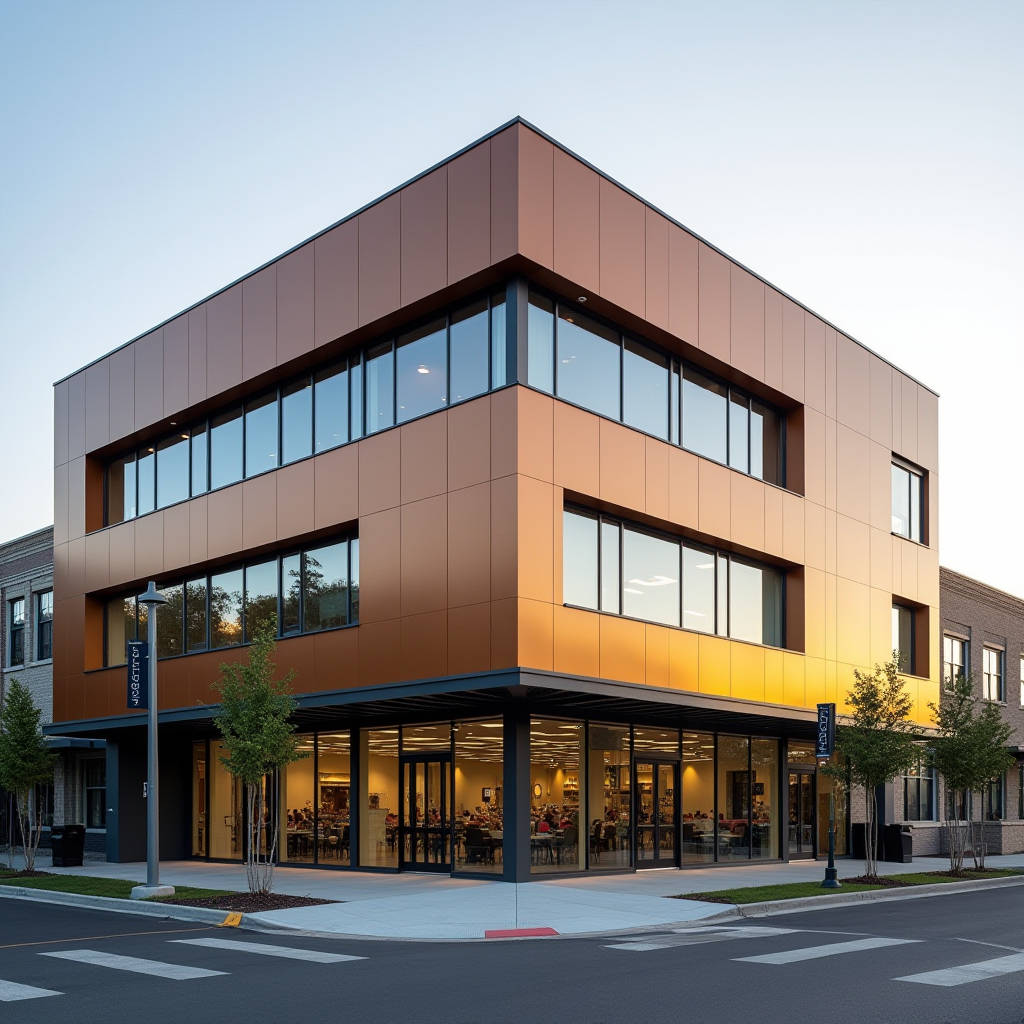
Polyester coated aluminum panel systems have quietly become the workhorse specification for mid-range commercial facades across Southeast Asia, the Middle East, and Latin America. When a project budget cannot stretch to PVDF fluoropolymer coatings but the architect still demands clean color consistency and a 10 to 15-year service life, polyester coated aluminum panel solutions fill that gap with surprising competence. The conversation around these panels often gets muddied by confusion with composite products, but a solid 2.0mm or 2.5mm polyester coated aluminum panel delivers a fundamentally different engineering proposition: monolithic fire behavior, better fastener pull-through resistance, and the ability to be brake-formed into complex cassette profiles without delamination risk. This article examines the specific technical boundary where polyester coated aluminum panel makes engineering sense, and more importantly, where it does not.
What Actually Sits on the Aluminum Surface
The term "polyester coating" in facade engineering refers to a thermosetting polyester resin system applied via continuous coil coating or spray coating onto a prepared aluminum substrate. The chemistry matters. Standard polyester resins are based on oil-free saturated polyesters crosslinked with melamine-formaldehyde or isocyanate hardeners. The resulting film is typically 18-25 microns thick on the weather side, with a 5-8 micron primer layer and a 5-10 micron backer coat on the reverse side. This is fundamentally different from the 30-35 micron PVDF systems specified for high-rise towers.
The coil coating process bonds the polyester layer to the aluminum at the molecular level. Chromate or titanium-zirconium conversion coatings etch the aluminum surface before the primer goes on, creating a mechanical and chemical lock. The polyester topcoat then fuses to the primer during oven curing at 200-240°C. What emerges from the line is a polyester coated aluminum panel with a surface that can handle brake-press bending to 90 degrees at a 2T radius without micro-cracking, provided the coating flexibility has been formulated correctly. Not all polyester systems achieve this. The difference between a panel that cracks on the press brake and one that bends cleanly often comes down to the resin's molecular weight and the ratio of linear to branched polymer chains.
Where Polyester Coated Aluminum Panel Makes Engineering Sense
Polyester coated aluminum panel applications cluster around three project profiles. First, low-rise commercial buildings under 15 meters where the facade sees moderate UV exposure and the design life expectation is 10-15 years. Second, interior feature walls, lift lobbies, and retail fit-outs where color vibrancy and cost per square meter drive specification. Third, sheltered exterior applications such as soffit linings, under-canopy ceilings, and recessed balcony cladding where direct rain washing and UV bombardment are limited.
The mechanical properties of the substrate remain unchanged by the coating choice. A 2.5mm solid aluminum panel in 3003-H14 or 5052-H32 temper still delivers the same wind load capacity whether it carries polyester or PVDF. The engineering decision sits purely in the weathering performance envelope. For a procurement manager in Manila or Dubai comparing quotes, the polyester coated aluminum panel route typically reduces facade material cost by 30-40% compared to an equivalent PVDF specification. On a 5,000 square meter rainscreen facade, that translates to meaningful six-figure savings in US dollar terms.
Color Range and Gloss Control
Polyester systems offer a wider practical color gamut than PVDF at the lower end of the cost spectrum. Bright reds, deep blues, and saturated yellows that would require expensive inorganic pigments in fluoropolymer systems can be achieved with organic pigments in polyester. Gloss levels range from 10-15 GU (matte) through 25-35 GU (satin) to 70-85 GU (high gloss). The specifier should understand that gloss retention under UV exposure is the primary weakness. A 70 GU polyester coated aluminum panel facing due south in Bangkok will read closer to 35-40 GU after five years of equatorial sun. This is not a defect; it is the material behaving within its known performance envelope.
Weathering Reality: What 10 Years of Exposure Does
Accelerated weathering data from QUV-B and Xenon arc testing provides a laboratory benchmark, but the real-world behavior of polyester coated aluminum panel installations tells a more nuanced story. The polyester resin backbone contains ester linkages that are inherently susceptible to hydrolysis when moisture and UV radiation combine. Over time, the coating undergoes two distinct degradation mechanisms: chalking and color fade.
Chalking occurs when the resin matrix at the surface erodes, exposing pigment particles. A properly formulated polyester system designed for exterior use will show minimal chalking (ASTM D4214 rating of 8 or above) after 5 years, but the rate accelerates between years 7 and 12. Color fade measured by Delta E (CIE Lab) typically runs 3-5 units after 5 years for standard polyester, compared to 1-2 units for PVDF. This is why polyester coated aluminum panel specifications for exterior facades should include a realistic conversation about the building's appearance at year 10 versus year 1.
"The specifier must match the coating chemistry to the project's true performance horizon, not the optimistic one in the marketing brochure."
Comparative Coating Performance Data
The table below provides a side-by-side comparison of the three primary coating systems available for solid aluminum panels. This data is drawn from manufacturer technical data sheets, AAMA 2605/2604/2603 standards, and field performance observations across tropical and temperate climate zones.
| Performance Parameter | Standard Polyester (PE) | Super Durable Polyester (SDP) | PVDF (70/30 Kynar) |
|---|---|---|---|
| Dry Film Thickness (Weather Side) | 18-25 microns | 25-30 microns | 30-35 microns |
| Applicable AAMA Standard | AAMA 2603 | AAMA 2604 | AAMA 2605 |
| Typical Gloss Retention (5 Years, South Florida) | 40-55% | 65-75% | 80-90% |
| Color Change Delta E (5 Years) | 3-5 units | 2-3 units | 1-2 units |
| Chalk Resistance (ASTM D4214, 5 Years) | Rating 6-8 | Rating 8-9 | Rating 9-10 |
| Pencil Hardness | HB-F | F-H | H-2H |
| Flexibility (T-Bend, No Crack) | 2T-3T | 2T-3T | 2T-3T |
| Relative Material Cost per m² | Baseline (1.0x) | 1.3-1.5x | 1.6-2.0x |
| Recommended Max Building Height | 15 meters | 30 meters | No practical limit |
Super durable polyester (SDP) deserves a specific mention. These systems use polyester resins modified with silicone intermediates or cycloaliphatic chemistry to improve UV resistance without reaching PVDF pricing. An SDP-coated panel bridges the gap between standard polyester coated aluminum panel economics and PVDF performance, and is increasingly specified for mid-rise projects in the 15-30 meter height band.
Fabrication Behavior: What the Press Brake Operator Knows
Shop floor experience reveals practical differences between polyester and other coating systems that rarely appear in technical datasheets. Polyester coated aluminum panel material tends to be more forgiving during folding operations. The coating's lower glass transition temperature and higher elongation at break mean it stretches with the aluminum rather than micro-cracking at the bend radius. A 2.5mm 3003-H14 panel with a quality polyester coating can typically be bent to 90 degrees at a 2T radius without visible cracking at the outer edge of the bend.
However, the softer surface comes with a trade-off. Polyester coatings scratch more easily during handling. Fabricators working with polyester coated aluminum panel stock need to maintain clean work surfaces, use protective film until final installation, and train handling crews to avoid dragging panels across each other. A single deep scratch that penetrates to the aluminum substrate creates a corrosion initiation point that will undermine the coating's protective function within the first wet season.
Cutting operations also require attention. The heat generated by a circular saw or router can melt the polyester coating at the cut edge, creating a ragged finish. Sharp tooling, appropriate feed rates, and post-cut edge dressing are standard practice. For projects specifying polyester coated aluminum panel with exposed edges, a touch-up pen matched to the factory color should be specified in the submittal package.
Corrosion Protection: The Electrochemical Reality
Aluminum's natural corrosion resistance comes from its passive oxide layer. The polyester coating functions primarily as a barrier that prevents aggressive ions (chlorides, sulfates) from reaching the metal surface. In coastal environments, chloride deposition rates become the critical variable. A polyester coated aluminum panel installed 500 meters from a breaking surf zone in Southeast Asia will accumulate chloride at rates that demand careful substrate preparation and adequate coating thickness.
The chromate conversion coating applied before the polyester primer is the hidden hero of the system. Without it, underfilm corrosion propagates from any scratch or cut edge. With it, the hexavalent chromium compounds (or the newer trivalent chromium alternatives driven by REACH and RoHS compliance) passivate any exposed aluminum and prevent filiform corrosion from spreading. Specifiers should verify that the polyester coated aluminum panel supplier uses a recognized conversion coating process, whether chromate-based or one of the titanium-zirconium systems validated under Qualicoat or AAMA specifications.
Edge Creep and Cut-Edge Performance
Every polyester coated aluminum panel has a vulnerability at the cut edge. The coating stops, the aluminum is exposed, and the interface between coating and metal becomes a potential pathway for moisture ingress. In sheltered applications like soffits, this is rarely a problem. On exposed rainscreen facades with open joints, edge creep corrosion can appear within 3-5 years if the panel edges are not protected by the joint design or by factory-applied edge coatings.
The practical solution is twofold. First, specify a minimum 5-micron backer coat on the reverse side of the panel. Second, ensure the joint design channels water away from panel edges rather than allowing it to dwell. Pressure-equalized rainscreen systems with adequate cavity depth (minimum 25mm) and continuous drainage at the base of each floor level dramatically reduce the time that panel edges remain wet.
Fire Performance of Solid Polyester Coated Panels
This is where solid polyester coated aluminum panel material diverges sharply from aluminum composite panels. A 2.5mm solid aluminum panel with a polyester coating contains no polyethylene core, no combustible filler, and no lamination adhesives. The polyester coating itself represents approximately 0.15-0.25 kg/m² of organic material, compared to 3-5 kg/m² of polyethylene in a typical 4mm ACP. Under fire conditions, the solid panel contributes negligible fuel load.
Testing to EN 13501-1 typically yields a classification of A2-s1,d0 for the aluminum substrate, with the polyester coating being thin enough that it does not downgrade the classification below A2. This is a critical distinction for projects in jurisdictions that have tightened cladding regulations following the Grenfell Tower fire. A polyester coated aluminum panel on a solid aluminum substrate does not present the same combustion risks as a polyethylene-cored composite panel. Specifiers should still verify the specific classification of the complete panel assembly, including any insulation backing, through accredited fire testing laboratories.
Supply Chain and Quality Verification
Procurement managers sourcing polyester coated aluminum panel material internationally should focus on three verification points. First, the aluminum substrate grade. For facade applications, 3003-H14 is the minimum acceptable alloy; 5052-H32 offers higher strength and better corrosion resistance for coastal projects. The mill certificate should trace back to a recognized smelter with ISO 9001 and ISO 14001 certifications.
Second, coating specification. The purchase order should state the coating type (polyester), dry film thickness (minimum 18 microns weather side), gloss level (in GU units at 60-degree geometry), and color reference (RAL, Pantone, or custom match). Third, the conversion coating process should be documented. Suppliers like Futeng® who operate their own coil coating lines can provide full traceability from aluminum ingot to finished polyester coated aluminum panel, including batch-specific quality control data for coating thickness, adhesion (cross-hatch test to ISO 2409), and color consistency (Delta E measurements across the batch).
Pre-shipment inspection should include random sampling of panels for coating thickness measurement using a calibrated eddy-current gauge, visual inspection under controlled lighting for color consistency, and adhesion testing on a sacrificial panel from the same batch.
Installation Factors That Determine Long-Term Performance
The best polyester coated aluminum panel will fail early if installed poorly. The primary installation-related failure mode is water entrapment. Rainscreen systems with inadequate cavity ventilation trap humid air behind the panels, creating a microclimate where the polyester coating is exposed to continuous moisture. This accelerates hydrolysis of the ester linkages and drives premature chalking and gloss loss.
Secondary failure modes include galvanic corrosion from incompatible fasteners. Stainless steel fasteners (A2 or A4 grade) are mandatory for polyester coated aluminum panel installation. Carbon steel screws, even zinc-plated ones, create a galvanic couple with aluminum that corrodes the panel around the fastener hole within the first year of exposure. The fastener head should also have a nylon or EPDM washer to prevent direct metal-to-metal contact between the screw head and the panel surface.
Joint design deserves equal attention. The minimum joint width for a polyester coated aluminum panel rainscreen is 10mm for panels up to 600mm wide, scaling to 15mm for wider panels, to accommodate thermal movement. Aluminum has a coefficient of thermal expansion of approximately 24 × 10⁻⁶ per °C. A 3-meter panel subjected to a 60°C temperature swing will expand and contract by approximately 4.3mm over its length. Joints that are too tight will cause panels to buckle or fasteners to shear.
When to Step Up from Polyester
The decision to specify polyester coated aluminum panel versus higher-performance alternatives should be driven by four factors: building height, geographic location, design life expectation, and maintenance access. Buildings over 15 meters in tropical or subtropical climates with a design life exceeding 15 years and limited facade access for maintenance are strong candidates for PVDF or super durable polyester. The incremental coating cost represents a small fraction of the total facade package but buys a significant extension of the aesthetic service life.
Conversely, a two-story commercial building in a temperate climate, or an interior application with controlled environmental conditions, represents the sweet spot for polyester coated aluminum panel specification. The money saved on coating can be redirected into thicker aluminum substrate, better fasteners, or more sophisticated joint detailing that will deliver tangible performance benefits over the building's life.
The engineering judgment lies in matching the coating's performance envelope to the project's actual conditions. A polyester coated aluminum panel is not an inferior product. It is a correctly specified product when the project parameters align with the coating's capabilities. The problems arise when polyester is pushed into applications that demand PVDF-level weathering performance, or when procurement decisions are made purely on initial cost without understanding the long-term appearance implications.
For project teams evaluating options, the conversation should start with the building's exposure conditions, move through the design life requirements, and only then arrive at the coating specification. The polyester coated aluminum panel that emerges from this process will be right-sized for the job: neither over-specified nor under-specified, but engineered to deliver exactly what the project demands for its intended service life.