PE Coated Aluminum Panel Performance Data Fabrication Behavior and Cost Engineering for Solid Cladding
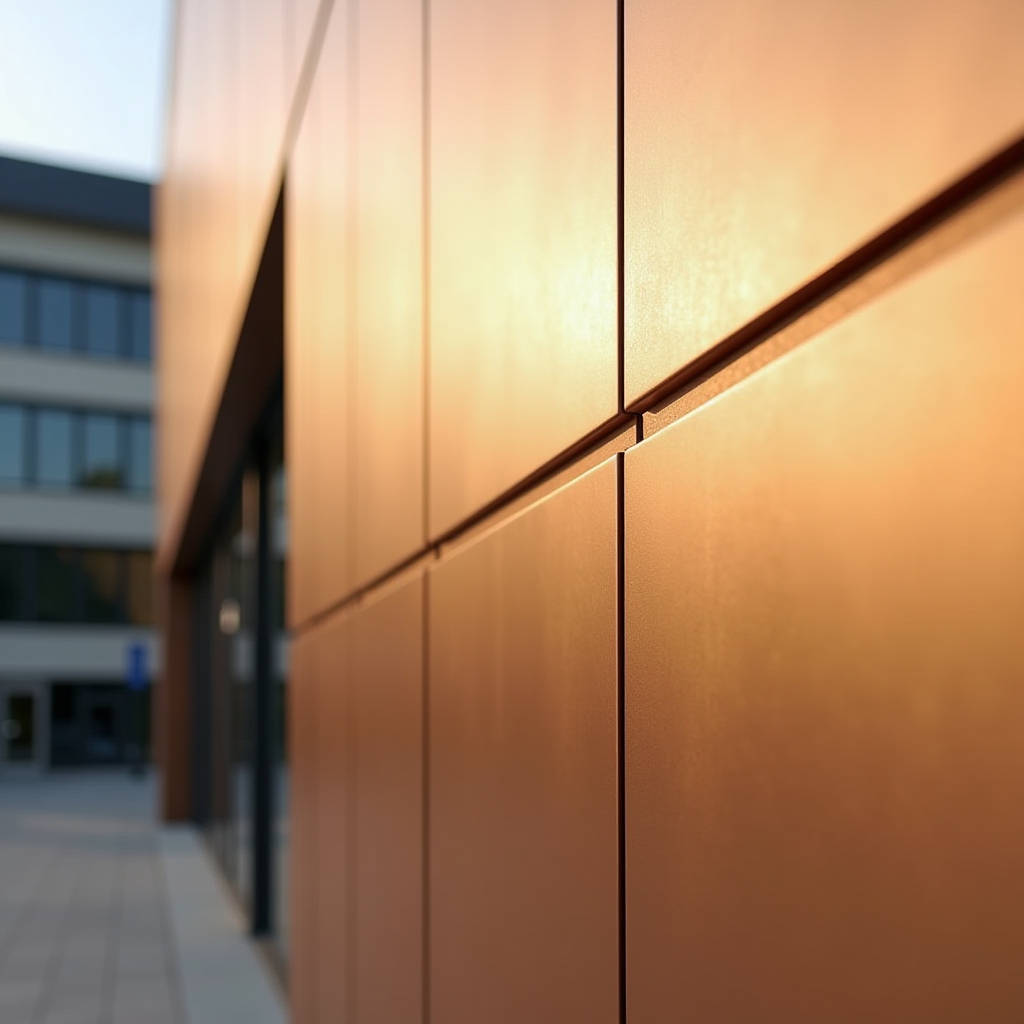
When a project lands on your desk and the spec calls for a PE Coated Aluminum Panel, the first question is rarely about what the material is. It is about whether the coating will hold up under real-world conditions, how flat the panel stays after routing, and what kind of lead time you are actually looking at. Polyester-coated solid aluminum has been in the cladding supply chain for decades, yet the gap between a datasheet promise and jobsite reality remains wide. This article gets into the technical specifics that matter during procurement and installation: coating chemistry, thickness tolerances, fabrication behavior, and the cost implications of choosing PE over fluoropolymer finishes on solid aluminum sheets.
Understanding the PE Coating on Solid Aluminum
Polyester (PE) coating on aluminum is a thermosetting resin system applied via continuous coil coating or spray coating onto a solid aluminum substrate. The resin is typically a polyester backbone cross-linked with melamine or isocyanate curing agents. This chemistry delivers a balance of flexibility, color consistency, and surface hardness that has made it the default choice for interior cladding and sheltered exterior applications.
The key distinction that often gets lost in specification documents is the difference between the coating technology and the substrate. A PE Coated Aluminum Panel in the context of solid aluminum cladding means a monolithic sheet — typically 2.0mm, 2.5mm, or 3.0mm thick — with a polyester finish applied to the visible face. The coating system generally consists of a primer layer (5-8 microns) and a topcoat (18-25 microns), giving a total dry film thickness of approximately 25-33 microns. This is substantially thinner than PVDF systems, which run 35-45 microns total, and that difference has direct consequences for long-term weathering performance.
Coating Architecture: Primer, Pigment, and Cure
The performance envelope of a polyester coating starts with the pretreatment. Solid aluminum sheets undergo a multi-stage chemical conversion process — typically chrome-based or chrome-free passivation — before any paint touches the metal. This conversion layer is what prevents filiform corrosion from creeping under the coating at cut edges and fastener holes.
After pretreatment, a polyester primer is applied. This layer provides adhesion to the aluminum and creates a uniform base for the color coat. The topcoat carries the pigment and provides the UV resistance, color retention, and surface hardness that the specifier sees. Standard polyester topcoats use a single-coat application, though some manufacturers offer a two-coat polyester system for deeper colors. The entire stack is then oven-cured at temperatures between 200°C and 250°C, depending on the line speed and coating chemistry.
What matters in procurement is that not all polyester coatings are equal. The resin quality, pigment loading, and cure conditions all affect how the panel looks after three years on a south-facing elevation. A well-formulated polyester from a supplier like Futeng® will use high-solids resin systems and lightfast pigments that push the realistic service life of the coating to 10-15 years in non-aggressive environments. Budget formulations can show noticeable chalking and color shift within 5-7 years.
PE vs. PVDF vs. FEVE: A Technical Comparison for Solid Aluminum Panels
Specifiers frequently ask whether polyester is adequate for a given project. The answer depends on exposure conditions, performance expectations, and budget. The table below breaks down the measurable differences across the three coating families commonly applied to solid aluminum cladding panels.
| Property | Polyester (PE) | PVDF (Kynar 500®) | FEVE (Lumiflon®) |
|---|---|---|---|
| Resin Chemistry | Polyester-melamine cross-linked | Polyvinylidene fluoride (70/30) | Fluoroethylene vinyl ether |
| Total DFT (microns) | 25-33 | 35-45 | 35-50 |
| Gloss Retention (10 yrs, Florida) | 30-50% | 80-90% | 85-95% |
| Color Shift (ΔE, 10 yrs) | 5-8 | ≤3 | ≤3 |
| Chalk Resistance (ASTM D4214) | Moderate (Rating 6-8) | Excellent (Rating 9-10) | Excellent (Rating 9-10) |
| Flexibility (T-bend) | 0T-1T | 1T-2T | 1T-2T |
| Pencil Hardness | HB-F | F-H | F-H |
| Typical Warranty (Exterior) | 5-10 years | 20-30 years | 20-30 years |
| Relative Cost Index | 1.0 | 2.5-3.5 | 3.0-4.0 |
| Standard Reference | AAMA 2603 | AAMA 2605 | AAMA 2605 |
The cost index is worth unpacking. On a 2.5mm solid aluminum panel, the polyester coating might add $3-5 per square meter to the base metal cost. A PVDF system adds $12-18 per square meter. On a 10,000-square-meter facade, that difference is $90,000 to $130,000 — real money that has to be justified by performance requirements. For interior applications, soffits under deep overhangs, or buildings in mild climates with planned maintenance cycles, polyester is frequently the correct engineering decision, not a compromise.
Fabrication Behavior: What Happens When You Cut, Bend, and Route PE-Coated Solid Aluminum
Solid aluminum panels with polyester coatings behave differently in fabrication than PVDF-coated equivalents. The polyester film is softer and more flexible, which is an advantage in bending operations but requires more care during routing and handling.
Routing and Grooving
When a solid aluminum panel is routed for folded corners, the V-groove removes material down to a thin skin — typically 0.3mm to 0.5mm of aluminum remaining at the fold line. The polyester coating on the face must survive this operation without cracking, delaminating, or showing stress whitening. High-quality PE Coated Aluminum Panel products use coatings with elongation properties exceeding 50%, which means the paint film stretches rather than fractures when the panel is folded along the groove line.
The practical concern for the fabricator is tooling setup. Polyester coatings are more susceptible to heat buildup during routing than PVDF. If the router bit is dull or the feed rate is too slow, friction heat can soften the coating and cause it to gum up on the tool, leaving a rough edge. The fix is straightforward: sharp carbide tooling, appropriate feed rates (2-4 meters per minute for typical CNC routers), and ensuring the coating is fully cured before fabrication begins.
Cutting and Edge Treatment
Sheared edges on PE-coated solid aluminum expose bare aluminum at the cut line. This is normal for all coated aluminum products, but polyester's thinner film means the exposed edge is slightly wider than on a PVDF panel. For interior applications, this is cosmetic and typically hidden by joinery. For exterior applications, exposed cut edges should be touched up with a compatible edge sealant or positioned away from direct water contact.
Laser cutting introduces a different set of variables. The heat-affected zone can discolor polyester coatings up to 1-2mm from the cut line. This is manageable with proper masking and parameter optimization, but it is a consideration that should be discussed with the fabricator before committing to a laser-cut design on PE-coated material.
Weathering Realities: What 10 Years of Exposure Does to Polyester
Polyester coatings weather through a predictable sequence: gloss reduction, then chalking, then color shift, and eventually film erosion. The rate depends on UV exposure, temperature cycling, humidity, and atmospheric chemistry.
In a temperate climate like London or Seattle, a quality polyester coating on a vertical facade will show minimal change for the first 3-5 years. Between years 5 and 10, gloss drops from an initial 70-80 GU (at 60° measurement angle) down to 30-40 GU. This is often described as a "matte-in-place" effect and can be aesthetically acceptable if the specifier planned for it. After 10 years, chalking becomes measurable — you can rub a finger across the surface and pick up pigment. The film itself remains intact and protective; the aluminum substrate is not exposed.
In high-UV environments — Dubai, Singapore, Phoenix — the timeline compresses. Gloss loss can be noticeable within 2-3 years, and chalking becomes significant by year 7-8. This is where the AAMA 2603 specification, which governs polyester coatings for aluminum, becomes relevant. AAMA 2603 requires minimum performance for color retention, chalk resistance, and gloss retention after one year of South Florida exposure. It is a baseline, not a guarantee of long-term appearance.
The American Architectural Manufacturers Association (AAMA) publishes the full test protocols under AAMA 2603, 2604, and 2605. For projects where appearance retention is critical beyond 10 years, the spec should reference AAMA 2605 and the corresponding PVDF or FEVE coating systems.
Cost Engineering: Where PE-Coated Solid Aluminum Makes Financial Sense
Material cost is only one line item. The full installed cost of a solid aluminum cladding system includes fabrication, substructure, fasteners, insulation, and labor. The coating choice affects some of these downstream costs.
Polyester-coated panels are easier to fabricate, which translates to faster cycle times and lower per-panel processing costs. The softer coating is more forgiving of minor handling during installation — it scratches less readily than PVDF when panels are stacked or slid into place. Touch-up paint for polyester is less expensive and more widely available than PVDF touch-up kits.
For a typical mid-rise commercial project, the installed cost breakdown for a PE Coated Aluminum Panel system might look like this:
- Solid aluminum sheet (2.5mm, mill finish): 40-50% of material cost
- Polyester coating application: 15-20% of material cost
- Fabrication (cutting, routing, folding): 20-25% of material cost
- Substructure and fasteners: 30-40% of total installed cost
- Installation labor: 25-35% of total installed cost
The coating itself is a relatively small fraction of the total installed cost. Upgrading from PE to PVDF might increase the total project cost by 8-15%, not the 2.5-3.5x multiple that the coating cost alone suggests. This is the calculation that should drive specification decisions: if the building is expected to remain in service for 30+ years without a reclad, the incremental cost of PVDF amortizes to a negligible annual amount. If the building has a 15-year interior renovation cycle or the panels are installed in a protected location, polyester is the financially rational choice.
Supply Chain and Quality Control: What to Verify Before Signing the PO
Procurement of PE Coated Aluminum Panel products from international suppliers requires a focused quality verification process. The coating is only as good as the factory's process control, and process control varies significantly across manufacturers.
Three things to verify before committing to a supplier:
- Coating thickness measurement. Request a coating thickness report for every batch. The measurement should be taken with a calibrated eddy-current gauge (compliant with ISO 2360) at multiple points per sheet. Acceptable variation is ±3 microns from the specified DFT. Reject any batch where the minimum thickness falls below 20 microns total.
- Gloss and color consistency. Gloss should be measured at 60° geometry per ASTM D523. For a single project, gloss variation across panels should not exceed ±5 GU. Color should be measured with a spectrophotometer and reported as ΔE against the approved standard. A ΔE of less than 1.0 is achievable with good process control; anything above 2.0 will be visible to a trained eye under daylight conditions.
- Adhesion testing. Cross-hatch adhesion testing per ASTM D3359 should achieve a rating of 4B or 5B. Anything less indicates a pretreatment or cure problem that will lead to field failures.
Futeng® and other established manufacturers provide these test reports as standard documentation with every shipment. If a supplier cannot produce coating thickness data by batch, that is a red flag regardless of the price point.
Design Considerations: Where PE-Coated Solid Panels Perform Best
Architects and facade engineers should think about polyester-coated solid aluminum in terms of exposure categories rather than a simple interior/exterior binary.
Category 1: Fully Interior. Lobbies, elevator cabs, column covers, interior wall cladding. Polyester is the default choice here. UV exposure is minimal, physical wear is the main concern, and polyester's hardness and scratch resistance are entirely adequate. The wide color range available in polyester — including metallics and bright solids — gives designers more options than PVDF, which has a more limited color palette due to the constraints of fluoropolymer pigment dispersion.
Category 2: Sheltered Exterior. Soffits, under-canopy panels, recessed entries, balcony ceilings. These locations see ambient light but no direct rain or sustained UV. A PE Coated Aluminum Panel in these positions will perform similarly to an interior panel. The coating is not being asked to do heavy lifting in terms of weather resistance.
Category 3: Moderate Exterior. Vertical facades in temperate climates, buildings with regular maintenance access, projects where the aesthetic expectation accepts gradual matte-ing over a decade. This is the gray zone where polyester is viable but requires honest conversation with the client about long-term appearance.
Category 4: Aggressive Exterior. Coastal environments, high-UV locations, industrial areas with airborne contaminants, roofs, and any surface that is difficult to access for maintenance. PVDF or FEVE is the correct specification here. The cost premium is justified by the performance gap.
Installation Notes: Handling, Fastening, and Thermal Movement
Solid aluminum panels expand and contract with temperature changes. The coefficient of thermal expansion for aluminum is approximately 24 × 10⁻⁶ per °C. A 3-meter panel subjected to a 60°C temperature swing (from -10°C in winter to 50°C surface temperature in summer sun) will move about 4.3mm. The polyester coating must accommodate this movement without cracking, and the panel joint design must allow for it.
Polyester's flexibility is an advantage here. At 0T-1T bend capability, the coating can handle the micro-movements of thermal cycling far better than a brittle finish would. The practical implication for installation is that PE-coated panels can be used with tighter joint tolerances than some harder coatings, though the standard recommendation of 8-12mm open joints for drained and ventilated rainscreen systems still applies.
Fastener selection matters. Stainless steel fasteners (304 or 316 grade) should be used with EPDM washers to prevent galvanic corrosion at the fastener-panel interface. The polyester coating around fastener holes should be intact after drilling; any chips or cracks are initiation points for corrosion. Pre-drilling with a sharp bit and deburring the hole edge is standard practice that prevents field problems.
Maintenance and Service Life Planning
A PE Coated Aluminum Panel facade on a commercial building should be included in the facility maintenance plan from day one. Annual inspection and cleaning — plain water, mild detergent, soft brush or sponge — will remove accumulated dirt and atmospheric deposits that can accelerate coating degradation. Pressure washing is acceptable at low pressure (under 500 psi) with the nozzle kept at least 300mm from the surface.
After 10-15 years, depending on exposure, the coating may need rejuvenation. This can take the form of a clear sealant application to restore gloss and arrest chalking, or a full repaint if the color has shifted beyond acceptable limits. The solid aluminum substrate itself will last indefinitely; the coating is a renewable layer. This is a fundamental difference from composite panels, where core degradation can be a terminal condition.
For projects where a 20-year appearance warranty is required, polyester is not the right choice. But for the large number of commercial and institutional buildings where a 10-15 year maintenance cycle is already budgeted, specifying a PE Coated Aluminum Panel from a quality-controlled manufacturer is a technically sound and financially disciplined decision. The key is understanding the performance envelope and specifying within it, rather than treating all coating types as interchangeable.
Specifications should reference AAMA 2603 as the minimum performance standard for polyester coatings on aluminum. For projects requiring documented batch-level quality control, request coating thickness reports per ISO 2360, gloss measurements per ASTM D523, and adhesion test results per ASTM D3359 as part of the material submittal package.