Powder Coated Aluminum Facade Performance What AAMA 2605 and Pretreatment Chemistry Actually Determine
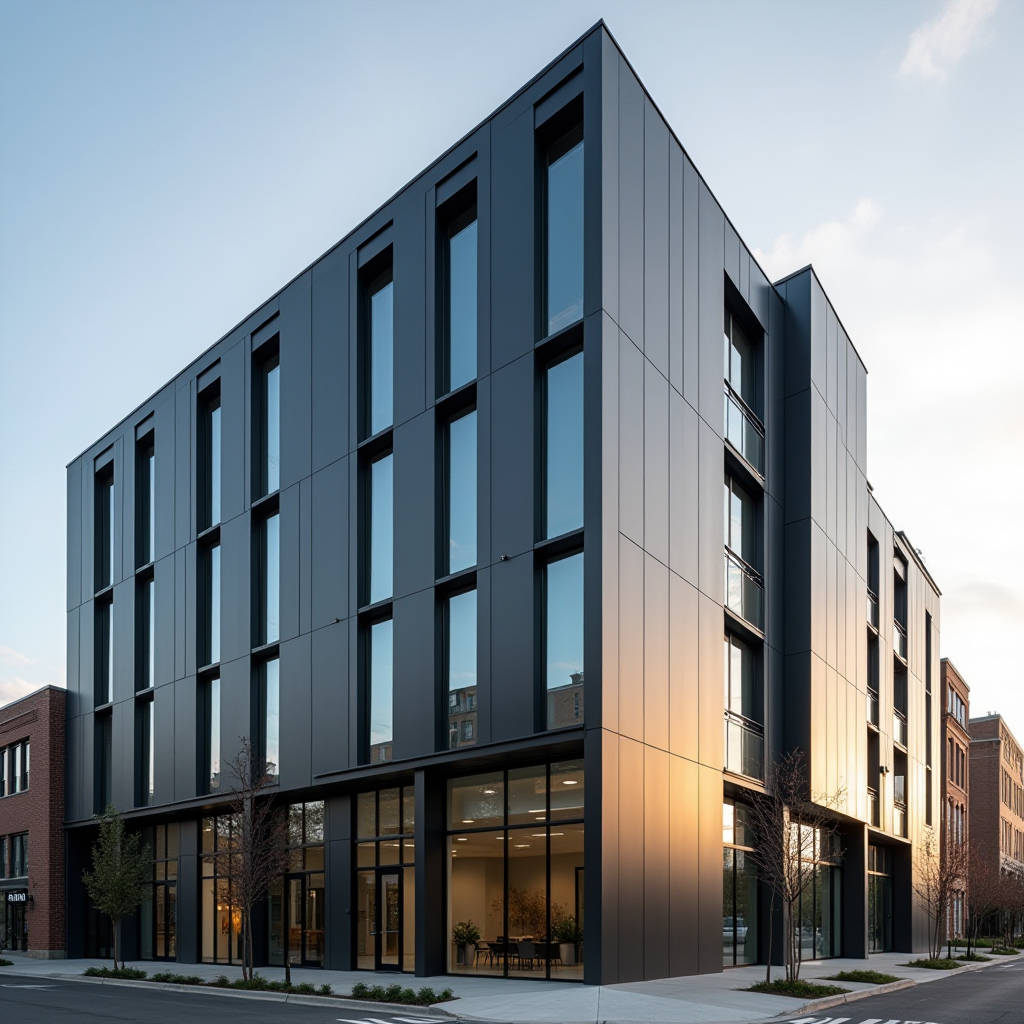
A powder coated aluminum facade represents one of the most reliable long-term cladding investments a project team can specify, yet the performance gap between a coating that looks good on day one and one that still performs after 15 years of UV exposure, salt spray, and thermal cycling is enormous. This article examines how project stakeholders can evaluate powder coated aluminum facade systems through the lens of AAMA 2605 compliance, accelerated weathering data, and real-world degradation mechanisms. The focus is not on generic promises of durability, but on the specific test standards, application parameters, and quality control protocols that separate architectural-grade finishes from commodity coatings. For developers and facade contractors managing projects in coastal zones, high-UV regions, or temperature-extreme environments, understanding these distinctions before procurement prevents costly remediation and reputation damage.
Why AAMA 2605 Is the Only Meaningful Benchmark for Architectural Powder Coatings
The aluminum cladding industry recognizes three performance tiers under AAMA: 2603 (standard performance), 2604 (high performance), and 2605 (superior performance). For any powder coated aluminum facade installed on a commercial or institutional building with a design life exceeding 10 years, AAMA 2605 is the only specification that matters. The reason is straightforward: AAMA 2605 requires 10-year South Florida exposure testing with maximum color change of 5 Delta E units and maximum gloss retention of 50%. AAMA 2603, by contrast, demands only 1 year of Florida exposure and permits up to 5 Delta E units of fade — a threshold that, in practice, allows visible color shift within 18 to 24 months on south-facing elevations.
The gap between these standards becomes painfully visible on buildings where value engineering substituted 2603-grade powder for 2605-grade powder. Within three to five years, the facade develops a patchy, chalked appearance. The color difference between sun-exposed panels and those shielded by overhangs or adjacent structures can exceed 8 Delta E, creating a permanent visual defect that no cleaning regimen can correct. The cost of full facade recoating or panel replacement typically runs 4 to 7 times the initial coating upgrade cost that was avoided.
Qualicoat Class 3, the European equivalent, aligns closely with AAMA 2605 and adds a boiling water adhesion test that is particularly relevant for powder coated aluminum facade applications in high-humidity climates. Specifiers should confirm that coating applicators hold active Qualicoat or AAMA certification — not merely that the powder supplier is certified. The applicator's pretreatment line, cure oven calibration, and film thickness control determine whether the powder's laboratory performance translates to the installed facade.
Pretreatment Chemistry: The Hidden Layer That Determines Coating Life
Every powder coated aluminum facade panel begins its life in a pretreatment tank, and the chemistry chosen at this stage dictates whether the coating will still be bonded to the substrate after a decade of thermal expansion and contraction. Aluminum naturally forms an oxide layer that, while protective in some contexts, provides a poor anchor for organic powder coatings. The pretreatment process converts this oxide into a chemically bonded crystalline layer that the powder can mechanically and chemically lock onto.
Chromate conversion coatings dominated the industry for decades and remain the gold standard for corrosion resistance, particularly in marine environments. However, environmental regulations — notably REACH in Europe and tightening EPA restrictions in North America — have driven the shift toward chrome-free alternatives. Modern titanium-zirconium conversion coatings, when applied with precise pH and concentration control, achieve corrosion resistance within 5% to 8% of chromate performance on the ASTM B117 salt spray test (typically 3,000+ hours for chromate versus 2,700+ hours for advanced chrome-free systems).
The critical quality control parameter is coating weight, measured in milligrams per square meter. Chrome-free pretreatments require tighter process windows: a deviation of 15% from the target coating weight can reduce salt spray performance by 30% or more. For a powder coated aluminum facade on a coastal building, this is not a theoretical concern. Chloride ions penetrate underfilm at coating defects and travel along the pretreatment-aluminum interface. A robust, uniform pretreatment layer blocks this lateral migration; an inadequate one allows filiform corrosion to spread beneath otherwise intact powder coating.
Futeng® operates pretreatment lines with automated chemical dosing and conductivity monitoring that maintain coating weight within ±8% of specification across full production runs. This level of control becomes particularly relevant when project specifications require AAMA 2605 performance backed by actual production-line quality data rather than laboratory coupons.
Powder Formulation Types and Their Real-World Performance Differences
Not all architectural powders are chemically equivalent, and the formulation differences have direct consequences for a powder coated aluminum facade's long-term appearance. The industry broadly categorizes architectural powders into three resin systems:
| Resin System | Typical AAMA Grade | UV Resistance | Flexibility | Best Application |
|---|---|---|---|---|
| Standard Polyester (TGIC-Free) | 2603 | Moderate — 1-3 year color stability | Good | Interior cladding, soffits, sheltered areas |
| Super-Durable Polyester | 2604 | High — 5-7 year color stability | Good | Mid-rise commercial, partial shade exposure |
| Fluoropolymer (FEVE-based) | 2605 | Excellent — 10-15+ year color stability | Moderate | High-rise, coastal, full sun exposure |
Super-durable polyester powders use modified resin backbones with increased crosslink density and UV-stable pigment systems. They represent a legitimate step up from standard polyester but fall short of fluoropolymer performance in two measurable ways: gloss retention and chalk resistance. After 5 years of vertical South Florida exposure, super-durable polyester typically retains 60% to 70% of initial gloss, while FEVE-based fluoropolymer powders retain 85% to 95%. The chalking difference is even more pronounced, with super-durable polyester showing visible surface degradation (chalking rating of 6-8 per ASTM D4214) versus fluoropolymer's near-zero chalking (rating 9-10).
FEVE (fluoroethylene vinyl ether) powders are the only powder technology that meets AAMA 2605 without requiring a liquid PVDF topcoat. They cost 30% to 50% more than super-durable polyester per square meter, but for a powder coated aluminum facade on a 30-story tower where scaffolding access for recoating costs $500,000 or more, the incremental coating premium is negligible against lifecycle cost. The key specification detail: confirm that the FEVE powder contains at least 70% fluoropolymer resin by weight. Some products marketed as "fluoropolymer-enhanced" contain as little as 30% FEVE blended with polyester, which does not meet AAMA 2605.
Film Thickness: The Numerical Difference Between Warranty and Failure
Powder coating film thickness is measured in microns (µm), and the difference between 40µm and 80µm is not merely cosmetic. Film thickness directly controls three performance properties: UV opacity, edge coverage, and impact resistance. A powder layer that is too thin allows UV photons to reach the pretreatment layer, where they can degrade the polymer-metal bond. It also leaves sharp panel edges — where the coating naturally thins during electrostatic application — with inadequate protection.
The Qualicoat specification for architectural powder coating mandates a minimum of 60µm on significant surfaces, with many AAMA 2605 applicators targeting 70-80µm for exterior facades. This is not arbitrary. Cross-section microscopy of panels that failed after 7-9 years of service consistently shows coating thickness below 45µm at failure points, even when the average thickness across the panel face met specification. The failure mechanism is predictable: thinner coating at edges and corners degrades faster, moisture penetrates, and corrosion propagates inward from the panel perimeter.
For a powder coated aluminum facade with complex geometry — folded panels, perforated screens, deep reveals — the electrostatic application process requires careful gun positioning and possibly manual touch-up of shadow areas where the Faraday cage effect prevents powder deposition. The specification should require the applicator to measure and report film thickness at a minimum of 5 points per panel, including edges and corners, not just the center of flat surfaces.
Color Consistency Across Production Batches
Architects specify powder coated aluminum facade systems expecting uniform color across thousands of square meters of cladding. Achieving this requires more than selecting a RAL code. Powder manufacturing inherently produces slight color variation between production lots due to pigment dispersion, base resin tint, and cure cycle differences. The human eye can detect color differences as small as 1 Delta E under controlled lighting, and differences of 2 Delta E become apparent when panels are installed adjacent to each other on a facade.
The industry standard for batch-to-batch color tolerance is Delta E ≤ 1.0 measured with a spectrophotometer under D65 illuminant, 10-degree observer. Reputable powder suppliers maintain master color standards and test every production batch against them. However, the responsibility for final color verification falls on the coating applicator, who must check incoming powder against the approved control sample and retain spray-out panels from each production run.
Metallic and mica-effect powder coatings introduce additional complexity. These finishes contain aluminum flakes or mica platelets that orient differently depending on application parameters — gun voltage, air pressure, and gun-to-part distance all influence the final appearance. Two panels coated with the same metallic powder lot can appear visibly different if the application parameters drifted during the production run. The specification should require the applicator to produce a metallic control panel at the start of each production shift and compare subsequent panels against it under standardized lighting. For large powder coated aluminum facade projects exceeding 5,000 square meters, it is prudent to order the entire powder requirement from a single production batch and reserve 5% to 10% extra for future panel replacement needs.
Coastal and Industrial Environment Performance
Buildings within 5 kilometers of breaking surf or in heavy industrial zones subject powder coated aluminum facade systems to accelerated degradation. The combined effect of UV radiation, salt deposition, and moisture creates a micro-environment at the coating surface that is far more aggressive than what standard weathering tests simulate. Salt spray testing per ASTM B117 provides a baseline, but it does not capture the synergistic effect of UV and chloride exposure that occurs on real buildings.
Cyclic corrosion testing — such as ASTM G85 Annex A5 (Prohesion) or ISO 12944-9 — provides more realistic data by alternating between salt fog, drying, and condensation phases. For a powder coated aluminum facade in a coastal environment, specifiers should request Prohesion test results showing less than 2mm underfilm corrosion creep from a scribe after 2,000 hours. This is a more demanding criterion than the standard AAMA 2605 requirement and correlates better with 15-year real-world performance.
The aluminum alloy substrate also matters. Alloy 5052 (marine-grade) offers superior corrosion resistance compared to standard 3003 or 1100 alloys, particularly at cut edges and fastener holes where the powder coating may be disrupted. The incremental cost of specifying 5052 alloy for the aluminum sheets — typically 8% to 15% — is justified for buildings within 500 meters of salt water. When combined with a chrome-based pretreatment and FEVE powder coating at 80µm minimum thickness, this combination represents the most durable powder coated aluminum facade system currently available for marine environments.
Fire Performance and Building Code Compliance
Fire safety requirements for facade materials have tightened significantly following high-profile cladding fires globally. Solid aluminum panels with powder coating are inherently non-combustible (the aluminum substrate is classified as A1 per EN 13501-1 or non-combustible per ASTM E136), but the powder coating layer contributes a small organic content that must be accounted for in system-level fire testing.
A powder coated aluminum facade system using 2.5mm or 3.0mm solid aluminum sheets with powder coating at 60-80µm typically achieves Class A2-s1,d0 per EN 13501-1 when tested as a complete assembly including insulation and mounting system. The "s1" designation (lowest smoke production) and "d0" (no flaming droplets) are critical for buildings above 18 meters in many jurisdictions. The NFPA 285 test, required by the International Building Code for exterior wall assemblies on buildings over 40 feet, evaluates the full wall assembly's fire propagation characteristics. Solid aluminum panels with powder coating have consistently passed NFPA 285 when installed over mineral wool insulation and non-combustible sheathing.
Specifiers should verify that the powder coating supplier provides third-party test data for the specific coating chemistry and film thickness being specified. Some powder formulations contain additives that increase smoke production or flaming droplet formation, and these effects are not captured by testing the aluminum substrate alone.
Fabrication Tolerances and Their Impact on Facade Appearance
A powder coated aluminum facade is only as flat and uniform as the aluminum sheets and fabrication process that precede coating. The industry standard for aluminum sheet flatness is defined by ASTM B209, which specifies tolerances based on sheet thickness and temper. For 2.5mm and 3.0mm sheets in H14 temper, the standard flatness tolerance is approximately 3mm deviation over a 1-meter straightedge. However, for large-format facade panels exceeding 1.5 meters in any dimension, this tolerance can produce visible waviness, particularly on low-angle lighting conditions or with high-gloss powder finishes.
The solution is to specify stretcher-leveled sheets, which undergo mechanical tensioning to relieve internal stresses and achieve flatness within 1mm over 1 meter. Stretcher-leveled aluminum costs approximately 10% to 15% more than standard mill-finish sheet, but the improvement in facade appearance is dramatic, particularly for dark colors and metallic finishes that highlight surface irregularities. The powder coating process itself does not correct substrate waviness — it amplifies it, because the uniform gloss of the coating makes surface deviations more visible to the eye.
Panel fabrication tolerances — particularly bend radii, corner squareness, and fastener hole placement — also affect the installed appearance of a powder coated aluminum facade. A panel that is 2mm out of square across a 1.2-meter width will create a visible gap variation when installed adjacent to neighboring panels. The specification should require fabricators to hold panel dimensions to ±1.0mm and diagonal measurements to ±1.5mm, with these tolerances verified on a sample of 5% of panels per production batch.
Lifecycle Cost Analysis: Powder Coating vs. Liquid PVDF
The decision between powder coating and liquid PVDF for an aluminum facade is often framed as a cost-versus-performance tradeoff, but the comparison is more nuanced. The table below summarizes the key lifecycle factors:
| Factor | FEVE Powder Coating (AAMA 2605) | Liquid PVDF (AAMA 2605) |
|---|---|---|
| Initial coating cost per m² | $18-28 | $22-35 |
| Color consistency (batch-to-batch) | Good (Delta E ≤ 1.0) | Excellent (Delta E ≤ 0.5) |
| Edge coverage | Excellent (60-80µm uniform) | Moderate (thinner at edges) |
| Metallic finish quality | Good (flake orientation variable) | Excellent (wet application control) |
| VOC emissions during application | Near-zero | Requires solvent management |
| Touch-up repairability on site | Moderate (requires heat curing) | Good (air-dry touch-up kits) |
| Expected service life to first recoat | 15-20 years | 20-25 years |
For most commercial and institutional powder coated aluminum facade projects, FEVE powder coating delivers the optimal balance of cost, durability, and environmental compliance. Liquid PVDF retains an edge for projects requiring extremely tight metallic color matching across very large areas or where on-site touch-up capability is critical. The cost difference narrows significantly when the full installed system cost — including substructure, insulation, and labor — is considered, because the coating represents only 12% to 18% of the total facade cost per square meter.
Quality Assurance During Production: What to Inspect Before Shipment
The most effective quality control for a powder coated aluminum facade occurs at the coating applicator's facility, before panels are packed and shipped. Once panels arrive on site, discovering coating defects triggers delay claims, costly return shipments, and schedule pressure that often forces acceptance of substandard work. A pre-shipment inspection protocol should verify the following minimum checks:
- Film thickness: Measure at 5 points per panel (center and 4 corners) using a calibrated eddy-current gauge. All readings must exceed the specified minimum (typically 60µm for AAMA 2605).
- Gloss level: Measure at 60-degree geometry using a calibrated gloss meter. Variation across panels should not exceed ±5 gloss units from the approved control sample.
- Color: Measure Delta E against the approved control sample using a spectrophotometer. Maximum acceptable Delta E is 1.0 for solid colors, 1.5 for metallics.
- Adhesion: Perform cross-hatch test per ASTM D3359 Method B on at least one panel per production batch. Rating must be 5B (no coating removal).
- Impact resistance: Perform direct and reverse impact testing per ASTM D2794. No cracking or detachment at 20 inch-pounds minimum.
- Pencil hardness: Minimum H-2H per ASTM D3363 for architectural coatings.
These tests require approximately 15 minutes per panel batch and the equipment cost is under $3,000. For projects exceeding 2,000 square meters, engaging a third-party inspection agency such as Intertek or SGS to witness production and perform independent testing adds approximately $0.50 to $1.00 per square meter — a modest investment against the cost of facade remediation.
The AAMA 2605 specification includes a requirement for the coating applicator to retain production records and test coupons for a minimum of 10 years. Specifiers should verify this capability during the qualification process and include a requirement for the applicator to submit a certificate of compliance with each shipment, referencing the specific production batch numbers and test results.
Installation Factors That Affect Long-Term Coating Performance
Even the best powder coated aluminum facade panels can fail prematurely if installation practices create conditions that trap moisture, concentrate stress, or damage the coating. The most common installation-related failure mode is crevice corrosion at panel joints where water becomes trapped between overlapping aluminum surfaces. This is particularly aggressive in coastal environments, where trapped seawater concentrates as it evaporates, creating a localized chloride-rich solution that attacks the aluminum.
Proper joint design — including adequate drainage paths, the use of EPDM gaskets rather than silicone sealants at movement joints, and maintaining a minimum 10mm air gap behind panels for ventilation — prevents moisture accumulation. The Centre for Window and Cladding Technology (CWCT) provides detailed guidance on rainscreen design principles that apply directly to powder coated aluminum facade installations.
Handling damage during installation is another preventable problem. Powder coating is tough but not indestructible; panels dragged across scaffolding or stacked without interleaving will develop scratches that breach the coating. Site touch-up of powder coating requires specialized two-component repair kits that chemically cure rather than air-dry, and the color match is never perfect. The best practice is to minimize the need for touch-up by protecting panels during transport and handling, and to accept that any on-site repair will be visible on close inspection. For highly visible areas, replacing the damaged panel is the only solution that preserves the architect's design intent.
Ultimately, a powder coated aluminum facade that performs for 20 years or more is the product of decisions made long before the first panel is hung. The specification of AAMA 2605-grade FEVE powder, chrome-free pretreatment with tight process control, 70-80µm film thickness verified at edges and corners, and factory quality assurance backed by third-party inspection creates a system that resists the combined assault of UV, moisture, salt, and thermal cycling. The alternative — cutting corners on coating specification to save 5% to 8% on the facade package — guarantees a building that looks tired and neglected within a decade, with remediation costs that dwarf the initial savings.