Powder Coated Aluminium Panel Chemistry Guide Polyester vs Fluoropolymer Performance Data
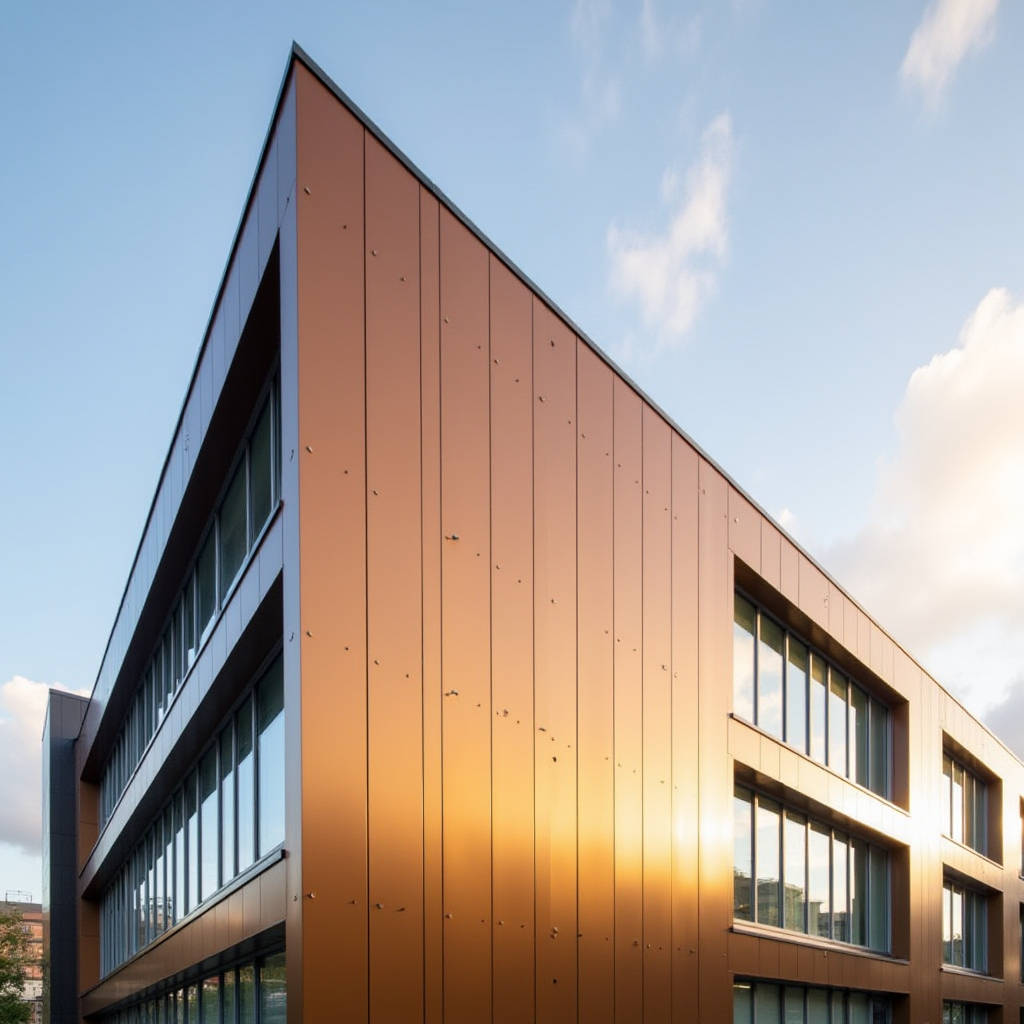
Specifying a powder coated aluminium panel for a rainscreen facade or interior wall lining means committing to a finish that will face UV radiation, airborne pollutants, and mechanical abrasion for decades. The single most consequential variable in that specification is the powder chemistry itself. Architects and facade engineers who treat all powder coatings as interchangeable often discover the difference between polyester and fluoropolymer only after the panels have chalked or faded unevenly across a single elevation. This article examines the technical distinctions between polyester TGIC, polyester HAA, polyurethane, and FEVE fluoropolymer powder chemistries as they apply to solid aluminium cladding panels, with a focus on the accelerated weathering data, application thickness tolerances, and real-world performance limitations that procurement teams need to evaluate before issuing a purchase order.
Why Powder Chemistry Determines Facade Longevity
The electrostatic powder coating process looks similar regardless of chemistry: a dry powder is sprayed onto a grounded aluminium substrate, then cured in an oven at 180–200°C to form a continuous film. What changes between chemistries is the resin backbone that crosslinks during curing. That backbone dictates how the cured film responds to UV photons, hydrolysis, and the alkaline contaminants that accumulate on building facades in urban or coastal environments.
For a solid aluminium cladding panel—typically 2.0 mm, 2.5 mm, or 3.0 mm thick 5005 or 5052 alloy—the coating is the only barrier between the metal and the environment. Bare aluminium forms a self-limiting oxide layer, but that oxide provides zero protection against the chloride ions in coastal spray or the sulphur compounds in industrial atmospheres. The powder coating must maintain adhesion, colour stability, and film integrity across the full design life of the facade, which for commercial buildings in Europe and North America is commonly specified at 25 to 30 years.
Three broad families of powder chemistry dominate the architectural aluminium market: standard polyester (both TGIC and HAA-cured), super-durable polyester, and FEVE-based fluoropolymer. Each occupies a distinct position on the cost-performance curve, and each has specific curing requirements that affect the throughput and quality control achievable at the coating line.
Polyester TGIC: The Workhorse with Known Limits
Triglycidyl isocyanurate (TGIC) cured polyester powders have been the volume leader in architectural powder coating for over three decades. The chemistry is well understood, the raw materials are widely available, and the curing window is forgiving enough to accommodate high-volume production. A typical TGIC polyester system applied to a powder coated aluminium panel delivers 60–80 microns of dry film thickness with good edge coverage and reasonable flexibility.
The limitation is UV resistance. TGIC polyester uses a bisphenol-A or similar aromatic polyester backbone. The aromatic rings absorb UV energy in the 290–350 nm range, which is precisely the spectrum that reaches the earth's surface. That absorbed energy breaks ester linkages over time, causing the resin to degrade through a process called photo-oxidation. The visible result is chalking—the formation of a friable, powdery layer on the coating surface—and gradual gloss loss.
Accelerated weathering data tells a consistent story. Under ASTM G154 Cycle 1 (UVA-340 lamps, 8 hours UV at 60°C, 4 hours condensation at 50°C), a standard TGIC polyester in a mid-tone colour will retain approximately 50% of its original 60° gloss after 1,000–1,500 hours. In real terms, that translates to noticeable gloss reduction within 3–5 years on a south-facing elevation in a temperate climate, and faster degradation in subtropical or high-UV environments.
TGIC polyester remains a legitimate choice for interior applications—lift lobbies, column cladding, ceiling panels—where UV exposure is negligible and the specification priority is impact resistance and cost efficiency. For exterior facades, the risk calculus changes. A building owner who specifies standard polyester on a 20-storey rainscreen will face recoating or panel replacement costs that dwarf the initial coating savings.
Super-Durable Polyester: The HAA Shift and AAMA 2604 Compliance
The industry's response to TGIC's UV limitations came in two forms: a change in curing chemistry and a reformulation of the resin itself. The curing agent shift from TGIC to β-hydroxyalkylamide (HAA) was driven partly by toxicological concerns about TGIC's mutagenic classification, but HAA also brought technical advantages. HAA-cured films exhibit lower yellowing during overbake, better flow and levelling, and reduced outgassing on cast aluminium substrates.
Super-durable polyester resins replace the standard aromatic backbone with a partially or fully aliphatic structure. Aliphatic carbon chains do not absorb UV in the damaging 290–350 nm range, which dramatically slows the photo-oxidation cascade. The result is a powder coating that meets AAMA 2604-22 performance requirements: minimum 50% gloss retention after 5 years of South Florida exposure, colour change ΔE ≤ 5, and chalking rating no worse than 6 per ASTM D4214.
For a powder coated aluminium panel specified under AAMA 2604, the typical dry film thickness increases to 70–100 microns. The additional film build compensates for the slightly lower crosslink density of aliphatic systems and ensures adequate coverage on routed edges, folded returns, and weld seams. Quality-conscious applicators will also apply a chrome-free pretreatment—typically a zirconium or titanium-based conversion coating—to achieve the 3,000-hour neutral salt spray resistance that AAMA 2604 demands.
The cost premium for super-durable polyester over standard TGIC is approximately 15–25% on a per-square-metre basis. For a medium-scale project with 3,000 m² of solid aluminium cladding, that differential might add €12,000–€18,000 to the coating budget. Spread across a 20-year facade life, the annualised cost is negligible compared to the risk of premature chalking on a standard system.
FEVE Fluoropolymer Powder: The AAMA 2605 Benchmark
Fluoroethylene vinyl ether (FEVE) resin technology represents the highest tier of architectural powder coating performance. Unlike PVDF liquid coatings, which require a solvent-borne dispersion and a separate primer layer, FEVE powders are applied as a single-coat, primer-free system that cures into a fully fluorinated film. The carbon-fluorine bond energy (approximately 485 kJ/mol) exceeds the photon energy of terrestrial UV radiation, meaning the polymer backbone is inherently immune to UV-induced scission.
The performance data supports this chemistry. FEVE powder coatings tested under AAMA 2605-22 protocols must demonstrate minimum 50% gloss retention after 10 years of South Florida exposure—double the duration required for AAMA 2604. Colour change ΔE must remain below 5 over the same period. In accelerated QUV-B testing (ASTM G154 Cycle 2), FEVE powders routinely exceed 4,000 hours with minimal gloss loss and no chalking.
Application parameters for FEVE powders on a powder coated aluminium panel differ from polyester in several important respects. The curing temperature is typically higher—200–220°C versus 180–200°C for polyester—and the dwell time is longer. This has implications for the aluminium substrate: alloys with high magnesium content (5xxx series) can experience grain boundary precipitation if held at these temperatures for extended periods. Reputable coaters mitigate this through controlled ramp rates and by selecting 5005 alloy (Mg ≤ 1.1%) rather than 5052 (Mg 2.2–2.8%) for FEVE applications.
Film thickness for FEVE powder is typically specified at 60–80 microns, slightly thinner than super-durable polyester because the fluoropolymer's density and barrier properties provide equivalent protection at lower film builds. The cost premium is significant—FEVE powder materials cost 2–3 times more than super-durable polyester—but for landmark buildings, coastal installations, and projects where facade access for maintenance is restricted, the lifecycle economics favour the higher-specification coating.
Polyurethane Powders: The Niche for Interior High-Traffic Areas
Polyurethane powder coatings occupy a narrow but important niche in architectural aluminium. Cured with blocked isocyanates, polyurethane films offer outstanding abrasion resistance, chemical resistance, and flexibility. They are the coating of choice for aluminium panels in high-traffic interior environments—airport terminal wall linings, retail concourse cladding, hospital corridor panels—where repeated impact from trolleys, luggage, and cleaning chemicals is expected.
The trade-off is UV stability. Aromatic polyurethane powders yellow and chalk rapidly under exterior exposure, and even aliphatic polyurethane systems cannot match the weatherability of super-durable polyester. For a powder coated aluminium panel installed in an interior application with occasional indirect sunlight, polyurethane provides a durable, cost-effective finish. For any exterior application, polyester or fluoropolymer chemistries are the appropriate specification.
Pretreatment: The Hidden Determinant of Coating Adhesion
No powder chemistry can compensate for inadequate pretreatment. The aluminium surface, as delivered from the rolling mill, carries a thin layer of mill oil, aluminium oxide, and trace contaminants from the rolling process. If powder is applied directly to this surface, adhesion will fail—typically within the first 12–24 months of exterior exposure—through filiform corrosion that propagates from cut edges and fastener holes.
The industry-standard pretreatment sequence for architectural aluminium involves alkaline cleaning to remove oils, followed by a deoxidising step to strip the existing oxide layer, and then application of a conversion coating. Hexavalent chromium (chrome VI) conversion coatings were the historical standard and remain the benchmark for corrosion resistance, but REACH regulations in Europe and EPA restrictions in North America have driven the industry toward chrome-free alternatives.
Modern chrome-free pretreatment systems based on zirconium, titanium, or organosilane chemistry can achieve corrosion resistance approaching that of chrome VI when applied under tightly controlled conditions. The key process parameters are bath concentration (typically 5–15% v/v), pH (2.5–5.0 depending on chemistry), contact time (30–120 seconds), and rinse water conductivity (below 50 μS/cm). A powder coated aluminium panel that has passed through a properly maintained chrome-free pretreatment line and been coated with a super-durable polyester or FEVE powder will routinely achieve 3,000+ hours of neutral salt spray resistance per ASTM B117 with less than 2 mm of creep from the scribe.
Procurement teams should request pretreatment process data as part of the coating qualification submission. A reputable applicator—such as Futeng®, whose in-house coating lines serve both domestic Chinese and export markets—will provide pretreatment bath logs, conductivity readings, and adhesion test results (ISO 2409 cross-hatch, rating 0 or 1) for each production batch.
Comparative Performance Data: Four Powder Chemistries
The table below consolidates the key performance parameters that facade specifiers and procurement managers need when selecting a powder chemistry for solid aluminium cladding panels. All data is based on commercially available powder systems applied to 5005-H14 aluminium with chrome-free pretreatment.
| Parameter | Polyester TGIC | Super-Durable Polyester HAA | Polyurethane | FEVE Fluoropolymer |
|---|---|---|---|---|
| Applicable Standard | AAMA 2603 | AAMA 2604 | AAMA 2603 (Interior) | AAMA 2605 |
| Dry Film Thickness (μm) | 60–80 | 70–100 | 60–80 | 60–80 |
| Cure Temperature (°C) | 180–200 | 180–200 | 180–200 | 200–220 |
| QUV-B Gloss Retention (hrs to 50%) | 1,000–1,500 | 2,500–3,500 | 400–800 | 4,000+ |
| South Florida 10-Year ΔE | 8–12 (est.) | 4–7 (est.) | Not recommended | ≤ 5 |
| Salt Spray Resistance (ASTM B117) | 1,000–1,500 hrs | 2,000–3,000 hrs | 1,000–1,500 hrs | 3,000+ hrs |
| Pencil Hardness (ASTM D3363) | H–2H | H–2H | 2H–3H | H–2H |
| Relative Material Cost | 1.0x | 1.2–1.3x | 1.1–1.2x | 2.5–3.0x |
| Recommended Application | Interior only | Exterior facade | High-traffic interior | Premium exterior, coastal |
This data underscores a procurement reality: the coating chemistry decision is not a binary choice between "powder" and "liquid" but a nuanced selection among powder types with vastly different performance profiles. A specification that simply reads "powder coated aluminium panel to RAL 7016" without nominating the chemistry and performance standard leaves the door open for the cheapest compliant option—which will almost always be standard TGIC polyester, regardless of whether the panels are destined for an interior wall or a coastal facade.
Colour Stability and the Metallic Pigment Challenge
Colour consistency across multiple production batches is one of the most persistent quality challenges in architectural powder coating. Solid colours are relatively straightforward: the pigment loading is controlled gravimetrically, and the colour is verified against a master standard using a spectrophotometer (typically with ΔE ≤ 1.0 under D65 illuminant).
Metallic and mica-effect powders introduce additional complexity. The metallic flakes—usually aluminium pigments encapsulated in a silica or acrylic coating to prevent oxidation during curing—must orient parallel to the substrate surface to achieve consistent reflectivity. This orientation is influenced by the electrostatic application parameters (voltage, gun-to-part distance, powder flow rate) and the rheology of the powder during the melt phase of curing. A powder coated aluminium panel with a metallic finish can exhibit visible colour variation between batches if the application parameters drift, even when the powder formulation is identical.
The bonding process, in which metallic pigments are mechanically bonded to the powder particles rather than simply dry-blended, improves batch-to-batch consistency and reduces the tendency for metallic pigments to separate during reclaim. For large-scale facade projects where panels from multiple production batches will be installed adjacent to each other, bonded metallic powders are the minimum acceptable specification. The cost increment is modest—approximately 5–8% over dry-blended equivalents—and the reduction in on-site rejection risk justifies the expense.
Edge Coverage and the Geometry Problem
Powder coating, by its nature, struggles with sharp edges. The electrostatic field concentrates at corners and edges during application, but the powder particles that deposit there are pulled away during the melt phase by surface tension, which draws the molten coating toward flat surfaces. The result is thin coating at edges—often below 40 microns on a 90° corner—creating the most vulnerable points on the entire panel.
For a powder coated aluminium panel with folded returns, the exposed cut edges of the aluminium are particularly susceptible to corrosion initiation. Several strategies address this: applying a stripe coat (a targeted application of powder to edges before the full coat), specifying a minimum edge radius (typically 1.5–2.0 mm rather than a sharp 90° corner), or using a two-coat system where a primer layer provides additional edge protection.
The AAMA 2604 and 2605 standards include specific edge coverage requirements, but compliance testing is often limited to flat panels. Procurement specifications should explicitly require edge-coating thickness measurements on production samples, with a minimum of 50 microns at any point on a folded edge, measured by a calibrated eddy-current gauge per ISO 2360.
Quality Verification: What to Inspect Before Shipment
Third-party inspection of powder coated aluminium panels before they leave the factory is standard practice on major projects. The inspection protocol should cover the following minimum checks, with results documented against the project specification:
- Dry film thickness: Measured per ISO 2360 at a minimum of 5 points per square metre, including edges, returns, and flat surfaces. Acceptance criteria: no single reading below 80% of nominal, average of all readings ≥ nominal.
- Gloss: Measured at 60° geometry per ISO 2813. Acceptance: ±5 gloss units from the approved reference panel for the specified gloss range.
- Colour: Measured with a sphere spectrophotometer, D65/10° observer, specular included. Acceptance: ΔE ≤ 1.0 for solid colours, ΔE ≤ 1.5 for metallics.
- Adhesion: Cross-hatch test per ISO 2409 on a production-retained sample. Acceptance: rating 0 or 1, with no detachment along the cut edges.
- Impact resistance: Direct and reverse impact per ASTM D2794, typically 2.5 J (20 inch-pounds) minimum. Acceptance: no cracking or detachment.
- Pencil hardness: Per ASTM D3363, minimum H for exterior applications.
These tests can be performed on-site at the coating facility with portable equipment, and the results should be compiled into a batch-specific inspection report that accompanies the shipping documents. For projects referencing AAMA 2605, the coating supplier should also provide the results of the full qualification testing program—including 10-year Florida exposure data—conducted on the specific powder formulation being supplied.
Specifying Powder Coated Aluminium Panels for Export Markets
International procurement of powder coated aluminium panels introduces additional considerations. Different markets reference different performance standards: AAMA in North America, Qualicoat in Europe, and AS 3715 in Australia. While these standards share common DNA, the test protocols and acceptance criteria are not directly interchangeable.
A Qualicoat Class 2 powder coating (equivalent to super-durable polyester) requires 2,000 hours of neutral salt spray and 1,000 hours of condensation resistance under ISO 6270. The AAMA 2604 equivalent requires 3,000 hours of salt spray. A panel that meets Qualicoat Class 2 may not automatically satisfy AAMA 2604, and vice versa. Procurement specifications should identify the governing standard explicitly and require evidence of compliance to that specific standard, not an assumed equivalent.
Logistics also affect coating quality. Panels shipped in sea containers experience temperature cycling and condensation that can initiate filiform corrosion at any microscopic breach in the coating. Proper packaging—individual panel separation with breathable interleaving, desiccant packs in sealed bundles, and ventilated container loading—prevents the moisture accumulation that drives corrosion during transit. These packaging requirements should be specified in the purchase order, not left to the supplier's discretion.
For projects in the Middle East, Southeast Asia, and other high-UV, high-humidity markets, the conservative specification is a FEVE fluoropolymer powder coating to AAMA 2605. The incremental material cost is offset by the reduction in long-term maintenance liability and the avoidance of the logistical and reputational cost of premature coating failure on a completed building.
The powder chemistry decision on a powder coated aluminium panel is ultimately a decision about risk allocation over a 20- to 30-year time horizon. Standard polyester transfers the risk of coating degradation to the building owner. Super-durable polyester shares that risk between the coating supplier, the applicator, and the owner. FEVE fluoropolymer minimises the risk to a level where coating failure becomes statistically improbable if the pretreatment and application are executed correctly. The procurement team's responsibility is to make that risk allocation explicit in the specification, so that the tender price reflects the performance that the project actually requires.