Fluorocarbon Aluminum Facade Engineering From PVDF Chemistry to Field Performance
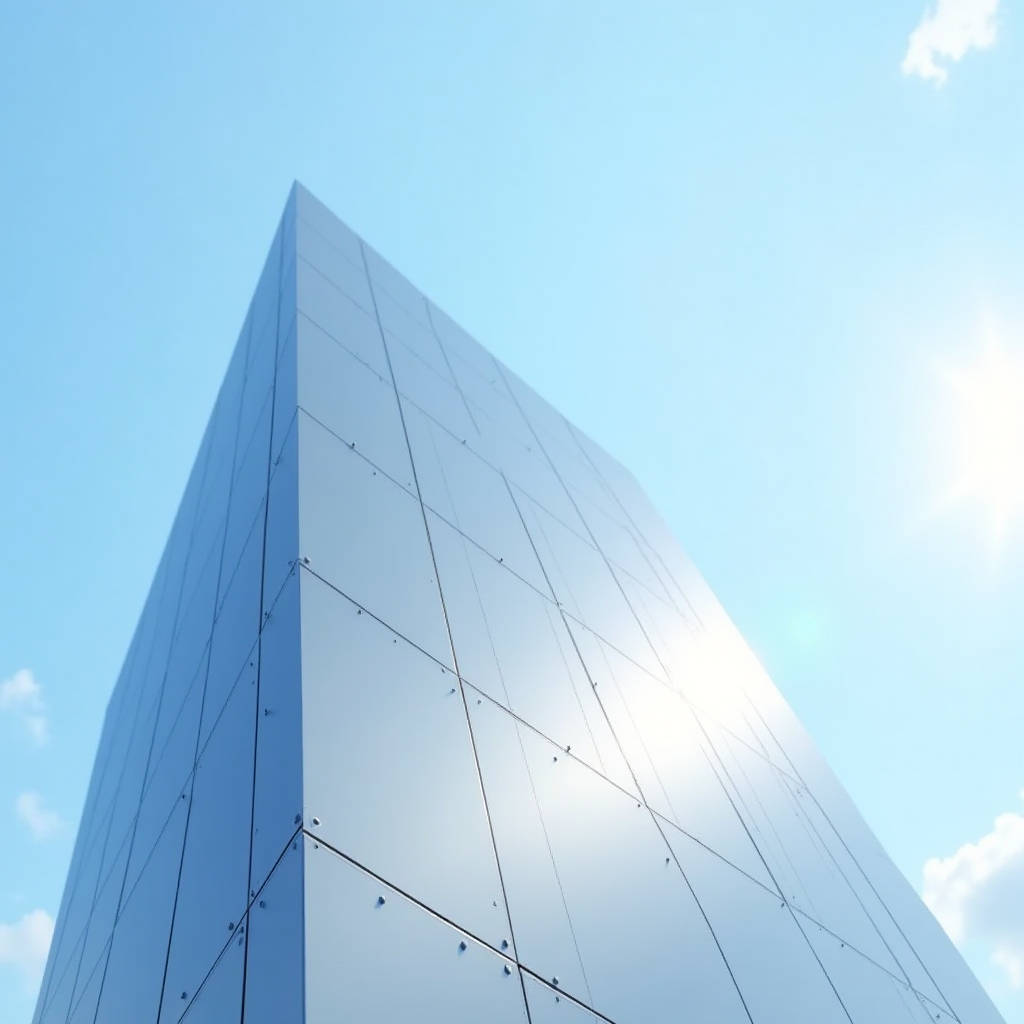
When a project specification calls for a Fluorocarbon Aluminum Facade, the decision usually comes down to one thing: long-term performance under brutal environmental exposure. Architects and facade consultants specify PVDF-coated solid aluminum panels because they have seen what happens to lesser coatings after five years of UV radiation, salt spray, and thermal cycling. The fluorocarbon chemistry—specifically polyvinylidene fluoride (PVDF) resin blended with acrylic binders—creates a film that resists chalking, fading, and chemical degradation in ways that polyester and even high-durability polyester coatings cannot match. This article examines the technical realities behind fluorocarbon aluminum cladding: what the coating actually does, how to evaluate it against international standards, what drives cost differences across suppliers, and where the common failure points hide in fabrication and installation. If you are reviewing submittals or preparing a tender package for a ventilated rainscreen or unitized curtain wall, the following sections will give you the engineering detail you need to make a defensible choice.
What Makes a Fluorocarbon Coating Different from Standard Architectural Finishes
The distinction between a true Fluorocarbon Aluminum Facade and a standard powder-coated or polyester-finished system lies in the resin chemistry. PVDF resin contains carbon-fluorine bonds—among the strongest single bonds in organic chemistry—with a bond dissociation energy of approximately 485 kJ/mol. By comparison, the carbon-hydrogen bonds in polyester resins sit around 410 kJ/mol. That 75 kJ/mol difference translates directly into resistance to photo-oxidative degradation. When UV photons strike the coating surface, they carry enough energy to cleave weaker bonds, initiating free-radical chain reactions that break down the polymer matrix. Fluorocarbon coatings resist this because the carbon-fluorine bond requires significantly more energy to rupture.
The practical consequence: a properly formulated 70% PVDF coating (the industry benchmark defined by AAMA 2605) will retain color within 5 Delta E units and maintain over 50% of its original gloss after 10 years of South Florida exposure at 45 degrees. Polyester coatings tested under identical conditions can show Delta E shifts of 8-15 units and gloss retention below 30% within three to five years. This is not a marginal difference—it is the difference between a facade that looks intentional and one that looks prematurely aged.
70% PVDF vs. 50% PVDF: The Resin Ratio That Determines Performance
Not all fluorocarbon coatings are equal. The AAMA 2605 specification requires a minimum 70% PVDF resin content by weight in the color coat, measured before pigmentation. Some manufacturers offer 50% PVDF formulations at a lower price point, marketing them as "fluorocarbon" systems. The 50% formulations deliver roughly 60-70% of the UV resistance of a full 70% system, which may be acceptable for interior applications or sheltered soffits but falls short for exposed high-rise elevations. When you specify a Fluorocarbon Aluminum Facade, the coating submittal should include the resin ratio certification from the paint supplier—PPG, AkzoNobel, Sherwin-Williams, and Beckers all provide this documentation. Without it, you are taking the fabricator's word on chemistry you cannot verify visually.
Coating System Architecture: Primer, Color Coat, Clear Coat
A complete PVDF coating system on solid aluminum panels is not a single layer. The standard architecture consists of three layers applied in sequence: a corrosion-inhibiting primer (typically 5-8 microns dry film thickness), the PVDF color coat (25-30 microns DFT), and in many cases a clear topcoat (12-15 microns DFT). The primer serves two functions: it bonds the organic coating to the chromate or titanium-zirconium conversion coating on the aluminum substrate, and it provides a reservoir of corrosion inhibitors—usually strontium chromate in legacy formulations or non-chromate alternatives in systems compliant with REACH and other environmental regulations.
The color coat carries the PVDF resin, the pigment, and the UV-blocking package. Metallic and mica pigments require a clear topcoat to prevent oxidation of the metallic flakes; without it, silver and champagne finishes can develop a dull, gray patina within two to three years. Solid colors—particularly darker shades like charcoal, bronze, and black—can sometimes be specified as two-coat systems, but the three-coat architecture provides a margin of safety that most facade consultants consider essential for any Fluorocarbon Aluminum Facade on a building over four stories.
Total dry film thickness for a three-coat PVDF system should fall between 40 and 50 microns. Below 35 microns, pinhole defects become statistically likely, and corrosion resistance drops sharply. Above 55 microns, the coating risks solvent entrapment during curing, which can cause micro-blisters when the panel heats up in service. Quality fabricators—including Futeng® in their solid aluminum panel production—maintain automated spray lines with electrostatic bells or rotary atomizers that control film build within a ±5 micron tolerance across the panel surface.
Substrate Selection: Why 3003 and 5052 Alloys Dominate
The aluminum alloy behind the coating matters as much as the coating itself. For flat panels and simple brake-formed shapes, 3003-H14 alloy provides an excellent balance of formability, corrosion resistance, and cost. For panels requiring complex routing, perforation, or welded attachments, 5052-H32 offers higher tensile strength (210-260 MPa vs. 150-200 MPa for 3003-H14) and superior fatigue resistance. Both alloys are marine-grade, meaning they contain less than 0.10% copper—a critical threshold because copper-rich intermetallic particles accelerate pitting corrosion in chloride environments.
Panel thickness selection follows structural logic, not aesthetic preference. A 2.0mm solid aluminum panel can span approximately 600mm between stiffeners without visible oil-canning under thermal load. At 2.5mm, that span extends to roughly 800mm. At 3.0mm, you can push to 1,000mm or more, depending on the stiffener design and the panel aspect ratio. These numbers assume a properly engineered rear stiffener grid—typically aluminum extrusions or folded profiles bonded to the panel back with structural adhesive. The stiffener spacing is determined by finite element analysis or by the deflection limits in the project specification, usually L/175 or L/240 under wind load. A Fluorocarbon Aluminum Facade system that looks flat on day one but develops visible ripples after the first summer heat wave has failed on stiffener engineering, not on coating quality.
Performance Standards: AAMA 2605, EN 13523, and ISO 16474
Three standards govern the testing and certification of fluorocarbon coatings for architectural aluminum. AAMA 2605 (Voluntary Specification for High Performance Organic Coatings on Architectural Extrusions and Panels) is the North American benchmark. It requires 10-year South Florida exposure testing, 4,000 hours of accelerated weathering per ASTM G154, and resistance to muriatic acid, mortar, and chemical agents. EN 13523 (Coil coated metals—Test methods) covers the European approach, with specific test methods for color difference, specular gloss, and adhesion after boiling water immersion. ISO 16474 (Paints and varnishes—Methods of exposure to laboratory light sources) provides the international framework for accelerated weathering correlation.
The key numbers to know:
| Test Parameter | AAMA 2605 Requirement | EN 13523 Equivalent | What It Means in Practice |
|---|---|---|---|
| Color Retention (10 years) | ΔE ≤ 5 (Hunter) | ΔE ≤ 5 (CIELAB) | Visible color shift barely perceptible to the human eye |
| Gloss Retention (10 years) | ≥ 50% of initial | ≥ 50% of initial | South Florida benchmark; accelerated tests approximate |
| Accelerated Weathering | 4,000 hrs ASTM G154 | 2,000-4,000 hrs per ISO 16474 | Cycles include UV, condensation, and thermal shock |
| Pencil Hardness | F minimum | HB-F typical | Resistance to jobsite scratching during handling |
| Adhesion (Crosshatch) | No removal | Class 0-1 | Tape pull test after scribing; zero coating loss |
| Chemical Resistance | Muriatic acid, mortar | Acid, alkali per EN 13523 | Simulates construction site exposure and cleaning |
When reviewing coating submittals, confirm that the test reports reference the specific standard and that the testing laboratory is ISO 17025 accredited. A generic "tested to AAMA standards" statement without a lab report number is not sufficient. The paint manufacturer's warranty—typically 20 to 30 years for a 70% PVDF system—should also reference the specific project and panel quantity, not just a generic product warranty.
Fabrication Tolerances and Their Impact on Facade Appearance
The best PVDF coating in the world cannot compensate for poor fabrication. A Fluorocarbon Aluminum Facade panel that is cut 2mm oversize, bent with a radius inconsistent with the specified design, or assembled with visible fastener heads will look amateurish regardless of the coating chemistry. The key fabrication tolerances to specify and inspect:
Panel flatness after stiffener attachment should not exceed 0.5% of the diagonal dimension measured with a straight edge and feeler gauge. For a 1,200mm x 2,400mm panel, that means a maximum deviation of approximately 13mm across the diagonal—but most high-quality fabricators work to half that tolerance. Corner squareness should be within ±1.0mm across the diagonal measurement. Bend radii for 2.0mm and 2.5mm material should be a minimum of 1.5 times the material thickness for 3003 alloy and 2.0 times for 5052, to avoid micro-cracking in the bend zone that can propagate through the coating over time.
Routed and returned edges—where the panel edge is grooved from the back and folded to create a clean, sharp corner—require precise control of the remaining face material thickness. The standard is 0.8mm to 1.0mm of residual material. Less than 0.6mm risks tearing during folding; more than 1.2mm produces a rounded corner that looks soft and inconsistent with adjacent panels. This is a detail that separates fabricators who invest in CNC routing centers from those who rely on manual processes.
Cost Drivers: What Actually Moves the Price Per Square Meter
The installed cost of a Fluorocarbon Aluminum Facade system varies widely—from approximately $180 to $350 per square meter for the panel and support system, excluding the curtain wall framing or rainscreen substructure. Several factors drive this range:
Material thickness is the most direct cost lever. Moving from 2.0mm to 3.0mm adds roughly 50% more aluminum by weight, and aluminum ingot pricing directly affects the panel cost. At current LME aluminum prices around $2,200 per metric ton, the raw material cost difference between 2.0mm and 3.0mm is approximately $8-12 per square meter before fabrication.
Coating color and finish type have a significant impact. Standard solid colors—white, light gray, beige—are the most economical. Metallic finishes add 15-25% to the coating cost due to the clear coat requirement and the higher pigment cost. Custom-matched colors, particularly those requiring multiple tinting steps to achieve a specific RAL or custom shade, can add 20-40% to the coating cost. Bright colors—vibrant reds, oranges, yellows—use organic pigments that are inherently more expensive and less UV-stable than inorganic pigments, sometimes requiring additional UV absorber packages that increase cost further.
Panel complexity drives fabrication cost. A simple flat rectangular panel with no perforations, no routed returns, and a standard stiffener grid is the baseline. Add perforations (round holes, slots, or custom patterns) and the cost increases 30-60% depending on the open area percentage and hole size. Add 3D forming, curved profiles, or folded returns on all four edges, and fabrication cost can double or triple relative to a flat panel. Complex geometries also increase waste factors—from a typical 10-15% for rectangular panels to 20-30% for irregular shapes.
Logistics and packaging add cost that is often underestimated. Solid aluminum panels are heavy—a 2.5mm panel weighs approximately 6.8 kg/m². A 40-foot container can hold roughly 800-1,200 m² of panels depending on packaging configuration. Ocean freight from Asian manufacturing hubs to the US East Coast currently runs $4,000-7,000 per container, adding $4-9 per square meter. Protective interleaving, edge protection, and crating add another $3-5 per square meter. These costs are not trivial and should be factored into any comparison between domestic and offshore supply.
Common Failure Modes and How to Prevent Them
Even a properly specified and fabricated Fluorocarbon Aluminum Facade can fail if certain risks are not managed during design and installation. The most common failure modes observed in the field:
Filiform corrosion—thin, thread-like corrosion tracks that propagate under the coating from cut edges or fastener holes. This occurs when the conversion coating is damaged or absent at the cut edge, and moisture penetrates the coating-substrate interface. Prevention requires specifying that all cut edges be sealed with a chromate or non-chromate touch-up primer, and that field-cut panels receive the same treatment before installation. Factory-applied edge sealers are preferable to field-applied ones because they are applied under controlled conditions.
Thermal movement distress—aluminum expands at approximately 2.4 mm per linear meter per 100°C temperature change. A 3-meter panel on a dark-colored facade can experience a surface temperature swing from -10°C on a winter night to +80°C under direct summer sun—a 90°C delta that produces roughly 6.5mm of linear expansion. If the panel attachment system does not accommodate this movement, panels will buckle, fasteners will loosen, and sealant joints will tear. The solution is to specify slotted attachment holes, sliding clips, or other engineered movement accommodation at every panel connection point.
Galvanic corrosion—when aluminum panels come into contact with dissimilar metals in the presence of an electrolyte (rainwater, condensation), a galvanic cell forms and the aluminum corrodes sacrificially. Carbon steel fasteners, stainless steel brackets without isolation, and copper or brass components are common culprits. The fix is straightforward: specify stainless steel fasteners (grade 304 or 316 for coastal environments) with nylon or EPDM isolation washers, and ensure that all aluminum-to-aluminum contact surfaces are separated by a non-conductive material.
Coating delamination at bend lines—when the coating is applied after forming (post-coating), the bend radius is not a concern. But when pre-coated coil is brake-formed, the coating on the outside of the bend stretches and can crack if the elongation exceeds the coating's flexibility limit. A 70% PVDF coating typically tolerates 20-30% elongation without cracking, which is adequate for standard bend radii. However, tight radii below 1.5T can exceed this limit, especially with thicker coatings or harder formulations. The fabricator should perform bend tests on sample coupons before committing to production.
Comparing PVDF to Alternative Architectural Coatings
The coating landscape for architectural aluminum includes several options beyond PVDF. Understanding where each fits helps clarify why a Fluorocarbon Aluminum Facade remains the default choice for premium exterior applications:
| Coating Type | Resin Chemistry | Typical Warranty | Best Application | Approximate Cost Index |
|---|---|---|---|---|
| 70% PVDF (AAMA 2605) | PVDF + Acrylic | 20-30 years | Exterior facades, high-rise, coastal | 100 (baseline) |
| 50% PVDF | PVDF + Acrylic (lower ratio) | 10-15 years | Mid-rise, sheltered exterior | 75-85 |
| FEVE (Fluoroethylene Vinyl Ether) | FEVE resin | 20-30 years | Field-applied, complex shapes | 110-130 |
| Super Durable Polyester | Polyester + TGIC/HAA | 10-15 years | Interior, low-rise, non-critical | 60-70 |
| Standard Polyester | Polyester | 5-10 years | Interior only | 45-55 |
| Anodized (Class I) | Aluminum oxide | 20+ years | Premium architectural, uniform metallic | 120-150 |
FEVE coatings deserve particular attention because they are sometimes specified as an alternative to PVDF for field-applied or touch-up applications. FEVE resins offer similar UV resistance to PVDF but can be formulated as ambient-cure systems, meaning they can be sprayed on-site without the 230-250°C bake cycle that PVDF requires. This makes FEVE valuable for repairing damaged PVDF panels or coating complex geometries that cannot fit in a bake oven. However, FEVE field-applied coatings rarely achieve the film thickness uniformity of factory-applied PVDF, and their long-term track record—while strong—is shorter than PVDF's 50-plus years of documented performance.
Specifying a Fluorocarbon Aluminum Facade: Key Submittal Requirements
A complete specification for a Fluorocarbon Aluminum Facade system should require the following submittals from the fabricator, reviewed and approved before production begins:
- Alloy certification from the aluminum mill, including chemical composition and mechanical properties per the relevant ASTM B209 or EN 485 standard
- Coating applicator certification from the paint manufacturer, confirming that the applicator is approved for the specific PVDF system being specified
- Coating batch certificates showing resin ratio, pigment type, and film thickness measurements for each production batch
- AAMA 2605 test reports from an ISO 17025 accredited laboratory, including color retention, gloss retention, adhesion, and chemical resistance
- Fabrication shop drawings showing panel dimensions, stiffener layout, attachment points, and movement accommodation details
- Physical mock-up or sample panel (minimum 300mm x 300mm) representing the actual production coating, color, and fabrication quality
- Warranty documentation from the paint manufacturer, naming the project and specifying the warranty period and conditions
The mock-up is particularly important. A color chip from a paint fan deck is a laboratory sample produced under ideal conditions on a small flat coupon. It does not represent the color and gloss that will appear on a full-size panel with stiffener bond lines, slight surface texture variations, and the optical effects of the panel's orientation on the building. A physical mock-up viewed under natural daylight at the project site reveals color metamerism issues that spectrophotometer readings alone cannot predict.
Cleaning and Maintenance: Protecting the Warranty
PVDF coatings are low-maintenance, not zero-maintenance. Most paint warranties require periodic cleaning—typically annually or biannually—to remove surface deposits that can trap moisture and promote localized corrosion. The cleaning protocol is straightforward: mild detergent solution (pH 6-8), soft bristle brushes or sponges, and low-pressure water rinse. Abrasive cleaners, strong acids, strong alkalis, and pressure washers above 500 psi can damage the coating and void the warranty.
In coastal environments, salt spray deposits should be removed more frequently—quarterly cleaning is recommended for buildings within 500 meters of breaking surf. In industrial environments with sulfur dioxide or nitrogen oxide emissions, the cleaning frequency depends on the deposition rate, but annual cleaning is the minimum. The cleaning specification should be included in the project's facility maintenance manual, and the building owner should understand that neglecting this requirement can reduce the effective service life of the Fluorocarbon Aluminum Facade by accelerating chalking and gloss loss beyond the warranted limits.
Engineering Judgment: When PVDF Is Worth the Premium
The cost premium for a 70% PVDF Fluorocarbon Aluminum Facade over a super durable polyester system is typically 30-40% on the coating portion of the panel cost, which translates to roughly 10-15% on the total installed panel cost when substrate, fabrication, and installation are included. Whether that premium is justified depends on the project context.
For a high-rise tower where access for recoating is logistically difficult and expensive—requiring swing stages, street closures, and months of disruption—the PVDF premium is almost always justified. The net present value of avoiding a recoating cycle 15 to 20 years into the building's life far exceeds the initial coating cost difference. For a single-story retail building with easy access and a 15-year lease horizon, a super durable polyester system may be the rational economic choice. For a public building designed for a 50-year service life, PVDF is the minimum acceptable standard.
The engineering judgment also involves the building's orientation and climate. A south-facing elevation in Arizona or a west-facing elevation in Dubai will receive UV doses that are two to three times higher than a north-facing elevation in London. The same coating system will perform differently in these contexts, and the specification should reflect that. A Fluorocarbon Aluminum Facade on a severely exposed elevation may warrant a three-coat system with a clear topcoat even for solid colors, while a sheltered elevation on the same building could use a two-coat system without compromising performance.
The specification of a Fluorocarbon Aluminum Facade is ultimately a risk management decision. The coating chemistry, the fabrication quality, the attachment engineering, and the maintenance program all contribute to whether the facade performs as intended over its design life. Understanding the technical details behind each of these elements—rather than relying on marketing claims or price comparisons alone—is what separates projects that age gracefully from those that require premature intervention.