PVDF Aluminum Facade Engineering Variables That Determine Coating Performance Over 30 Years
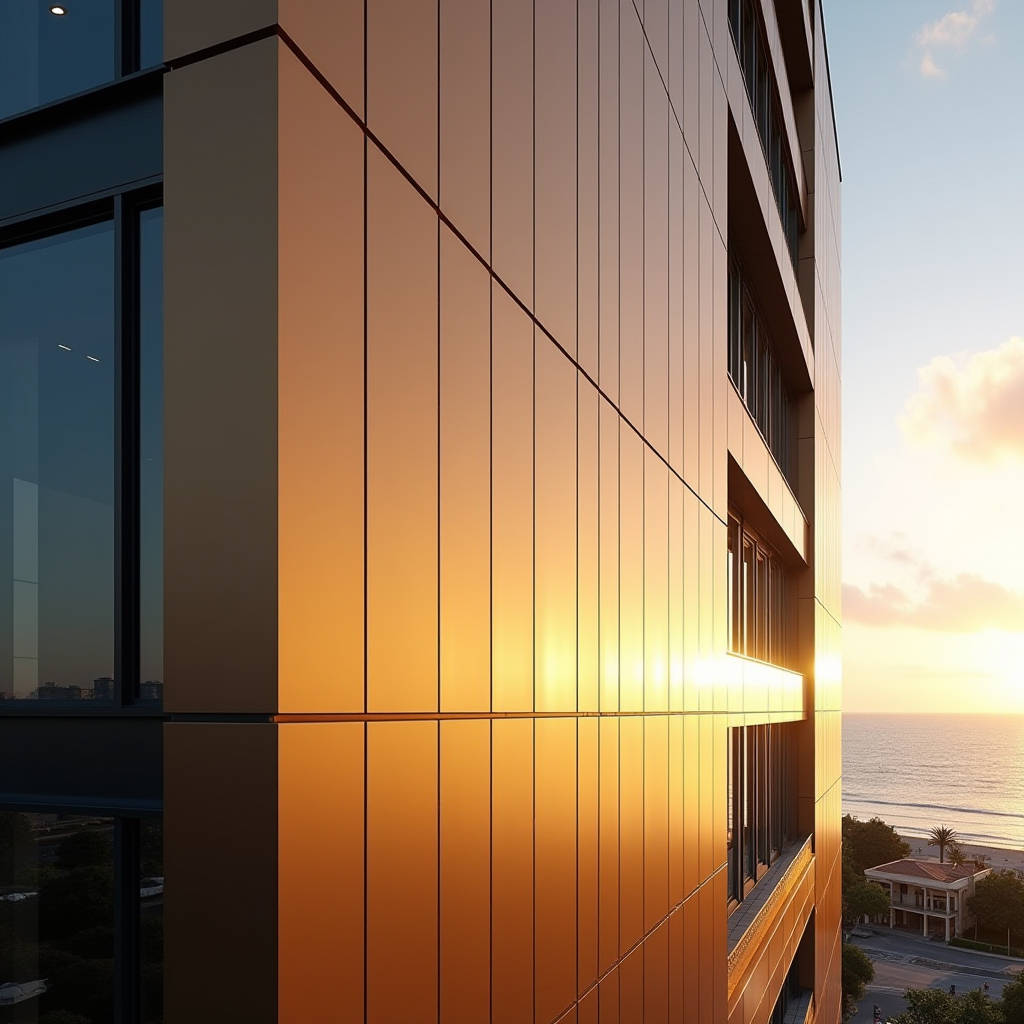
Specifying a PVDF Aluminum Facade means committing to a particular set of fabrication tolerances, coating chemistry, and long-term weathering expectations. The decision tree for any project team starts with a single question: will this building envelope still look intentional after 15 years of UV exposure, salt spray, and thermal cycling? For solid aluminium cladding panels finished with polyvinylidene fluoride, the answer depends less on the resin brand than on what happens between the coil coating line and the final site inspection. This article examines the three variables that quietly determine whether a PVDF aluminium facade performs as specified or becomes a warranty claim waiting to happen: film thickness verification, alloy selection for flatness, and the often-overlooked relationship between cure temperature and intercoat adhesion.
The Chemistry That Makes PVDF Different
Polyvinylidene fluoride is a fluoropolymer thermoplastic with a carbon-fluorine bond energy substantially higher than the carbon-oxygen bonds found in polyester or acrylic coatings. In practical terms, that bond energy translates to a coating that does not degrade under UV radiation the way conventional architectural paints do. A properly formulated PVDF coating contains a minimum 70% PVDF resin by weight in the color coat, with the remaining 30% consisting of acrylic resin for pigment dispersion and adhesion. This ratio is not arbitrary. The AAMA 2605 specification, which governs high-performance organic coatings on architectural aluminium, mandates precisely this 70/30 resin-to-acrylic ratio for the color coat layer.
The full PVDF coating system on a solid aluminium panel typically consists of three layers: a chrome-based or chrome-free conversion coating applied directly to the aluminium substrate, a primer coat that provides corrosion inhibition and adhesion, and the PVDF color coat. Some manufacturers add a clear topcoat for metallic or mica finishes. Total dry film thickness for the color coat alone should fall between 25 and 35 microns, with the complete system including primer reaching 35 to 45 microns. When a project specification calls for a PVDF Aluminum Facade, the coating thickness is not a negotiable variable. Thin spots below 20 microns create pathways for moisture and chloride ions to reach the aluminium substrate, triggering filiform corrosion that spreads beneath the coating film.
Alloy Selection and Flatness: The Substrate Problem
Solid aluminium cladding panels for PVDF finishing are typically fabricated from 1xxx, 3xxx, or 5xxx series alloys. The choice matters because each alloy family responds differently to the thermal stresses introduced during PVDF curing. A 3003-H14 alloy offers good formability and moderate strength, making it suitable for panels with simple brake-formed edges. For panels requiring extensive routing, perforation, or complex geometric folding, 5052-H32 provides higher tensile strength and better resistance to stress corrosion cracking. The 1xxx series, while highly formable, delivers lower yield strength and may require thicker gauge material to achieve the same flatness tolerance.
Flatness is the metric that separates a premium PVDF Aluminum Facade from an acceptable one. Industry standards for aluminium sheet flatness are defined by the Aluminum Association's flatness tolerances, but these are general manufacturing guidelines. For architectural facade panels, the practical requirement is tighter. A panel measuring 1200mm by 3000mm should exhibit no more than 0.4% deviation from a flat plane, measured as the ratio of wave height to wave length. This translates to a maximum 4mm deviation across a 1-meter span. Achieving this tolerance requires stretcher-leveled sheet, not simply roller-leveled coil stock. Stretcher leveling permanently sets the aluminium by applying controlled tension beyond the material's yield point, eliminating the internal stresses that cause oil-canning when panels are installed on a curtain wall grid.
Cure Temperature and Intercoat Adhesion: The Hidden Variable
PVDF coatings cure at peak metal temperatures between 230°C and 250°C, a range substantially higher than polyester or silicone-modified polyester systems. The cure window is narrow. At 220°C, the PVDF resin particles may not fully coalesce, leaving microscopic voids in the film that reduce gloss retention and chemical resistance. Above 260°C, the acrylic component begins to thermally degrade, causing yellowing in light colors and embrittlement across all hues. The dwell time at peak metal temperature typically ranges from 45 to 90 seconds, depending on line speed and oven configuration.
The intercoat adhesion between the primer and the PVDF color coat is where many coating failures originate. When the primer is under-cured before the color coat is applied, the two layers never fully crosslink. The result is a panel that passes initial dry adhesion tests but delaminates after 3 to 5 years of thermal cycling. The crosshatch adhesion test per ASTM D3359, Method B, should produce a 5B rating with no coating removal. For a PVDF Aluminum Facade exposed to coastal conditions, the wet adhesion test becomes critical. After 24 hours of water immersion at 38°C, the same crosshatch test should still yield a minimum 4B rating. Projects within 5 kilometers of saltwater should specify this wet adhesion requirement explicitly, as it is not automatically included in AAMA 2605 unless called out in the project specification.
Color Consistency Across Production Batches
Architects specifying a PVDF Aluminum Facade for a large commercial project face a practical challenge: panels fabricated from different coil production runs may not match. PVDF coating is a batch process, and even with computerized color matching, slight variations in pigment dispersion, film thickness, and cure conditions produce measurable delta-E values between batches. A delta-E of less than 1.0 is generally imperceptible to the human eye. Between 1.0 and 2.0, the difference becomes visible under controlled lighting conditions. Above 2.0, the mismatch is noticeable on an installed facade.
The industry practice for managing batch-to-batch color variation involves several strategies. First, for projects exceeding 2,000 square meters, the fabricator should order all coil stock from a single production run whenever possible. Second, the specifier should require a color range panel set showing the acceptable drift limits, typically a master panel plus two boundary panels representing the lightest and darkest acceptable variations. Third, the installer should sort panels by production lot and install them in sequence, avoiding random mixing that creates a patchwork effect. These procedures add cost but prevent the far greater expense of removing and replacing non-conforming panels after installation.
Comparing PVDF to Alternative Coating Systems
The decision to specify PVDF over other coating chemistries should be driven by project-specific performance requirements rather than habit. The table below provides a data-driven comparison of the four most common architectural coating systems for solid aluminium panels, using metrics that directly affect facade life-cycle costs.
| Performance Metric | PVDF (AAMA 2605) | FEVE (AAMA 2605) | SMP (AAMA 2604) | Polyester (AAMA 2603) |
|---|---|---|---|---|
| Minimum Resin Content (Color Coat) | 70% PVDF | 50%+ FEVE | 50% SMP | Polyester-based |
| South Florida 10-Year Gloss Retention | ≥50% | ≥50% | 20-30% | 5-15% |
| Color Change (Delta-E) After 10 Years | ≤5.0 | ≤5.0 | ≤8.0 | Significant fading |
| Chalk Resistance Rating (ASTM D4214) | No. 8 minimum | No. 6-8 | No. 4-6 | No. 2-4 |
| Pencil Hardness (ASTM D3363) | HB-F | F-H | HB-F | HB-2H |
| Typical Warranty (Film Integrity) | 20-30 years | 20-30 years | 10-15 years | 5-10 years |
| Relative Cost Index (per sqm) | 1.00 (baseline) | 1.05-1.15 | 0.70-0.80 | 0.50-0.65 |
| Recommended Applications | Monumental facades, coastal, high-rise | High-gloss, complex curves | Industrial, rear elevations | Interior, soffits, sheltered |
The cost index figures represent approximate relative pricing for solid aluminium panels with 2.5mm gauge material, finished both sides with the specified coating system. Actual pricing varies by region, project volume, and color complexity. Metallic and mica finishes in PVDF command a premium of 15-25% over solid colors due to the additional clear coat layer and the tighter process controls required to achieve uniform flake orientation.
Fabrication Sequencing and Edge Protection
A PVDF Aluminum Facade panel is only as durable as its weakest edge. The PVDF coating is applied to flat aluminium sheet before fabrication. When the sheet is cut, routed, punched, or folded, bare aluminium is exposed at every cut edge. These edges represent the primary entry point for moisture and corrosive agents. The standard remedy is a touch-up coating applied to cut edges after fabrication, but the chemistry of touch-up materials differs fundamentally from the factory-applied PVDF system.
Factory PVDF coatings are thermally cured at the temperatures described earlier. Field-applied or shop-applied touch-up coatings are typically air-dry acrylic or two-component polyurethane systems that cure at ambient temperature. These materials do not match the durability of the factory coating. The best practice for edge protection involves specifying a minimum 25-micron dry film thickness for touch-up on all cut edges, using a two-component epoxy primer followed by a two-component polyurethane topcoat color-matched to the factory finish. For projects in aggressive environments, the specification should require that all panel edges be shop-applied with the touch-up system before the panels leave the fabrication facility, rather than relying on site-applied correction.
An alternative approach gaining traction in high-end facade engineering is the use of pre-cut blanks. Rather than fabricating panels from large sheets, the aluminium is cut to finished size before PVDF coating. This means the coating wraps around all edges, eliminating exposed aluminium entirely. The trade-off is cost and lead time, as each panel size requires separate handling through the coating line. For monumental projects where a 50-year facade life is the design target, pre-cut blank coating represents the most robust edge protection strategy available.
Thermal Movement and Panel Joint Design
Aluminium expands and contracts at approximately 2.4mm per meter per 100°C temperature change. A 3-meter panel subjected to a 60°C seasonal temperature swing will move approximately 4.3mm. The joint design for a PVDF Aluminum Facade must accommodate this movement without transferring stress to the coating at panel edges. Sealant-filled joints require a minimum width-to-depth ratio of 2:1, with the sealant bonded only to the back of the joint, not to the panel edges, to prevent three-sided adhesion that tears the sealant during thermal cycling.
Open-joint rain-screen systems, increasingly specified for ventilated PVDF Aluminum Facade installations, eliminate the sealant problem entirely but introduce a different set of requirements. The gap between panels must be wide enough to prevent panel-to-panel contact during thermal expansion while narrow enough to maintain the visual continuity of the facade plane. A 10mm to 15mm open joint is typical for panels up to 3 meters in length. Behind the open joint, a black or dark-colored weather barrier must be installed to prevent visible light from penetrating the cavity and creating a see-through effect. The drainage and ventilation cavity behind the panels should maintain a minimum 25mm depth to allow adequate airflow for moisture evacuation.
Specifying PVDF for Coastal and Industrial Environments
Coastal environments introduce chloride ions that accelerate aluminium corrosion, particularly at cut edges and fastener penetrations. The AAMA 2605 specification includes a 4,000-hour salt spray test per ASTM B117, but this test simulates a continuous salt fog that does not replicate the wet-dry cycling of real coastal exposure. For projects within 500 meters of a shoreline, the specification should additionally require cyclic corrosion testing per ASTM G85, Annex A5, which alternates between salt fog and dry conditions. Panels that pass 2,000 hours of ASTM B117 may fail after 1,000 hours of cyclic testing because the drying phase concentrates chloride ions at coating defects.
Industrial environments with elevated sulfur dioxide levels present a different challenge. PVDF coatings are inherently resistant to acid attack, but the primer layer and the aluminium substrate are not. If sulfur dioxide penetrates through pinholes in the coating, it forms sulfuric acid upon contact with moisture, attacking the aluminium and causing blistering. The solution is a heavier primer coat, specified at a minimum 10 microns dry film thickness, and a requirement for pinhole-free coating verified by a low-voltage holiday detector test on a statistically significant sample of panels before shipment.
Futeng® has supplied PVDF-coated solid aluminium panels for projects in both coastal Southeast Asia and industrial zones in the Middle East, and the field data from these installations consistently shows that panels with primer thickness at the upper end of the specification range outperform those meeting only the minimum requirement. This is not a sales argument; it is an engineering observation that should inform specification writing.
Quality Verification: What to Inspect Before Shipment
The factory inspection protocol for a PVDF Aluminum Facade should go beyond visual color checks. The following tests, performed on retained samples from each production batch, provide objective data on coating quality:
- Dry Film Thickness: Measured per ASTM D7091 using an eddy-current gauge on both the face and the return legs of fabricated panels. A minimum of 5 readings per panel, with no single reading below 80% of the specified minimum.
- Gloss: Measured at 60° geometry per ASTM D523. The gloss range for the batch should fall within ±5 units of the approved control sample.
- Color: Measured with a spectrophotometer per ASTM D2244, CIELAB color space, D65 illuminant, 10° observer. Delta-E versus the approved standard should not exceed 1.0 for solid colors or 2.0 for metallic colors.
- Adhesion: Crosshatch test per ASTM D3359, Method B, on both flat areas and formed corners. Rating must be 5B dry and 4B minimum after 24-hour water immersion.
- Impact Resistance: Per ASTM D2794, using a 1.5mm thick coated panel, 1.8 kg weight dropped from 50 cm. No cracking or detachment of coating from the substrate.
- Pencil Hardness: Per ASTM D3363, minimum HB rating on the face coating.
These tests should be documented in a mill test report that accompanies each shipment. For projects exceeding 5,000 square meters, third-party inspection at the coating facility before fabrication begins is a prudent investment. The cost of an inspector for three days is negligible compared to the cost of replacing non-conforming panels after they have been installed on a 20-story curtain wall.
Life-Cycle Cost Perspective
The procurement decision for a PVDF Aluminum Facade is often made on initial cost per square meter, but the financial case for PVDF becomes clear when life-cycle costs are calculated over a 30-year building life. A polyester-coated panel on a mid-rise commercial building in a temperate climate may require recoating or replacement after 10 to 12 years. The cost of access equipment alone, whether swing stages or scaffolding, typically exceeds the original material cost. Add the operational disruption, the risk of damage to adjacent building elements, and the environmental cost of disposal, and the initial premium for PVDF becomes a fraction of the avoided future cost.
ASTM International, AAMA, and the Aluminum Association publish the standards referenced in this article. For the most current versions, consult www.astm.org, www.aamanet.org, and www.aluminum.org. The European equivalent for PVDF coating specifications is covered under EN 13523, available from www.cen.eu. For coating applicator certification programs, the Qualicoat standard provides a useful reference framework at www.qualicoat.net.
Specifying a PVDF Aluminum Facade is fundamentally an exercise in defining the performance requirements clearly enough that every party in the supply chain, from the coil coater to the installer, understands what constitutes an acceptable panel. The specification should reference AAMA 2605 as the baseline, then add project-specific requirements for wet adhesion, cyclic corrosion testing, flatness tolerances, and edge treatment. The upfront effort of writing a tight specification pays for itself many times over during the construction phase, when the alternative is negotiating responsibility for coating failures that should have been designed out of the project from the start.