PVDF Coated Aluminium Panel Specification Guide for Long Life Architectural Facades
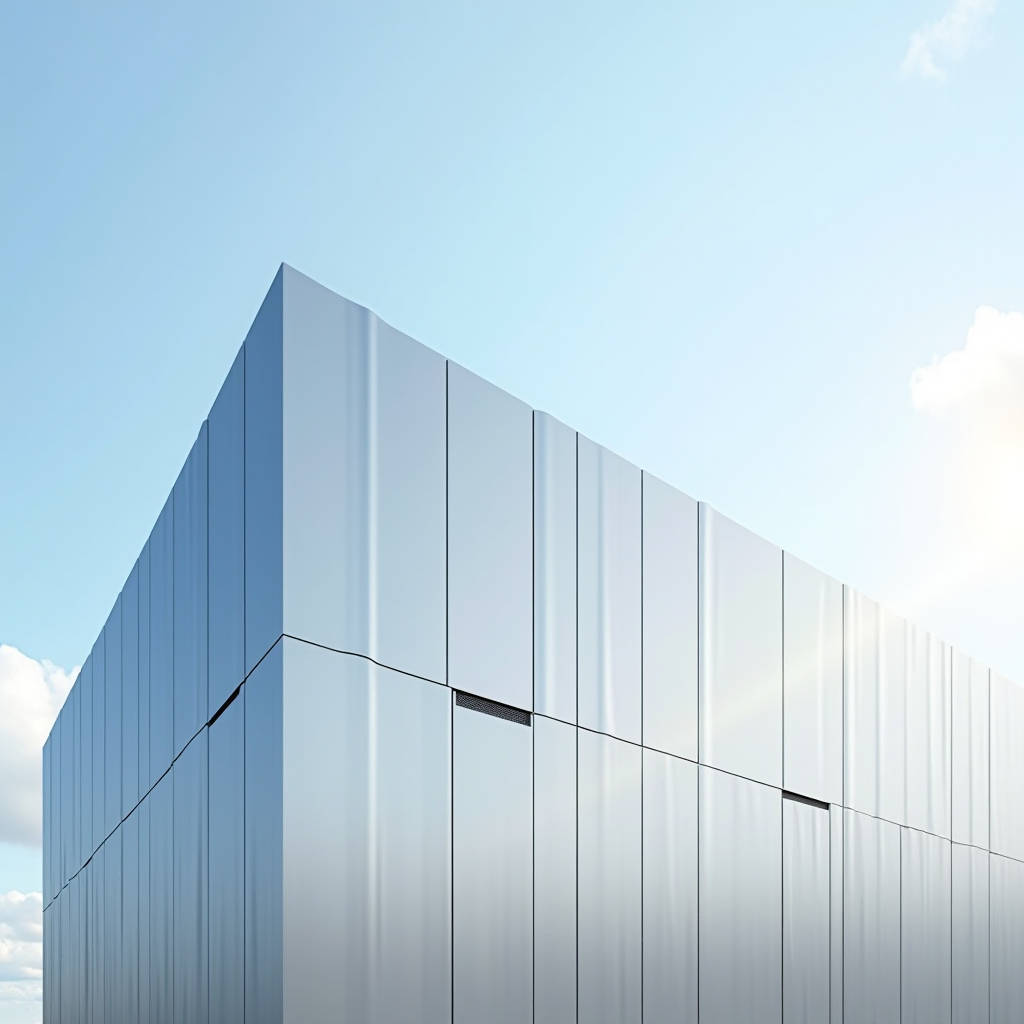
When a building envelope starts showing its age after only five or six years—chalking, fading, streaking down the face of what was supposed to be a landmark facade—the root cause almost always traces back to one decision made during the specification phase: the coating system. A PVDF Coated Aluminium Panel, properly manufactured and applied, sidesteps this entire category of failure. But the term gets thrown around loosely in procurement documents, and not every product labeled "PVDF" delivers the same performance. The difference between a 70% PVDF resin system and a 50% blend is not a marginal technical footnote. It is the difference between a facade that holds its colour and gloss for two decades and one that needs replacement cladding before the contractor's defects liability period has even expired.
What PVDF Actually Means on a Solid Aluminium Panel
Polyvinylidene fluoride is a fluoropolymer resin. In architectural coating systems, it serves as the binder that holds pigment particles in place and bonds them to the aluminium substrate. The key number that matters for anyone writing a performance specification is the resin-to-pigment ratio in the finish coat. AAMA 2605, the highest-tier architectural coating standard in North America, requires a minimum of 70% PVDF resin by weight in the colour coat. Below that threshold, UV resistance drops off sharply. Some manufacturers cut costs by blending acrylic or polyester resins into the mix, which brings the PVDF content down to 50% or lower. Those panels will still look fine on day one. They will not look fine on day 1,800.
On a solid aluminium panel—typically 2.0mm, 2.5mm, or 3.0mm thick 1xxx, 3xxx, or 5xxx series alloy—the PVDF coating is applied as a multi-layer system. The standard architecture is a chrome-based or chrome-free conversion coating directly on the aluminium, followed by a primer layer (5–8 microns), then the colour coat (20–25 microns) containing the PVDF resin, and optionally a clear topcoat (12–15 microns) for metallic or high-gloss finishes. Total dry film thickness typically lands between 30 and 45 microns. This is not paint in the conventional sense. It is an engineered fluoropolymer barrier.
Why Coating Thickness and Application Method Dictate Lifespan
Procurement teams often focus on panel thickness and alloy grade, which matters, but the coating process is where long-term value is either locked in or thrown away. PVDF coatings are applied via spray coating in a controlled factory environment, not on-site. The aluminium sheet or fabricated panel is cleaned, pre-treated, and then sprayed using electrostatic or air-atomised spray guns. After each coat, the panel passes through a curing oven where temperatures reach 230–250°C, fusing the resin into a continuous film.
Two-coat systems (primer + colour) are standard for most solid colours. Three-coat systems (primer + colour + clear) are mandatory for metallic and pearlescent finishes because the aluminium flake pigments in the colour coat need a clear protective layer to prevent oxidation and water ingress. Four-coat systems exist for extremely aggressive environments—coastal installations with salt spray, industrial zones with airborne acids—where an additional barrier primer is applied before the standard primer.
The risk in the supply chain is that some processors will thin the coating to stretch material, reducing the colour coat to 15 microns or less. At that thickness, UV radiation penetrates the film and begins degrading the primer layer underneath. The panel does not fail catastrophically; it chalks gradually, then the colour shifts, then the gloss readings drop below 30 at 60°. By year seven or eight, the building owner is looking at a full re-cladding project that should never have been necessary.
Performance Benchmarks: AAMA 2605, EN 1396, and Real-World Expectations
Specifiers have three primary standards to reference when qualifying PVDF Coated Aluminium Panel products. AAMA 2605 is the most stringent and widely cited in North America, the Middle East, and parts of Asia. It requires 10-year minimum South Florida exposure testing with colour retention of at least 5 Delta E units and gloss retention above 50%. EN 1396, the European coil-coating standard, takes a different approach but converges on similar durability expectations. ISO 16474 covers accelerated weathering test methods used to simulate years of UV exposure in a matter of weeks.
The table below compares the key performance thresholds across these standards and what they mean for a project's maintenance schedule:
| Performance Parameter | AAMA 2605 Requirement | EN 1396 (Class 1) | Practical Implication |
|---|---|---|---|
| Minimum PVDF Resin Content | 70% (colour coat) | Not explicitly specified; performance-based | Below 70%, expect colour shift within 5–7 years |
| Colour Retention (ΔE) | ≤ 5 after 10 years Florida | Grey scale ≥ 4 after 5 years Florida | ΔE of 5 is perceptible; ΔE of 2 is not |
| Gloss Retention (60°) | ≥ 50% after 10 years | ≥ 50% after 5 years | Metallics lose gloss faster than solids |
| Chalk Resistance | Rating ≥ 8 (ASTM D4214) | Rating ≥ 4 (EN 13523-21) | Chalking is the first visible sign of coating breakdown |
| Salt Spray Resistance | No blistering after 4,000 hrs (ASTM B117) | No blistering after 1,000 hrs | Critical for coastal projects within 5km of shoreline |
| Humidity Resistance | No blistering after 4,000 hrs (ASTM D2247) | No blistering after 1,000 hrs | Essential for tropical and subtropical climates |
These numbers are not abstract. A project in Dubai, where summer ambient temperatures regularly exceed 45°C and UV index hits 11+, will expose any coating weakness within three years. A project in Singapore, with 80% average humidity and frequent heavy rain, will test adhesion and filiform corrosion resistance continuously. The standard you specify needs to match the environment the panels will actually face.
Colour Stability and the Metallic Finish Challenge
Solid colours—whites, beiges, greys—are the most forgiving. The pigments are inorganic metal oxides, inherently UV-stable, and the PVDF resin simply keeps them locked in place. A properly coated white PVDF Coated Aluminium Panel will show a ΔE of less than 2 after a decade of equatorial sun exposure. The challenge comes with metallic, pearlescent, and bright colours.
Metallic finishes use aluminium flake pigments suspended in the colour coat. These flakes are flat, reflective, and oriented parallel to the panel surface. If the clear topcoat is too thin or improperly cured, moisture penetrates through microscopic pores and begins oxidising the aluminium flakes. The panel does not fade—it dulls, then develops a greyish haze, then shows pinpoint corrosion spots. This failure mode is slow and insidious because it starts at the microscopic level and only becomes visible after 3–5 years.
Bright colours—vibrant reds, oranges, yellows—use organic pigments that are inherently less UV-stable than inorganic alternatives. Even with a 70% PVDF resin system, these colours will show measurable colour shift faster than earth tones. Specifying a three-coat system with a UV-absorbing clear topcoat adds roughly 10–15% to the coating cost but can extend the aesthetic lifespan of a bright colour by 5–8 years. For a project where the architect has specified a specific RAL or Pantone shade as a signature design element, that premium is negligible compared to the cost of premature replacement.
Coastal Environments, Salt Spray, and the Corrosion Equation
Aluminium is naturally corrosion-resistant because it forms a stable oxide layer on contact with air. But that oxide layer is porous, and in the presence of chloride ions—salt—it breaks down through pitting corrosion. The PVDF coating functions as a barrier that prevents chloride ions from ever reaching the aluminium substrate. When the coating is intact, the aluminium underneath stays pristine for decades. When the coating is compromised—through mechanical damage during installation, insufficient edge coverage, or pinholes from poor application—corrosion starts at that point and creeps under the coating film.
For projects within 5 kilometres of a coastline, the specification should mandate a minimum 45-micron total dry film thickness, a chrome-based pre-treatment (or a proven chrome-free alternative with equivalent performance data), and edge coverage that wraps the coating around the panel perimeter. Cut edges from fabrication—routing, drilling, notching—must be touched up with a compatible PVDF repair coating. Skipping this step is the single most common cause of corrosion-related warranty claims on coastal projects.
Futeng®, a supplier with extensive experience in Middle Eastern and Southeast Asian coastal projects, has documented cases where properly specified PVDF Coated Aluminium Panel installations on beachfront properties showed zero visible corrosion after 12 years of continuous salt spray exposure. The common thread in those projects was not any proprietary technology but rigorous adherence to the full coating specification: pre-treatment, primer, colour coat, clear coat, and edge sealing.
Fabrication Compatibility: Bending, Routing, and the Coating Integrity Question
A PVDF coating is flexible but not infinitely so. When a coated aluminium panel is bent on a press brake, the coating on the outside radius stretches, and the coating on the inside radius compresses. The minimum bend radius that the coating can tolerate without micro-cracking depends on the coating thickness, the alloy temper, and the bend angle. As a general rule, a 2.5mm-thick 3003-H14 panel with a 35-micron PVDF coating can be bent to a 90° angle with an inside radius of 3mm without coating failure. Tighter bends require testing.
Routing and perforating present a different challenge. The cutting tool generates heat and friction at the cut edge, which can cause localised coating delamination if the feed rate is too slow or the tool is dull. The solution is straightforward: sharp carbide tooling, appropriate feed rates, and post-fabrication touch-up of all cut edges. The touch-up coating should be from the same PVDF system as the factory-applied finish, applied with a brush or sponge applicator, and allowed to cure fully before the panel is packed for shipment.
For projects with complex geometry—folded panels, 3D facades, parametric designs—the coating should be applied after fabrication (post-coating) rather than on flat sheet (pre-coating). Post-coating ensures that every exposed surface, including weld seams and folded edges, receives the full coating system. The trade-off is longer lead times and higher cost, but for geometrically complex facades, it is the only way to guarantee uniform protection.
Supply Chain Reality: What to Verify Before Accepting a Shipment
The global supply chain for PVDF-coated aluminium panels is fragmented. Resin manufacturers—Arkema (Kynar®), Solvay, and a few others—supply the PVDF resin to paint formulators like PPG, AkzoNobel, and Sherwin-Williams, who produce the liquid coating. The coating is then sold to aluminium processors who apply it to sheet or fabricated panels. At each step, there is an opportunity for substitution or dilution.
When a shipment of PVDF Coated Aluminium Panel arrives on site, the project team should verify three things before accepting it. First, the coating supplier's batch certificate should confirm the PVDF resin content and the coating system used (2-coat, 3-coat, or 4-coat). Second, a dry film thickness gauge should be used to spot-check multiple panels; readings below the specified minimum are grounds for rejection. Third, colour should be checked against the approved sample under natural daylight using a spectrophotometer, not by eye. A ΔE of less than 2 between the sample and the delivered panels is generally acceptable; above 2, the difference will be visible to a trained observer.
These checks take 15 minutes with the right equipment and can prevent a dispute that lasts 15 months. The cost of a DFT gauge and a basic spectrophotometer is trivial compared to the cost of replacing 2,000 square metres of cladding that does not match the architect's specification.
Warranty Structures and What They Actually Cover
Most PVDF coating warranties run 15 to 20 years and cover colour retention, gloss retention, chalking, and film integrity. But the fine print matters. A typical warranty excludes damage from abrasive cleaning, chemical exposure beyond atmospheric conditions, and mechanical impact. It also excludes colour change due to environmental soiling—a panel that turns grey because it has accumulated diesel particulate near a busy road is not a coating failure, it is a maintenance issue.
The warranty is also only as strong as the entity standing behind it. A 20-year warranty from a processor that has been in business for three years is worth very little. The project team should verify that the coating applicator is certified by the paint manufacturer and that the warranty is backed by the paint manufacturer, not just the panel fabricator. PPG, AkzoNobel, and Sherwin-Williams all maintain applicator certification programs that include factory audits and periodic quality testing.
For reference, the American Architectural Manufacturers Association (AAMA) publishes the full AAMA 2605 specification, and the ASTM International maintains the individual test methods (B117 for salt spray, D2247 for humidity, D4214 for chalking). These are the documents that should be referenced in the project specification, not just the phrase "PVDF coating."
Cost Drivers and the Value of Specification Discipline
The coating typically represents 15–25% of the total cost of a fabricated solid aluminium panel, depending on the complexity of the finish. A standard two-coat solid colour on a 2.5mm panel might add $18–22 per square metre. A three-coat metallic with a custom colour match can push that to $30–40 per square metre. A four-coat system for an aggressive coastal environment adds another $5–8 per square metre.
These numbers look like line items to be negotiated down during value engineering. But the cost of getting the coating wrong is orders of magnitude higher. Replacing a failed cladding system on an occupied building involves scaffolding or swing-stage access, removal of the old panels, disposal costs, new panel procurement, and re-installation. Total cost can exceed $400 per square metre—roughly 10 times the original panel cost. The coating specification is not the place to save money.
The ISO 16474 accelerated weathering standards and the ASTM D4214 chalking test methods provide the technical framework for evaluating coating performance. Specifiers who reference these standards in their procurement documents create a level playing field for suppliers and eliminate ambiguity about what "PVDF" means.
Making the Specification Decision That Sticks
The decision chain for a PVDF Coated Aluminium Panel specification runs from the architect's aesthetic intent, through the facade engineer's performance requirements, to the contractor's procurement team, and finally to the processor's factory floor. At each handoff, the specification can be watered down unless it is written with enough detail to survive value engineering.
A robust specification names the standard (AAMA 2605 or equivalent), the coating system architecture (2-coat, 3-coat, or 4-coat), the minimum dry film thickness per coat, the pre-treatment chemistry, the PVDF resin content (minimum 70% in the colour coat), and the warranty duration with the backing entity. It also requires the coating applicator to be certified by the paint manufacturer and to provide batch test certificates with each shipment.
This level of detail takes an extra 30 minutes to write into the specification document. It saves years of disputes, premature facade degradation, and the professional embarrassment of a building that looks tired before its time. In an industry where the building envelope is both the first thing people see and the primary barrier against the elements, the coating is not a cosmetic afterthought. It is the difference between a facade that performs for 30 years and one that starts failing before the project's final account is settled.