PVDF Coated Aluminum Panel Performance What 70 Percent Resin and AAMA 2605 Actually Mean for Facade Specifiers
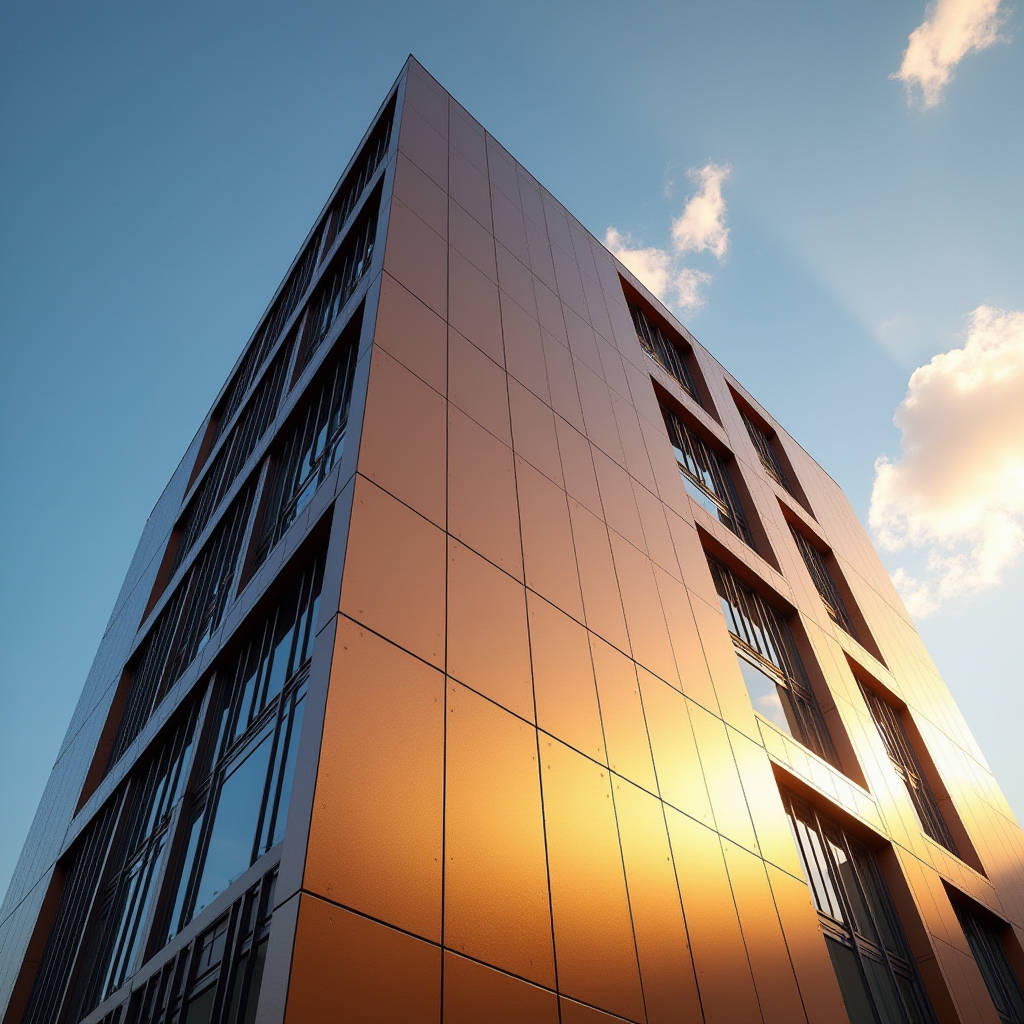
When a project specification calls for exterior aluminium cladding that must retain its color fidelity and structural integrity across three decades of UV exposure, salt spray, and industrial pollutants, the conversation narrows quickly to one material: the PVDF Coated Aluminum Panel. This is not a generic architectural finish. It is a factory-applied fluorocarbon coating system where polyvinylidene fluoride resin—typically 70% of the formulation—bonds to a pretreated aluminium substrate through a multi-stage thermal curing process. The result is a surface that resists chalking, fading, and chemical degradation in ways that polyester and even silicone-modified polyester coatings cannot match. For contractors and specifiers evaluating solid aluminium cladding panels for high-rise facades, coastal installations, or institutional buildings with 30-year performance expectations, understanding what sits behind the PVDF label—resin grades, application methods, and the difference between a two-coat and four-coat system—determines whether the installed facade meets its design life or falls short of it.
What Actually Constitutes a PVDF Coating System
Calling a coating "PVDF" tells you about the resin chemistry but not the complete system architecture. A properly specified PVDF Coated Aluminum Panel involves multiple layers, each serving a distinct function. The substrate is solid aluminium—typically alloy 3003, 3004, or 5052 depending on formability requirements—with thicknesses of 2.0mm, 2.5mm, or 3.0mm for exterior cladding applications. The aluminium first undergoes a multi-stage pretreatment: degreasing to remove mill oils, alkaline etching to create surface profile, and a chrome or chrome-free conversion coating that provides corrosion resistance and promotes coating adhesion. This pretreatment step is where many coating failures originate when it is rushed or poorly controlled.
The coating layers themselves follow a defined sequence. The primer layer, typically 5-8 microns thick, bonds to the conversion coating and provides additional corrosion protection. The color coat—the layer that carries the pigment and the bulk of the PVDF resin—ranges from 20-30 microns. In a two-coat system, the process stops here. In a three-coat system, a clear topcoat adds 12-15 microns of pure PVDF resin, significantly boosting UV resistance and gloss retention. For metallic and mica finishes, the clear coat is non-negotiable because the metallic flakes in the color coat are vulnerable to oxidation without it. A four-coat system adds a barrier coat between the primer and color coat, used primarily for specialty finishes or when the substrate requires additional isolation.
The total dry film thickness for a standard three-coat PVDF system lands between 35-45 microns. This is thinner than many people assume, which is why the quality of each layer matters more than the total number. A poorly formulated 45-micron system will fail before a well-engineered 35-micron one.
70% PVDF: Why Resin Content Dictates Performance
The architectural coatings industry has coalesced around a benchmark established by AAMA 2605, the most demanding voluntary specification for organic coatings on aluminium extrusions and panels. To meet AAMA 2605, the coating must contain at minimum 70% PVDF resin by weight in the color coat. This is not a marketing number. The remaining 30% is acrylic resin, which serves as a carrier and aids film formation during curing, but the PVDF fraction is what delivers the performance.
Here is what the 70% threshold buys you in practical terms. PVDF resin is chemically inert—it does not react with atmospheric pollutants, acid rain, or the chloride ions in coastal air. The carbon-fluorine bond in PVDF is one of the strongest single bonds in organic chemistry, with a dissociation energy of approximately 485 kJ/mol. Compare this to the carbon-hydrogen bonds in polyester resins at roughly 410 kJ/mol, and the durability gap becomes a physics problem rather than a marketing claim.
When a manufacturer reduces PVDF content below 70%—often substituting with cheaper acrylics to hit a price point—the coating's performance envelope shrinks. Chalk resistance drops. Color shift accelerates. The coating becomes susceptible to erosion from wind-driven particulates. These failures typically manifest between years 7 and 12, well within a building's service life but outside most standard warranty periods, which is precisely why specifiers need to verify resin content rather than accepting "PVDF" as a binary label.
Independent testing data from the American Architectural Manufacturers Association shows that 70% PVDF coatings subjected to 10 years of South Florida exposure—the industry's most aggressive natural weathering benchmark—retain over 90% of their original gloss and show color change values (ΔE) below 5 units. Polyester coatings under identical conditions can show ΔE values exceeding 15 units, which is visually obvious to the naked eye.
Liquid PVDF vs. Powder PVDF: A Decision That Affects Everything
Not all PVDF Coated Aluminum Panel products are created through the same application method. The traditional route is liquid PVDF, applied via spray coating in a controlled factory environment. The liquid system involves dissolving the PVDF resin in a solvent carrier, spraying it onto the pretreated aluminium, and then baking it at temperatures between 230°C and 250°C. The solvent evaporates, and the resin crosslinks into a continuous film. This process has been refined over 40 years and produces the finishes that have performed on landmark buildings since the 1980s.
Powder PVDF is a newer technology that eliminates solvents entirely. The resin is ground into a fine powder, electrostatically sprayed onto the aluminium, and then melted and fused in a curing oven. The environmental advantages are straightforward: zero VOC emissions, no solvent handling, and easier compliance with air quality regulations. But the performance characteristics differ in ways that matter for architectural applications.
The table below summarizes the key differences based on current industry data and manufacturer specifications:
| Parameter | Liquid PVDF (Spray) | Powder PVDF |
|---|---|---|
| Film thickness range | 25-45 microns (multi-coat) | 50-80 microns (single coat typical) |
| Color consistency | Excellent; decades of batch data | Good; improving with newer formulations |
| Metallic/mica finishes | Well-established; clear coat required | Limited; metallic effect harder to control |
| Edge coverage | Dependent on spray technique | Generally better due to electrostatic wrap |
| VOC emissions | Present; requires abatement | Near zero |
| AAMA 2605 compliance | Standard; widely certified | Available on select formulations |
| Relative cost | Moderate | Slightly higher; offset by environmental compliance savings |
For projects in jurisdictions with strict VOC regulations—California, the EU, and increasingly parts of Asia—powder PVDF eliminates a compliance headache. For projects demanding precise color matching across multiple production batches, liquid PVDF still holds an edge due to the maturity of the tinting infrastructure. Neither is categorically superior; the choice depends on the project's regulatory environment and aesthetic requirements.
Pretreatment: The Step That Determines Whether the Coating Sticks
If you spend time on construction sites, you have seen coating delamination. It rarely starts with the PVDF layer itself. It starts at the interface between the aluminium and the primer, which means it starts with pretreatment. The aluminium surface, fresh from the rolling mill, carries a layer of mill oil and a thin, non-uniform oxide film. Neither provides a suitable surface for coating adhesion.
The pretreatment process for a PVDF Coated Aluminum Panel follows a sequence that cannot be shortcut. First, the panels pass through an alkaline degreasing bath that removes oils and loose contaminants. Next, an etching step—typically using a mild acid or alkaline solution—removes the existing oxide layer and creates a uniform surface profile with microscopic peaks and valleys. This increases the effective surface area for mechanical bonding. The critical third step is the conversion coating: a chrome-based or chrome-free chemical treatment that deposits a thin, corrosion-resistant layer onto the aluminium surface. This layer passivates the aluminium and provides chemical bonding sites for the primer.
Chrome-based conversion coatings (using hexavalent chromium compounds) deliver the best corrosion performance, which is why they remain specified for aerospace and marine applications. However, hexavalent chromium is a known carcinogen, and regulations—particularly EU REACH and growing restrictions in North America—are driving the industry toward chrome-free alternatives. Modern chrome-free conversion coatings based on zirconium, titanium, or silane chemistry can achieve comparable performance when properly applied, but they are less forgiving of process variation. The pH, temperature, and immersion time must be controlled within tighter windows.
The specification that governs pretreatment quality is ASTM D1730, which outlines standard practices for preparing aluminium surfaces for painting. AAMA 2605 further requires that coated panels pass a minimum of 3,000 hours of salt spray testing (ASTM B117) with no blistering and less than 2mm underfilm corrosion at the scribe line. This is the test that separates properly pretreated panels from those that will peel within a decade.
Color Retention and the South Florida Benchmark
Architects specify PVDF because they want the building to look the same in year 15 as it did on day one. Color retention is the metric that matters most, and the industry's proving ground is South Florida. Test panels mounted at 45° south-facing near Miami endure annual UV radiation doses exceeding 280 MJ/m², combined with high humidity, salt-laden air, and temperatures that push panel surface temperatures above 80°C in summer. Ten years of this exposure is considered equivalent to 25-30 years of service life in a temperate climate.
The AAMA 2605 specification requires that after 10 years of South Florida exposure, the coating must show a color change (ΔE) of no more than 5 Hunter units and gloss retention of at least 50% for standard colors and 30% for metallic colors. In practice, high-quality 70% PVDF systems routinely exceed these thresholds. Test data from the Fluoropolymer Coatings Association indicates that properly formulated PVDF coatings can maintain ΔE values below 3 units after a decade of Florida exposure, which is imperceptible to the human eye under most lighting conditions.
Color choice itself affects long-term performance. Darker colors absorb more solar radiation and reach higher surface temperatures, which accelerates any degradation mechanism that is thermally driven. A black PVDF panel in Arizona might see surface temperatures of 90°C, while a white panel on the same building stays below 55°C. This temperature differential affects the coating's polymer matrix differently over time. For dark-colored panels in hot climates, the clear topcoat in a three-coat system becomes particularly important because it provides a sacrificial UV-absorbing layer that protects the pigmented color coat beneath.
Fabrication Considerations for PVDF Coated Panels
A PVDF Coated Aluminum Panel arrives on site as a finished product, but the journey from flat sheet to installed facade involves cutting, routing, bending, and fastening operations that can compromise the coating if not managed properly. The coating is tough—pencil hardness typically ranges from H to 2H—but it is not indestructible.
Bending coated panels requires attention to the minimum bend radius relative to the total thickness. For a 2.5mm solid aluminium panel with a three-coat PVDF system, a minimum inside bend radius of 2.5 times the material thickness (approximately 6mm) generally prevents coating cracking. Tighter radii are possible with careful process control—preheating the panel to 40-60°C can improve coating flexibility during forming—but should be validated with test coupons before production runs.
Cut edges present a particular concern. The PVDF coating stops at the cut line, leaving bare aluminium exposed. For exterior applications, this exposed edge is a potential corrosion initiation point, especially in coastal or industrial environments. The standard mitigation is edge sealing: applying a compatible touch-up coating to all cut edges after fabrication. This is tedious work that fabricators are tempted to skip, but the consequences of edge corrosion—creeping underfilm corrosion that lifts the coating from the edge inward—are expensive to remediate. Specifications should explicitly require edge sealing and include it in the quality assurance checklist.
Fastener selection also interacts with the coating system. Stainless steel fasteners (grade 304 or 316 for coastal) are the standard recommendation to avoid galvanic corrosion between the fastener and the aluminium panel. The PVDF coating around fastener holes should be intact; any damage from drilling requires touch-up before installation. Some manufacturers, including Futeng®, supply panels with pre-applied fastener isolation pads for particularly aggressive environments.
Warranty Structures and What They Actually Cover
PVDF coating warranties are a specialized area of contract negotiation that rewards careful reading. The industry standard is a 20-year film integrity warranty, sometimes extending to 30 years for premium systems. But "film integrity" is a specific term: it means the coating will not crack, peel, or blister. It does not mean the color will not change, and it does not mean the gloss will not diminish.
Color and gloss retention warranties are separate and typically more limited. A 20-year color warranty might guarantee ΔE no greater than 5 units, but only for standard colors. Metallic and mica finishes often carry shorter color warranties—10 to 15 years—because the metallic pigments are inherently more susceptible to environmental degradation. The warranty will also specify the acceptable measurement method (usually ASTM D2244 for color and ASTM D523 for gloss) and the required cleaning regimen. Failure to clean the panels annually or biannually, depending on the environment, can void the warranty.
The entity standing behind the warranty matters as much as the terms. Warranty claims require the coating manufacturer, the panel fabricator, and sometimes the applicator to still be in business and willing to honor their obligations. This is where supplier selection intersects with risk management. A PVDF Coated Aluminum Panel sourced through a supplier with established relationships with major coating manufacturers—PPG, AkzoNobel, Sherwin-Williams, and their respective licensed applicator networks—carries a warranty that is backed by the coating manufacturer's balance sheet, not just the fabricator's promise.
Environmental and Regulatory Landscape
The regulatory environment around architectural coatings is shifting, and PVDF is not exempt from scrutiny. The solvents used in liquid PVDF application—typically a mix of aromatic hydrocarbons and ketones—are volatile organic compounds (VOCs) that contribute to ground-level ozone formation. Regulatory limits on VOC emissions from coating operations vary by jurisdiction: the US EPA sets a national limit of 3.5 lbs of VOC per gallon of coating solids for architectural aluminium coatings, while California's South Coast Air Quality Management District enforces stricter limits that have driven adoption of powder PVDF and water-based primer technologies.
The European Union's REACH regulation has added another layer of complexity. Certain fluorinated compounds used in PVDF resin production are under review for their persistence in the environment, though PVDF itself—as a high-molecular-weight polymer—is considered chemically stable and not bioavailable. The industry is responding with improved solvent recovery systems, chrome-free pretreatment chemistries, and powder PVDF formulations that eliminate solvent emissions entirely.
For project teams pursuing LEED, BREEAM, or other green building certifications, PVDF-coated aluminium panels can contribute to several credit categories. The aluminium substrate is recyclable at end of life. Powder PVDF eliminates VOC emissions. And the longevity of the coating—reducing the need for recoating or panel replacement over the building's service life—aligns with lifecycle assessment principles. The U.S. Green Building Council recognizes extended building material service life as a sustainability strategy, and a 30-year PVDF finish directly supports that argument.
Quality Verification: What to Check Before Panels Leave the Factory
The difference between a PVDF Coated Aluminum Panel that performs for 30 years and one that fails in 10 is often established before the panels ship. Factory inspection is not a formality; it is the last opportunity to catch problems before they become installed liabilities.
A practical quality verification checklist should include: dry film thickness measurements taken at multiple points per panel using a calibrated eddy-current gauge, with readings compared against the specified range; color readings using a spectrophotometer, with ΔE values checked against the approved control standard under both D65 (daylight) and illuminant A (incandescent) light sources; gloss readings at 60° geometry per ASTM D523; adhesion testing per ASTM D3359 (cross-hatch tape test), with a minimum rating of 4B or 5B; and pencil hardness testing per ASTM D3363 to confirm cure completeness.
For large projects, retaining a sample panel from each production batch as a physical reference standard is standard practice. This panel is measured, documented, and stored under controlled conditions. If color or gloss disputes arise during installation or after occupancy, the retained sample provides an objective baseline against which installed panels can be compared.
The ASTM International standards referenced above—B117 for salt spray, D2244 for color measurement, D523 for gloss, D3359 for adhesion, and D3363 for hardness—form the backbone of the quality assurance framework. Specifiers should reference these standards explicitly in project documentation rather than relying on generic "meets industry standards" language.
Making the Right Specification Decision
Specifying a PVDF Coated Aluminum Panel is not a single checkbox on a product data sheet. It is a series of interconnected decisions: liquid or powder, two-coat or three-coat, chrome or chrome-free pretreatment, standard color or metallic, and which warranty structure to require. Each decision carries cost, performance, and regulatory implications that ripple through the project's procurement, installation, and long-term maintenance phases.
For coastal projects within 5km of salt water, a three-coat liquid PVDF system with chrome-based pretreatment and a 316 stainless steel fastener package represents the conservative specification. For inland commercial buildings in temperate climates, a two-coat system with chrome-free pretreatment may deliver equivalent service life at lower cost. For projects in strict VOC jurisdictions, powder PVDF eliminates regulatory risk while delivering comparable performance, provided the color range and metallic options meet the design intent.
The common thread across all these scenarios is the importance of verifiable quality. A 70% PVDF resin content, properly applied over a controlled pretreatment process and backed by a warranty from a solvent coating manufacturer, produces a facade material that will outlast most of the other components in the building envelope. When the specification is written with precision and the supply chain is selected with care, the PVDF Coated Aluminum Panel delivers exactly what it promises: decades of low-maintenance, color-stable performance in the most demanding exterior environments.