Industrial Aluminum Cladding Alloy Selection Coating Chemistry and Attachment Engineering for Heavy Duty Facades
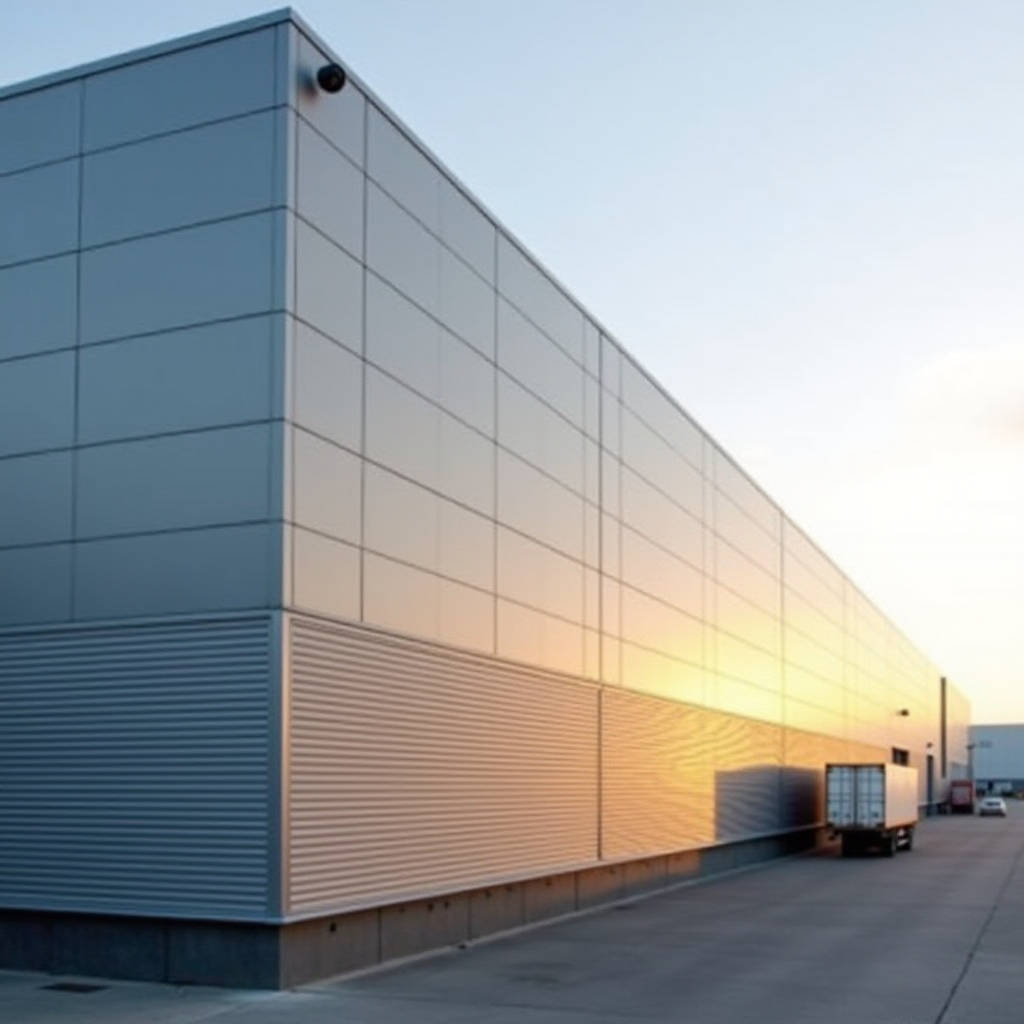
Industrial aluminum cladding has shifted from a commodity specification to a strategic facade decision. For warehouses, logistics centers, food processing plants, and heavy manufacturing facilities, the panel system you select directly determines long-term maintenance costs, thermal performance, fire compliance, and even insurance premiums. Too many project teams still default to corrugated steel or insulated sandwich panels without examining what solid aluminum brings to the table: a non-combustible, fully recyclable envelope that handles aggressive chemical exposure, high humidity, and thermal cycling without the corrosion headaches that plague ferrous alternatives. This article walks through the engineering and procurement considerations that matter on the ground: alloy selection, coating chemistry, attachment methods, and the cost logic that makes 2.5mm and 3.0mm solid aluminum panels a defensible specification for industrial buildings expected to perform for 30 years or more.
Why Industrial Buildings Demand a Different Cladding Logic
Industrial envelopes face conditions that commercial office towers rarely encounter. Internal processes generate heat, steam, and airborne particulates. External environments may include salt spray near coastal ports, sulfur compounds near chemical plants, or abrasive dust from aggregate handling. The cladding system sits at the intersection of these internal and external loads, and failure modes are expensive. A food processing line shut down because a corroded panel compromised the hygiene envelope is a seven-figure problem. A logistics hub with water ingress through failed joints loses inventory and faces insurance claims.
Solid aluminum cladding panels, manufactured from 3003-H14 or 5052-H32 alloy sheets at thicknesses of 2.0mm, 2.5mm, or 3.0mm, address these risks through material properties alone. Aluminum's natural oxide layer provides baseline corrosion resistance. When combined with factory-applied PVDF (polyvinylidene fluoride) coatings meeting AAMA 2605, the system delivers a barrier that withstands pH ranges from roughly 2 to 11, depending on concentration and exposure duration. This matters for chemical storage facilities, wastewater treatment plants, and fertilizer production buildings where acidic or alkaline atmospheres eat through galvanized steel in under a decade.
Alloy Selection and Mechanical Properties
Not all aluminum is the same, and the alloy choice for industrial cladding has real consequences for fabrication tolerances, flatness, and long-term dimensional stability. The two workhorse alloys are 3003 and 5052. Each brings a distinct balance of formability, strength, and corrosion resistance to the table.
3003-H14 is a manganese-alloyed grade with tensile strength around 150 MPa and yield strength near 125 MPa. It forms cleanly, accepts tight bend radii without cracking, and costs less than 5052. For large flat panels on warehouse facades or distribution centers where wind load governs design, 3003 is often the economical choice. The trade-off is slightly lower ultimate tensile strength compared to magnesium-bearing alloys.
5052-H32 contains roughly 2.5% magnesium, pushing tensile strength to approximately 230 MPa with yield strength around 195 MPa. This grade excels in marine-industrial environments where chloride exposure is constant. Coastal power plants, port terminal buildings, and offshore support facilities benefit from 5052's superior resistance to saltwater pitting and stress corrosion cracking. The material cost premium typically runs 8-12% over 3003, but the service life extension in aggressive environments justifies the differential.
| Property | 3003-H14 | 5052-H32 | Relevance to Industrial Cladding |
|---|---|---|---|
| Tensile Strength (MPa) | 150 | 230 | Higher strength allows larger panel spans, reducing substructure cost |
| Yield Strength (MPa) | 125 | 195 | Determines resistance to wind-induced deflection |
| Elongation (%) | 8-10 | 12-14 | Higher elongation permits more complex forming for architectural features |
| Marine Atmosphere Rating | Good | Excellent | 5052 preferred within 5km of coastline or salt-laden atmospheres |
| Typical Sheet Thickness (mm) | 2.0 / 2.5 / 3.0 | 2.0 / 2.5 / 3.0 | Thicker panels improve flatness and impact resistance |
| Relative Cost Index | 1.0 | 1.08-1.12 | Premium justified by service life in corrosive environments |
Coating Systems for Industrial Environments
The coating on industrial aluminum cladding is not decoration. It is the primary chemical barrier between the aluminum substrate and whatever the building's exterior atmosphere throws at it. Specification errors here are the most common cause of premature facade degradation in industrial projects.
PVDF (Kynar 500® / Hylar 5000®) – The Industrial Standard
PVDF resin-based coatings, applied at a minimum dry film thickness of 25-30 microns in a two-coat or three-coat system, remain the benchmark for industrial aluminum cladding. AAMA 2605 certification guarantees performance through accelerated weathering tests that simulate decades of UV exposure, humidity cycling, and salt spray. The fluoropolymer chemistry resists chalking, fading, and chemical attack better than any alternative at comparable cost. For industrial buildings where recoating means shutting down operations, the 20-30 year color and gloss retention of PVDF translates directly to lower lifecycle cost.
FEVE (Fluoroethylene Vinyl Ether) – When PVDF Needs a Boost
FEVE coatings offer similar weatherability to PVDF but with higher gloss potential (up to 80+ GU at 60°) and the ability to cure at ambient temperature. This matters for field touch-ups and repairs, which are inevitable on large industrial sites where panels get scratched during installation. FEVE's wider color gamut also supports the trend toward corporate branding on industrial buildings, where specific RAL or Pantone matches are non-negotiable.
Powder Coating – The Value Option with Limits
Polyester powder coatings meeting AAMA 2604 provide a serviceable finish for interior industrial walls or sheltered exterior applications. Film thickness typically runs 60-80 microns, offering good impact resistance. However, in direct UV exposure, polyester powders chalk and fade noticeably within 5-8 years. For exterior industrial aluminum cladding on uninsulated walls where surface temperatures can exceed 80°C in summer, powder coating's thermal stability limits make PVDF the safer long-term specification.
| Coating Type | Standard | DFT (microns) | Color Retention (years) | Chemical Resistance | Best Application |
|---|---|---|---|---|---|
| PVDF 70% Resin | AAMA 2605 | 25-30 | 20-30 | Excellent | Exterior industrial facades, chemical plants, coastal buildings |
| FEVE | AAMA 2605 | 25-35 | 20-30 | Excellent | High-gloss corporate branding, field-repairable applications |
| Polyester Powder | AAMA 2604 | 60-80 | 5-10 | Moderate | Interior walls, sheltered soffits, low-UV environments |
| Anodized | AA-M10C22A31 | 10-20 | 15-25 | Good | Architectural accents, limited color range |
Attachment Systems and Thermal Movement
Aluminum expands and contracts at roughly 2.4mm per meter per 100°C temperature change. On a 300-meter-long industrial facade, that is over 70mm of cumulative movement between winter night and summer afternoon. The attachment system must accommodate this without transferring stress to the panels, which would cause oil-canning, fastener fatigue, or gasket failure.
Three attachment approaches dominate industrial aluminum cladding specifications:
Exposed fastener systems use stainless steel screws with EPDM washers driven through pre-punched panel faces into steel or aluminum sub-girts. This is the lowest installed cost method, typically running $18-28 per square foot including substructure. The trade-off is visible fasteners and the need for precise slotting to allow thermal movement. For warehouses and logistics centers where aesthetics are secondary, this remains the most common specification.
Concealed clip systems use extruded aluminum rails and clips that engage panel returns, hiding all fasteners behind the facade plane. Installed costs run $25-40 per square foot. The clips provide positive engagement while allowing sliding movement. This system dominates food processing, pharmaceutical, and electronics manufacturing facilities where the smooth, crevice-free surface simplifies washdown cleaning and eliminates fastener-head dust traps.
Rainscreen systems add a ventilated cavity behind the aluminum cladding panels, typically 25-50mm deep, creating a pressure-equalized zone that manages moisture and improves thermal performance. Installed costs start around $35 per square foot and can exceed $55 depending on bracket complexity. The cavity allows continuous insulation placement without thermal bridging through girts, which matters for cold storage, cleanrooms, and any industrial building pursuing LEED or BREEAM certification.
Fire Performance and Compliance
Solid aluminum cladding panels are inherently non-combustible. Aluminum melts at approximately 660°C but does not contribute fuel to a fire. This distinguishes solid aluminum from composite panels with polyethylene cores, which have been the subject of regulatory tightening worldwide following high-profile facade fires.
For industrial buildings, the fire compliance conversation has shifted. Insurers now scrutinize cladding specifications during underwriting. A solid aluminum panel system with mineral wool insulation behind it can achieve an A1 or A2-s1,d0 classification under EN 13501-1, the European fire classification standard. Under ASTM E84, the aluminum itself achieves a Class A rating with flame spread index of 0 and smoke developed index of 0. The complete assembly rating depends on insulation and weather barrier choices, but the aluminum skin eliminates the combustible core risk entirely.
This matters for industrial facilities storing flammable materials, chemical processing plants, and any building where fire suppression systems may be delayed by remote location. The insurance premium differential between a solid aluminum-clad building and one using combustible-core panels can pay back the material cost difference within 3-5 years, according to risk engineering assessments from major industrial insurers. For more detailed fire testing protocols, refer to the NFPA 285 multi-story assembly test standard, which is increasingly specified for industrial buildings with occupied mezzanine levels.
Wind Load Engineering for Large Industrial Facades
Industrial buildings often present large, uninterrupted wall surfaces. A 200-meter-long by 15-meter-high warehouse wall is a big sail. Wind tunnel testing or ASCE 7-22 calculations determine design pressures, and the cladding system must transfer those loads through panels, clips, girts, and back to the primary structure.
For a 2.5mm thick 3003-H14 aluminum panel spanning 1.2 meters between girts, the allowable uniform pressure typically exceeds 1.5 kPa (31 psf) at a deflection limit of L/90. This covers most wind zones for buildings up to 15 meters in height. In hurricane-prone regions or for buildings taller than 20 meters, reducing girt spacing to 900mm or stepping up to 3.0mm panel thickness brings allowable pressures above 2.5 kPa (52 psf).
The connection between panel and substructure is usually the governing limit state. A single stainless steel fastener in 2.5mm aluminum with a 10mm diameter EPDM washer can handle roughly 1.2 kN in pull-out before the panel material yields around the fastener hole. Multiply by the fastener count per panel, and the system capacity is typically well above the demand, provided the girt spacing is correctly engineered. For projects requiring full structural calculations, the Aluminum Association's Aluminum Design Manual provides the relevant allowable stress design methodology.
Condensation Management in Humid Industrial Environments
Breweries, paper mills, textile plants, and food processing facilities generate high internal humidity. When warm, moisture-laden air contacts the back face of cold aluminum cladding, condensation forms. Over time, this water corrodes steel substructure, saturates insulation, and supports mold growth inside wall cavities.
Solid aluminum cladding panels in a rainscreen configuration solve this by creating a ventilated cavity. Air enters at the base of the wall, rises as it warms, and exits at the top, carrying moisture out of the system. The key design parameter is the cavity width: 25mm minimum for single-story buildings, 38mm minimum for buildings over 8 meters tall. The ventilation openings should provide at least 50cm² per linear meter of wall at both intake and exhaust.
For non-rainscreen industrial aluminum cladding, a high-performance vapor barrier on the warm side of the insulation is essential. Polyethylene sheet at 0.15mm minimum thickness, with all laps taped, prevents vapor drive into the wall cavity. The cost of adding this barrier is under $2 per square foot, but omitting it in a high-humidity industrial building can lead to $50+ per square foot in remediation costs within a decade.
Cost Structure and Procurement Strategy
Material cost for 2.5mm solid aluminum cladding panels with PVDF coating typically runs $12-18 per square foot FOB factory, depending on alloy, finish complexity, and panel size. Freight, duties, and handling add 8-15% for international shipments. Installation labor and substructure bring the complete installed system to $25-45 per square foot, with the wide range reflecting geographic labor rates, wall height, and attachment method complexity.
What procurement teams often miss is the cost of the substructure. Aluminum panels are lighter than steel (roughly 7 kg/m² for 2.5mm panel vs. 12+ kg/m² for equivalent steel cladding), which reduces girt sizes and foundation loads. On a 10,000m² industrial building, the structural steel savings from using aluminum cladding instead of steel panels can offset 15-20% of the aluminum material premium.
Lead times deserve attention. Standard PVDF colors from major coaters typically ship in 4-6 weeks from order. Custom color matches add 2-3 weeks for lab formulation and sample approval. For projects on tight schedules, suppliers like Futeng® maintain buffer stock of common alloys and can expedite panel fabrication to 3-4 weeks when the coating color is already qualified. Ordering panels cut to final dimensions with pre-punched fastener holes eliminates field cutting labor and reduces installation time by roughly 20% compared to field-cut panels.
Quality Verification at Receiving
When industrial aluminum cladding panels arrive on site, a systematic receiving inspection prevents the nightmare of discovering coating defects or dimensional errors after installation has begun. The inspection protocol should cover:
- Coating thickness: Measure DFT at minimum 5 points per panel using a calibrated eddy-current gauge. PVDF should read 25-30 microns. Any reading below 22 microns is grounds for rejection.
- Color consistency: Compare panels against the approved control sample under natural daylight. A Delta E below 2.0 units is generally acceptable for industrial buildings; below 1.0 for architecturally prominent facades.
- Panel flatness: Place a 2-meter straightedge diagonally across the panel. Deviation should not exceed 0.5% of the diagonal length for 2.5mm and thicker panels.
- Dimensional tolerance: Length and width within ±1.5mm, squareness within ±1.0mm across the diagonal. Hole positions within ±0.5mm of drawing dimensions.
- Coating adhesion: Cross-hatch test per ASTM D3359 Method B. Rating should be 4B or 5B, indicating no more than 5% removal.
Documenting these checks with photographs and a receiving report protects the contractor if coating issues surface later. The ASTM International standards library provides the full test methods for each of these parameters.
Maintenance Intervals and Lifecycle Cost
Industrial aluminum cladding with PVDF coating requires minimal maintenance, but "minimal" does not mean zero. An annual visual inspection identifies impact damage from forklifts or hail, loose fasteners, and sealant joint deterioration. Every 3-5 years, a low-pressure water wash (under 500 psi, with a fan nozzle held at least 300mm from the surface) removes accumulated industrial dust, which can trap moisture and accelerate localized corrosion if left for years.
The AAMA 609.1 and 610.1 cleaning and maintenance guidelines provide detailed procedures. For industrial buildings near cement plants, steel mills, or other particulate-heavy operations, washing frequency may need to increase to every 12-18 months because alkaline dust combined with dew or rain creates a corrosive slurry on panel surfaces.
When comparing lifecycle costs, the numbers favor solid aluminum over painted steel by a significant margin. A steel panel system in an industrial environment typically requires repainting at year 10-15, at a cost of $8-15 per square foot including surface preparation, access equipment, and downtime. The aluminum system with PVDF coating reaches year 30 with its original finish intact, avoiding one to two repaint cycles entirely. The net present value of that avoided maintenance, discounted at 5%, typically covers the aluminum material premium within the first 15 years of service.
Specifying Industrial Aluminum Cladding for Your Project
A defensible specification for industrial aluminum cladding starts with the right references and performance requirements. The spec should call out the alloy and temper, coating system and standard, panel thickness, attachment method, and testing requirements. A concise performance spec might read:
Solid aluminum cladding panels: 2.5mm minimum thickness, alloy 3003-H14 or 5052-H32 per ASTM B209. Factory-applied PVDF coating meeting AAMA 2605, 70% PVDF resin minimum, 25 microns minimum DFT. Color to be selected from manufacturer's standard range. Concealed clip attachment system with stainless steel clips allowing thermal movement of ±3mm per panel. Complete assembly tested to ASTM E330 for wind load and ASTM E331 for water penetration. Panel flatness: maximum deviation of 0.5% of diagonal length.
This language gives contractors clear requirements while leaving room for competitive bidding from qualified suppliers. The American Architectural Manufacturers Association publishes the relevant coating and performance standards referenced above. For projects outside North America, the equivalent ISO standards apply, though the performance thresholds are broadly similar.
Industrial aluminum cladding represents a mature, well-documented technology. The engineering is straightforward, the material behavior is predictable, and the supply chain is global. What separates successful projects from problematic ones is the attention to the details covered here: alloy selection matched to environmental exposure, coating specification that accounts for chemical atmosphere, attachment design that respects thermal movement, and receiving inspection that catches defects before they become installed problems. For procurement teams and specifiers who get these fundamentals right, a solid aluminum facade delivers decades of low-maintenance service with a clean, professional appearance that holds its value.