Aluminum Balcony Panel Coating Systems Compared PVDF Powder and Anodized Finishes for Facade Engineers
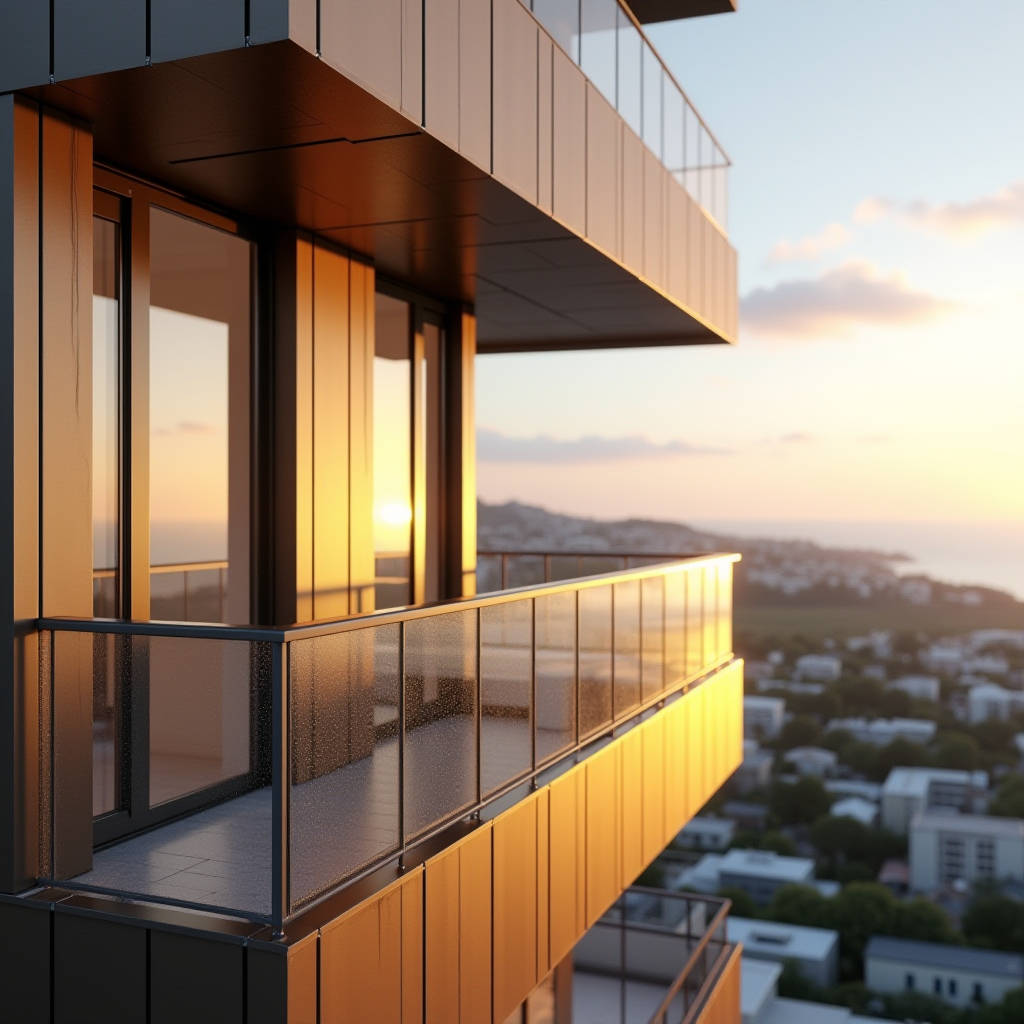
When a facade contractor evaluates an Aluminum Balcony Panel system, the conversation almost always starts with one question: how will this material hold up against wind-driven rain, salt spray, and the thermal cycling that turns inferior metals into maintenance liabilities within five years? The answer depends less on the aluminum itself and more on what sits between the metal and the atmosphere. An Aluminum Balcony Panel is only as durable as its coating system. This article examines the three dominant coating technologies used on solid aluminum panels for balcony applications — PVDF fluorocarbon, polyester powder, and anodized finishes — and maps each one against real-world performance variables including UV degradation, salt fog resistance, color retention, and lifecycle cost. The goal is to give architects, quantity surveyors, and cladding subcontractors a data-driven framework for specifying coating systems that match the actual exposure conditions of the project site.
Why Coating Selection Dictates Balcony Panel Longevity
Solid aluminum panels — typically 2.0mm, 2.5mm, or 3.0mm 5052 or 3003 alloy sheets — arrive on site with inherent corrosion resistance thanks to the passive oxide layer that forms on raw aluminum. But balcony environments are not benign. A panel mounted on a high-rise balcony in Singapore faces 2,400mm of annual rainfall and relentless UV index readings above 10. The same panel on a coastal project in Dubai contends with chloride-laden air and sand abrasion. Without a properly specified coating system, the aluminum substrate becomes vulnerable to filiform corrosion, chalking, and color fade that can render a facade visually unacceptable long before structural failure occurs.
The coating is not decorative. It is the primary defense mechanism. Three families of coating technology dominate the global Aluminum Balcony Panel supply chain. Each carries distinct performance profiles, cost implications, and application constraints. Understanding these differences at the specification stage prevents the kind of coating failures that lead to expensive remedial work, contractual disputes, and reputational damage for the entire project team.
PVDF Fluorocarbon Coatings: The Architectural Benchmark
Polyvinylidene fluoride (PVDF) coatings, applied through a factory-controlled spray process over a chrome-based conversion primer, represent the highest-performance option available for Aluminum Balcony Panel applications. The defining characteristic of PVDF resin is the carbon-fluorine bond — one of the strongest chemical bonds in organic chemistry — which resists breakdown from ultraviolet radiation far more effectively than the carbon-oxygen or carbon-nitrogen bonds found in conventional paint polymers.
Industry standards for PVDF on architectural aluminum are governed by AAMA 2605, the most stringent specification published by the American Architectural Manufacturers Association. Panels meeting AAMA 2605 must demonstrate less than 5 Delta E color change after 10 years of South Florida exposure at 45 degrees facing south. This is not a laboratory simulation; it is a real-time weathering benchmark that has made PVDF the default specification for prestige commercial and high-rise residential balcony projects worldwide.
A properly applied PVDF system on a 2.5mm solid Aluminum Balcony Panel consists of three layers: a corrosion-resistant primer (typically 5-8 microns), a color coat containing the PVDF resin and pigment (20-25 microns), and a clear topcoat that adds gloss control and additional UV screening (10-15 microns). Total dry film thickness ranges from 35 to 45 microns. The resin-to-pigment ratio is critical: PVDF content must be at least 70% of the resin solids by weight, as specified in AAMA 2605. Lower PVDF content — sometimes found in cost-engineered products — compromises long-term film integrity.
Futeng®, a manufacturer with extensive experience in solid aluminum cladding for export markets, produces PVDF-coated Aluminum Balcony Panel systems using resins from PPG, AkzoNobel, and other approved suppliers. The key specification detail that procurement managers should verify is not just the brand name but the resin grade and the applicator's certification status with the coating manufacturer.
Polyester Powder Coatings: Cost-Effective with Measurable Limits
Polyester powder coatings — both standard polyester and the upgraded super-durable polyester variants — are applied electrostatically and cured in continuous ovens. For Aluminum Balcony Panel projects where initial capital expenditure is the dominant constraint, powder coating offers a viable alternative to PVDF, provided the specifier understands exactly where the performance trade-offs occur.
Standard polyester powder, governed by AAMA 2603, provides adequate performance for interior balcony panels or sheltered exterior applications in temperate climates. The coating thickness is typically 60-80 microns — thicker than PVDF — but the resin chemistry is fundamentally less resistant to UV-induced polymer chain scission. After 5 years of exterior exposure, standard polyester coatings can show Delta E values exceeding 5 units, particularly in darker colors that absorb more solar radiation. Chalking — the degradation of the resin binder that leaves pigment particles exposed on the surface — begins earlier and progresses faster than with PVDF.
Super-durable polyester powder, specified under AAMA 2604, narrows the gap considerably. These formulations use polyester resins modified with hydroxyalkylamide or triglycidyl isocyanurate crosslinkers that improve UV resistance. AAMA 2604 requires less than 5 Delta E after 5 years of South Florida exposure. For mid-rise residential balcony projects in continental climates — Chicago, Berlin, Seoul — super-durable polyester on an Aluminum Balcony Panel can deliver a 15-20 year service life before recoating becomes necessary.
The cost differential matters. Powder coating a 2.0mm solid aluminum panel typically costs 40-60% less than PVDF spraying on a per-square-meter basis. But the lifecycle equation must account for the probability and timing of recoating. A PVDF-coated panel on a coastal balcony may deliver 25 years without film failure; a standard polyester panel in the same location might require attention within 8-10 years. The access costs alone — scaffolding, mast climbers, or rope access teams — can exceed the original coating cost by a factor of three.
Anodized Finishes: The Inorganic Alternative
Anodizing is not a coating in the conventional sense. It is an electrochemical process that converts the aluminum surface into a controlled thickness of aluminum oxide — a ceramic-like layer that is integral to the metal rather than applied on top of it. For Aluminum Balcony Panel applications, architectural anodizing to Class I or Class II standards under AAMA 611 produces a finish that is exceptionally hard, completely UV-stable, and resistant to delamination because there is no discrete coating layer to separate from the substrate.
Class I anodized finishes, with a minimum oxide thickness of 18 microns (0.7 mil), are specified for severe exterior exposures. Class II, at 10 microns minimum, suits less aggressive environments. The anodic layer is transparent; color is achieved either through electrolytic deposition of metal salts into the pore structure (producing bronze and black tones) or through organic dye absorption followed by hydrothermal sealing. Electrolytically colored anodized finishes are far more lightfast than dyed versions and should be specified for any exterior Aluminum Balcony Panel application.
The limitations of anodizing are practical rather than performance-based. Color range is restricted compared to PVDF or powder — architects cannot specify a custom RAL color and expect an anodized match. The substrate aluminum alloy and temper significantly affect the final appearance. Alloy 5005 and 6063 anodize cleanly; alloy 5052, commonly used for sheet panels, can produce a slightly yellowish cast that becomes noticeable in clear anodized finishes. Weld zones, if present on fabricated balcony panels, will anodize differently from the parent metal and may require careful detailing to conceal.
From a durability standpoint, anodized Aluminum Balcony Panel surfaces are virtually immune to UV degradation. The aluminum oxide layer is already fully oxidized — there is nothing left to degrade. The primary failure mode is not fading but sealing degradation, which allows contaminants to penetrate the pore structure and cause staining. Properly sealed anodized finishes on balcony panels in marine environments should be specified with a minimum of 20 microns oxide thickness and regular freshwater washing to remove chloride deposits.
Comparative Performance Data: Coating Systems Evaluated
The table below consolidates key performance parameters across the three coating technologies. The data is drawn from AAMA specification documents, ASTM test methods, and manufacturer technical data sheets for solid aluminum panels in architectural balcony applications.
| Performance Parameter | PVDF (AAMA 2605) | Super-Durable Polyester (AAMA 2604) | Standard Polyester (AAMA 2603) | Anodized Class I (AAMA 611) |
|---|---|---|---|---|
| Color Retention (ΔE, 10yr Florida) | < 5 | < 5 (5yr) | > 5 (5yr typical) | < 2 (electrolytic) |
| Chalk Resistance (ASTM D4214) | Rating 8+ (10yr) | Rating 6-8 (5yr) | Rating 4-6 (5yr) | No organic chalk |
| Salt Fog Resistance (ASTM B117) | 4,000+ hrs | 1,500-2,000 hrs | 500-1,000 hrs | 3,000+ hrs |
| Film Thickness | 35-45 microns | 60-80 microns | 60-80 microns | 18-25 microns (oxide) |
| Pencil Hardness (ASTM D3363) | HB-F | H-2H | H-2H | 9H (sapphire equivalent) |
| Flexibility (ASTM D522, 180° bend) | No cracking | No cracking | No cracking | Craze at bend line |
| Color Range | Full RAL, mica, metallic | Full RAL, limited metallic | Full RAL | Bronze, black, clear, limited |
| Relative Initial Cost (per m²) | 100% (baseline) | 50-65% | 35-50% | 70-85% |
| Typical Service Life (exterior) | 20-30 years | 15-20 years | 8-12 years | 25-40 years |
The cost figures are indicative, based on 2024 factory pricing for 2.5mm solid aluminum panels with standard surface preparation. Actual pricing varies with order volume, panel complexity, and geographic location. The service life estimates assume normal urban or suburban atmospheric conditions; aggressive marine or industrial environments reduce all figures by 20-30% unless protective maintenance programs are implemented.
Environmental Exposure: Matching Coating to Site Conditions
Generic coating specifications fail when they ignore the specific environmental stressors at the project site. A sensible approach classifies balcony panel exposure into four categories and maps each to the appropriate coating technology.
Category 1: Coastal Marine (within 500m of shoreline)
Chloride deposition rates in coastal zones range from 50 to over 300 mg/m² per day depending on prevailing winds, surf conditions, and humidity. This is the most aggressive environment for any Aluminum Balcony Panel coating system. PVDF with a corrosion-resistant primer is the minimum recommendation. Anodized Class I with 20+ micron oxide thickness and regular freshwater washing is also suitable. Standard polyester should be excluded from specification entirely for coastal projects — filiform corrosion at cut edges and fastener penetrations will initiate within 2-3 years.
For projects in the Middle East Gulf region, where chloride levels combine with extreme UV and sand abrasion, PVDF coatings with a clear topcoat provide the additional erosion resistance needed. Some manufacturers offer PVDF formulations with enhanced mar resistance specifically for these conditions. The AAMA 2605 specification includes a 10-year film integrity requirement that provides a useful contractual benchmark for these demanding sites.
Category 2: Urban High-Rise (temperate climate)
Balcony panels on buildings in London, Toronto, or Tokyo face moderate UV exposure, occasional acid rain, and significant thermal cycling. PVDF remains the preferred specification for premium projects where the balcony is a visible architectural feature. However, super-durable polyester under AAMA 2604 can perform adequately on mid-market residential towers, particularly when lighter colors are selected to minimize solar heat gain and the associated thermal stress on the coating film.
Category 3: Inland Continental (extreme temperature range)
Projects in Moscow, Beijing, or Minneapolis experience winter temperatures below -20°C and summer highs above 35°C. The coating on an Aluminum Balcony Panel must accommodate the differential thermal expansion between the coating film and the aluminum substrate — approximately 2.3 x 10⁻⁵ per °C for aluminum versus 3-5 x 10⁻⁵ for organic coatings. PVDF's flexibility gives it an advantage here; the film elongates sufficiently to prevent cracking during thermal cycling. Anodized finishes, being integral to the metal, experience no differential expansion and are inherently stable across temperature extremes.
Category 4: Sheltered or Interior Balcony Applications
For balconies that are fully recessed, covered by deep overhangs, or located in atriums where direct rain and UV exposure are minimal, standard polyester powder coating under AAMA 2603 can be a cost-appropriate specification. The key risk is condensation — even sheltered balcony panels can experience moisture accumulation, particularly in humid climates. A minimum 60-micron coating thickness with proper edge coverage is essential to prevent moisture ingress at cut edges.
Fabrication Considerations: How Coating Choice Affects Manufacturability
The interaction between coating technology and fabrication processes is often overlooked during specification but becomes painfully apparent on the factory floor. PVDF spray coatings are applied after the Aluminum Balcony Panel is fabricated — cut, routed, folded, and welded. This post-fabrication application means the coating covers all exposed edges and weld seams, providing complete encapsulation. The trade-off is that PVDF spraying requires a controlled factory environment with temperature and humidity management, and the process is inherently slower than powder coating, which can be applied in a continuous automated line.
Powder coating can be applied either pre-fabrication (coil coating) or post-fabrication. Post-fabrication powder coating provides edge coverage similar to PVDF. Pre-fabrication powder coating — where the flat aluminum sheet is coated before cutting and folding — leaves cut edges exposed. These edges become corrosion initiation points unless the panel design includes folded returns that conceal the raw edge, or unless a touch-up coating is applied on site. For Aluminum Balcony Panel systems with complex geometries, post-fabrication coating is strongly preferred regardless of the coating chemistry selected.
Anodizing presents unique fabrication constraints. All welding must be completed before anodizing, and the weld filler alloy must be carefully matched to the parent metal to minimize color variation. Mechanical fasteners used in balcony panel assembly — rivets, screws, brackets — must be fabricated from aluminum or stainless steel that is compatible with the anodizing bath chemistry. Steel fasteners will contaminate the anodizing tank and cause pitting defects on the panel surface.
The ASTM B580 standard for anodic oxide coatings on aluminum provides guidance on alloy selection and process control. Specifiers should require that anodized Aluminum Balcony Panel products are processed by a facility certified to ISO 9001 with documented bath analysis and sealing quality control procedures.
Lifecycle Cost Analysis: Beyond the Square-Meter Price
Procurement decisions based solely on the per-square-meter cost of coated panels systematically underestimate the total cost of ownership. A lifecycle cost model for an Aluminum Balcony Panel system must incorporate initial material cost, installation cost, maintenance frequency, maintenance access costs, recoating cost (if applicable), and the time value of money over the building's design life.
Consider a 5,000-square-meter balcony panel package for a 30-story residential tower. The initial cost difference between PVDF and standard polyester might be $25-35 per square meter — a total premium of $125,000-175,000. Over a 30-year building life, the polyester panels will likely require recoating at least twice, possibly three times in aggressive environments. Each recoating event involves access equipment ($50,000-150,000 depending on building height and configuration), surface preparation ($15-25 per square meter), and coating application ($20-35 per square meter). The net present value of these future costs, discounted at 5%, frequently exceeds the initial PVDF premium.
The calculation shifts further when the cost of disruption is included. Balcony recoating on an occupied residential building displaces residents, restricts balcony use, and generates noise and odor complaints. These soft costs are difficult to quantify but are real and substantial for building owners and property managers. PVDF and anodized finishes essentially eliminate the need for recoating within the typical 30-50 year design life of a modern high-rise building, making them the default choice for projects where lifecycle cost rather than initial cost drives decision-making.
Quality Verification: What to Inspect Before Shipment
For procurement managers and facade consultants sourcing Aluminum Balcony Panel systems from overseas manufacturers, pre-shipment inspection of coating quality is non-negotiable. The inspection protocol should verify at minimum the following parameters against the specified AAMA or equivalent standard:
- Dry film thickness measured with a calibrated eddy-current gauge, with readings taken at a minimum of 5 points per panel including edges and corners
- Color consistency checked against the approved reference sample under a standardized D65 light source, with Delta E measured using a spectrophotometer
- Gloss level measured at 60-degree geometry per ASTM D523, with acceptable tolerance typically ±5 units from the specified value
- Adhesion tested by cross-hatch method per ASTM D3359, requiring classification 4B or 5B (less than 5% removal)
- Impact resistance per ASTM D2794, with no cracking or delamination at the specified impact energy
- For PVDF: solvent resistance test using methyl ethyl ketone (MEK) double rub method per ASTM D5402, confirming proper cure
- For anodized: seal quality verified by acid dissolution test per ASTM B680 or admittance test per ISO 2931
Third-party inspection agencies with coating expertise — SGS, Bureau Veritas, Intertek — can perform these tests at the manufacturer's facility before container loading. The cost of inspection, typically $2,000-5,000 per shipment, is trivial compared to the cost of rejecting non-conforming panels after they arrive on site or, worse, after installation.
The Aluminum Association publishes technical guides on coating specification and quality assurance that provide additional detail for project-specific quality plans. Specifiers should also reference the ISO 12944 series on corrosion protection of steel structures by protective paint systems, which, while developed for steel, contains environmental classification methodologies applicable to aluminum balcony panel coating selection.
Practical Specification Guidance for Project Teams
Translating the technical analysis into actionable specification language requires clarity on three decision points. First, determine the environmental severity category for the project site using the classification framework described above. Second, establish the building's design life and the owner's tolerance for maintenance intervention. Third, align the coating specification with the project budget while documenting the lifecycle cost implications of any value-engineering proposals that substitute lower-performance coatings.
For balcony panels on buildings where the facade is a key architectural expression and the client expects minimal maintenance over 25+ years, PVDF to AAMA 2605 remains the specification of choice. The coating technology is mature, the performance data is extensive, and the supply chain — from resin manufacturers to certified applicators — is globally established. For projects where the balcony panels are secondary architectural elements and the budget is constrained, super-durable polyester to AAMA 2604 offers a defensible compromise. Anodized finishes occupy a specialized niche: unmatched hardness and UV stability, but limited color range and demanding fabrication requirements that not every panel manufacturer can meet consistently.
An Aluminum Balcony Panel represents a long-term investment in building envelope performance. The coating system that protects it deserves the same rigorous engineering attention as the structural connections, the thermal breaks, and the drainage details. Getting the coating right at the specification stage costs nothing extra. Getting it wrong costs everything.