CNC Carved Aluminum Panel Attachment Systems Mechanical Fastening Versus Adhesive Bonding
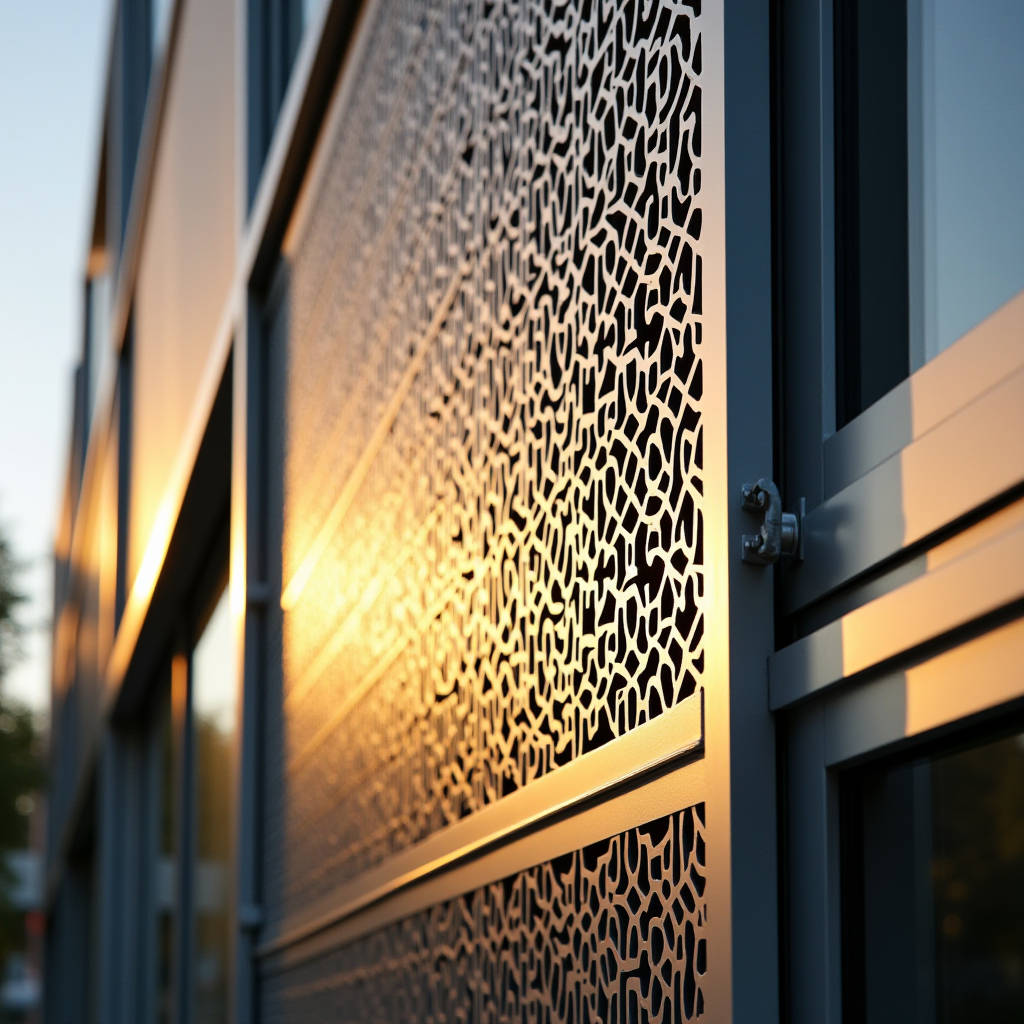
When a facade panel fails, the cost rarely ends at material replacement. A single dislodged aluminum panel on a mid-rise commercial building in Chicago triggered a six-figure liability claim in 2023. The root cause was not the aluminum itself but the mounting system, an engineering detail that gets buried in specification sheets until something goes wrong. For architects and contractors specifying CNC Carved Aluminum Panel systems, the question of mechanical attachment versus adhesive bonding is not academic. It determines whether a building envelope stays intact through decades of thermal cycling, wind gusts, and building movement. This article examines the structural logic behind both methods, the engineering calculations that matter, and why one approach dominates high-stakes commercial facades.
What Actually Holds a CNC Carved Aluminum Panel on the Wall
Solid aluminum panels weigh between 5.5 and 8.5 kg per square meter depending on thickness, typically 2.0mm, 2.5mm, or 3.0mm for exterior cladding. That weight sits on a substructure and must resist wind suction, which on a 20-story building can exceed 2.5 kPa. The attachment system transfers those loads from the panel face to the building's structural frame. Two fundamentally different philosophies exist. Mechanical systems use aluminum clips, rivets, or bolt-through fasteners that physically lock the panel to the substructure. Adhesive systems rely on structural silicone or double-sided acrylic foam tapes to bond the panel directly to a support rail. Both can work. Both can fail. The difference lies in how they fail and what that failure costs.
Mechanical attachment dominates the CNC Carved Aluminum Panel market for exterior applications. The reason is straightforward: a properly engineered mechanical clip provides a load path that can be calculated, tested, and verified. When a panel is riveted or clipped to an aluminum extrusion, the engineer knows exactly how many fasteners are engaged, what each one is rated for, and where the stress concentrates. With adhesive bonding, the load path depends on surface preparation, temperature during installation, adhesive thickness, and long-term polymer degradation. These variables are harder to control on a dusty construction site than in a laboratory.
Mechanical Fastening: The Load Path You Can Calculate
Mechanical attachment systems for CNC Carved Aluminum Panel installations fall into three categories: exposed fastener systems, concealed clip systems, and cassette systems with integrated brackets. Each has a distinct load transfer mechanism.
Exposed fastener systems use stainless steel screws or rivets driven through the panel face into aluminum or steel sub-framing. The panel is perforated with pre-drilled holes, typically countersunk, so the fastener head sits flush or slightly recessed. This is the simplest system and the easiest to inspect. If a screw is missing, you see it. The downside is aesthetic: visible fasteners interrupt the carved pattern, which defeats much of the purpose of specifying a decorative CNC panel.
Concealed clip systems solve the aesthetic problem. A folded aluminum clip is riveted to the back of the panel during fabrication. The clip hooks onto a horizontal or vertical rail mounted to the building substructure. Gravity and a spring-loaded or snap-fit geometry lock the panel in place. The clip itself is typically fabricated from 5052-H32 aluminum, 1.5mm to 2.0mm thick, with a calculated yield strength that must exceed the maximum design wind load by a safety factor of at least 2.0 per AAMA 508-21. For a panel measuring 1,200mm x 2,400mm in a 2.0 kPa wind zone, each clip might need to resist 1.15 kN of tensile force. That means four clips per panel, each rated at 0.6 kN, gives a 2.08 safety factor. The math is simple. The inspection is visual. The failure mode is ductile: an overloaded clip bends before it breaks, giving warning.
Cassette systems with integrated brackets are the premium option. The panel edges are folded into a tray, typically 25mm to 50mm deep, with mounting brackets riveted into the side returns. The cassette hangs on a rail system, often with interlocking edges that provide a rainscreen gap. This is the preferred system for ventilated facades where the CNC Carved Aluminum Panel functions as both a decorative screen and a weather barrier. The bracket connection is shop-fabricated under controlled conditions, reducing field labor and improving consistency.
Adhesive Bonding: When Chemistry Replaces Fasteners
Structural silicone bonding for aluminum panels has been used in curtain wall construction since the 1970s. The technology is mature. Two-part silicone sealants can achieve tensile adhesion strengths of 1.0 to 1.5 MPa on properly prepared aluminum surfaces. For a panel with a 100mm-wide bonding area along four edges, that translates to a bond strength far exceeding typical wind loads. The appeal for CNC Carved Aluminum Panel applications is clear: no visible fasteners, no holes drilled through the decorative face, and a continuous support that distributes stress evenly.
The problem is execution. Silicone adhesion to aluminum requires a clean, oxide-free surface. The standard preparation involves solvent wiping, abrasion, and primer application within a specific time window before the silicone is applied. On a factory floor, this is manageable. On a scaffold 40 meters above the ground, with wind, dust, and temperature swings, it is a quality control nightmare. A 2022 study published in the Journal of ASTM International documented adhesive bond failures on aluminum panels where surface contamination reduced peel strength by 60% compared to laboratory-prepared specimens. The failure was catastrophic: the panel detached completely, with no yield warning.
Double-sided acrylic foam tapes, often marketed as "structural glazing tapes," are another option. These are viscoelastic materials that absorb dynamic loads through deformation. They bond instantly, require no curing time, and can accommodate thermal expansion differentials between the aluminum panel and the steel substructure. The limitation is temperature: acrylic foam tapes lose significant strength above 70°C, which a dark-colored aluminum panel can reach on a summer afternoon in Dubai or Phoenix. For high-temperature climates, mechanical attachment remains the safer choice.
Thermal Movement: The Silent Stressor
Aluminum expands at approximately 23 x 10⁻⁶ per °C. A 3-meter-long CNC Carved Aluminum Panel subjected to a 60°C temperature swing between winter night and summer day will expand and contract by about 4.1mm. That movement must be accommodated somewhere in the system. Mechanical clips allow the panel to slide slightly within the clip's engagement range. Adhesive bonds, by contrast, must absorb the differential strain through the polymer's elasticity. Over thousands of thermal cycles, this strain can initiate micro-cracking at the bond interface, particularly if the adhesive layer is too thin or too thick.
Engineers specifying CNC Carved Aluminum Panel systems for buildings in regions with significant diurnal temperature swings, such as the Middle East, Australia, or the American Southwest, should require thermal movement calculations from the system supplier. The calculation should account for the panel's linear expansion coefficient, the maximum expected temperature range, and the movement capacity of the attachment system. A well-designed mechanical clip system provides 5mm to 8mm of movement capacity per connection point. A silicone joint needs a minimum width-to-depth ratio of 2:1 to accommodate movement without cohesive failure.
Wind Load Performance: Testing Versus Theory
ASTM E330 is the standard test method for structural performance of exterior windows, doors, skylights, and curtain walls under uniform static air pressure difference. For CNC Carved Aluminum Panel systems, the test involves building a mock-up of the facade, applying positive and negative pressure differentials, and measuring deflection and permanent deformation. The pass criterion is typically no panel disengagement, no fastener failure, and no permanent deformation exceeding L/175 of the span.
Mechanical systems generally perform predictably in ASTM E330 testing. The load path is deterministic, and the failure point can be calculated from the fastener shear strength and clip yield strength. Adhesive systems show more variability. A 2023 round-robin test conducted by the Fenestration and Glazing Industry Alliance (FGIA) found that identical silicone-bonded panel assemblies tested at different laboratories produced ultimate strength values varying by up to 25%, primarily due to differences in surface preparation and curing conditions. For projects requiring certified performance values, mechanical attachment provides a narrower confidence interval.
The carve pattern itself affects wind load. A CNC Carved Aluminum Panel with 40% open area experiences lower net wind pressure than a solid panel because air can pass through the perforations. However, the remaining material must still resist the pressure on each solid segment. The pattern geometry, rib widths between cutouts, and panel thickness all factor into the structural analysis. Finite element modeling (FEM) is increasingly used to optimize pattern designs for both aesthetics and structural integrity. Suppliers like Futeng® provide FEM analysis as part of the engineering package for complex carved patterns, ensuring that the artistic vision does not compromise the panel's ability to stay on the building.
| Performance Factor | Mechanical Clip System | Structural Silicone Bonding | Acrylic Foam Tape |
|---|---|---|---|
| Load path predictability | High: deterministic, calculable | Moderate: depends on surface prep | Moderate: temperature-dependent |
| Thermal movement accommodation | 5-8mm per connection (sliding) | Limited by joint geometry | Good: viscoelastic absorption |
| Installation quality sensitivity | Low: visual inspection possible | High: requires cleanroom discipline | Medium: surface-sensitive |
| Failure mode | Ductile: bending before fracture | Brittle: sudden detachment | Gradual: creep and peel |
| Max service temperature | 200°C+ (aluminum limited) | 150°C (silicone rated) | 70°C (significant strength loss) |
| Design life expectancy | 30-50 years (with SS fasteners) | 20-30 years (UV-dependent) | 15-20 years (polymer aging) |
| Field repair feasibility | High: individual panel replacement | Low: requires full bond removal | Medium: solvent-based removal |
| ASTM E330 test variability | Low: ±5% | High: ±25% | Medium: ±15% |
| Installed cost per panel (relative) | 1.0x (baseline) | 1.3-1.5x | 1.1-1.2x |
Corrosion and Galvanic Compatibility
Every mechanical fastener creates a potential galvanic cell. Stainless steel fasteners in aluminum panels are standard practice, but the material combination requires attention. A2 (304) stainless steel is acceptable for most environments. A4 (316) stainless steel is specified for coastal or industrial atmospheres where chloride exposure accelerates corrosion. The fastener should be electrically isolated from the aluminum with a nylon washer or EPDM gasket in severe environments. Without isolation, the aluminum acts as the sacrificial anode and corrodes preferentially around the fastener hole, a failure mode that takes years to develop but is irreversible once it starts.
Adhesive systems avoid galvanic corrosion entirely because there is no dissimilar metal contact. This is one of the few technical advantages of adhesive bonding that holds up under scrutiny. For CNC Carved Aluminum Panel installations on buildings within 5 kilometers of a coastline, where salt spray is a daily reality, the corrosion argument for adhesive bonding carries weight. However, the same benefit can be achieved with mechanical systems by specifying 316 stainless fasteners with isolation washers, a solution that adds roughly 8-12% to the fastener cost but eliminates the galvanic risk.
Fire Performance and Building Code Implications
Solid aluminum panels are non-combustible, meeting the requirements of ASTM E136 for use in Type I and Type II construction. The attachment system, however, can introduce combustible components. Structural silicone sealants are typically classified as limited-combustible, and acrylic foam tapes are combustible. In a fire event, adhesive-bonded panels may lose their attachment as the adhesive softens or burns, leading to panel delamination and falling debris. This is a recognized hazard in high-rise construction and has driven code requirements in several jurisdictions, including the UK's updated Approved Document B following the Grenfell Tower inquiry, which mandates that all components of external wall systems on buildings over 18 meters must be non-combustible or pass a large-scale fire test.
Mechanical attachment systems using all-metal components, aluminum clips, stainless steel fasteners, and aluminum or steel sub-framing, are fully non-combustible. This simplifies code compliance for high-rise projects and avoids the need for additional fire engineering assessments. For contractors and specifiers working on buildings over four stories, this is often the decisive factor in choosing mechanical attachment over adhesive bonding for CNC Carved Aluminum Panel facades.
Installation Tolerances and Field Adjustability
Building structures are never perfectly flat. Concrete slabs deflect, steel frames have erection tolerances, and the cumulative error across a 50-meter facade can be 15mm to 25mm. Mechanical attachment systems handle this through slotted connections, adjustable brackets, and shimming. A concealed clip system with 10mm of vertical adjustment at each bracket gives the installer the flexibility to align panels across an uneven substrate. The panel itself remains flat, and the gap between the panel and the substructure absorbs the variation.
Adhesive systems are less forgiving. The adhesive bond line must be a consistent thickness, typically 3mm to 6mm, to develop full strength. If the substrate is uneven, the bond line varies, and thin spots become stress concentrators. Builders must either shim the substrate to a tighter tolerance, adding labor cost, or accept a higher risk of bond failure at thin spots. The practical tolerance for adhesive bonding is about ±3mm over a 3-meter span, which is tighter than what most concrete and steel structures deliver without additional leveling work.
Long-Term Maintenance and Panel Replacement
Facades get damaged. A cherry picker hits a panel. A storm throws debris. A tenant wants to relocate an opening. When a mechanically attached CNC Carved Aluminum Panel needs replacement, the process is straightforward: remove the damaged panel by disengaging the clips or removing the fasteners, and install a new panel in the same mounting points. The adjacent panels remain undisturbed. The repair takes hours, not days.
Replacing an adhesive-bonded panel is a different proposition. The failed panel must be cut away from the substrate, the old adhesive must be mechanically removed, the surface must be re-prepared, and the new panel must be bonded in place with the adhesive curing for 24 to 72 hours before it reaches full strength. During that curing period, the panel must be temporarily supported. The adjacent panels may be damaged during removal because the adhesive bonds the panel edges to the framing continuously. The repair cost for an adhesive-bonded panel is typically 2 to 3 times that of a mechanically attached panel, and the downtime is significantly longer.
For building owners calculating total lifecycle cost rather than initial installation cost, this maintenance differential is material. A 30-year facade lifecycle cost analysis that includes an allowance for 5% panel replacement over the period will favor mechanical attachment by a margin of 15-20% in most scenarios.
Making the Engineering Decision
The choice between mechanical attachment and adhesive bonding for CNC Carved Aluminum Panel facades reduces to a few key questions. Is the building over four stories? If yes, fire code considerations strongly favor all-metal mechanical systems. Is the site within 5 kilometers of a coast? If yes, either system works with appropriate material selections, 316 stainless for mechanical, high-quality primers for adhesive. Is the substrate tolerance tighter than ±3mm over 3 meters? If not, mechanical attachment will be easier to execute reliably. Is the design life over 30 years? If yes, mechanical attachment's predictable aging and replaceability give it the edge.
There are projects where adhesive bonding makes sense. Interior feature walls, where fire code and weather exposure are not factors. Low-rise buildings in mild climates with tight substrate tolerances. Applications where the CNC Carved Aluminum Panel pattern is so intricate that drilling fastener holes would compromise the design intent. But for the majority of exterior commercial facades, the engineering logic points to mechanical attachment. The load path is calculable. The failure mode is ductile. The installation is tolerant of real-world construction conditions. And when something goes wrong, the fix is straightforward.
Specifiers should require their CNC Carved Aluminum Panel supplier to provide a complete attachment system engineering package: clip or bracket drawings with material certifications, fastener schedules with corrosion resistance ratings, thermal movement calculations, and ASTM E330 test reports for the specific panel configuration being supplied. A supplier that cannot provide these documents is not a serious facade engineering partner. The panel itself is only half the product. The other half is the system that keeps it on the wall.
ASTM E330-21: Standard Test Method for Structural Performance of Exterior Windows, Doors, Skylights and Curtain Walls by Uniform Static Air Pressure Difference. ASTM International
AAMA 508-21: Voluntary Specification for Structural Silicone Glazing. American Architectural Manufacturers Association
EN 1999-1-1: Eurocode 9: Design of Aluminium Structures. European Committee for Standardization
FGIA Technical Bulletin: Structural Silicone Glazing Sealant Adhesion Testing. Fenestration and Glazing Industry Alliance
ISO 21207:2015: Corrosion Tests in Artificial Atmospheres. International Organization for Standardization