Spherical Aluminum Panel Engineering From Forming Methods to Installation Tolerances
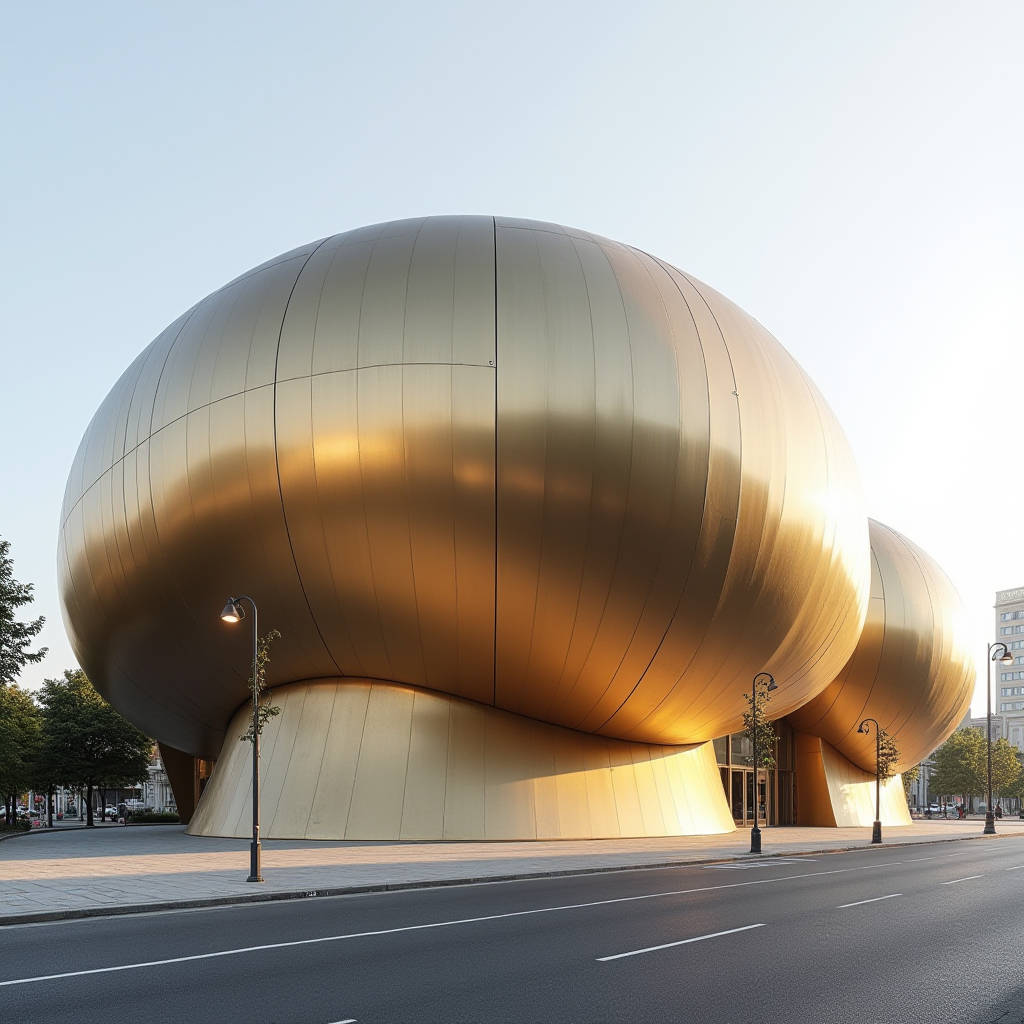
Spherical Aluminum Panel fabrication represents one of the most technically demanding disciplines in modern architectural metalwork. When a design calls for a true three-dimensional curved surface—not a simple rolled cylinder but a compound-curved dome, a concave hemisphere, or a freeform spherical segment—standard flat panel logic collapses. The sheet must stretch, shrink, or both simultaneously across different axes. This article focuses on the engineering realities behind spherical aluminum panel production: how press tooling, multi-axis stretch forming, and CNC hammering differ in output quality, what tolerances are actually achievable at scale, and where procurement teams routinely underestimate lead times and cost drivers. For architects and facade contractors evaluating whether a spherical aluminum panel system is viable for their project, understanding these production constraints early prevents budget blowouts and on-site fitment disasters.
The Geometry Problem: Why Spherical Panels Defy Simple Forming
A cylindrical curve bends along one axis only. A spherical curve bends along two axes simultaneously. This is the fundamental distinction that separates straightforward curved aluminum work from genuine spherical aluminum panel fabrication. When you take a flat 2.0mm or 3.0mm sheet of AA3003 H14 aluminum and attempt to deform it into a spherical cap, the material must undergo biaxial strain. The perimeter wants to buckle. The center wants to thin. The edges resist the compound angle. These are not subtle effects—they are the primary reasons why spherical aluminum panel production has a significantly higher scrap rate than single-curvature work, often running 15-25% during prototyping phases before tooling is dialed in.
The Gaussian curvature of a sphere is positive and constant. For a flat sheet to conform to this geometry, material must either be gathered (compressive forming) or stretched (tensile forming). Most architectural spherical aluminum panel work uses stretch forming because it produces a smoother surface with fewer wrinkles. However, stretch forming requires the aluminum to elongate beyond its yield point uniformly. AA3003 H14 offers roughly 1-3% elongation before necking in its H14 temper, which is insufficient for deep spherical draws. This is why many fabricators switch to O-temper (fully annealed) material for aggressive spherical geometries, then re-temper through the forming process itself or through post-form heat treatment. The trade-off: O-temper material is softer, scratches more easily during handling, and demands more careful fixturing.
Three Production Methods Compared
Not all spherical aluminum panels are made the same way. The method chosen determines surface quality, achievable radius, repeatability across large production runs, and ultimately the installed visual result. Three primary industrial processes dominate the market:
1. Multi-Axis CNC Stretch Forming
This is the gold standard for architectural spherical aluminum panel work. A flat sheet is gripped along its edges by hydraulically actuated jaws, then stretched over a precision-machined die while a multi-axis CNC controller coordinates the motion. The sheet is pulled beyond its yield point and held against the die until the material relaxes into the spherical contour. The process allows for controlled thinning across the panel surface and produces the most consistent results for production runs of 50+ identical panels. The limitation is tooling cost: each unique spherical radius and panel size requires a dedicated die set, typically machined from steel or high-density polymer composite. Die costs for a single spherical profile can range from $8,000 to $35,000 depending on size and complexity.
2. Incremental CNC Hammer Forming (Dieless)
For one-off spherical panels, small batch runs, or geometries where building a dedicated die is economically prohibitive, incremental sheet forming (ISF) using a CNC-controlled hammering or rolling head offers a tooling-free alternative. The machine progressively deforms the sheet point by point, following a 3D toolpath generated from the digital model. The advantage is zero tooling cost and rapid turnaround for prototypes. The disadvantage is surface finish: the panel surface will exhibit a subtle texture from the incremental forming passes, which may or may not be acceptable depending on the viewing distance and coating specification. For a PVDF-coated spherical aluminum panel viewed at street level from 10 meters, this texture is generally invisible. For a lobby installation viewed at arm's length, it may require post-form hand finishing.
3. Press Brake Segmented Forming
Some fabricators approximate spherical surfaces by making a series of closely spaced single-axis bends on a press brake, creating a faceted approximation. This is not a true spherical aluminum panel and should not be specified as such. The faceted surface catches light differently, and the visual result is distinctly polygonal. This method is sometimes proposed as a cost-saving measure, but it fundamentally alters the design intent. Procurement teams should clarify in their RFQ whether the specified method is true spherical stretch forming or segmented approximation.
| Forming Method | Surface Quality | Tooling Cost | Min. Order Viability | Typical Tolerance | Lead Time Impact |
|---|---|---|---|---|---|
| CNC Stretch Forming | Excellent, smooth | $8K–$35K per die | 50+ panels | ±1.5mm over 2m | +4–6 weeks for die fab |
| Incremental Hammer Forming | Good, slight texture | None | 1–30 panels | ±2.5mm over 2m | Shortest, no tooling delay |
| Press Brake Segmented | Faceted, not smooth | Standard tooling | Any quantity | ±3.0mm over 2m | Standard |
Material Selection: Why AA3003 and Not 5000-Series?
Architectural spherical aluminum panels are overwhelmingly produced from AA3003 alloy, typically in H14 temper for moderate forming or O-temper for deep spherical draws. The question often arises: why not use 5005 or 5052, which offer higher strength? The answer lies in formability. AA3003 manganese alloy has a significantly higher elongation at break compared to magnesium-bearing 5xxx series alloys. When you are stretching a flat sheet into a spherical aluminum panel, the material's ability to elongate without fracturing is the limiting factor. AA5052 H32 offers roughly 7-10% elongation; AA3003 H14 offers 1-3% in its work-hardened state, but AA3003 O-temper can reach 20-30% elongation. For deep spherical geometries, O-temper 3003 is the practical choice, and the panel gains strength through work hardening during the forming process itself.
Panel thickness for spherical applications typically ranges from 2.0mm to 3.0mm. Thinner material (1.5mm) tends to wrinkle during compound forming and lacks the structural stiffness needed to maintain the spherical shape after installation without excessive substructure. Thicker material (4.0mm+) becomes difficult to stretch form and may require intermediate annealing steps. The 2.5mm to 3.0mm range represents the sweet spot for most architectural spherical aluminum panel applications, balancing formability with post-form rigidity.
Coating Systems for Spherical Surfaces: PVDF Performance Requirements
Coating a spherical aluminum panel presents unique challenges compared to flat panel finishing. The compound curvature means that spray gun distance, angle, and overlap patterns must be carefully controlled to avoid dry spray on the panel edges or excessive buildup in the center. For architectural exterior applications, the coating system must meet AAMA 2605 standards, which specify minimum performance criteria for high-performance organic coatings on aluminum extrusions and panels.
A compliant PVDF (polyvinylidene fluoride) coating system consists of a three-coat process: a chrome-based conversion coating or chrome-free pretreatment for corrosion resistance, a primer coat for adhesion, and a color coat containing minimum 70% PVDF resin (Kynar 500 or Hylar 5000). Total dry film thickness should measure 25-35 microns minimum per AAMA 2605. For coastal or high-UV environments, some specifiers require a four-coat system with an additional clear topcoat, bringing total DFT to 40-50 microns.
Color consistency across spherical panels is harder to achieve than on flat panels because the curved surface reflects light at varying angles. A metallic or mica finish on a spherical aluminum panel will exhibit noticeable flop—the perceived color shifts as the viewing angle changes. This is not a coating defect; it is a geometric reality. Solid colors (non-metallic) are recommended for spherical surfaces where uniform appearance from all viewing angles is critical. If a metallic finish is specified, the architect should review full-scale mockups under natural lighting conditions from multiple vantage points before approving the coating.
Segmentation Strategy: From Digital Model to Panel Layout
A large spherical dome or hemispherical structure cannot be fabricated as a single panel. The surface must be segmented into individual spherical aluminum panels that can be (a) formed within the limits of available press equipment, (b) transported to the site, and (c) installed without excessive weight per panel. This segmentation process, often called panelization or rationalization, is one of the most value-adding steps a fabricator provides.
The starting point is the architect's 3D surface model, typically delivered as a Rhino, Grasshopper, or Revit file. The fabricator analyzes the surface for Gaussian curvature, identifies areas of consistent spherical radius, and divides the surface into panels that follow the structural grid. Several constraints govern this division:
- Maximum panel diagonal: Typically 2.0–2.5 meters for manageable weight and handling
- Panel weight: A 3.0mm aluminum panel measuring 2.0m × 1.5m weighs approximately 24 kg; larger panels require mechanical lifting aids during installation
- Joint width: Open joints (15–25mm) accommodate thermal movement and installation tolerances more forgivingly than closed joints
- Edge condition: Panels at the perimeter of the spherical surface require hemmed or folded edges to maintain visual consistency
A well-executed panelization strategy minimizes the number of unique panel geometries while maintaining the visual smoothness of the spherical surface. Each unique panel shape requires its own CNC program, its own quality inspection template, and its own packaging configuration. Reducing the number of unique panel types from, say, 200 to 80 through smart panelization can cut project costs by 15-20% without compromising the architectural intent.
Installation Engineering: Substructure and Tolerance Stack-Up
Installing spherical aluminum panels demands a fundamentally different approach than flat panel cladding. The substructure must follow the spherical geometry precisely, because the panels themselves have limited adjustability once formed. A flat panel can be shimmed at its attachment points to correct minor misalignments. A spherical panel, by contrast, derives its structural behavior from its double-curved geometry—if you force it to conform to an incorrectly positioned substructure, you introduce stresses that can cause the panel to oil-can (buckle with a popping sound under thermal cycling) or, worse, permanently deform.
The typical installation sequence begins with a 3D survey of the as-built structure using laser scanning or total station measurement. The surveyed point cloud is compared against the design model, and any deviations are analyzed. The substructure—typically a system of curved steel or aluminum tubes, brackets, and adjustable connection nodes—is then fabricated to match the actual site conditions rather than the theoretical model. Each spherical aluminum panel is attached using a minimum of four connection points, with at least two of those points incorporating slotted holes for thermal expansion accommodation.
Thermal movement is a critical consideration that is frequently underestimated. Aluminum has a coefficient of thermal expansion of approximately 23 × 10⁻⁶ per °C. A 2-meter spherical aluminum panel subjected to a 60°C temperature swing (from -10°C winter night to 50°C summer sun) will expand and contract by roughly 2.8mm. If the panel is rigidly fixed at all connection points, this movement has nowhere to go, and the panel will buckle. The fix: design the attachment system with one fixed point and the remaining points as sliding connections, allowing the panel to breathe.
Quality Control: Inspection Templates and Tolerance Verification
Inspecting a spherical aluminum panel for dimensional accuracy cannot be done with a simple tape measure and straightedge. The double-curved surface requires a purpose-built inspection template, typically CNC-machined from MDF or aluminum plate, that matches the designed spherical radius. The formed panel is laid against the template, and the gap between the panel surface and the template is measured with feeler gauges at multiple points across the surface.
Industry-standard tolerances for spherical aluminum panels are tighter than many contractors expect. Per AAMA 609.1 and ASTM standards applicable to architectural aluminum panels, the following tolerances are generally achievable and should be specified:
- Overall dimensions (length × width): ±1.5mm for panels up to 2m
- Spherical radius deviation: ±2.0mm measured against the inspection template
- Edge straightness: ±1.0mm per linear meter
- Hole position for attachment points: ±0.5mm
- Twist (out-of-plane corner deviation): ±2.0mm
These tolerances are achievable with CNC stretch forming. Incremental hammer forming may produce slightly wider deviations, particularly on the spherical radius consistency. For projects where the spherical aluminum panel forms part of a continuous curved surface visible at close range, the tighter CNC stretch forming tolerances should be specified and enforced through a first-article inspection process before production quantities commence.
Spherical aluminum panel fabrication rewards early collaboration between architect, facade consultant, and fabricator. The most successful projects bring the fabricator into the design process during schematic design, not during the tender phase, allowing the panelization strategy to inform the structural grid rather than the other way around.
Cost Drivers: What Actually Moves the Budget
Procurement teams approaching a spherical aluminum panel package for the first time often anchor their budget expectations on flat panel pricing and add a modest premium for "curving." This approach underestimates the real cost structure. The following factors are the primary cost drivers, ranked by impact:
- Number of unique panel geometries: Each unique shape requires separate programming, separate inspection templates, and separate packaging. Reducing unique geometries through panelization optimization is the single most effective cost-control measure.
- Tooling amortization: For CNC stretch forming, the die cost is a fixed upfront expense. If the project has 500 identical spherical panels, the die cost per panel is negligible. If the project has 20 identical panels, the die cost per panel is substantial.
- Material utilization: Spherical forming requires oversized blanks that are trimmed after forming. Material utilization rates of 60-70% are typical, compared to 85-90% for flat panels. The scrap aluminum has recycling value, but the working capital tied up in the extra material is real.
- Coating complexity: Metallic and mica finishes on spherical surfaces require more careful application, higher rejection rates for color inconsistency, and more rigorous quality control.
- Logistics: Spherical panels do not stack flat. They require custom crating with contoured supports, and they occupy more volume per panel during shipping. For international projects, freight costs can exceed the panel fabrication cost for large spherical panels.
As a reference point, a standard 3.0mm flat aluminum panel with PVDF coating might cost $120–$180 per square meter ex-works. A spherical aluminum panel of the same material and coating, produced via CNC stretch forming with dedicated tooling, typically ranges from $280–$450 per square meter depending on the factors above. Small-batch incremental forming may fall in the $220–$350 range but with the surface finish caveats noted earlier. These figures are indicative and vary significantly with project specifics, but they establish the correct order of magnitude for early-stage budgeting.
Case Considerations: Saudi Arabia Project Example
Recent large-scale spherical aluminum panel projects in the Middle East have demonstrated both the capabilities and the challenges of this technology. In one notable Saudi Arabian project, a double-curved spherical aluminum panel facade covering several thousand square meters required coordination from 3D model review through panel segmentation, fabrication, PVDF coating in a custom champagne metallic finish, and phased delivery to match the installation sequence. The project highlighted several practical lessons:
First, the panelization strategy must account for the installation access method. Panels that were theoretically optimal from a fabrication standpoint proved difficult to install when the access scaffolding did not align with the panel joint pattern. Second, metallic PVDF coatings on spherical surfaces in high-ambient-temperature environments (surface temperatures exceeding 70°C in direct Gulf sun) experienced more visible thermal expansion than anticipated, requiring wider joint gaps than originally specified. Third, the logistics of shipping spherical panels from East Asian fabrication facilities to Middle Eastern sites required custom container loading configurations that added approximately 18% to freight costs compared to flat panel shipments of equivalent weight.
These are not isolated experiences. They represent the kind of real-world complexity that separates spherical aluminum panel projects from conventional cladding work. Fabricators with dedicated spherical forming capability and project management experience—such as Futeng® with its established track record in complex curved panel projects—have developed workflows that anticipate these issues rather than reacting to them on site.
Specification Checklist for Architects and Engineers
Writing a specification for spherical aluminum panels requires more detail than a standard flat panel spec. The following items should be explicitly addressed in the specification document to avoid ambiguity and ensure compliant bids:
- Alloy and temper: Specify AA3003 H14 or O-temper based on the required spherical radius. Reference ASTM B209 for aluminum sheet standards.
- Forming method: Specify "CNC stretch forming over dedicated die" if surface quality is critical. Accept "incremental forming" only if surface texture is acceptable.
- Coating standard: Reference AAMA 2605 for PVDF. Specify minimum 70% PVDF resin content (Kynar 500 or Hylar 5000). State total DFT minimum.
- Tolerances: Reference AAMA 609.1 and specify the dimensional and spherical radius tolerances explicitly.
- Inspection requirements: Require first-article inspection with a CNC-machined template. Require feeler gauge measurements at minimum 9 points per panel.
- Thermal movement accommodation: Require the attachment system design to accommodate the calculated thermal movement range based on the project location's temperature extremes.
- Mockup requirement: Require a full-scale visual mockup of minimum 3×3 panels installed on representative substructure, reviewed under natural light before production approval.
For further technical reference, specifiers should consult AAMA 2605 for coating performance requirements, ASTM B209 for aluminum sheet specifications, and ISO 16630 for hole expansion testing relevant to formability assessment. The Aluminum Association publishes design guidelines that include thermal expansion data and structural design considerations for aluminum building components. For project-specific forming capability verification, the American Welding Society provides standards for aluminum welding where welded attachment clips are specified.
The decision to specify spherical aluminum panels carries implications that ripple through every phase of a project: design, engineering, procurement, fabrication, logistics, and installation. The projects that succeed are those where the design team acknowledges these implications early and builds the project schedule and budget around them. The projects that struggle are those where spherical panels are treated as a simple material substitution—"aluminum instead of GRG" or "metal instead of FRP"—without accounting for the fundamentally different production and installation logic that compound-curved metal demands. Understanding the forming methods, material constraints, coating limitations, and tolerance realities described in this article provides the foundation for informed specification and successful project delivery.