Curved Aluminium Panel Engineering From Alloy Selection to Installation Tolerance
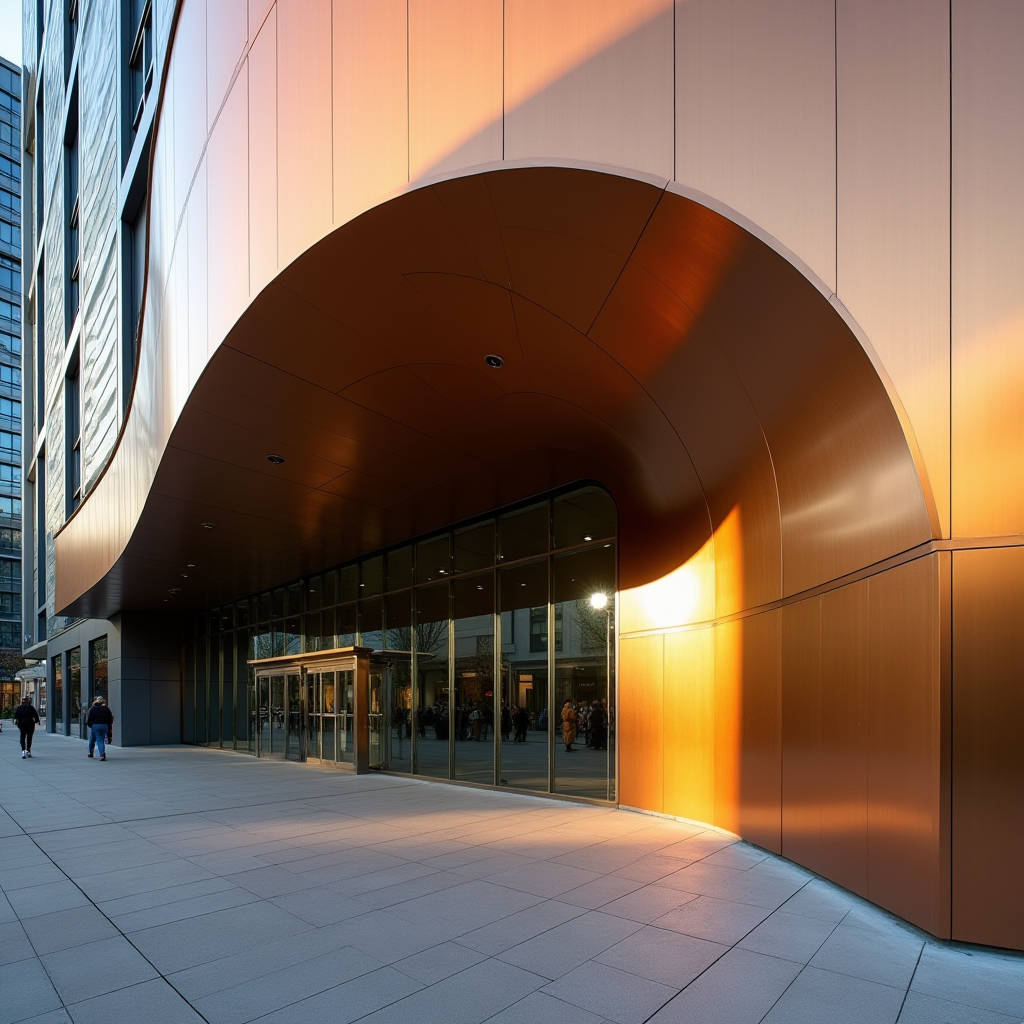
Architects and facade engineers keep pushing the limits of building geometry, and at the centre of that push sits the Curved Aluminium Panel. Getting a smooth, consistent radius on a solid 2.5mm or 3.0mm aluminium sheet is not a simple press-brake operation. It demands a tight grip on alloy selection, elongation limits, springback compensation, and the forming method itself. When a specification lands on your desk calling for 200 curved panels across a 12-metre-high entrance canopy, the first question is not about colour. It is about whether the radius-to-thickness ratio is actually achievable without tearing, wrinkling, or leaving the panel with so much residual stress that it oil-cans the moment the sun hits it. This article works through the engineering and procurement logic that determines whether a curved solid aluminium facade performs for 25 years or becomes a maintenance headache within three.
Alloy and Temper: Where Curvature Starts
Not every aluminium alloy bends the same way. For solid aluminium panels that need to be curved, the most commonly specified grades across international facade projects are 5005-H34, 5754, and 3003. These three alloys belong to the 5000 and 3000 series, both known for good formability and corrosion resistance. 5005-H34 is the workhorse for architectural cladding: it holds a consistent surface finish after bending, responds well to PVDF coating adhesion, and delivers tensile strength in the 145-185 MPa range. 5754 offers slightly higher strength and is often chosen for marine or coastal environments where chloride corrosion resistance matters. 3003, with its lower strength and higher elongation (around 25-30% in annealed temper), suits tighter radii but may require thicker gauges to meet wind load deflection limits.
The temper designation is just as important as the alloy number. H34 temper means the material has been strain-hardened and then stabilised by a low-temperature heat treatment. This gives the fabricator a predictable balance: enough ductility to form a curve without cracking, yet enough stiffness that the finished panel holds its shape. Ordering 5005-O (fully annealed) might make bending easier, but the panel will need stiffeners or a sub-frame to meet structural requirements. The cost difference between 5005-H34 and 5005-O is modest per square metre, but the downstream fabrication complexity can shift the budget by 12-18%.
For double-curved applications where the panel bends along two axes simultaneously, 5754 in H111 temper is increasingly preferred. The H111 temper provides some work hardening from the rolling process but retains enough elongation for compound curves. Fabricators working on complex geometries often source mill-certified material with elongation values of 18% minimum, verified by tensile test reports per ASTM B209. Skipping this verification step has led to cracking during stretch forming, particularly on panels with radii tighter than 300mm.
Forming Methods and Their Engineering Limits
Three primary forming methods produce curved solid aluminium panels, and each has a distinct envelope of achievable geometry, surface quality, and cost. The choice between them depends on the radius, panel size, quantity, and whether the curve is single-axis or double-axis.
Roll Bending (Three-Roll and Four-Roll Machines)
Roll bending passes the flat aluminium sheet through a set of rollers that progressively apply curvature. Three-roll machines are common for single-radius cylindrical curves. Four-roll machines offer better control at the panel edges and reduce the flat section that three-roll machines leave at the leading and trailing ends. For a 2.5mm-thick 5005-H34 panel, the minimum practical radius is roughly 250-300mm without intermediate annealing. Tighter radii increase the risk of surface rippling (often called "orange peel" effect) and require a skilled operator to adjust roller pressure incrementally. Roll bending is the most economical method for large quantities of single-curvature panels, with throughput rates of 20-40 panels per shift depending on length.
Stretch Forming
Stretch forming grips the aluminium sheet along its edges and pulls it over a curved die, simultaneously stretching and bending the material. This method produces far less springback than roll bending because the material yields plastically through its entire cross-section. The result is a more accurate, repeatable curve. Stretch forming handles double-curved geometries that roll bending cannot, including saddle shapes and twisted surfaces. The trade-off is cost: stretch forming dies are machined specifically for each project, and the setup time runs 4-8 hours. For a run of 50 panels, the die cost amortised per panel can be significant. For 500 panels, it becomes negligible. Panel thicknesses up to 3.0mm in 5754 are routinely stretch-formed, though elongation must be verified at the mill level.
CNC Routing with Kerf Bending (for Specific Edge Conditions)
Kerf bending involves machining a series of grooves into the back face of the aluminium panel, reducing the effective thickness at the bend line so the panel can be folded by hand or with light mechanical pressure. This method is not suitable for weather-exposed facade panels where the grooves would compromise water tightness and structural integrity. It finds limited use in interior feature panels, column wraps, and soffit linings where the back face is concealed. Solid aluminium panels for exterior cladding should never rely on kerf bending for primary curvature; the method is mentioned here only because some specifications mistakenly allow it, and the resulting failures—water ingress through the kerf lines, fatigue cracking at the groove roots—are well documented in facade consultancy reports.
Springback Compensation: The Difference Between Spec and Reality
Aluminium, like all metals, exhibits elastic recovery after bending. When the forming force is released, the panel springs back slightly, reducing the curvature. The amount of springback depends on the alloy, temper, thickness, bend radius, and forming method. For 5005-H34 at 2.5mm thickness bent to a 500mm radius by roll bending, springback typically adds 8-12% to the radius. That means if the die or roller setting targets exactly 500mm, the finished panel will measure roughly 540-560mm radius. The fabricator must over-bend to compensate.
Springback is not a linear phenomenon. Tighter radii produce proportionally more springback. A panel bent to a 200mm radius might spring back 15-18%. Stretch forming reduces springback to 2-5% because the material is stressed beyond its elastic limit uniformly. For critical architectural projects where adjacent panels must align within a 3mm tolerance, specifying stretch forming and requiring a first-article inspection with a radius gauge template is standard practice. Projects that skip this step often discover alignment issues during installation, when the scaffold is up and the corrective options are limited to shimming sub-frames or, in the worst case, re-fabricating panels.
Coating Systems for Curved Surfaces
Applying a high-performance coating to a curved aluminium panel introduces challenges that flat panel coating does not face. The curvature affects film thickness uniformity, particularly on tight radii where electrostatic spray guns may struggle to wrap the coating around the panel edge. PVDF (polyvinylidene fluoride) coatings remain the industry standard for exterior architectural aluminium, specified under AAMA 2605 for high-performance applications. A properly applied PVDF system consists of a chrome-based conversion coating, a primer layer, and a colour coat with clear topcoat, achieving a total dry film thickness of 30-35 microns.
On curved panels, fabricators must adjust spray parameters—gun distance, fluid flow rate, and part rotation speed—to maintain consistent film thickness across the arc. Powder coating, governed by Qualicoat or AAMA 2604 standards, offers an alternative with good edge coverage but can produce a slightly orange-peel texture that becomes more visible on curved surfaces under raking light. For high-gloss metallic finishes on curved panels, PVDF is the preferred route because the metallic flake orientation can be controlled during the spray process, whereas powder coating metallic flakes tend to distribute randomly, creating a mottled appearance on curves.
| Coating Parameter | PVDF (AAMA 2605) | Powder (AAMA 2604) | Polyester (AAMA 2603) |
|---|---|---|---|
| Dry Film Thickness | 30-35 μm | 60-80 μm | 25-30 μm |
| Gloss Retention (10 yr, Florida) | ≥50% | ≥30% | ≥20% |
| Colour Change (ΔE, 10 yr) | ≤5 | ≤5 | ≤8 |
| Curved Panel Suitability | Excellent, uniform coverage with spray adjustment | Good, edge coverage strong; texture may show on tight radii | Moderate; limited exterior durability |
| Typical Warranty | 20-25 years | 15-20 years | 5-10 years |
| Relative Cost Index | 1.0 (baseline) | 0.85-0.95 | 0.60-0.75 |
Structural Considerations: Wind Load, Deflection, and Sub-Framing
A curved panel behaves differently under wind load than a flat panel of the same thickness. The curvature introduces membrane action: some of the wind pressure is carried through in-plane tension rather than pure bending, which can increase the panel's effective stiffness. However, this benefit is geometry-dependent and should not be relied upon without finite element analysis (FEA) or physical load testing. For procurement purposes, the safe approach is to design the curved panel and its sub-frame to meet the same deflection limit as a flat panel—typically L/175 or L/240 under design wind load, per ASTM E1300 or local building codes.
Sub-frames for curved panels are usually fabricated from extruded aluminium profiles that are themselves roll-bent to match the panel curvature. The sub-frame serves three functions: it provides attachment points for the cladding system's brackets, it stiffens the panel against wind pressure, and it holds the panel's curved shape during transport and handling. Sub-frame design must account for differential thermal expansion between the aluminium panel and the supporting structure. A 3-metre-long curved panel in dark grey PVDF can expand 4-5mm between a cold winter night and direct summer sun. The attachment system—typically a cassette or hook-on system with slotted connections—must allow this movement without transferring stress to the panel or fasteners.
Procurement Data: What to Specify and What to Verify
When issuing an enquiry for curved aluminium panels, the specification package should include more than just a drawing. Fabricators need the alloy and temper, the panel thickness, the radius (or radii, for multi-radius panels), the coating specification, the sub-frame design intent, and the tolerance requirements. A clear specification reduces the back-and-forth that delays procurement by weeks.
Key data points to include in the RFQ:
- Alloy and temper: 5005-H34, 5754-H111, or 3003-H14 as appropriate for the curvature.
- Panel thickness: 2.0mm, 2.5mm, or 3.0mm solid aluminium sheet. Confirm that the thickness is measured on the base metal, not including coating.
- Radius and tolerance: Specify the radius in millimetres and the allowable deviation (typically ±3mm for radii above 500mm, ±5mm for radii between 250-500mm).
- Coating: PVDF to AAMA 2605, powder to AAMA 2604, or polyester to AAMA 2603. Include colour code (RAL, Pantone, or custom match) and gloss level.
- Sub-frame: Material, profile, connection type, and thermal movement allowance.
- Testing and certification: Mill test certificates for the aluminium, coating thickness and adhesion test reports, and first-article dimensional inspection.
For projects requiring significant quantities of curved panels, working with a supplier that has in-house roll bending, stretch forming, and coating lines reduces lead times and eliminates the quality-control gaps that occur when sub-contractors handle different stages of fabrication. Futeng®, as one example, operates integrated production facilities that handle the full sequence from aluminium sheet cutting through forming, welding, coating, and packaging, which simplifies logistics and quality traceability for international projects.
Cost Drivers: What Moves the Price per Square Metre
The cost of a curved aluminium panel is not a simple multiple of the flat panel price. Several factors push the number higher, and understanding them helps procurement managers budget accurately and negotiate with fabricators from a position of knowledge.
The largest cost driver is the forming method. Roll bending adds roughly 15-25% to the base panel cost for single-curvature work. Stretch forming adds 30-50% for single curvature and 50-100% for double-curved panels, driven by die fabrication and longer machine cycle times. Panel size also matters: very large panels (above 3 metres in length) require bigger machines and more handling, while very small panels (below 0.3 square metres) have disproportionately high labour costs per unit area.
Coating complexity is the second major factor. A standard solid-colour PVDF on a curved panel costs roughly 20-30% more than the same coating on a flat panel, due to the slower spray process and the need for manual touch-up on edges. Metallic and mica finishes add another 15-25%, and multi-colour or patterned coatings can double the finishing cost. Sub-frame complexity, tolerance requirements, and packaging for export (curved panels need custom crates) all add incremental costs that should be line-itemed in the quotation rather than buried in a lump sum.
Quality Control and Inspection Protocol
Inspecting curved aluminium panels requires different tools and checkpoints than flat panel inspection. A radius gauge—a physical template cut to the specified radius—is the simplest and most reliable tool for verifying curvature on site or at the factory. For double-curved panels, a full-surface template or a 3D scanning comparison against the CAD model is the gold standard. Dimensional tolerances should be checked at three points along the panel length: centre and both ends.
Coating inspection on curved surfaces should include dry film thickness measurements at multiple points across the arc, not just on the flattest section. Adhesion testing per ISO 2409 (cross-hatch) or ASTM D3359 should be performed on a curved sample or a witness panel that went through the same forming and coating process. Visual inspection under daylight conditions is essential for detecting colour variation, orange peel, and metallic flake misalignment that may not show up under factory lighting.
Curved panels that pass factory inspection but fail during installation often do so because the sub-frame was not checked for alignment before the panels were hung. A 2mm deviation in sub-frame alignment across a 3-metre curve can translate to a 5-6mm step at the panel joint, which is visible from ground level.
Installation Logic: Sequence, Handling, and Joint Tolerance
Installing curved aluminium panels on a building facade follows a different logic than flat panel installation. The panels must be stored and handled in a way that does not distort the curvature. Vertical stacking of curved panels without intermediate supports can flatten the curve over time, especially in warm weather when the aluminium is softer. Horizontal storage on purpose-built racks with curved cradles is the correct approach.
The installation sequence should start from a fixed reference point—typically the centreline of the facade or the most visually prominent corner—and work outward. This ensures that any accumulated tolerance errors are pushed to the less visible edges. Joint widths between curved panels need careful attention: a 15mm joint that is perfectly uniform on a flat facade can appear to vary in width on a curved facade because the viewing angle changes along the arc. Specifying a minimum joint width of 12-15mm and using a gasket system that accommodates the curvature helps maintain visual consistency.
For double-curved facades, each panel is typically unique, and the installation drawings must clearly number each panel and its corresponding location. A single misplaced panel can disrupt the entire geometric flow, and replacement lead times for a double-curved panel run 6-10 weeks. Site teams should verify the as-built substrate dimensions before releasing panels from the factory, because even a 10mm discrepancy in the structural frame can make a precisely fabricated curved panel impossible to fit without modification.
When Curved Panels Make Engineering Sense
Curved aluminium panels are not a default choice. They cost more, take longer to fabricate, and demand more from the design and installation teams. The decision to use them should be driven by architectural intent that cannot be achieved with faceted panels—a gradual radius that reads as a continuous surface, a double-curved corner that softens the building mass, or a canopy that guides pedestrian flow. Where the radius is large enough that a series of flat panels with angled joints could approximate the curve, a cost-benefit analysis comparing faceted versus truly curved panels should be part of the value-engineering discussion.
That said, when the geometry demands it, a well-specified and properly fabricated Curved Aluminium Panel delivers a facade that is lightweight, fully recyclable, and capable of meeting the same 25-year performance expectations as any flat solid aluminium cladding system. The engineering is mature, the supply chain is established, and the key to success lies in the details: alloy selection, forming method, springback compensation, coating uniformity, and installation discipline. Get those five elements right, and the curved facade will perform as intended for decades.