Aluminium Composite Material Engineering Guide for Facade Specification and Procurement Teams
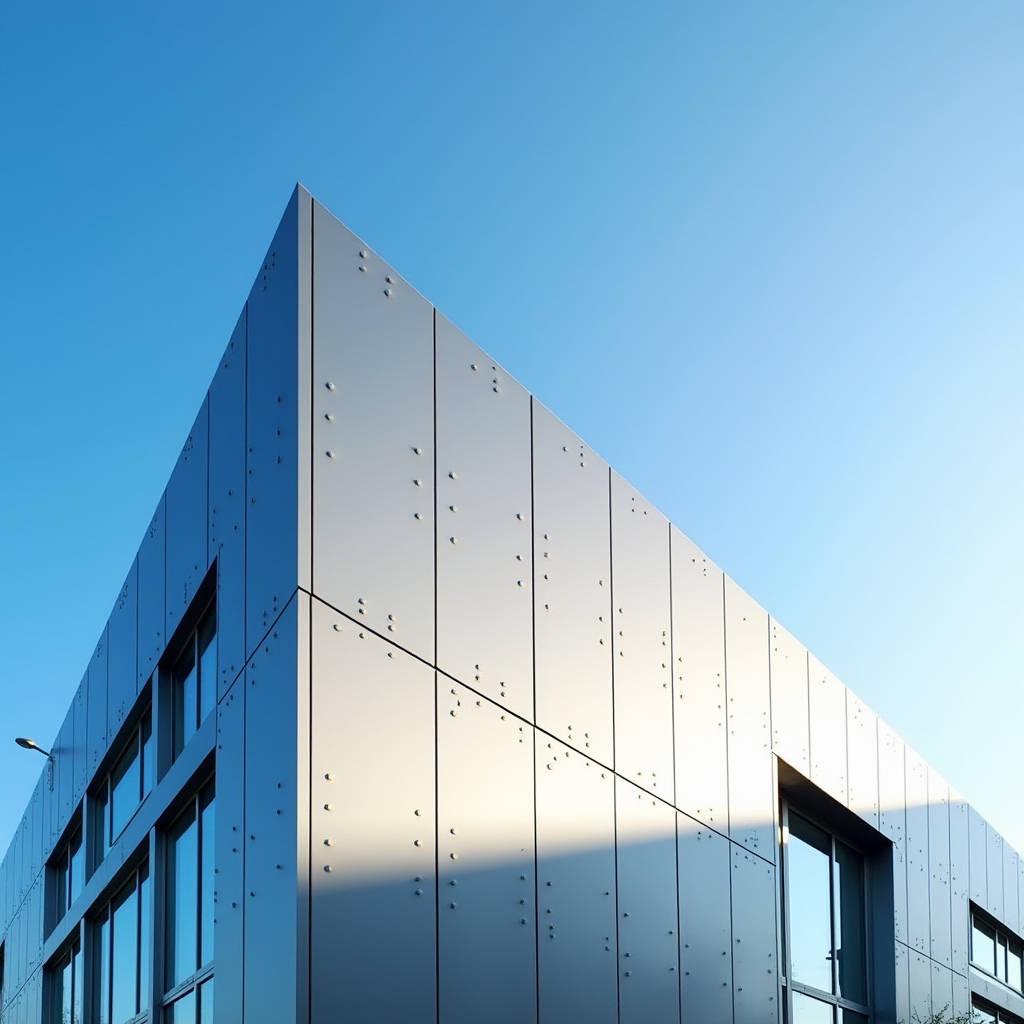
When a project specification lands on your desk calling for Aluminium Composite Material, the first question is rarely about what ACM costs per square meter. It is about whether the material can handle the wind loads, thermal movement, and long-term weathering that the specific site demands. Aluminium Composite Material has become a standard reference point in modern facade design, but the engineering decisions that separate a 15-year facade from a 40-year facade are often buried in the submittals rather than the marketing brochures. This article examines the structural and finish-related considerations that procurement teams and facade engineers need to evaluate when Aluminium Composite Material enters the conversation, with a focus on how those considerations translate into specification writing, budget forecasting, and on-site handling.
Understanding the Core Structure of Aluminium Composite Material
Aluminium Composite Material consists of two thin aluminium sheets — typically 0.5mm each — bonded to a non-aluminium core. The core material is most commonly polyethylene (PE) in standard-grade products, though fire-retardant (FR) cores filled with mineral compounds are specified for buildings where combustibility regulations apply. The total panel thickness generally ranges from 3mm to 6mm, with 4mm being the most common for architectural cladding applications.
The aluminium skins are pre-painted before lamination, usually with a coil-coating process that applies either polyester or PVDF (polyvinylidene fluoride) paint systems. The bond between the skin and core is achieved through a continuous thermal lamination process that uses adhesive films. This structure gives Aluminium Composite Material its signature combination of flatness and low weight — a 4mm panel weighs approximately 5.5 kg/m², compared to roughly 8.5 kg/m² for a 2.5mm solid aluminium sheet.
What matters for procurement is not the generic description but the specific performance data. The grade of aluminium alloy used for the skins — typically 3003, 3105, or 5005 series — affects formability and corrosion resistance. The core density and composition determine fire performance classification. The paint system specification dictates color retention and chalking resistance over time. Each of these variables has a cost implication, and each should be explicitly called out in the project specification rather than left to supplier interpretation.
Fire Performance and Building Code Compliance
Fire safety has become the single most scrutinized aspect of Aluminium Composite Material specification since the Grenfell Tower fire in 2017. The regulatory landscape varies significantly by region, and understanding the distinctions is essential for any international procurement team.
In the United States, the International Building Code (IBC) requires that exterior wall assemblies on buildings over 40 feet in height pass NFPA 285, a multi-story fire propagation test. Aluminium Composite Material with a standard PE core will not pass NFPA 285 without additional engineering. Manufacturers now offer FR-grade cores that use mineral-filled formulations to achieve the required performance. The ASTM E84 test (often called the "tunnel test") measures flame spread and smoke development indices, but passing E84 alone does not guarantee NFPA 285 compliance.
In Europe, the classification system under EN 13501-1 assigns ratings from A1 (non-combustible) through F. Most FR-grade Aluminium Composite Material achieves a B-s1,d0 rating, meaning limited combustibility, minimal smoke production, and no flaming droplets. The UK's post-Grenfell regulations have effectively banned Aluminium Composite Material with unmodified PE cores on buildings over 18 meters in height.
In the Middle East, many jurisdictions now reference the UAE Fire and Life Safety Code, which mandates compliance with NFPA 285 for high-rise buildings. Procurement teams should verify that the specific panel configuration — including the core formulation, skin thickness, and paint system — has been tested as a complete assembly rather than relying on component-level certifications.
For projects where Aluminium Composite Material is being evaluated alongside solid aluminium cladding panels, the fire performance conversation shifts. Solid aluminium panels — typically 2.0mm, 2.5mm, or 3.0mm thick with PVDF or FEVE coatings — are inherently non-combustible and classified as A1 under EN 13501-1. This eliminates the need for FR core additives and the associated testing documentation. For high-rise facades in jurisdictions with strict combustibility restrictions, this distinction can simplify the approvals process considerably.
Coating Systems and Weathering Performance
The longevity of any Aluminium Composite Material installation depends heavily on the coating system applied to the aluminium skins. Three primary coating technologies dominate the market, and each carries distinct performance characteristics that affect lifecycle cost calculations.
PVDF (polyvinylidene fluoride) coatings, typically based on 70% PVDF resin content with the balance being acrylic, are the industry standard for architectural exteriors. The carbon-fluorine bond in PVDF is exceptionally stable against UV radiation, which translates to superior color retention and chalking resistance. AAMA 2605, the highest performance standard for architectural coatings, requires PVDF-based systems to demonstrate less than 5 Delta E color change after 10 years of South Florida exposure. This is the benchmark that specifiers should reference when evaluating Aluminium Composite Material finishes for exterior applications.
Polyester coatings are less expensive but offer reduced weathering performance. AAMA 2603, the standard for polyester finishes, requires only one year of South Florida exposure with less than 5 Delta E color change. These coatings are suitable for interior applications or sheltered exterior areas but should not be specified for exposed building facades where long-term appearance matters.
FEVE (fluoroethylene vinyl ether) coatings represent a newer alternative to PVDF. FEVE resins can be formulated for ambient-cure application, which means they can be applied in the field or in smaller batch operations. They offer comparable UV resistance to PVDF and can achieve AAMA 2605 compliance. The key advantage is that FEVE coatings can achieve higher gloss levels — up to 90 GU at 60° compared to the 30-40 GU typical of PVDF — which may be relevant for projects where a high-gloss metallic appearance is desired.
The following table summarizes the key performance criteria for the three coating systems commonly specified on Aluminium Composite Material:
| Performance Criterion | Polyester (AAMA 2603) | PVDF (AAMA 2605) | FEVE (AAMA 2605) |
|---|---|---|---|
| Minimum Dry Film Thickness | 20-25 microns | 30-35 microns | 30-35 microns |
| Color Retention (10-year ΔE) | Not rated (1-year only) | < 5.0 | < 5.0 |
| Chalk Resistance (10-year) | Not rated | Rating 8+ (ASTM D4214) | Rating 8+ (ASTM D4214) |
| Gloss Range (60° GU) | 20-80 | 25-40 | 25-90 |
| Typical Warranty Period | 5-10 years | 20-30 years | 20-30 years |
| Relative Cost Index | 1.0 (baseline) | 2.0-2.5 | 2.2-2.8 |
| Recommended Application | Interior, sheltered | Exterior facade | Exterior, high-gloss |
Data in this table is based on performance requirements outlined in AAMA 2603 and AAMA 2605 specifications. Actual performance varies by manufacturer and specific formulation.
Thermal Movement and Panel Engineering
One of the most frequently overlooked aspects of Aluminium Composite Material specification is thermal movement. Aluminium has a coefficient of linear thermal expansion of approximately 2.4 × 10⁻⁵ per °C. For a 4-meter panel subjected to a temperature swing of 80°C (from -20°C in winter to 60°C on a sun-exposed dark-colored facade in summer), the calculated linear expansion is roughly 7.7mm.
This movement must be accommodated in the joint design. Standard practice calls for a minimum joint width of 10-12mm for Aluminium Composite Material panels, with the exact dimension calculated based on the expected temperature range, panel dimensions, and the color of the coating (darker colors absorb more solar radiation and experience greater thermal swings). The joint sealant must be selected for the appropriate movement capability — typically ±25% for silicone sealants used in facade applications, with ±50% available for high-movement joints.
The fixing system also needs to account for thermal movement. Fixed-point and sliding-point connections are standard practice. Each panel is rigidly fixed at one or two points, with the remaining connections allowing for movement through slotted holes or sliding clips. If all connections are fixed rigidly, the panel will buckle under thermal loading. This is a common failure mode observed in installations where the installer has not followed the engineered fixing pattern.
For procurement teams, the key takeaway is that the Aluminium Composite Material panel itself is only one component of a system. The substructure, fixings, sealants, and thermal isolation details must all be engineered together. The panel supplier should be able to provide a complete system warranty that covers all these components, not just the panel material.
Flatness, Oil Canning, and Visual Quality Standards
One of the reasons Aluminium Composite Material has gained widespread adoption in architectural cladding is its superior flatness compared to solid aluminium sheet of equivalent thickness. The composite structure — two thin skins bonded to a core — creates a panel that resists the waviness and "oil canning" effects that can occur with monolithic metal sheets.
Oil canning is the visible waviness or distortion that appears in flat metal panels, particularly under certain lighting conditions. It is caused by internal stresses in the metal, often introduced during the rolling, coating, or fabrication processes. Aluminium Composite Material largely eliminates this issue because the core provides a continuous support layer that stabilizes the thin aluminium skins. The result is a panel that lays flatter and produces a more uniform appearance across large facade areas.
However, flatness is not absolute. The industry standard for Aluminium Composite Material panel flatness is typically specified as a maximum deviation of 2mm over a 1-meter straight edge. This should be verified against the manufacturer's published tolerance data. Factors that can affect flatness include the panel aspect ratio, the fixing method, the substructure alignment, and the handling during transportation and installation.
For projects where visual quality is critical — such as feature facades with high-gloss or metallic finishes, or installations where grazing light will highlight any surface irregularities — the specification should include explicit flatness requirements and a defined inspection protocol. The AAMA 508 standard provides guidance on visual acceptance criteria for architectural metal panels, including viewing distance, lighting conditions, and acceptable deviation limits.
Fabrication Methods and On-Site Considerations
Aluminium Composite Material can be fabricated using several methods, each with implications for cost, lead time, and quality. The three primary fabrication approaches are routing and folding, CNC machining, and saw-cutting with edge capping.
Routing and folding is the most common method for creating return edges and cassette-style panels. A V-groove is routed into the back skin and core, leaving the front skin intact. The panel is then folded along the groove to create a clean, sharp corner. This method requires precise control of the routing depth — if the groove is too shallow, the fold will be difficult to make; if it is too deep, the front skin may be damaged or may crack during folding. The routing depth tolerance is typically ±0.1mm, which requires well-maintained CNC routing equipment.
CNC machining allows for complex shapes, cutouts, and perforations. Aluminium Composite Material machines similarly to solid aluminium but with the added consideration that the core material generates more dust and requires different cutting parameters than solid metal. The core material — particularly PE — can melt if cutting speeds are too high, leading to poor edge quality and potential delamination at the cut edge.
Saw-cutting with edge capping is used for panels that will have exposed edges. The cut edge reveals the core material, which is generally not aesthetically acceptable for visible edges. Edge capping with aluminium trim profiles or paint provides a finished appearance. This method is more labor-intensive than routing and folding but may be necessary for certain panel configurations.
For procurement teams managing international supply chains, the fabrication location matters. Shipping fully fabricated Aluminium Composite Material panels adds volume and risk of damage compared to shipping flat sheets and fabricating locally. The decision should be based on a comparison of the total landed cost — including freight, duties, local fabrication, and the cost of any quality issues arising from transportation damage.
Cost Structure and Value Engineering
The cost of Aluminium Composite Material for a cladding project is not simply the panel price per square meter. A realistic budget needs to account for the complete installed system, and understanding the cost breakdown helps identify where value engineering can be applied without compromising performance.
The panel material itself typically represents 30-40% of the total installed cost. The remaining 60-70% is split between the substructure (aluminium extrusions or steel framing), fixings and fasteners, sealants and gaskets, thermal insulation, fabrication labor, and installation labor. This means that a 10% saving on the panel material translates to only a 3-4% saving on the total installed cost — and that saving may be more than offset by increased installation complexity or reduced durability.
Where value engineering can be effective is in panel size optimization. Larger panels reduce the number of joints, fixings, and substructure components per square meter of facade area. However, larger panels also require thicker skins or additional stiffening to maintain flatness, and they are more expensive to transport and handle. The optimum panel size for Aluminium Composite Material is typically in the range of 1.2m to 1.5m in width and 3m to 4m in length, but this varies by project.
Another cost variable is the choice between standard stock colors and custom colors. Aluminium Composite Material manufacturers typically offer a range of stock colors — whites, silvers, greys, and common architectural tones — at standard pricing. Custom colors require minimum order quantities and attract a premium of 15-30% depending on the color complexity and the paint system. For large projects, the custom color premium may be justified by the design intent; for smaller projects, specifying a stock color can significantly reduce cost and lead time.
For projects where the specification is evaluating Aluminium Composite Material alongside alternatives, Futeng® provides solid aluminium cladding panels in thicknesses of 2.0mm, 2.5mm, and 3.0mm with PVDF coating systems meeting AAMA 2605 requirements. The choice between composite and solid aluminium panels involves trade-offs in weight, flatness, fire performance, and cost that should be evaluated against the specific project requirements.
Quality Assurance and Factory Inspection Protocols
For international procurement of Aluminium Composite Material, a structured quality assurance program is essential. The key inspection points should cover incoming raw materials, the lamination process, the coating quality, and the finished panel dimensions and appearance.
Raw material inspection should verify the aluminium alloy grade and temper, the skin thickness, the core material specification, and the paint system type and batch numbers. The coil-coating process should be monitored for paint film thickness, color consistency, gloss level, and adhesion. ASTM D3359 (cross-hatch adhesion) and ASTM D2794 (impact resistance) are standard test methods for coating quality.
For the finished panels, dimensional inspection should check length, width, thickness, squareness (diagonal measurement), and flatness. Visual inspection should be conducted under controlled lighting conditions at a defined viewing distance — typically 3 meters for general appearance and 1 meter for detailed inspection. The acceptance criteria should be defined in the project specification, referencing standards such as AAMA 508 or the ISO 28199 series for coating evaluation.
Third-party inspection is recommended for large or critical projects. Independent inspection agencies can verify compliance at the factory before shipment, reducing the risk of disputes after the material arrives on site. The cost of third-party inspection — typically 1-3% of the material value — is generally a worthwhile investment for projects where quality issues would cause significant delays or remediation costs.
Environmental and Sustainability Considerations
Sustainability requirements are increasingly appearing in project specifications for Aluminium Composite Material. The key environmental metrics that procurement teams should be prepared to address include recycled content, end-of-life recyclability, and embodied carbon.
The aluminium skins in Aluminium Composite Material are typically produced from rolled aluminium sheet, which may contain recycled content ranging from 30% to 80% depending on the mill source and the alloy specification. The core material — particularly PE — is petroleum-based and has a higher embodied carbon footprint than the aluminium skins on a per-kilogram basis, though the core represents a relatively small fraction of the total panel weight.
End-of-life recyclability is a more complex question. The aluminium skins can be separated from the core and recycled through standard aluminium recycling streams. However, the separation process requires specialized equipment and is not available in all regions. Some manufacturers have developed take-back programs that accept post-consumer Aluminium Composite Material for recycling. The Aluminum Association provides guidance on aluminium recycling rates and processes.
For projects targeting LEED, BREEAM, or other green building certifications, the specification should include requirements for Environmental Product Declarations (EPDs) and material ingredient reporting. EPDs for Aluminium Composite Material are available from several major manufacturers and provide third-party verified data on environmental impacts across the product lifecycle.
Selecting the right Aluminium Composite Material for a project requires balancing structural performance, fire safety, aesthetic requirements, durability expectations, and budget constraints. The specification should be written with specific performance criteria rather than generic product names, and the procurement process should include verification of those criteria through testing documentation, factory inspection, and system warranty coverage. When these elements are properly addressed, Aluminium Composite Material can deliver a facade solution that performs reliably for decades.