How Core Geometry and Thermal Control Determine Aluminium Honeycomb Panel Flatness
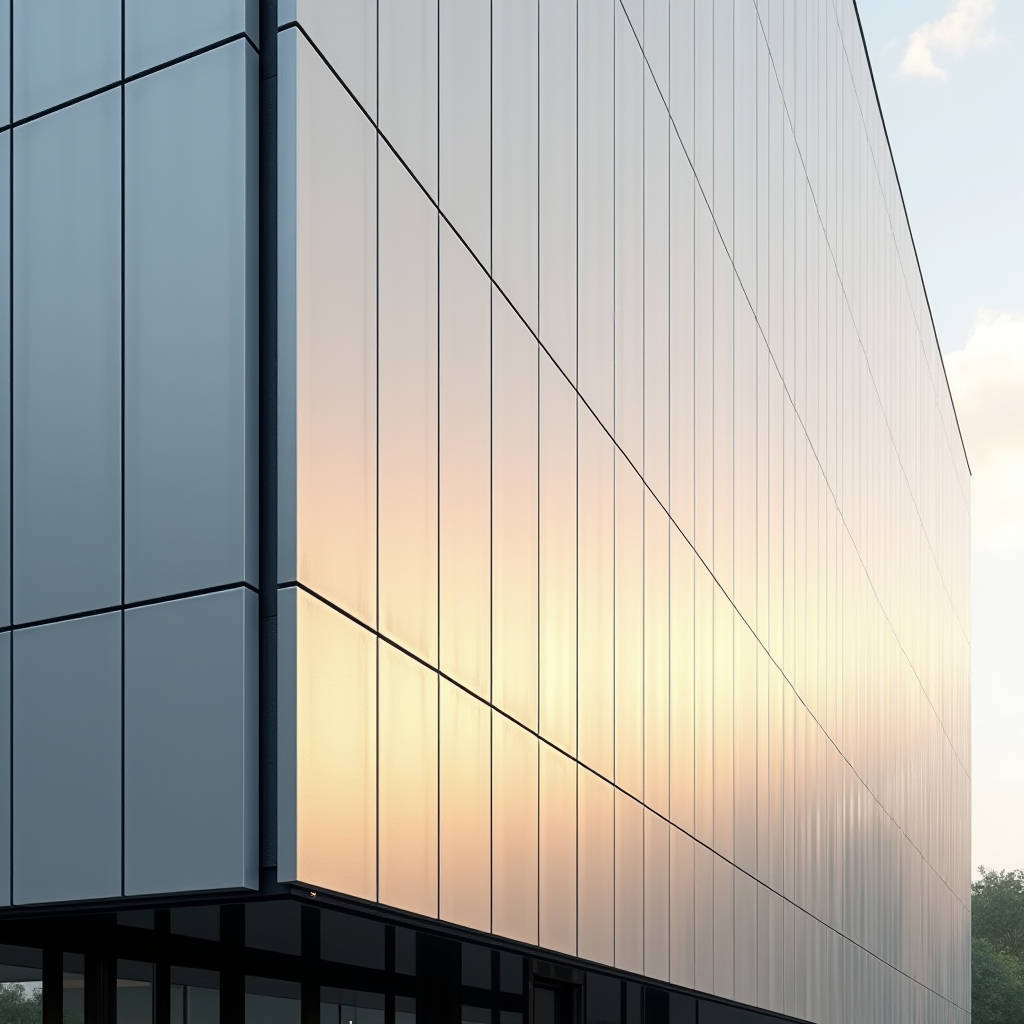
Flatness is one of those things nobody talks about until a façade goes up and the afternoon sun hits it at the wrong angle. That is when every ripple, every oil-can dimple, every millimeter of deviation becomes painfully visible. Aluminium Honeycomb Panel systems have largely solved this problem in high-end cladding, but the mechanism behind that flatness is not always well understood by specifiers who are used to dealing with solid aluminium sheets. The secret is not just the core geometry. It is a combination of skin thickness, cell size, adhesive chemistry, and the thermal conditions the panel was manufactured under. Get one variable wrong, and you end up with a panel that looks fine on the bench but warps once it is bolted to a subframe in 40-degree heat.
Why Flatness Fails in Conventional Cladding
Solid aluminium cladding panels, typically in 2.0mm, 2.5mm, or 3.0mm thicknesses, rely on their own bending stiffness to resist out-of-plane deformation. The problem is that aluminium has a coefficient of thermal expansion around 23.6 × 10⁻⁶ /°C. A 3-meter panel subjected to a 50°C temperature swing will expand by roughly 3.5mm. If the panel is restrained at its fixing points, that expansion has to go somewhere. It manifests as buckling, oil-canning, or visible waviness across the panel face. This is not a material defect. It is physics. The only way to beat it is to increase the effective bending stiffness without adding mass, and that is exactly what an Aluminium Honeycomb Panel does.
The sandwich structure changes the game entirely. Two thin aluminium face sheets, typically 0.5mm to 1.0mm each, are bonded to an aluminium honeycomb core that can range from 6mm to 50mm in thickness. The core acts as a shear web, keeping the face sheets in plane and dramatically increasing the panel's second moment of area. The result is a panel that can be 60% lighter than a solid 3mm aluminium sheet of the same dimensions while being up to 150 times stiffer in bending. But that stiffness only translates to flatness if the manufacturing process is tightly controlled.
The Core Geometry and Its Influence on Surface Quality
Not all honeycomb cores are created equal. The hexagonal cell size, typically specified as the distance between opposite cell walls, has a direct impact on surface quality. Common cell sizes for architectural applications are 1/4 inch (6.35mm), 3/8 inch (9.5mm), and 1/2 inch (12.7mm). Smaller cells provide more support points for the face sheet per unit area, which reduces the likelihood of "telegraphing" — a phenomenon where the honeycomb pattern becomes visible through the face sheet under certain lighting conditions.
Telegraphing is a subtle but real problem. When a thin face sheet is bonded to a honeycomb core, the adhesive fillets at the cell walls create localized stress concentrations. Over time, particularly under thermal cycling, these can cause the face sheet to develop a faint hexagonal pattern. This is more pronounced with larger cell sizes and thinner face skins. For architectural façades where visual flatness is non-negotiable, a 1/4-inch cell with a 0.8mm or 1.0mm face sheet is the conservative choice. The trade-off is weight and cost: smaller cells mean more aluminium in the core and a slightly heavier panel.
The core foil thickness also matters. Architectural honeycomb cores are typically made from 3003 or 5052 aluminium alloy foil, with thicknesses ranging from 0.05mm to 0.1mm. Thicker foil improves shear strength and compression resistance, which matters for high-wind applications, but it also adds weight. The key specification to watch is the core density, expressed in kg/m³. A typical architectural core runs between 40 kg/m³ and 80 kg/m³. Below 40 kg/m³, you risk core crushing during fabrication or handling. Above 80 kg/m³, you are paying for strength you probably do not need unless the panel is structural.
Adhesive Chemistry and Thermal History
The bond between the face sheets and the core is where flatness is won or lost. Most Aluminium Honeycomb Panel manufacturers use thermoplastic adhesive films, typically modified epoxy or polyurethane, that are heat-activated during the lamination process. The panel stack is placed in a heated press or autoclave, where temperature and pressure are applied simultaneously to cure the adhesive.
The critical parameter is the temperature ramp rate and the cooling profile. If the panel is cooled too quickly after lamination, differential thermal contraction between the face sheets and the core can introduce residual stresses. These stresses may not be visible immediately, but they will relax over time, especially when the panel is exposed to its first summer on a building façade. The result is a panel that gradually develops curvature or edge lift. A controlled cooling cycle, where the panel is held at an intermediate temperature before being brought to ambient, can largely eliminate this problem.
Another variable is the adhesive coverage pattern. The adhesive must form a consistent fillet at each cell wall without excessive flow into the cell cavity. Too little adhesive, and the bond is weak. Too much, and you add unnecessary weight and cost. The ideal fillet height is typically 0.2mm to 0.5mm above the cell wall. This is a quality control metric that reputable manufacturers monitor closely, and it is one of the reasons why suppliers like Futeng® invest in automated lamination lines rather than relying on manual layup processes.
Flatness Tolerances: What Should You Actually Specify?
Flatness is not an abstract concept. It is quantifiable, and the relevant standards give clear guidance. For aluminium sandwich panels, the flatness tolerance is typically specified as a deviation from a straight edge or a flat reference plane, measured in millimeters per meter of panel length.
The table below summarizes flatness tolerance benchmarks from different standards and typical manufacturer specifications for Aluminium Honeycomb Panel products:
| Standard / Source | Flatness Tolerance | Measurement Method | Typical Application |
|---|---|---|---|
| AAMA 609.1 (General) | ±3.0 mm per 1000 mm | Straight edge, feeler gauge | General architectural cladding |
| EN 14509 (Tight) | ±2.0 mm per 1000 mm | Reference plane, dial indicator | High-specification curtain wall |
| EN 14509 (Standard) | ±3.0 mm per 1000 mm | Reference plane, dial indicator | Standard façade panels |
| Typical Manufacturer Spec | ±1.5 mm per 1000 mm | Optical scanning / CMM | Premium architectural panels |
| ISO 2768-1 (Class L) | ±0.5 mm per 100 mm | Coordinate measuring machine | Not directly applicable; reference only |
In practice, a flatness of ±2.0mm per meter is achievable with a well-manufactured Aluminium Honeycomb Panel and is a reasonable specification for most architectural projects. Specifying tighter than ±1.5mm per meter will significantly increase cost because it requires optical inspection and may increase the rejection rate. For a 3-meter panel, ±2.0mm per meter means a total deviation of ±6.0mm across the panel length, which is perfectly acceptable for all but the most demanding applications.
Fixing Systems and Their Effect on Panel Flatness
Even a perfectly flat panel can be ruined by a poorly designed fixing system. The way an Aluminium Honeycomb Panel is attached to the substructure directly affects how it behaves under thermal loads and wind pressure. There are three common fixing methods, and each has different implications for flatness.
Perimeter cassette systems, where the panel edges are folded and hooked onto a supporting framework, allow the panel to expand and contract freely. This is the most forgiving system from a flatness perspective because the panel is not rigidly restrained. The downside is that the cassette edges are visible, which may not suit all architectural aesthetics.
Secret-fix systems using rear-mounted brackets bonded or mechanically fastened to the panel back face are popular for achieving a clean, uninterrupted façade. However, the bonding process introduces another variable. If the brackets are bonded with a two-part structural adhesive, the curing process generates heat, and if the bracket locations are not carefully controlled, localized thermal expansion during curing can create small dimples on the panel face. These dimples are typically less than 0.5mm deep, but they can be visible under raking light.
Through-fixed systems, where fasteners penetrate the panel face, are the most restrictive in terms of thermal movement. The panel is pinned at each fastener location, and thermal expansion is accommodated by elastic deformation of the panel between fixings. For this to work without buckling, the fixing centers must be calculated based on the panel thickness, the expected temperature range, and the allowable deflection. As a rule of thumb, fixing centers should not exceed 600mm for a panel with 1.0mm face sheets, and 400mm for 0.5mm face sheets, in climates with a 60°C annual temperature swing.
Wind Load and the Flatness-Strength Trade-off
Wind load is the primary structural load on a façade panel, and it has a direct relationship with flatness. A panel that is perfectly flat under zero load will deflect under wind pressure. The question is how much deflection is acceptable and how to design the panel to stay within that limit.
For an Aluminium Honeycomb Panel, the deflection under uniform wind pressure can be calculated using sandwich panel theory. The total deflection is the sum of bending deflection and shear deflection. The bending deflection is governed by the face sheet stiffness, while the shear deflection is governed by the core shear modulus. For a typical architectural panel with 0.8mm face sheets and a 25mm core, the shear deflection can account for 30-40% of the total deflection. This is a significant difference from solid aluminium panels, where shear deflection is negligible.
Under a design wind pressure of 2.0 kPa (roughly corresponding to a basic wind speed of 55 m/s in open terrain), a 1.5m × 3.0m panel with 0.8mm face sheets and a 25mm core will typically deflect 8-12mm at the center. This is within the commonly accepted limit of span/250 (12mm for a 3m span), but it is worth noting that the panel will not look flat under load. Specifiers should be aware that flatness specifications are measured on unloaded panels in a controlled environment. The panel on the building will always deflect under wind, and this is normal and accounted for in the structural design.
The AAMA 508 and 509 standards provide test methods for determining the structural performance of cladding panels under uniform static pressure. These are the relevant standards for verifying that a panel system meets the specified deflection limits under design wind loads.
Coating Systems and Their Impact on Perceived Flatness
The coating on an Aluminium Honeycomb Panel does not affect the mechanical flatness of the panel, but it has a huge impact on perceived flatness. Glossy finishes amplify every deviation. A panel with a 60% gloss PVDF coating will show ripples that are completely invisible on the same panel with a 25% gloss matte finish. This is a well-known phenomenon in the automotive industry, but it is often overlooked in architectural specifications.
PVDF (polyvinylidene fluoride) coatings, typically applied at 25-35 microns dry film thickness per coat in a two-coat or three-coat system, are the industry standard for architectural aluminium. The key specification is AAMA 2605, which covers high-performance organic coatings on aluminium extrusions and panels. AAMA 2605-compliant coatings are tested for color retention, chalk resistance, and gloss retention after 10 years of South Florida exposure. This is the benchmark that any reputable supplier should meet.
For projects where flatness is critical and the architect insists on a high-gloss finish, the panel specification needs to be tighter. The face sheet should be at least 1.0mm thick, the cell size should be 1/4 inch or smaller, and the flatness tolerance should be tightened to ±1.5mm per meter. The additional cost is not trivial, but neither is the cost of re-cladding a building because the panels look wavy under the client's lighting.
Manufacturing Tolerances and Quality Control
Flatness starts in the factory, and it is worth understanding what good manufacturing practice looks like. The face sheets should be cut from flat-rolled coil that has been leveled and stress-relieved. If the incoming coil has residual curvature from the rolling process, that curvature will be locked into the finished panel. This is why reputable manufacturers use tension-leveled coil stock and inspect incoming material for flatness before lamination.
The lamination press itself must apply uniform pressure and temperature across the entire panel area. Any variation in pressure or temperature will result in uneven adhesive cure and residual stresses. Modern presses use multiple heating zones and closed-loop temperature control to maintain uniformity within ±3°C across the platen. This level of control is expensive, but it is what separates panels that stay flat from panels that do not.
The ISO 9001 quality management framework provides a structure for controlling these processes, but it does not specify the actual process parameters. Those are proprietary to each manufacturer. When evaluating a supplier, ask about their incoming material inspection, their lamination process control, and their finished panel inspection methods. A supplier that cannot answer these questions in detail is probably not controlling them adequately.
Edge Treatment and Long-Term Dimensional Stability
The edges of an Aluminium Honeycomb Panel are a potential entry point for moisture, and moisture ingress can cause long-term flatness problems. If water gets into the honeycomb core and freezes, the expansion can delaminate the face sheets or cause localized swelling. For exterior applications, the panel edges must be sealed.
Common edge treatments include folded aluminium edge profiles, extruded edge closures, and liquid-applied sealants. Folded edge profiles, where the face sheet is extended and folded over the edge, provide a clean appearance and a continuous barrier. Extruded edge closures are mechanically fastened or bonded and offer good durability. Liquid sealants are the least expensive option but require careful application to ensure complete coverage.
The ASTM E331 standard test for water penetration of exterior walls is the relevant method for verifying that edge-sealed panels do not allow water ingress under simulated wind-driven rain conditions. Specifying this test as part of the panel qualification process is good practice for any exterior application.
Thermal Performance and the Flatness Connection
The thermal performance of an Aluminium Honeycomb Panel is not usually the primary reason for specifying it, but it has a secondary effect on flatness that is worth understanding. The honeycomb core is mostly air, and air is a poor conductor of heat. The effective thermal conductivity of a 25mm aluminium honeycomb panel is around 0.5-1.0 W/m·K, which is significantly lower than solid aluminium at 160 W/m·K.
This means the panel acts as a thermal break, reducing heat transfer between the exterior face sheet and the interior face sheet. The practical consequence is that the two face sheets can be at different temperatures, particularly in direct sunlight. The exterior face might be at 70°C while the interior face is at 30°C. This temperature differential causes differential thermal expansion, which introduces a bending moment into the panel. The panel will bow outward toward the hotter side.
For a 3-meter panel with a 25mm core and a 40°C temperature differential between face sheets, the bowing deflection can be on the order of 2-3mm. This is generally within acceptable limits, but it is another reason why flatness specifications should be understood as applying to panels at a uniform temperature, not panels in service under solar load.
Practical Specification Guidance
For architects and façade engineers writing specifications for Aluminium Honeycomb Panel systems, the following points summarize the key considerations for achieving and maintaining flatness:
- Face sheet thickness: 0.8mm minimum for general applications, 1.0mm for high-gloss finishes or large panels exceeding 2.5m in any dimension.
- Core cell size: 1/4 inch (6.35mm) for critical visual applications, 3/8 inch (9.5mm) for standard applications.
- Core density: 50-70 kg/m³ for architectural façades. Verify with the manufacturer that the core meets the compression strength required for the fixing system.
- Flatness tolerance: ±2.0mm per meter is a reasonable specification. Tighten to ±1.5mm per meter for high-gloss finishes.
- Coating: AAMA 2605-compliant PVDF, minimum 70% resin content, 25-35 microns dry film thickness per coat. Specify gloss level and understand its impact on perceived flatness.
- Edge sealing: Required for all exterior applications. Specify the edge treatment method and require ASTM E331 water penetration testing.
- Fixing system: Design to accommodate thermal expansion. Avoid rigid restraint at multiple points. Cassette systems are preferred for flatness-critical applications.
The EN 14509 standard for self-supporting double-skin metal-faced insulating panels provides a comprehensive framework for specifying sandwich panels, including flatness tolerances, mechanical properties, and test methods. It is the most directly applicable European standard for Aluminium Honeycomb Panel products in architectural applications.
Flatness is not a single number on a datasheet. It is the result of a chain of decisions: material selection, manufacturing process control, fixing system design, and coating specification. Each link in that chain can either preserve flatness or compromise it. The specifier's job is to understand the whole chain, not just the final tolerance. An Aluminium Honeycomb Panel that is specified correctly, manufactured with care, and installed with an understanding of thermal movement will deliver a façade that looks crisp and precise for decades. One that is specified on price alone will probably not.