Aluminum Honeycomb Panel Structural Engineering and Fire Performance for High Rise Facade Specifications
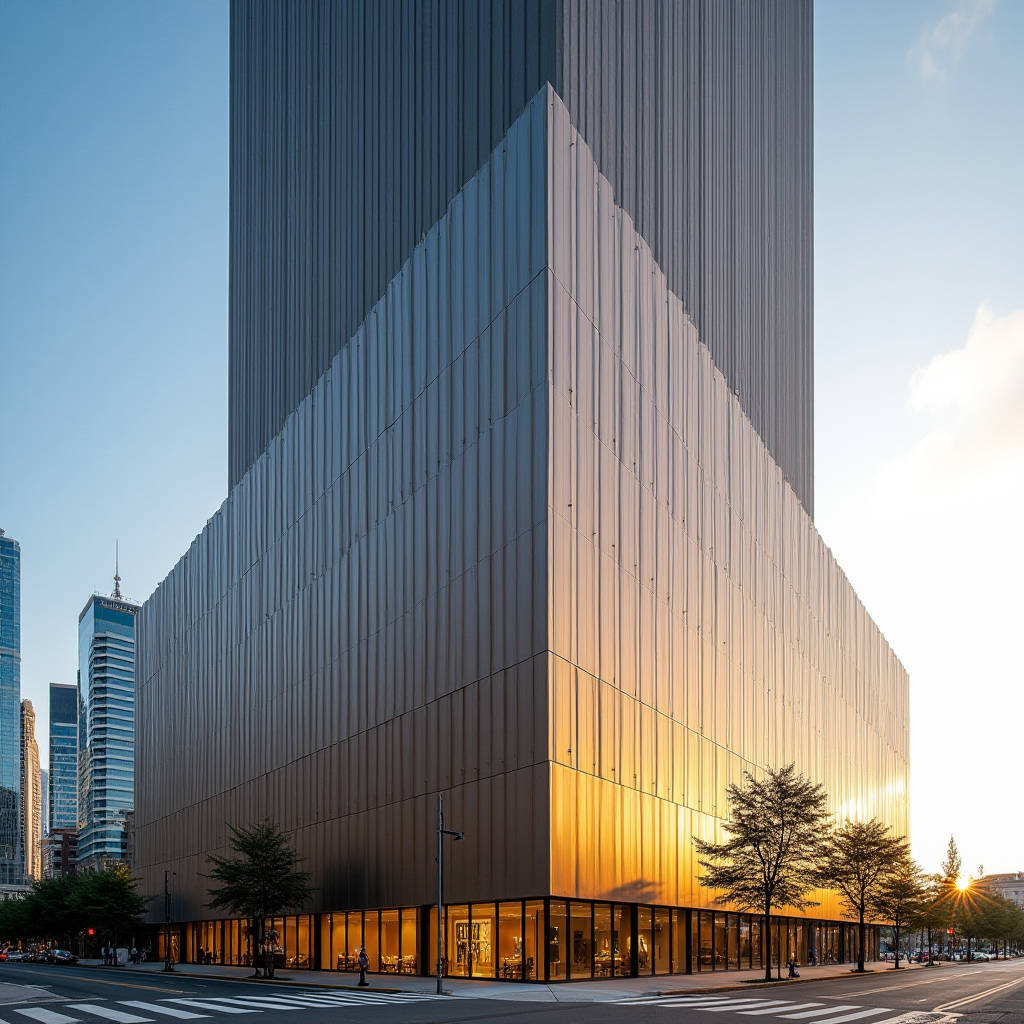
When a facade engineer starts punching numbers on a high-rise cladding project, the first collision is always between dead load and wind load. You want the flatness of a solid 3mm aluminium sheet but the weight penalty makes your support structure groan. You look at lightweight composites but the deflection data under negative wind pressure tells a different story. This is where the Aluminum Honeycomb Panel enters the conversation, not as a compromise, but as a calculated engineering decision. A properly specified Aluminum Honeycomb Panel delivers the bending stiffness of a much thicker solid plate while weighing roughly 30 to 40 percent less. For curtain wall contractors and building envelope consultants working on towers exceeding 80 meters, that weight differential cascades into savings on mullion sizing, anchoring systems, and ultimately the primary steel frame. This article dissects the structural mechanics, fire performance classifications, and long-term durability factors that determine whether an Aluminum Honeycomb Panel specification will hold up over a 30-year building lifecycle, and it does so from the perspective of someone who has reviewed technical submittals on both sides of the Pacific.
How the Hexagonal Core Changes the Structural Game
The engineering principle behind an Aluminum Honeycomb Panel is borrowed directly from aerospace sandwich theory. Two thin aluminium face sheets, typically 0.5mm to 1.0mm thick, are bonded to a hexagonal aluminium core that can range from 6mm to 50mm in total thickness. The core itself is manufactured by expanding slit aluminium foil, creating a network of hexagonal cells that transfer shear loads between the face sheets. When a bending moment hits the panel, the top face sheet goes into compression, the bottom face sheet goes into tension, and the honeycomb core resists the shear that would otherwise allow the two faces to slide past each other.
This is fundamentally different from how a solid aluminium plate behaves. A solid 3mm plate resists bending through its own cross-sectional inertia. An Aluminum Honeycomb Panel with a total thickness of 20mm and face sheets of 0.7mm each achieves a dramatically higher section modulus without the mass penalty. The math is not linear. Doubling the core thickness increases flexural stiffness by a factor approaching four, while the weight increase is marginal because the honeycomb core is over 95 percent air by volume. For a facade contractor, this means a 20mm-thick panel can span between fixing points at distances that would require a 4mm or even 5mm solid sheet, and it does so at roughly half the weight per square meter.
The practical implication on a 200-meter tower is substantial. Reducing cladding weight from 12 kg/m² to 7 kg/m² across 15,000 square meters of facade eliminates 75 metric tons of dead load from the building structure. That figure flows directly into smaller mullion profiles, lighter transoms, reduced anchor bolt diameters, and potentially one fewer row of embeds per floor. The cost cascade is real, and experienced quantity surveyors on large-scale curtain wall packages track it closely.
Fire Performance and the A2 Classification Question
Fire safety is the non-negotiable gatekeeper for any cladding material specified on buildings above 18 meters in most jurisdictions. The Aluminum Honeycomb Panel occupies a specific position in the fire classification hierarchy that specifiers need to understand clearly. The aluminium face sheets and the aluminium honeycomb core are inherently non-combustible. The variable is the adhesive film that bonds the skins to the core. Standard thermoplastic adhesive films, typically polyethylene-based, will soften and lose structural integrity at temperatures around 120°C to 150°C. Under full fire exposure, the panel can delaminate, and the combustible adhesive content contributes to the fire load.
This is where the A2-s1,d0 classification becomes critical. An Aluminum Honeycomb Panel achieving A2 rating under EN 13501-1 uses a mineral-based adhesive system or a modified thermoset film with significantly reduced organic content. The total calorific value of the panel is kept below the 3 MJ/kg threshold required for A2 classification. Fire testing data from accredited laboratories shows that A2-rated Aluminum Honeycomb Panels exhibit negligible smoke production (s1) and no flaming droplets (d0), which are the two parameters that caused catastrophic facade fire propagation in documented high-rise incidents globally.
For projects in the Middle East, where civil defense requirements are particularly stringent, specifying an A2-rated Aluminum Honeycomb Panel is increasingly becoming the baseline rather than an upgrade. The same trend is visible in London, Singapore, and Sydney, where post-Grenfell regulatory tightening has pushed facade consultants to demand full-scale mockup fire testing, including BS 8414 or NFPA 285, even for panels with non-combustible cores. Manufacturers like Futeng® have responded by developing adhesive systems that maintain structural bond strength at elevated temperatures while keeping organic content below A2 thresholds. The test reports are worth reading in detail, not just the summary classification.
Flatness, Oil Canning, and Visual Expectations
One of the unspoken reasons architects gravitate toward solid aluminium panels is flatness. A 3mm solid sheet, properly stiffened with folded returns and intermediate stiffeners, delivers a mirror-like surface that reads as monolithic under raking light. The Aluminum Honeycomb Panel achieves flatness through a different mechanism. The honeycomb core provides continuous support across the entire face sheet area, preventing the localized pillowing or oil canning that can occur with thin-gauge solid panels between stiffener points.
The visual result is a panel that can be installed with minimal deflection under thermal cycling. The coefficient of thermal expansion for aluminium is approximately 23 x 10⁻⁶ m/m/°C. A 3-meter-long panel subjected to a 60°C temperature swing will expand by roughly 4.1mm. In a solid panel system, this movement must be accommodated entirely by the fixing system. In an Aluminum Honeycomb Panel, the sandwich construction distributes thermal stresses more evenly, and the lower mass means the panel reaches equilibrium temperature faster, reducing the duration of thermal stress gradients.
However, specifiers should be aware that the surface quality of an Aluminum Honeycomb Panel is directly tied to the face sheet thickness and the core cell size. A 0.5mm face sheet over a 19mm cell size core may exhibit subtle telegraphing of the honeycomb pattern under certain lighting conditions, particularly with high-gloss metallic finishes. Moving to a 0.7mm or 1.0mm face sheet and specifying a smaller cell size, typically 6mm or 9mm, eliminates this effect. The cost increment is modest, and the visual payoff on a premium commercial facade is significant. The American Architectural Manufacturers Association (AAMA) has published guidance on acceptable flatness tolerances for metal composite panels, and these standards provide a useful benchmark for specification language.
Coating Systems and Coastal Environment Durability
The aluminium face sheets of an Aluminum Honeycomb Panel are finished with the same coating technologies used on solid aluminium cladding. The difference is that the panel's lighter weight sometimes tempts specifiers to use it in more aggressive environments, including high-rise coastal installations where salt spray and UV exposure combine to create a punishing microclimate.
PVDF (polyvinylidene fluoride) coatings, typically 70 percent PVDF resin with 30 percent acrylic, remain the industry standard for architectural facades. Applied at a minimum dry film thickness of 25 to 30 microns in a two-coat or three-coat system, PVDF meets the performance requirements of AAMA 2605, the highest voluntary specification for architectural coatings on aluminium. Testing under this standard requires 4,000 hours of accelerated weathering with a maximum of 5 Delta E color change and 50 percent gloss retention. For an Aluminum Honeycomb Panel specified on a coastal tower, the three-coat system with a 10-micron clear topcoat provides additional protection against chloride-induced pitting.
FEVE (fluoroethylene vinyl ether) coatings offer an alternative chemistry with similar weatherability claims and the advantage of being available in a wider gloss range, including high-gloss finishes exceeding 80 gloss units at 60 degrees. The trade-off is that FEVE systems typically require a primer coat optimized for the specific alloy, and the curing parameters are narrower than PVDF. For powder coating options, polyester-based systems meeting AAMA 2604 provide adequate performance for inland applications but should be approached with caution for marine exposures. The table below summarizes the key performance parameters across coating types as they apply to Aluminum Honeycomb Panel facades.
| Coating Type | Standard | DFT (microns) | Accelerated Weathering | Gloss Retention | Coastal Suitability |
|---|---|---|---|---|---|
| PVDF 70% (2-coat) | AAMA 2605 | 25-30 | 4,000 hrs | ≥50% | Good |
| PVDF 70% (3-coat) | AAMA 2605 | 35-40 | 4,000 hrs | ≥50% | Excellent |
| FEVE (2-coat) | AAMA 2605 | 30-35 | 4,000 hrs | ≥60% | Excellent |
| Polyester Powder | AAMA 2604 | 60-80 | 2,000 hrs | ≥30% | Limited |
| Anodized (Class I) | AAMA 611 | 15-20 | N/A | N/A | Moderate |
Fabrication Tolerances and the CNC Factor
Panel fabrication accuracy is where the Aluminum Honeycomb Panel separates suppliers into distinct tiers. The panel is typically cut to size using CNC routers with diamond or carbide tooling. The edge treatment varies by application: a simple square cut for panels that will be captured in a framing system, a routed edge with an aluminium closure bar for exposed edges, or a folded return on the face sheet that wraps around the core edge for a clean architectural reveal.
The critical tolerance is panel diagonal accuracy. A 1,200mm x 3,000mm panel with a diagonal deviation of 2mm will create a 1mm gap variation at the corners when installed next to an adjacent panel. On a facade with 6mm nominal joints, that variation is visible from street level. Top-tier fabricators hold diagonal tolerances to ±1.0mm and length/width tolerances to ±0.5mm. These numbers are achievable with proper CNC fixturing and toolpath optimization, but they require investment in equipment and quality control that not all manufacturers have made.
The bonding process itself is equally critical. The adhesive film must be applied uniformly across the entire core-to-skin interface. Voids or thin spots in the adhesive layer create points where the face sheet can separate from the core under wind suction loads. Quality-conscious manufacturers, including Futeng®, use continuous hot-press bonding lines with precise temperature and pressure control, followed by 100 percent flat-sheet ultrasonic inspection to detect delamination defects before panels leave the factory. The ASTM E2580 standard for ultrasonic testing of flat panel composites provides a useful reference for specifying inspection protocols.
Wind Load Performance and Span Tables
The structural performance of an Aluminum Honeycomb Panel under wind load is governed by the panel's flexural rigidity, which is a function of face sheet thickness, core thickness, and core shear modulus. For a typical architectural panel with 0.7mm face sheets and a 20mm total thickness, the flexural rigidity is in the range of 1.2 to 1.8 x 10⁶ N-mm²/mm, depending on the specific core density and adhesive system.
What this translates to in practice: a 1,200mm x 2,400mm panel with these parameters, simply supported on four edges, can resist a design wind pressure of 2.5 kPa with a deflection limited to span/60, which is a common serviceability criterion for metal cladding. Increasing the core thickness to 25mm pushes the allowable wind pressure to approximately 3.2 kPa at the same deflection limit, or allows the panel size to increase to 1,500mm x 3,000mm at the original 2.5 kPa loading.
For corner zones of tall buildings, where negative wind pressures can reach 4.0 kPa or higher in typhoon-prone regions, the panel specification needs to be checked carefully. The failure mode under high suction is typically not panel fracture but rather pull-through of the fixing at the panel edge. The bearing strength of the aluminium face sheet around the fixing point becomes the limiting factor. Using a 1.0mm face sheet instead of 0.7mm increases the bearing area and can raise the allowable pull-through load by 40 to 50 percent. The fixing system design, including the use of stainless steel rivet nuts or threaded inserts bonded into the core, is as important as the panel laminate itself.
Acoustic Performance in Curtain Wall Applications
A less frequently discussed property of the Aluminum Honeycomb Panel is its acoustic behavior. The sandwich construction creates a panel that is inherently stiffer and better damped than a single-skin aluminium sheet of equivalent mass. The airborne sound reduction index (Rw) of a 20mm Aluminum Honeycomb Panel with 0.7mm face sheets is typically in the range of 28 to 32 dB, which is modest on its own but contributes meaningfully to the overall curtain wall sound insulation when combined with the glazing units and spandrel insulation.
The more significant acoustic benefit is in the reduction of rain noise and wind-induced vibration. A solid aluminium sheet can act as a large diaphragm, transmitting impact noise from rain droplets across the entire panel area. The honeycomb core disrupts this transmission path, converting the panel from a resonant membrane into a damped structure. For buildings in tropical climates with frequent heavy rainfall, this difference is noticeable to occupants and is sometimes cited in project specifications as a reason for selecting honeycomb panels over solid sheets for spandrel areas.
Testing in accordance with ISO 10140 provides the standardized methodology for measuring airborne sound insulation of building elements, and the results can be used directly in building acoustic models. For projects where acoustic performance is a priority, specifying a minimum Rw of 30 dB for the spandrel panel assembly, including any backing insulation, is a reasonable starting point.
Supply Chain Realities and Lead Time Planning
The Aluminum Honeycomb Panel supply chain involves multiple specialized processes: aluminium coil coating, honeycomb core expansion, panel lamination, and CNC fabrication. Each of these steps has its own lead time, and the cumulative effect can surprise project teams accustomed to the relatively short lead times of standard solid aluminium sheet fabrication.
Coil coating for the face sheets typically requires 4 to 6 weeks, depending on the color and whether the coating line is running a compatible batch. Custom colors that require a dedicated coating run add 2 to 3 weeks. The honeycomb core itself is produced by specialized manufacturers, and while standard core sizes are usually available from stock, non-standard cell sizes or core densities may require a production run. Panel lamination and fabrication add another 3 to 4 weeks. In total, a project team should plan for 10 to 14 weeks from order placement to delivery for a standard specification, and 14 to 18 weeks for custom colors or non-standard panel configurations.
Freight is another consideration. The Aluminum Honeycomb Panel is a volume-sensitive product; the panels are light but bulky. A 40-foot container can hold approximately 800 to 1,000 square meters of panels, depending on panel sizes and packaging configuration. For projects exceeding 5,000 square meters, the logistics planning needs to account for multiple container shipments and potential staging at the project site. Ocean freight from Asian manufacturing hubs to North American or European ports typically takes 4 to 6 weeks, and this must be factored into the overall procurement schedule.
Quality documentation is part of the supply chain deliverable. A complete submittal package should include mill test certificates for the aluminium coil, coating performance test reports, adhesive system certification, fire classification test reports from an accredited laboratory, and dimensional inspection reports for each batch of fabricated panels. The ISO 9001 quality management framework provides a baseline, but the actual content of the documentation is what matters for the project record.
Making the Specification Decision
Choosing an Aluminum Honeycomb Panel over a solid aluminium sheet is not a blanket decision. It is a point-by-point engineering trade-off that makes sense under specific conditions: when the panel spans exceed 600mm in both directions, when the project is above 20 stories and dead load reduction has measurable structural value, when fire codes demand A2-rated non-combustible materials, or when the architectural vision requires large-format panels with zero visible stiffener read-through.
The specification should be precise about the parameters that matter. Face sheet alloy (typically 3003, 3005, or 5052), face sheet thickness, core cell size, core density, adhesive type, coating system, and fire classification should all be called out explicitly. Vague language like "aluminium honeycomb composite panel" invites substitution with products that may meet the letter of the description but not the engineering intent. Referencing established standards, including ASTM E2580 for flat panel ultrasonic testing, AAMA 2605 for coating performance, and EN 13501-1 for fire classification, provides an objective basis for evaluating submittals.
The facade industry has accumulated enough long-term case data on Aluminum Honeycomb Panel installations to move beyond the early-adopter phase. Buildings completed 15 to 20 years ago with these panels are now providing real-world durability data. The panels that have performed well share common characteristics: A2-rated adhesive systems, PVDF or FEVE coating with adequate film thickness, properly designed fixing systems that avoid point loading, and edge detailing that prevents water ingress into the core. The panels that have underperformed typically cut corners on one of these parameters. The lesson for specifiers is straightforward: the Aluminum Honeycomb Panel is a proven technology when specified correctly, and the specification detail is what determines whether the 30-year performance expectation is met.