Aluminium Cladding Panel Specification Guide Alloy Selection Coating and Installation
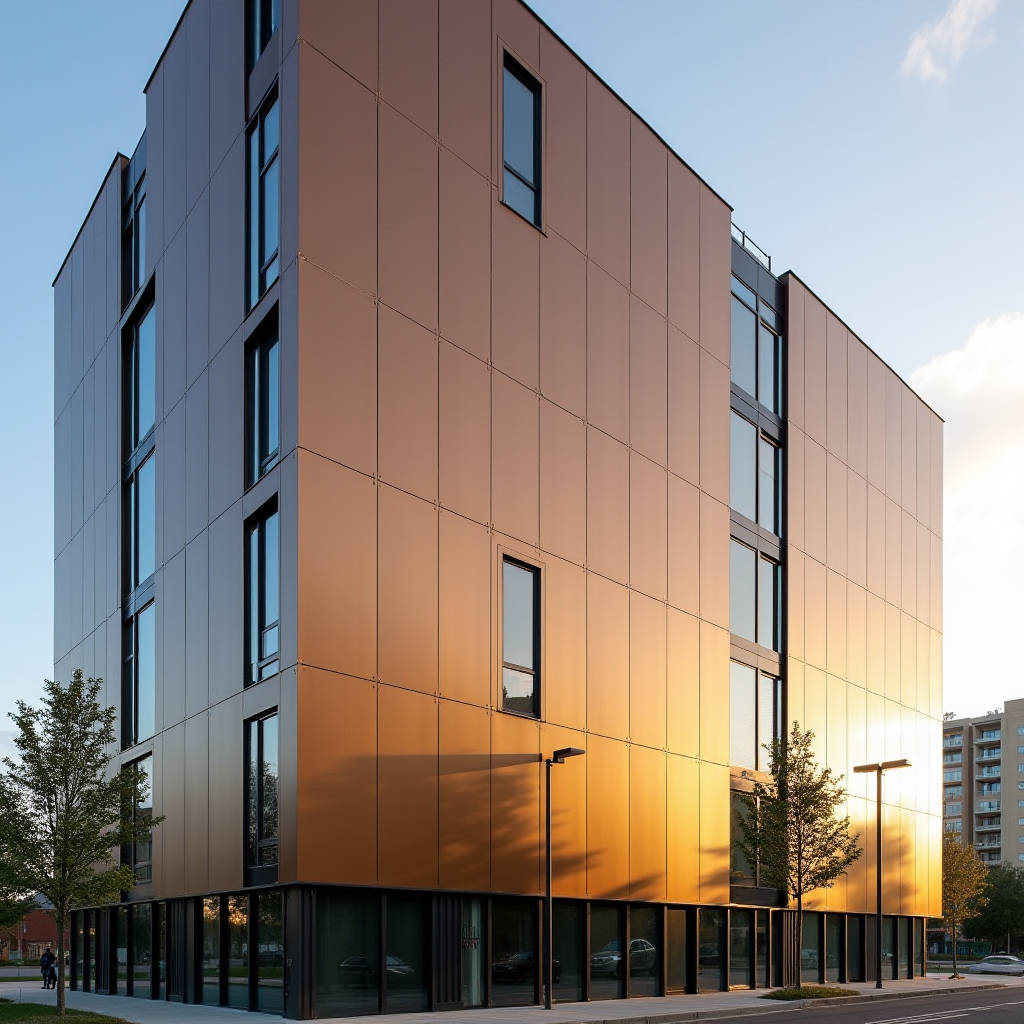
Aluminium cladding has become the default specification for architects and contractors who need a facade material that balances weight, durability, and geometric flexibility. Solid aluminium panels, typically rolled from 3003 or 5005 series alloys, arrive on site as fully fabricated cassettes ready for dry-hung installation. The conversation around these panels tends to focus on aesthetics, but the engineering reality is that the alloy grade, temper, and thickness selection determine whether a facade still looks flat and secure after a decade of thermal cycling and wind loading. This article examines the practical decision-making behind specifying solid aluminium cladding panels, from alloy metallurgy through to installation tolerances, with the aim of giving project managers and facade engineers a clear framework for procurement and quality control.
Why Alloy Selection Dictates Panel Performance
Not all aluminium is interchangeable. The two workhorse alloys for solid aluminium cladding panels are 3003 and 5005. Both are wrought aluminium-manganese alloys, but the magnesium content in 5005 gives it roughly 15% higher tensile strength than 3003 in the H14 temper. This matters when you are specifying 2.5mm or 3.0mm thick panels for a high-rise where wind suction pressures climb past 2.5 kPa at corner zones.
3003-H14 offers a tensile strength around 150 MPa and yield strength of approximately 130 MPa. 5005-H14 moves those numbers up to roughly 165 MPa and 140 MPa respectively. The difference sounds marginal on paper, but when you run the numbers on a 1,200mm x 3,000mm panel spanning between vertical T-profiles at 600mm centres, the 5005 panel deflects measurably less under the same negative wind load. For projects in cyclone-prone regions or anywhere governed by AS/NZS 1170.2, the stronger alloy can mean the difference between a 3.0mm panel passing deflection limits (typically L/175 for facades) or requiring a thicker gauge.
The trade-off is cost and availability. 3003 is produced in higher volumes globally and carries a lower per-tonne premium. For low-rise commercial buildings where wind loads are modest, 3003 at 2.0mm or 2.5mm is often the rational choice. For towers above 30 metres, the engineering case for 5005 strengthens considerably. A supplier like Futeng® can provide mill certificates for both grades, and any competent fabricator should be able to produce cassettes in either alloy. The key is to specify the alloy and temper explicitly in the performance specification rather than leaving it to the fabricator's discretion.
PVDF Coating Systems: What the Micron Numbers Actually Mean
Architectural specifications for aluminium cladding almost always call for PVDF (polyvinylidene fluoride) coatings, typically referencing AAMA 2605 as the benchmark. The standard requires a minimum total dry film thickness of 30 microns for a two-coat system and 40 microns for a three-coat system. But the number that matters most is the PVDF resin content: AAMA 2605 mandates a minimum of 70% PVDF resin by weight in the colour coat. This is what delivers the 20-year colour retention and chalk resistance that specifiers expect.
The three-coat system adds a clear topcoat over the colour coat, which boosts gloss retention and provides additional UV blocking. In coastal environments with salt spray and high UV exposure, the three-coat system is worth the 15-20% cost premium over two-coat. The clear coat also makes the surface harder to scratch during handling and installation, which reduces site repair costs.
Below is a practical comparison of coating systems commonly specified for solid aluminium cladding:
| Coating System | Total DFT (microns) | PVDF Resin Content | Expected Colour Retention | Best Application |
|---|---|---|---|---|
| 2-Coat PVDF (AAMA 2605) | 30-35 | ≥70% | 15-20 years | Inland commercial, low-rise |
| 3-Coat PVDF (AAMA 2605) | 40-45 | ≥70% | 20-25 years | Coastal, high-rise, premium |
| 4-Coat PVDF (Metallic/Mica) | 45-55 | ≥70% | 20-25 years | Special-effect finishes |
| FEVE (Lumiflon-based) | 30-40 | N/A (FEVE resin) | 20-30 years | Extreme UV, high-gloss |
| Polyester Powder (AAMA 2604) | 60-80 | N/A | 5-10 years | Interior, budget exterior |
One detail that gets overlooked: the primer layer. AAMA 2605 requires a chromate or non-chromate conversion coating underneath the primer. For aluminium cladding panels, the pretreatment process (typically a chrome-free titanium-zirconium conversion coating) is what prevents filiform corrosion from creeping under the paint film at cut edges and fastener holes. If the fabricator skimps on pretreatment, the 40-micron PVDF topcoat will peel within five years regardless of how good the resin is.
Panel Thickness: Engineering vs. Procurement Instincts
Solid aluminium cladding panels are typically supplied in 2.0mm, 2.5mm, and 3.0mm thicknesses. The procurement instinct is to default to 2.0mm because it is cheaper per square metre. The engineering reality is that thickness should be driven by three factors: wind load, panel aspect ratio, and the fixing system.
For a typical rainscreen with panels supported on all four edges by a cassette system, a 2.0mm panel can work for spans up to roughly 600mm x 1,200mm in moderate wind zones. But when the panel dimensions grow to 1,200mm x 3,000mm, the unsupported span between vertical stiffeners becomes the governing factor. At that size, 2.0mm panels will exhibit visible oil-canning, the wavy distortion that appears under certain lighting conditions even when the panel is structurally sound. Oil-canning is not a structural failure, but it is the number one aesthetic complaint on aluminium cladding projects.
Moving to 2.5mm reduces oil-canning substantially. At 3.0mm, it is almost eliminated for panels up to 1,500mm wide. The cost increment from 2.0mm to 2.5mm is roughly 18-22% on the raw material, but the reduction in site rejection and rework often erases that premium. For high-visibility facades with large, uninterrupted panels, 3.0mm is the conservative choice.
There is also a fire performance dimension. Solid aluminium panels are non-combustible and classified as A1 under EN 13501-1 or deemed non-combustible under ASTM E136. This is not a function of thickness, but thicker panels retain structural integrity longer under fire exposure, which matters for buildings where facade flame spread is a regulatory concern post-Grenfell.
Fixing Systems and Thermal Movement
Aluminium has a coefficient of thermal expansion of approximately 24 × 10⁻⁶ per °C. A 3,000mm panel subjected to a 60°C temperature swing (from -10°C overnight to 50°C under direct sun) will expand by roughly 4.3mm. If the fixing system does not accommodate this movement, the panels will buckle.
The standard approach for solid aluminium cladding is a dry-hung cassette system with hook-on brackets at the top edge and a retaining clip at the bottom. The top hooks carry the dead load, and the bottom clip prevents wind uplift from dislodging the panel. The key detail is that the bottom clip must allow vertical slip. Some systems use a slotted hole with a shoulder screw; others use a spring clip that grips the return leg of the cassette while allowing it to slide.
For panels wider than 600mm, intermediate stiffeners are bonded to the rear face using structural adhesive or welded studs. The stiffener material is typically aluminium extrusion, and the bond must be continuous to prevent differential movement between the stiffener and the panel skin. This is where quality control at the fabrication stage matters: a poorly bonded stiffener will telegraph through to the face of the panel as a visible line after a few thermal cycles.
The American Architectural Manufacturers Association (AAMA) publishes installation guidelines that cover these movement joints in detail. The Centre for Window and Cladding Technology (CWCT) in the UK also provides standard test methods for rainscreen systems, including thermal cycling tests that simulate decades of movement in a laboratory environment.
Fire Compliance: What the Codes Actually Require
Since 2017, fire performance of external cladding has been under intense regulatory scrutiny. Solid aluminium cladding panels are inherently non-combustible. They meet the requirements of ASTM E136 (Standard Test Method for Assessing Combustibility of Materials Using a Vertical Tube Furnace) and achieve an A1 classification under EN 13501-1. This is not a coating claim; it is a property of the aluminium substrate itself.
However, the panel is only one component of the facade system. The insulation layer behind the rainscreen, the vapour barrier, and the sealants all contribute to the overall fire performance of the wall assembly. The relevant large-scale test is NFPA 285 (Standard Fire Test Method for Evaluation of Fire Propagation Characteristics of Exterior Wall Assemblies), which is required by the International Building Code for buildings over 40 feet in height. Solid aluminium panels have been tested in numerous NFPA 285-compliant assemblies, and the panels themselves do not contribute to flame spread.
For projects in the Middle East, the UAE Fire and Life Safety Code of Practice references ASTM E119 and NFPA 285. For the UK, the updated Approved Document B requires that all materials in the external wall of relevant buildings over 18 metres be non-combustible (A2-s1,d0 or better). Solid aluminium cladding satisfies this requirement without the need for any fire-retardant core, which is the fundamental advantage over composite products.
Cost Structure: Where the Money Goes
Understanding the cost breakdown of solid aluminium cladding helps procurement managers negotiate intelligently. The raw aluminium coil accounts for roughly 40-50% of the fabricated panel cost. The PVDF coating adds 15-20%. Fabrication, including cutting, folding, routing, and stiffener bonding, represents 25-30%. The remaining 5-10% covers packaging and logistics.
Aluminium ingot prices on the London Metal Exchange (LME) are the single biggest variable. A $200/tonne swing in LME aluminium translates to approximately $1.50-$2.00 per square metre on a 2.5mm panel. For a 10,000m² facade, that is a $15,000-$20,000 swing. Smart procurement involves watching LME trends and locking in pricing with the fabricator when ingot prices dip.
Freight is the other wild card. A 40-foot container can hold roughly 1,500-2,000m² of fabricated aluminium cladding panels, depending on the cassette depth and packaging density. Shipping from East Asian fabrication hubs to the US West Coast currently runs $4,000-$6,000 per container. To the Middle East, it is $3,000-$4,500. These numbers change quarterly, and they should be factored into the total installed cost comparison against locally fabricated alternatives.
Quality Control: What to Inspect Before Shipment
Third-party inspection at the fabrication facility is standard practice for large aluminium cladding contracts. The inspection checklist should cover at minimum: alloy verification via handheld XRF or optical emission spectroscopy, coating thickness measurement using an eddy-current gauge, colour measurement against the approved sample using a spectrophotometer (ΔE should be less than 1.0 for solid colours and less than 1.5 for metallics), and dimensional checks on panel flatness.
Flatness tolerance for solid aluminium panels is typically 0.5% of the panel diagonal, measured as the gap under a straight edge placed on the panel face. For a panel with a 3,600mm diagonal, that means a maximum deviation of 18mm. In practice, well-fabricated panels should achieve half that tolerance. The ASTM International standard ASTM B209 covers aluminium and aluminium-alloy sheet and plate, and it specifies flatness tolerances that can be referenced in procurement documents.
Adhesion testing is another critical checkpoint. The standard test is ASTM D3359 Method B (cross-hatch tape test). A rating of 5B (no coating removed) is the expected result for properly applied PVDF on a correctly pretreated aluminium substrate. Anything less than 4B should trigger a full investigation of the pretreatment line.
Installation Sequencing and Site Handling
Solid aluminium cladding panels arrive on site with a factory-applied protective film. That film should be removed within 30 days of installation, or sooner in hot climates. If left on too long, the adhesive can bond permanently to the PVDF surface, leaving a residue that is difficult to remove without damaging the coating.
Panels should be stored vertically on A-frames, not flat-stacked. Flat stacking concentrates weight on the bottom panels and can cause permanent deformation. The storage area should be dry and protected from wind-blown debris. Aluminium is corrosion-resistant, but wet packaging materials in contact with the coated surface can cause water staining that is purely cosmetic but annoying to resolve.
Installation should proceed from a fixed datum, typically the bottom of the facade, working upward. Each panel is hooked onto its top brackets and then secured at the bottom. The horizontal and vertical joints between panels are typically 15-20mm, filled with a backer rod and weather sealant or left open in a pressure-equalised rainscreen design. The open-joint rainscreen approach, pioneered by European facade engineers, eliminates the maintenance burden of sealant replacement and allows the cavity to breathe, which improves drying potential.
The Centre for Window and Cladding Technology (CWCT) provides detailed guidance on rainscreen design principles, including cavity width, ventilation openings, and drainage provisions. Their standards are referenced in many performance specifications for aluminium cladding projects across Europe and the Middle East.
Environmental and Lifecycle Considerations
Aluminium carries a high embodied energy from primary smelting, roughly 150-200 MJ/kg. But the material is infinitely recyclable without loss of properties, and the recycling process uses only 5% of the energy required for primary production. For projects targeting LEED or BREEAM credits, specifying aluminium cladding with a high recycled content (typically 30-50% post-industrial recycled content is achievable without affecting mechanical properties) can contribute to Materials and Resources credits.
End-of-life recycling is also a practical reality. Aluminium cladding panels can be stripped from the building, separated from their fixings, and returned to the scrap stream. The scrap value of aluminium is high enough that demolition contractors will actively recover it, which is not true for most other cladding materials.
The Aluminum Association publishes Environmental Product Declarations (EPDs) for aluminium sheet products, which can be used in whole-building lifecycle assessment calculations. For specifiers working on projects with stringent embodied carbon targets, these EPDs provide the verified data needed to compare aluminium cladding against alternative materials on a like-for-like basis.
Practical Specification Checklist for Project Managers
Drawing together the technical threads from this article, the following checklist covers the key decisions that should be locked down before issuing a tender for solid aluminium cladding panels:
- Alloy and temper: Specify 3003-H14 or 5005-H14 based on wind load calculations and deflection criteria. Reference ASTM B209 or EN 485 for material properties.
- Panel thickness: Select 2.0mm, 2.5mm, or 3.0mm based on panel dimensions and oil-canning risk. Larger panels demand thicker gauges.
- Coating specification: Reference AAMA 2605 for PVDF. Specify coat count (2, 3, or 4), minimum dry film thickness, and colour range. Include a ΔE tolerance for colour consistency.
- Fixing system: Define whether the system is face-fixed or secret-fix cassette. Specify the bracket material (aluminium or stainless steel) and the thermal movement accommodation detail.
- Fire performance: Confirm that the panel substrate meets A1 per EN 13501-1 or is non-combustible per ASTM E136. If the building requires NFPA 285 compliance, request the test report for the specific wall assembly.
- Quality assurance: Require mill certificates for the aluminium coil, coating batch certificates, and a third-party inspection report covering dimensional, visual, and adhesion testing.
- Warranty: PVDF coating warranties of 20-25 years are standard from reputable coating suppliers. The panel fabricator should provide a separate material warranty covering fabrication defects.
Getting these seven items right at the specification stage prevents most of the disputes that arise during aluminium cladding installation. The technical performance of solid aluminium panels is well understood; the problems on site are almost always traceable to ambiguous specifications or overlooked details.
Solid aluminium cladding panels remain one of the most technically predictable facade materials available to the construction industry. The alloy grades, coating systems, and fixing methods are mature technologies with decades of performance data behind them. The challenge for project teams is not finding new solutions but applying the existing ones correctly. By paying attention to alloy selection, coating specification, thermal movement, and quality control, a well-executed aluminium cladding facade will deliver 30-plus years of service with minimal maintenance, and at the end of its life, the material can be fully recycled into new products. That combination of durability and circularity is difficult to match with any other cladding material currently on the market.