Aluminum Facade Panel Fastener Specification Avoiding Galvanic Corrosion and Thermal Movement Failure
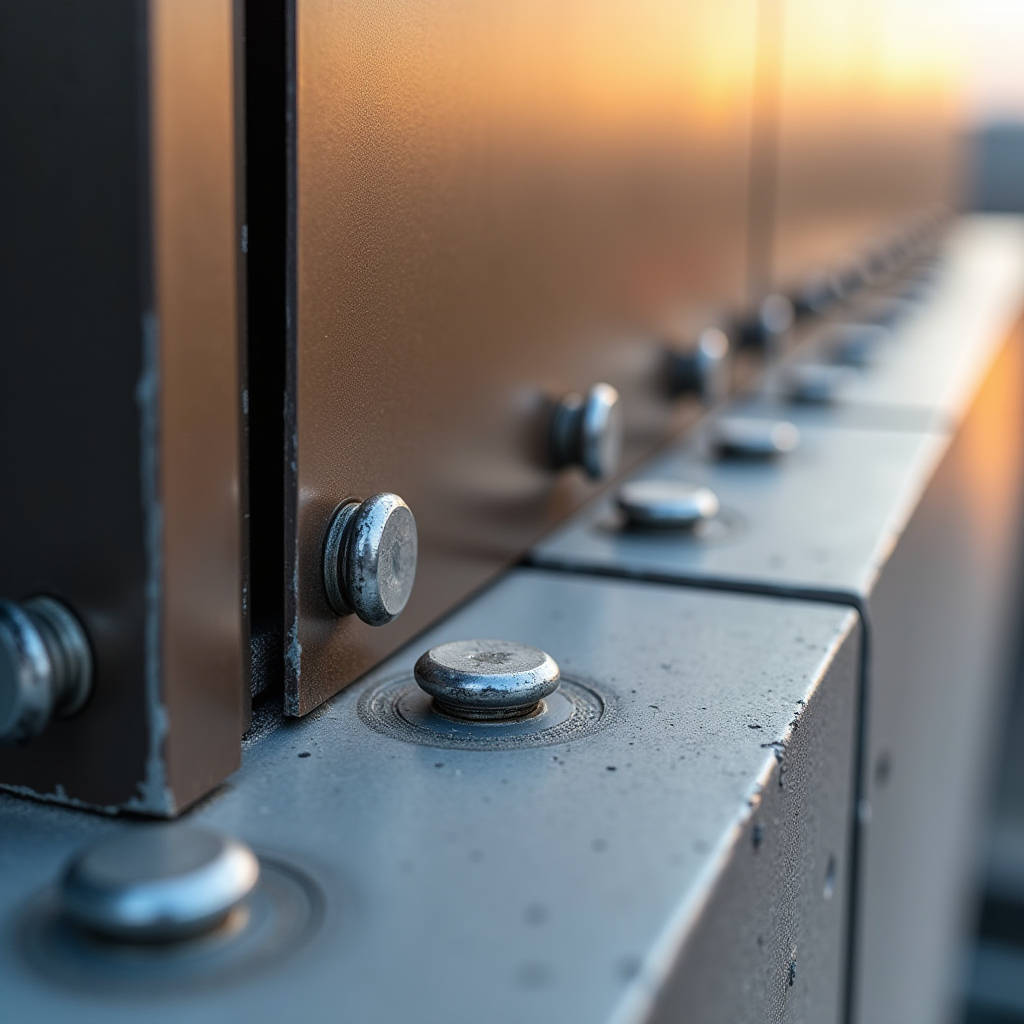
When a 40-story tower in Singapore started showing streaks of rust-colored staining just 18 months after completion, the investigation traced back to one thing: fastener incompatibility. The aluminum facade panels themselves were flawless — 3.0mm solid 3003-H14 alloy with PVDF coating. But the stainless steel screws spec'd by a junior consultant were 304 grade in a coastal environment. The lesson cost the contractor nearly $2 million in remedial work. This is the reality of aluminum facade panel specification that rarely makes it into glossy brochures. Getting the panel alloy right is only half the battle. The fastening system, environmental compatibility, and installation methodology determine whether a building envelope performs for 5 years or 50.
The Fastener Compatibility Problem Nobody Talks About
Galvanic corrosion is the silent killer of aluminum facade panel installations. When two dissimilar metals sit in contact with an electrolyte — rainwater, coastal spray, even high-humidity air — an electrochemical reaction begins. Aluminum sits near the anodic end of the galvanic series. Pair it with the wrong fastener, and the aluminum becomes a sacrificial anode, corroding preferentially.
The standard specification calls for 316-grade stainless steel fasteners in any environment within 5 kilometers of a coastline. But here is what spec sheets often omit: even 316 stainless can cause problems if the fastener manufacturer uses a different passivation process. The chromium oxide layer on properly passivated 316 fasteners should measure at least 10 nanometers thick. Anything less, and you are rolling the dice.
Field Note: On a 2022 project in Jeddah, we caught a batch of "316 stainless" rivets that were actually 304 with a thin chromium flash coating. A simple XRF analyzer test on site flagged the discrepancy in under 30 seconds. The contractor had already installed 400 square meters of panels. Every single rivet had to be drilled out and replaced. The XRF unit costs about $3,000 to rent for a month. The rework cost $47,000.
Understanding the Galvanic Series in Practice
The galvanic potential difference between aluminum and common fastener materials dictates risk levels. A difference under 0.15 volts in the galvanic series is generally safe for most environments. Above 0.25 volts, you need isolation measures. Above 0.5 volts, direct contact is unacceptable regardless of environment.
Here is what that looks like in real numbers for aluminum facade panel applications:
| Fastener Material | Potential vs. Aluminum (V) | Risk Level | Mitigation Required |
|---|---|---|---|
| Aluminum (5052/6061) | 0.00 - 0.05 | Negligible | None |
| Zinc-plated Steel | 0.30 - 0.40 | Moderate | Nylon washer + isolation tape |
| 304 Stainless Steel | 0.35 - 0.50 | High (coastal) | Not recommended within 5km of coast |
| 316 Stainless Steel | 0.25 - 0.35 | Low-Moderate | EPDM isolation washer recommended |
| Monel (Ni-Cu alloy) | 0.15 - 0.25 | Low | Minimal — preferred for aggressive marine |
| Titanium (Grade 2) | 0.05 - 0.10 | Negligible | None — cost-prohibitive for most projects |
The takeaway is not that 316 stainless is always the answer. It is that the answer depends on distance from saltwater, prevailing wind direction, building height, and whether the fasteners sit in sheltered or exposed locations. A recessed fastener behind a drainable cavity sees different conditions than an exposed rivet on a parapet cap.
Thermal Movement: The Math That Determines Joint Width
Aluminum expands at roughly 23.6 × 10⁻⁶ per degree Celsius. A 3-meter-long aluminum facade panel subjected to a 70°C temperature swing — entirely realistic for a dark-colored panel on a rooftop in Dubai or Phoenix — will expand by approximately 4.96 millimeters. If your joint design only allows for 3 millimeters of movement, the panels will buckle. If they buckle, fasteners loosen. If fasteners loosen, water gets in.
The calculation is straightforward:
ΔL = α × L × ΔT
Where α = 23.6 × 10⁻⁶ /°C, L is panel length in mm, and ΔT is the expected temperature range. But the engineering judgment comes in deciding what ΔT to use. Surface temperature on a dark PVDF-coated aluminum facade panel can exceed ambient air temperature by 30°C or more under direct solar radiation. AAMA 501.5 testing protocols recommend using surface temperature data, not ambient air data, when calculating movement joints.
For a 4-meter panel with a dark bronze finish in a climate where ambient temperatures swing from -10°C to 45°C, the actual surface temperature range might be -10°C to 75°C. That is an 85°C delta. The resulting expansion: 23.6 × 10⁻⁶ × 4000 × 85 = 8.02 mm. That is nearly double what a naive calculation using ambient temperatures would suggest.
Joint Design Beyond the Silicone Seal
The movement accommodation strategy for aluminum facade panel systems typically involves a two-stage joint. The primary weather seal — often a silicone sealant meeting ASTM C920 Class 50 requirements — handles the visible gap. Behind it, a secondary drainage plane with a pressure-equalized cavity manages any water that penetrates the outer seal.
But the fastener connection itself must accommodate movement. This is where slotted holes and sliding clips become critical. A fixed-point connection at the panel center combined with sliding connections at the perimeter allows the panel to expand and contract without transferring stress to the fasteners. The slot length should match the calculated movement range plus a 50% safety factor.
Pro Tip: When specifying slotted holes for thermal movement on aluminum facade panels, always orient the slot parallel to the direction of expected movement. On a rectangular panel, the long dimension drives the movement. On a square panel, orient slots radially outward from the fixed center point. We have seen installers orient every slot vertically "because it looked neater." The horizontal joints opened up within the first seasonal cycle.
Wind Load and Fastener Spacing: A Combined Analysis
Wind load calculations for aluminum facade panel fastening follow ASCE 7-16 (or the local equivalent such as EN 1991-1-4 in Europe or AS/NZS 1170.2 in Australia). The design wind pressure at a given building zone determines the tributary area each fastener must resist. But the interaction between wind load and thermal movement complicates fastener selection.
Consider a corner zone on a 60-meter-tall building in a 150 mph (67 m/s) basic wind speed region. The design pressure might reach 3.5 kPa (73 psf) under ASCE 7-16 components and cladding provisions. A 3.0mm aluminum facade panel measuring 1.2m × 2.4m has a tributary area of 2.88 m² per panel. The total wind force per panel is approximately 10.08 kN.
If the panel uses 6 fasteners, each fastener sees 1.68 kN in tension. A properly specified 316 stainless steel self-tapping screw with a 6.3mm diameter can typically handle 2.5-3.0 kN in pull-out from a 3mm aluminum substrate, assuming adequate edge distance. But add thermal cycling fatigue, and the allowable load drops. AAMA TIR-A9-14 provides guidance on combining these loads.
What often gets overlooked is the substrate. The aluminum facade panel fasteners anchor into a subframe — typically aluminum extrusions or galvanized steel girts. If the subframe material differs from the fastener material, you reintroduce galvanic concerns at the secondary connection point. A 316 stainless fastener into a galvanized steel girt creates a galvanic couple. The zinc coating on the girt sacrifices itself to protect the fastener. Over time, the girt corrodes, the fastener loses its grip, and the panel becomes loose.
EPDM vs. Nylon Isolation: Choosing the Right Barrier
Isolation materials sit between the aluminum facade panel and the fastener or between the fastener and the subframe. The two most common options are EPDM (ethylene propylene diene monomer) washers and nylon bushings. They serve different purposes and have different limitations.
EPDM washers provide excellent compression set resistance and remain flexible down to -40°C. They work well under the head of a fastener, creating a watertight seal while electrically isolating the fastener from the panel surface. A quality EPDM washer with a Shore A hardness of 60-70 durometer will maintain sealing pressure for decades. But EPDM degrades under prolonged UV exposure, so the washer must be fully shielded by the fastener head.
Nylon bushings or shoulder washers isolate the fastener shank from the panel hole. This is critical when using stainless steel fasteners in aluminum facade panels because the hole edge is where galvanic attack often initiates. A nylon bushing with a wall thickness of 0.5-1.0mm provides sufficient dielectric separation. The material should meet ASTM D4066 for PA6 or PA66 with moisture-conditioned mechanical properties.
Some manufacturers, including systems supplied by Futeng® for export projects, now specify a combined approach: an EPDM sealing washer under the head and a nylon isolation bushing through the panel hole. This dual-isolation strategy adds roughly $0.15-0.30 per fastener point but eliminates the two most common failure modes at the fastener interface.
Installation Torque: The Overlooked Variable
Over-torquing fasteners in aluminum facade panels creates a cascade of problems. The aluminum substrate yields locally around the fastener hole. The protective coating — whether PVDF or powder — cracks at the microscopic level. Moisture reaches bare aluminum. Corrosion initiates from the hole outward, hidden under the fastener head until the damage is advanced.
The correct installation torque for a 6.3mm self-tapping screw into 3.0mm aluminum is typically 4.5-6.0 Nm, depending on the specific thread geometry and the alloy temper. But this number means nothing without calibrated tools. On a 2019 project in Kuala Lumpur, a subcontractor used impact drivers set to maximum torque. The fasteners were seating at 12-15 Nm. Within 6 months, stress corrosion cracking appeared around 30% of the fastener holes. The entire elevation had to be re-skinned.
Torque-limiting installation tools are not optional. Battery-powered torque-control screwdrivers with automatic shutoff at the specified torque value cost more than standard impact drivers — roughly $400-600 per unit versus $150-250 — but they prevent failures that cost orders of magnitude more to fix. The specification should mandate torque-control tools and require daily torque verification logs using a calibrated torque tester.
Coating Integrity at Fastener Penetrations
Every fastener hole in an aluminum facade panel is a breach in the protective coating system. The quality of the coating at the hole edge directly affects long-term corrosion resistance. PVDF coatings based on Kynar 500® or Hylar 5000® resins provide excellent barrier protection on the panel face, but the cut edge at a drilled or punched hole exposes bare aluminum.
Two approaches mitigate this vulnerability. The first is pre-punching or pre-drilling holes in the factory before coating, then applying a touch-up coating to the hole interior after fabrication. This works reasonably well but relies on consistent quality control at the touch-up stage. The second approach — field drilling after panel installation — is riskier because the hole edge receives no post-drilling treatment in most cases.
AAMA 2605-compliant PVDF coating systems typically specify a minimum total dry film thickness of 25-35 microns for a two-coat system and 35-45 microns for a three-coat system. The coating at the panel edge and around fastener holes should meet the same thickness specification, but this is difficult to verify on site. The practical solution is to specify factory-applied coating with documented quality control and to minimize or eliminate field drilling.
Pull-Out Testing: Verify Before You Scale
ASTM E488 / E488M provides the standard test method for strength of anchors in concrete and masonry elements. For aluminum facade panel fasteners into metal subframes, the relevant standard is often ASTM D1761 for mechanical fasteners in wood, adapted for metal substrates, or manufacturer-specific test protocols based on AAMA 501.4.
A proper pull-out test program for an aluminum facade panel installation should include at least 5 tests per substrate type, per fastener type, per building elevation. The test measures ultimate pull-out capacity and allowable design load (typically ultimate divided by a safety factor of 4). The test must replicate the actual installation conditions: substrate material and thickness, fastener type and size, installation torque, and edge distance.
On a recent project in Melbourne, the specified fasteners achieved 3.2 kN average pull-out in laboratory conditions on 3.0mm 3003-H14 aluminum. But on site, the actual substrate was a 2.5mm 5052-H32 extrusion with a slightly different hole tolerance. The field pull-out tests averaged 2.1 kN. The design load was 1.8 kN per fastener. The safety factor had shrunk from 1.78 to 1.17. The fix required adding 30% more fasteners per panel — a six-figure change order that could have been avoided with early field testing.
Packaging and Transport: Fastener Systems as a Complete Kit
When aluminum facade panels ship internationally — from a factory in Asia to a project site in North America, Europe, or the Middle East — the fasteners and isolation components should ship as a coordinated kit. This seems obvious, but procurement fragmentation is common. Panels come from one supplier. Fasteners come from a local distributor. Isolation washers come from a third source. Nothing is tested together until it reaches the site.
A coordinated fastener kit for aluminum facade panel systems should include: the specified fasteners (with mill certificates), EPDM sealing washers, nylon isolation bushings, installation instructions with torque specifications, and a batch-specific pull-out test report from the supplier's quality control. The kit should be packaged in moisture-proof containers with desiccant packs for sea freight shipments, especially when EPDM components are included — prolonged exposure to high humidity and temperature in a shipping container can degrade EPDM before it ever reaches the site.
This integrated approach adds roughly 3-5% to the fastener line item cost but eliminates the risk of mismatched components and provides a clear chain of quality documentation. For projects requiring AAMA 501 compliance documentation, having a single-source fastener kit simplifies the submittal process considerably.
Making the Right Call on Fastener Specification
The fastener system for an aluminum facade panel installation is not a commodity item to be value-engineered at the last minute. It is a safety-critical, performance-critical component that determines whether the facade performs as intended or fails prematurely. The specification should address material compatibility, thermal movement accommodation, wind load resistance, installation torque control, and coating integrity at penetrations — all before a single panel arrives on site.
Start with the environmental assessment. Coastal, industrial, or de-icing salt exposure demands 316 stainless minimum, with EPDM and nylon isolation. Inland, low-humidity environments may allow 304 stainless with appropriate isolation. But always verify with galvanic potential calculations specific to the actual materials being used, not generic assumptions.
Calculate thermal movement requirements using surface temperature data, not ambient air data. Design joints and fastener slots accordingly. Specify torque-controlled installation tools and require daily calibration logs. Conduct field pull-out tests before scaling up installation. And procure fasteners and isolation components as a coordinated, tested kit from a single supplier.
The cost of getting fastener specification right is measured in cents per fastener. The cost of getting it wrong is measured in millions of dollars of remedial work, years of legal disputes, and a building envelope that never performs as the architect intended. The aluminum facade panel itself is a durable, high-performance material. The fasteners that hold it in place deserve the same level of engineering attention.
For further technical guidance, refer to AAMA 501 for thermal cycling test methods, ASTM E488 for anchor strength testing, ISO 9223 for atmospheric corrosivity classification, and ASCE 7-16 for wind load design provisions.