ACP Panel in Tender Documents How to Tell If You Actually Need Solid Aluminium Cladding
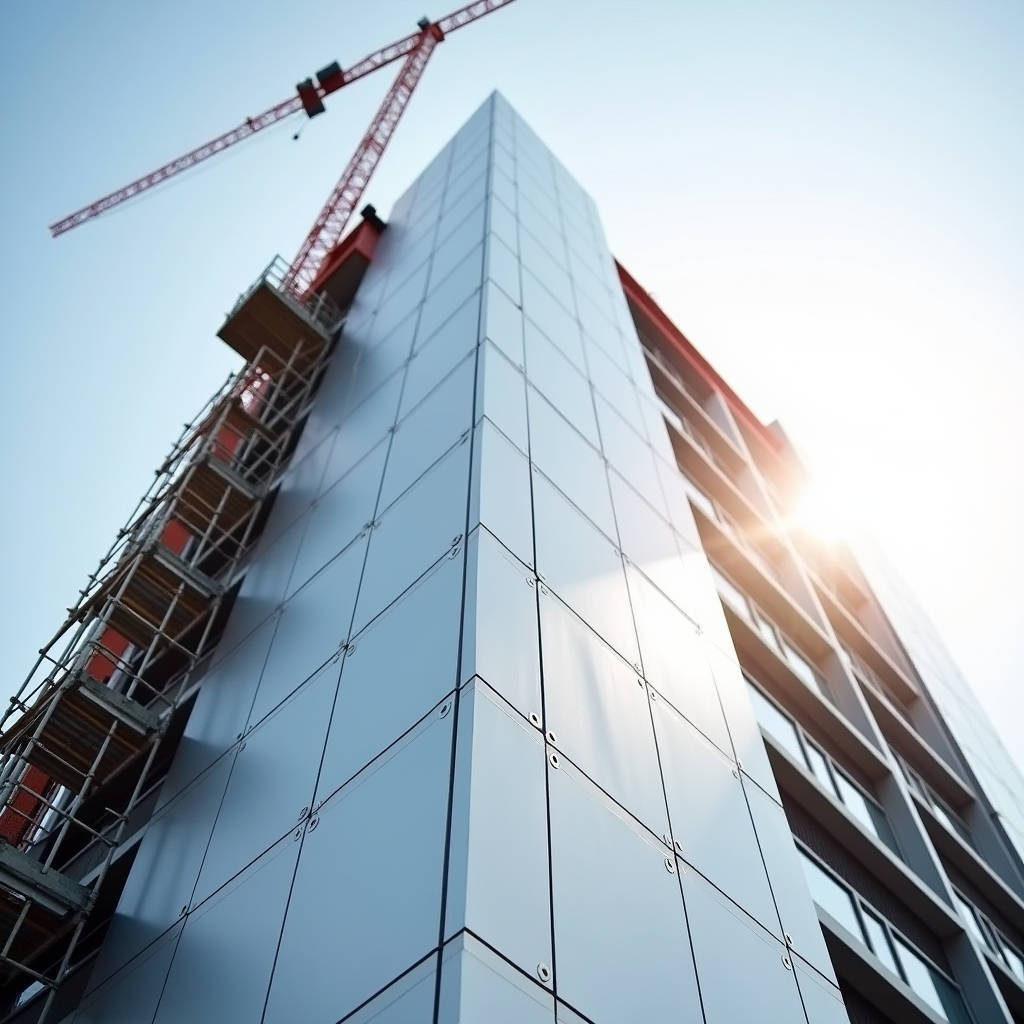
When a project specification lands on the desk of a facade engineer or procurement manager, the term "ACP panel" often triggers an immediate set of assumptions about aluminium composite panels. But what happens when the actual requirement calls for solid aluminium cladding panels, and the documentation still carries the ACP panel shorthand? This confusion is far more common than most people admit. In Southeast Asian and Middle Eastern markets, the acronym ACP panel has become a genericised term for virtually any aluminium-based facade material, regardless of whether it is a composite sandwich panel or a solid sheet. For contractors and architects navigating this terminological grey zone, the risk of ordering the wrong material is real, and the consequences show up in fire compliance reports, wind load calculations, and ultimately on the installation site itself. This article unpacks the practical implications of this confusion, focusing on how to read specifications critically, what technical parameters actually matter, and how to avoid costly procurement errors when the term ACP panel appears in tender documents but the engineering intent points toward solid aluminium cladding.
The Terminology Trap: How ACP Panel Became a Generic Label
Walk through any major construction tender in Mumbai, Dubai, or Manila, and you will find the term ACP panel used loosely to describe exterior metal cladding. The problem is not linguistic pedantry. It is a procurement and engineering problem. An aluminium composite panel consists of two thin aluminium skins bonded to a polyethylene or mineral-filled core, typically with a total thickness of 3mm to 6mm. A solid aluminium cladding panel, by contrast, is a single sheet of aluminium alloy — usually 2.0mm, 2.5mm, or 3.0mm thick — with no core material whatsoever.
The distinction matters because these two product categories behave differently under thermal expansion, wind load, impact, and fire conditions. When a specification simply says "ACP panel" without clarifying whether it refers to a composite or solid product, the bidder is left guessing. In competitive tendering, the lowest bidder often assumes composite, because it is cheaper per square meter. The consultant may have assumed solid aluminium for fire compliance. The gap between these assumptions is where disputes are born.
Seasoned quantity surveyors in the Gulf region have learned to flag any specification that uses ACP panel as a standalone term. The immediate request for clarification goes back to the consultant: "Please confirm whether the specified ACP panel refers to aluminium composite panel with PE core, FR core, or solid aluminium sheet." This single question has saved more projects from mid-construction material rejection than any other procurement intervention.
Reading the Specification: What to Look for Beyond the Acronym
When the term ACP panel appears in a specification document, the first thing to check is not the word itself but the technical parameters that surround it. A properly written specification will include measurable criteria that reveal the true material intent, even if the terminology is sloppy.
Panel Thickness Tells the Real Story
If the specification calls for a panel thickness of 2.0mm, 2.5mm, or 3.0mm, you are almost certainly looking at a solid aluminium cladding requirement. Composite panels are rarely specified below 3mm total thickness, and even then, the individual aluminium skins are typically 0.2mm to 0.5mm each. A single-skin thickness of 2.0mm or above is physically impossible for an aluminium composite panel. This is the fastest litmus test available to anyone reviewing tender documents.
Solid aluminium panels in the 2.0mm to 3.0mm range are commonly produced from 1100, 3003, or 5052 aluminium alloy series. The 3003 alloy offers a good balance of formability and strength, while 5052 provides higher tensile strength for applications with elevated wind loads. Suppliers like Futeng® manufacture solid aluminium cladding panels in these standard thicknesses with tolerance control within ±0.05mm, which is critical for achieving flatness across large facade areas.
Coating Specification as a Clue
Another giveaway is the coating specification. Solid aluminium panels destined for exterior facades are almost universally specified with PVDF (polyvinylidene fluoride) coating systems, typically at a minimum of 70% Kynar 500® or Hylar 5000® resin content. The dry film thickness for a two-coat PVDF system on solid aluminium is usually 25-35 microns, while a three-coat system with primer, colour coat, and clear coat reaches 35-45 microns.
If the specification mentions PVDF coating with a Kynar 500® requirement and a film thickness above 25 microns, it is a strong indicator that the project expects solid aluminium panels rather than composite sheets. Composite panels can also be PVDF-coated, but the coating thickness on the thin aluminium skins of composite panels is typically lower, and the application process differs significantly from coil-coated or spray-coated solid sheets.
Field Note: On a 2023 hotel tower project in Ho Chi Minh City, the specification used "ACP panel" throughout 200+ pages of documentation. The facade consultant had actually designed for 2.5mm solid aluminium panels with PVDF three-coat finish. The contractor caught this by cross-referencing the panel thickness table buried in the structural drawings, not the architectural specification. The lesson: always check the structural drawings, not just the architectural spec.
Fire Performance: The Core Difference That Changes Everything
Fire compliance is arguably the single most consequential reason to distinguish between composite ACP panels and solid aluminium cladding panels. The global regulatory landscape shifted dramatically after the Grenfell Tower fire in 2017, and jurisdictions from the UK to Australia to the UAE have tightened their cladding fire safety requirements.
Aluminium composite panels with polyethylene (PE) cores are combustible. Even panels with fire-retardant (FR) mineral cores may not meet the most stringent non-combustibility requirements depending on the jurisdiction. Solid aluminium panels, by contrast, contain no combustible core material. A 2.5mm or 3.0mm solid aluminium sheet is inherently non-combustible when tested to ASTM E136 or EN 13501-1 Class A1 standards. The aluminium alloy itself is classified as non-combustible, and the PVDF coating, applied at micron-level thickness, contributes negligible fuel load.
This does not mean solid aluminium panels are automatically compliant with every fire code. The complete facade system — including insulation, vapour barriers, and mounting substructures — must be evaluated as an assembly. However, eliminating the combustible core from the panel itself removes the single largest fire risk variable in the cladding system.
For contractors working on projects above 18 meters in height in markets that have adopted post-Grenfell regulations, specifying solid aluminium panels instead of composite ACP panels can simplify the compliance pathway considerably. The documentation burden is lighter, and the risk of regulatory rejection during construction is lower.
Wind Load Performance: Solid Panels Under Pressure
Wind load resistance is another area where the distinction between composite ACP panels and solid aluminium cladding matters in ways that directly affect panel sizing, fixing design, and overall facade cost. Solid aluminium panels, with their homogeneous cross-section, behave predictably under wind pressure. The structural calculation follows standard plate bending theory, and the allowable deflection is typically limited to L/175 or L/200 of the span, depending on the project specification and local building code.
A 3.0mm thick solid aluminium panel of grade 3003-H14, spanning 600mm between stiffeners, can resist a design wind pressure of approximately 2.5 kPa with deflection within L/200 limits. Increase the span to 900mm, and the same panel may require stiffeners or a thicker gauge to maintain deflection criteria. These are straightforward engineering calculations that any facade engineer can verify using finite element analysis or empirical formulas from the Aluminium Design Manual published by the Aluminum Association.
Composite ACP panels behave differently under wind load because the core material contributes to the bending stiffness of the sandwich structure. The thin aluminium skins carry the tensile and compressive stresses, while the core transfers shear. This means that for a given total thickness, a composite panel may exhibit different deflection characteristics compared to a solid panel of the same thickness. The comparison is not one of superiority — both products work when engineered correctly — but of predictability and long-term creep behaviour. Solid aluminium panels do not creep under sustained load, whereas some composite core materials may exhibit creep deformation over decades of service.
| Parameter | Solid Aluminium Panel (2.5mm, 3003-H14) | Solid Aluminium Panel (3.0mm, 3003-H14) | Typical PE-Core ACP (4mm Total) |
|---|---|---|---|
| Weight per m² | 6.75 kg | 8.10 kg | 5.5-7.5 kg |
| Combustibility (ASTM E136) | Non-combustible | Non-combustible | Combustible |
| Flexural Stiffness (EI) | ~0.45 kN·m²/m | ~0.78 kN·m²/m | ~0.35-0.50 kN·m²/m |
| Thermal Expansion (α) | 23.6 × 10⁻⁶ /°C | 23.6 × 10⁻⁶ /°C | ~24-26 × 10⁻⁶ /°C |
| Typical PVDF Film Thickness | 30-40 μm (3-coat) | 30-40 μm (3-coat) | 20-28 μm (coil-coated) |
| Service Life (Exterior, PVDF) | 30+ years | 30+ years | 15-25 years |
Thermal Movement and Joint Design
Solid aluminium panels expand and contract with temperature changes, and the coefficient of thermal expansion for aluminium is approximately 23.6 × 10⁻⁶ per degree Celsius. On a 3-meter-long panel subjected to a 60°C temperature swing between summer sun exposure and winter night conditions, the linear expansion is roughly 4.25mm. This is not a trivial number when you are aligning panels with 10mm nominal joints.
Facade designers working with solid aluminium cladding must account for this movement in the joint design. The standard approach uses a minimum joint width of 8-10mm for panels up to 2 meters in length, increasing to 12-15mm for larger panels. The fixing system must allow the panel to move independently of the substructure. This is typically achieved through slotted holes in the fixing brackets or through the use of aluminium extrusion rails that permit sliding movement.
One common mistake occurs when installers, accustomed to working with composite ACP panels that have different thermal expansion characteristics due to the polyethylene core, apply the same joint dimensions to solid aluminium panels. The result can be panel buckling on hot days or excessive joint opening in cold weather. Neither outcome is acceptable for a high-end architectural facade.
Pro Tip: When calculating thermal expansion for solid aluminium panels in desert climates like Riyadh or Dubai, use a surface temperature range of -5°C to +85°C rather than ambient air temperature. Dark-coloured PVDF coatings can reach 80-85°C under direct solar radiation even when the air temperature is only 45°C. This 90°C delta produces 6.4mm of expansion on a 3-meter panel. Size your joints accordingly.
Coating Systems: PVDF Performance on Solid Aluminium
The PVDF coating system applied to solid aluminium panels is fundamentally different from the coil-coating process used for the thin aluminium skins in composite ACP panels. Solid panels are typically spray-coated after fabrication, which allows for edge coverage and consistent film thickness across the entire surface, including cut edges and fold lines. This is a significant advantage for corrosion resistance at panel edges, where coil-coated composite panels may expose bare aluminium after cutting and routing.
A properly specified PVDF coating for solid aluminium cladding should reference AAMA 2605, the voluntary specification for high-performance organic coatings on architectural aluminium extrusions and panels. This standard requires a minimum of 70% Kynar 500® or Hylar 5000® resin by weight in the colour coat, and it sets performance criteria for colour retention, chalk resistance, and gloss retention after 10 years of South Florida exposure.
The colour consistency requirement is typically expressed as a Delta E (ΔE) value. For premium architectural projects, a ΔE of less than 1.0 across the entire facade is the standard expectation. Achieving this requires tight control of the spray coating process, including consistent application of primer, colour coat, and clear coat, as well as controlled curing temperatures. Suppliers with in-house PVDF coating lines, such as Futeng®, can maintain this level of colour consistency across production batches of several thousand square meters.
Fabrication Tolerances and Flatness Requirements
Solid aluminium panels are fabricated through cutting, folding, welding (where required), and reinforcing with stiffeners on the reverse side. The flatness of the finished panel is a critical quality parameter that directly affects the visual appearance of the installed facade. Industry practice for solid aluminium cladding panels typically specifies a flatness tolerance of 0.5% of the panel's diagonal dimension, or a maximum deviation of 2mm per linear meter, whichever is stricter.
Flatness is influenced by several factors: the quality of the aluminium sheet stock, the residual stress introduced during folding and welding, the design and attachment of stiffeners, and the handling and packaging of finished panels. Stiffeners are typically aluminium extrusions or folded profiles bonded to the reverse side of the panel using structural adhesive. The spacing and orientation of stiffeners must be engineered to resist wind load deflection while avoiding visible read-through on the panel face.
For large-format panels exceeding 2 meters in any dimension, achieving consistent flatness requires careful attention to the stiffener layout. A common approach uses a grid of horizontal and vertical stiffeners at 400mm to 600mm centres, with the stiffener depth sized to provide adequate bending stiffness. The adhesive bond between the stiffener and the panel must be continuous to prevent localised buckling under negative wind pressure.
Procurement Strategy: When the Tender Says ACP Panel
For procurement professionals facing a tender that uses the term ACP panel ambiguously, a structured approach can prevent costly mistakes. The first step is to request a formal clarification from the consultant or client, specifically asking whether the requirement is for aluminium composite panels or solid aluminium cladding panels. This request should reference the specific clauses in the specification where the ambiguity exists.
If the consultant confirms that solid aluminium panels are required, the next step is to verify that the specification parameters align with solid panel standards. Check the panel thickness, alloy grade, temper designation, coating specification, and flatness tolerance. If any of these parameters are inconsistent with solid aluminium panels — for example, if the specification calls for a 4mm total thickness but also references a PE core — flag the inconsistency immediately.
Pricing strategy also differs significantly between composite and solid panels. Solid aluminium panels, with their higher aluminium content per square meter, are more sensitive to LME aluminium price fluctuations. A procurement contract for solid aluminium cladding should include a price adjustment mechanism tied to the LME aluminium benchmark, or at minimum, a validity period for the quoted price. Composite ACP panels, with their thinner aluminium skins, have lower material cost sensitivity to aluminium price movements.
Logistics and Handling: Protecting Solid Panels in Transit
Solid aluminium panels are heavier and more rigid than composite ACP panels, which affects packaging, handling, and shipping logistics. A 2.5mm solid aluminium panel weighs approximately 6.75 kg per square meter, compared to 5.5-7.5 kg for a typical 4mm composite panel. For a container load of 2,000 square meters, the weight difference can be several tonnes, impacting freight costs under both FOB and CIF terms.
Surface protection during transit is critical. Solid aluminium panels with PVDF finishes are typically protected with a peelable polyethylene film applied immediately after coating. The film should be UV-stabilised if the panels will be stored outdoors for any period before installation. Panels should be packed vertically in purpose-built steel crates with interleaving foam or felt separators to prevent surface-to-surface contact and scratching.
For international shipments, particularly to markets in the Middle East and Southeast Asia where humidity and salt spray are concerns during maritime transport, additional precautions include the use of desiccant packs inside the packaging and vapour-barrier wrapping to prevent condensation on the panel surfaces. The cost of these protective measures is modest compared to the cost of replacing panels that arrive on site with corrosion spots or scratches that cannot be remedied.
The American Architectural Manufacturers Association (AAMA) provides guidelines on handling and storage of architectural aluminium products, and the ISO 28278-2 standard covers structural sealant glazing that is often relevant to panel assembly. For coating performance, ASTM International publishes the relevant test methods under the D series for organic coatings.
Installation Considerations Specific to Solid Panels
The installation of solid aluminium cladding panels follows a different workflow compared to composite ACP panels, primarily due to the panel weight and the fixing methods employed. Solid panels are typically installed using a cassette system or a tray-panel system with concealed fixings. The panels are secured to an aluminium or galvanised steel substructure using stainless steel screws, rivets, or proprietary clip systems.
The substructure must be installed with tight tolerances. A deviation of more than ±3mm in the plane of the substructure over a 3-meter length will be visible in the finished facade, particularly under glancing light conditions. Laser surveying equipment is now standard practice for verifying substructure alignment before panel installation begins.
Panel handling on site requires suction cups or mechanical lifting equipment for larger panels. A 3.0mm solid aluminium panel measuring 1.5 meters by 3 meters weighs approximately 36.5 kg, which is beyond the safe manual handling limit for a single installer. Site teams must plan for mechanical handling, and the installation sequence must account for crane or hoist access.
The Aluminum Association provides design guidelines that include handling and installation recommendations for aluminium building products. Additionally, the Centre for Window and Cladding Technology (CWCT) in the UK publishes standards for cladding installation that are referenced in specifications across multiple international markets.
Making the Right Call: A Practical Decision Framework
When the term ACP panel appears in project documentation, the path to the correct material decision runs through a series of verifiable checkpoints. Panel thickness above 2.0mm points to solid aluminium. PVDF coating with Kynar 500® at 70% resin content and 30+ micron film thickness points to solid aluminium. Non-combustibility requirements under ASTM E136 or EN 13501-1 Class A1 point to solid aluminium. Tight flatness tolerances and large panel formats with stiffener requirements point to solid aluminium.
None of this is to suggest that composite ACP panels are an inferior product. They have their place in the market, particularly for interior applications, signage, and low-rise buildings where fire regulations permit their use. The point is that the two products are not interchangeable, and the loose use of the term ACP panel in tender documents creates a procurement risk that falls squarely on the contractor and the subcontractor.
The most effective risk mitigation strategy is disciplined specification review. Every time the term ACP panel appears, ask what the engineering parameters actually require. If the answer is unclear, request clarification in writing. The cost of a clarification email is zero. The cost of replacing 3,000 square meters of incorrectly supplied cladding panels is measured in six-figure losses and months of project delay.
For projects where solid aluminium cladding is confirmed as the requirement, working with manufacturers who specialise in solid panel production rather than composite panel production ensures that the technical support, fabrication capability, and quality control systems are aligned with the product being supplied. This is not about brand preference — it is about supply chain alignment. A manufacturer whose primary business is composite ACP panels may not have the spray coating line, the stiffener bonding equipment, or the flatness inspection protocols required for architectural-grade solid aluminium panels.