Surface Treatment Aluminum Panel Selection for Long Life Exterior Facades
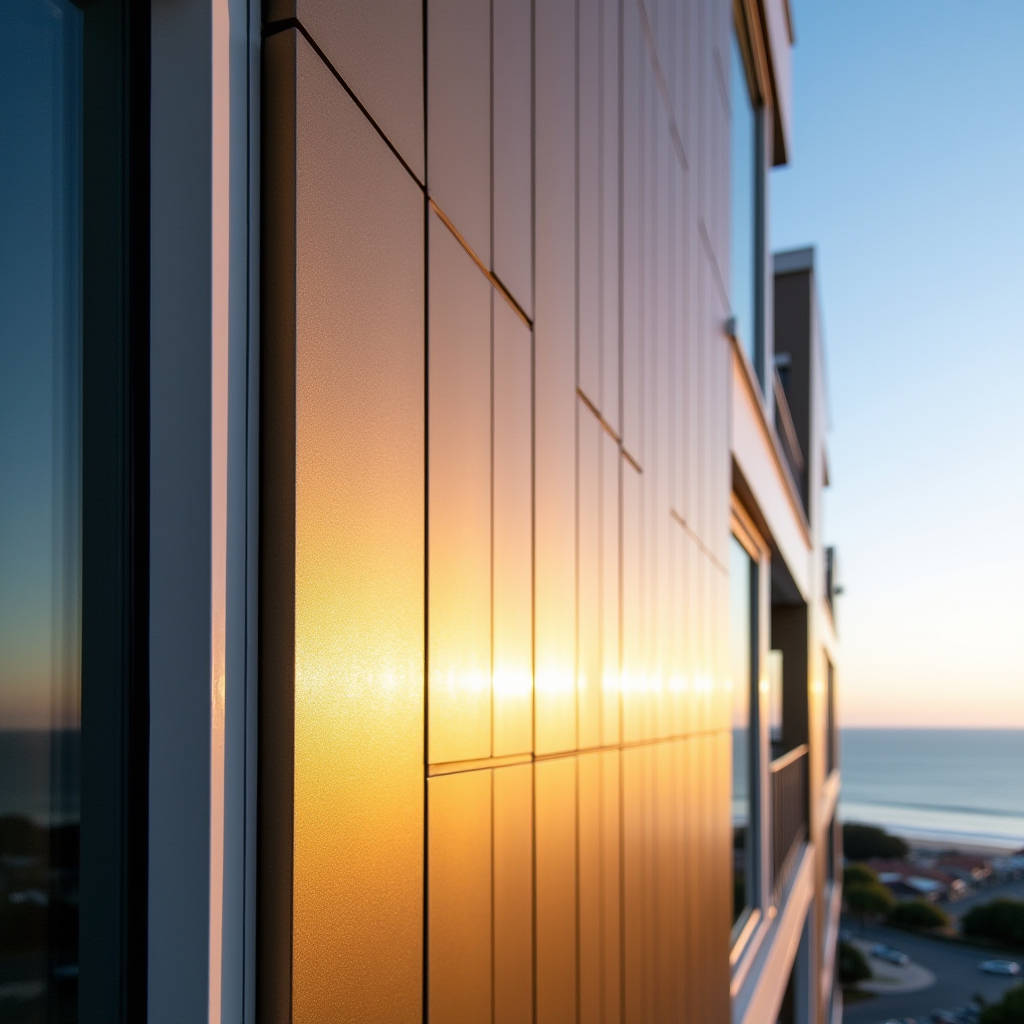
When a facade consultant specifies a surface treatment aluminum panel for a coastal high-rise, the conversation rarely stops at color. It starts with salt spray resistance, moves to coating adhesion after brake forming, and ends with a 20-year film integrity warranty that the contractor has to stand behind. The surface treatment is not a cosmetic afterthought. It is the primary barrier between raw aluminum and an environment that will try to corrode it, fade it, and chalk it. Getting this decision right means reconciling architectural intent with site conditions, fabrication constraints, and budget realities that shift from one project to the next.
Why Surface Treatment Determines Panel Longevity
Raw aluminum forms a natural oxide layer within hours of exposure. That layer is thin, uneven, and wholly inadequate for architectural cladding. A properly specified surface treatment aluminum panel does three things simultaneously: it locks out moisture and chlorides, it provides a predictable aesthetic that holds across thousands of square meters, and it creates a bondable substrate for the coating system. Without this engineered barrier, even 3.0mm solid aluminum will pit in marine environments within five to seven years.
The cost of getting it wrong is not theoretical. A 2021 recladding project in Singapore replaced 4,200 square meters of panels that had been specified with an architectural polyester coating in a coastal zone. The coating chalked to a Delta E exceeding 8 within six years. The replacement specification called for PVDF with a minimum 70% Kynar 500 resin content. The lesson is straightforward: surface treatment is a lifecycle cost decision, not a procurement line item.
What makes the selection process challenging is the sheer range of options. Anodizing, powder coating, liquid PVDF, sublimation, and even PVD each occupy a specific performance niche. They are not interchangeable. A treatment that works beautifully on an interior feature wall will fail catastrophically on a west-facing elevation in Dubai. The following sections break down each major category with the specificity that specification writers and procurement teams need.
PVDF Liquid Coating: The Benchmark for Exterior Facades
For any surface treatment aluminum panel destined for exterior use, PVDF (polyvinylidene fluoride) remains the reference standard. The chemistry is well understood: PVDF resin, typically at 70% content when using Kynar 500 or Hylar 5000, forms a carbon-fluorine bond that is extraordinarily resistant to UV degradation. The remaining 30% is acrylic resin, which provides pigment dispersion and adhesion. This ratio matters. Some manufacturers push acrylic content higher to reduce cost, and the result is a coating that chalks faster and fades sooner.
AAMA 2605 is the governing specification. It requires a minimum total dry film thickness of 30 microns for a two-coat system and 40 microns for a three-coat system. The three-coat build adds a clear topcoat that improves gloss retention and provides additional protection for metallic and mica pigments. For projects within 500 meters of breaking surf, a three-coat system is not optional. It is the minimum viable specification.
Testing under AAMA 2605 is rigorous. Panels must withstand 4,000 hours of salt spray (ASTM B117), 4,000 hours of humidity resistance, and 10 years of South Florida exposure with color change not exceeding 5 Delta E units. These are not accelerated tests that can be gamed. South Florida exposure is real-time, and coating manufacturers who have been in the market for decades have the data to back their claims.
Field Note: When reviewing PVDF coating submittals, request the coating supplier's most recent South Florida 10-year exposure report for the specific color and gloss level specified. Do not accept a generic system certification. Metallic and bright colors degrade differently than earth tones, and the difference in Delta E after a decade can exceed 3 units.
Anodizing: The Architectural Standard for Metallic Finishes
Anodizing is not a coating. It is an electrochemical process that converts the aluminum surface into aluminum oxide, a ceramic-like layer that is integral to the metal. For a surface treatment aluminum panel where a natural metallic appearance is non-negotiable, anodizing delivers a look that no organic coating can replicate. The oxide layer is translucent, so the aluminum's grain structure and alloy composition remain visible.
The process follows MIL-A-8625 Type II (conventional) or Type III (hard anodizing). For architectural panels, Type II Class I (clear) and Class II (dyed) are the most common. Film thickness ranges from 10 to 25 microns for exterior applications. Below 15 microns, sealing quality becomes critical. An improperly sealed anodic layer absorbs contaminants and develops a cloudy, blotchy appearance within months.
Alloy selection is the variable that trips up many specifications. Anodizing 5005 and 6061 alloys produces different visual results. 5005 anodizes to a warm, uniform tone. 6061, with its higher silicon and copper content, can appear gray or mottled. If the architect wants a consistent anodized finish across an entire facade, the alloy must be specified and the anodizer must run sample coupons from the actual production batch before committing to the full run.
One limitation that must be acknowledged: anodized aluminum is susceptible to fingerprinting and alkaline attack. Construction site mortar, concrete dust, and even some sealants will etch the surface permanently. This is why anodized panels are often specified with a protective strippable film that remains in place until final cleaning. The film adds cost, but replacing etched panels costs far more.
Powder Coating: Economics and the Polyester Question
Powder coating has advanced significantly in the past decade. Modern polyester powders, particularly those based on super-durable polyester resins, now meet AAMA 2604 standards for exterior durability. They offer a 5-7 year color retention profile that suits many commercial and low-rise applications. The economics are compelling: powder coating a surface treatment aluminum panel costs 30-40% less than a three-coat PVDF system, and the throughput is faster.
However, the distinction between standard polyester, super-durable polyester, and fluoropolymer-modified powders must be understood. Standard architectural polyester (AAMA 2603) is suitable for interior applications and sheltered exterior areas. It will chalk and fade within 3-5 years under direct UV exposure. Super-durable polyester (AAMA 2604) pushes that to 7-10 years. Only fluoropolymer powders approach PVDF performance, and they are still relatively new to the market with limited long-term exposure data.
The application process itself introduces variables. Pretreatment is non-negotiable. A six-stage or seven-stage pretreatment line that includes degreasing, etching, and chrome or zirconium conversion coating is the industry standard. Skipping the conversion coating step to save cost results in filiform corrosion that creeps under the powder film from cut edges and fastener holes. This failure mode is well documented and entirely preventable.
Comparative Performance Data
The table below summarizes key performance parameters for the three primary exterior surface treatment categories. These values are drawn from AAMA specifications and independent testing data. Use this as a reference when evaluating coating submittals, but always verify against the specific coating manufacturer's published data.
| Parameter | PVDF 70% (AAMA 2605) | Super-Durable Polyester (AAMA 2604) | Anodized (AA-M12C22A31) |
|---|---|---|---|
| Minimum Dry Film Thickness | 30-40 μm (2-3 coat) | 60-80 μm | 15-25 μm (oxide layer) |
| Salt Spray Resistance (ASTM B117) | 4,000 hours | 1,500-3,000 hours | 3,000+ hours (sealed) |
| South Florida 10-Year Delta E | ≤ 5 (color-dependent) | ≤ 5-8 (limited data) | N/A (no organic pigment) |
| Pencil Hardness | HB-F | H-2H | 9H (sapphire-hard) |
| Impact Resistance | Excellent (flexible) | Good | Poor (brittle, may crack) |
| Repairability (Field) | Good (liquid touch-up) | Moderate | Poor (requires re-anodizing) |
| Relative Cost Index | 100 (baseline) | 55-70 | 80-95 |
| Typical Warranty (Film Integrity) | 20-30 years | 10-15 years | 10-20 years |
Pretreatment: The Hidden Foundation
No surface treatment aluminum panel performs better than its pretreatment. This is a statement that every coating failure investigation confirms. The aluminum surface, as it arrives from the rolling mill, carries mill oils, atmospheric oxides, and trace contaminants from handling. If these are not removed and the surface is not chemically prepared, the coating bond is compromised from the start.
The industry standard for architectural aluminum is a chrome phosphate or chrome-free conversion coating applied in a multi-stage immersion or spray line. The process sequence is degrease, rinse, etch, rinse, deoxidize, rinse, conversion coat, rinse, and dry. Each stage has defined parameters for temperature, concentration, and dwell time. Deviation from these parameters produces a surface that looks clean but lacks the microscopic topography and chemical activation needed for coating adhesion.
Chrome-free conversion coatings, based on zirconium or titanium chemistries, have gained market share due to environmental regulations, particularly in Europe under REACH. These systems perform comparably to chrome-based processes when properly controlled, but they are less forgiving of process variation. A chrome-free line that is not meticulously maintained will produce panels that pass initial adhesion tests but fail after 3-5 years of thermal cycling.
Pro Tip: During factory audits, ask to see the pretreatment line's daily log sheets for the past 30 days. Look for gaps in recording, out-of-range readings, and evidence that corrective actions were taken. A well-run pretreatment line has complete, consistent records. A line with spotty documentation is a red flag regardless of what the finished panels look like.
Color Consistency and Delta E Control
For architects, color consistency across a facade is often more important than absolute color accuracy. A surface treatment aluminum panel that matches the RAL or Pantone master perfectly but varies visibly from panel to panel creates a patchwork effect that is unacceptable on a high-end building. The metric that governs this is Delta E (CIE Lab), and the specification must define both the tolerance against the master standard and the tolerance between adjacent panels.
For PVDF coatings, a Delta E of ≤ 2.0 against the master standard is achievable and commonly specified. Between adjacent panels on the same elevation, the tolerance should be tightened to ≤ 1.0. Achieving this requires the coating applicator to maintain strict control over film thickness, oven temperature profiles, and metallic pigment orientation. Metallic and mica coatings are particularly challenging because pigment flake orientation affects both color and brightness, and the effect is angle-dependent.
Anodized finishes present a different challenge. Because the color is influenced by alloy composition, temper, and grain structure, matching anodized panels from different production lots is inherently difficult. The industry practice is to process all panels for a single elevation from the same alloy lot and to run them through the anodizing line in a continuous batch. Even then, a Delta E tolerance of ≤ 3.0 is considered commercially acceptable for anodized finishes.
Fabrication After Treatment: Edge and Bend Considerations
Surface treatment typically occurs after the aluminum sheet has been cut to size and formed. This is the standard sequence for PVDF and powder-coated panels. The formed panels are hung on a conveyor and pass through the pretreatment and coating lines. This means the coating covers the face, returns, and edges, providing a continuous protective envelope.
However, there are situations where post-coating fabrication is unavoidable. Field modifications, last-minute dimensional adjustments, or the installation of stiffeners and brackets may require drilling or cutting through a coated panel. This creates a breach in the coating system that must be addressed. For PVDF, a two-part liquid touch-up kit can restore reasonable protection at fastener holes and cut edges. The touch-up will not match the factory finish perfectly, but it prevents corrosion initiation.
Anodized panels are more problematic. The anodic layer is brittle and will crack at bend radii tighter than approximately 2T (twice the material thickness). Bending anodized aluminum creates micro-cracks that expose bare aluminum. This is why anodized panels are typically formed before anodizing, or the bend zones are masked and re-treated. Specifying anodized panels with complex geometries requires early coordination between the fabricator and the anodizer.
For projects requiring extensive post-fabrication, suppliers like Futeng® offer integrated production workflows where cutting, forming, and surface treatment happen under a single quality management system. This reduces the coordination burden and ensures that the coating envelope remains intact from factory to site.
Marine and Industrial Environments: Special Requirements
Coastal and industrial atmospheres impose demands that go beyond standard architectural specifications. Chloride ions from sea spray attack the aluminum substrate directly if the coating system has any porosity or edge defects. Sulfur compounds in industrial atmospheres combine with moisture to form acids that degrade polyester resins rapidly.
For marine environments within 500 meters of the coastline, the minimum specification should be a three-coat PVDF system with a minimum 40-micron total dry film thickness, applied over a chrome or zirconium conversion coating. Some specifications go further, requiring a marine-grade primer with corrosion-inhibiting pigments. The additional cost is approximately 8-12% over a standard PVDF system, which is modest compared to the cost of premature replacement.
For industrial environments with high SO2 concentrations, the coating resin chemistry matters more than the film thickness. PVDF resins are inherently resistant to acid attack. Polyester resins, even super-durable grades, are susceptible to hydrolysis in acidic conditions. The specification should explicitly require fluoropolymer resin content of at least 70% and should reference AAMA 2605-20 for the full testing regimen.
Specification Writing: What to Include
A competent surface treatment specification for aluminum panels should address the following elements without ambiguity. Vague language like "high-performance coating" or "architectural finish" invites substitution of inferior products. The specification must be precise enough that a third-party testing laboratory can verify compliance.
- Coating type and resin chemistry: Specify PVDF with minimum 70% Kynar 500 or Hylar 5000 resin, or super-durable polyester, or anodizing per AA-M12C22A31.
- Applicable standard: AAMA 2605, 2604, or 2603 for organic coatings. MIL-A-8625 for anodizing.
- Film thickness: Minimum dry film thickness per coat, with measurement method (ASTM D7091 for non-destructive, ASTM D4138 for destructive cross-section).
- Pretreatment: Chrome or chrome-free conversion coating per the coating manufacturer's written recommendations.
- Color and gloss: Reference standard, Delta E tolerance, gloss range (ASTM D523 at 60° geometry).
- Warranty: Film integrity and color retention warranty duration, issued by the coating manufacturer, not just the applicator.
- Touch-up procedure: Approved materials and methods for field repairs.
References to external standards should be specific and dated. AAMA 2605-20 is the current version as of this writing. A specification that simply says "AAMA 2605" leaves room for interpretation about which version applies. The same principle applies to ASTM B117 for salt spray and ISO 9227 for corrosion tests in artificial atmospheres.
Quality Assurance: Testing Beyond the Data Sheet
Coating manufacturer data sheets are marketing documents. They present ideal results achieved under laboratory conditions. A responsible procurement team verifies performance through independent testing of production samples. The testing protocol should include at minimum: dry film thickness measurement on every panel, cross-hatch adhesion testing (ASTM D3359 Method B) on one panel per batch, and MEK solvent rub testing (ASTM D5402) to verify cure.
For large projects exceeding 5,000 square meters, a more comprehensive quality assurance program is warranted. This includes retaining a third-party coating inspector to witness pretreatment line parameters, collect retention samples from each production batch, and perform accelerated weathering on randomly selected samples. The cost of this inspection is typically 0.5-1.0% of the coating contract value, and it provides documentation that supports warranty claims if problems arise later.
Retention samples deserve special attention. At least two panels from each production batch should be retained: one stored at the factory and one at the project site or the owner's facility. These samples become the reference standard for evaluating future color and gloss changes. Without them, a warranty claim becomes a debate about what the original appearance actually was.
Logistics and Site Handling
The best surface treatment aluminum panel in the world is worthless if it arrives on site scratched, dented, or with coating damage. Packaging and handling protocols must be specified with the same rigor as the coating itself. Panels should be individually interleaved with foam or non-abrasive paper, stacked on A-frames or pallets with protective edge guards, and wrapped in weather-resistant material for ocean freight.
For international shipments under FOB or CIF terms, the packaging specification should be included in the purchase order. A panel that spends four weeks in a container crossing the South China Sea will experience temperature swings, humidity, and vibration. Inadequate packaging leads to fretting corrosion where panels rub against each other. This damage is often invisible until the protective film is removed on site, at which point assigning responsibility becomes contentious.
On-site storage matters too. Panels should be stored under cover, off the ground, with adequate ventilation to prevent condensation. If outdoor storage is unavoidable, the wrapping must be UV-resistant and the panels should be tilted to allow water drainage. Standing water on a coated aluminum surface for extended periods will cause blistering, regardless of the coating quality.
Making the Final Selection
Choosing a surface treatment for aluminum cladding panels is an exercise in balancing competing priorities. The architect wants a specific color and texture. The structural engineer needs the panels to perform under wind load and thermal cycling. The cost consultant has a budget. The contractor needs a supply chain that delivers on time. The surface treatment decision touches all of these stakeholders.
Start with the environmental conditions. Coastal, industrial, or high-UV exposure zones demand PVDF. Sheltered urban locations with moderate climates can use super-durable polyester with acceptable risk. Anodizing is the choice when the aesthetic demands a natural metallic finish that cannot be replicated by organic coatings, but the maintenance and handling requirements must be accepted.
Verify the pretreatment capability of the applicator. This is the single most common failure point. A beautiful coating applied over a poorly prepared surface is a future warranty claim. Review the applicator's certifications from the coating manufacturer. Kynar 500 and Hylar 5000 licensees are listed on the resin manufacturers' websites, and this is a minimum qualification for any applicator being considered.
Finally, align the warranty with the project's expectations. A 20-year film integrity warranty from a reputable coating manufacturer, backed by documented quality assurance, provides genuine protection. A warranty from an unknown applicator with no track record is worth very little. The warranty is only as strong as the entity standing behind it, and that entity should have assets and a history that suggest they will still exist when a claim is made.
The surface treatment aluminum panel that leaves the factory is the product of dozens of decisions made months earlier. Each decision, from alloy selection to pretreatment chemistry to coating type, compounds through the supply chain. Getting them right requires technical knowledge, supplier relationships, and a willingness to invest in quality assurance. The buildings that still look good after two decades are the ones where those decisions were made carefully.