PE Coating Aluminum Supply Chain Risks and How to Prevent Jobsite Coating Failures
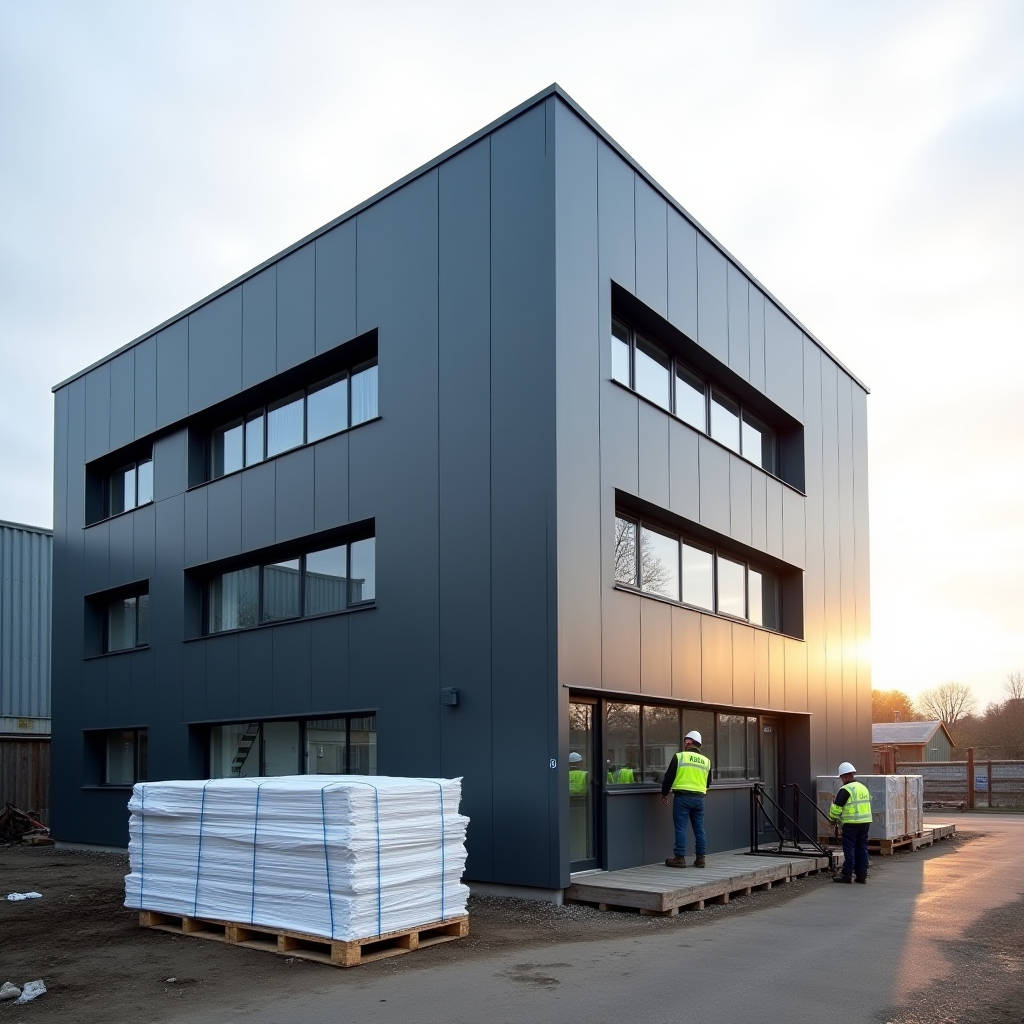
When a project specification calls for PE coating aluminum, the first question from a facade contractor usually isn't about the chemistry. It's about the budget envelope, the lead time, and whether the coating will still look acceptable three years after handover. PE coating aluminum — polyester-coated solid aluminium sheet — sits at the intersection of cost sensitivity and architectural ambition. It dominates mid-rise commercial cladding, interior lobby panels, soffit liners, and retail fascias across Southeast Asia, the Middle East, and Africa. The material itself is straightforward: a solid aluminium substrate (typically 1.5mm to 3.0mm thick, alloy 3003 or 5052) with a factory-applied polyester paint layer, baked at approximately 240°C to form a dense, semi-flexible protective skin. What makes or breaks a project isn't the datasheet. It's how the coating performs under real-world logistics, installation stress, and the slow grind of urban pollution. This article focuses on a dimension that rarely gets the attention it deserves: the vulnerability of PE-coated panels during global shipping, jobsite handling, and the first six months of exposure — and what procurement teams can do about it before a single panel leaves the factory.
PE Coating Aluminum and the Supply Chain Reality
Most technical discussions about PE coating aluminum stop at accelerated weathering tests and gloss retention figures. Those matter. But a panel that survives 2,000 hours of QUV-B testing in a lab can still arrive at a Dubai jobsite with scratches, edge chalking, or colour inconsistency across batches — problems that originate not in the coating chemistry, but in how the material is handled between the coating line and the installation crew.
The typical journey of a PE-coated solid aluminium panel involves at least five handling stages after the coating cures: slitting or shearing, interleaving, palletizing, container loading, and unloading at the destination port. Each stage introduces mechanical contact. Polyester coatings, with a typical dry film thickness of 16±2μm on the front side and 5-8μm on the reverse, are thinner than PVDF systems (which run 25-35μm). This is not a defect — it's a design characteristic that keeps costs at roughly 40-60% of equivalent PVDF-coated panels. But it does mean the margin for handling error is narrower.
Field Note: On a 12,000m² hotel facade project in Nairobi, we traced 23% of on-site panel rejections to scratches that occurred during container unloading. The PE coating wasn't defective — the interleaving paper had shifted during the 28-day sea freight journey, and the steel banding had been over-tensioned by 15%. The fix wasn't a better coating. It was a revised palletizing protocol and a switch to 80gsm interleaving paper instead of 60gsm.
What Actually Happens Inside a Shipping Container
Sea freight is the dominant mode for international aluminium cladding shipments. A 40-foot container can hold approximately 2,200-2,800m² of PE coating aluminum panels, depending on thickness and pallet configuration. The container environment is brutal in ways that laboratory conditioning never replicates.
Three factors conspire against PE coating aluminum during ocean transit. First, condensation. A container loaded in Shanghai in July at 35°C and 80% relative humidity will cross into the Indian Ocean where nighttime temperatures drop. The dew point shifts. Moisture condenses on the aluminium surface, and if the interleaving paper absorbs water and remains in contact with the PE coating for days, micro-blisters can form — not visible immediately, but appearing weeks after installation as the trapped moisture expands under solar gain.
Second, vibration abrasion. Container ships generate continuous low-frequency vibration. Panels that are not perfectly flat-stacked with uniform pressure distribution will experience micro-movement. The polyester coating, which has a pencil hardness of around HB to F (versus H to 2H for PVDF), can develop burnishing marks where panels rub against each other or against the paper interleaving.
Third, edge impact. PE coating aluminum panels are typically shipped with protective film on the decorative surface, but the edges — where the coating is thinnest due to the nature of roller-coating application — remain exposed. Forklift handling at transshipment ports (Jebel Ali, Port Klang, Mombasa) accounts for a disproportionate share of edge damage. Once the coating is compromised at the edge, the aluminium substrate is exposed to salt-laden air for the remainder of the journey.
Protective Film Specifications That Actually Work
Not all PE coating aluminum shipments use protective film, and among those that do, the film specification varies enormously. A 50-micron low-density polyethylene film with 180N/25mm peel strength might be standard for domestic truck delivery. For a 45-day sea freight journey to West Africa, that same film will degrade. UV exposure through container vents, combined with heat cycling, can cause the adhesive to cure onto the PE coating, leaving residue that requires solvent cleaning — which itself can attack the polyester surface if the wrong solvent is used.
The practical specification for long-haul PE coating aluminum shipments should include: 70-80 micron film thickness, UV-stabilized adhesive rated for 90 days of outdoor exposure, and peel strength between 200-350N/25mm. Below 200N, the film risks detaching during transit. Above 350N, removal becomes difficult and can pull coating fragments from the edges.
Futeng® has adopted a segmented approach: standard 50-micron film for domestic and short-haul Asian shipments, upgraded 75-micron UV-stabilized film for Middle East and African routes, and optional edge-protection profiles for projects exceeding 5,000m². The cost difference is approximately $0.35-0.55/m² — negligible against the cost of replacing 10% of panels on-site.
Coating Thickness, Hardness, and the Economics of Durability
PE coating aluminum is often positioned as the "budget" option in the coating hierarchy. That framing is misleading. The correct framing is that PE coating is the optimal choice for applications where the performance requirements are well-defined and the cost of over-specification is real.
The table below captures the practical performance envelope of the three common coating systems on solid aluminium panels. The data is drawn from a combination of AAMA 2605, AAMA 2604, and AAMA 2603 standards, supplemented by manufacturer technical data sheets and field performance observations.
| Parameter | PE (Polyester) | HDP (High-Durability Polyester) | PVDF (70% Kynar 500) |
|---|---|---|---|
| Standard Reference | AAMA 2603 | AAMA 2604 | AAMA 2605 |
| Typical DFT (Front) | 16±2 μm | 20-25 μm | 25-35 μm |
| Pencil Hardness | HB – F | F – H | H – 2H |
| Gloss Retention (5yr, Florida) | 30-50% | 50-70% | 70-85% |
| Colour Shift ΔE (5yr) | 5-8 | 3-5 | ≤2 |
| Relative Cost Index | 1.0 | 1.4-1.7 | 2.0-2.5 |
| Typical Warranty (Film Integrity) | 5-10 years | 10-15 years | 15-20 years |
| Recommended Application | Interior, soffits, low-rise sheltered facades | Mid-rise, semi-exposed | High-rise, coastal, landmark |
The numbers tell a story that specification writers sometimes miss. If a project is a three-storey commercial building in an inland city with a planned facade refresh cycle of 8-10 years, PE coating aluminum under AAMA 2603 is not a compromise — it is the rational engineering choice. The additional cost of PVDF would buy performance that the building's lifecycle does not require.
Colour Consistency and Batch Management Across Continents
One of the most persistent headaches with PE coating aluminum is colour matching across production batches. Unlike PVDF coatings, which are typically supplied by a small number of licensed resin manufacturers (Sherwin-Williams, PPG, AkzoNobel) with tightly controlled pigment formulations, polyester paint systems are produced by a much wider range of suppliers. Quality varies. So does colour consistency.
The mechanism is straightforward. Polyester resins accept pigments differently than fluoropolymer resins. The same RAL code — say, RAL 7016 Anthracite Grey — can exhibit a ΔE of 1.5-3.0 between two polyester paint batches from different suppliers, even when both claim compliance. For a 2,000m² facade where panels from three production batches are installed adjacent to each other, this difference is visible to the naked eye under overcast sky conditions, which are the most revealing for colour variation.
Pro Tip: Always request a "colour continuity certificate" from the coating applicator that specifies the maximum ΔE tolerance across batches — not just against the master standard. For PE coating aluminum, a practical specification is ΔE ≤ 1.5 under D65 illuminant, measured with a spectrophotometer on the actual coated panel, not on a laboratory drawdown card. And always retain a physical "golden sample" panel from the first approved batch, sealed in opaque packaging, stored on-site for the duration of the project.
Why Gloss Level Matters More Than Colour
Specifiers obsess over colour but often under-specify gloss. This is a mistake with PE coating aluminum. Gloss variation across panels is frequently more visually disruptive than minor colour differences. A 5-unit gloss difference at 30 GU (gloss units) is easily perceived when panels are viewed at a shallow angle — which is exactly how most facades are seen from street level.
Standard PE coating aluminum is available in a gloss range from 15-25 GU (matt) to 70-85 GU (high gloss). The practical recommendation is to specify gloss tolerance as ±5 GU for matt finishes and ±8 GU for high-gloss finishes, measured at 60° geometry per ISO 2813. For large projects, request that all panels for a single elevation be produced from the same paint batch, and that the coating line's gloss meter data be included in the quality documentation package.
Installation Damage: The First Six Months
The vulnerability window for PE coating aluminum doesn't close when the panels are installed. It extends through the first six months of exposure, during which the coating is simultaneously curing to its final hardness and being assaulted by construction site conditions.
Fresh polyester coatings continue to cross-link for several weeks after baking. During this period, the coating is slightly softer than its final state. Construction dust, particularly cementitious dust from adjacent concrete work, is highly alkaline. If it settles on PE-coated panels and is then activated by morning dew or light rain, it creates a micro-alkaline environment that can etch the polyester surface. The result is a patchy, dull appearance that is often misdiagnosed as a coating defect.
The preventive measures are procedural, not chemical. Schedule PE coating aluminum panel installation after the bulk of wet trades (concrete, plaster, masonry) are complete. If panels must be installed earlier, specify that they be covered with breathable protective sheeting — not polyethylene film, which traps moisture. For projects in coastal or industrial zones, a post-installation wash-down at 30-day intervals during the first three months removes aggressive deposits before they can bond to the partially cured coating.
Fabrication Stress and the Coating Edge
PE coating aluminum panels are rarely installed as flat sheets. They are routed, folded, perforated, and bent into cassettes, trays, and custom profiles. Each fabrication operation stresses the coating at the bend line. The polyester coating's flexibility — one of its genuine advantages over PVDF — allows it to survive a 90-degree fold on a 2mm radius without cracking, provided the coating is at room temperature. At 5°C, the same bend can produce micro-cracks that are invisible to the naked eye but open pathways for moisture ingress.
This temperature sensitivity is particularly relevant for projects in northern China, Central Asia, and Eastern Europe where fabrication may occur in unheated workshops during winter. The fix is simple: bring the aluminium to a minimum of 15°C before bending, or specify a slightly larger bend radius (2.5-3.0T, where T is the sheet thickness) for cold-weather fabrication.
For projects that require extensive perforation — common in acoustic cladding and sunscreen applications — the perforation process creates hundreds of cut edges per panel. Each edge is a potential initiation point for coating delamination. The quality of the polyester coating's adhesion to the aluminium substrate becomes critical. A well-executed PE coating system on properly pre-treated aluminium (chrome-free conversion coating per ISO 2812-1, applied at 0.5-1.0 g/m²) will show no edge creep beyond 0.5mm after 1,000 hours of salt spray testing per ASTM B117. Poor pre-treatment, or no pre-treatment at all, will show edge creep of 3-5mm under the same conditions.
Specifying PE Coating Aluminum for International Procurement
For procurement managers and quantity surveyors, the specification of PE coating aluminum needs to translate into contract language that is enforceable and verifiable. The following checklist is drawn from real project experience across multiple continents.
- Substrate: Aluminium alloy 3003 or 5052, temper H14 or H24, thickness as specified (typically 2.0mm or 2.5mm for solid cladding panels). Mill finish to EN 573-3 and EN 485-2.
- Pre-treatment: Chrome-free conversion coating, minimum coating weight 0.5 g/m². Test panels per ISO 9227 (neutral salt spray) for 1,000 hours, maximum edge creep 1.0mm.
- PE Coating System: Polyester primer (5-8μm) plus polyester topcoat (16±2μm), total DFT 21-26μm. Backer coat 5-8μm on reverse side. Bake temperature 230-250°C, peak metal temperature 240°C for minimum 90 seconds.
- Performance: AAMA 2603 compliant. Gloss retention ≥50% after 5 years South Florida exposure. Colour change ΔE ≤5.0. Chalk rating ≥6 per ASTM D4214.
- Packaging: UV-stabilized PE protective film, 70-80μm, peel strength 200-350N/25mm. Interleaving paper 80gsm minimum. Edge protectors on all pallet corners. Container loading inspection report with photographs.
- Documentation: Mill test certificates for aluminium, paint batch certificates, pre-treatment quality records, gloss and colour measurement data, packing list with panel-by-panel identification.
Futeng® supplies PE coating aluminum panels to projects in over 20 countries, and the documentation package has become as important as the panels themselves. A well-documented shipment clears customs faster, resolves disputes faster, and provides the traceability that facade consultants increasingly demand.
When PE Coating Aluminum Is the Wrong Choice
Honest engineering means acknowledging limitations. PE coating aluminum is not suitable for every application, and specifying it incorrectly creates problems that no amount of careful handling can solve.
PE coating is the wrong choice for: buildings within 500 metres of breaking surf in marine environments (salt spray combined with UV creates a synergistic degradation mechanism that accelerates polyester chalking); high-rise towers above 50 metres where access for maintenance is difficult and the cost of re-coating exceeds the initial coating cost differential; and any application where the specifier requires a 20-year colour and gloss warranty — that is PVDF territory, and no amount of wishful thinking changes the chemistry.
PE coating is the right choice for: interior wall cladding, ceiling panels, and lobby features where UV exposure is minimal; low-rise commercial facades (1-4 storeys) in urban or suburban settings with moderate pollution levels; soffit panels and under-eave linings that are sheltered from direct rain; retail and hospitality interiors where colour vibrancy and cost-effectiveness matter more than decades-long weatherability; and industrial building envelopes where the aesthetic expectation is "clean and professional" rather than "architectural landmark."
Practical Quality Verification on Arrival
When a container of PE coating aluminum panels arrives at the project site, the window for rejecting defective material is narrow. A structured receiving inspection takes 2-3 hours for a full container and pays for itself many times over.
The inspection protocol should cover: visual inspection of 10% of panels (randomly selected, not just the top layer on each pallet) under diffuse daylight or D65-standard lighting; gloss measurement on 5% of panels using a calibrated 60° gloss meter; colour measurement on 5% of panels using a portable spectrophotometer, compared against the approved golden sample; coating thickness measurement using an eddy-current gauge (ISO 2360) on 5% of panels, with a minimum of 5 readings per panel; adhesion testing using the cross-hatch method (ISO 2409) on one panel per pallet, with acceptance at Class 1 or better; and protective film peel test on one panel per pallet to verify that the film removes cleanly without adhesive transfer.
Document the results. Photograph any defects with a scale reference. If the rejection rate exceeds 5%, halt installation and notify the supplier with the inspection data. A professional supplier — Futeng® included — will have a claims procedure that requires this data to process replacements or credit.
Looking Ahead: PE Coating in a Changing Regulatory Landscape
The polyester coating industry is not static. Environmental regulations, particularly in the European Union and increasingly in the Gulf Cooperation Council countries, are pushing coating manufacturers toward lower-VOC formulations, chrome-free pre-treatments, and polyester resins with higher bio-based content. These changes affect PE coating aluminum performance in subtle ways that specifiers should track.
Waterborne polyester coatings, which reduce VOC emissions by 60-80% compared to solvent-borne systems, are gaining market share. Their application characteristics differ: they require more careful humidity control during spraying and longer flash-off times. The resulting film properties are comparable to solvent-borne systems in terms of hardness and flexibility, but the long-term weathering data set is shorter — 10-15 years versus 30+ years for established solvent-borne systems.
For procurement teams, the practical implication is that coating system specifications should be reviewed every 3-5 years against the current regulatory environment in the project's jurisdiction. A PE coating aluminum specification written in 2019 may reference standards or formulations that have since been superseded. The American Architectural Manufacturers Association (AAMA) updates its standards periodically, and the International Organization for Standardization (ISO) maintains a comprehensive library of coating test methods that form the backbone of international procurement specifications.
PE coating aluminum remains, for a large segment of the global construction market, the most rational balance of cost, aesthetics, and adequate durability. The key is not to treat it as a commodity item with interchangeable suppliers, but as an engineered material whose performance depends on the entire chain: pre-treatment quality, coating application control, packaging specification, shipping conditions, and installation sequencing. Get those right, and PE coating aluminum delivers exactly what it promises — no more, no less.