FEVE Coating Aluminum Corrosion Resistance in Marine and Industrial Facade Applications
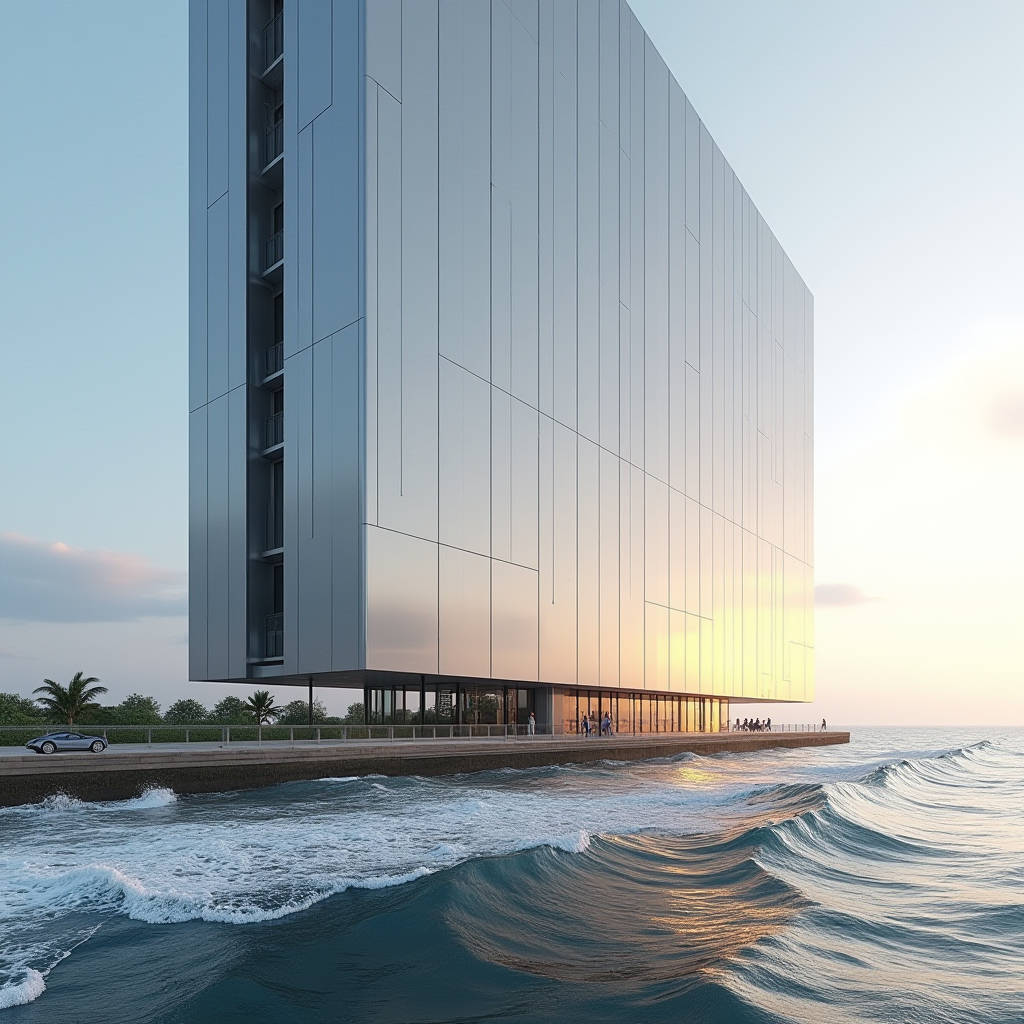
When a project specification calls for 30-year exterior durability on solid aluminum cladding panels, the conversation almost always narrows to fluoropolymer chemistry. Among the options available, FEVE coating aluminum has become the subject of intense scrutiny from facade consultants and building envelope engineers who need to reconcile laboratory data with real-world exposure. The question is not simply whether FEVE outperforms conventional polyester—that much is settled. The real debate sits at the intersection of accelerated weathering protocols, salt-spray resistance, and what actually happens on a coastal high-rise after two decades of salt-laden wind. This article examines the corrosion resistance mechanisms of FEVE coating aluminum from the perspective of a specifier, with particular attention to the pretreatment chain, the electrochemical realities of 6061 and 5052 substrates, and the test standards that matter when writing a performance specification.
Why Corrosion Resistance Is the Deciding Factor for FEVE Specification
Architects tend to fixate on gloss retention and color stability. Those are legitimate concerns, but for the contractor standing behind a 10-year workmanship warranty on a building three blocks from the ocean, corrosion is the failure mode that keeps people awake at night. FEVE coating aluminum earns its place in marine and industrial environments because the fluoroethylene vinyl ether resin backbone is inherently resistant to hydrolysis, UV scission, and—critically—chloride ion penetration. Unlike polyester or even standard PVDF systems, a properly crosslinked FEVE film creates a dense barrier that slows the transport of water, oxygen, and chloride ions to the aluminum substrate.
The numbers tell part of the story. In neutral salt spray testing per ASTM B117, FEVE-coated 5052 aluminum panels routinely exceed 4,000 hours with no blistering, no under-film corrosion, and scribe creep typically under 2mm. That is roughly double what a high-quality 70% PVDF system delivers under identical conditions. But the raw hours matter less than the failure mode. FEVE systems tend to fail by gradual erosion of the topcoat rather than by catastrophic delamination—a distinction that gives facility managers a predictable maintenance window rather than an emergency reclad.
Field Note: On a 2018 project in Dammam, Saudi Arabia, we specified FEVE coating aluminum for solid 3.0mm panels on a waterfront hotel. After five years of exposure to 45°C summers, high humidity, and airborne chlorides from the Arabian Gulf, the panels showed a Delta E of 1.8 and zero filiform corrosion at cut edges. The adjacent PVDF-finished louver blades—same substrate, same pretreatment—had visible edge creep at year three. The difference was the coating chemistry, not the installation.
Pretreatment Is the Real Performance Differentiator
No fluoropolymer topcoat—FEVE or otherwise—can compensate for a compromised pretreatment layer. The industry learned this the hard way in the 1990s when several high-profile projects in Southeast Asia experienced premature coating failure traced to inadequate chromate conversion. Modern FEVE coating aluminum systems rely on a multi-stage pretreatment chain that typically includes alkaline degreasing, acid etching, and a hexavalent or trivalent chromium conversion coating applied at 200-400 mg/m². The conversion layer serves two functions: it passivates the aluminum surface by filling microscopic pits and crevices, and it provides a mechanical and chemical anchor for the primer.
Recent research has pushed the envelope further. A 2024 study on metal-modified FEVE coatings applied to 6061 aluminum alloy incorporated a micro-arc oxidation (MAO) pretreatment layer beneath the fluoropolymer topcoat. The MAO process grows a ceramic-like oxide layer directly on the aluminum surface at thicknesses of 10-50 microns, creating a substrate that is orders of magnitude more resistant to chloride attack than bare or chromate-converted aluminum. When combined with FEVE topcoat chemistry, the MAO + FEVE system demonstrated corrosion current densities two orders of magnitude lower than chromate + FEVE in electrochemical impedance spectroscopy testing. This is laboratory-stage work, but it points toward a future where FEVE coating aluminum on MAO-treated substrates could push service life well beyond 40 years in C5-M marine environments per ISO 12944.
Pretreatment Options at a Glance
| Pretreatment Method | Typical Coating Weight | Salt Spray Performance (ASTM B117) | Environmental Profile | Relative Cost |
|---|---|---|---|---|
| Hexavalent Chrome (Cr⁶⁺) | 200-400 mg/m² | 3,000+ hours | REACH-restricted; requires waste treatment | Low |
| Trivalent Chrome (Cr³⁺) | 150-300 mg/m² | 2,500-3,000 hours | REACH-compliant; lower toxicity | Moderate |
| Chromium-Free (Ti/Zr-based) | 50-100 mg/m² | 1,500-2,500 hours | Fully compliant; variable adhesion | Moderate |
| Micro-Arc Oxidation (MAO) | 10-50 μm oxide layer | 4,000+ hours (with FEVE topcoat) | No heavy metals; high energy input | High (emerging) |
The practical takeaway: if your project is in a C3 or C4 environment per ISO 12944-2, a trivalent chrome pretreatment under FEVE is more than adequate. For C5-M marine or C5-I industrial, the incremental cost of hexavalent chrome or the emerging MAO route becomes defensible when weighed against the logistics of scaffold access and business interruption during a premature reclad.
Electrochemical Reality: Why Substrate Alloy Matters
FEVE coating aluminum is not a monolithic product category. The aluminum alloy underneath the coating stack has a significant influence on long-term corrosion behavior, particularly at cut edges, fastener penetrations, and areas where the coating may be damaged during handling or installation. The two alloys most commonly encountered in solid aluminum cladding are 5052 (Al-Mg) and 6061 (Al-Mg-Si).
Alloy 5052 contains approximately 2.5% magnesium and 0.25% chromium. It offers excellent corrosion resistance in marine atmospheres because the magnesium-rich intermetallic phases are relatively noble and do not create strong galvanic micro-cells at the surface. When FEVE coating aluminum on 5052 substrate, the primary corrosion risk is pitting at chloride-concentrated sites rather than intergranular attack. This makes 5052 the preferred choice for unperforated rain-screen panels in coastal applications.
Alloy 6061 contains magnesium and silicon in roughly equal proportions (0.8-1.2% Mg, 0.4-0.8% Si), with copper present at up to 0.4%. The copper-bearing intermetallic particles (primarily Al₂Cu and Al-Fe-Si-Cu phases) are cathodic relative to the aluminum matrix, creating localized galvanic cells that accelerate corrosion if the coating barrier is breached. This is why 6061-T6, despite its superior mechanical properties, requires more rigorous pretreatment and thicker coating films when used in aggressive environments. The MAO pretreatment route discussed earlier is particularly relevant for 6061, as the thick ceramic oxide layer effectively isolates the copper-rich intermetallics from the environment.
Pro Tip: When specifying FEVE coating aluminum for laser-cut or waterjet-cut panels with exposed edges, require the fabricator to apply a brush-applied edge sealant—typically a two-component epoxy or a solvent-based FEVE touch-up—to all cut edges prior to installation. The cut edge is where the coating-substrate interface is most vulnerable, and field-applied touch-up is rarely as durable as factory-applied coating. Put this in Section 05 40 00 of your spec, not in a note on the shop drawings.
Accelerated Testing: What the Numbers Actually Predict
Specifiers rely heavily on accelerated weathering and corrosion tests to compare coating systems, but the correlation between laboratory hours and service life is not linear. FEVE coating aluminum systems are typically evaluated against three core standards:
- ASTM B117 (Neutral Salt Spray): Continuous exposure to 5% NaCl fog at 35°C. This is the most widely cited corrosion test, but it is also the most misleading when interpreted in isolation. The constant wetness and absence of drying cycles mean B117 tends to overestimate the corrosion rate of aluminum substrates while underestimating the importance of coating adhesion under cyclic conditions.
- ASTM G85 (Cyclic Salt Fog): Incorporates wet/dry transitions and, in the modified A3 version, acetic acid to accelerate attack. This is a more realistic simulation of outdoor exposure because the drying cycles concentrate chloride ions at coating defects, mimicking the mechanism that drives filiform corrosion in the field.
- ISO 12944-6 (Cyclic Aging): Combines salt spray, condensation, and UV exposure in a programmed cycle. Systems tested to C5-M high durability under this standard must survive 2,680 hours of cyclic testing with no blistering, cracking, or adhesion loss beyond defined limits.
A FEVE coating aluminum system that passes 4,000 hours of ASTM B117 with scribe creep under 2mm is performing well. But a system that passes 2,000 hours of ASTM G85 A3 with the same scribe creep is arguably more robust for real-world marine exposure. The specifier's job is to understand which test protocol is most relevant to the project's specific environmental stressors and to write the performance specification accordingly.
Comparing FEVE with Other Fluoropolymer and Non-Fluoropolymer Systems
The corrosion resistance hierarchy among architectural coating systems for aluminum is well established, but the quantitative differences are worth examining. The table below consolidates data from multiple coating manufacturers' technical data sheets and independent test reports, normalized to a 3.0mm 5052-H32 aluminum substrate with hexavalent chrome pretreatment.
| Coating System | Nominal DFT (μm) | ASTM B117 (hours to scribe creep >3mm) | ASTM G85 A3 (hours to blister rating 8) | Filiform Corrosion Resistance (ISO 4623) | Typical Service Life in C5-M (years) |
|---|---|---|---|---|---|
| Standard Polyester (SP) | 25-30 | 500-800 | 300-500 | Poor | 5-8 |
| Super Durable Polyester (SDP) | 30-35 | 1,000-1,500 | 600-900 | Fair | 10-15 |
| 70% PVDF (Kynar 500) | 30-40 | 2,000-2,500 | 1,200-1,800 | Good | 20-25 |
| FEVE (Solvent-Based) | 35-45 | 3,500-5,000 | 2,000-3,000 | Excellent | 30-40 |
| FEVE (Powder) | 60-80 | 4,000-6,000 | 2,500-3,500 | Excellent | 30-40+ |
FEVE powder coatings deserve a separate mention. The higher dry film thickness achievable with powder—typically 60-80 microns in a single coat versus 35-45 microns for liquid FEVE—translates directly to improved barrier properties. The absence of solvent also eliminates the micro-porosity that can form in liquid-applied films as solvents evaporate during curing. For projects where corrosion resistance is the primary specification driver, FEVE powder on a chrome pretreatment is arguably the most robust system available in commercial production today. The trade-off is a slightly lower gloss ceiling (typically 80-85 GU at 60° versus 90+ for liquid FEVE) and a narrower color palette for metallics and micas.
Supply Chain Realities: Sourcing FEVE Coating Aluminum for Large-Scale Projects
Specifying FEVE coating aluminum is one thing; procuring 8,000 square meters of it with consistent quality across multiple batches is another. The global supply chain for FEVE resins is concentrated among a handful of chemical manufacturers—AGC Chemicals (Lumiflon®), Daikin, and Dongyue being the primary producers. Coating formulators license these resins and develop proprietary formulations that meet AAMA 2605 performance requirements. The fabricator then applies the coating to aluminum sheet or coil under controlled conditions.
This multi-tier supply chain creates several quality control choke points. The resin batch must be verified for molecular weight distribution and hydroxyl value, as these parameters directly affect crosslink density and, consequently, barrier properties. The coating formulation must be tested for pigment dispersion quality, because agglomerated pigment particles create pathways for moisture ingress. And the application process—whether spray, roll-coat, or electrostatic powder—must maintain consistent film thickness across the panel surface, with particular attention to edges and corners where the coating tends to thin out.
For procurement managers handling large-scale facade projects, the practical approach is to require the coating applicator to provide batch-specific test reports for each production run, including crosshatch adhesion (ISO 2409), pencil hardness (ASTM D3363), and impact resistance (ASTM D2794). A reputable supplier such as Futeng® can coordinate this documentation as part of the mill test certificate package, ensuring traceability from resin batch to finished panel. This is not a luxury; it is the minimum documentation required to defend a warranty claim five years down the line.
Edge Corrosion and the Installation Factor
Even the most rigorously tested FEVE coating aluminum system can fail at the installation stage. The primary vulnerability is the cut edge. When a solid aluminum panel is cut to size on site or in the fabricator's shop, the raw aluminum edge is exposed. In a marine or industrial atmosphere, chloride ions will attack this edge, and the corrosion can propagate beneath the coating as filiform corrosion—thin, thread-like delamination that spreads from the edge inward.
The defense against edge corrosion is multi-layered. First, panels should be fabricated to final dimensions in the factory where edge treatment can be applied under controlled conditions. Second, the edge treatment itself should be a two-component epoxy primer or a solvent-based FEVE touch-up applied at a minimum dry film thickness of 25 microns. Third, the panel joint design should incorporate a drained and ventilated cavity that allows any moisture reaching the panel edge to evaporate rather than accumulate. The Centre for Window and Cladding Technology (CWCT) in the UK provides detailed guidance on rainscreen cavity design that is directly applicable to FEVE-coated solid aluminum panels.
Fastener selection is another installation detail that impacts corrosion performance. Stainless steel fasteners (grade 304 or 316) are standard for aluminum cladding, but the specific grade matters. In chloride-rich environments, 316 stainless is mandatory because the molybdenum content provides resistance to pitting corrosion that 304 lacks. The fastener should also be isolated from the aluminum panel with a nylon or EPDM washer to prevent galvanic coupling between the stainless steel and the aluminum substrate.
Environmental and Regulatory Considerations
The corrosion resistance of FEVE coating aluminum has an environmental dimension that goes beyond the coating chemistry itself. The pretreatment stage, as discussed earlier, has historically relied on hexavalent chromium compounds that are now restricted under EU REACH and subject to stringent workplace exposure limits under OSHA in the United States. The industry is migrating toward trivalent chromium and chromium-free alternatives, but the corrosion performance of these systems—particularly in C5-M environments—is not yet equivalent to hexavalent chrome.
This regulatory pressure is one of the factors driving interest in FEVE powder coatings, which can achieve equivalent or superior corrosion resistance with chromium-free pretreatment because the higher film thickness and absence of solvent-induced porosity compensate for the less aggressive pretreatment. The powder route also eliminates volatile organic compound (VOC) emissions from the coating process, which aligns with increasingly stringent air quality regulations in markets such as California (SCAQMD Rule 1113) and the European Union (Industrial Emissions Directive).
For the specifier, the environmental calculus is nuanced. A FEVE coating aluminum system with hexavalent chrome pretreatment may offer the best corrosion resistance today, but it carries a long-term liability if the building is ever decommissioned and the panels must be disposed of as hazardous waste. The chromium-free powder route eliminates this liability while delivering comparable performance. The decision should be informed by the project's anticipated service life, the severity of the exposure environment, and the owner's corporate sustainability commitments.
Writing the Performance Specification
Translating all of this technical detail into a contract-ready performance specification is where the rubber meets the road. A well-written spec for FEVE coating aluminum on solid panels should address the following points as minimum requirements:
- Substrate: Specify the aluminum alloy and temper (e.g., 5052-H32 or 6061-T6), with a note that 5052 is preferred for marine environments due to superior corrosion resistance.
- Pretreatment: Require a minimum of five-stage pretreatment (alkaline clean, rinse, acid etch, rinse, chrome conversion coating) with coating weight verified by X-ray fluorescence per ASTM B449.
- Primer: Specify a two-component epoxy or FEVE-based primer at 5-10 microns DFT, with the primer chemistry matched to the topcoat by the coating manufacturer.
- Topcoat: Require FEVE resin content of minimum 50% by weight in the dry film, with the balance being pigments and additives. Cite AAMA 2605-20 as the governing performance standard.
- Film Thickness: Minimum total DFT of 40 microns for liquid FEVE, 60 microns for powder FEVE, measured per ISO 2360 on a flat area of the panel at least 25mm from any edge.
- Corrosion Testing: Require ASTM G85 A3 cyclic salt fog testing for a minimum of 2,000 hours with scribe creep not exceeding 2mm and blister rating not below 8 (ASTM D714).
- Edge Treatment: Require factory-applied edge sealant on all cut edges, with the sealant chemistry compatible with the FEVE topcoat system.
- Quality Assurance: Require batch-specific test reports for each production run, including adhesion, film thickness, gloss, color (Delta E ≤ 2.0 per CIE Lab), and impact resistance.
This level of detail in the specification protects the owner, the architect, and the contractor by establishing clear, measurable criteria that can be verified by third-party testing. It also eliminates the ambiguity that leads to value-engineering substitutions that compromise long-term corrosion performance.
The Bottom Line on FEVE Corrosion Performance
FEVE coating aluminum represents the current ceiling of commercially available corrosion protection for architectural aluminum cladding. The chemistry is proven, the test data is extensive, and the track record in aggressive environments now spans more than three decades. But the coating is only one link in a chain that includes substrate selection, pretreatment, application quality, edge detailing, and installation practice. A failure at any of these links will compromise the system regardless of how good the FEVE topcoat is.
For the procurement manager, the key is to qualify the coating applicator as rigorously as the coating chemistry. For the architect, the key is to write a specification that addresses the entire system rather than citing a single performance standard. And for the contractor, the key is to treat edge sealing and fastener isolation not as optional extras but as essential components of the corrosion protection strategy. Get these things right, and FEVE coating aluminum will deliver the 30-to-40-year service life that the laboratory data promises. Get them wrong, and even the best fluoropolymer chemistry cannot save the facade from premature failure.