PVDF Coating Aluminum Specification Guide for Facade Engineers and Contractors
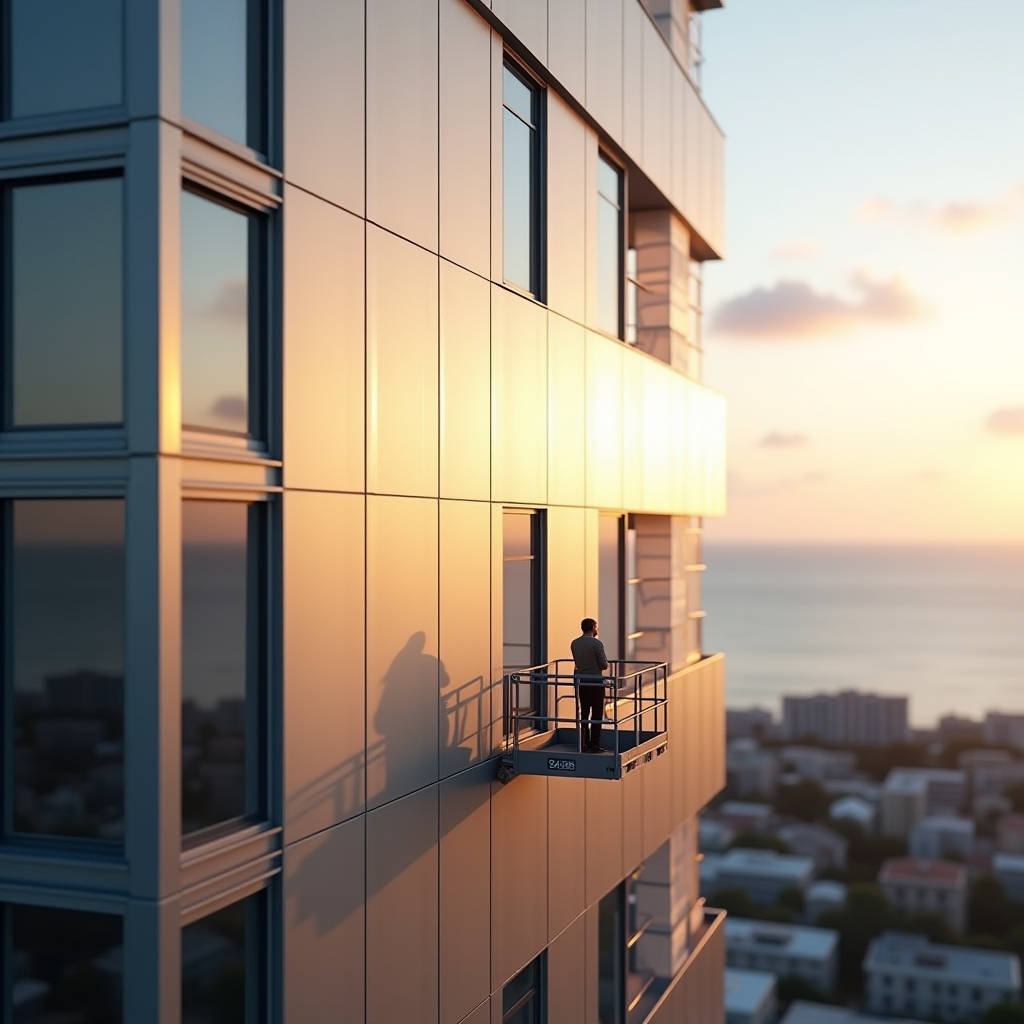
When a curtain wall panel fails at the 35th floor, nobody blames the aluminum. They blame the coating. That is the reality every facade contractor and specifier lives with. PVDF coating aluminum is not just a finish choice — it is a long-term liability decision wrapped in microns of fluoropolymer resin. A single specification error during the design phase can cascade into warranty disputes, colour drift across building elevations, and six-figure remediation costs five years after handover. This article dissects the specification chain from the perspective of a facade engineer standing on a swing stage, looking at panels that have weathered three seasons of UV, salt spray, and thermal cycling. The focus here is narrow and deliberate: how to specify PVDF coating aluminum so that what leaves the coater's line matches what the architect signed off on, and what the contractor installs matches what the owner expects to see a decade later.
Why PVDF Coating Aluminum Dominates the Architectural Envelope
Polyvinylidene fluoride (PVDF) has been the benchmark for architectural aluminum finishing since the 1960s, when Pennwalt Corporation first commercialised Kynar 500® resin. The chemistry is straightforward: PVDF is a thermoplastic fluoropolymer with a carbon-fluorine bond that is among the strongest single bonds in organic chemistry. That bond energy — roughly 485 kJ/mol — means ultraviolet radiation simply does not have enough energy to break it. This is why properly applied PVDF coating aluminum can face 20 years of equatorial sun exposure without measurable film degradation.
The architectural market has standardised around two resin grades: Kynar 500® and Hylar 5000®. Both require a minimum 70% PVDF resin content by weight in the colour coat. When a coating data sheet says "70% PVDF," it means the resin binder — the part that actually forms the film — contains 70% PVDF and 30% acrylic or other modifying resins. The acrylic component is not filler; it provides pigment wetting, adhesion to the aluminum substrate, and some flexibility. But drop below 70% PVDF, and the coating is no longer compliant with AAMA 2605, the most stringent architectural coating specification in North America.
This matters because procurement teams sometimes chase cost savings by accepting coatings with 50% or even 30% PVDF content, marketed as "PVDF-based" or "modified PVDF." These are not the same product. A 50% PVDF coating will show noticeable chalking within 5-7 years in high-UV environments. The specifier who signs off on that is accepting a known performance gap.
Field Note: When reviewing coating certifications, request the batch-specific resin content test report — not just the generic data sheet. We have seen cases where the data sheet claimed 70% PVDF but the batch test showed 63%. The coater had switched resin suppliers mid-project without disclosure. The panels passed visual inspection at installation but started chalking unevenly after 18 months. The cost to strip and recoat on-site exceeded the original panel fabrication cost.
Reading the Specification: AAMA 2605 vs. AAMA 2604 vs. AAMA 2603
Every PVDF coating aluminum specification conversation starts with three numbers: 2605, 2604, and 2603. These are AAMA (American Architectural Manufacturers Association) standards that define minimum performance requirements for organic coatings on aluminum extrusions and panels. Understanding the differences is not academic — it directly affects project cost, warranty duration, and the coating system's ability to survive the project's specific microclimate.
| Performance Criterion | AAMA 2605 (High-Performance) | AAMA 2604 (High-Performance, Interior) | AAMA 2603 (Standard Performance) |
|---|---|---|---|
| Minimum PVDF Resin Content | 70% (Kynar 500® / Hylar 5000®) | 50% minimum | No minimum; typically polyester or acrylic |
| South Florida Exposure (10 years) | Max 5 ΔE colour change; max 8 gloss retention units loss | Max 5 ΔE colour change (5 years) | Not rated for extended exterior exposure |
| Salt Spray Resistance (ASTM B117) | 4,000 hours minimum | 3,000 hours minimum | 1,500 hours minimum |
| Humidity Resistance (ASTM D2247) | 4,000 hours minimum | 3,000 hours minimum | 1,500 hours minimum |
| Pencil Hardness (minimum) | F | F | HB |
| Typical Warranty | 20-30 years film integrity; 10-20 years colour | 10-15 years | 5-10 years |
| Typical Cost Multiplier (vs. 2603) | 2.0x – 2.5x | 1.3x – 1.6x | 1.0x (baseline) |
| Recommended Application | Exterior curtain wall, monumental facades, coastal buildings | Interior feature walls, sheltered exterior soffits | Interior only; non-visible structural components |
The AAMA 2605 standard is the only one that mandates 70% PVDF resin. It also requires 10-year South Florida exposure testing — actual outdoor weathering at a test farm near Miami, not just accelerated QUV chamber testing. This is critical because accelerated tests can miss certain degradation modes. For example, some coating systems that pass 5,000 hours of QUV-B testing still fail after 5 years of real Florida exposure due to the combined effect of UV, moisture, and temperature cycling that no single accelerated test replicates.
For projects in the Middle East, Southeast Asia, or coastal Australia, AAMA 2605 is the baseline — not a premium upgrade. The combination of high UV index, salt-laden air, and diurnal temperature swings of 20°C or more accelerates coating degradation in ways that AAMA 2604 systems were never designed to handle. Specifying 2604 for a Dubai high-rise is not saving money; it is deferring a much larger cost to the building owner.
The Coating System Architecture: More Than Just a Colour Layer
A PVDF coating aluminum system is not a single layer of paint. It is a multi-layer engineered film, and each layer has a specific function. Understanding this architecture helps specifiers evaluate coating bids and spot corners being cut.
The standard AAMA 2605-compliant system for aluminum panels consists of three layers:
- Pretreatment / Conversion Coating: Before any PVDF touches the aluminum, the substrate undergoes cleaning and chemical conversion. The industry standard is a chrome-based conversion coating (chrome phosphate or chrome chromate) applied in a multi-stage spray or immersion line. This layer is only 0.5-1.0 microns thick but it does two things: it etches the aluminum surface to create mechanical adhesion and it passivates the metal to prevent filiform corrosion from creeping under the coating at cut edges or fastener holes. Chrome-free alternatives exist (titanium/zirconium-based) and are increasingly specified in Europe under REACH regulations, but they require tighter process control to achieve equivalent performance.
- Primer Coat: A 5-10 micron epoxy or polyurethane-based primer is applied over the conversion coating. The primer provides the primary corrosion barrier and the adhesive bridge between the metal and the PVDF topcoat. Some coaters use a primer tinted to match the topcoat colour, which helps hide minor scratches. The primer also contains corrosion-inhibiting pigments — strontium chromate being the traditional choice, though chrome-free alternatives are gaining market share.
- Colour / Topcoat: The 25-35 micron PVDF colour coat. This is where the 70% PVDF resin requirement applies. The remaining 30% is acrylic resin plus the pigment system. Inorganic pigments (mixed metal oxides) provide the best fade resistance; organic pigments offer brighter colours but degrade faster. A specifier choosing a bright red or vibrant blue PVDF coating aluminum panel should expect a shorter colour warranty than the same building in earth tones, because organic red and blue pigments simply do not have the UV stability of iron oxide or cobalt-based inorganic pigments.
Many projects also add a fourth layer: a 12-15 micron clear PVDF topcoat over the colour coat. This clear coat adds depth to metallic finishes, provides additional UV screening for the colour layer, and offers a sacrificial surface that can be cleaned more aggressively without affecting the colour. For coastal projects, the clear coat is strongly recommended — it adds roughly 8-12% to the coating cost but significantly extends the gloss retention timeline.
Colour Consistency and Delta E: The Metric That Drives Facade Disputes
Ask any facade contractor what generates the most punch-list items on a PVDF coating aluminum project, and the answer is almost always colour variation. The human eye is remarkably sensitive to colour differences across adjacent panels, and what looks acceptable under factory lighting can look unacceptable under morning sunlight at a 30-degree viewing angle.
The industry measures colour difference using Delta E (ΔE), a calculation derived from the CIE L*a*b* colour space. The formula — ΔE = √[(ΔL)² + (Δa)² + (Δb)²] — quantifies the total colour difference between two measurements. For PVDF coating aluminum, the key thresholds are:
- ΔE ≤ 1.0: Imperceptible to the human eye. This is the target for adjacent panels on the same elevation.
- ΔE ≤ 2.0: Noticeable only under controlled comparison. Generally acceptable for panels on different elevations or different batches.
- ΔE ≤ 3.0: Visible to a trained observer. AAMA 2605 allows up to 5 ΔE after 10 years, but this is cumulative degradation — not the starting point.
- ΔE > 3.0: Readily visible to most observers. Will generate complaints.
The practical challenge is that ΔE is measured with a spectrophotometer under controlled laboratory conditions (D65 illuminant, 10-degree observer). Real-world perception is influenced by gloss level, texture, viewing angle, and ambient light colour temperature. Two panels that measure ΔE 1.2 in the lab can look like ΔE 3.0 on a cloudy day because the diffuse light accentuates slight gloss differences.
Pro Tip: Before approving the final colour, request a set of "drift panels" — samples representing the upper and lower limits of acceptable colour variation for that specific formulation. The coater should produce panels at the agreed ΔE boundary (typically ±1.0 from the master standard). These drift panels become the contractual reference. If a production panel falls outside the drift panel range, it is rejected — no argument, no subjective judgment call. This practice has saved more facade projects from litigation than any warranty clause.
Metallic and Mica Finishes: The Hidden Complexity
Solid colours are relatively straightforward. Metallic and mica finishes on PVDF coating aluminum introduce a second dimension of variability: the orientation of reflective flakes within the coating film. Aluminum flakes, mica platelets, and pearlescent pigments create colour and sparkle effects that depend on viewing angle. This is measured as "flop" — the change in appearance between face-on and near-grazing viewing angles.
The problem is that flop is sensitive to application parameters. Spray gun distance, fluid flow rate, atomisation pressure, and even the ambient temperature and humidity in the coating booth affect how metallic flakes orient themselves in the wet film before it cures. A panel coated on a humid Monday morning can look visibly different from one coated on a dry Wednesday afternoon, even with identical paint formulation.
For large projects with metallic PVDF coating aluminum panels, the specification should mandate:
- All panels for a single elevation must be coated in a single continuous production run.
- If multiple runs are unavoidable, the coater must produce a "bridge panel" at the end of the first run and the beginning of the second, and both must be approved against the master standard.
- The contract should specify a maximum ΔE of 1.5 for metallic finishes (tighter than the 2.0 typically allowed for solids) and include a visual assessment under natural daylight as a supplementary acceptance criterion.
Futeng® has addressed this challenge in multiple large-scale projects by maintaining dedicated production lines for metallic finishes with automated spray parameters that are locked once the master sample is approved, eliminating operator-induced variability across shifts.
Film Thickness: The Microns That Matter
PVDF coating aluminum film thickness is specified in microns and verified with eddy-current gauges calibrated to the specific aluminum alloy substrate. The AAMA 2605 minimum is 30 microns (1.2 mils) total dry film thickness for a two-coat system (primer + colour). For three-coat systems (primer + colour + clear), the minimum is 40 microns (1.6 mils).
These are minimums, not targets. A well-run coating line typically achieves 35-45 microns for two-coat and 45-55 microns for three-coat systems. Film thickness below the minimum creates two risks: insufficient UV opacity (the coating becomes translucent to UV, which degrades the primer and eventually the substrate) and insufficient coverage of the aluminum surface profile, leading to pinpoint corrosion sites.
Excessive film thickness — above 75 microns — is also problematic. Thick PVDF films can develop internal stresses during curing that lead to micro-cracking, especially at formed edges and corners where the coating is stretched during panel fabrication. The ideal range is 35-55 microns for most architectural applications.
Specifiers should require the coater to provide dry film thickness measurements at a minimum of five points per panel (centre and four corners) and to record these in the batch quality documentation. For critical projects, a third-party inspection agency should independently verify film thickness on a statistical sampling basis per ISO 2808.
Accelerated Weathering Tests: What They Tell You and What They Do Not
Every PVDF coating aluminum data sheet references accelerated weathering results — typically QUV (ASTM G154) or xenon arc (ASTM G155) exposure. These tests are useful for comparative screening, but they have known limitations that every specifier should understand.
QUV-B testing uses fluorescent lamps with a peak emission at 313 nm, which is more aggressive than natural sunlight (which cuts off around 295 nm at the Earth's surface). This means QUV-B can degrade coatings through mechanisms that do not occur outdoors. QUV-A (340 nm peak) is a better match for natural sunlight's UV spectrum but still lacks the visible and infrared components that contribute to thermal cycling in real exposure.
Xenon arc testing provides a better spectral match to natural sunlight, including UV, visible, and some infrared. However, it still cannot replicate the wet-dry cycling, biological growth, and atmospheric pollutant exposure that real buildings experience. The correlation between 5,000 hours of xenon arc and 10 years of South Florida exposure is approximate at best.
The only reliable predictor of long-term PVDF coating aluminum performance is actual outdoor exposure data. AAMA 2605 requires 10 years of South Florida exposure for qualification. When evaluating a coating system, ask for this data — not just the accelerated test reports. If the coating formulation has been on the market for less than 10 years, ask for the oldest available outdoor exposure data and the correlation study between that data and the accelerated testing.
Fabrication After Coating: Protecting the Finish
PVDF coating aluminum is typically applied to flat sheet or coil before fabrication — the "post-painted" or "pre-painted" approach. The alternative is to fabricate first and coat afterward, but this is less common for architectural panels because complex geometries are harder to coat uniformly.
Post-coating fabrication — cutting, routing, bending, and punching — introduces risks to the coating integrity. The key concerns are:
- Edge damage: Shearing and routing expose bare aluminum at the cut edge. This is normal and acceptable for edges that will be hidden in the installed system (e.g., edges captured in gaskets or behind adjacent panels). For exposed edges, the specifier should require edge treatment — either a touch-up coating system approved by the PVDF manufacturer or a factory-applied edge coating.
- Bend line cracking: PVDF coatings are thermoplastic and can elongate significantly — typically 50-100% depending on formulation — but tight bend radii can still cause micro-cracking. The minimum bend radius for PVDF coating aluminum should be 2x the panel thickness for a 90-degree bend, with the coating on the outside of the bend. For tighter radii, the coating should be on the inside of the bend or the panel should be fabricated before coating.
- Scratching during handling: PVDF coatings have a pencil hardness of F to H, which is relatively soft compared to anodised finishes. Factory handling procedures must include protective interleaving, clean work surfaces, and operator training. On-site, panels should be stored vertically with protective film intact until installation.
Warranty Structure: Reading Between the Lines
PVDF coating aluminum warranties are typically issued by the coating manufacturer (not the panel fabricator or the coater) and cover two separate performance aspects: film integrity and colour retention. The standard AAMA 2605-compliant warranty offers 20-30 years for film integrity (no peeling, cracking, or blistering) and 10-20 years for colour retention (ΔE not exceeding 5.0).
The warranty is only as good as the conditions attached to it. Common exclusions and limitations include:
- Geographic restrictions: A warranty valid in North America may not apply to a project in Southeast Asia unless explicitly stated. The coating manufacturer's exposure data may not cover the specific climate zone.
- Substrate restrictions: The warranty typically applies only to specific aluminum alloys and tempers. Using an unapproved alloy can void the warranty.
- Pretreatment requirements: If the pretreatment is not performed to the coating manufacturer's specification, the warranty is void. This is a common point of failure — the coater may use a pretreatment that is "equivalent" but not approved by the coating manufacturer.
- Maintenance requirements: Most warranties require periodic cleaning (typically annually) to remove surface contaminants. Failure to clean can void the warranty, and the cleaning method must be approved — aggressive alkaline cleaners can damage PVDF coatings.
- Vertical vs. horizontal surfaces: Horizontal surfaces (parapet caps, ledges, sunshades) experience more severe exposure and may have shorter warranty terms or be excluded entirely.
For specifiers, the practical advice is to request the full warranty document — not just the summary — during the submittal review phase. Pay particular attention to the exclusions section and the claims procedure. A warranty that requires the building owner to ship panels back to the coater for evaluation is practically useless for an installed facade.
Coastal and Industrial Environments: Special Considerations
PVDF coating aluminum performs well in most environments, but coastal and industrial settings demand additional specification rigour. Salt spray, in particular, attacks aluminum through a different mechanism than simple weathering. Chloride ions penetrate the coating at microscopic defects and initiate pitting corrosion that can undercut the coating film.
For buildings within 5 km of a coastline, the specification should include:
- Minimum 50 microns total dry film thickness for a three-coat system, exceeding the AAMA 2605 minimum of 40 microns.
- Chrome-based pretreatment unless local regulations prohibit it. Chrome-free alternatives can work but require documented performance data in marine environments — do not accept generic equivalence claims.
- Aluminum alloy selection: 5000-series (Al-Mg) alloys offer better corrosion resistance than 3000-series (Al-Mn) for the substrate. For solid aluminum cladding panels, 5052 or 5754 alloys are preferred for coastal applications.
- Clear coat specification: A clear PVDF topcoat is mandatory, not optional, for coastal projects. It provides an additional barrier and a sacrificial layer.
Industrial environments with elevated SO₂ or NOₓ levels present a different challenge. These acidic pollutants can attack the acrylic component of the PVDF coating, leading to gradual gloss loss. The mitigation is the same as for coastal environments: thicker film build and a clear topcoat. Additionally, a more frequent cleaning schedule — every 6 months instead of annually — is recommended per AAMA maintenance guidelines.
Cost Drivers: What Actually Moves the Price
PVDF coating aluminum cost is driven by factors that are not always obvious to project teams focused on the per-square-metre coating price. Understanding these drivers helps in value engineering discussions and prevents scope gaps.
The base coating cost for AAMA 2605 PVDF on aluminum sheet typically ranges from USD 18-35 per square metre, depending on colour, finish type, and project volume. But this is only the coater's charge. The total cost impact includes:
- Colour formulation: A custom colour match adds USD 2,000-5,000 in one-time formulation and sample costs. Standard colours from the coater's library avoid this charge.
- Metallic and mica finishes: These typically add 15-25% to the per-square-metre coating cost due to higher material cost, slower application speed, and higher rejection rates.
- Clear coat: Adds 8-12% to coating cost but is strongly recommended for most exterior applications.
- Minimum batch charges: Most coaters have a minimum charge per colour, typically USD 3,000-8,000. For small projects with multiple colours, this can significantly increase the effective per-square-metre cost.
- Third-party inspection: Independent coating inspection adds USD 2,000-8,000 per project but is strongly recommended for projects over 5,000 square metres or with critical colour requirements.
Value engineering should focus on reducing the number of colours rather than downgrading the coating specification. Reducing from eight colours to three on a medium-sized project often saves more than switching from AAMA 2605 to 2604, and the performance penalty is avoided entirely.
Quality Assurance: The Inspection Protocol
A robust QA protocol for PVDF coating aluminum catches problems before panels leave the factory. The following inspection points should be included in the project specification:
- Incoming substrate inspection: Verify alloy, temper, surface condition, and flatness. Aluminum sheet with excessive mill oil or surface oxidation will not accept pretreatment uniformly.
- Pretreatment verification: Check conversion coating weight (typically 40-80 mg/ft² for chrome phosphate) using a weigh-strip-weigh method per ASTM B449.
- Wet film thickness: Measured immediately after each coating application using a comb gauge. This allows real-time adjustment of spray parameters.
- Dry film thickness: Measured after curing using a calibrated eddy-current gauge. Minimum five points per panel.
- Colour measurement: Spectrophotometer reading (D65/10°) at a minimum of three points per panel. Record L*, a*, b* values and ΔE against the master standard.
- Gloss measurement: 60-degree gloss meter reading. Record and compare to specification.
- Adhesion testing: Cross-hatch or pull-off adhesion testing per ISO 2409 or ASTM D3359 on a representative sample from each batch.
- Impact and flexibility: Reverse impact and bend testing to verify coating flexibility and adhesion after forming.
- Final visual inspection: Under controlled lighting (minimum 1,000 lux) at a distance of 1 metre. Check for craters, orange peel, dirt inclusions, and colour consistency.
For projects exceeding 10,000 square metres of PVDF coating aluminum, the QA protocol should include a retained sample program — a set of panels from each production batch stored at the factory and at a third-party location for future reference in case of warranty claims.
Installation and Handling: The Last Mile
The best PVDF coating aluminum specification is worthless if panels are damaged between the factory and the facade. The supply chain from coater to installation site involves multiple handling steps, and each one is an opportunity for coating damage.
Packaging specifications should mandate:
- Interleaving with polyethylene foam or acid-free paper between panels.
- Protective polyethylene film (minimum 50 microns thick) with UV-stable adhesive rated for at least 6 months of outdoor exposure. The film should be removable without leaving adhesive residue.
- Crating with adequate edge protection and weatherproof wrapping for sea freight. FOB and CIF shipments require different packaging strategies — a container travelling through the Panama Canal will experience condensation cycles that inland trucking never sees.
- Vertical storage at the site, with panels separated by adequate spacers to allow air circulation and prevent moisture entrapment.
Installation crews should be trained to handle PVDF-coated panels with clean gloves, to avoid dragging panels across each other, and to remove protective film within the manufacturer's specified timeframe. Leaving film on too long — especially in direct sunlight — can result in adhesive transfer that is extremely difficult to remove without damaging the coating.
The specification of PVDF coating aluminum is a chain of decisions that starts with resin chemistry and ends with a site worker removing protective film. Every link in that chain matters. A project that invests in AAMA 2605 coating but neglects the packaging specification is not getting the full value of that investment. The coating will perform — but only if it reaches the building in the same condition it left the factory.
For project teams navigating these decisions, working with suppliers who maintain integrated control over the full chain — from substrate sourcing through coating to packaging — reduces the number of interfaces where quality can be lost. The goal is not to find the cheapest PVDF coating aluminum per square metre. It is to find the solution that delivers the specified performance for the intended service life, with the fewest surprises along the way.