How Solid Aluminium Contemporary Architectural Panels Handle Thermal Expansion and Joint Design
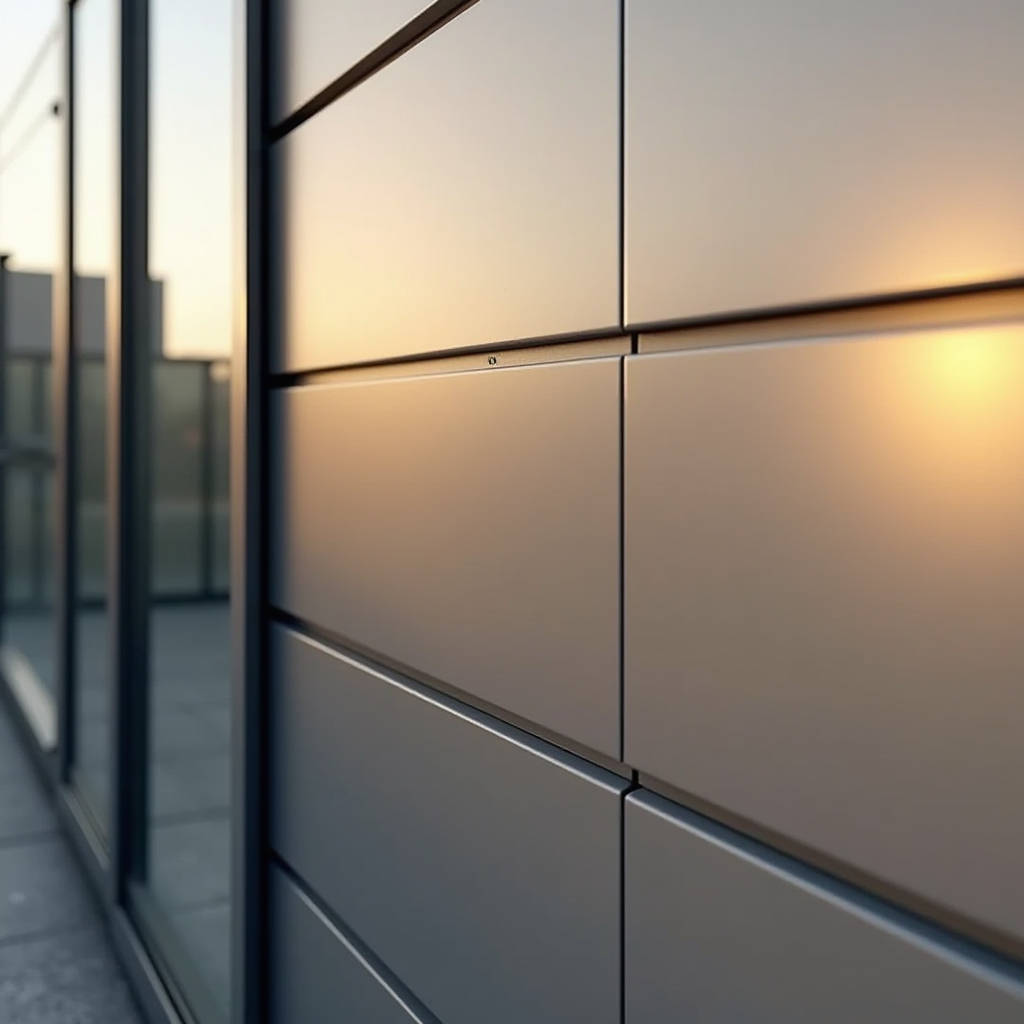
When a project spec calls for solid metal facade coverage, the conversation almost always lands on aluminium. But not all aluminium is equal. The distinction between composite sheets and solid aluminium cladding panels becomes critical the moment wind loads, fire codes, and long-term flatness tolerances enter the discussion. Contemporary architectural panels manufactured from solid 2.5mm or 3.0mm aluminium sheet bring a set of engineering properties that directly shape how a facade performs over 20 or 30 years. This article examines one specific dimension of that performance: how solid aluminium panels handle thermal expansion and the joint design strategies that prevent buckling, oil-canning, and sealant failure across seasons.
Why Thermal Movement Dictates Panel Joint Design
Aluminium expands and contracts. That is not a defect. It is a physical property every facade engineer accounts for from day one. A 3.0mm solid aluminium sheet spanning 1,200mm will move roughly 2.5mm to 3.2mm between a cold winter morning at -10°C and a summer afternoon where the dark PVDF-coated surface hits 70°C. Multiply that across a 40-metre elevation and the cumulative movement exceeds 100mm. Ignore it, and panels will buckle at the edges, fasteners will shear, and silicone joints will tear within two or three seasonal cycles.
The coefficient of linear thermal expansion for aluminium alloys in the 3000 and 5000 series—the grades typically specified for contemporary architectural panels—sits at approximately 23.6 × 10⁻⁶ per °C. That figure is not negotiable. What is negotiable is how the joint system absorbs that movement. Three approaches dominate current practice: open joints with rear drainage, closed joints with compression gaskets, and wet-sealed silicone joints. Each carries a different cost profile, maintenance burden, and tolerance for installation error.
| Joint Type | Movement Capacity | Typical Joint Width | Installed Cost (per m² facade) | Maintenance Cycle |
|---|---|---|---|---|
| Open joint (rear-drained) | ±6mm to ±10mm | 12–20mm | $95–$130 | 10–15 years (cavity inspection) |
| Compression gasket (EPDM) | ±4mm to ±6mm | 8–15mm | $110–$155 | 15–20 years (gasket replacement) |
| Wet-sealed silicone | ±2mm to ±3mm | 6–10mm | $80–$105 | 7–12 years (re-seal) |
Open joints have gained significant ground in commercial and institutional projects over the past decade. The logic is straightforward: eliminate the sealant as a failure point entirely. Water passes through the outer face, hits a rear drainage plane, and exits at the bottom. The panel edges remain free to move. The trade-off is that the supporting subframe and backup wall must be fully weatherproofed, which shifts cost from the cladding contractor to the envelope scope. For solid aluminium panels with a PVDF or FEVE finish, open joints also expose the panel return edges to UV and moisture, so edge coating specification becomes non-negotiable.
Panel Thickness, Stiffness, and the Flatness Problem
Flatness is not purely cosmetic. A panel that reads as wavy under grazing light signals stress concentrations at the fixing points. Over time, those stress points fatigue the aluminium around the rivet or screw holes. The relationship between panel thickness, stiffener layout, and thermal flatness stability is well documented in the AAMA 508 and 509 standards, though those primarily address voluntary test methods rather than prescriptive design rules.
For solid aluminium panels in the 2.0mm to 3.0mm range, the stiffener spacing along the longest unsupported span determines whether oil-canning appears. A 2.5mm panel with stiffeners at 500mm centres will generally hold flatness within 2mm per 300mm of panel width under thermal cycling to 80°C. Push that spacing to 700mm without increasing thickness, and the same panel can show 4mm to 6mm of deviation after a single hot season. The stiffeners themselves must be bonded with a structural adhesive that accommodates differential expansion between the aluminium skin and the galvanized steel or aluminium stiffener profile. Urethane-based adhesives with a Shore A hardness of 40–60 are common, applied in a controlled bead pattern that avoids hard spots.
Field Note: On a 22-storey mixed-use tower in Kuala Lumpur, the facade consultant specified 3.0mm solid aluminium panels with 20mm open joints after reviewing 12 months of thermal modelling data. The contractor initially proposed 15mm joints to reduce visual impact. Within 18 months of completion, three panels on the west elevation showed edge contact at 15:00 hours on clear days. The fix required removing 47 panels and re-cutting edges. The lesson: joint width calculations based on the full 100-year temperature range are not optional.
Coating Systems and Surface Temperature
The surface temperature of a contemporary architectural panel depends on solar absorptance, which is a function of colour and coating chemistry. A dark grey PVDF coating with a solar reflectance index below 30 can reach 75°C to 85°C on a still summer day in Dubai, Singapore, or Phoenix. A white or light metallic coating with an SRI above 80 might stay under 50°C. That 35°C difference changes the thermal expansion calculation by roughly 40%.
PVDF coatings based on Kynar 500 or Hylar 5000 resin systems dominate the solid aluminium panel market. The standard specification calls for a 70% PVDF resin ratio in the topcoat, applied at 25–35 microns dry film thickness over a 5–10 micron primer. This system has been tested to 10,000+ hours of accelerated weathering under ASTM G154 without significant chalking or colour shift beyond Delta E 5. FEVE (fluoroethylene vinyl ether) coatings offer a higher gloss range and can be formulated for 60%+ specular gloss at 60°, which PVDF struggles to achieve. The trade-off is cost: FEVE typically adds 15–25% to the coating line item.
For projects where dark colours are non-negotiable and thermal expansion is a concern, specifying a cool pigment formulation can reduce surface temperature by 8°C to 12°C compared to standard pigments at the same visible colour. The infrared-reflective pigments used in these formulations do not alter the visible appearance but cut solar heat gain measurably. Suppliers like Futeng® offer cool pigment options across their standard PVDF colour range, which can reduce the required joint width by 1mm to 2mm on dark panels—a small number that matters when architects are pushing for minimal joint aesthetics.
Subframe Interaction and Differential Movement
The aluminium panel is only one part of a multi-material assembly. The subframe—typically extruded aluminium, galvanized steel, or stainless steel—has its own thermal expansion coefficient. Steel expands at roughly half the rate of aluminium. When a solid aluminium panel is fixed to a steel subframe with rigid connections, the differential movement creates shear at every fastener. Over thousands of thermal cycles, fastener holes elongate, panels shift, and the facade loses its alignment.
The standard mitigation is to use slotted connections on one axis. A panel might be fixed rigidly at the top two corners with round holes and slotted at the bottom two corners with vertical slots 8mm to 12mm long. This allows the panel to expand downward freely while the top edge remains registered. The slot length is calculated from the panel height, the expected temperature range, and the differential expansion between the panel and subframe materials. Getting this calculation wrong by even 2mm per slot can bind the panel and transfer stress into the face.
Aluminium subframes eliminate the differential expansion problem between panel and rail but introduce it between the rail and the primary structure. The bracket connections between the subframe and the building slab or steel frame must still accommodate movement. Adjustable brackets with serrated washers and slotted bolt holes are the industry workaround, but they add cost and installation time. A typical three-axis adjustable bracket system adds $12 to $18 per square metre compared to fixed brackets.
Wind Load and Joint Width Interaction
Wind load and thermal joint width are not independent variables. Wider joints reduce the panel's effective wind-bearing area, which sounds beneficial. But wider joints also expose more of the subframe to direct wind pressure, and the panel edges become more susceptible to flutter. The AAMA 501.1 dynamic wind test captures this behaviour: a panel that passes static uniform load testing under ASTM E330 can still exhibit edge flutter under dynamic gust conditions if the joint width exceeds 20mm without adequate edge stiffening.
For solid aluminium panels with a 3.0mm thickness, edge returns of 20mm to 25mm with a continuous stiffener within 50mm of the return provide adequate edge stiffness for joint widths up to 20mm. Beyond 20mm, the panel edge should be hemmed or reinforced with a secondary profile. The additional fabrication step adds roughly $8 to $12 per panel, which scales quickly on large projects. The decision to use wide joints for thermal reasons must therefore account for the wind engineering cost implications.
Sealant Selection for Closed Joint Systems
When closed joints are specified, the sealant becomes the critical path for thermal performance. Low-modulus neutral-cure silicones are the standard choice for solid aluminium panel joints. They offer movement accommodation of ±25% to ±50% of the joint width, depending on the formulation. A 12mm joint sealed with a ±50% silicone can absorb 6mm of movement, which covers the thermal expansion of a panel up to roughly 2,400mm in height under a 60°C temperature swing.
The failure mode to watch for is cohesive failure within the sealant bead, not adhesive failure at the bond line. Cohesive failure occurs when the sealant is stretched beyond its modulus limit repeatedly. The bead develops micro-tears that propagate over time. The solution is not a stronger sealant but a wider joint or a sealant with higher elongation at break. ASTM C920 Class 50 sealants are specified for this reason. The cost difference between a Class 25 and Class 50 sealant is negligible on a per-metre basis—typically under $1 per linear metre—but the long-term performance gap is substantial.
Pro Tip: When specifying sealant for dark-coloured solid aluminium panels in hot climates, request the sealant manufacturer's adhesion test data on PVDF-coated aluminium at 70°C, not just at ambient laboratory temperature. Some sealants that pass standard adhesion tests at 23°C show a 30% to 40% reduction in peel strength at elevated temperatures. This data is rarely published in standard datasheets but is available on request from technical departments.
Fabrication Tolerances and Their Thermal Consequences
A panel fabricated 1.5mm oversize on the width reduces the design joint by 1.5mm. That might not sound like much, but on a panel where the joint was calculated to the minimum for thermal movement, it can eliminate the entire safety margin. The EN 1090-3 standard for aluminium structures and the AAMA 508 test method for panel flatness both address dimensional tolerances, but neither prescribes a specific fabrication tolerance for panel edge-to-edge dimensions. That falls to the project specification.
A defensible specification for contemporary architectural panels in the 1,000mm to 2,000mm dimension range is ±1.0mm on length and width, with a diagonal tolerance of ±1.5mm. Achieving this requires CNC routing or laser cutting rather than manual sawing. The capital cost difference for the fabricator is significant—a CNC router with a 4-metre bed runs $80,000 to $150,000—but the per-panel cost increment is modest once the equipment is amortized. For a project with 2,000 panels, the CNC premium might be $3 to $5 per panel, which is cheap insurance against field rework.
Panel squareness matters more than most people realize. A panel that is out of square by 1.5mm across a 1,200mm width creates a tapered joint that binds at one end while leaving a gap at the other. The thermal movement concentrates at the narrow end, and the sealant or gasket fails locally. The failure looks like a workmanship issue in the field, but the root cause is in the factory. Quality control on diagonal dimensions should be non-negotiable.
Installation Sequencing and Temperature at Time of Fixing
The temperature at which panels are fixed to the subframe sets the neutral point for thermal movement. If panels are installed on a cold morning at 5°C, the joints will close up as the day warms. If they are installed at 35°C in the afternoon, the joints will open as the panels cool overnight. The ideal installation temperature is the midpoint of the expected annual temperature range for the location. For a temperate climate with a -5°C to 35°C range, that midpoint is 15°C. Installing at 15°C means the panels will see roughly equal expansion and contraction in both directions, minimizing the maximum joint movement.
In practice, hitting that midpoint is rarely possible across an entire installation sequence that spans weeks or months. The workaround is to adjust the joint width at the time of installation based on the ambient temperature. A simple lookup table, calculated from the panel dimension and the aluminium expansion coefficient, tells the installer what joint width to set for a given temperature. This adds complexity to the site workflow but is standard practice on high-end facade projects. The alternative—fixing all panels with the same joint width regardless of temperature—guarantees that some joints will be over-compressed and others over-extended.
Long-Term Performance Data and Warranty Considerations
Solid aluminium panels with PVDF coatings have a documented service life exceeding 30 years in temperate climates and 20 to 25 years in aggressive coastal or industrial environments. The AAMA 2605 specification for high-performance organic coatings on aluminium extrusions and panels sets the benchmark for colour retention, chalk resistance, and gloss retention over 10 years of South Florida exposure. Panels meeting AAMA 2605 typically carry a 20-year film integrity warranty from the coating manufacturer and a 10-year colour fade warranty with a Delta E limit of 5.
Warranty claims on solid aluminium panels rarely involve the coating itself. The more common failure modes are related to the joint system: sealant adhesion loss, gasket compression set, and fastener corrosion at the panel-to-subframe connection. These are installation and design issues, not material defects. The ISO 12944 series on corrosion protection of steel structures by protective paint systems provides a useful framework for specifying the corrosion protection of steel subframe components, even though the standard is not specifically written for facade applications.
For project specifications, referencing the ASTM B209 standard for aluminium and aluminium-alloy sheet and plate ensures the base metal meets the required mechanical properties. Combined with a coating specification referencing AAMA 2605, this provides a complete material and finish specification that is defensible in a technical review and enforceable during quality assurance inspections.
Making the Thermal Case in Procurement Documents
The thermal performance of solid aluminium cladding panels is not a separate line item in a bill of quantities. It is embedded in the joint width, the stiffener design, the coating specification, and the installation sequence. Procurement managers who treat these as independent decisions will end up with a facade that meets the spec on paper but fails in the field.
A well-structured procurement approach for contemporary architectural panels includes a thermal movement calculation as part of the shop drawing submission. The calculation should cover the full temperature range for the project location, the panel dimensions, the joint type, and the subframe material. It should be stamped by the facade engineer, not delegated to the panel fabricator. The fabricator's responsibility is to meet the dimensional tolerances that the calculation assumes. When those responsibilities are clearly separated, the risk of thermal failure drops significantly.
Solid aluminium panels remain the default choice for projects where flatness, durability, and a fully non-combustible facade are non-negotiable. The material itself is well understood. The variable is how the joint system and the installation process account for the fact that aluminium moves. Get that right, and the facade will look as intended for decades. Get it wrong, and the evidence shows up within two years.