What Modern Metal Cladding Actually Costs Per Square Meter in 2024 2025
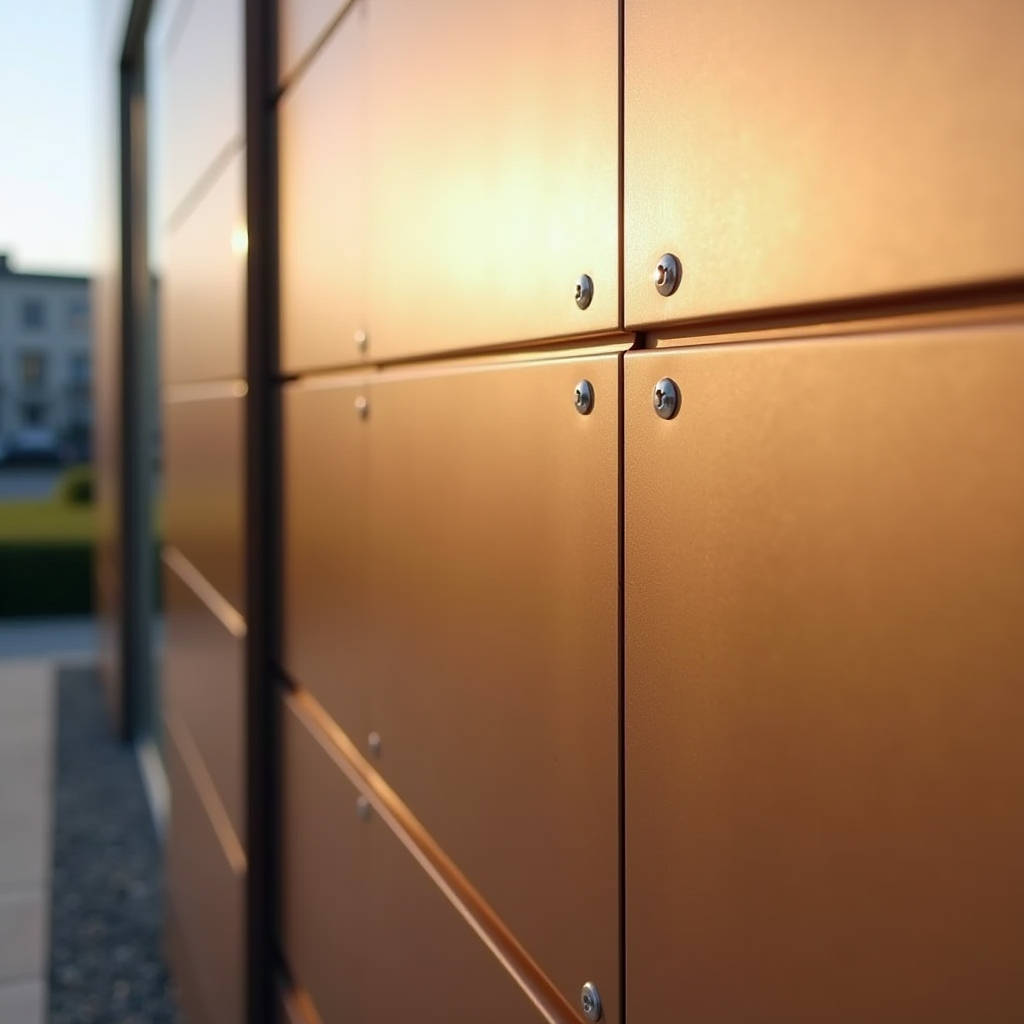
When a project specification lands on the desk of a facade contractor or procurement manager, the term modern metal cladding often triggers an immediate question: what is the actual installed cost per square meter, and which variables push that number up or down? The answer is never a single figure. It depends on panel thickness, coating chemistry, substrate preparation, framing complexity, and geography. This article breaks down the real cost drivers behind solid aluminium cladding panels — not composite sheets, not zinc, not steel — across typical commercial and high-rise applications. If you are budgeting for a 5,000-square-meter tower facade or a 20,000-square-meter logistics hub, the numbers here reflect what you will see on supplier quotations and subcontractor bids in 2024-2025.
Material Cost Breakdown: Solid Aluminium vs. Market Assumptions
Many cost models for modern metal cladding still reference outdated pricing from 2019 or mistakenly lump solid aluminium panels together with aluminium composite panels. That creates a 25-35% gap between budget estimates and actual tender returns. Solid aluminium sheet — typically alloy 3003, 5005, or 5052 — is priced differently from coil-coated composite material. The raw ingot cost, rolling mill margin, and temper specification all feed into the base metal price before a single panel is fabricated.
As of late 2024, a 2.5mm-thick solid aluminium sheet (alloy 3003 H14) sourced from a mill with ISO 9001 certification runs approximately $28-35 per square meter ex-works, depending on order volume and tolerance class. A 3.0mm sheet adds roughly $4-6 per square meter. Thinner 2.0mm material drops the cost but also reduces spanning capability, which can increase the required substructure — a trade-off that many value-engineering exercises miss.
| Thickness | Alloy | Typical Span (mm) | Sheet Cost (USD/m²) | Best Application |
|---|---|---|---|---|
| 2.0mm | 3003 H14 | ≤ 600 | $24 – 30 | Interior liners, soffits, low-wind zones |
| 2.5mm | 3003 H14 | ≤ 800 | $28 – 35 | General exterior facade, mid-rise |
| 3.0mm | 3003 H14 / 5005 H14 | ≤ 1,000 | $32 – 41 | High-wind areas, large-format panels |
| 3.0mm | 5052 H32 | ≤ 1,200 | $38 – 48 | Coastal, marine-grade requirements |
The alloy choice matters more than many specifiers realize. Alloy 5005 offers better anodizing response and slightly higher tensile strength. Alloy 5052 H32, with its magnesium content, handles marine environments where salt spray would pit standard 3003 within a decade. The premium is real — roughly 15-20% on raw material — but the lifecycle cost argument often wins when the building sits within 5 kilometers of a coastline.
Coating Chemistry and Its Real Cost Impact
Raw aluminium sheet is not a finished facade product. The coating system — its chemistry, application method, and warranty structure — can represent 30-45% of the total panel cost. This is where modern metal cladding specifications diverge sharply between projects that prioritize upfront capital expenditure and those that optimize for 30-year performance.
PVDF: The Industry Standard, But Not All Formulations Are Equal
Polyvinylidene fluoride (PVDF) coatings dominate the architectural aluminium market. The benchmark is a 70% PVDF resin system using Kynar 500® or Hylar 5000® resin, applied as a three-coat system (primer, color coat, clear topcoat) with a total dry film thickness of 30-35 microns. This configuration delivers the AAMA 2605 performance that most project specifications demand.
A three-coat PVDF system on a 2.5mm solid aluminium panel adds approximately $14-18 per square meter to the fabricated cost. Two-coat systems (primer plus color, 25-28 microns DFT) reduce that to $10-12 per square meter but sacrifice some gloss retention and chalk resistance. For projects where the architect has specified a metallic or pearlescent finish, the cost jumps further — mica-based pigments and tighter application tolerances push the coating adder to $20-25 per square meter.
Field Note: On a recent 12,000 m² office tower in Southeast Asia, the contractor saved $52,000 by switching from a three-coat metallic PVDF to a two-coat solid color PVDF on the rear elevation only — maintaining the architect's vision on street-facing facades while cutting cost on the service yard and roof-level mechanical screen. No performance compromise, just intelligent specification.
FEVE: When Gloss Matters More Than Budget
Fluoroethylene vinyl ether (FEVE) coatings, often specified under the Lumiflon® resin family, offer higher gloss levels (up to 80 GU at 60°) and better recoatability than PVDF. They also cure at ambient temperature, which opens the door to field touch-up that PVDF does not easily permit. The trade-off: FEVE adds $20-28 per square meter and typically requires a shop with dedicated temperature-controlled spray booths. For landmark projects where the facade is the brand — corporate headquarters, flagship retail, cultural buildings — the gloss and depth of FEVE justify the premium. For standard commercial office stock, PVDF remains the rational choice.
Fabrication Complexity: Where Cost Estimates Break Down
Panel fabrication is the least understood cost driver in modern metal cladding procurement. A flat rectangular panel with simple folded returns costs significantly less than a panel with multiple perforation patterns, compound bends, or integrated stiffening ribs. The fabrication shop's hourly rate — typically $45-75 per hour in markets with established aluminium processing capability — gets multiplied by the number of operations per panel.
Perforated panels illustrate the point clearly. A panel with 15% open area using a standard 8mm staggered hole pattern requires CNC punching time, tool wear amortization, and often a secondary deburring step. The fabrication adder for perforation alone ranges from $8-15 per square meter depending on hole density and pattern complexity. Custom perforation patterns — where the architect wants a gradient effect or an image mapped onto the facade — can push that to $25-40 per square meter because the CNC programming and setup time become the dominant cost, not the material.
Panel size also drives fabrication economics. Standard panel sizes (1,200mm x 2,400mm, 1,500mm x 3,000mm) maximize material yield from standard mill sheet dimensions. Oversized panels — 2,000mm wide or 4,500mm long — require custom sheet orders from the mill, increase scrap rates, and demand larger bending equipment. The cost premium for oversized panels can reach 20-30% over standard sizes, and that is before factoring in the logistics challenges of shipping large-format panels without damage.
Substructure and Installation: The Hidden Half of the Budget
Panel material and fabrication typically account for 45-55% of the total installed cost of a modern metal cladding system. The remaining 45-55% goes into the substructure, fixings, thermal isolation, and labor. This ratio surprises many procurement teams who focus exclusively on the panel line item.
The substructure — typically aluminium extruded profiles (alloy 6063 T5 or T6) or galvanized steel channels — must be designed to accommodate thermal movement of the solid aluminium panels. A 3-meter-long aluminium panel expands approximately 2.5mm across a 40°C temperature swing. If the fixing system does not allow for this movement, panels will buckle, fasteners will loosen, and the warranty will be void. Vertical carrier profiles with slotted holes and stainless steel rivets (grade 304 or 316 for coastal) are the standard solution, and they add $18-25 per square meter to the installed cost.
| Substructure Type | Material | Cost Range (USD/m² installed) | Thermal Performance | Typical Application |
|---|---|---|---|---|
| Aluminium T-profile, vertical only | 6063 T5 | $18 – 22 | Moderate | Low-rise, simple geometry |
| Aluminium T-profile + horizontal rails | 6063 T5 | $25 – 32 | Good | Mid/high-rise, wind load > 1.5 kPa |
| Galvanized steel channel system | G90 / Z275 | $15 – 20 | Lower (thermal bridging risk) | Industrial, budget-sensitive |
| Unitized aluminium grid with thermal breaks | 6063 T6 + polyamide strips | $35 – 48 | Excellent | High-performance envelopes, LEED/BREEAM targets |
Installation labor varies dramatically by region. In Western Europe and North America, facade installation rates run $45-75 per square meter for straightforward panel systems on low-rise buildings. In the Middle East and Southeast Asia, rates of $18-30 per square meter are common, though productivity and quality control must be verified. High-rise installation adds swing-stage or mast-climber access costs, which can add $8-15 per square meter above 30 meters of building height.
Logistics, Packaging, and the Cost of Getting It Right
International logistics for modern metal cladding panels is a discipline unto itself. Solid aluminium panels with PVDF finishes are susceptible to scratching during transit, and a single damaged panel on a high-rise project can delay the installation sequence by days while a replacement is fabricated and shipped.
Proper packaging for ocean freight involves interleaving each panel with polyethylene foam or kraft paper, edge protection with rigid cardboard or plastic corner guards, and crating in fumigated plywood boxes. This packaging adds $2-4 per square meter but reduces transit damage rates from an industry average of 3-5% down to below 0.5%. For a 10,000-square-meter project, that difference represents $40,000-80,000 in avoided rework and delay costs.
Pro Tip: When specifying FOB terms with an Asian supplier, insist on ISPM 15-compliant fumigated crates and request photographic documentation of the packing process before container sealing. One project we reviewed had 22 panels arrive with corner damage because the crates were built with undersized timber that flexed during container loading. The supplier's insurance covered the material cost but not the three-week schedule delay.
Incoterms also shape the true landed cost. FOB Shanghai pricing might look attractive at $55 per square meter for fabricated and coated panels, but after ocean freight ($3-5/m²), insurance (0.3-0.5% of cargo value), import duties (variable by country, typically 5-12% on aluminium products), port handling, and inland trucking, the landed cost can reach $68-78 per square meter. CIF terms simplify the calculation but rarely represent the lowest total cost for buyers who have established freight forwarding relationships.
Wind Load Engineering and Panel Thickness Selection
Wind load is not a cost factor that appears on a supplier's quotation, but it dictates panel thickness, stiffener design, and fixing spacing — all of which flow directly into the square-meter rate. A building in Miami (design wind speed 180 mph per ASCE 7-22) requires a fundamentally different panel specification than a building in Frankfurt (design wind speed 125 mph).
For a typical mid-rise facade with panels spanning 800mm between vertical supports, a 2.5mm solid aluminium panel with a 25mm return leg can handle a design wind pressure of approximately 1.8 kPa before deflection exceeds L/90. If the wind pressure rises to 2.5 kPa, the panel either needs to go to 3.0mm thickness or the span must be reduced to 600mm — which increases the linear meters of substructure by 33% and the associated cost. The engineering decision tree is straightforward, but it requires accurate wind tunnel data or code-based calculations early in the design phase.
Many projects now specify a maximum deflection limit of L/120 under serviceability wind load, which is tighter than the L/60 or L/90 found in older standards. This tighter limit reduces visible waviness and oil-canning on smooth, high-gloss finishes — but it increases panel thickness or reduces spans, adding 8-15% to the facade cost. The aesthetic benefit is real, and for high-gloss modern metal cladding in prominent locations, the tighter deflection criterion is worth the cost.
Total Installed Cost Ranges: A Practical Summary
Bringing the cost components together, the total installed cost for solid aluminium cladding systems in 2024-2025 falls into the following ranges, assuming a project size of 5,000-15,000 square meters with reasonable geometry and access conditions:
- Budget specification: 2.0mm 3003, two-coat PVDF, galvanized steel substructure, standard panel sizes — $85-105 per square meter installed.
- Mid-range specification: 2.5mm 3003, three-coat PVDF, aluminium T-profile substructure, moderate panel complexity — $110-140 per square meter installed.
- High-performance specification: 3.0mm 5005/5052, three-coat PVDF metallic or FEVE, unitized aluminium grid with thermal breaks, custom panel geometries — $155-200 per square meter installed.
These ranges assume competitive bidding from qualified facade subcontractors. Single-source or proprietary system specifications can push the upper range higher. Value engineering exercises that reduce panel thickness, simplify geometry, or standardize sizes can bring the mid-range down toward $95-105 per square meter without sacrificing the essential performance characteristics of solid aluminium.
For procurement teams evaluating supplier options, a manufacturer like Futeng® that operates integrated fabrication and coating lines can offer a 5-10% cost advantage over supply chains where the sheet, fabrication, and coating are handled by separate entities — simply by eliminating multiple handling steps, margin stacking, and coordination overhead. That advantage compounds on larger projects where the logistics of coordinating three separate vendors becomes a genuine risk.
Specification Decisions That Control Cost Without Compromising Quality
The most effective cost control in modern metal cladding happens during specification writing, not during tender negotiation. Several decisions have outsized impact on the final square-meter rate:
Panel modularization. Designing the facade grid to use a limited number of panel sizes — ideally 3-5 unique dimensions across the entire project — reduces fabrication setup time, minimizes scrap, and simplifies installation. A facade with 47 unique panel sizes will cost 15-25% more than one with 5 sizes, even if the total area is identical.
Coating color and finish. Standard solid colors (RAL, Pantone-matched) from a PVDF coater's existing library avoid color-matching fees and minimum batch charges. Custom colors, particularly those requiring multiple tinting iterations to achieve a specific Delta E tolerance, add $3-6 per square meter and extend lead times by 2-4 weeks. Metallic and mica finishes add further cost and require directional installation — panels must be oriented consistently or the facade will read as patchy under certain light conditions.
Perforation strategy. If perforation is required for ventilation, solar shading, or aesthetic effect, standardizing on a single hole pattern and open-area percentage across the project captures economies of scale. Mixing three different perforation patterns on one building might look compelling in a rendering, but the fabrication cost will reflect the CNC reprogramming and tool changes between batches.
Testing and mock-ups. A properly executed visual mock-up — typically 3-4 bays wide and two stories tall — costs $15,000-30,000 but routinely identifies interface issues, color discrepancies, and installation sequencing problems that would cost far more to fix on the full facade. The AAMA 501.2 water penetration test and ASTM E283 air leakage test on the mock-up provide data that de-risks the main installation. Skipping the mock-up to save upfront cost is a false economy that the industry has seen fail too many times.
Ultimately, the cost of modern metal cladding is not a single number but a function of engineering rigor, specification clarity, and supply chain structure. The projects that achieve the best balance of cost and performance are those where the procurement team engages with the technical realities of solid aluminium — thickness, alloy, coating chemistry, and installation methodology — rather than treating the facade as a commodity line item to be squeezed. The savings are there, but they are found in the details, not in the discount.