How PVDF Coating Chemistry Determines Maintenance Free Metal Cladding Performance
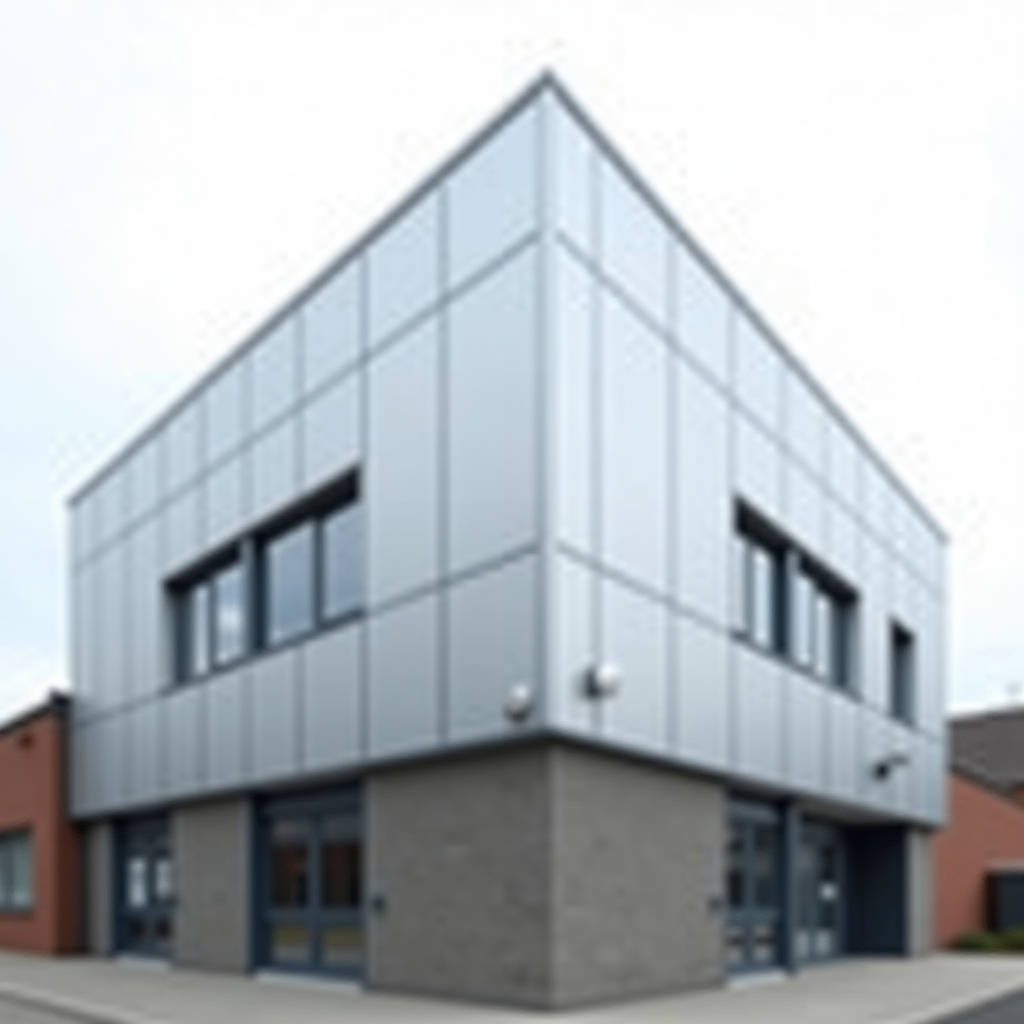
When a building envelope specification lands on a procurement manager's desk, the phrase maintenance free metal cladding often triggers immediate skepticism. Every manufacturer claims low maintenance. Few can back it up with material science, coating chemistry, and real-world weathering data. The difference between a facade that still looks new after 15 years and one that shows chalk marks, fade lines, and corrosion spots at year five comes down to a single decision point: the coil coating system specified before the aluminium sheet ever reaches the press brake. This article examines the technical relationship between PVDF coating architecture and the long-term zero-maintenance performance of solid aluminium cladding panels, with specific reference to AAMA 2605 compliance, Kynar 500 resin thresholds, and the accelerated weathering protocols that separate marketing claims from verifiable durability.
What "Maintenance Free" Actually Means in a Coating Context
The term maintenance free metal cladding does not mean the material is immune to physics. It means the panel surface resists degradation to a degree that no scheduled cleaning, recoating, or replacement is required within the building's design service life. For solid aluminium panels in architectural applications, that service life typically spans 30 to 50 years. The coating system bears the entire burden of this promise.
Three mechanisms destroy facade coatings over time: ultraviolet (UV) photo-oxidation, hydrolytic breakdown from moisture, and chemical erosion from airborne pollutants. A coating that fails against any one of these will chalk, fade, delaminate, or lose gloss within the first decade. The owner then faces two bad options: live with a deteriorating facade, or budget for a full reclad. Neither scenario aligns with the procurement intent behind specifying maintenance free metal cladding.
ASTM and AAMA testing protocols quantify resistance to each degradation pathway. The relevant standards stack is not optional reading for specifiers. It is the only objective language available when comparing coating systems across suppliers. A project in coastal Shenzhen demands different coating chemistry than one in arid Riyadh. The standard that governs the highest architectural performance tier is AAMA 2605, which mandates 10-year South Florida exposure testing with maximum Delta E of 5.0 and gloss retention above 50%.
Field Note: On a 2018 mixed-use tower in Kuala Lumpur, the consultant specified AAMA 2605-compliant PVDF on 2.5mm solid aluminium panels. After six years of equatorial UV exposure with zero facade cleaning, Delta E measured 1.8 across all elevations. The coating was a 70% Kynar 500 formulation applied at 35 microns minimum dry film thickness. The specifier had rejected three alternative bids offering 50% PVDF blends at 25 microns. The upfront cost difference was approximately USD 12/m². The avoided reclad cost, estimated at USD 180/m² in 2024 terms, never materialized.
Kynar 500 vs. 70% PVDF: The Resin Ratio That Determines Everything
Not all PVDF coatings are equal. The term "PVDF" describes a family of fluoropolymer resins. The architectural benchmark is polyvinylidene fluoride resin manufactured by Arkema under the trade name Kynar 500. The critical specification is the resin-to-pigment ratio in the cured film.
A true 70% Kynar 500 coating contains 70% PVDF resin by weight in the binder system, with the remaining 30% consisting of acrylic modifiers and pigment. The acrylic component is necessary for pigment wetting and adhesion, but it is also the weak link in UV resistance. Coatings marketed as "PVDF" with only 50% resin content sacrifice approximately 40% of the UV resistance compared to a 70% formulation. The cost saving at the coil coating stage is roughly USD 3-5 per square meter. The long-term cost in fading and chalking is disproportionately larger.
For any project where maintenance free metal cladding is a genuine specification requirement rather than marketing language, the coating specification must state "70% Kynar 500 PVDF" explicitly. Accepting "PVDF" without the resin percentage is equivalent to accepting "steel" without a grade designation. The table below summarizes the performance differential across common coating tiers.
| Coating Type | Resin Content | AAMA Standard | Typical Film Thickness | South Florida 10yr Delta E | Gloss Retention | Expected Service Life |
|---|---|---|---|---|---|---|
| 70% Kynar 500 PVDF | 70% PVDF | AAMA 2605 | 30-40 microns | < 5.0 | > 50% | 30-50 years |
| 50% PVDF Blend | 50% PVDF | AAMA 2604 | 25-30 microns | < 8.0 | > 30% | 15-20 years |
| FEVE Fluoropolymer | Fluoroethylene Vinyl Ether | AAMA 2605 | 30-40 microns | < 5.0 | > 50% | 30-50 years |
| SMP (Silicone-Modified Polyester) | N/A | AAMA 2603 | 20-25 microns | < 12.0 | > 20% | 10-15 years |
| Standard Polyester | N/A | AAMA 2603 | 20-25 microns | > 15.0 | < 20% | 5-10 years |
The data above comes from aggregated accelerated weathering results per ASTM G154 and ASTM G155 protocols, correlated with natural exposure testing. The jump from AAMA 2604 to AAMA 2605 is not incremental. It represents a fundamentally different coating chemistry and a step change in service life expectation.
Film Thickness: The Micron Margin That Compounds Over Decades
Resin quality sets the ceiling for coating performance. Dry film thickness (DFT) determines how long the coating takes to reach that ceiling. At 25 microns DFT, a 70% Kynar 500 coating will still outperform a 50% blend at 35 microns, but it will not deliver its full potential lifespan. The industry consensus among coil coating specialists and facade consultants is that 30-35 microns DFT represents the minimum for AAMA 2605 compliance on architectural aluminium panels.
The relationship between DFT and UV transmission is logarithmic, not linear. Each additional 5 microns of coating thickness reduces UV photon penetration to the primer layer by roughly 40%. The primer layer is typically an epoxy or polyurethane formulation with far lower UV resistance than the PVDF topcoat. Once UV reaches the primer, adhesion failure begins. The panel does not visibly fail at that point. It simply starts accumulating invisible damage that manifests as delamination years later.
For specifiers evaluating maintenance free metal cladding options, DFT measurement should be a factory inspection checkpoint, not a trust-based assumption. A calibrated eddy-current gauge applied to multiple points across each panel batch provides verifiable data. Suppliers like Futeng® who operate under ISO 9001 quality management systems typically provide DFT test reports as part of the standard mill certification package, alongside tensile test data for the aluminium substrate and adhesion test results per ASTM D3359.
Chalking, Fading, and Gloss: The Three Visual Failure Modes
Owners and architects judge maintenance free metal cladding by what they see. Three distinct visual degradation modes determine whether a facade still looks acceptable after a decade of exposure.
Chalking occurs when the organic binder at the coating surface degrades, releasing pigment particles as a loose powder. ASTM D4214 rates chalking on a 1-10 scale, with 10 representing no chalking. AAMA 2605 requires a rating of 8 or higher after 10 years. In practical terms, a rating of 6 means running a finger across the panel leaves a visible white residue. At 4, the coating is actively eroding.
Fading is measured as Delta E, the calculated color difference between the exposed panel and an unexposed control. The human eye generally perceives Delta E below 2.0 as negligible. AAMA 2605 permits up to 5.0, which is a visible but not objectionable shift for most colors. Dark and saturated colors fade faster than light neutrals. A deep blue or red panel will show higher Delta E values than a silver metallic or off-white under identical UV exposure. This is a pigment chemistry limitation, not a coating failure, and specifiers should account for it when selecting colors for large facade areas.
Gloss retention measures how much of the original specular reflectance remains. AAMA 2605 requires 50% minimum at 60-degree gloss meter reading. Starting gloss of 25-35 units (typical for architectural PVDF) means the panel must retain at least 12-18 units after a decade. Below 10 units, the surface reads as matte regardless of the original specification.
Pro Tip: When reviewing coating warranties for maintenance free metal cladding, check whether the warranty covers film integrity, color, and gloss as separate line items. Many "30-year finish warranties" only cover film integrity (no peeling or cracking). Color and gloss are often warranted for 10-15 years only. The warranty language, not the marketing headline, defines what the coating supplier actually stands behind. Request a copy of the full warranty document before bid evaluation, not after contract award.
Coastal, Industrial, and High-UV Environments: Chemistry Adjustments
Standard architectural PVDF performs well in most environments. Three specific exposure conditions demand additional specification scrutiny.
Coastal and marine environments introduce chloride ion attack. The PVDF topcoat is inherently resistant to salt spray, but the cut edges of fabricated panels expose bare aluminium. For projects within 5 kilometers of saltwater, the panel specification should include a chromate-free conversion coating under the primer and a minimum 5-micron epoxy primer layer. Some suppliers also offer a shop-applied edge sealant as a secondary barrier. The relevant test standard is ASTM B117 salt spray exposure, with 3,000 hours minimum for coastal applications.
Industrial zones with high SO2 and NOx concentrations accelerate acid-etch degradation of the acrylic modifier in PVDF coatings. The solution is not a different coating type but a higher resin-to-pigment ratio. A 70% Kynar 500 formulation with 35+ microns DFT has demonstrated 20-year performance in industrial environments including chemical processing plants and steel mills, where standard polyester coatings fail within 3-5 years.
High-UV tropical and high-altitude locations increase the total annual UV dose by 40-60% compared to temperate reference climates. The accelerated weathering protocol for these projects should use ASTM G155 with extended exposure cycles. Some consultants specify a minimum of 5,000 hours xenon arc testing for equatorial projects, versus the standard 3,000-4,000 hours for temperate zones.
Factory Application vs. Spray-Applied: Why Coil Coating Wins
Solid aluminium cladding panels can receive their PVDF coating through two routes: coil coating (applied to flat aluminium coil before fabrication) or spray coating (applied to fabricated panels in a spray booth). Both can achieve AAMA 2605 certification. The performance difference emerges over time.
Coil coating applies the PVDF system to a continuous aluminium strip under tightly controlled conditions. The coil moves at a constant speed through a series of rollers that deposit primer and topcoat at precise thicknesses. The coated coil then passes through a multi-zone oven where the temperature profile is calibrated to within ±3°C across the entire width. This consistency is difficult to replicate in a spray booth, where film thickness varies with operator technique, panel geometry, and booth airflow.
The practical consequence for maintenance free metal cladding is that coil-coated panels exhibit less than 5% variation in DFT across a production batch. Spray-coated panels typically show 10-15% variation. The thin spots become the points where UV degradation initiates first. On a 10,000-square-meter facade, a 15% DFT variation means some panels will show visible fading 3-5 years earlier than others, creating a patchwork effect that no amount of cleaning can fix.
The trade-off is that coil-coated panels must be fabricated after coating, which means cut edges are uncoated. Spray coating can cover edges and complex geometries. For flat or simply curved panels, coil coating is the superior choice for long-term color and gloss uniformity. For complex 3D geometries, spray coating is necessary, and the specifier should tighten the DFT inspection tolerance to ±5 microns.
Warranty Architecture: What the Fine Print Reveals
The coating warranty on maintenance free metal cladding is a legal document, not a technical specification. It defines the coating supplier's financial liability if the coating fails prematurely. The warranty structure reveals more about expected performance than any marketing brochure.
A standard AAMA 2605 PVDF warranty from a major resin supplier covers film integrity for 30 years, color change (Delta E) for 10-15 years, and gloss retention for 10-15 years. The warranty is typically non-prorated, meaning the full remedy applies regardless of when the failure occurs within the warranty period. The remedy is usually limited to the cost of recoating or replacing the affected panels, explicitly excluding labor, access equipment, and consequential damages.
Several conditions void the warranty. The most common: failure to apply the coating to a certified pretreatment system, use of non-approved primers, application at DFT below the specified minimum, and exposure to chemicals not covered by the warranty. Specifiers should verify that the panel fabricator is a licensed applicator for the specific coating system being specified. This is not a formality. Unauthorized applicators may produce panels that look identical but carry no coating warranty.
The warranty chain also matters. The resin supplier (Arkema for Kynar 500) warrants the resin. The coil coater warrants the coating application. The panel fabricator warrants the finished panel. The installer warrants the installation. Each link must be intact for the warranty to flow through to the building owner. A break in any link transfers risk to the party that specified or purchased the non-warranted component.
Color Stability and the Delta E Specification Trap
Delta E is the most widely cited metric for coating color stability. It is also the most frequently misunderstood. The CIE L*a*b* color space measures color in three dimensions: L* (lightness), a* (red-green axis), and b* (yellow-blue axis). Delta E is the Euclidean distance between two points in this space.
The problem is that Delta E is an aggregate number. A Delta E of 3.0 could mean a 3.0 shift in lightness with no hue change, or a 2.0 shift in the yellow-blue axis with a 2.0 shift in lightness. These two scenarios look completely different on a building facade. The human eye is far more sensitive to hue shifts than lightness shifts. A panel that gets lighter but maintains its color reads as "faded" but acceptable. A panel that shifts from neutral gray to greenish-gray reads as "wrong."
For critical maintenance free metal cladding applications where color consistency across multiple production batches is essential, the specification should include individual Delta L*, Delta a*, and Delta b* limits in addition to aggregate Delta E. A typical tight specification: Delta E less than 3.0, with Delta a* less than 1.5 and Delta b* less than 2.0. This prevents the situation where a panel passes Delta E but fails visually.
The AAMA 2605 standard provides the framework. The specifier's additional constraints provide the precision. Both are necessary for large-scale projects where panels from multiple production runs will be installed adjacent to each other on the same elevation.
Accelerated Weathering: What the Lab Can and Cannot Predict
Accelerated weathering tests compress years of UV, moisture, and thermal cycling into weeks. The two dominant protocols are ASTM G154 (fluorescent UV) and ASTM G155 (xenon arc). Both are useful. Neither perfectly replicates natural exposure.
ASTM G154 uses UVA-340 fluorescent lamps that simulate the short-wavelength UV spectrum of sunlight. The test cycles between UV exposure at elevated temperature and condensation at elevated humidity. It is fast, reproducible, and relatively inexpensive. Its limitation is that it does not reproduce the full solar spectrum, particularly visible and infrared wavelengths that contribute to thermal degradation.
ASTM G155 uses xenon arc lamps with filters to match the full solar spectrum. It better simulates natural sunlight but is more expensive and slower. For maintenance free metal cladding specifications, ASTM G155 is the preferred protocol for qualifying PVDF coatings because it more accurately predicts gloss retention and color shift behavior.
The correlation between accelerated and natural weathering is approximately 500-1,000 hours of ASTM G155 per year of South Florida exposure, depending on the coating chemistry. A 10,000-hour xenon arc test roughly corresponds to 10-20 years of natural exposure. However, this correlation is empirical and varies by color, resin system, and exposure conditions. The only definitive test is natural weathering, which is why AAMA 2605 requires actual South Florida exposure data, not just accelerated lab results.
Specifying Maintenance Free Metal Cladding: A Practical Checklist
Translating the technical discussion above into a specification section requires precision. The following checklist summarizes the key specification points that directly determine whether maintenance free metal cladding will deliver on its zero-maintenance promise over the building's service life.
- Coating type: 70% Kynar 500 PVDF or equivalent FEVE fluoropolymer, AAMA 2605 compliant
- Dry film thickness: 30-35 microns minimum for topcoat, 5-8 microns for primer
- Pretreatment: Chromate-free conversion coating per ASTM D1730, minimum coating weight specified
- Application method: Coil coating preferred for flat panels; spray coating acceptable with tightened DFT tolerance
- Color stability: Delta E less than 5.0 (AAMA 2605), with optional tighter limits on Delta a* and Delta b*
- Gloss retention: 50% minimum after 10 years at 60-degree measurement angle
- Chalking resistance: ASTM D4214 rating 8 or higher after 10 years
- Warranty: 30-year film integrity, 15-year color and gloss, non-prorated, from licensed applicator
- Quality verification: DFT measurement per batch, adhesion testing per ASTM D3359, color reading per ISO 7724
- Environmental adjustments: Increased DFT and edge protection for coastal zones; extended xenon arc testing for tropical climates
This checklist is not exhaustive. Each project adds its own constraints around budget, schedule, local availability, and installer capability. The principle remains constant: the coating system is the only thing standing between the aluminium substrate and decades of environmental exposure. Shortcuts in coating specification are shortcuts in building lifespan.
The global supply chain for architectural PVDF coatings is concentrated among a limited number of qualified coil coaters and resin suppliers. Lead times for custom colors can extend to 8-12 weeks. For projects with compressed schedules, suppliers such as Futeng® who maintain inventory of pre-coated coil in standard architectural colors can reduce lead times significantly without compromising on the 70% Kynar 500 specification. The key is verifying that the stock material carries current AAMA 2605 certification and that the coating date is within the supplier's recommended shelf life for fabrication.
Ultimately, maintenance free metal cladding is not a product category. It is an outcome that results from correct material selection, precise specification, and rigorous quality control. The panels that still look new after two decades are not lucky. They were specified correctly from the coating outward.