PVDF Coating Chemistry Behind a Durable Aluminum Facade That Lasts 30 Years
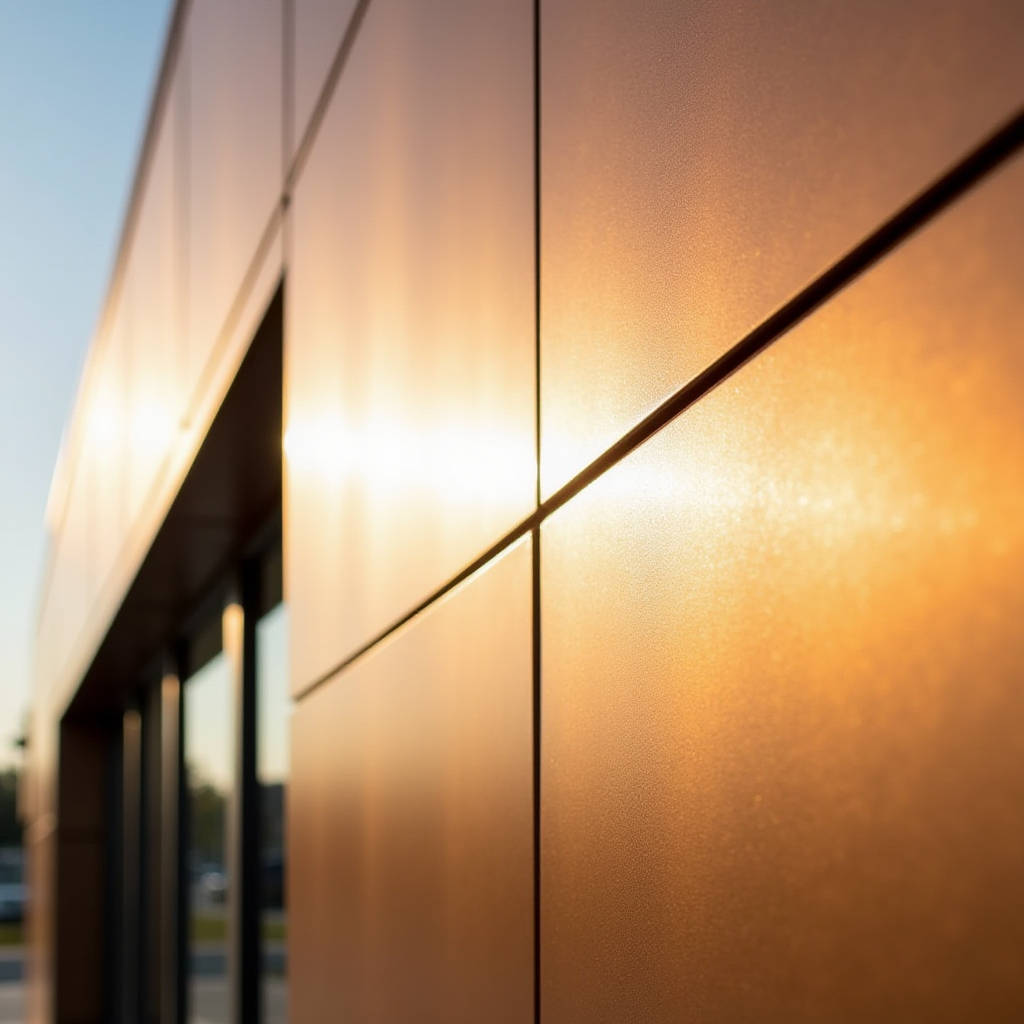
When a project specification lands on a procurement desk, the phrase "durable aluminum facade" appears in nearly every brief. But the gap between specifying durability and actually getting it on site comes down to one thing most architects never see: the coating chemistry. A 3.0mm solid aluminum sheet will last decades structurally. What fails first is the surface. That is where PVDF fluorocarbon technology separates a facade that still looks new at year 20 from one that chalks out by year 7.
Why Coating Determines the Real Lifespan of a Durable Aluminum Facade
Solid aluminum itself resists corrosion naturally. The mill-finish oxide layer that forms on raw aluminum provides a baseline barrier. But on a building envelope exposed to UV radiation, acid rain, salt spray, and thermal cycling, that natural oxide is not enough. A durable aluminum facade relies on a factory-applied coating system that locks out moisture, resists photodegradation, and maintains color stability across decades.
The industry benchmark is the PVDF (polyvinylidene fluoride) system, specifically formulations containing 70% PVDF resin by weight in the color coat. The standard reference is AAMA 2605, the highest performance specification for architectural coatings on aluminum. Coatings meeting AAMA 2605 must pass 4,000 hours of accelerated weathering with a maximum color change of 5 Delta E units and gloss retention above 50%. In real-world terms, that translates to 20 to 30 years of south-facing Florida exposure without chalk or fade.
Field Note: On a 2016 mixed-use tower in Singapore, we specified a 70% Kynar 500® PVDF three-coat system on 2.5mm solid aluminum panels. After 8 years of equatorial UV and monsoon rains, the Delta E shift measured 2.1 across all elevations. The only maintenance has been annual low-pressure washing. The spec added roughly 12% to the upfront panel cost compared to a 50% PVDF blend, but the client has avoided a full recoating cycle that would have hit by year 6.
Breaking Down PVDF Chemistry: Kynar 500® vs. 70% PVDF Formulations
Not all PVDF coatings are equal. The resin system matters at the molecular level. Kynar 500® from Arkema is the most widely specified PVDF resin globally, but the key metric is the resin-to-pigment ratio in the cured film. A true AAMA 2605-compliant coating uses 70% Kynar 500® resin and 30% acrylic or other modifiers in the binder phase. The acrylic component aids pigment dispersion and adhesion, but if it creeps above 30%, UV resistance drops sharply.
Some fabricators offer "PVDF-based" coatings at lower cost. These may contain only 30% to 50% PVDF resin, with the balance filled by polyester or acrylic. They will pass AAMA 2604 (the intermediate spec) but not AAMA 2605. The visual difference appears within 3 to 5 years: gloss loss, color fade, and eventually chalking where the resin binder degrades and releases pigment particles onto the surface. For a durable aluminum facade on any project with a design life beyond 10 years, the 70% threshold is non-negotiable.
Three-Coat vs. Four-Coat Systems: When the Extra Layer Pays Off
A standard three-coat PVDF system consists of a chromate or chrome-free conversion coating (0.2-0.5 mils), a primer (0.2-0.4 mils), and a color topcoat (1.0-1.2 mils). Total dry film thickness (DFT) lands between 1.4 and 2.1 mils (35-53 microns). This is adequate for most commercial facades.
The four-coat system adds a clear topcoat over the color layer, bringing total DFT to 2.0-3.0 mils. The clear coat provides additional UV absorption and scratch resistance. It is worth the extra cost in three scenarios: metallic or mica finishes where pigment orientation affects appearance, coastal installations with airborne salt, and high-traffic ground-level panels subject to abrasion. For a standard solid-color durable aluminum facade at upper elevations, the three-coat system performs identically over a 20-year window.
| Coating Type | PVDF Resin Content | DFT Range (mils) | AAMA Spec | Expected Color Retention | Relative Cost Index |
|---|---|---|---|---|---|
| Polyester Powder (Standard) | 0% | 2.0-4.0 | AAMA 2603 | 3-5 years | 1.0 |
| Super Durable Polyester | 0% | 2.0-4.0 | AAMA 2604 | 7-10 years | 1.3 |
| 50% PVDF Blend | 50% | 1.2-1.8 | AAMA 2604 | 10-15 years | 1.6 |
| 70% PVDF (Kynar 500®) | 70% | 1.4-2.1 | AAMA 2605 | 20-30 years | 2.0 |
| 70% PVDF 4-Coat (Clear Top) | 70% | 2.0-3.0 | AAMA 2605 | 25-35 years | 2.5 |
| FEVE Fluoropolymer (Lumiflon®) | N/A (FEVE resin) | 1.5-2.5 | AAMA 2605 | 20-30 years | 2.8 |
FEVE Fluoropolymers: The Alternative Worth Understanding
FEVE (fluoroethylene vinyl ether) resins, such as Lumiflon®, offer a different chemistry from PVDF. They are solvent-soluble at room temperature, which allows them to be formulated into ambient-cure coatings. This matters for projects where factory baking is impractical or where on-site touch-up needs to match the original coating performance. FEVE coatings can achieve AAMA 2605 compliance and offer comparable UV resistance to Kynar 500®.
The trade-off is cost and application complexity. FEVE coatings typically run 30-40% more expensive than PVDF on a per-square-meter basis. They also require tighter humidity control during application. For a durable aluminum facade fabricated in a controlled factory environment, PVDF remains the cost-performance leader. FEVE becomes relevant for restoration projects or complex geometries where shop-applied PVDF baking is not feasible.
How Coating Thickness Is Measured and Verified on Site
Specifying a coating system is one thing. Verifying it arrived as specified is another. The standard field instrument is the eddy-current DFT gauge (Type 2 per SSPC-PA2). It measures non-conductive coating thickness on a non-ferrous metal substrate. For aluminum panels, the gauge must be calibrated on bare aluminum of the same alloy and temper as the panels being tested.
Per AAMA 2605, the minimum DFT for a three-coat system is 1.2 mils (30 microns). Individual spot measurements can vary by ±0.1 mil, but the average of five readings across a 1-square-meter panel should meet or exceed the spec. Readings below 1.0 mil on a color topcoat are grounds for rejection. On a recent project, Futeng® supplied 2.5mm solid aluminum panels with a measured DFT averaging 1.6 mils across 200 random spot checks, well above the AAMA minimum.
Pro Tip: Always request the coating batch certificate from the applicator. It should list the PVDF resin brand, resin percentage, pigment type, and cure oven temperature profile. Cross-check the batch number against the labels on the panel packaging. A missing batch certificate on a large order is a red flag that the coating may not match the spec.
Color Stability and the Delta E Standard
Color consistency is where durable aluminum facade specifications get commercial teeth. AAMA 2605 sets a maximum Delta E of 5.0 after 4,000 hours of QUV or Xenon arc exposure. But most project specifications tighten this to Delta E ≤ 3.0 for the initial factory batch and Delta E ≤ 2.0 between panels on the same elevation.
Delta E (CIE LAB) measures the mathematical distance between two colors in three-dimensional color space. A Delta E below 1.0 is imperceptible to the human eye. Between 1.0 and 2.0, only a trained eye under controlled lighting can detect the difference. Above 3.0, the average observer notices. For a durable aluminum facade with large uninterrupted surfaces, even a Delta E of 2.5 between adjacent panels creates visible checkerboarding that can trigger a rejection by the architect.
Metallic and mica finishes complicate this further. The orientation of aluminum flake pigments shifts with viewing angle and panel forming direction. Specifying a maximum Delta E under three lighting conditions (D65 daylight, A incandescent, and F2 fluorescent) closes this loophole. Fabricators should produce a physical range panel set showing the acceptable color variation envelope before starting full production.
Pretreatment: The Layer Nobody Sees That Determines Everything
Before any coating touches the aluminum surface, the pretreatment process determines whether the coating will bond or peel. The industry standard is a chromate conversion coating applied in a multi-stage immersion or spray line. The process: alkaline cleaning to remove mill oils, rinsing, deoxidation to remove the natural oxide layer, rinsing, chromate application, final rinsing, and drying.
Chrome-free pretreatments using titanium or zirconium chemistries have gained traction due to environmental regulations, particularly in the EU under REACH. These systems can match hex-chrome performance when properly controlled, but they are less forgiving of process variation. Bath temperature, pH, and contact time must stay within narrow windows. A chrome-free pretreatment line that drifts out of spec can produce panels that pass initial adhesion tests but delaminate after 5 years of thermal cycling.
The adhesion test per AAMA 2605 is a cross-hatch tape pull (ASTM D3359, Method B) after 24 hours of boiling water immersion. A rating of 5B (no coating removal) is required. This test simulates the moisture penetration that occurs behind a rainscreen facade during prolonged wet weather. A durable aluminum facade must survive this test because real buildings do not stay dry behind the cladding.
Thermal Expansion and the Coating Interface
Aluminum expands at roughly 2.4 mm per linear meter per 100°C temperature change. A 3-meter panel on a dark-colored facade can see a surface temperature swing from -10°C to +80°C between winter night and summer sun. That is a 90°C delta, producing 6.5 mm of linear movement. The coating must stretch and contract with the substrate without cracking, peeling, or losing adhesion.
PVDF coatings handle this well because the fluoropolymer backbone is inherently flexible. Polyester coatings are more brittle and can micro-crack over repeated thermal cycles. This is why a durable aluminum facade in a climate with large diurnal temperature swings (desert regions, high-altitude cities) should always use PVDF, regardless of the project budget. The cost of replacing cracked panels far exceeds the coating premium.
Specifying Coating Performance in International Procurement
When sourcing solid aluminum panels across borders, the coating specification must bridge different regional standards. A project in the Middle East might reference AAMA 2605. A European project might reference EN 13523 for coil-coated metals or Qualicoat Class 3 for architectural powder coatings. A project in Southeast Asia might reference AS 3715 for metal finishing.
The procurement team needs to map these standards to the same underlying performance requirements: 70% PVDF resin, minimum DFT, and accelerated weathering to 4,000+ hours. A coating that meets Qualicoat Class 3 but not AAMA 2605 may use a super durable polyester, not a fluoropolymer. The spec must explicitly state the resin chemistry, not just the standard number. Suppliers like Futeng® can provide cross-reference documentation showing compliance with multiple standards from a single coating system.
Powder Coatings: The Evolving Alternative
PVDF liquid coatings dominate the high-performance segment, but powder coating technology has advanced. Super durable polyester powders meeting AAMA 2604 now offer 10-year color stability. Fluoropolymer powders based on FEVE resin chemistry can meet AAMA 2605. The advantage of powder is a thicker single-coat film (2.0-4.0 mils) with zero VOC emissions during application.
The limitation for a durable aluminum facade is color range and metallic consistency. Powder coatings struggle to match the brightness and depth of PVDF metallics. They also cannot achieve the ultra-low gloss (below 15 GU at 60°) that some architects specify. For solid colors and textured finishes, powder is a viable option. For high-end metallic or mica facades, PVDF liquid remains the standard.
Factory Quality Control: What to Audit Before Shipment
A coating spec on paper has no value without factory QC. Before accepting shipment of a durable aluminum facade order, the buyer or third-party inspector should verify at minimum: coating thickness across 10% of panels using a calibrated DFT gauge, gloss level per ASTM D523 (60° geometry), color Delta E against the approved sample using a spectrophotometer, adhesion via cross-hatch test on a retained sample panel, and impact resistance per ASTM D2794 (direct and reverse impact at 1.5X the specified film thickness).
Gloss measurement deserves particular attention. AAMA 2605 requires gloss retention above 50% after weathering, but the initial gloss must be within the architect's specified range. A panel specified at 30±5 GU that measures 42 GU will stand out on the facade. Gloss variation between panels on the same elevation should not exceed ±3 GU.
For more detailed guidance on coating selection and verification, the American Architectural Manufacturers Association (AAMA) publishes the full test protocols. The ISO 16474 series covers paint and varnish weathering test methods that align with AAMA requirements. For PVDF resin specifications, Arkema's Kynar 500® technical library provides formulation guidelines.
Making the Coating Decision That Lasts
The structural integrity of a 2.5mm or 3.0mm solid aluminum panel is rarely the failure point on a facade. The coating fails first. When it does, the building looks tired, the owner faces a six-figure recoating bill, and the original specification team gets the blame.
A durable aluminum facade starts with a 70% PVDF coating system, verified at the factory, backed by batch certificates, and inspected on arrival. The premium over a mid-range coating is roughly 8-12% of the panel cost. Spread across a 25-year building lifespan, that is less than 0.5% per year. The alternative is a facade that chalks, fades, and needs replacement before the mortgage is paid off. The math is not complicated. The discipline to enforce the spec is what separates projects that age gracefully from those that do not.