B1 Fire Rated Aluminum Panel Specification and Compliance Across Solid Facade Systems
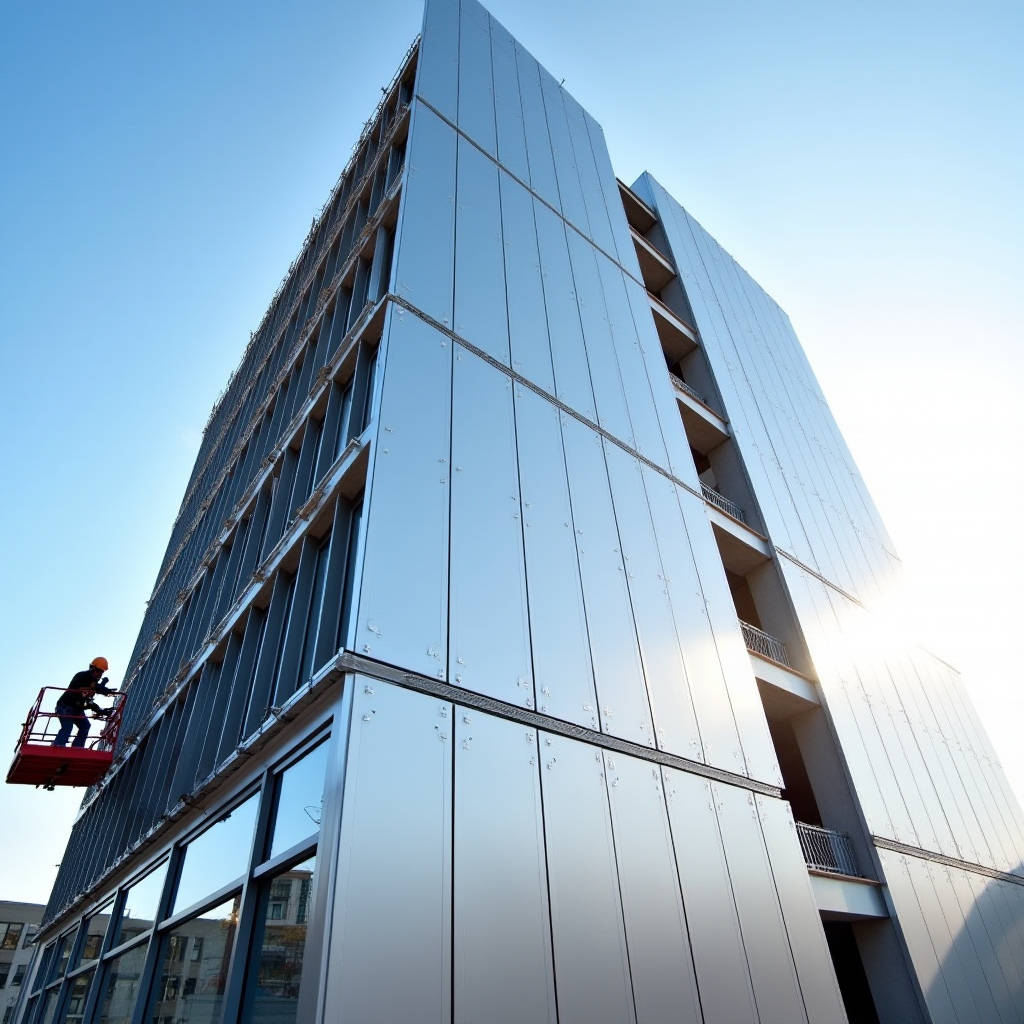
When a project specification lands on the procurement desk with "B1 fire rated aluminum panel" written into the facade schedule, the first question from the QS is rarely about fire performance alone. It is about whether the solid aluminum sheets specified can actually carry that B1 certification while holding flatness across a 2.5mm thickness and surviving 20 years of UV exposure on a coastal high-rise. The short answer is yes, but the long answer involves navigating a supply chain where B1 test reports are often conflated with ACP core classifications, leaving solid aluminum panel buyers with a documentation gap that needs closing before the first container leaves the factory.
What B1 Actually Means for Solid Aluminum Panels
The B1 classification under GB 8624 is a reaction-to-fire rating that sits between B2 (combustible) and A2 (non-combustible). For a solid aluminum panel, the fire behavior is fundamentally different from what engineers see with composite products. A 2.0mm, 2.5mm, or 3.0mm solid 3003-H14 or 5005-H24 aluminum sheet has no polyethylene core, no mineral filler, and no lamination layers that can delaminate under heat. The aluminum itself melts at approximately 660°C, but it does not contribute fuel to a fire. The B1 classification for solid aluminum cladding panels typically references the complete assembly, including the PVDF or FEVE coating system and any rear insulation layer, rather than the aluminum substrate alone.
Testing under GB/T 8626 evaluates ignitability when a small flame is applied directly to the panel edge. Solid aluminum panels pass this test without difficulty because the metal substrate simply does not ignite. The more critical test is GB/T 8625, which assesses flame spread across the panel surface. Here, the coating chemistry matters. Standard PVDF coatings with 70% Kynar 500 resin content have inherently limited flame spread characteristics. However, panels with thick polyester back coats or shop-applied acoustic perforations with non-fire-rated backing materials can shift the assembly classification downward. Procurement teams should request test certificates that cover the exact build-up being supplied, not just the bare metal.
Field Note: On a recent 22-story mixed-use tower in Southeast Asia, the facade consultant rejected three B1 certificate submissions because the test reports referenced 3.0mm panels but the shop drawings specified 2.5mm. The 0.5mm difference was enough to trigger a non-conformance report. Always match the test certificate thickness to the approved shop drawing thickness before submitting to the consultant for sign-off.
Coating Systems and Fire Performance Interplay
Solid aluminum panels achieve their weather resistance and color stability through factory-applied coil or spray coatings. The dominant systems are PVDF (polyvinylidene fluoride) with Kynar 500 or Hylar 5000 resins, and FEVE (fluoroethylene vinyl ether) resins for applications requiring higher gloss retention. Both systems have distinct behaviors when exposed to elevated temperatures.
PVDF coatings applied at a minimum 25μm dry film thickness on a two-coat system, or 35μm on a three-coat system, will soften but not ignite at temperatures below the aluminum substrate melting point. The critical parameter is the pigment-to-binder ratio. Coatings with high inorganic pigment loading, such as bright whites and metallic silvers, tend to perform better in fire scenarios than dark colors with high organic pigment content. This is not a B1 classification issue per se, but it affects the overall reaction-to-fire profile of the installed panel.
FEVE coil coatings, such as those using Lumiflon resin technology, offer superior weatherability with 60% gloss retention after 20 years in Florida exposure testing. From a fire perspective, FEVE resins have a higher thermal decomposition temperature than standard PVDF, typically above 350°C. This makes them a preferred choice for projects where both B1 fire rating and long-term color stability are specified together, particularly in high-UV environments like the Middle East and Australia.
Coating System Comparison for B1 Rated Solid Aluminum Panels
| Parameter | PVDF 70% Kynar 500 | PVDF 50% Kynar 500 | FEVE Lumiflon | Polyester (PE) |
|---|---|---|---|---|
| Dry Film Thickness | 25-35μm | 25-30μm | 25-35μm | 20-25μm |
| Thermal Decomposition | ~320°C | ~290°C | >350°C | ~220°C |
| B1 Assembly Compatibility | Yes, with mineral backing | Conditional | Yes, preferred | Not recommended |
| Gloss Retention (10yr) | 50-60% | 40-50% | 60-70% | 20-30% |
| Color Range | Full RAL, custom | Limited | Full RAL, custom | Basic colors |
| Relative Cost Index | 1.0 (baseline) | 0.75 | 1.25 | 0.50 |
The cost index figures above are indicative for budget estimation. Actual pricing depends on order volume, panel size, and factory location. For projects specifying B1 fire rated aluminum panel assemblies, the coating specification should never be downgraded to polyester without a formal concession from the fire engineer and the facade consultant. A polyester-coated solid aluminum panel may still pass B1 classification on the metal substrate alone, but the assembly classification including the coating can drop below the threshold required by local building codes.
Panel Thickness, Flatness, and Fire Rating Correlation
Solid aluminum cladding panels are typically specified at 2.0mm, 2.5mm, or 3.0mm thickness. The choice affects flatness, wind load resistance, and fabrication behavior. It also has a subtle but measurable impact on fire performance. Thicker panels have greater thermal mass, meaning they absorb more heat before reaching the temperature at which the coating system begins to degrade. A 3.0mm panel provides approximately 50% more thermal mass than a 2.0mm panel, which translates to a longer period before the panel assembly reaches critical temperatures in a developing fire scenario.
Flatness is governed by the aluminum alloy temper and the fabrication process. 3003-H14 alloy, commonly used for solid aluminum panels, has a yield strength of approximately 145 MPa and provides good formability with acceptable flatness after routing and folding. 5005-H24 alloy offers higher yield strength at around 160 MPa, which translates to better flatness on large-format panels exceeding 1,500mm in any dimension. The trade-off is that 5005-H24 is slightly more difficult to fold into complex geometries, requiring larger bend radii to avoid surface cracking.
For B1 fire rated aluminum panel applications on high-rise facades, flatness is not merely an aesthetic concern. Panels with visible oil-canning or waviness can create gaps at the panel joints that compromise the fire-rated assembly's integrity. A gap exceeding 6mm between adjacent panels can allow hot gases to bypass the panel face and reach the backup wall or insulation layer, potentially undermining the B1 classification of the overall system. The AAMA 508 standard provides guidelines for acceptable panel flatness tolerances, typically specifying a maximum deviation of 0.8% of the panel diagonal dimension.
Installation Systems and B1 Compliance Continuity
A B1 fire rated aluminum panel is only as good as the system it is installed into. The panel itself may carry a valid B1 test certificate, but if the installation method introduces combustible elements or creates unsealed cavities, the fire performance of the completed facade can be significantly different from the tested assembly.
The three dominant installation systems for solid aluminum panels are:
- Exposed fastener systems: Panels are fixed directly to the substructure with visible screws or rivets. This is the most economical method but creates thermal bridges at every fastener point. From a fire perspective, the fasteners themselves are typically stainless steel and do not contribute fuel. However, the panel edges are not sealed, which can allow flame propagation behind the panel face if the cavity is not compartmentalized.
- Cassette or hook-on systems: Panels are fabricated with folded returns on all four edges and hung onto a carrier rail system. This method provides a clean, fastener-free face and allows for thermal movement. For B1 compliance, the critical detail is the horizontal fire stop at each floor level. Without proper compartmentalization, a cassette system creates a continuous vertical cavity that can act as a chimney in a fire event.
- Unitized curtain wall integration: Solid aluminum panels are integrated into pre-assembled unitized frames in the factory, then shipped to site as complete modules. This method offers the highest level of quality control because the panel, insulation, vapor barrier, and fire stops are all assembled under factory conditions. The B1 classification is easier to maintain because the assembly is tested as a complete unit rather than relying on site workmanship.
Pro Tip: When reviewing installation shop drawings for a B1 fire rated aluminum panel facade, check the vertical section detail at the floor slab edge. If the detail shows an open cavity from floor to floor without a horizontal fire stop, flag it immediately. The panel may be B1, but the system is not. Most building codes require cavity barriers at every floor level and at maximum 10-meter vertical intervals, referencing ISO 13785-1 test methods for facade fire propagation.
Supply Chain Documentation and Factory Audits
Procurement managers sourcing B1 fire rated aluminum panel products from overseas factories face a documentation challenge that goes beyond the standard mill test certificates for the aluminum coil. The B1 classification must be supported by test reports from an accredited laboratory, and those reports must be traceable to the specific product configuration being supplied.
A complete documentation package for a B1 fire rated solid aluminum panel order should include:
- Aluminum coil mill certificates (EN 10204 3.1 or equivalent) showing alloy, temper, and chemical composition.
- Coating system certificates from the paint manufacturer confirming Kynar 500 or Hylar 5000 resin content, batch numbers, and application parameters.
- B1 classification test report from a laboratory accredited to ISO/IEC 17025, showing the test standard (GB/T 8625, GB/T 8626), the exact panel build-up tested, and the classification result.
- Factory production records linking the specific order to the tested configuration, including panel thickness, coating specification, and any rear-side treatments.
- Third-party inspection reports if the project specification requires independent verification of coating thickness, color measurement, and dimensional tolerances before shipment.
Suppliers like Futeng® that maintain in-house testing capabilities and can provide batch-specific B1 documentation reduce the risk of non-compliance at the project level. The key question for the procurement team is whether the factory can demonstrate traceability from the raw aluminum coil through to the finished panel, with documented quality gates at each production stage. A factory audit should verify that the coating line parameters, including oven cure temperature and dwell time, are recorded for every batch and that these records are retained for the warranty period.
Color Consistency and Delta E Control Under Fire-Rated Constraints
Specifying a B1 fire rated aluminum panel in a custom architectural color introduces a manufacturing challenge that is often overlooked during the design phase. The PVDF or FEVE coating system must be formulated to achieve the target color while maintaining the fire performance characteristics of the assembly. This is not always straightforward, particularly for deep reds, bright oranges, and certain organic yellows where the pigment chemistry can influence the coating's thermal behavior.
Color measurement is governed by the CIELAB system, with Delta E (ΔE) being the standard metric for color difference. For architectural facades, a ΔE of less than 1.0 is considered imperceptible to the human eye, while a ΔE of 1.0-2.0 represents a minor difference that is acceptable for most projects. The ASTM D2244 standard defines the calculation method for ΔE using the CIE 1976 L*a*b* color space.
The challenge with B1 rated panels is that the coating formulation may need to be adjusted to maintain fire performance, which can shift the color coordinates. A standard PVDF formulation for a non-fire-rated application might use a higher proportion of organic pigments to achieve a specific hue, but the same formulation on a B1 rated panel may require substitution with inorganic pigments that have slightly different spectral reflectance curves. This can result in a ΔE shift of 1.5-3.0 compared to the architect's reference sample, which is enough to trigger a rejection if not managed proactively.
The practical solution is to request a fire-rated color match sample early in the procurement process, ideally 8-10 weeks before the main production run. This sample should be produced on the same coating line, using the same substrate thickness and the same batch of paint that will be used for production. The sample should be measured against the architect's reference under D65 illuminant using a spectrophotometer, and the ΔE values for L*, a*, and b* should be documented and submitted for approval before production begins.
Logistics, Packaging, and Site Handling
Shipping B1 fire rated aluminum panel orders internationally requires packaging that protects both the panel flatness and the coating integrity. The standard export packaging for solid aluminum panels consists of:
- Individual panel separation using PE foam interleaving sheets, minimum 1.0mm thickness.
- Edge protection with cardboard angle profiles to prevent corner damage during handling.
- Wooden crating with fumigation certification (ISPM 15) for container shipments.
- Desiccant packs inside the crate to prevent condensation during ocean freight, particularly for shipments transiting through tropical climates.
Panel size limits for container shipping are governed by the internal dimensions of standard 20-foot and 40-foot HC containers. A 40-foot HC container has an internal length of approximately 12,030mm, which limits panel lengths to about 11,800mm after accounting for crate thickness. Panels exceeding this length require flat-rack containers or break-bulk shipping, which significantly increases freight costs. The procurement team should confirm the maximum panel size with the factory before finalizing the facade design, as reducing panel sizes by even 100mm can sometimes eliminate the need for specialized shipping.
On site, panels should be stored in a dry, covered area with the crates elevated off the ground on timber bearers. If panels are removed from crates for inspection, they must be handled vertically using suction lifters, never dragged across each other. A single scratch on a PVDF-coated surface that penetrates the topcoat can become a corrosion initiation point within 12 months in a coastal environment, regardless of the panel's B1 classification.
Wind Load Performance and Panel Span Calculations
Solid aluminum panels specified as B1 fire rated assemblies must also satisfy the structural requirements of the project. Wind load is typically the governing load case for facade panels, and the panel span, thickness, and fixing method must be engineered to resist the design wind pressure for the specific building location and height.
The design wind pressure is calculated according to the local building code, typically referencing ISO 4354 or regional standards such as ASCE 7 in the United States or EN 1991-1-4 in Europe. For a typical high-rise building at 100 meters height in a suburban terrain category, the design wind pressure can range from 1.5 kPa to 3.0 kPa depending on the geographic location.
For a 2.5mm thick 3003-H14 solid aluminum panel with a typical cassette fixing system on all four edges, the allowable span is approximately:
- 600mm span: suitable for wind pressures up to 3.5 kPa.
- 900mm span: suitable for wind pressures up to 2.0 kPa.
- 1,200mm span: suitable for wind pressures up to 1.2 kPa.
These figures are indicative and must be verified by a qualified structural engineer for each specific project. The panel deflection under wind load should be limited to span/175 for serviceability, which is a common criterion in facade engineering. Exceeding this limit can result in visible panel movement that, while structurally safe, is unacceptable to building occupants and may cause water ingress at the panel joints.
The interaction between wind load resistance and fire performance is indirect but important. Panels that are undersized for the wind load may experience excessive deflection that opens up the panel joints, creating the same cavity gaps that compromise fire compartmentalization. The structural design and the fire engineering design must be coordinated to ensure that the panel system performs as intended under both normal service conditions and fire conditions.
Making the Specification Work in Practice
Specifying a B1 fire rated aluminum panel is straightforward on paper. Making it work on site requires coordination across multiple disciplines: the architect who selects the color and finish, the structural engineer who determines the panel spans and fixing requirements, the fire engineer who defines the compartmentalization strategy, and the procurement team who sources panels that meet all of these requirements while staying within budget and schedule.
The single most effective step a project team can take is to consolidate the fire rating documentation with the structural and architectural specifications into a single performance specification, rather than treating them as separate requirements. This means the panel supplier is responsible for demonstrating that the panel assembly, including the coating system, the fixing method, and the cavity fire stopping, meets the B1 classification as a complete system. Partial compliance, where the panel is B1 but the installation system is not, is not compliance at all.
For international projects, the acceptance of GB 8624 B1 classification by local authorities should be confirmed during the design phase, not during the construction phase. Some jurisdictions may require equivalent testing to local standards, such as BS 476 in the UK or ASTM E84 in the US, and the correlation between these standards and GB 8624 is not always direct. The ISO 9705 room corner test provides a full-scale fire test methodology that is recognized internationally and can serve as a bridging document between different national standards.
The solid aluminum panel industry has matured significantly over the past decade, and the supply chain for B1 rated products is now well-established across multiple manufacturing regions. The challenge for the project team is not finding a panel that meets the B1 requirement, but ensuring that the panel, the coating, the installation system, and the documentation all align to deliver a facade that performs as specified for the design life of the building.